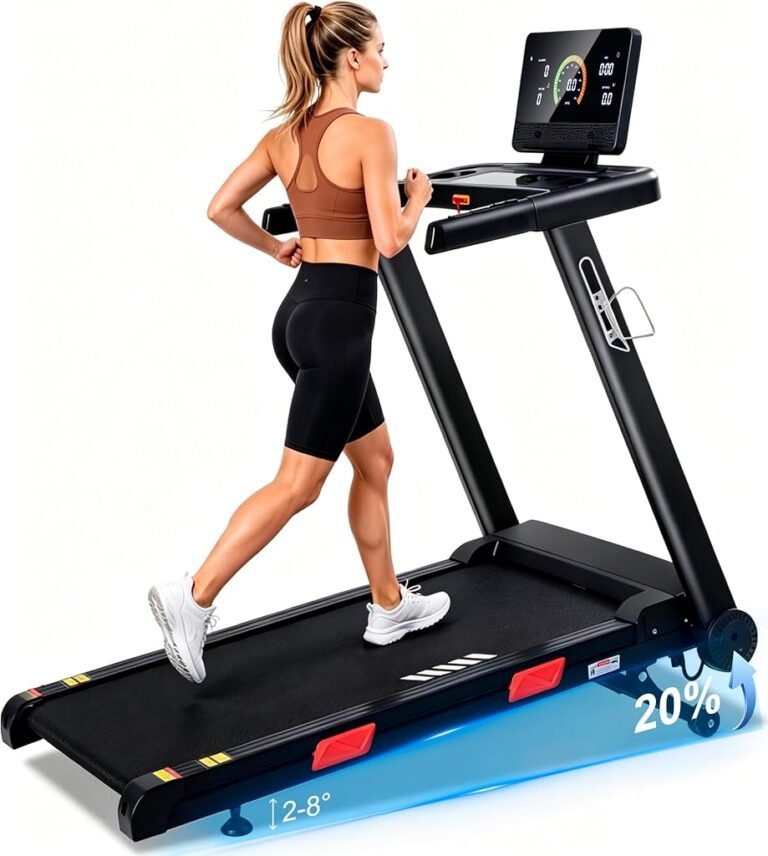
Buying a treadmill for home use looks deceptively straightforward. Pick a price, find a machine that fits the room, compare a few incline settings, and order one. Yet the machine that looks strongest on a specification sheet can be poorly matched to the person who will actually use it.
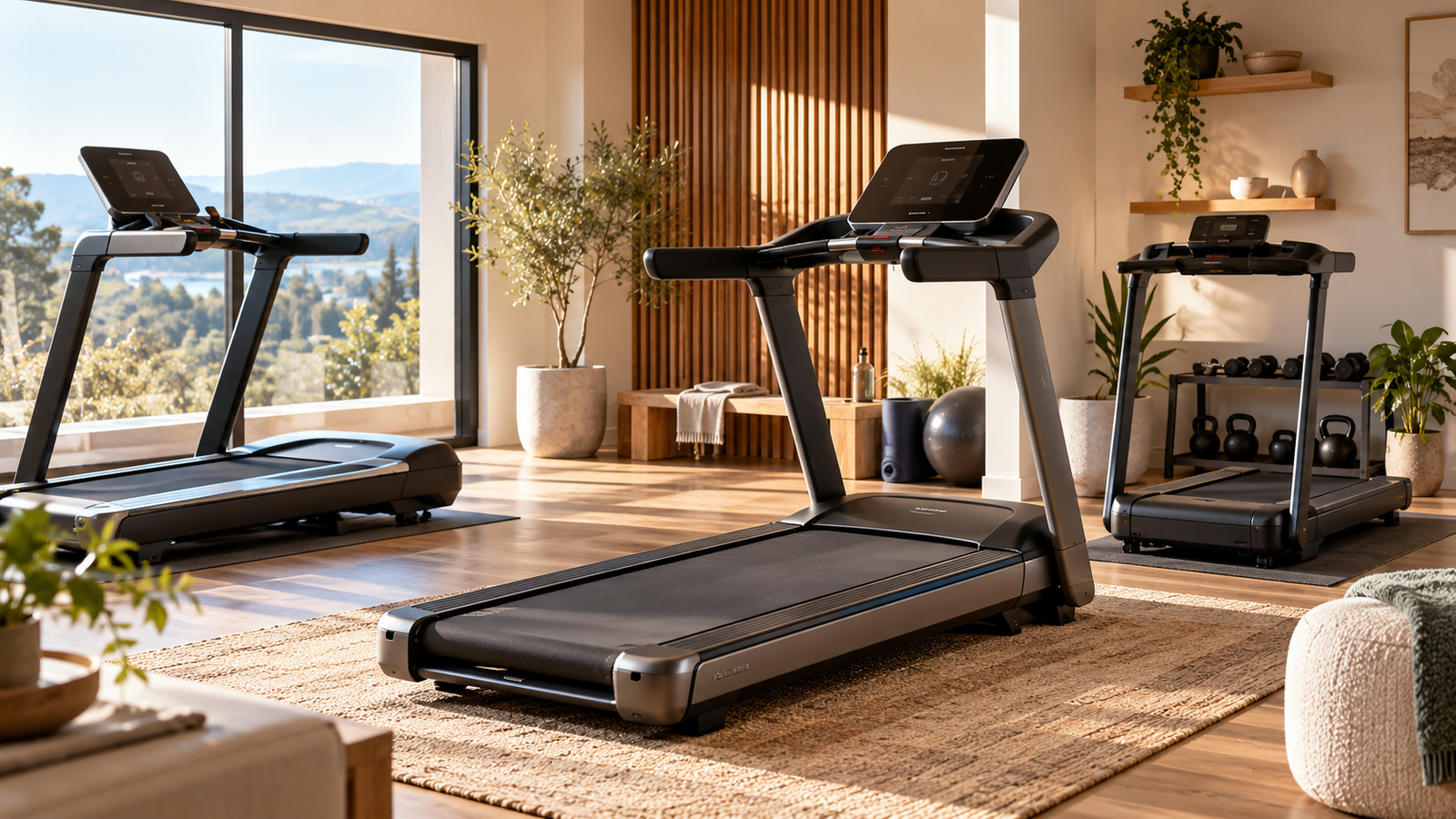
A runner needs a different platform from a person building a daily walking habit. An older adult who values long handrails has different priorities from an apartment resident trying to reclaim floor space after every workout. A household expecting several users places different demands on a machine than a single person walking for 30 minutes each morning.
The health rationale for owning one is relatively uncomplicated. The CDC’s physical-activity guidance says adults need at least 150 minutes of moderate-intensity physical activity each week, or 75 minutes of vigorous-intensity activity, or an equivalent combination, alongside muscle-strengthening activity on at least two days. Federal guidance places the range associated with the greatest health benefits at 150 to 300 minutes of moderate-intensity aerobic activity per week.
A home treadmill can make that target easier to schedule. Weather disappears from the equation. Darkness is irrelevant. Travel time to a gym vanishes. Five, 15, or 30 minutes can be accumulated without leaving the house.
The harder question is which treadmill deserves the floor space.
Our assessment of the current field puts considerable weight on four editorial signals: Our Score, Customer Sentiment, Buyer Confidence, and Value. Those measures are useful because price alone says little about suitability. A $300 machine can be the more rational purchase for a walker with limited space, while a substantially more expensive model can make sense for someone who expects structured running, automatic incline changes, or a more developed connected-training system.
The result is not one universal winner. It is a hierarchy of better matches.
The Strongest Home Treadmill Choices at a Glance
Among the models evaluated, several distinguish themselves for different reasons:
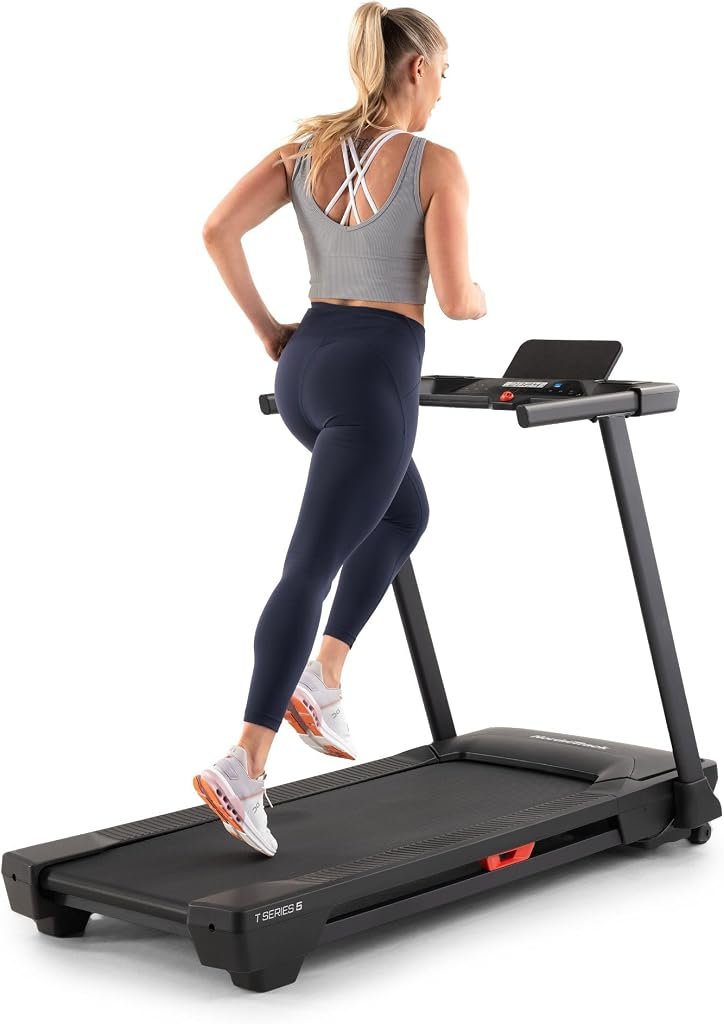
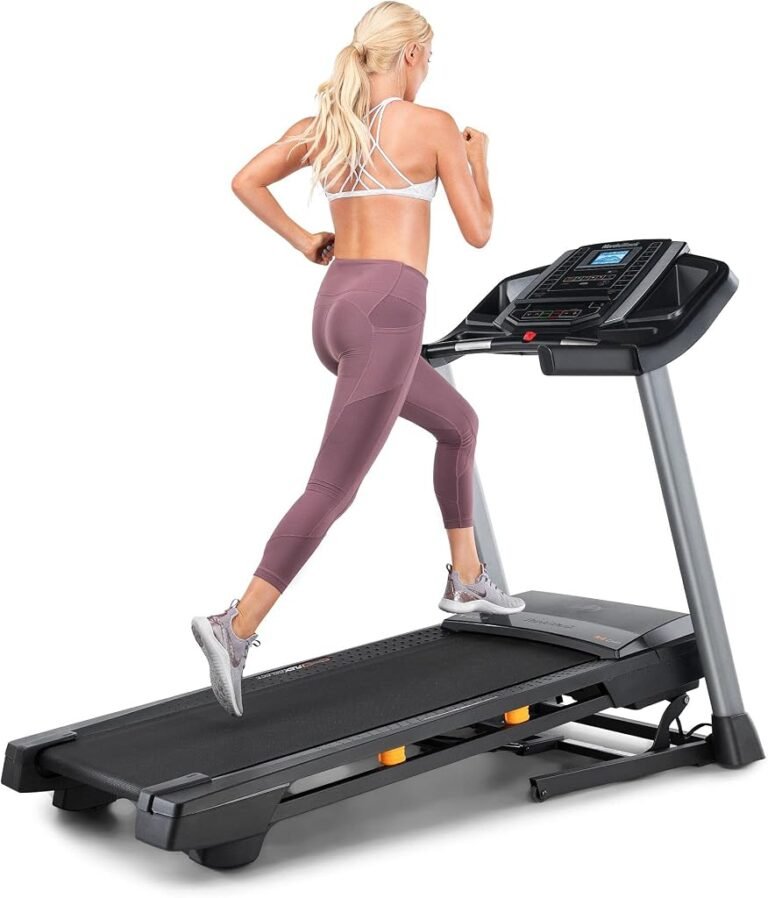
- The NordicTrack T Series Treadmill earns an 8.4/10 Our Score, backed by 9.8 Buyer Confidence. It is the strongest established-brand option in this field for buyers who value a developed training ecosystem.
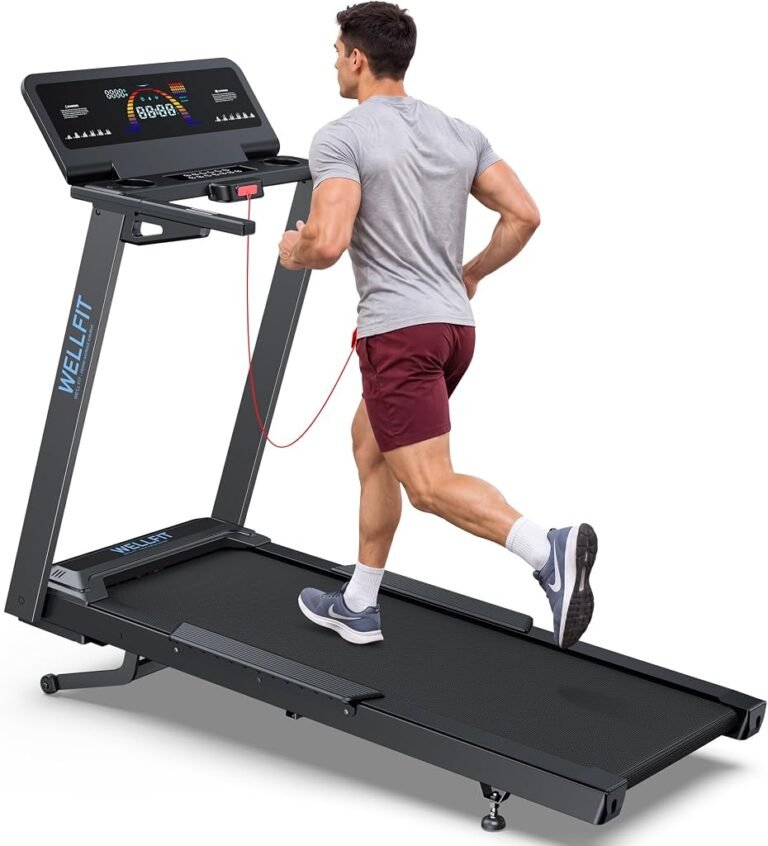
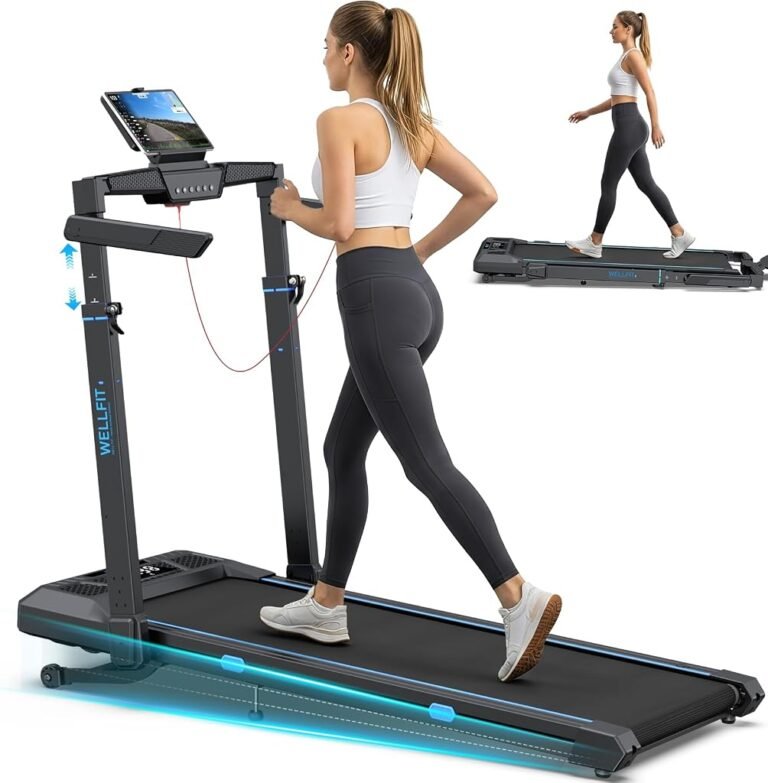
- The WELLFIT Foldable Treadmill scores 8.67/10, with 8.72 Customer Sentiment and 8.4 Value. At $379.99 in our comparison, its editorial numbers make it one of the more balanced choices.
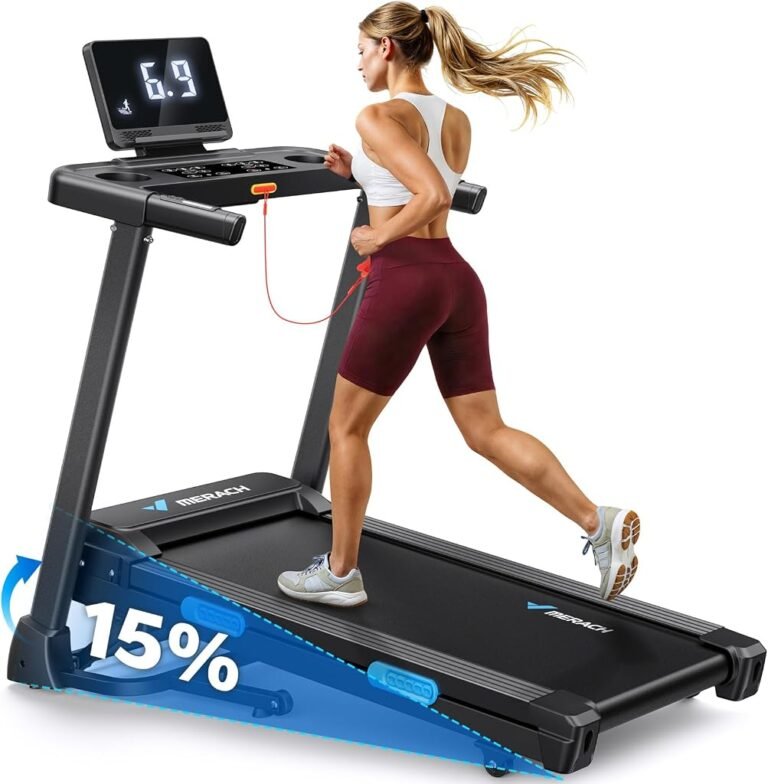
- The MERACH T12 Foldable Treadmill reaches 8.52/10, supported by 9.65 Buyer Confidence and an $359.99 comparison price.
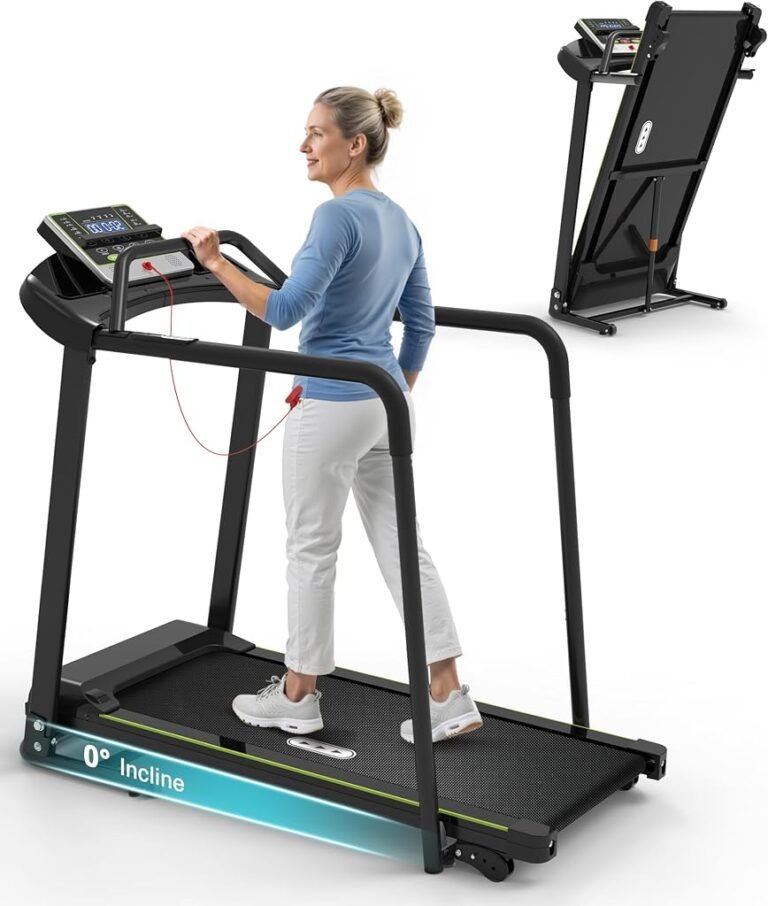
- The Redliro Treadmill for Seniors earns 8.64/10 and stands out when the shopping brief specifically prioritizes an older user.
- The Auto Incline Foldable Walking Pad with Handle Bar receives the highest Our Score in this group at 8.87/10, alongside 8.94 Customer Sentiment, 9.09 Buyer Confidence, and 8.52 Value. Its walking-pad format, however, means it should not automatically displace a full treadmill for running-oriented households.
- The BORGUSI Auto Incline Folding Treadmill scores 8.55/10 and pairs that figure with 9.8 Buyer Confidence.
- The Sunny Health & Fitness Foldable Auto Incline Treadmill also scores 8.55/10 with 9.8 Buyer Confidence, making it a logical candidate for buyers who prioritize automatic incline and folding storage.
- The Sunny Health & Fitness Fully Assembled Auto Incline Treadmill receives the same 8.55/10 assessment and provides a useful counterpoint for households that value simpler initial setup over the storage advantages associated with folding designs.
These are not interchangeable machines. The distinctions become clearer when the purchase is examined through the realities of home use.
Start With the Person, Not the Treadmill
The phrase “best treadmill” often obscures the decision that matters: best for whom?
A buyer intending to walk while answering email has little reason to prioritize the same qualities as someone training for a 10K. A senior concerned about balance may place handrail access above connected entertainment. A heavier user should examine treadmill weight capacity before touchscreen size, app connectivity, or speaker quality.
That hierarchy prevents feature overload.
The first question is therefore behavioral: what activity will happen most often?
For steady walking, a modest speed range can be entirely adequate. For jogging and running, available running space, stability, speed capability, cushioning, and the machine’s ability to withstand repeated use rise in relevance. Interval training makes quick controls and automatic incline more useful. Shared households should give more attention to structural capacity, adjustment range, and serviceability.
A treadmill is ultimately a repetitive-use machine. Features encountered every day matter more than features demonstrated once.
Walking Pad vs Treadmill: Similar Motion, Different Jobs
The walking pad vs treadmill decision deserves particular care because the categories increasingly overlap.
Walking pads usually make the strongest argument around compactness. They suit low-speed walking, home-office activity, and rooms where permanent fitness equipment would be intrusive. The Auto Incline Foldable Walking Pad with Handle Bar review is especially interesting because its 8.87/10 Our Score is higher than every conventional treadmill in this comparison.
That score does not mean a walking pad should replace a treadmill for every household. Category fit still matters.
A full treadmill generally makes more sense when the buyer expects running, wider training variation, sustained incline work, or a more substantial console-and-handrail structure. A walking pad makes more sense when daily steps and storage dominate the brief.
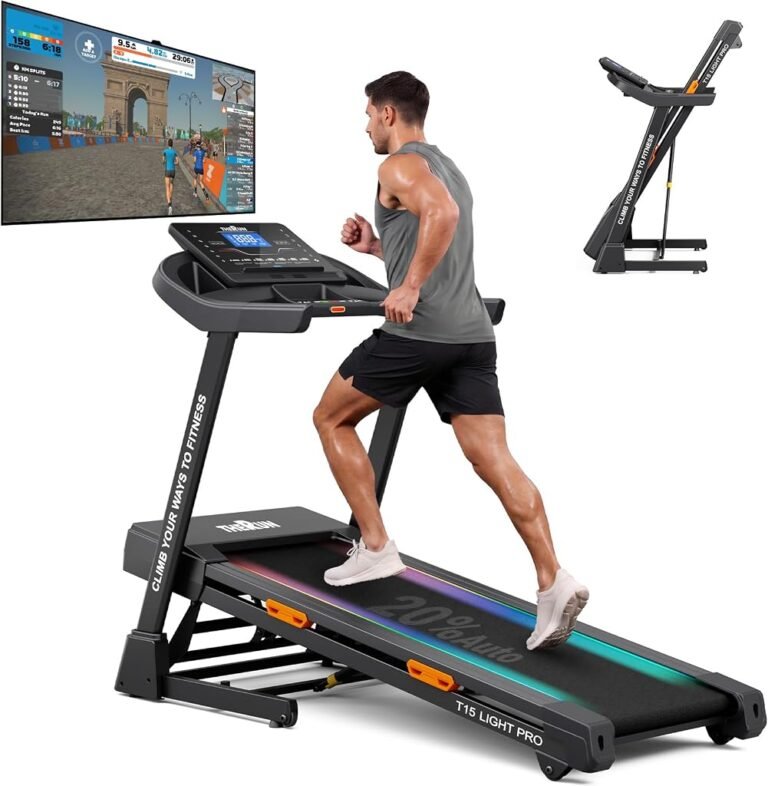
The THERUN Foldable Walking Treadmill with Incline sits between those ideas. Its 8.37/10 Our Score, 8.28 Customer Sentiment, 8.91 Buyer Confidence, and 8.15 Value make it an appealing bridge for buyers whose activity is centered on walking rather than faster running.
The choice should follow intended movement, not whichever category currently attracts more online attention.
Foldable vs Non Foldable Treadmill: Floor Space Has a Cost
The foldable vs non foldable treadmill decision is fundamentally about how the room works when nobody is exercising.
A dedicated gym room weakens the argument for folding. If the machine never needs to move, permanent placement eliminates an extra ownership ritual and lets the buyer focus on the running platform and training functions.
Mixed-use rooms reverse that logic. A treadmill in a bedroom, office, living area, or multipurpose basement may need to disappear after every session.
The WELLFIT Foldable Treadmill review is persuasive here because its $379.99 comparison price accompanies an 8.67/10 Our Score. The WELLFIT Heavy Duty Foldable Treadmill follows closely at 8.62/10, while the JAGJOG Foldable Auto Incline Treadmill also reaches 8.62/10.
Folding itself should never be treated as proof of compactness. Buyers need the folded dimensions, the direction in which the deck moves, the machine’s weight, and the route through which it must be rolled or carried. A treadmill that technically folds but remains difficult to maneuver may solve little.
There is also a less glamorous issue: foldable treadmill maintenance.
Moving joints, deck mechanisms, belt alignment, lubrication, and hardware still require attention. Sunny Health & Fitness maintenance guidance instructs owners of applicable models to unplug the treadmill before maintenance and describes belt lubrication every six months or 150 miles. Maintenance intervals vary by manufacturer and model, so the owner’s manual remains the controlling reference.
Storage convenience does not erase mechanical ownership.
Auto Incline vs Manual Incline Treadmill
Few treadmill features affect workout behavior as directly as incline.
With manual incline, the user normally stops or leaves the belt to change the deck position. That is acceptable when a person selects one grade before exercising and leaves it there.
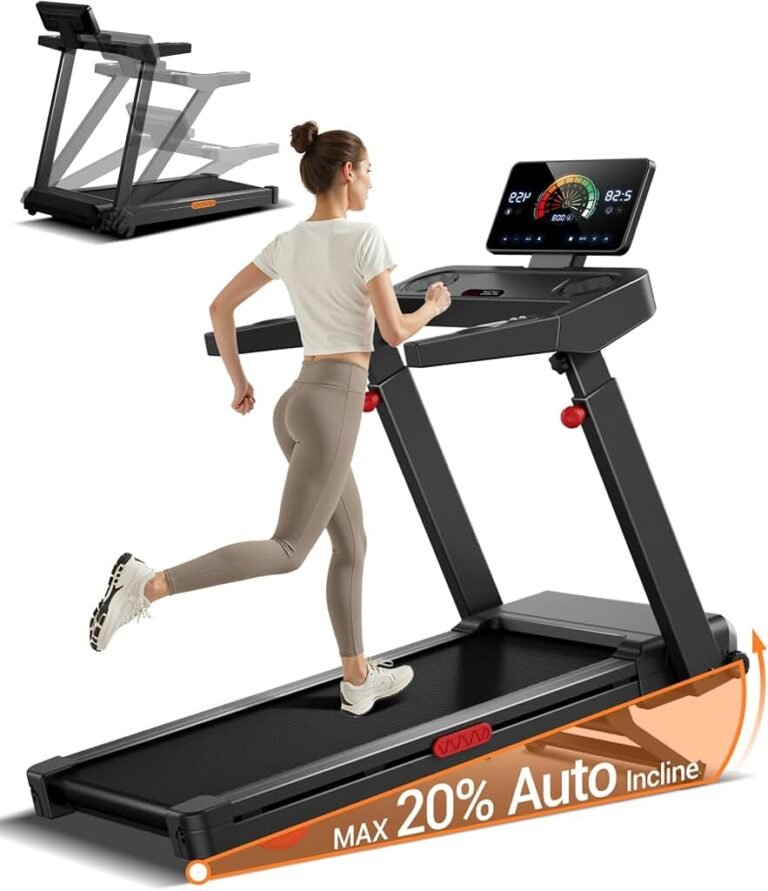
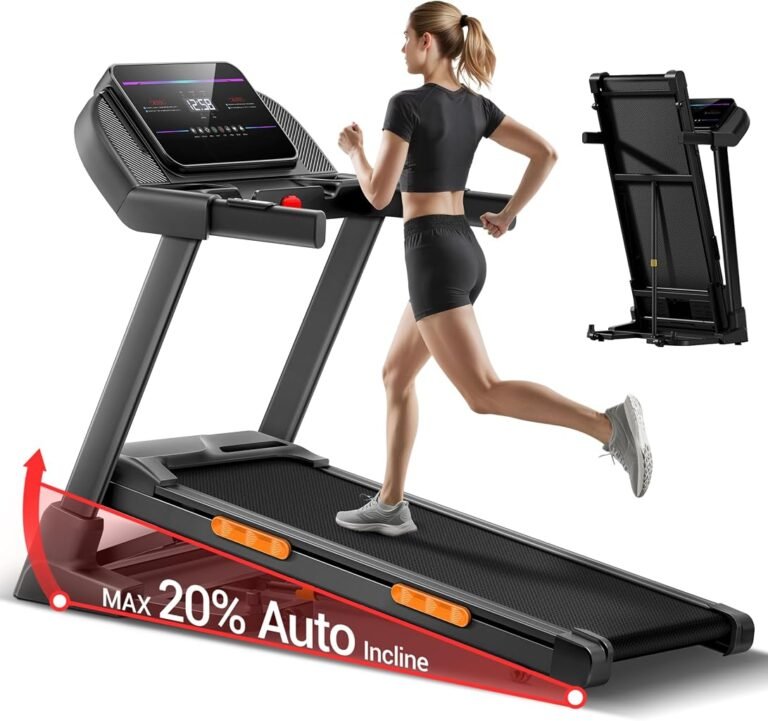
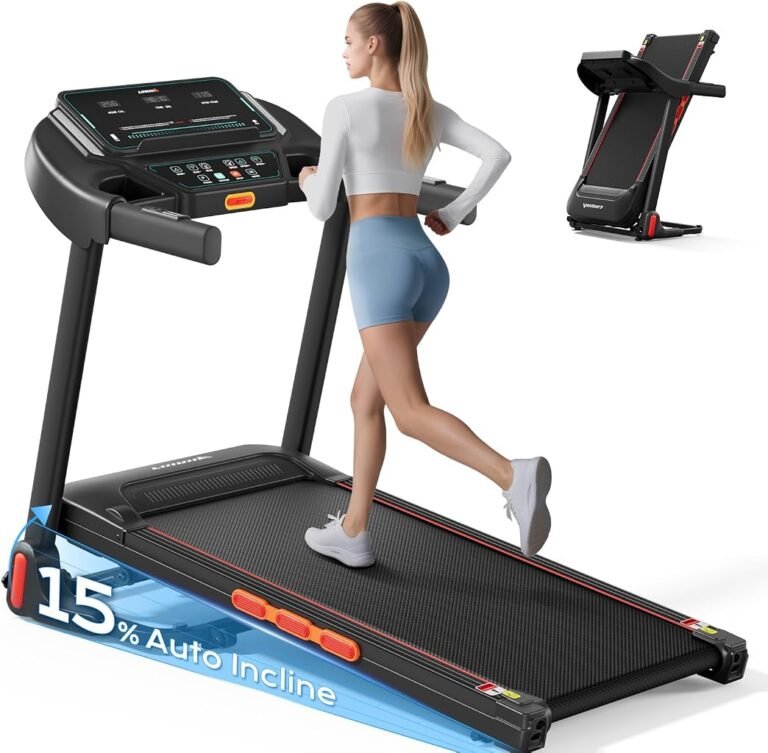
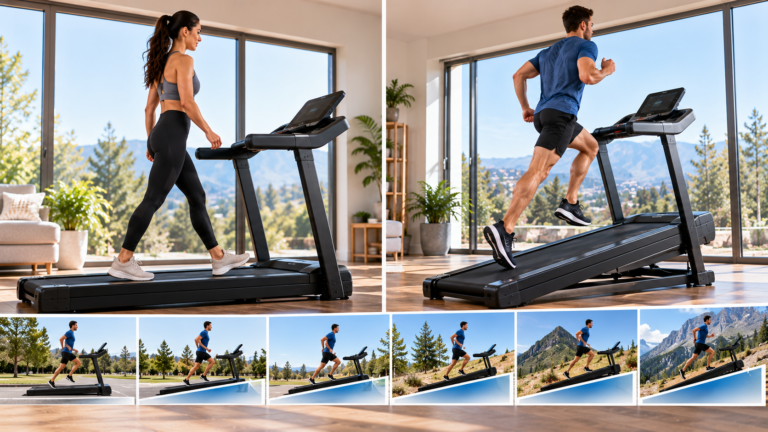
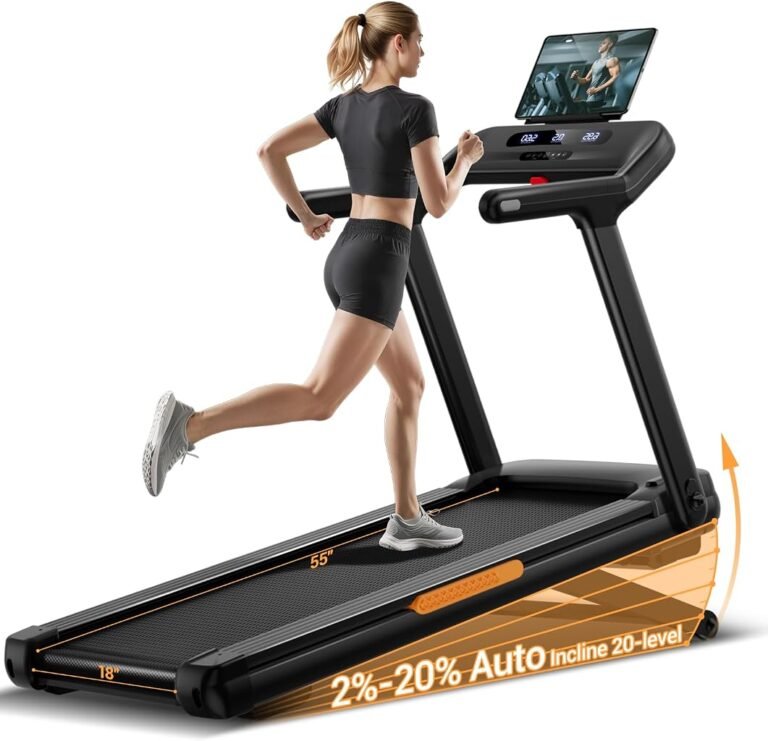
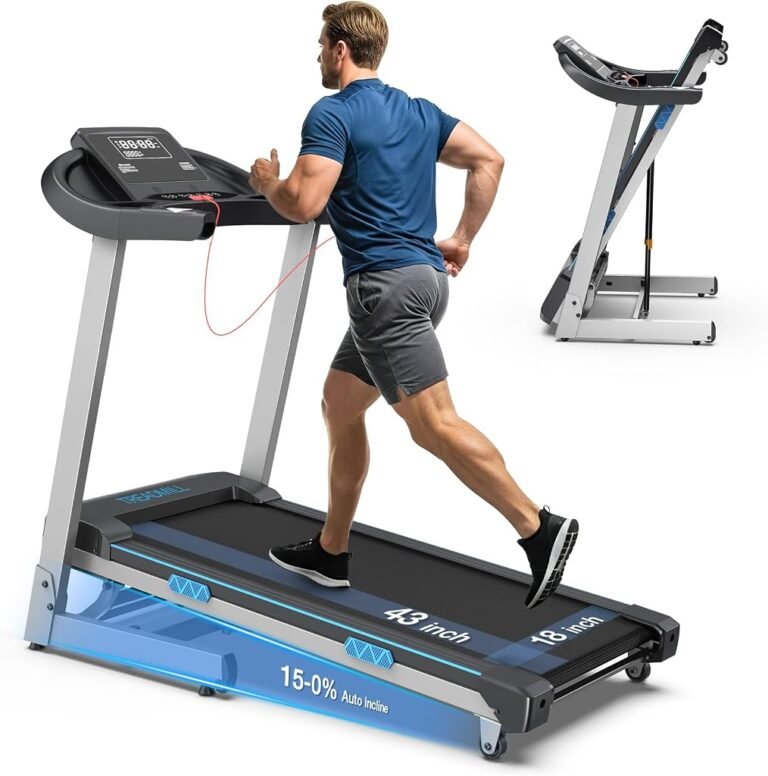
Automatic incline is much more useful for sessions involving repeated grade changes. Adjustments can occur during the workout, which makes hills, progression sessions, and interval structures easier to execute.
This makes auto incline vs manual incline treadmill less about prestige and more about frequency of adjustment.
Research helps explain why incline deserves attention. In a study involving 24 healthy older adults, walking at a 10% treadmill grade increased net cardiopulmonary metabolic energy cost by 22.9% compared with level walking; at 16%, the increase was 44.2%. Muscle activity also changed as slope increased.
Another treadmill study found that slower uphill walking could produce moderate-intensity exercise while reducing certain lower-extremity loading measures compared with faster level walking in adults with obesity. The authors reported roughly 19% lower peak knee-extension moments and 26% lower knee-adduction moments in one uphill condition compared with faster level walking. That finding came from a small laboratory study and should not be converted into medical advice for an individual user, but it illustrates why speed and grade should be considered together.
How to Choose Treadmill Incline
How to choose treadmill incline is therefore a question of training purpose.
Someone primarily seeking uncomplicated walking does not need to chase the highest possible grade. A runner building hill sessions gains more from automatic adjustment. An older adult or new exerciser may place greater value on small, predictable changes and accessible controls.
The WELLFIT Heavy Duty Auto Incline Foldable Treadmill earns 8.14/10 at $399.99 in our comparison. The ATEEDGE Auto Incline Treadmill scores 7.78/10, while the ATEEDGE Auto Incline Foldable Treadmill rises to 8.14/10.
The THERUN Auto Incline Foldable Treadmill receives an 8.0/10 assessment, although its $899.99 comparison price places much more pressure on its value proposition.
At the other end of the price spectrum, the UMAY Fitness Auto/Manual Incline Treadmill costs $309.99 in our comparison and scores 7.71/10. The UMAY Fitness Auto Incline Foldable Treadmill costs the same while scoring slightly higher at 7.84/10.
For buyers who expect frequent hill training, automatic control has practical value. For buyers who rarely alter grade, paying substantially more solely for automated incline is harder to defend.
Treadmill Weight Capacity Is a Screening Criterion
Treadmill weight capacity should be checked before secondary conveniences.
The manufacturer’s stated limit establishes the boundary within which the machine is intended to operate. Buyers should verify the exact specification for the exact model under consideration rather than assuming that “heavy duty” in a product name corresponds to a standardized capacity.
The principle extends beyond body weight. A higher-capacity machine may be attractive to a multi-user household, but capacity alone does not reveal running-area dimensions, machine mass, frame behavior, motor characteristics, or long-run durability.
The UMAY Fitness Heavy Duty Treadmill earns an 8.32/10 Our Score at $489.99. The UMAY Fitness Heavy Duty Treadmill review is therefore favorable on our editorial measures, with 8.28 Customer Sentiment, 8.64 Buyer Confidence, and 8.15 Value.
The UMAY Heavy Duty Auto Incline Treadmill is cheaper at $398.99 but scores 7.93/10.
The WELLFIT Heavy Duty Foldable Treadmill review is stronger at 8.62/10. For buyers who need an unusually high capacity, however, the label is not enough; the exact manufacturer’s specification should be confirmed before purchase.
As one example of what verified capacity data look like, WELLFIT’s official TM007 specification page states a 200 kg maximum load, a 45.7 by 114.3 cm running area, and 0-15% automatic incline for that specific model.
That level of model-specific verification is preferable to extrapolating specifications from family names.
Best Options for Automatic Incline
Automatic incline is heavily represented in the current home market, but our scores separate several candidates.
The WELLFIT Auto Incline Treadmill review stands near the front. The WELLFIT Auto Incline Treadmill earns 8.53/10, with 8.5 Customer Sentiment, 8.93 Buyer Confidence, and 8.28 Value. Its $749.99 comparison price makes it a more deliberate purchase than the brand’s less expensive folding options.
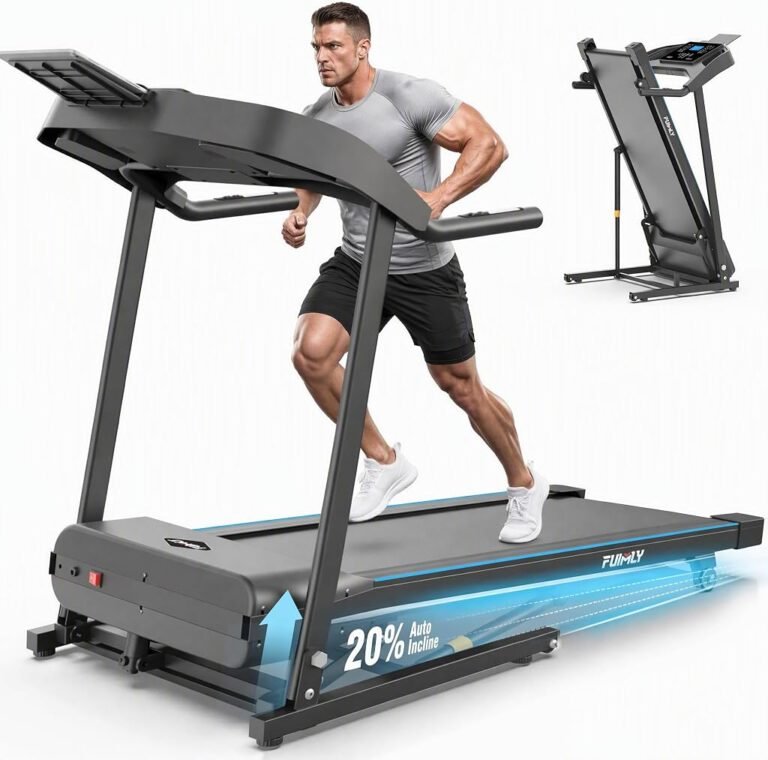
The FUNMILY Auto Incline Folding Treadmill receives 8.35/10, while the LIJIUJIA Auto Incline Treadmill scores 8.25/10. LIJIUJIA’s 9.8 Buyer Confidence is particularly strong within our scoring system.
The BORGUSI Auto Incline Treadmill review produces another credible middle-ground option. The BORGUSI Auto Incline Treadmill earns 8.34/10 at $449.99.
Its folding counterpart is stronger. The BORGUSI Auto Incline Folding Treadmill review reaches 8.55/10, including 9.8 Buyer Confidence. At $389.99 in our comparison, that combination gives it one of the cleaner price-to-score relationships among conventional treadmills here.
The MERACH Auto Incline Foldable Treadmill scores 8.33/10 and carries 9.43 Buyer Confidence. The MERACH Auto Incline Foldable Treadmill review therefore lands slightly below the MERACH T12 in overall score but remains appealing when automatic incline is a priority.
The WELLFIT Auto Incline Foldable Treadmill comes in at 7.99/10. That score is respectable, although the brand’s higher-scoring alternatives deserve examination before a decision.
NordicTrack T Series Treadmill Review
The NordicTrack T Series Treadmill review requires a slightly different lens because T Series refers to a family rather than one immutable specification.
Our T Series entry scores 8.4/10, with 8.06 Customer Sentiment, 9.8 Buyer Confidence, and 8.03 Value. That confidence score is among the strongest in the comparison.
Current NordicTrack T Series documentation describes the present T Series family with speeds up to 12 mph, incline up to 12%, folding capability, adjustable cushioning, and iFIT integration; exact specifications vary by model.
That model variation matters. A buyer should compare the exact T Series machine being sold rather than importing specifications from another generation or screen size.
For the right household, the appeal lies in integration. Speed, incline, display, cushioning, folding storage, and connected workouts exist within one system. Buyers who simply want an uncomplicated walking machine may be paying for an ecosystem they barely use.
That distinction becomes sharper in NordicTrack T Series vs ProForm Carbon.
NordicTrack T Series vs ProForm Carbon
The ProForm Carbon Treadmill earns an 8.3/10 Our Score, compared with 8.4/10 for NordicTrack T Series. ProForm receives 8.28 Customer Sentiment, 8.54 Buyer Confidence, and 8.15 Value.
Current ProForm Carbon Series information describes models with speeds up to 12 mph, 0-12% incline, ProShox cushioning, and iFIT connectivity through a phone or tablet, while exact equipment differs within the Carbon family.
The ProForm Carbon Treadmill review therefore produces a close contest rather than a runaway result.
For NordicTrack T Series vs ProForm Carbon, NordicTrack receives the edge in our scoring because its 9.8 Buyer Confidence materially exceeds ProForm’s 8.54. ProForm’s 8.15 Value score, however, is slightly higher than NordicTrack’s 8.03.
The decision should follow the exact models and the buyer’s relationship with connected training. Buyers interested in either family should check what requires a paid subscription, what remains functional without one, and which controls are available directly on the machine.
Connected fitness can add structure. It can also add recurring cost and another software dependency to equipment that may remain in the house for years.
Treadmill Features for Seniors
Treadmill features for seniors deserve a separate buying framework.
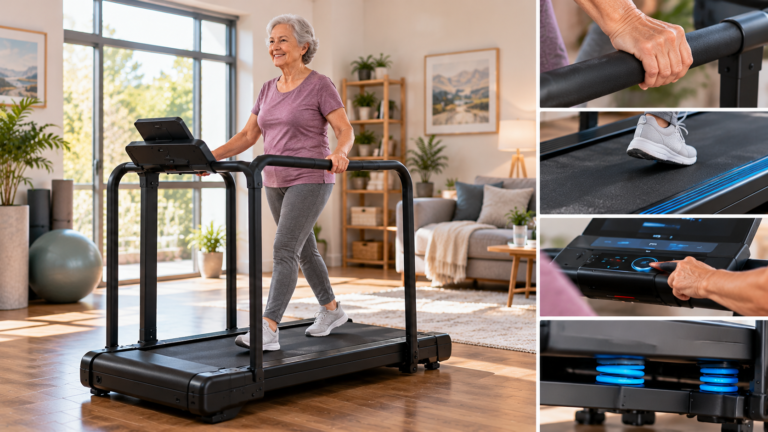
Speed is rarely the first criterion. Accessible controls, stable entry and exit, handrail geometry, a clear display, a usable walking surface, predictable belt behavior, and a straightforward emergency stop can matter far more.
Longer handrails deserve particular attention when balance support is required. Research involving people post-stroke found that self-selected handrail support increased anteroposterior margin of stability for both legs compared with walking without holding the rail. The researchers also stressed that handrail use should be matched to the purpose of rehabilitation.
Handrails should not automatically become permanent body-weight supports during every treadmill session. Separate research in healthy adults found that holding treadmill handrails during split-belt adaptation reduced aspects of locomotor learning.
The practical reading is nuanced: handrails can provide meaningful support, but how they are used matters.
Redliro vs FYC Treadmill for Seniors
The Redliro vs FYC treadmill for seniors comparison produces a clearer editorial difference.
The Redliro Treadmill for Seniors review earns 8.64/10, with 8.72 Customer Sentiment, 8.73 Buyer Confidence, and 8.4 Value. Its comparison price is $399.99.
The FYC Treadmill for Seniors with Extended Handrails costs less at $319.99 but scores 7.85/10, with 7.62 Customer Sentiment, 8.57 Buyer Confidence, and 7.79 Value.
On our editorial scoring, Redliro is the stronger choice. FYC remains relevant where extended handrails and a lower initial price align more closely with the buyer’s needs.
The FYC Treadmill for Seniors with Extended Handrails review should therefore be read through ergonomics rather than raw ranking. A senior treadmill should fit the user’s reach, walking pattern, balance needs, and ability to mount and leave the deck.
For a person with a history of falls, neurological disease, significant mobility limitation, cardiovascular symptoms, or another condition affecting exercise safety, equipment selection should be coordinated with an appropriate clinician rather than inferred from a generic age label.
Sunny Foldable vs Fully Assembled Treadmill
The Sunny foldable vs fully assembled treadmill comparison illustrates another underappreciated trade-off: setup burden versus storage flexibility.
The Sunny Health & Fitness Foldable Auto Incline Treadmill review scores 8.55/10. The Sunny Health & Fitness Fully Assembled Auto Incline Treadmill review also scores 8.55/10. Both carry 8.28 Customer Sentiment, 9.8 Buyer Confidence, and 8.15 Value in our assessment.
Price separates them in this comparison: $799.99 for the foldable model versus $656.49 for the fully assembled entry.
For a room where the treadmill needs to be moved regularly, folding can justify the premium. For a dedicated workout area, the setup convenience and lower comparison price of the fully assembled machine can be more rational.
The distinction also shows why assembly deserves attention before delivery day. Some treadmills arrive in large, heavy cartons and still require upright, console, or hardware installation. Sunny’s SF-T7515 assembly documentation, for example, includes securing support tubes, attaching covers and the console, and lubricating the treadmill before first use.
“Home treadmill” does not necessarily mean “easy one-person installation.”
Smart Features: Useful Only When They Reduce Friction
The Sunny Health & Fitness Smart Wi-Fi Treadmill scores 8.4/10, with 9.8 Buyer Confidence. The Sunny Health & Fitness Smart Wi-Fi Treadmill review therefore belongs in the discussion for buyers who genuinely use connected functions.
The operative word is use.
Wi-Fi, apps, displays, virtual routes, training libraries, speakers, and workout synchronization can help some people exercise consistently. For others, they are additional interfaces between the user and a simple task: walking.
The ANCHEER Incline Treadmill with Desk Workstation review illustrates the same principle from another direction. The ANCHEER Incline Treadmill with Desk Workstation scores 7.83/10 at $329.99.
A workstation can be useful for slow walking during low-intensity computer tasks. It is much less relevant to someone buying a treadmill for conventional running. The desk is therefore neither inherently an advantage nor a disadvantage. It is useful only when it matches the intended routine.
Other Auto-Incline Models Worth Comparing
Several models sit in the broad middle of the field, where buying decisions should be driven by fit rather than tiny score differences.
The WELLFIT Heavy Duty Auto Incline Foldable Treadmill review earns 8.14/10. The ATEEDGE Auto Incline Foldable Treadmill review also reaches 8.14/10. The THERUN Auto Incline Foldable Treadmill review scores 8.0/10.
The Vitalwalk Foldable Auto Incline Treadmill earns 8.09/10. At $829.98 in our comparison, its price means buyers should verify that its exact feature set solves a need not met by less expensive alternatives.
The WELLFIT Heavy Duty Auto Incline Foldable Treadmill review and WELLFIT Auto Incline Treadmill review are particularly useful when deciding whether compact storage or a higher-scoring conventional configuration matters more.
The ATEEDGE Auto Incline Treadmill review and ATEEDGE Auto Incline Foldable Treadmill review reveal a similar pattern: our score rises from 7.78 for the former to 8.14 for the foldable entry.
The UMAY Fitness Auto/Manual Incline Treadmill review, meanwhile, demonstrates the budget end of incline control. At $309.99, its 7.71/10 score is lower, but a buyer with a strict spending ceiling may reasonably value affordability above a few tenths of editorial score.
Treadmill Belt Slipping: A Buying Issue Disguised as a Maintenance Issue
Treadmill belt slipping is often discovered after purchase, yet it belongs in the buying conversation.
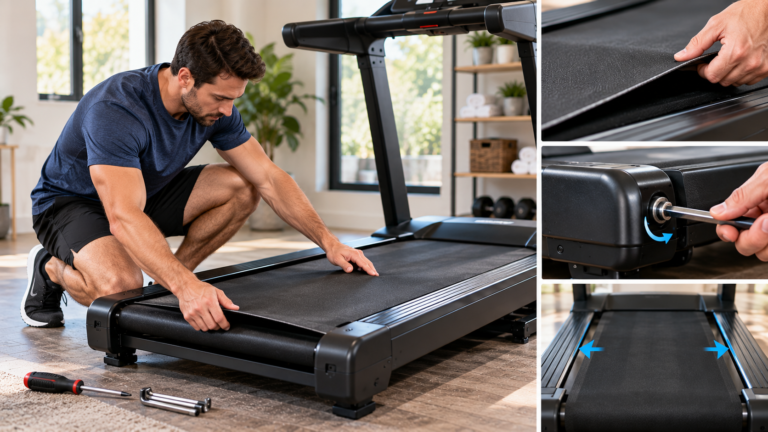
A running belt is a wear and adjustment component. Ownership can involve centering, tension adjustment, lubrication, cleaning, and eventual component replacement.
Sunny Health & Fitness treadmill support resources include dedicated maintenance material for aligning and tightening running belts as well as lubrication. Its manual-treadmill adjustment guidance describes centering the belt and tightening rear-roller bolts evenly. Procedures differ across machines, so owners should follow the instructions for their specific model.
A slipping belt should not automatically be “fixed” by aggressively tightening it. Excessive tension can create other mechanical problems. If the manufacturer’s troubleshooting process does not resolve the issue, service is preferable to improvised repair.
This is one reason documentation matters. A slightly cheaper treadmill becomes less appealing if replacement parts, manuals, lubrication instructions, or technical support are difficult to obtain.
Safety Deserves More Attention Than the Feature List
Treadmills combine body weight, electrical power, a moving belt, rollers, and substantial mechanical force. That combination deserves respect.
The historical record demonstrates why.
In 2021, the U.S. Consumer Product Safety Commission announced a recall of Peloton Tread+ treadmills after a child died and dozens of incidents involving people, pets, or objects being pulled under the machine were reported. The episode led to further work around rear-roller entrapment hazards.
More recently, in April 2026, CPSC warned consumers to stop using specified Sperax walking pads and treadmills after reports involving unexpected speed changes, abrupt stops, overheating, fires, falls, and injuries. The warning concerned named Sperax models, not treadmills generally, but it demonstrates why current recall and safety-warning checks belong in the buying process.
For homes with children, the physical placement of the treadmill matters as much as its specifications. CPSC guidance issued in connection with the Tread+ hazard advised keeping children and pets away, unplugging the machine when it was not being used, and storing the safety key out of children’s reach.
A treadmill is not passive furniture simply because the workout has ended.
Price Should Be Judged Against Frequency of Use
The prices in this comparison stretch from roughly $310 to about $900. That spread creates a temptation to treat cost as a proxy for quality.
Our scoring does not support such a simple relationship.
The MERACH T12 Foldable Treadmill review is a useful example. At $359.99, it earns 8.52/10, with 9.65 Buyer Confidence.
The WELLFIT Foldable Treadmill review goes further: $379.99 and an 8.67/10 Our Score.
Meanwhile, the $899.99 THERUN Auto Incline Foldable Treadmill scores 8.0/10. Price alone therefore does not predict our assessment.
A rational budget should instead be linked to expected use. A machine used five days a week for several years can justify a larger outlay than one purchased on the hope that ownership will create motivation by itself.
That behavioral distinction is often missing from treadmill shopping. The machine cannot manufacture consistency. It can only reduce barriers to it.
How to Make the Final Choice
A buyer can narrow the field efficiently by working through the decision in order.
First comes intended activity: walking, jogging, running, desk walking, or mixed use.
Second comes the user: body size, stride, mobility, balance needs, and the number of people sharing the machine.
Third comes the room: available operating footprint, ceiling clearance, electrical access, storage location, flooring, noise sensitivity, and delivery route.
Only then should features enter the comparison.
Incline matters when it will actually be used. Folding matters when floor space must be reclaimed. Extended handrails ma