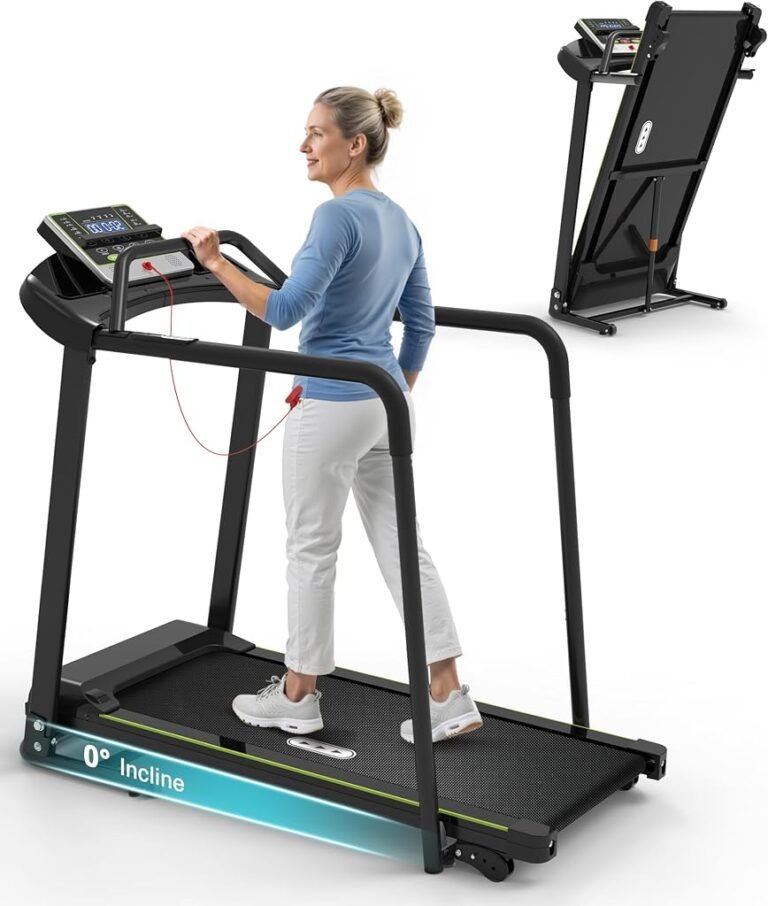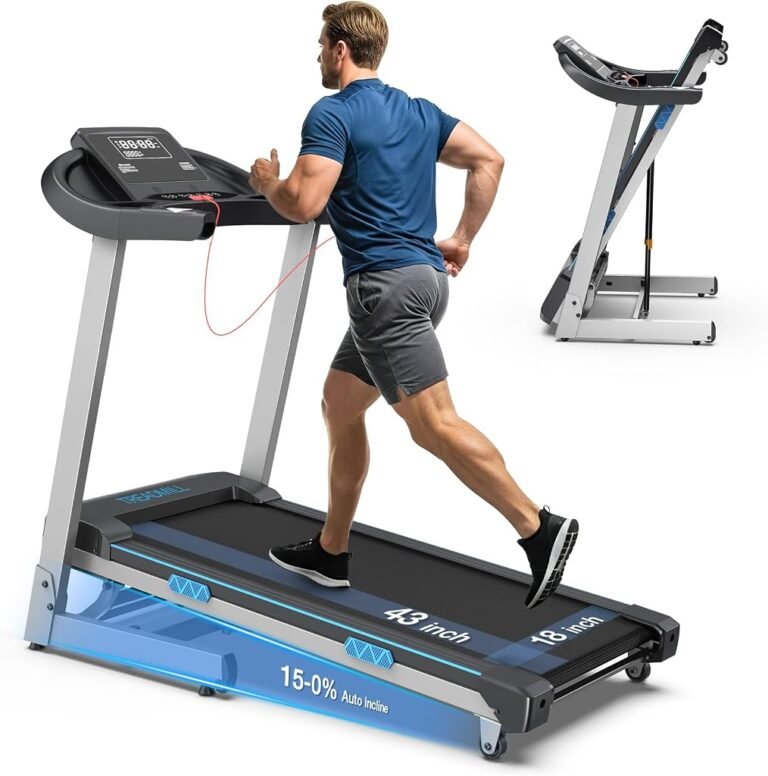
The phrase “heavy duty” is used loosely in the home-fitness market. Sometimes it describes little more than a reinforced-looking frame. Sometimes it identifies a treadmill that genuinely increases user capacity, motor output, running-space dimensions, and structural support. The distinction matters because buyers shopping for a higher-capacity treadmill are often trying to solve practical problems that ordinary compact machines do not address.
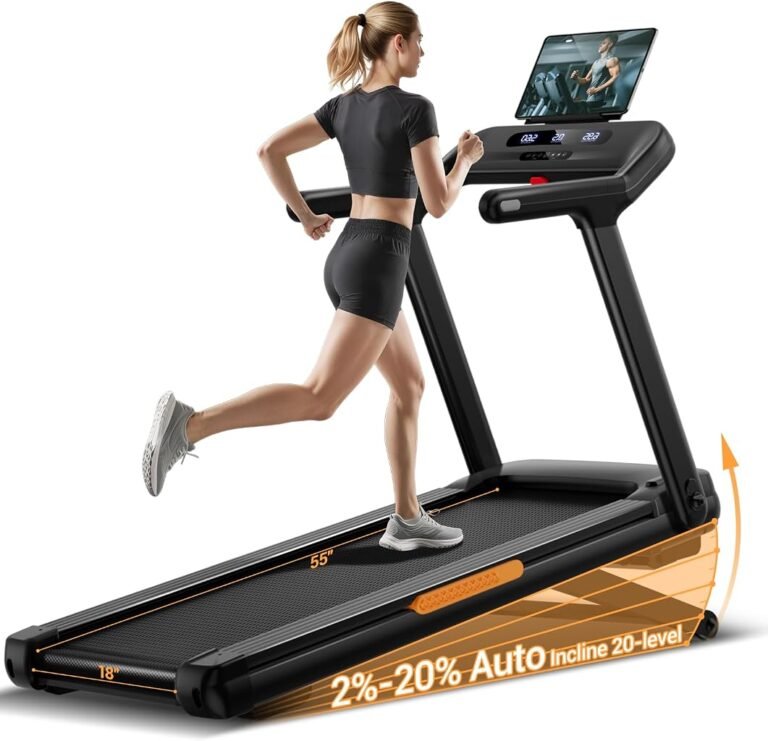
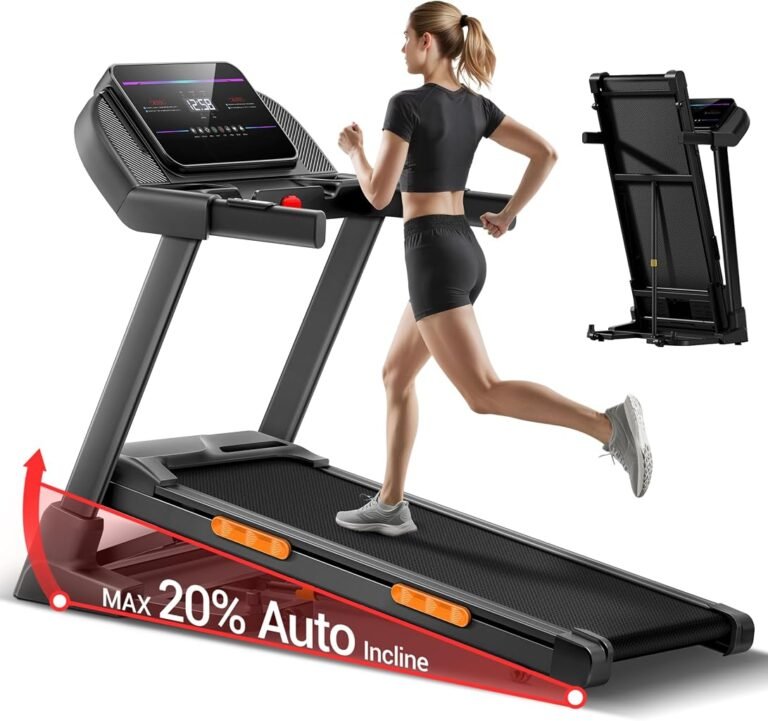
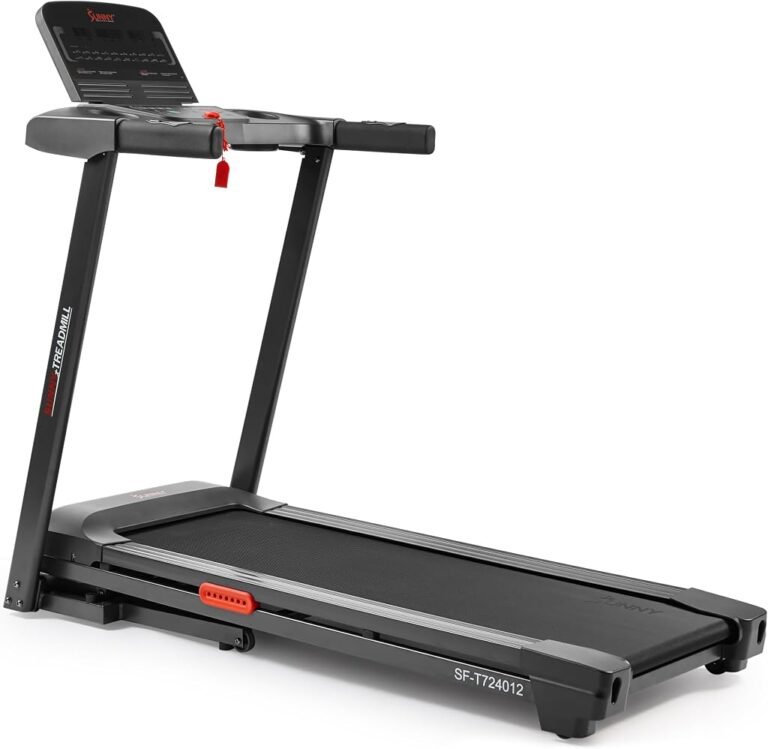
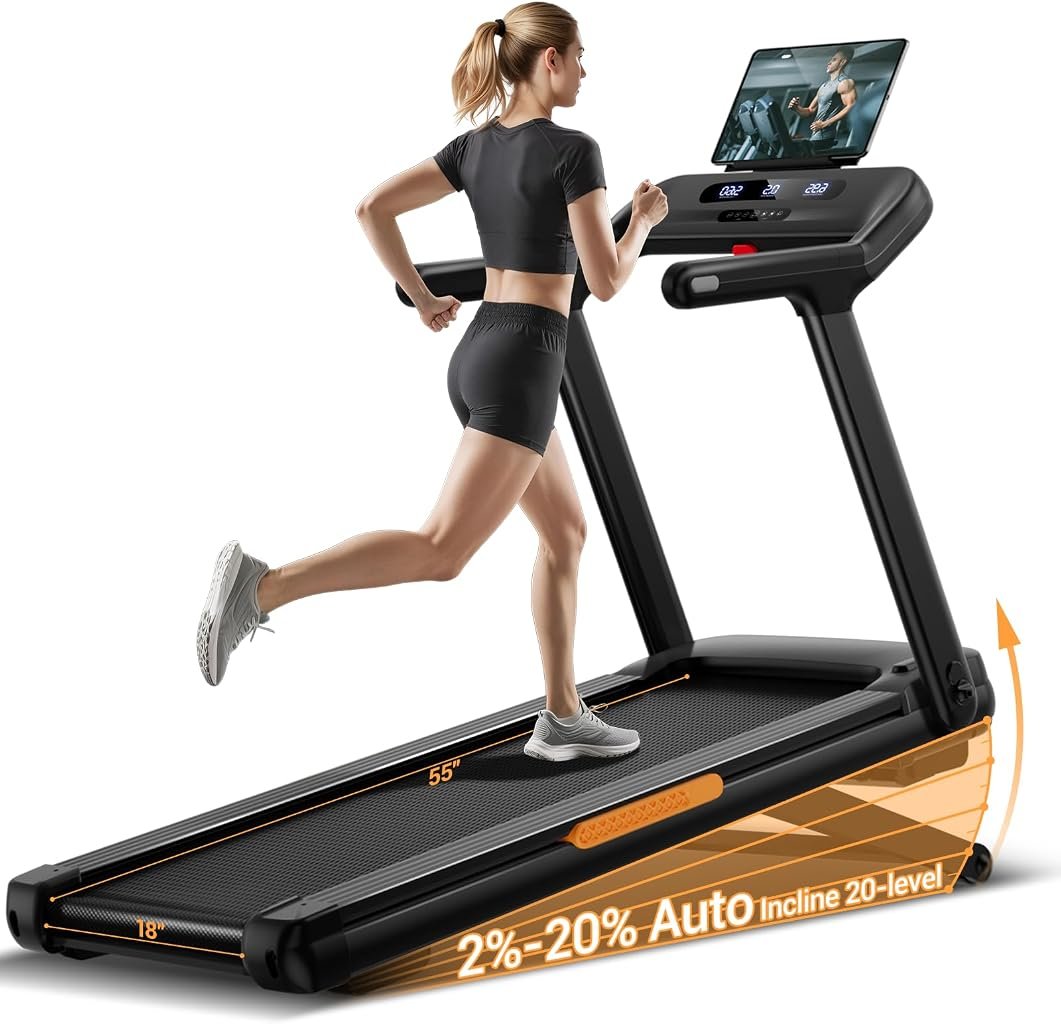
UMAY’s current U80 is the clearest fit for the UMAY Fitness Heavy Duty Treadmill name. The manufacturer identifies it as the U80 400LBS Heavy Duty Professional Treadmill and specifies a 400-pound user capacity, 4.0 HP brushless motor, maximum speed of 9.5 mph, 20-level automatic incline ranging from 2% to 20%, and a 55-by-18-inch running belt. These specifications are detailed on the UMAY U80 product page.
Those specifications establish the central character of the machine. This is not an under-desk walking pad with ambitious branding. It is a folding home treadmill intended to accommodate walking, jogging, running, and steep incline work while supporting users who may exceed the capacities of many lighter residential machines.
Our score is 8.32/10. Customer Sentiment is 8.28, Buyer Confidence is 8.64, and Value is 8.15. Those ratings place the U80 in very-good territory while leaving room for reservations about its 18-inch belt width, 9.5 mph maximum speed, one-year warranty coverage, and the difficulty of verifying some manufacturer performance claims independently.
The resulting assessment is favorable but disciplined: the U80 offers an unusual combination of capacity, incline, running length, and folding storage, yet its strongest case is for buyers whose needs align with those specific strengths.
A Heavy-Duty Treadmill With a Clearly Defined Purpose
UMAY’s current treadmill range spans small walking pads, compact folding machines, and more substantial running treadmills. The company’s treadmill collection distinguishes the U80 through its 400-pound capacity, automatic incline, wider running surface, and higher running speed relative to many of the smaller models.
That positioning matters.
A person who primarily wants to walk beneath a standing desk does not need this much machine. A household looking for a treadmill that can accommodate users of substantially different body sizes, offer steep incline training, and still permit running has a stronger reason to consider it.
The U80’s 55-inch running length is particularly significant. UMAY’s European ACE Series comparison lists the U80 running belt at 55 by 18 inches, substantially longer than the belts on the company’s compact U20F, X5FD, and U70 models.
The 18-inch width, however, creates the first meaningful trade-off.
Eighteen inches is usable for walking and running, but it is narrower than the 20-inch belts found on many full-size home running treadmills. Larger runners or people who naturally move laterally may prefer additional width.
The U80 is therefore heavy-duty in capacity and drive specification without becoming an exceptionally wide treadmill.
Our 8.32/10 Score Reflects an Unusual Specification Mix
An overall score of 8.32/10 reflects a machine that does several difficult things simultaneously.
It supports up to 400 pounds. It provides automatic incline rather than requiring users to stop and manually reposition supports. It reaches 20% incline. It offers a 55-inch-long belt. It folds. And it uses a 4.0 HP brushless motor according to UMAY’s current specification.
Those features address practical limitations that frequently separate compact treadmills from more capable running equipment.
The score stops short of the nine-point range because several compromises remain.
Maximum speed is 9.5 mph. That equals roughly a 6:19-per-mile pace, fast enough for a broad range of recreational running but below the 12 mph ceiling common on many performance-oriented home treadmills.
The belt is long but only 18 inches wide.
Warranty coverage is another point of restraint. UMAY’s U.S. U80 page currently states that walking pads and treadmills receive a one-year warranty on parts and a one-year warranty on the structural frame. For equipment expected to handle substantial loads, buyers may reasonably prefer longer structural and component coverage.
Those limitations do not erase the U80’s strengths. They define its place in the market.
The 400-Pound Capacity Is More Than a Marketing Detail
Weight capacity is one of the U80’s defining specifications.
UMAY rates the machine for users up to 400 pounds.
That gives it relevance for households underserved by lower-capacity treadmills. A machine with a 250- or 300-pound maximum may simply be unsuitable for some users regardless of its software, display, or workout programs.
Capacity should not be confused with a guarantee of identical performance at every body weight. Nor does a high maximum user rating automatically establish long-term durability. Those are separate questions requiring long-duration testing.
Still, published capacity matters because it establishes the manufacturer’s stated operating boundary.
UMAY also describes the U80 as using reinforced structural components. The ACE Series comparison places it alongside the U70 as one of the company’s 400-pound-capacity higher-output models.
For buyers specifically seeking higher-capacity exercise equipment, this specification is likely to matter more than decorative console features.
The 4.0 HP Brushless Motor Has Plenty of Claimed Output
UMAY specifies a 4.0 HP brushless motor for the U80.
Motor specifications deserve careful interpretation.
Horsepower alone does not establish treadmill quality. Cooling, controller design, belt friction, roller geometry, duty cycle, electrical supply, component tolerances, and software behavior all affect real operation.
Nor should manufacturer horsepower figures from different companies automatically be treated as perfectly comparable measurements unless the measurement methods are known.
Within UMAY’s own range, however, the specification is useful. The ACE Series comparison lists the U20F at 2.5 HP, X5FD at 3.0 HP, and both the U70 and U80 at 4.0 HP.
That places the U80 at the upper end of UMAY’s current treadmill motor specifications.
The manufacturer also claims operating noise below 45 dB. That figure should be treated as a manufacturer claim rather than an independent acoustic measurement. Treadmill noise changes with speed, foot strike, floor construction, room acoustics, incline, user weight, and distance from the measuring device.
A treadmill can have a relatively quiet motor while still producing substantial impact noise through the floor.
The 9.5 MPH Maximum Speed Defines the Running Audience
Maximum speed is 9.5 mph.
For walking, that ceiling is irrelevant because ordinary walking occupies only a fraction of the available range.
For recreational jogging and running, 9.5 mph offers considerable headroom. It corresponds to approximately 6 minutes 19 seconds per mile.
For faster runners, however, the ceiling becomes restrictive.
A runner capable of performing intervals at 10, 11, or 12 mph will reach the machine’s limit before reaching the desired workout speed. That makes the U80 less appropriate for speed-focused runners than treadmills with higher belt-speed ceilings.
The distinction illustrates the U80’s priorities.
Its engineering proposition emphasizes high user capacity and steep incline more strongly than outright running speed. A 20% climb at a moderate pace is a very different training problem from a 12 mph interval on a shallow grade.
The U80 clearly leans toward the former.
The 20% Automatic Incline Is a Major Training Feature
The U80’s incline system is one of its most distinctive characteristics.
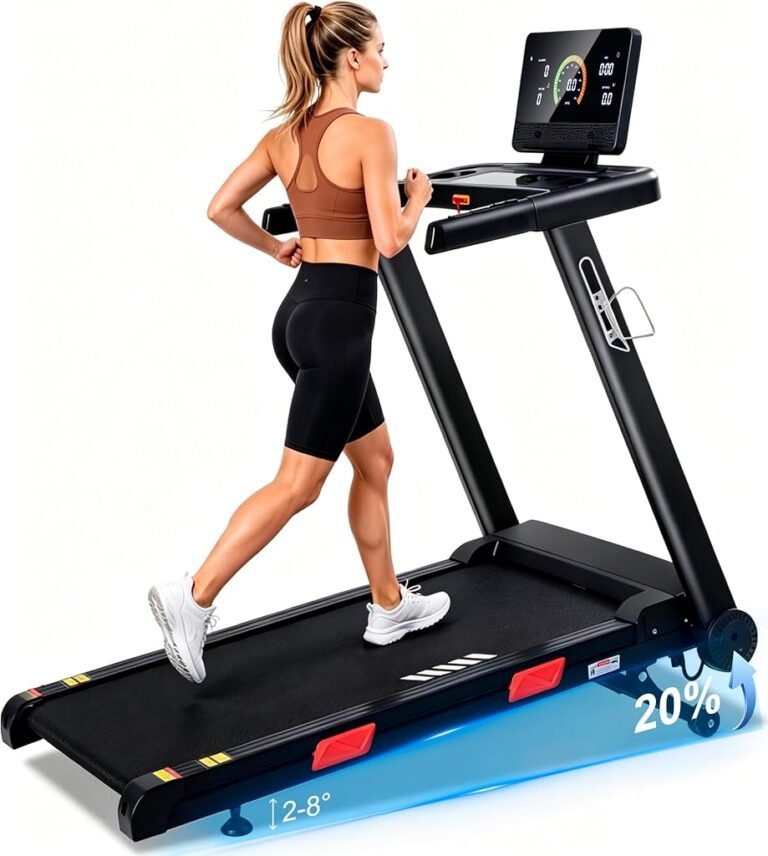
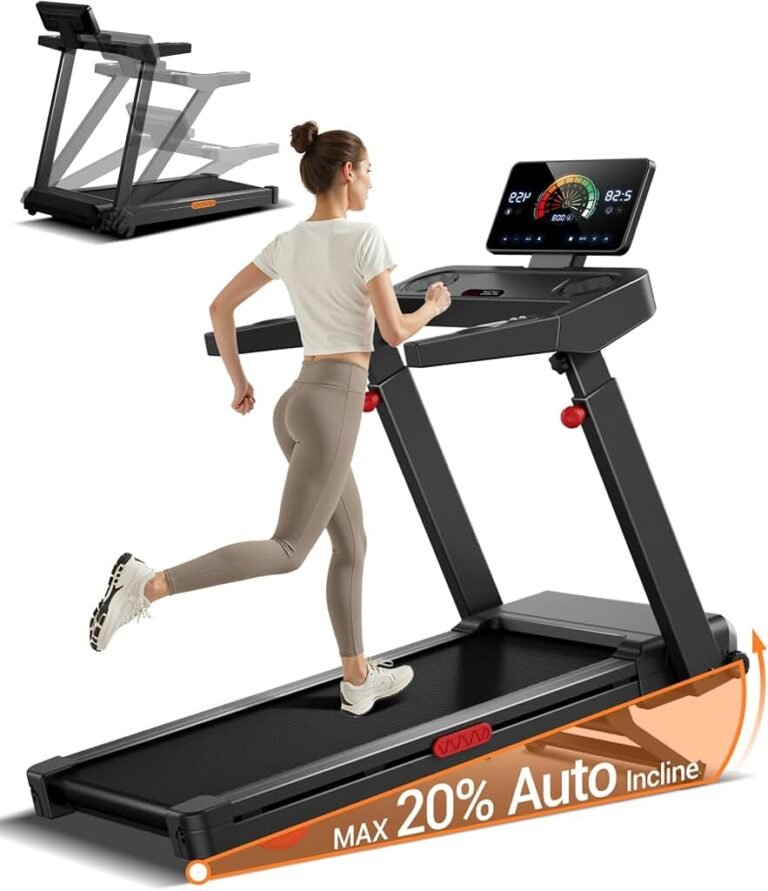
UMAY specifies 20 automatic incline levels covering 2% to 20%.
Automatic adjustment is a meaningful advantage over treadmills that require the user to step off and manually reposition incline supports.
It permits gradient changes during a workout, making progressive climbs and incline intervals easier to structure.
A 20% maximum is also steep.
At that grade, the treadmill is better understood as a climbing platform than an ordinary level-running surface. Most users will reduce speed substantially as incline rises.
This creates useful flexibility for people who want high cardiovascular demand without relying exclusively on faster running.
The incline specification may be particularly attractive to hikers, incline walkers, and users who prefer lower-speed uphill exercise.
The lower boundary also deserves attention. UMAY lists the automatic incline range as beginning at 2%, rather than 0%, on the current U80 specification. Buyers who specifically want a perfectly level 0% setting should verify current production specifications before purchase.
The 55-by-18-Inch Belt Is Long but Relatively Narrow
Running-area dimensions frequently reveal more about a treadmill’s intended audience than the console does.
The U80 provides a 55-by-18-inch belt according to UMAY’s current ACE Series comparison.
The 55-inch length gives substantially more stride room than UMAY’s compact walking-oriented products. It is appropriate for walking and offers credible running space for many users.
The 18-inch width is the greater limitation.
A wider belt provides more lateral margin when a runner drifts slightly during fatigue, looks toward a screen, changes pace, or runs at steeper incline.
Eighteen inches is not inherently inadequate. It simply demands a more centered running path than a 20- or 22-inch surface.
Larger users attracted by the 400-pound capacity should pay particular attention to this dimension. High weight capacity does not automatically mean an unusually spacious belt.
That is one of the U80’s more interesting contradictions: the structure is designed around a broad user-weight range, while the running lane remains comparatively restrained in width.
Shock Absorption Is Substantial on Paper
UMAY describes the U80 as using a seven-layer running belt together with multiple shock-management elements. Its ACE Series comparison characterizes the U80 system as “3x Shock +7-Layer + Double Bee Nest.”
Those descriptions indicate that cushioning is a deliberate design feature.
They do not establish a precise percentage reduction in joint loading during real use.
That distinction matters because treadmill cushioning claims can move quickly from mechanical description into medical-sounding promises. Actual forces experienced by a user vary with body mass, running mechanics, speed, incline, footwear, stride, deck stiffness, and other factors.
The defensible assessment is narrower: the U80 incorporates a multilayer belt and dedicated shock-absorption structures intended to moderate impact.
Whether a particular user finds that surface soft, firm, comfortable, or preferable to another treadmill requires direct comparison.
Heart-Rate Monitoring Is Present, but the Numbers Need Context
The U80 includes optical heart-rate monitoring. UMAY advertises a 98.99% accuracy figure for the system.
That percentage is unusually precise.
Without an independently published validation protocol explaining the reference device, participant population, exercise intensities, statistical method, and testing conditions, it should remain a manufacturer claim rather than being interpreted as clinical-grade accuracy.
For ordinary exercise, built-in heart-rate monitoring can still be useful for observing trends.
A user can watch whether heart rate rises as incline or speed increases and can compare similar sessions over time. Anyone requiring medically reliable heart-rate information should use equipment and guidance appropriate to that purpose.
The distinction protects the feature from being asked to do more than the available evidence supports.
Folding Storage Improves Its Home-Gym Fit
The U80 is a folding treadmill.
UMAY’s ACE Series identifies the model as using a manual folding design, while the U70 uses hydraulic automatic folding.
That distinction is relevant for buyers comparing the two.
Folding reduces the treadmill’s floor footprint when the running deck is raised, which can make a substantial machine more manageable in a shared room.
It does not make the U80 equivalent to an under-bed walking pad.
A heavy-duty frame, 55-inch running surface, incline mechanism, and 400-pound capacity necessarily create more physical equipment than a minimalist walking machine.
People comparing the best treadmills for home use should therefore distinguish between foldable and highly portable. The U80 belongs firmly in the first category.
Its storage design helps reclaim floor area. Buyers should still plan a permanent location from which the treadmill can be folded and moved safely.
The Console Favors Exercise Data Over Entertainment
UMAY describes the U80 as using a digital console with real-time workout information and optical heart-rate monitoring.
This is not a treadmill built around a giant entertainment display.
That can be an advantage or a drawback depending on expectations.
A user who already watches a wall-mounted television or uses a separate tablet may prefer a simpler console. Another buyer may expect an integrated high-resolution screen and streaming environment at this price level.
UMAY also states that the treadmill can connect with Zwift and Kinomap and can record workout information through compatible app functionality.
Connected-app support expands the training options without making the treadmill entirely dependent on a proprietary subscription ecosystem.
That is a meaningful difference from treadmills whose major software functions are tightly bound to one paid platform.
Assembly Is Designed to Be Relatively Limited
UMAY describes the U80 as 90% pre-assembled.
That does not mean setup is trivial.
A treadmill with a reinforced frame and substantial running deck is still large equipment. Delivery route, lifting, final positioning, power access, and assembly space deserve planning.
The practical advantage of extensive preassembly is that fewer structural components need to be built from scratch by the owner.
Buyers should still follow the manual rather than assuming that obvious-looking bolts or supports can be assembled intuitively.
Correct initial setup affects belt tracking, frame stability, handrail security, and the machine’s overall behavior.
Customer Sentiment: 8.28
Our Customer Sentiment score is 8.28.
That is slightly below the overall 8.32 score but still firmly positive.
The reason is straightforward: the U80’s feature combination answers several recurring home-treadmill complaints. It offers substantially more weight capacity than many compact models, provides a long belt, includes steep automatic incline, folds for storage, and reaches speeds suitable for ordinary running.
The limitations are also tangible rather than obscure.
An 18-inch belt will feel narrower to some runners. A 9.5 mph maximum excludes faster interval work. The warranty is relatively short. Some highly specific performance claims, including noise and heart-rate accuracy figures, originate with the manufacturer and should be interpreted accordingly.
An 8.28 sentiment score captures that balance. The product proposition is attractive without requiring every specification to be treated uncritically.
Buyer Confidence: 8.64
Buyer Confidence is 8.64, the highest of our four editorial ratings.
That score reflects the clarity of the U80’s intended role.
UMAY publishes the core specifications buyers need to establish basic fit: maximum user weight, motor rating, incline range, speed, belt dimensions, folding design, heart-rate system, shock-absorption configuration, and warranty. The company’s ACE comparison also places those figures beside other UMAY treadmills, making the model hierarchy easier to understand.
The buyer profile is therefore fairly easy to define.
The U80 makes sense for users prioritizing:
- A stated 400-pound weight capacity.
- Automatic steep incline.
- Walking, jogging, and moderate-to-fast recreational running.
- A longer running surface than compact walking pads.
- Folding storage.
- App connectivity without making a giant touchscreen the center of the treadmill.
- A high-output motor specification within UMAY’s range.
Confidence drops when the buyer requires faster sprinting, an especially wide belt, extensive independent performance validation, or lengthy warranty protection.
Value: 8.15
Our Value score is 8.15.
That rating reflects the amount of functional hardware built into the U80 rather than assuming that a long feature list automatically creates value.
The combination of 400-pound capacity, 20% automatic incline, 4.0 HP claimed motor output, 55-inch running length, folding construction, heart-rate monitoring, and connected-app support gives the U80 a broad capability set.
The machine can plausibly replace several narrower-use products for a household that wants walking, running, and steep climbing in one platform.
Value loses ground because the 18-inch belt and 9.5 mph maximum impose real limits, particularly for faster or larger runners.
Warranty coverage also matters in a value judgment. A low purchase cost means less if expensive components fail outside a short coverage period.
For that reason, 8.15 is a more defensible value assessment than a score suggesting there are no meaningful ownership compromises.
Who Should Consider the UMAY U80?
The U80 has a particularly logical buyer profile.
It suits:
- Larger users who need a treadmill rated up to 400 pounds.
- Walkers who want demanding incline workouts.
- Recreational runners who remain within a 9.5 mph speed ceiling.
- Hikers training indoors for sustained climbs.
- Households sharing one treadmill across different fitness levels.
- Buyers who need folding storage but do not require an ultra-portable walking pad.
- Users who prefer app compatibility without making an integrated entertainment screen mandatory.
The 20% incline gives the machine particular appeal for walkers. A steep walking session can generate substantial exercise intensity without requiring running speeds.
Who Should Look Elsewhere?
Fast runners are the clearest group.
Anyone routinely training above 9.5 mph will encounter the U80’s speed ceiling directly.
Runners who strongly prefer a 20- or 22-inch belt may also find the 18-inch running surface restrictive.
Buyers seeking very long warranty coverage should compare competing policies carefully. UMAY’s current U.S. U80 listing states one-year coverage for both parts and structural frame.
Those seeking a large integrated entertainment display may also prefer another design.
Finally, buyers who need only light walking have little reason to pay for a 4.0 HP specification, 20% motorized incline, and 400-pound capacity unless those features solve another household requirement.
The Most Meaningful Strengths
The U80’s strongest characteristics are unusually easy to identify.
The 400-pound capacity broadens its potential user base.
The 20% automatic incline gives walkers and runners far more climbing range than basic flat or manually inclined treadmills.
The 55-inch belt length makes it substantially more suitable for running than compact walking pads.
The 4.0 HP brushless motor specification places it at the upper end of UMAY’s current ACE treadmill range.
The folding frame makes substantial exercise equipment easier to accommodate in a residential room.
The app compatibility adds connected training options without making a large built-in display the center of the experience.
These features work together rather than functioning as unrelated additions.
The Main Drawbacks
The first drawback is belt width. Eighteen inches is narrower than many conventional running treadmills.
The second is maximum speed. A 9.5 mph ceiling is sufficient for many recreational users but not for fast interval training.
The third is warranty duration. One-year coverage on the current U.S. listing is modest for equipment marketed around heavy-duty use.
The fourth is evidence quality around certain manufacturer claims. Precise figures for heart-rate accuracy and low noise are difficult to interpret without independent test methodology.
None of these issues makes the U80 unsuitable by itself.
They simply establish where the machine’s priorities lie: capacity, climbing, and home versatility ahead of extreme speed, extra-wide running space, and premium long-duration warranty protection.
Final Considerations
The UMAY Fitness Heavy Duty Treadmill earns an overall 8.32/10 because its major specifications address real limitations in the home-treadmill category.
A 400-pound user capacity matters for people excluded by lighter machines. A 20% automatic incline gives walking and running sessions substantial gradient range. A 55-inch-long belt creates legitimate running room. The 4.0 HP brushless motor specification provides considerable stated output, while folding construction prevents the machine from demanding its entire operating footprint when stored.
Our Customer Sentiment rating of 8.28 reflects a favorable product proposition with recognizable compromises. Buyer Confidence at 8.64 is stronger because the intended user is relatively easy to identify. Value at 8.15 recognizes the substantial hardware package while accounting for the narrower belt, 9.5 mph speed ceiling, and limited warranty.
The U80 should not be reduced to its “heavy duty” label.
Its more meaningful identity is a high-capacity incline treadmill that can also run.
That distinction explains both its strengths and its limits. It gives larger users more room within the manufacturer’s stated capacity. It offers incline walkers an unusually steep automatic range. It provides enough belt length and speed for a broad population of recreational runners. Yet it does not chase the widest running surface or fastest belt speed available in the home market.
For a buyer whose priorities are capacity, incline, folding storage, and mixed walking-and-running use, that trade-off is coherent.
For a fast runner demanding 12 mph intervals or a particularly wide running lane, it is less convincing.
That clarity is ultimately what supports the 8.32/10 assessment: the UMAY U80 does not need to satisfy every treadmill buyer to make a credible case for the ones it was built to accommodate.