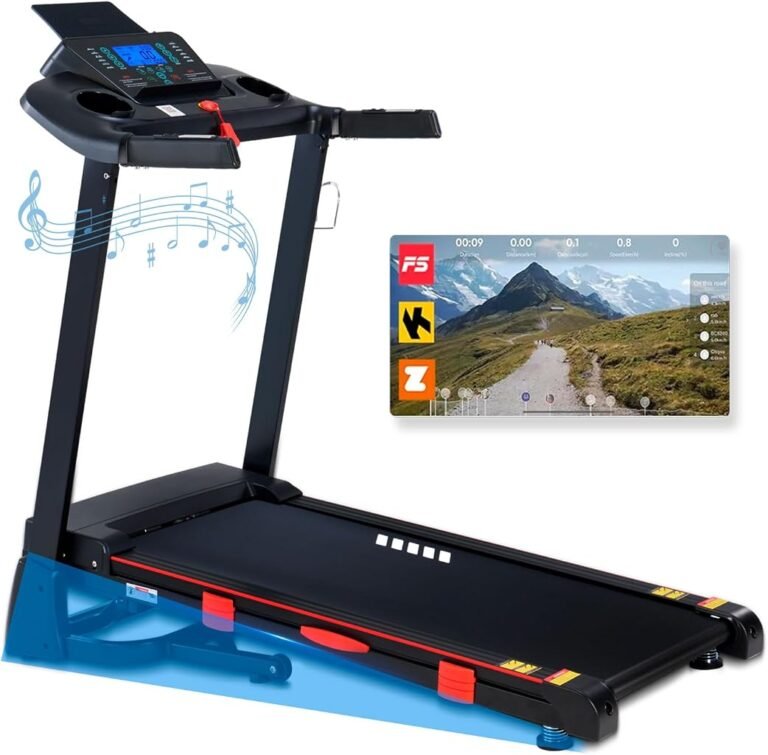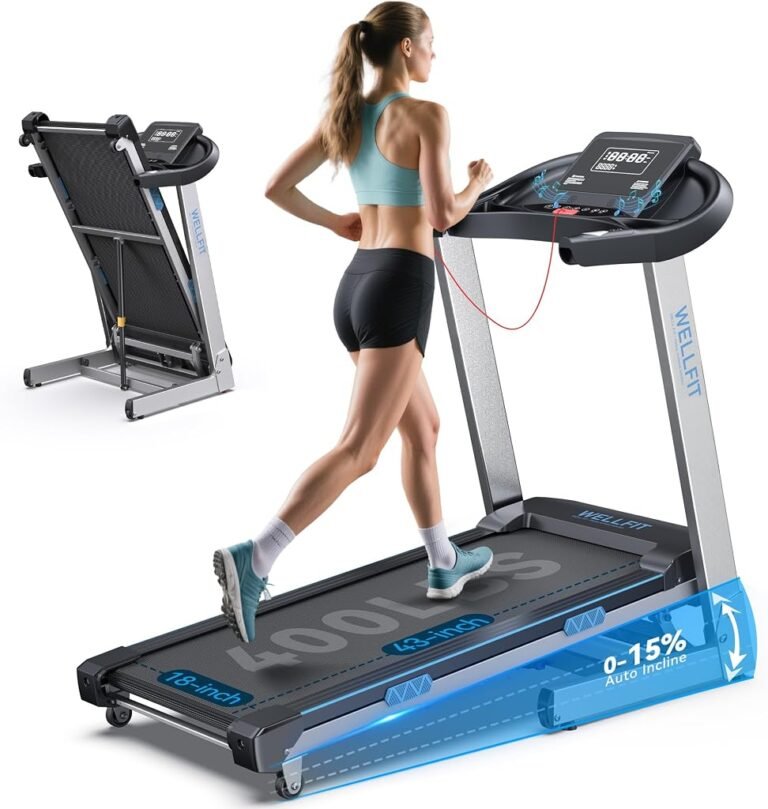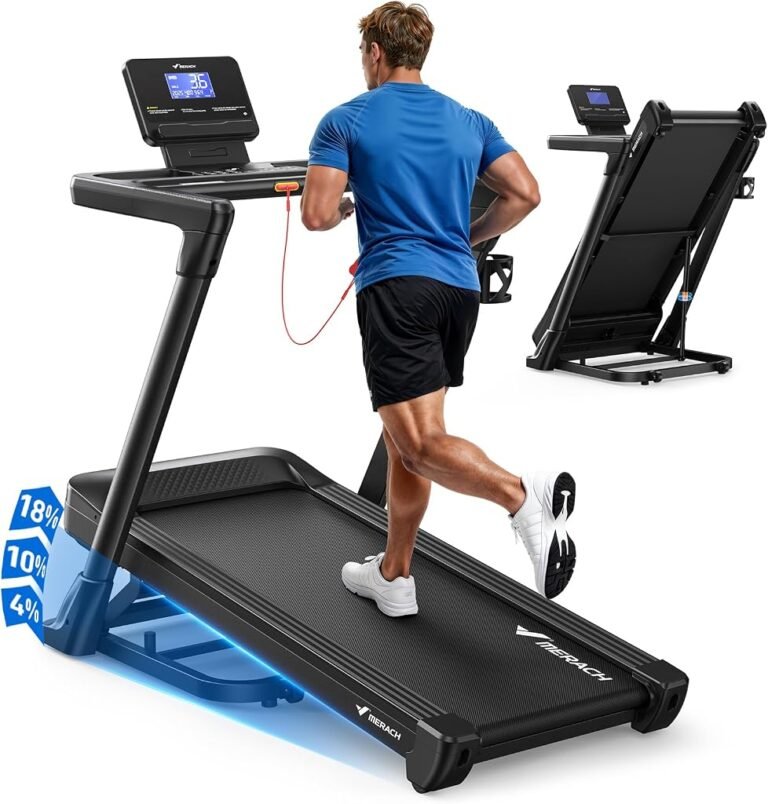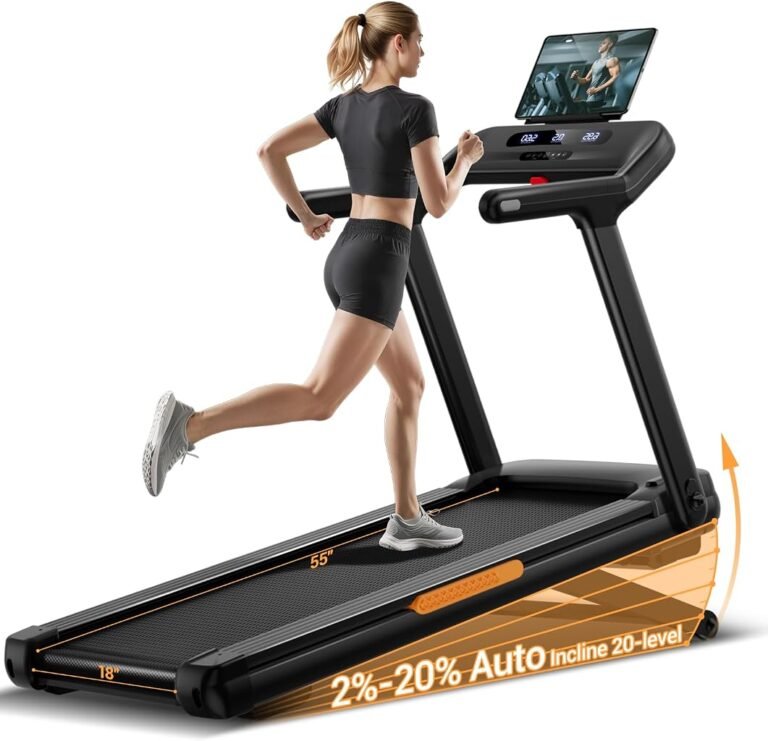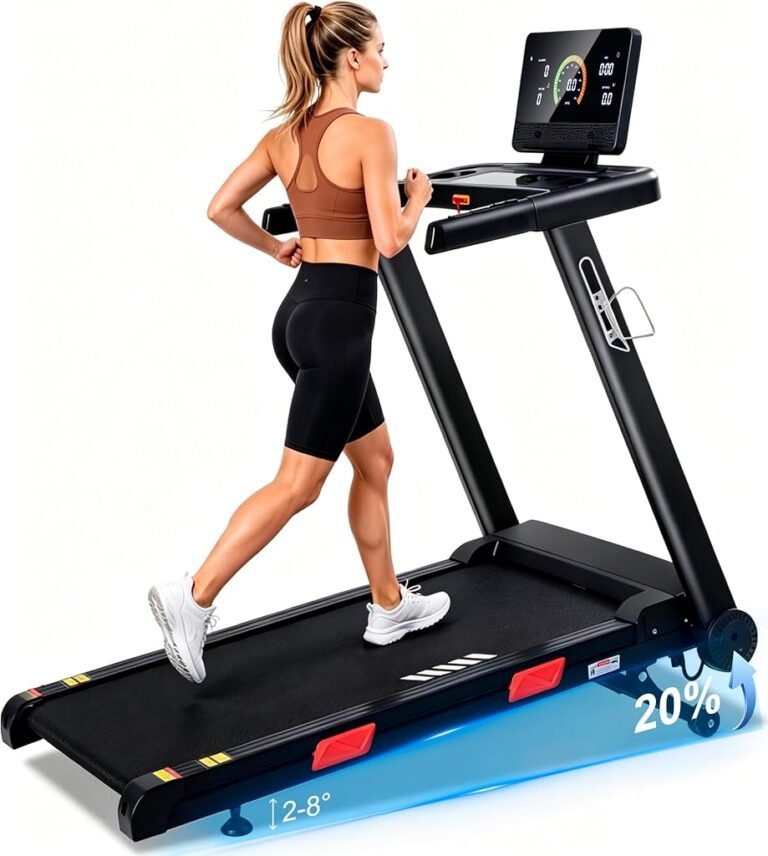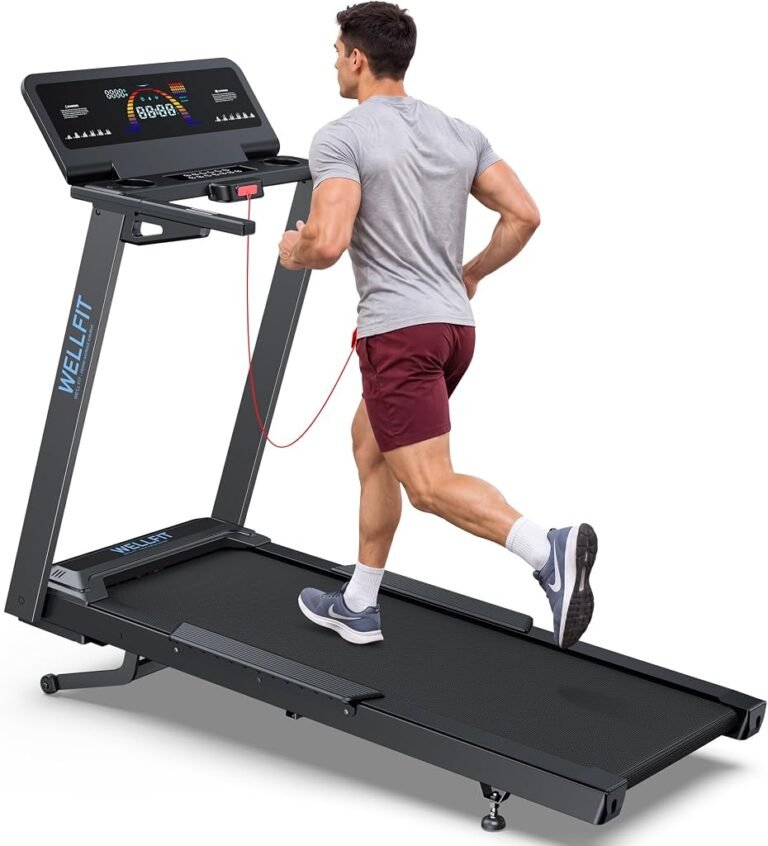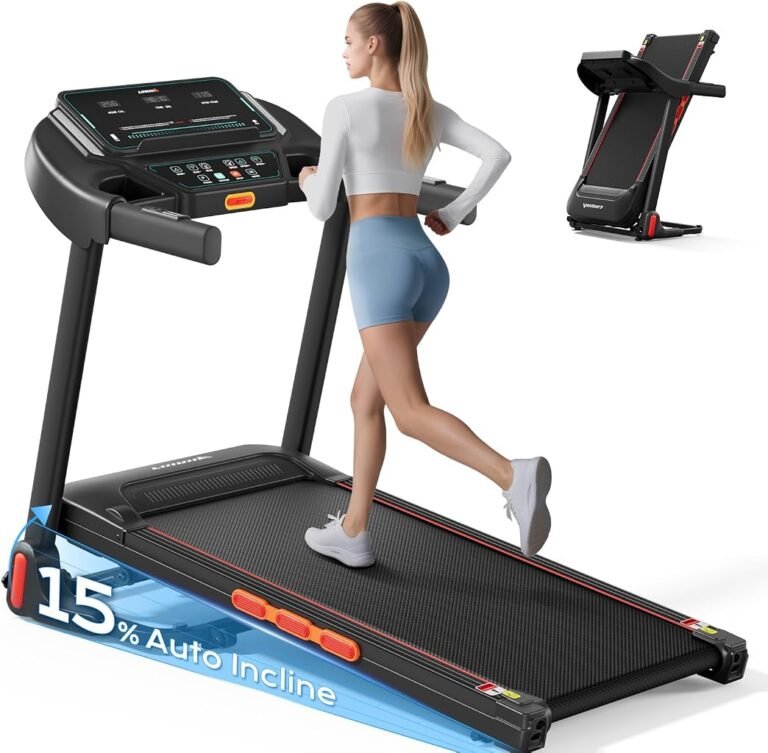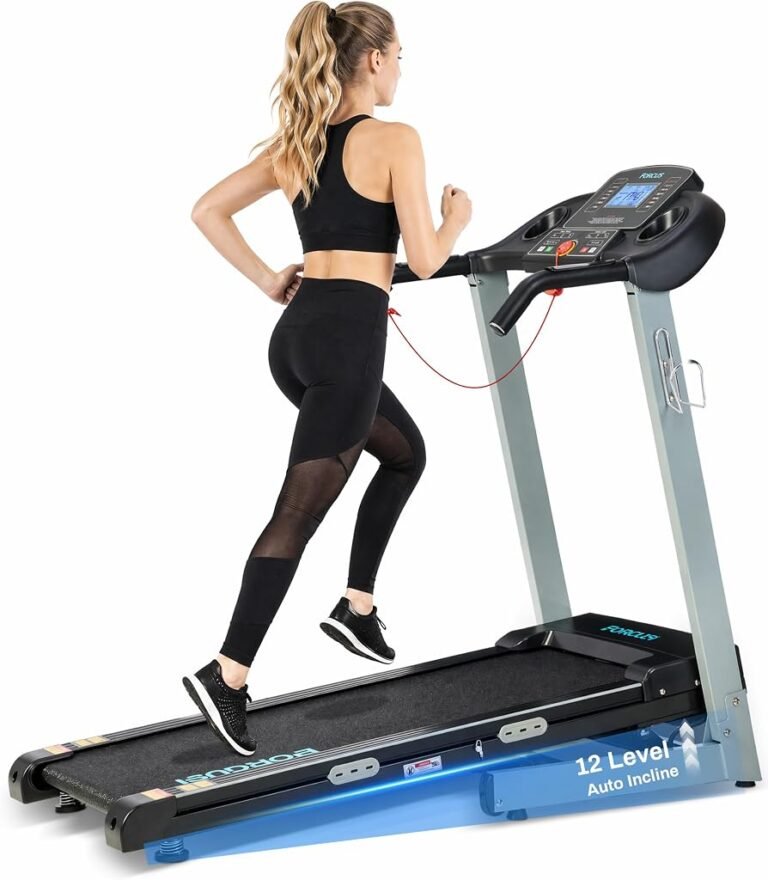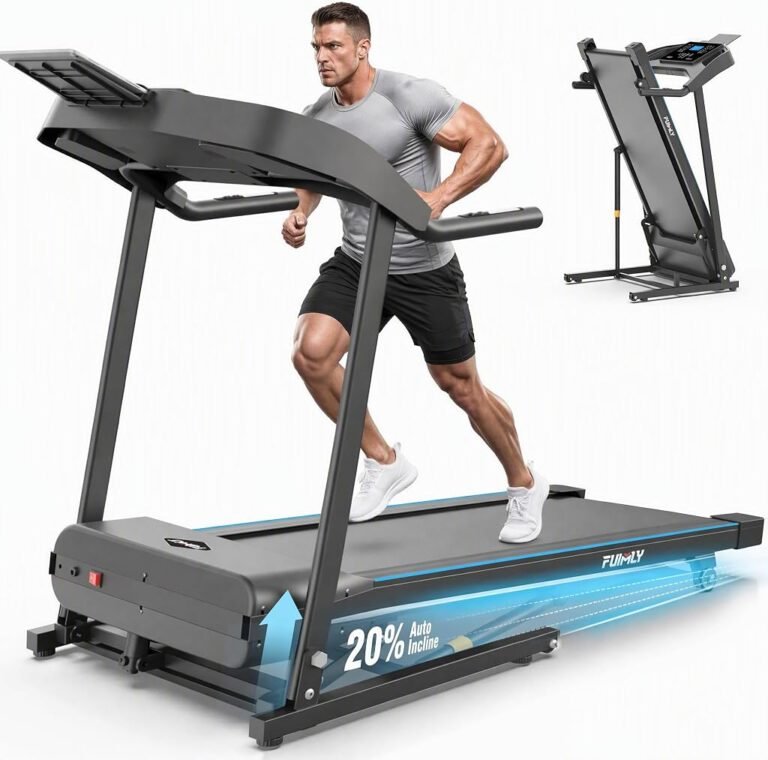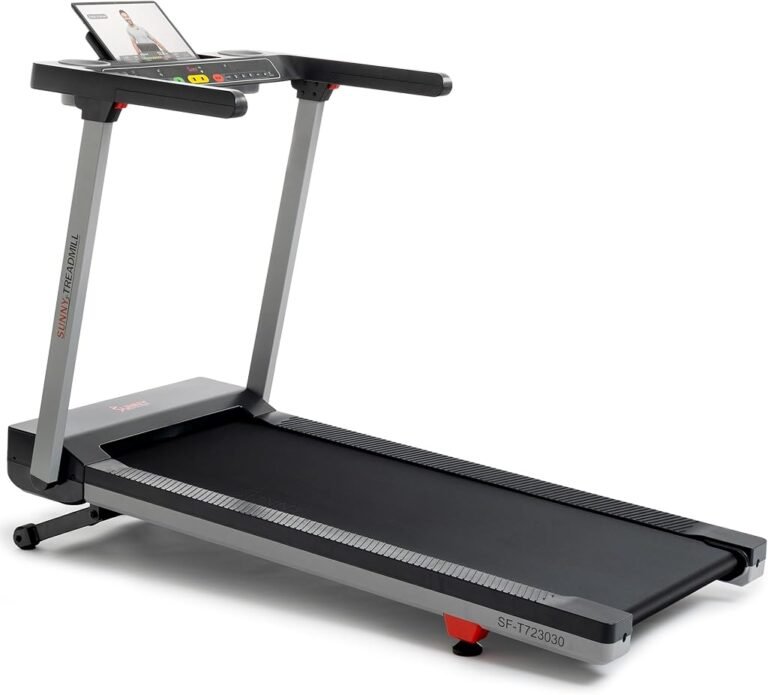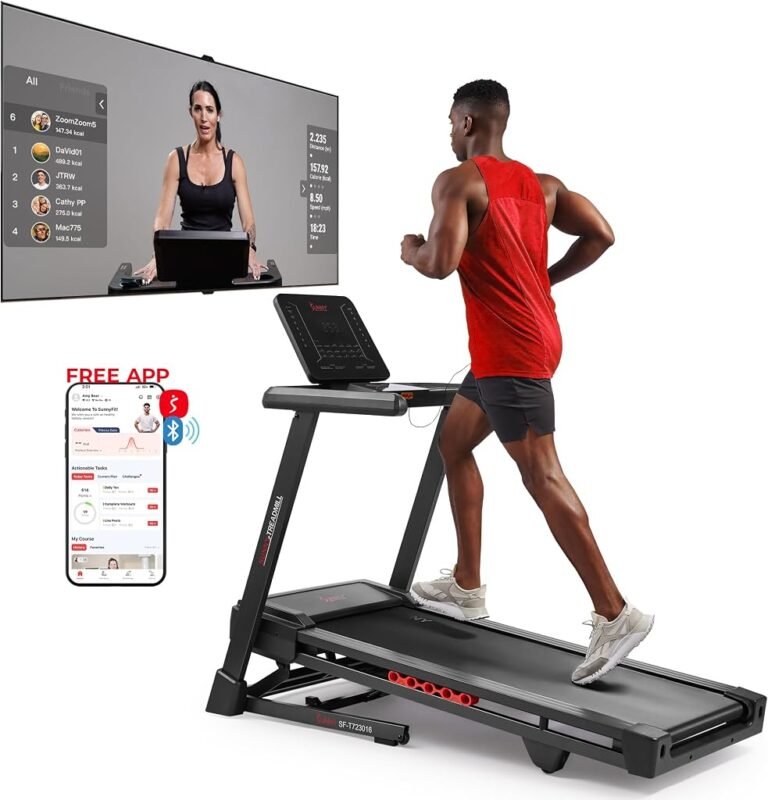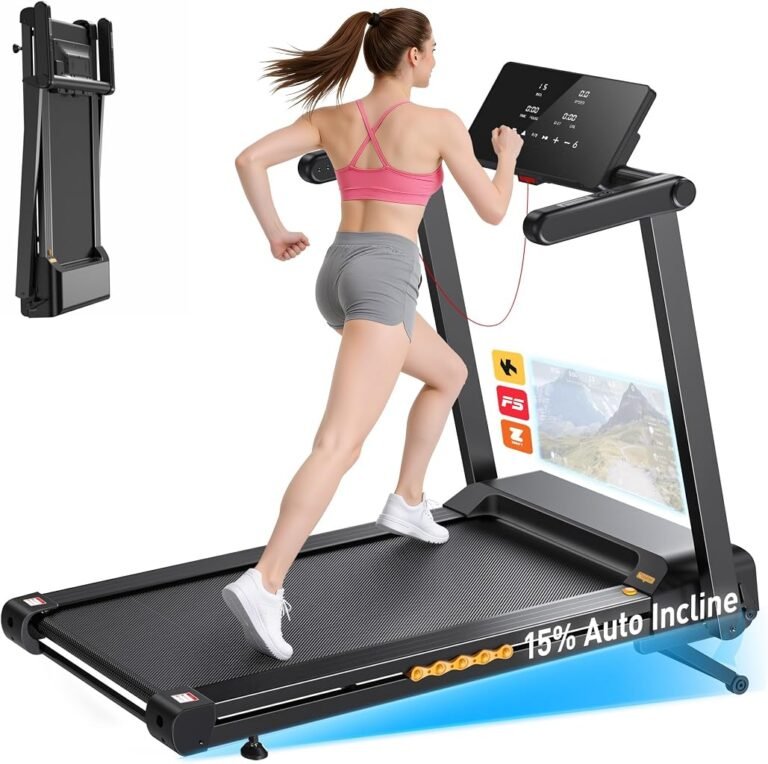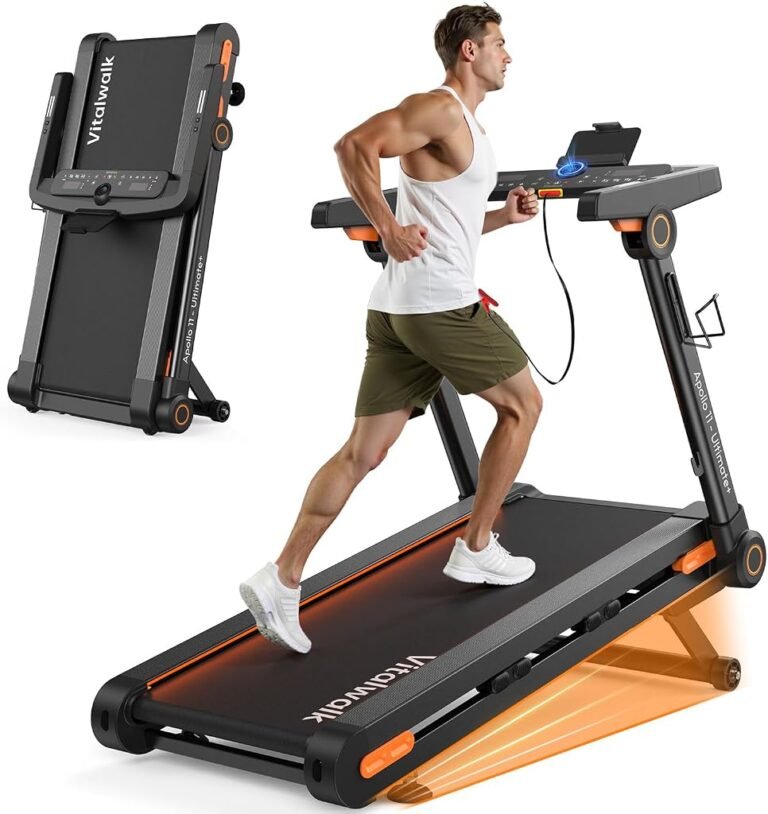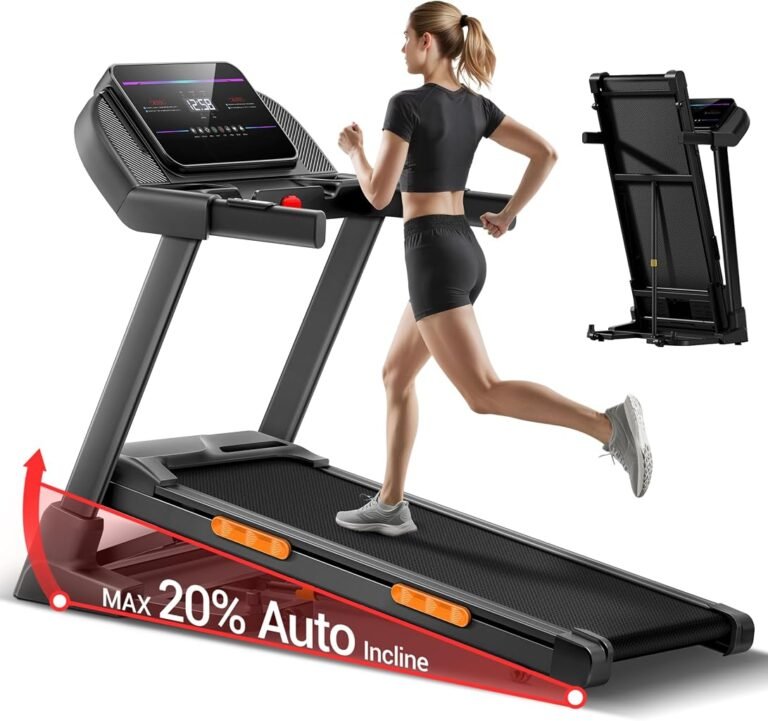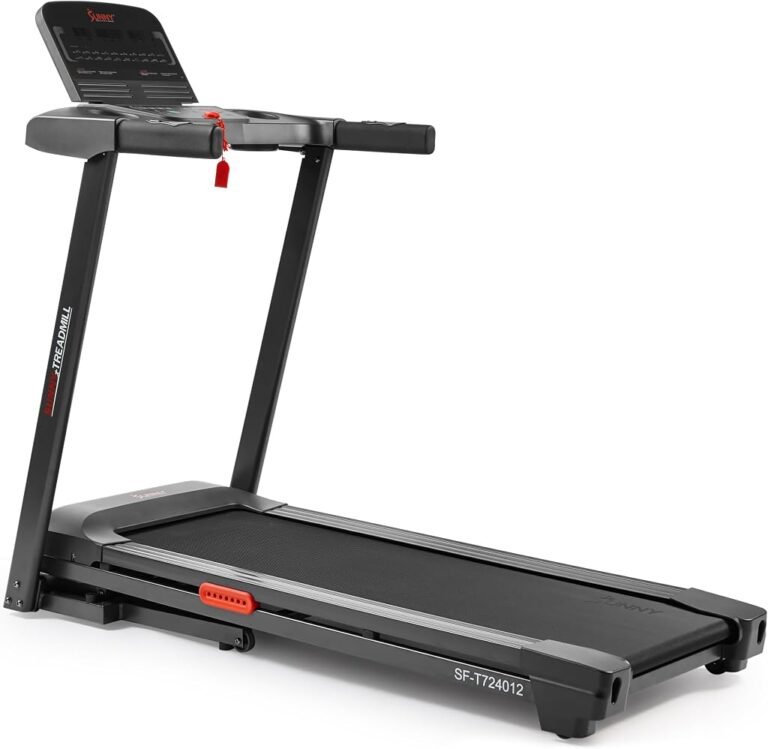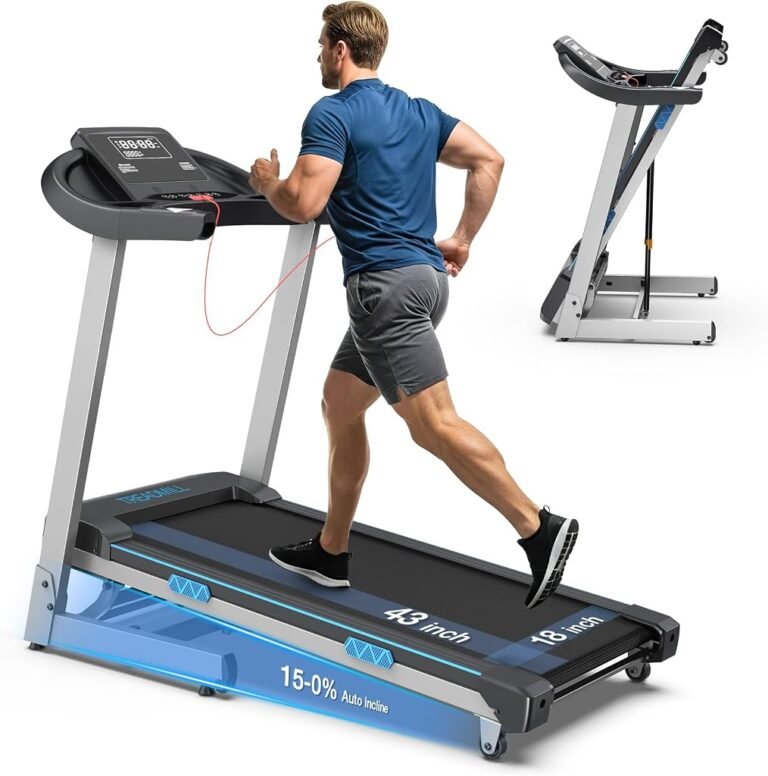
A treadmill can spend considerably more time standing still than moving. That mundane fact changes how home exercise equipment should be judged.
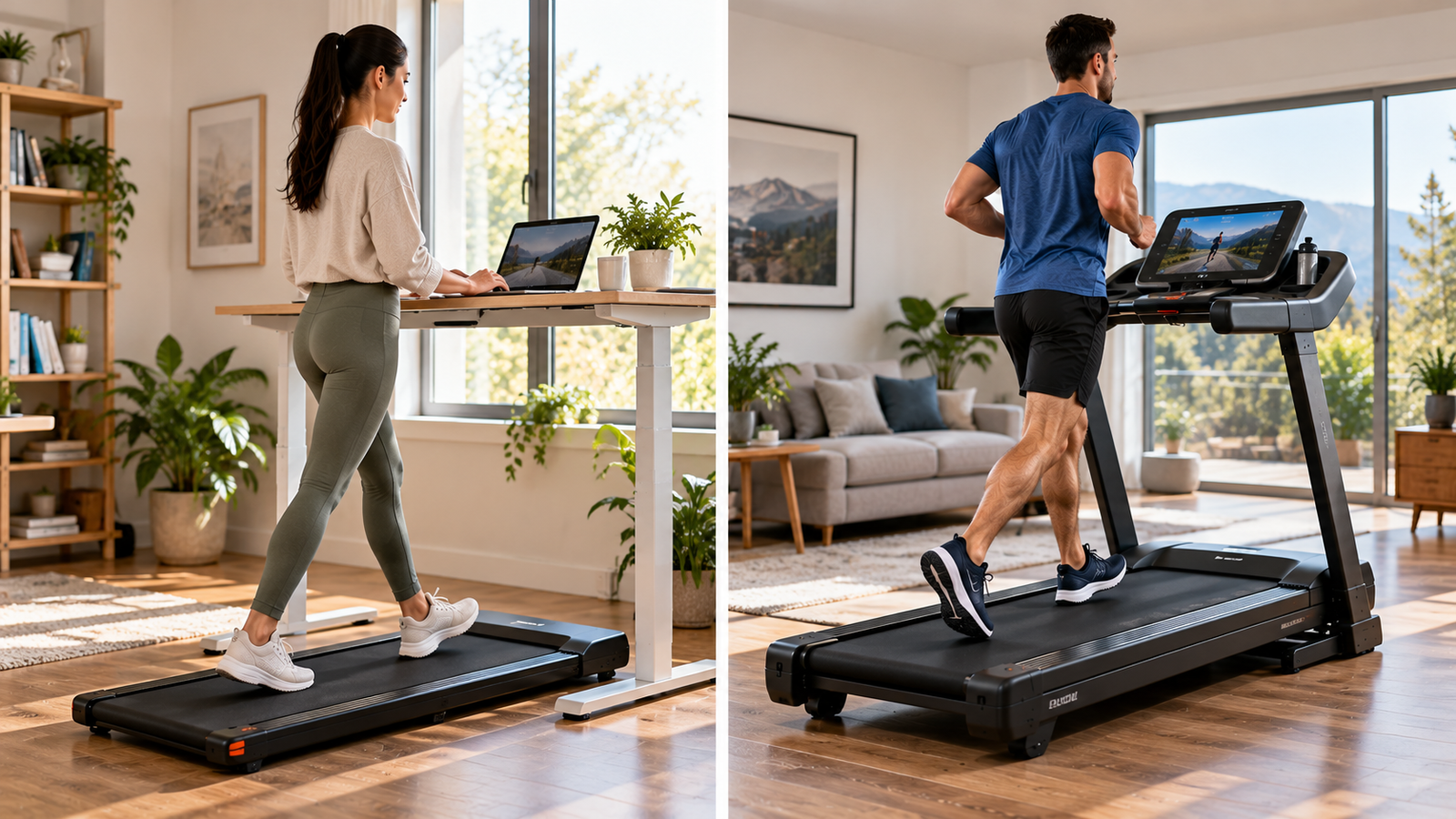
Running performance matters. So do incline control, comfort, capacity, and the usability of the controls. Yet a treadmill purchased for a residence also has to survive the less glamorous parts of ownership: delivery, assembly, placement, storage, cleaning, lubrication, and coexistence with everything else in the room.
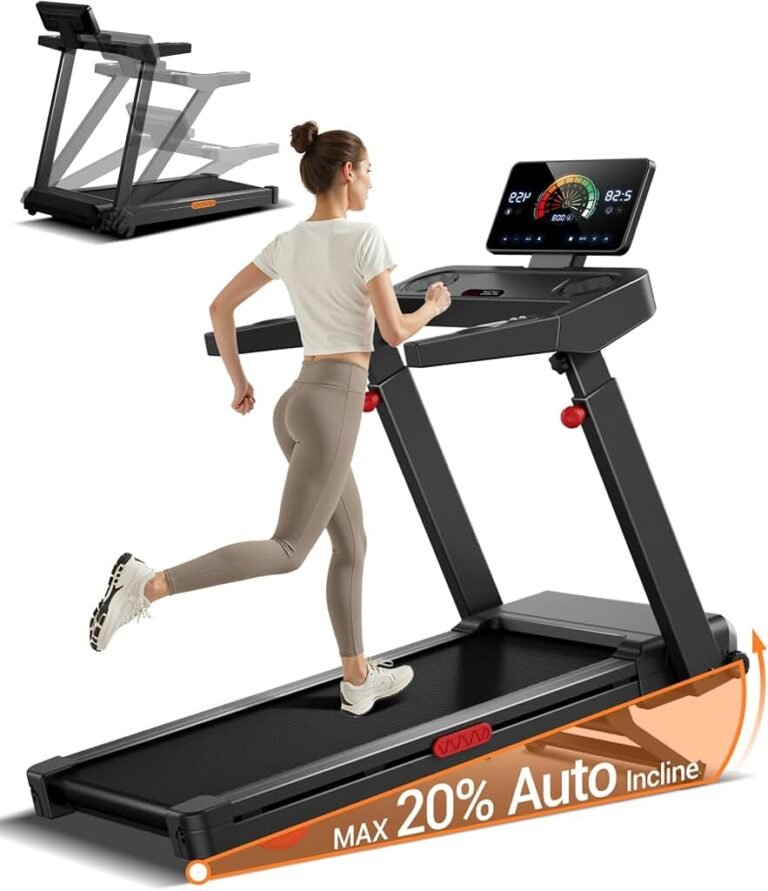
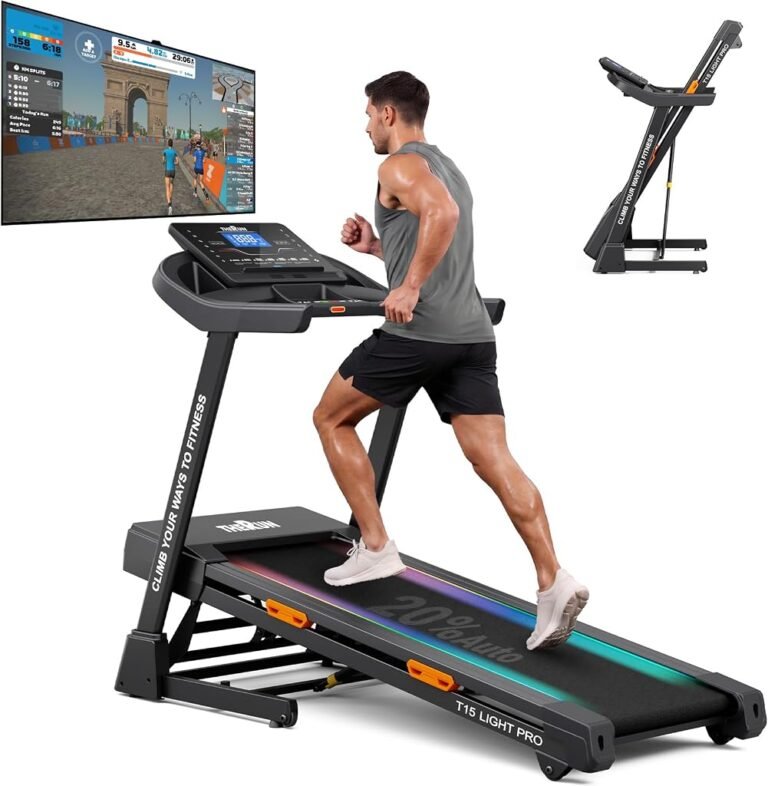
That is what makes the Sunny Health & Fitness Foldable Auto Incline Treadmill vs Fully Assembled Auto Incline Treadmill comparison unusually practical. This is not a contest separated by editorial quality scores. Both machines receive precisely the same assessment from us: an 8.55/10 Our Score, 8.28 Customer Sentiment, 9.8 Buyer Confidence, and 8.15 Value.
Price creates the meaningful separation.
The foldable model costs $799.99 in our comparison. The fully assembled treadmill costs $656.49. That is a $143.50 difference, or nearly 18% of the foldable machine’s price.
The decision therefore turns on a question many treadmill comparisons treat as secondary: how much should a household pay for the configuration that better fits the physical realities of the home?
Sunny Foldable vs Fully Assembled at a Glance
The editorial numbers could hardly be closer because they are identical.
The Sunny Health & Fitness Foldable Auto Incline Treadmill receives:
- Our Score: 8.55/10
- Customer Sentiment: 8.28
- Buyer Confidence: 9.8
- Value: 8.15
- Price: $799.99
The Sunny Health & Fitness Fully Assembled Auto Incline Treadmill receives:
- Our Score: 8.55/10
- Customer Sentiment: 8.28
- Buyer Confidence: 9.8
- Value: 8.15
- Price: $656.49
There is no defensible reason to manufacture a quality-ranking victory where the scores show none.
The fully assembled option is $143.50 cheaper. The foldable option places its storage configuration directly at the center of its identity.
Those distinctions make buyer fit more useful than declaring a universal winner.
A household with a dedicated exercise room can reasonably view folding capability as secondary. Someone exercising in a bedroom, office, den, or shared living area may reach the opposite judgment. Likewise, a buyer who wants to minimize setup work may assign greater value to a machine arriving assembled than another buyer who is comfortable with hardware, support tubes, wiring, and console installation.
The exercise equipment may be similar in purpose. The ownership experience can be quite different.
Folding Solves a Household Problem, Not a Fitness Problem
A folding treadmill does not inherently produce a better workout.
It does something else: it changes what happens to the machine when the workout ends.
That distinction matters because residential floor space has economic and practical value. A treadmill positioned permanently in a dedicated home gym creates little conflict. The same machine placed in a guest room or home office can become an obstacle several hours after the novelty of ownership disappears.
A folding mechanism can reduce that conflict.
Yet “foldable” should never be read as “small.” Many folding treadmills remain substantial pieces of equipment even with the deck raised. The buyer still needs to consider the machine’s stored footprint, height, weight, transport wheels, clearance requirements, and the route through which it must move.
The useful question is not whether a treadmill folds. It is whether folding materially improves the room in which that particular treadmill will live.
If the deck will never be raised after the first week, the buyer has paid for a capability that provides little practical return.
If the room must switch from workout space to office space every morning, folding can become one of the machine’s most frequently used functions.
Fully Assembled Equipment Addresses a Different Source of Friction
Assembly is easy to dismiss because it happens only once. That single event can still determine whether ownership begins smoothly.
Sunny Health & Fitness maintains a substantial library of treadmill assembly instructions, illustrating how model-specific setup can be. For example, the company’s SF-T7515 Auto Incline Treadmill assembly procedure includes securing left and right support tubes to the base, attaching side covers, securing the console, avoiding pinched wires, removing packing material, and lubricating the treadmill before first use.
That does not mean every Sunny treadmill requires those exact operations. It demonstrates why “some assembly required” should not be treated as meaningless fine print.
A fully assembled treadmill removes much of that initial mechanical work.
Sunny’s current product range confirms that the company actively uses this design strategy. Its OneClick-Fold 20-inch Smart Auto Incline Treadmill, for example, is explicitly described as fully assembled while also being foldable. That current model demonstrates an important point: folding and factory assembly are not inherently opposing characteristics. They describe different aspects of ownership.
One describes storage.
The other describes setup.
A buyer should resist treating them as interchangeable advantages.
The $143.50 Price Difference Needs a Job
Price differences become meaningful only when the extra expenditure accomplishes something the buyer values.
The foldable treadmill costs $799.99. The fully assembled option costs $656.49.
The difference is exactly $143.50.
Measured against the fully assembled machine, the foldable treadmill costs roughly 21.9% more. Measured against the foldable treadmill’s price, choosing the fully assembled option saves approximately 17.9%.
Those percentages are large enough to deserve scrutiny.
Our Value score does not separate the machines. Both receive 8.15. Our Score, Customer Sentiment, and Buyer Confidence are also identical.
That means the extra $143.50 cannot be justified through a higher editorial rating.
It has to be justified through household fit.
For someone living in a compact apartment, reclaiming floor space may easily justify the premium. For a household with an unused basement room where the treadmill will remain open permanently, paying more primarily for folding functionality is harder to defend.
Conversely, a fully assembled design can have unusual value for someone who does not want to perform setup work or arrange paid assembly assistance.
The price difference is therefore less about fitness capability than about friction.
Auto Incline Gives Both Concepts a More Serious Training Role
Automatic incline deserves more attention than many cosmetic treadmill features because it changes the physical demand of walking without requiring a proportional increase in speed.
Research provides useful context.
A study of 24 healthy older adults examined treadmill walking at 0%, 10%, and 16% grades. Compared with level walking, a 10% grade increased net cardiopulmonary metabolic energy cost by 22.9%, while a 16% grade increased it by 44.2%. Muscle activity also changed as the slope increased.
Those figures should not be converted into predictions for every treadmill user. The study involved a specific population under controlled conditions. They do show why incline is more than a specification-sheet ornament.
Automatic incline also changes usability.
With manual incline, changing grade generally requires interrupting the session and physically altering the deck position. Automatic incline allows the user to change grade from the controls while exercising.
That makes variable hill sessions easier to execute and gives walkers another way to alter workload without simply increasing belt speed.
For many home users, especially those primarily interested in walking, that can be more useful than a very high maximum speed.
Incline Should Be Used as a Control, Not a Contest
Manufacturers frequently present incline as a number to maximize. Exercise physiology suggests a more measured approach.
Another study comparing younger and older adults during level and uphill walking found that older adults in the study had a 13–17% greater metabolic cost across the tested slopes, along with 25% more leg-muscle co-activation. The researchers tested grades from level to 7.5%.
That research does not establish a universal prescription. It illustrates why a given incline can represent different workloads for different people.
A treadmill buyer should therefore ask how incline will actually be used.
A walker seeking moderate exercise may value small, repeatable grade adjustments. A runner training for hills may want broader variation. Someone beginning an exercise program may spend substantial time at low grades before steeper settings become useful.
The presence of auto incline on both Sunny concepts is meaningful. The largest available number matters less than whether adjustment is convenient, predictable, and suitable for the user’s routine.
The Best Treadmills for Home Have to Survive Ordinary Life
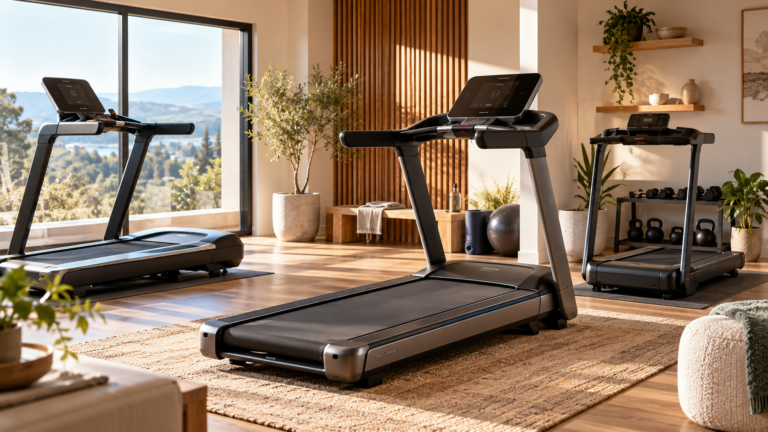
Searches for the best treadmills for home often concentrate on exercise specifications while treating the home itself as an empty rectangle.
Real rooms are not empty rectangles.
They contain desks, beds, sofas, shelves, children, pets, electrical outlets, doors, rugs, and walking paths. They may sit above neighbors. They may need to function as offices at 9 a.m. and exercise rooms at 6 p.m.
This is where the foldable model earns its strongest argument.
Storage flexibility has little influence on calorie expenditure, but it can have enormous influence on whether the treadmill is tolerated in a shared room.
The fully assembled machine approaches convenience from the opposite end of ownership. It reduces setup friction rather than storage friction.
The choice should follow which problem exists in the buyer’s home.
A permanent exercise room favors the less expensive fully assembled option.
A room that must repeatedly change functions creates a stronger argument for folding.
A buyer who finds equipment assembly difficult may prioritize factory setup regardless of floor space.
Assembly Is Only the Beginning of Ownership
A fully assembled treadmill should not be mistaken for a maintenance-free treadmill.
The machine still contains a moving belt, deck, rollers, motor, electronics, and mechanical components. Folding does not remove those responsibilities either.
Sunny’s treadmill maintenance guidance says applicable treadmills should be unplugged before cleaning, lubricating, or repair. Its published procedure calls for silicone-based treadmill lubricant and states that lubricating the belt every six months or 150 miles can reduce wear on the belt, deck, and motor. Owners should follow the instructions for their exact model because maintenance requirements can vary.
This distinction matters when comparing convenience.
“Fully assembled” describes the state in which a treadmill enters the home. It says nothing about whether the owner will need to inspect belt alignment six months later.
“Foldable” describes a storage mechanism. It says nothing about whether the deck needs lubrication.
Neither feature eliminates mechanical ownership.
Belt Care Should Influence the Purchase
Treadmill belt maintenance is rarely exciting enough to influence advertising, yet it can influence years of ownership.
Sunny’s broader treadmill support library includes resources for belt alignment, belt tightening, lubrication, assembly, and troubleshooting across numerous treadmill models.
That kind of documentation deserves attention before purchase.
A treadmill is a durable appliance with consumable and adjustable components. The ability to find a manual, identify lubricant requirements, understand belt alignment, and contact the manufacturer can matter more over several years than a minor difference in display design.
For a folding treadmill, owners should also pay attention to the storage mechanism itself. The deck should be raised and lowered according to the manufacturer’s procedure rather than forced or modified.
For a fully assembled machine, the same mechanical discipline applies once setup is complete.
Convenience at delivery does not abolish maintenance after delivery.
Treadmill Walking Is Not Identical to Walking Outdoors
Home treadmill ownership is often framed as a direct substitute for outdoor walking. The movements are related, but research has identified physiological differences.
A study of healthy active older and younger adults found no difference in net metabolic cost of overground walking between the age groups at their preferred speed, but the older participants showed higher net metabolic cost during treadmill walking than overground walking in the morning testing session.
Earlier research involving adults aged 65 to 83 similarly found that treadmill walking required more metabolic energy than overground walking across the experimental speeds studied.
The practical message is not that treadmill walking is undesirable. It is that indoor belt walking should not automatically be treated as physiologically identical to walking outside.
For a new treadmill owner, gradual familiarization makes sense. Speed and incline can be increased as comfort develops rather than selected according to what the machine can theoretically deliver.
Who Is Better Suited to the Foldable Auto Incline Treadmill?
The Sunny Health & Fitness Foldable Auto Incline Treadmill is the stronger fit when storage flexibility has real household value.
It suits buyers who:
- Exercise in a shared or multipurpose room.
- Expect to reclaim floor space after workouts.
- Place a monetary value on easier storage.
- Are comfortable paying $143.50 more for the configuration.
- Want automatic incline within a storage-conscious design.
- Expect the folding mechanism to be used regularly rather than occasionally.
Its 8.55/10 Our Score and 9.8 Buyer Confidence make it a strong editorial performer.
The important qualifier is economic rather than qualitative. Because the fully assembled alternative receives identical scores, the foldable model’s higher price needs to earn its keep through actual use of the storage function.
A folding deck that remains permanently open has failed to justify much of its premium.
Who Is Better Suited to the Fully Assembled Auto Incline Treadmill?
The Sunny Health & Fitness Fully Assembled Auto Incline Treadmill makes the stronger financial argument.
At $656.49, it saves $143.50 while receiving exactly the same 8.55/10 Our Score, 8.28 Customer Sentiment, 9.8 Buyer Confidence, and 8.15 Value.
It suits buyers who:
- Have a dedicated location for the treadmill.
- Do not expect storage flexibility to be a daily priority.
- Want to minimize initial assembly work.
- Prefer spending $143.50 less when the editorial scores are tied.
- Want automatic incline without paying extra solely for a different ownership configuration.
- Value a simpler transition from delivery to use.
For a dedicated home gym, the logic is particularly strong. If the treadmill will remain in operating position throughout its life, folding capability loses much of its practical significance.
In that environment, the lower-priced fully assembled machine becomes the more efficient purchase.
Why Identical Scores Do Not Mean Identical Buyers
A scoring system can summarize quality and value. It cannot measure the dimensions of someone’s spare bedroom.
That is why both Sunny treadmills can receive identical scores without being equally appropriate for every buyer.
The foldable model addresses space management.
The fully assembled model addresses setup burden and price.
Both incorporate automatic incline as a stated characteristic.
This is a useful reminder that treadmill comparisons should not always produce a single hierarchy. Two machines can reach the same editorial assessment by solving different ownership problems.
A buyer with abundant floor space gains little from paying extra to reclaim it.
A buyer with scarce floor space may regard storage as indispensable.
The scores remain tied. The households do not.
A Better Pre-Purchase Checklist
Before choosing between these Sunny treadmills, the buyer should answer several questions with a tape measure and a realistic assessment of routine:
- Where will the treadmill stand while being used?
- Does the room need to perform another function afterward?
- How often would the treadmill realistically be folded?
- Is there sufficient clearance for raising and lowering the deck?
- Is assembly itself a meaningful obstacle?
- Can the delivery route accommodate the packaged machine?
- Is there an appropriate electrical outlet near the intended position?
- Will the owner follow lubrication and belt-maintenance instructions?
- Is automatic incline likely to be used regularly?
- Does saving $143.50 matter more than the storage advantage?
That exercise is more useful than counting features.
The machine will spend years inside a physical room. The purchase should begin with that room.
Final Considerations
The Sunny Health & Fitness Foldable Auto Incline Treadmill vs Fully Assembled Auto Incline Treadmill comparison does not produce an editorial quality winner.
Both receive an 8.55/10 Our Score.
Both receive 8.28 Customer Sentiment.
Both receive 9.8 Buyer Confidence.
Both receive 8.15 Value.
The meaningful numerical difference is $143.50.
At $799.99, the foldable treadmill makes sense when reclaiming floor space is worth paying for. Its case strengthens in apartments, bedrooms, offices, guest rooms, and other areas where exercise equipment cannot remain permanently deployed without interfering with daily life.
At $656.49, the fully assembled treadmill is the stronger economic choice when the machine has a permanent location and reduced setup burden carries more value than storage flexibility. The identical editorial scores make that lower price difficult to ignore.
Automatic incline gives both concepts more training versatility, particularly for walkers who want to increase workload without relying exclusively on speed. Research showing substantial increases in metabolic demand during inclined treadmill walking helps explain why the feature deserves attention. It does not mean steeper is automatically better; grade should match the user’s fitness and purpose.
Maintenance remains part of ownership whichever design is selected. Assembly convenience ends after setup. Folding convenience ends when the deck is lowered. Belt care, lubrication, cleaning, safe placement, and appropriate use remain.
The more revealing comparison is therefore not foldable versus fully assembled in isolation. It is recurring convenience versus one-time convenience.
Folding can improve the room after every workout.
Factory assembly can improve the first day.
For a buyer with limited floor space, recurring convenience may justify the $143.50 premium. For someone with a dedicated workout area, paying that premium becomes harder to defend when every editorial score is tied.
Among the best treadmills for home, the more suitable machine is often determined by what happens before and after exercise as much as by what happens while the belt is moving. A treadmill that fits the household is easier to keep accessible. A treadmill that remains accessible has a better chance of becoming part of ordinary life rather than an expensive object waiting in the corner.