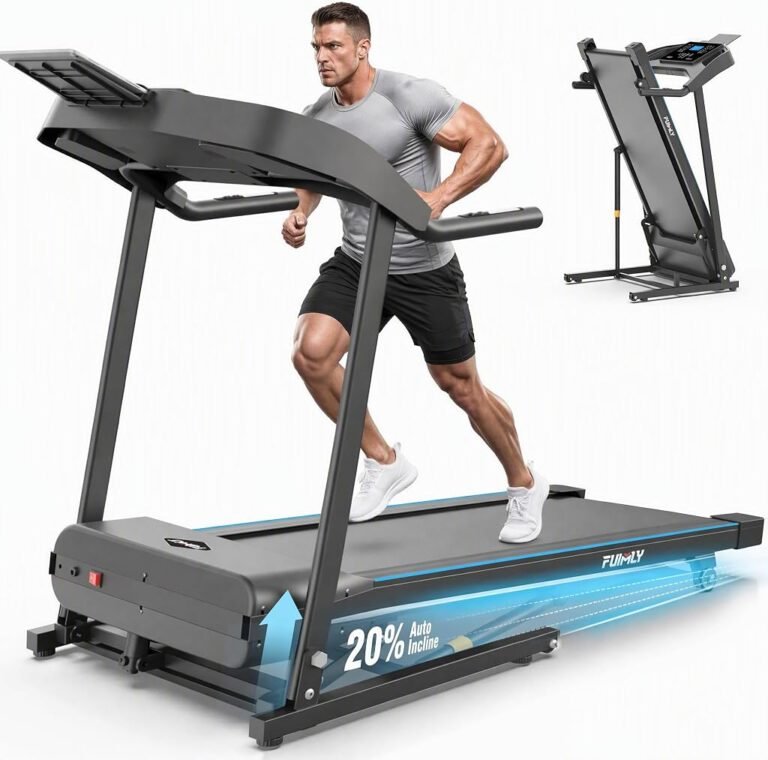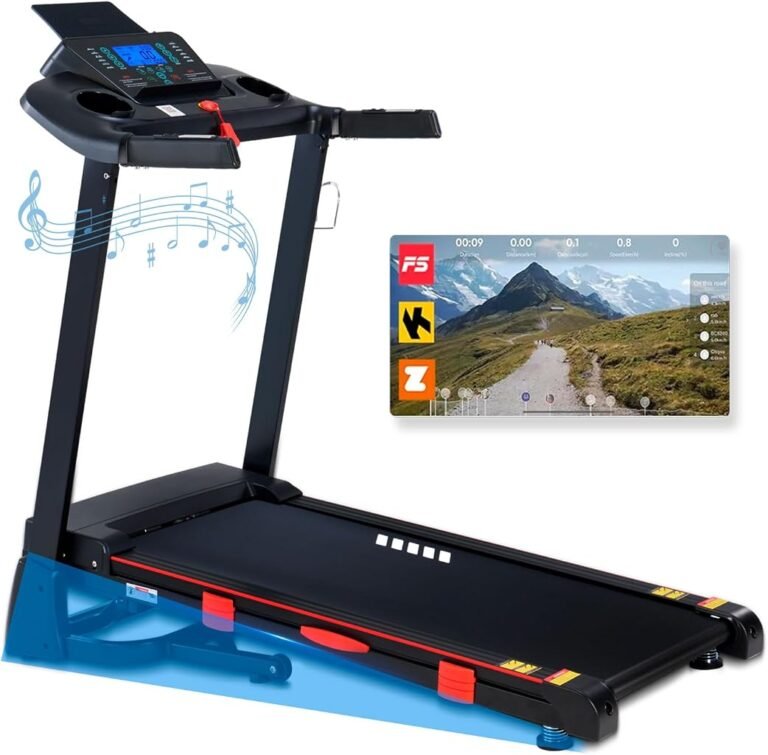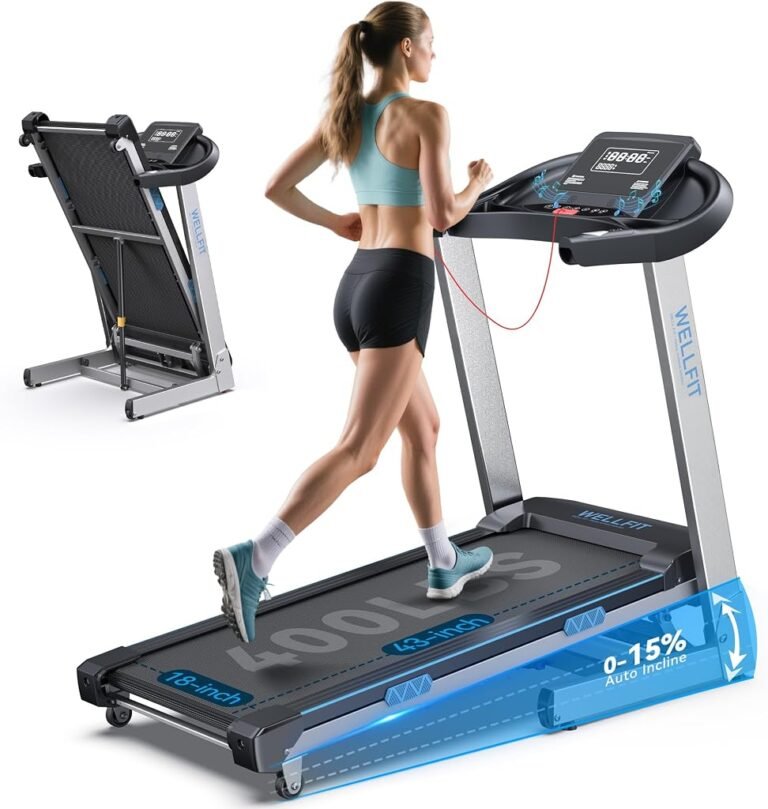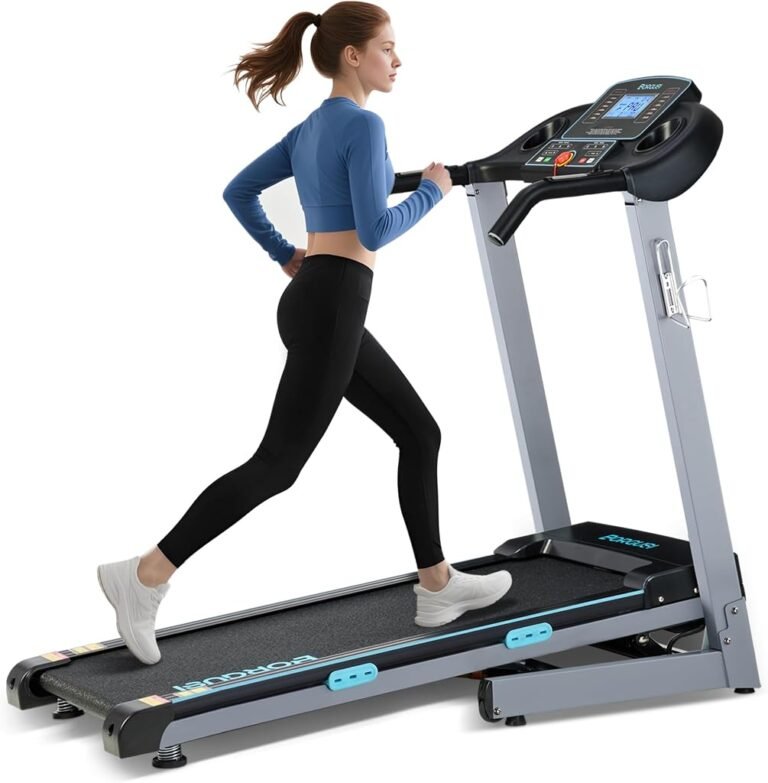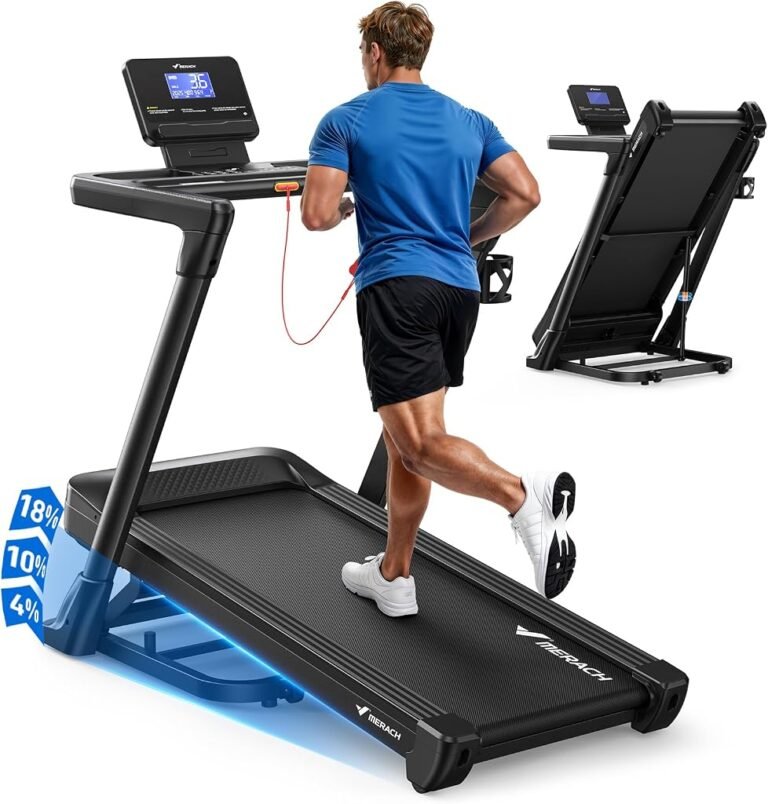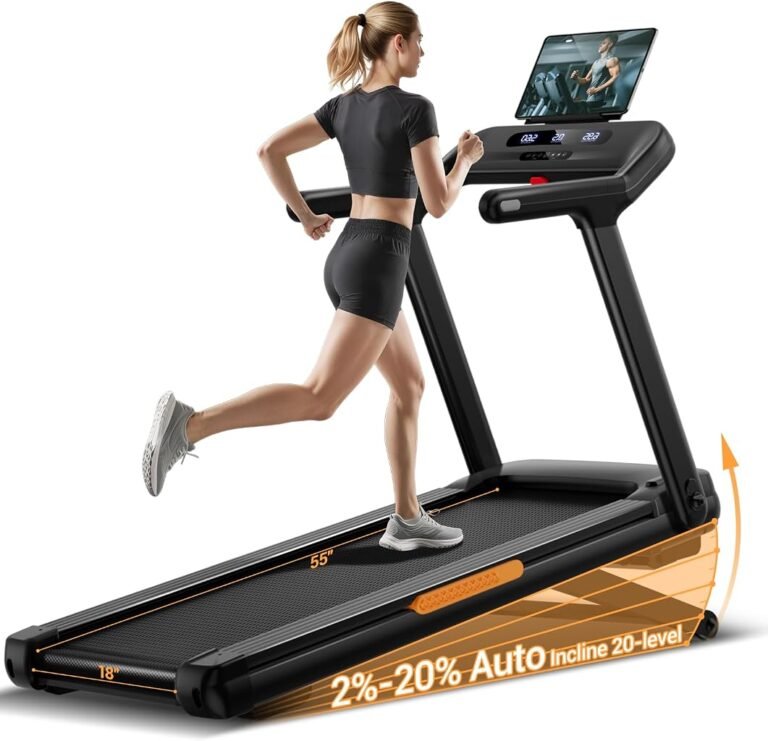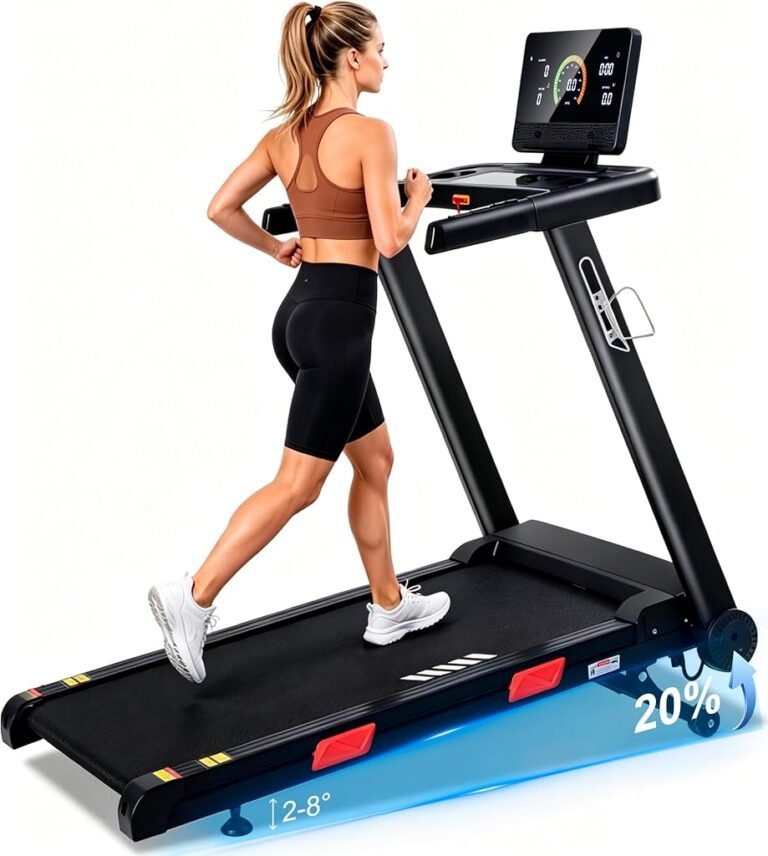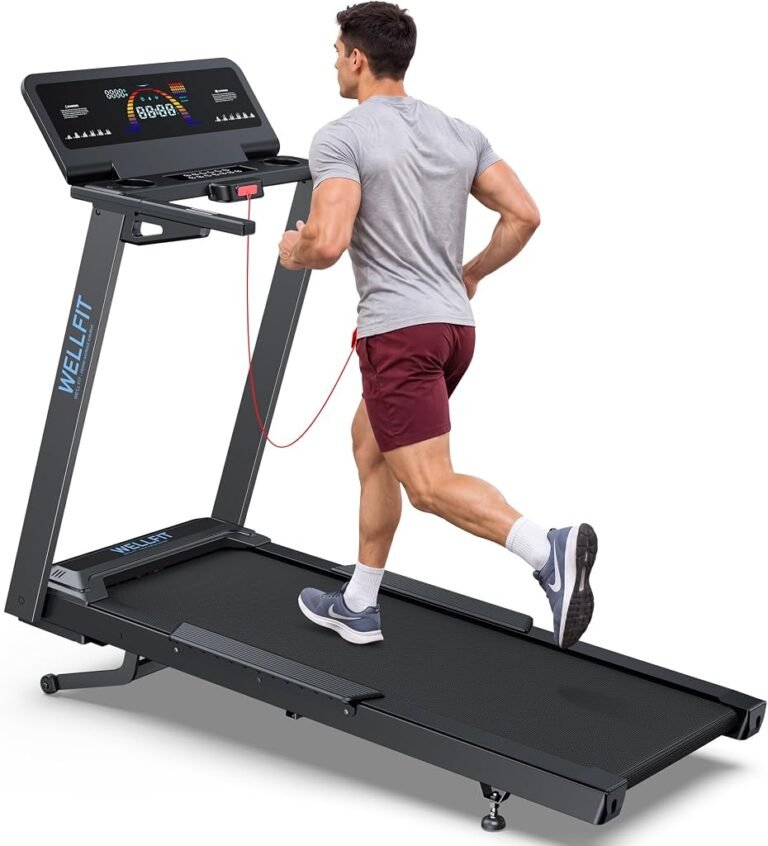
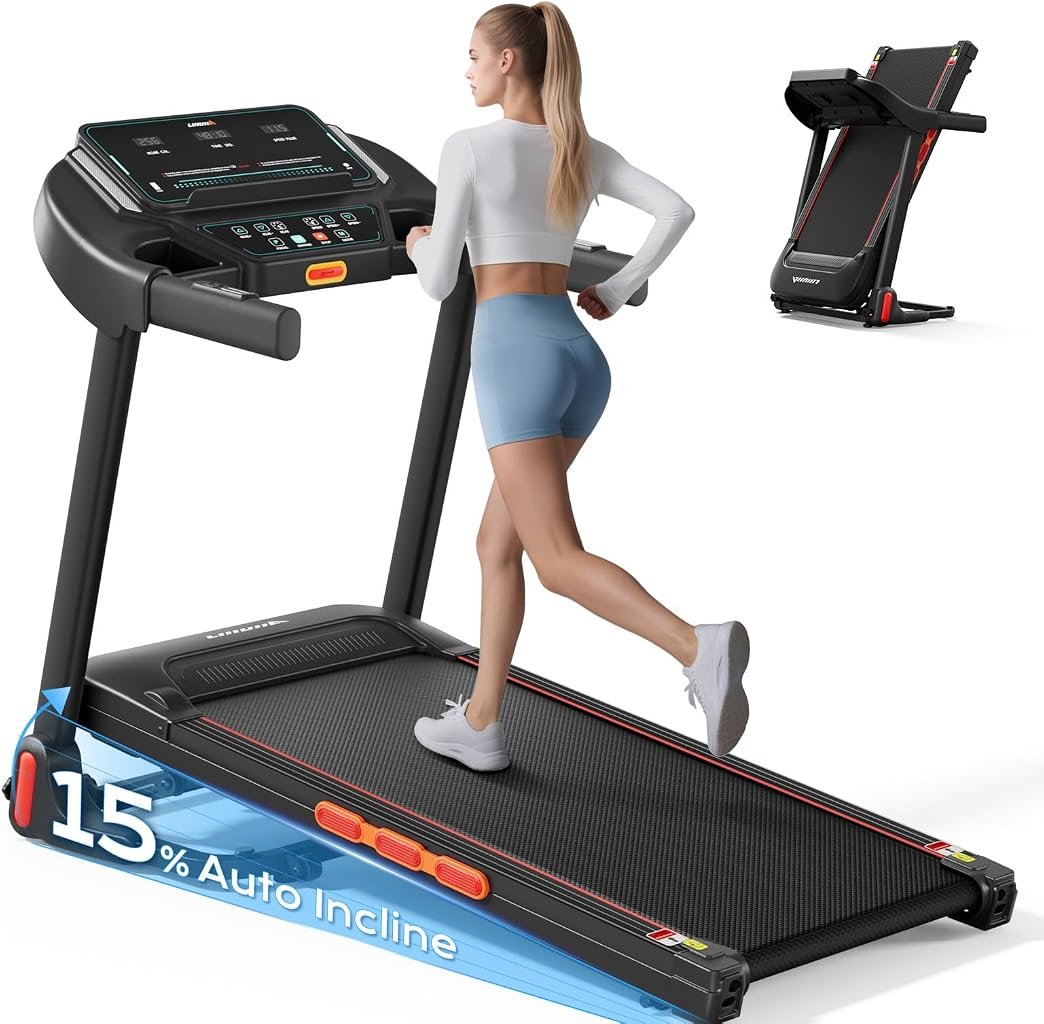
Home treadmills have evolved from bulky, single-purpose exercise machines into equipment that attempts to balance performance, storage convenience, and affordability. Automatic incline adjustment and folding construction are now prominent features in this category, promising greater exercise flexibility without demanding a permanent gym-sized space.
The LIJIUJIA Auto Incline Treadmill enters this discussion with an important distinction: the model identified by product reference B0FZJR7N88 is branded Vitalwalk. It is a foldable home treadmill advertised with automatic incline capabilities described as 25%/20%.
That combination raises several questions. How much does steep incline capability contribute to everyday fitness? Does a foldable design offer meaningful advantages in an ordinary household? And can a treadmill priced at $309.99 deliver sufficient utility to justify its purchase?
Our overall editorial score is 8.25/10, placing the machine in our Very Good category. The assessment recognizes the appeal of automatic incline adjustment, folding construction, and an accessible purchase price. However, the individual ratings reveal a more complicated balance between product appeal, buyer confidence, and practical value.
Buyer Confidence stands at 9.8/10, substantially higher than Customer Sentiment at 7.84/10 and Value at 7.91/10. This separation is meaningful. Confidence in the product’s general buying proposition does not eliminate the trade-offs associated with its design, particularly for people seeking a straightforward treadmill for regular walking rather than steep-gradient workouts.
The Vitalwalk is best understood as a home treadmill built around two priorities: incline-based exercise and storage flexibility. Its appeal depends on whether those priorities match the buyer’s actual training habits.
Product Overview: What Does the Vitalwalk Offer?
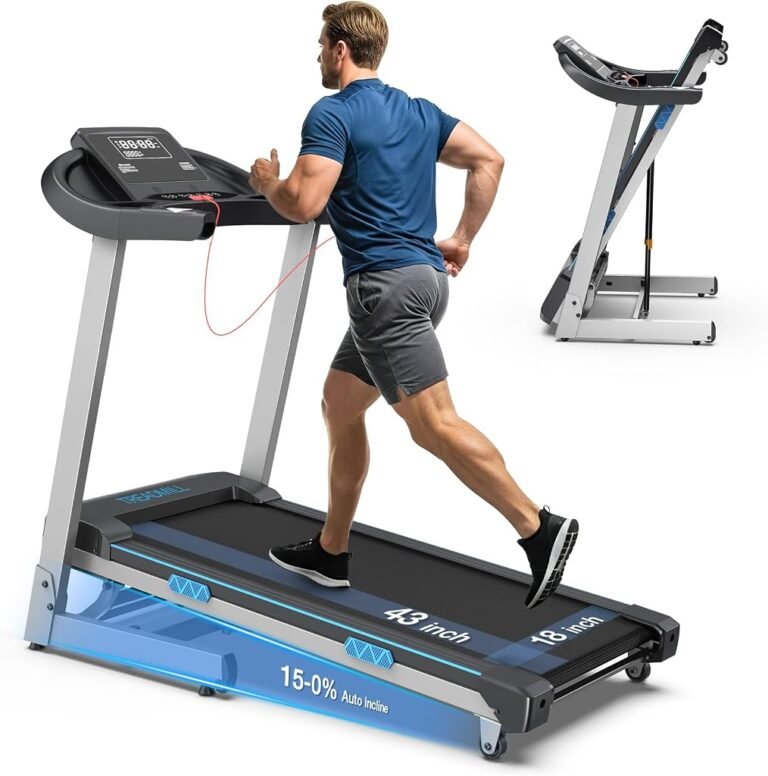
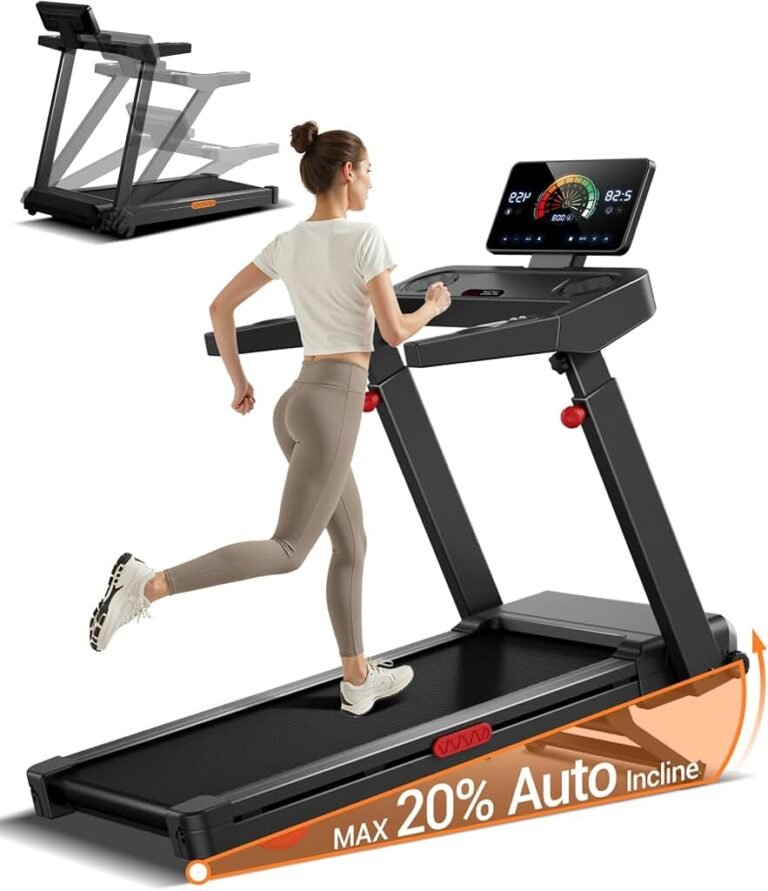
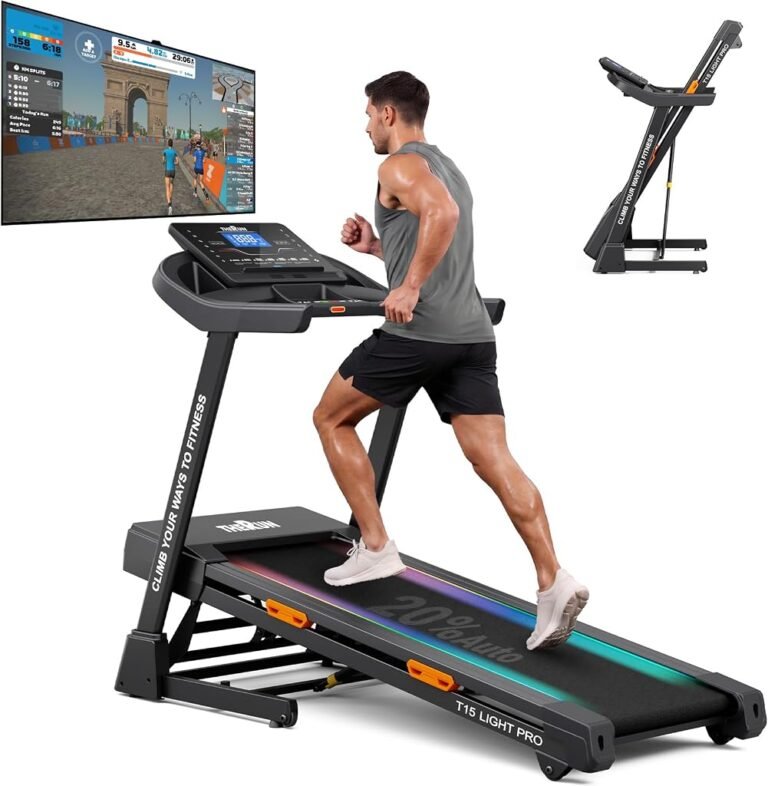
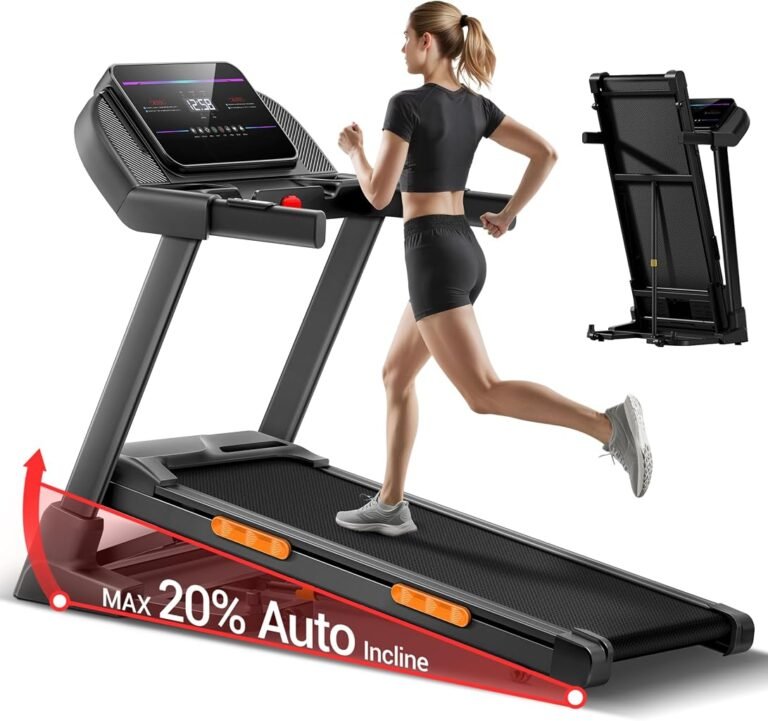
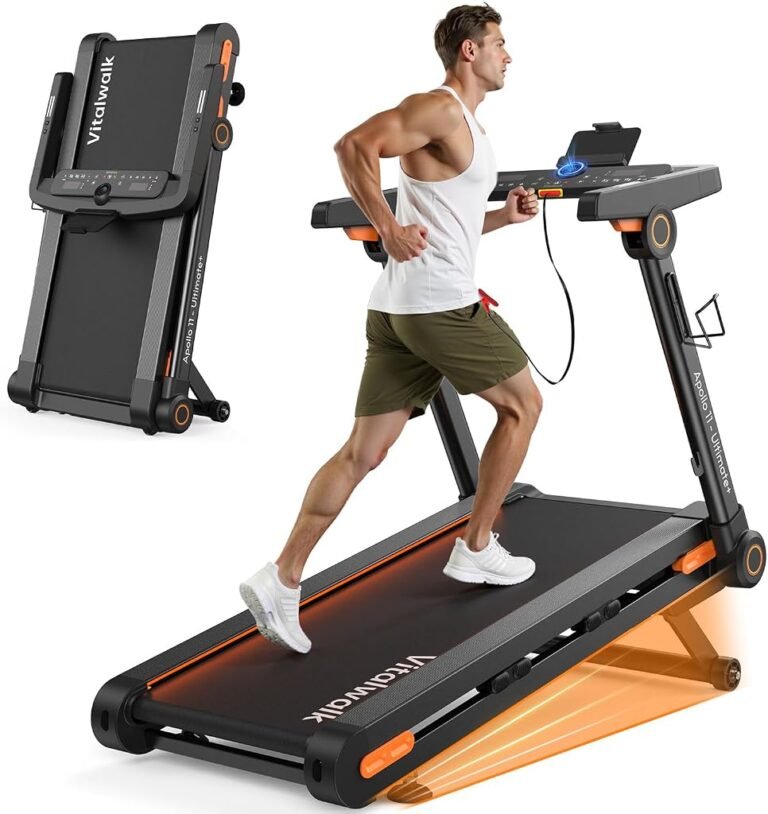
The Vitalwalk combines automatic incline functionality with a foldable structure, creating an alternative to conventional fixed-frame treadmills.
Its principal characteristics are:
- Brand: Vitalwalk.
- Product type: Foldable home treadmill.
- Incline: Automatic incline, advertised as 25%/20%.
- Storage design: Foldable construction.
- Listed price: $309.99.
- Our Score: 8.25/10.
- Customer Sentiment: 7.84/10.
- Buyer Confidence: 9.8/10.
- Value: 7.91/10.
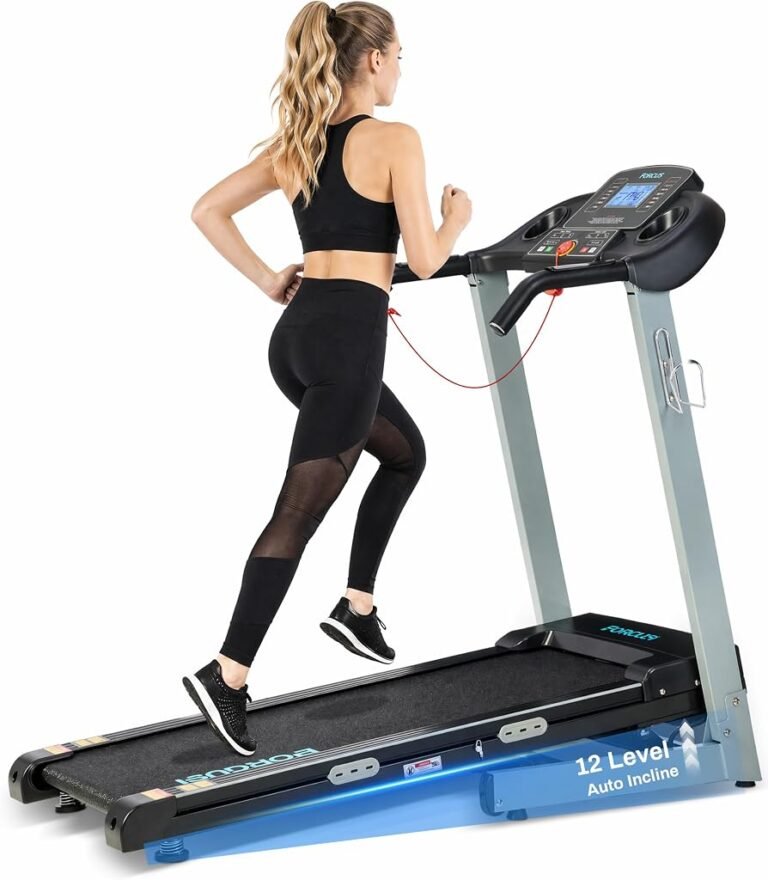
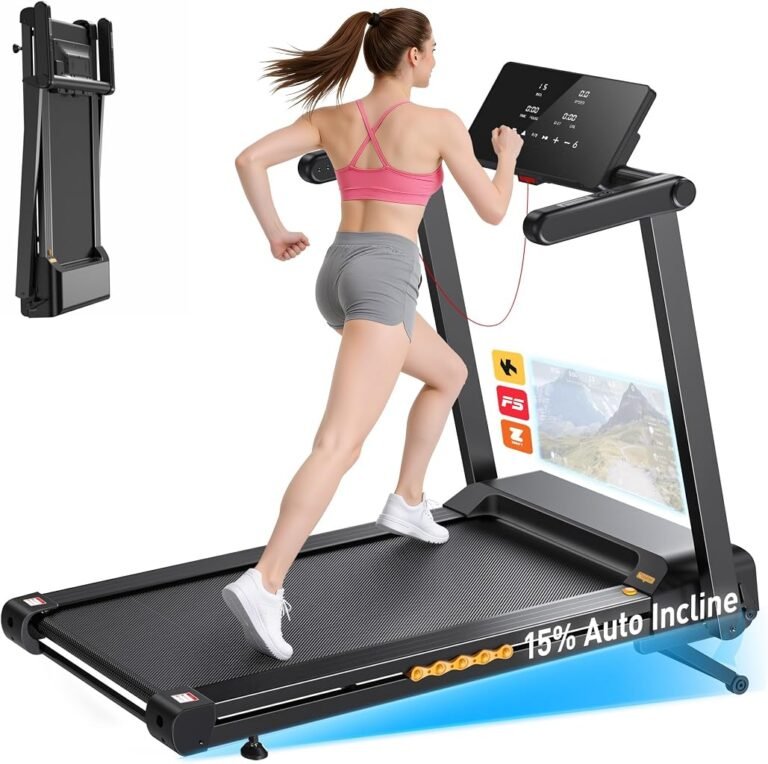
The treadmill’s defining feature is its automatic incline capability. This allows the exercise gradient to be adjusted through the machine’s mechanism rather than requiring manual repositioning of the walking deck.
The advertised 25%/20% incline description deserves careful interpretation. Those two figures should not be treated as interchangeable. Buyers should verify which maximum incline applies to the exact configuration being purchased and how the manufacturer measures the grade.
The foldable design is the other central attraction. For households where exercise equipment shares space with furniture, storage convenience can influence whether a treadmill is practical at all.
However, folding construction does not automatically establish that a machine is lightweight, easy to transport, or compact enough for every storage location. Those qualities depend on its dimensions, weight, folding mechanism, and available clearance.
The Vitalwalk’s appeal therefore rests on a relatively focused feature combination rather than an extensive range of documented technical specifications.
Automatic Incline: The Feature That Defines the Machine
Incline capability is often presented as a simple way to make treadmill exercise more demanding without increasing walking speed.
The underlying principle is straightforward. Walking uphill requires the body to overcome a greater vertical component of resistance, increasing muscular and cardiovascular demands.
On a treadmill, automatic incline adjustment changes the angle of the walking surface while allowing the user to maintain a chosen belt speed.
This creates opportunities for several forms of exercise, including steady uphill walking, progressive incline sessions, and workouts alternating between easier and more demanding gradients.
For someone who prefers walking over running, incline training can be especially attractive. It offers a means of increasing physical effort without necessarily requiring the faster leg turnover associated with running.
Nevertheless, steep incline capability is not inherently beneficial for every user.
The appropriate gradient depends on fitness, gait, joint comfort, balance, and training experience. A person beginning an exercise routine may gain more from regular level walking than from attempting demanding hill sessions.
The Vitalwalk’s incline system is therefore best viewed as a tool for progression rather than a feature that should be used aggressively from the first workout.
Understanding the 25%/20% Incline Description
Incline percentages describe the relationship between vertical rise and horizontal distance.
A 20% grade means the surface rises 20 units for every 100 units of horizontal travel. A 25% grade represents an even steeper gradient.
These figures describe substantial slopes.
They should not be confused with degrees. A 20% grade corresponds to an angle of approximately 11.3 degrees, while a 25% grade corresponds to approximately 14 degrees.
That distinction matters because percentage and degree measurements can create very different impressions of steepness.
For ordinary walking, either gradient represents a demanding exercise condition. Maintaining balance, posture, and consistent steps becomes increasingly important as the deck rises.
The advertised 25%/20% specification is one of the Vitalwalk’s strongest distinguishing features, but buyers should establish the exact operating range of their selected model.
The practical value of incline adjustment also depends on how smoothly the machine changes gradient and how conveniently the user can control it.
The Science of Incline Walking
The appeal of incline training extends beyond the sensation of a harder workout.
Walking uphill changes the mechanical work performed by the lower body. The muscles involved in supporting and propelling the body must respond to the increased slope, while the cardiovascular system works to meet higher energy demands.
Research into walking exercise has established that speed and grade both influence oxygen consumption.
The American College of Sports Medicine’s metabolic equations, widely used in exercise physiology, incorporate treadmill speed and grade when estimating the oxygen cost of walking.
For example, the standard walking equation expresses estimated oxygen consumption in milliliters per kilogram per minute as:
VO₂ = (0.1 × speed) + (1.8 × speed × grade) + 3.5
In this equation, speed is measured in meters per minute and grade is expressed as a decimal.
The equation illustrates why incline can dramatically increase estimated exercise intensity even when walking speed remains unchanged.
It is not, however, a universal prediction of calorie expenditure or physical response. The walking equation has an established range of application, and very steep gradients can fall outside conditions where its estimates are appropriate.
For Vitalwalk owners, the practical implication is that higher incline settings should not be treated as automatically superior.
Moderate gradients can provide substantial training demands, particularly when used consistently.
The most productive incline is one that supports controlled movement and a sustainable workload.
Foldable Design: A Practical Advantage With Conditions
Home exercise equipment competes for space with ordinary domestic life.
A treadmill may be used for 30 minutes a day yet remain in the room for the other 23 and a half hours. That imbalance explains why folding construction can be a meaningful buying consideration.
The Vitalwalk’s foldable design addresses this problem by allowing the machine to be reconfigured for storage.
For people living in apartments, smaller houses, or multipurpose rooms, this flexibility may make treadmill ownership more realistic.
A folding treadmill can also reduce the visual impact of exercise equipment when it is not being used.
Yet the word “foldable” covers several different mechanical arrangements.
Some treadmills raise the running deck toward the console. Others use a structure that allows the machine to fold into a flatter configuration.
The precise mechanism determines how much space is saved, how the machine must be handled, and where it can be stored.
The Vitalwalk’s folding feature is a meaningful advantage, but the actual storage benefit should be assessed against the dimensions of the intended room.
Storage Space Is Not the Same as Exercise Space
A treadmill requires more than enough floor area to accommodate its frame.
Users also need clearance for mounting, dismounting, walking safely, and accessing controls.
The space behind the treadmill is particularly important because a loss of footing can carry the user toward the rear of the moving belt.
A machine that fits neatly against a wall when folded may still require a substantially larger area when operating.
Before purchase, buyers should measure the intended exercise space and confirm that the treadmill can be unfolded without obstructing doors, furniture, or walking routes.
The folded dimensions, overall weight, and movement arrangements also deserve attention.
A foldable machine that requires considerable effort to reposition may be inconvenient for someone who expects to store it after every session.
The strongest case for folding construction is therefore not simply that the treadmill can be folded. It is that the owner can realistically incorporate folding and unfolding into an ordinary exercise routine.
Walking and Running: Matching the Treadmill to the User
The Vitalwalk is marketed as a home treadmill with incline capability, making it relevant to people seeking indoor cardiovascular exercise.
For walking-focused users, automatic incline offers an alternative to increasing belt speed.
A moderate walking pace on a raised deck can create a demanding session, although the appropriate combination of speed and incline varies by individual.
For runners, the buying decision requires additional consideration of running surface dimensions, maximum speed, motor performance, and structural stability.
These specifications directly influence whether a treadmill is comfortable for longer strides and sustained running.
The Vitalwalk’s most distinctive documented attributes are its incline system and foldable construction. Those features are particularly appealing to walkers interested in hill-based exercise.
A buyer primarily interested in high-speed running should place greater emphasis on running-specific dimensions and performance characteristics.
The treadmill’s strongest identity is therefore not that of a specialized athletic running machine, but of a flexible home exercise option emphasizing adjustable gradients.
Exercise Effectiveness: Turning Features Into Fitness Progress
The practical worth of any treadmill depends on how regularly it is used and whether its settings support appropriate exercise intensity.
The Centers for Disease Control and Prevention recommends that adults complete at least 150 minutes of moderate-intensity aerobic activity each week, or 75 minutes of vigorous activity, alongside muscle-strengthening activity on two or more days. These physical activity guidelines provide a useful framework for evaluating home exercise equipment.
The Vitalwalk can support the aerobic portion of that routine through level walking, inclined walking, or more demanding sessions suited to the user’s abilities.
Five 30-minute sessions, for example, would provide 150 minutes of weekly exercise. Whether those sessions qualify as moderate intensity depends on the individual’s effort rather than the duration alone.
A person who has been largely inactive may initially find 10 minutes challenging. Someone with an established fitness routine may need longer sessions or greater intensity to achieve a similar training stimulus.
The CDC’s guidance on adding physical activity emphasizes choosing enjoyable activities that match individual abilities and building activity into a manageable schedule.
This is an area where a home treadmill can be useful. Indoor walking is less vulnerable to rain, darkness, extreme temperatures, and inconvenient travel arrangements.
Automatic incline adds another option for maintaining variety without changing exercise equipment.
However, a steep incline should not become the defining measure of a successful workout. The objective is sustained, appropriate physical activity, not routinely reaching the highest available setting.
Comfort and Stability During Incline Exercise
Comfort becomes increasingly important as treadmill gradient increases.
Walking on a level surface allows the body to move through a familiar gait pattern. Incline walking changes posture, stride mechanics, and the distribution of muscular effort.
Users may naturally shorten their steps and adjust their forward body position as the slope increases.
The machine’s physical stability, belt traction, and responsiveness become especially relevant during these adjustments.
The Vitalwalk’s foldable construction and automatic incline system create a useful combination of features, but comfort cannot be judged from those characteristics alone.
Running deck dimensions, cushioning, frame rigidity, and belt behavior all influence the experience.
Footwear also matters. Shoes should provide secure footing and suit the user’s gait and intended activity.
For people with recurring ankle, knee, hip, or lower-back discomfort, increasing the incline aggressively can create unnecessary physical demands.
A gradual progression allows the user to evaluate how the body responds to changes in gradient.
Incline exercise should also be performed with controlled posture. Holding the treadmill’s handrails continuously while leaning backward can alter the intended movement and make exercise intensity harder to assess.
Handrails remain useful for entering, exiting, and recovering stability, but users should not select an incline that exceeds their ability to walk safely.
Safety: Automatic Incline Requires Responsible Operation
A moving treadmill presents hazards that differ from walking outdoors or on a stationary surface.
The belt continues moving independently of the user’s pace, and a momentary loss of coordination can lead to a fall.
Incline adjustment introduces another variable because the walking surface changes position during exercise.
The Vitalwalk’s automatic incline is convenient, but users should establish a stable walking rhythm before changing the gradient.
The treadmill should be placed on a firm, level floor, with adequate space around the machine.
Rear clearance is particularly relevant. The Health & Fitness Association’s discussion of treadmill safety and equipment placement describes a legal case involving inadequate space behind a treadmill and explains why manufacturer clearance instructions should be followed.
For home users, this means that placing the rear of a treadmill immediately against furniture or a wall can create an avoidable hazard.
The machine’s emergency stop mechanism should also be located and understood before exercise begins.
Any safety key or stopping device should be used according to the manufacturer’s instructions.
Children and pets should remain away from the operating treadmill, and the equipment should not be left running unattended.
These precautions are particularly relevant in multipurpose rooms where the machine may be unfolded only during exercise sessions.
Our Editorial Ratings: Why Buyer Confidence Leads
Our overall score for the Vitalwalk treadmill is 8.25/10, placing it in our Very Good category.
This assessment reflects a favorable balance of price, incline capability, and folding convenience. It also recognizes that the product’s appeal is more specialized than that of a treadmill designed primarily around conventional walking and running specifications.
The differences between the individual editorial ratings help clarify its buyer profile.
Customer Sentiment: 7.84/10
Our Customer Sentiment rating of 7.84 indicates a positive but measured assessment of the treadmill’s overall appeal.
The automatic incline and folding structure address recognizable household needs, particularly for users who want hill-based workouts without dedicating permanent space to a large exercise machine.
However, these features are not equally useful to every buyer.
Someone who primarily wants comfortable level walking may place greater value on belt dimensions, cushioning, quiet operation, and straightforward controls.
The Vitalwalk’s feature combination therefore has a defined audience rather than universal appeal.
Buyer Confidence: 9.8/10
Buyer Confidence receives 9.8, the highest of our editorial ratings.
We view the machine’s central buying proposition as particularly coherent: it combines automatic incline training with foldable home storage at a comparatively modest purchase price.
This rating reflects confidence in the appeal and clarity of that proposition, not a claim that every operational detail will suit every household.
Buyers should still verify the exact incline configuration, unfolded and folded dimensions, maximum user capacity, and warranty arrangements.
The substantial difference between Buyer Confidence and Customer Sentiment also explains why a confident purchase proposition does not necessarily produce equally broad user satisfaction.
A machine can make sense for a clearly defined audience while being less appropriate for people with different priorities.
Value: 7.91/10
Our Value rating is 7.91, below the overall score.
At $309.99, the Vitalwalk offers an appealing combination of automatic incline and foldable construction.
However, value is not determined by feature quantity alone.
A treadmill with steep incline capability may be excellent value for someone who frequently performs hill workouts. The same machine may represent a less efficient purchase for a user who rarely adjusts the gradient.
Similarly, folding construction creates value when storage space is limited. In a dedicated home gym, that advantage becomes less significant.
Our Value assessment therefore recognizes an attractive purchase price while placing greater emphasis on how effectively the treadmill’s defining features match actual exercise needs.
Price Analysis: What Does $309.99 Buy?
At $309.99, the Vitalwalk presents a relatively accessible entry into home treadmill ownership.
Its automatic incline system is the most meaningful feature in the price proposition, particularly for users interested in walking workouts that incorporate gradients.
The folding design provides another practical benefit for homes where exercise equipment cannot remain permanently deployed.
However, the listed purchase price should not be confused with the full cost of ownership.
Delivery arrangements, assembly requirements, maintenance, potential replacement components, and warranty limitations can influence long-term expense.
Treadmills contain moving mechanical parts that require appropriate care.
Belt alignment, lubrication, cleanliness, and inspection should follow the manufacturer’s instructions.
A poorly maintained treadmill may become noisier, operate less smoothly, or develop avoidable mechanical problems.
For buyers considering the Vitalwalk, the warranty deserves particular attention because the incline mechanism and folding structure introduce additional mechanical functions.
The availability of replacement parts and practical service arrangements can be as consequential as the original purchase price.
A lower initial cost is most valuable when the equipment remains convenient and economical to operate.
How It Compares With Other Home Treadmill Categories
The best treadmills for home are not always the machines offering the largest number of exercise settings.
Different designs prioritize different needs.
A full-size running treadmill generally emphasizes a generous running surface, sustained motor performance, and stability at higher speeds.
A compact walking treadmill may prioritize simplicity, low-speed operation, and reduced floor-space requirements.
An incline-focused treadmill emphasizes adjustable gradients and the ability to vary exercise intensity without relying exclusively on speed.
The Vitalwalk fits most naturally into the third category while incorporating the storage convenience associated with foldable designs.
This makes it particularly relevant to walkers seeking more demanding exercise options.
Its competitive advantage is not simply the presence of incline adjustment, but the combination of automatic incline and foldability at $309.99.
Nevertheless, a buyer interested primarily in running should evaluate belt dimensions and speed capability before choosing this machine over a conventional running-focused treadmill.
Likewise, someone who needs exceptionally simple controls or specialized mobility support should prioritize those requirements over steep incline settings.
The appropriate comparison begins with intended use rather than a single specification.
Who Is the Vitalwalk Best Suited For?
The Vitalwalk is most appealing to users who want regular indoor walking with the option to increase exercise difficulty through incline adjustments.
It also suits households where space is shared and a permanently positioned treadmill would be inconvenient.
People who enjoy structured walking workouts may appreciate the ability to alternate between level movement and uphill segments.
The treadmill can also appeal to users who prefer moderate walking speeds but want opportunities for more demanding cardiovascular exercise.
Its strongest buyer profiles include:
- Home exercisers interested in incline walking.
- Apartment residents seeking foldable equipment.
- Users who want an alternative to outdoor hill walking.
- People building a regular cardiovascular exercise routine.
- Households balancing exercise equipment with limited living space.
- Budget-conscious buyers prioritizing automatic incline functionality.
The machine is less compelling for buyers whose principal requirements are documented high-speed running performance, specialized rehabilitation features, or a particularly large running deck.
Those needs require a different purchasing emphasis.
Building a Practical Incline Walking Routine
A sustainable treadmill routine should begin with manageable exercise rather than demanding settings.
For a beginner, the first objective is becoming comfortable with the moving belt, controls, and basic walking rhythm.
Level walking provides an opportunity to establish that familiarity before incline adjustments are introduced.
Once the user can walk comfortably, short periods of mild incline can be added.
For example, a session might include an easy warm-up, a period of comfortable walking, several brief uphill intervals, and a gradual return to level movement.
The exact speed, gradient, and duration should reflect the individual’s physical capacity.
The CDC’s guidance on aerobic exercise intensity explains that moderate activity raises breathing and heart rate, while vigorous activity produces a substantially greater effort.
This distinction is useful because treadmill settings alone do not determine the intensity experienced by every person.
A moderate incline for one user may feel demanding to another.
Training progression is generally easier to manage when only one variable is increased at a time.
Increasing duration before introducing steeper gradients may help users build endurance while maintaining controlled movement.
Exercise records can also be useful. Tracking duration, incline setting, perceived effort, and any discomfort provides a practical basis for adjusting future sessions.
The goal is not to use the treadmill’s maximum incline as frequently as possible. It is to create a repeatable exercise routine that improves fitness without introducing unnecessary strain.
Strengths and Drawbacks
The Vitalwalk has several characteristics that support its favorable editorial rating.
Its principal strengths include:
- Automatic incline adjustment for varied walking workouts.
- An advertised 25%/20% incline specification offering demanding gradient options.
- Foldable construction suited to shared household spaces.
- A $309.99 listed price.
- Flexibility for level walking and incline-based cardiovascular exercise.
- A focused design proposition combining exercise variety with storage convenience.
Its limitations are equally relevant.
The advertised incline figures require careful verification for the selected configuration. The folding feature also needs to be assessed against actual storage dimensions and the effort required to move the machine.
For running-focused buyers, belt size, maximum speed, and sustained motor performance deserve greater attention than incline capability alone.
For beginners, the steepest settings may offer little immediate benefit.
The treadmill’s long-term value will also depend on maintenance requirements, component durability, and the owner’s willingness to use it consistently.
These drawbacks do not make the Vitalwalk an unsuitable purchase. They establish the boundaries of its strongest applications.
Final Considerations
The LIJIUJIA Auto Incline Treadmill review ultimately concerns the Vitalwalk foldable treadmill, a machine centered on automatic incline exercise and practical home storage.
Our overall score of 8.25/10 reflects a Very Good assessment of its feature combination and purchase price.
Buyer Confidence at 9.8/10 demonstrates the strength of its general buying proposition, while Customer Sentiment at 7.84/10 and Value at 7.91/10 reflect a more selective judgment about everyday suitability.
At $309.99, the Vitalwalk offers an appealing route into incline-focused home exercise.
Its automatic gradient adjustment is especially relevant to people who enjoy walking workouts and want opportunities to increase intensity without relying entirely on speed.
The foldable design adds practical appeal for smaller homes and shared living spaces.
However, steep incline capability should not overshadow the fundamentals of treadmill ownership: safe operation, appropriate exercise intensity, comfortable movement, sufficient floor clearance, and manageable maintenance.
The Vitalwalk earns a favorable editorial recommendation for buyers whose priorities are incline walking, storage flexibility, and a moderate purchase price.
It is less persuasive for those who need specialized running specifications or who would rarely use the incline system.
Ultimately, the machine’s strongest contribution is the opportunity to make indoor walking more adaptable. When matched to the right user and incorporated into a sustainable routine, its combination of automatic incline and foldable construction can support regular physical activity without requiring a dedicated home gym.