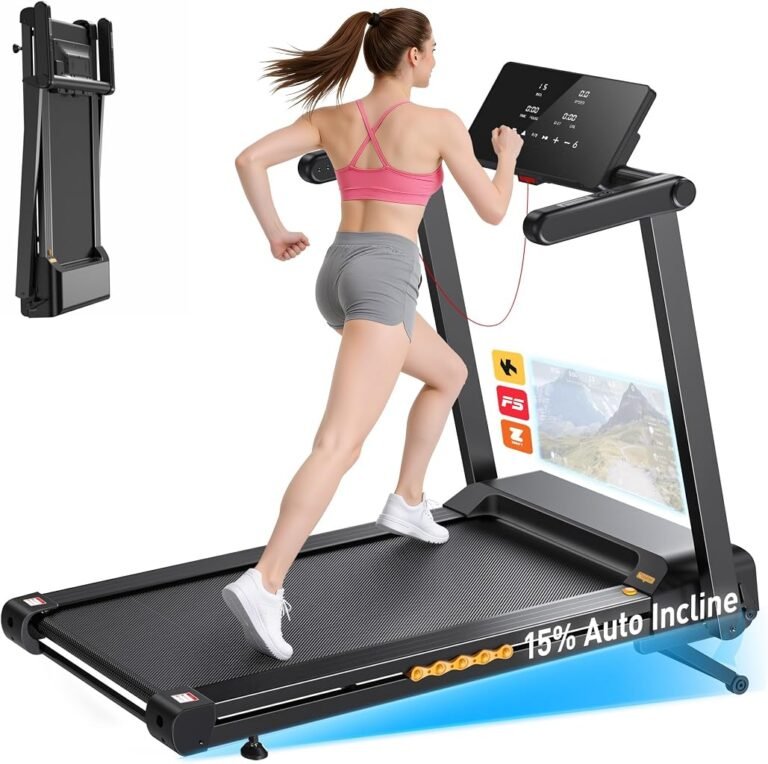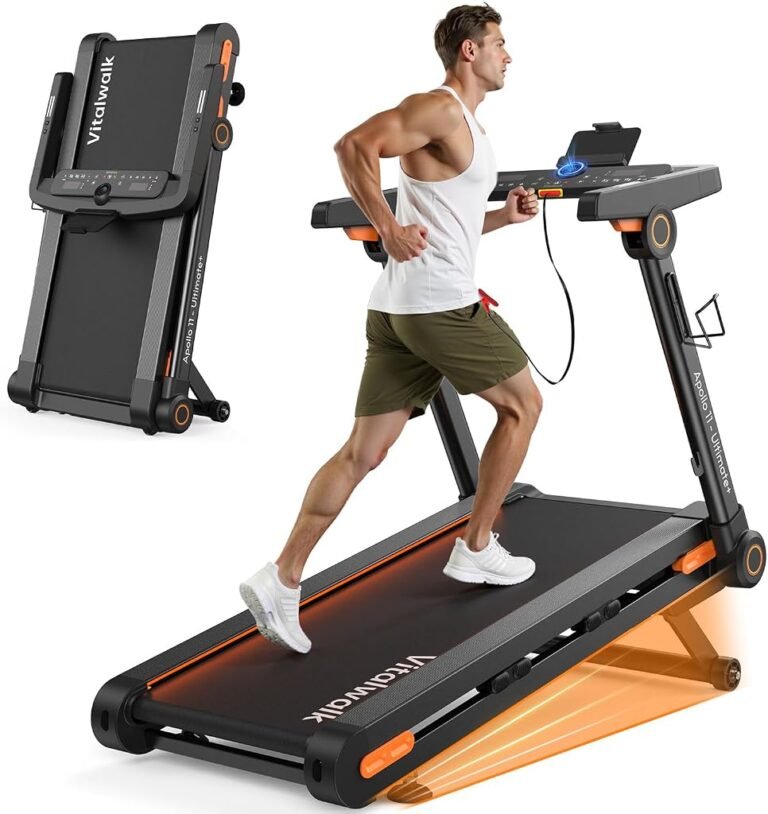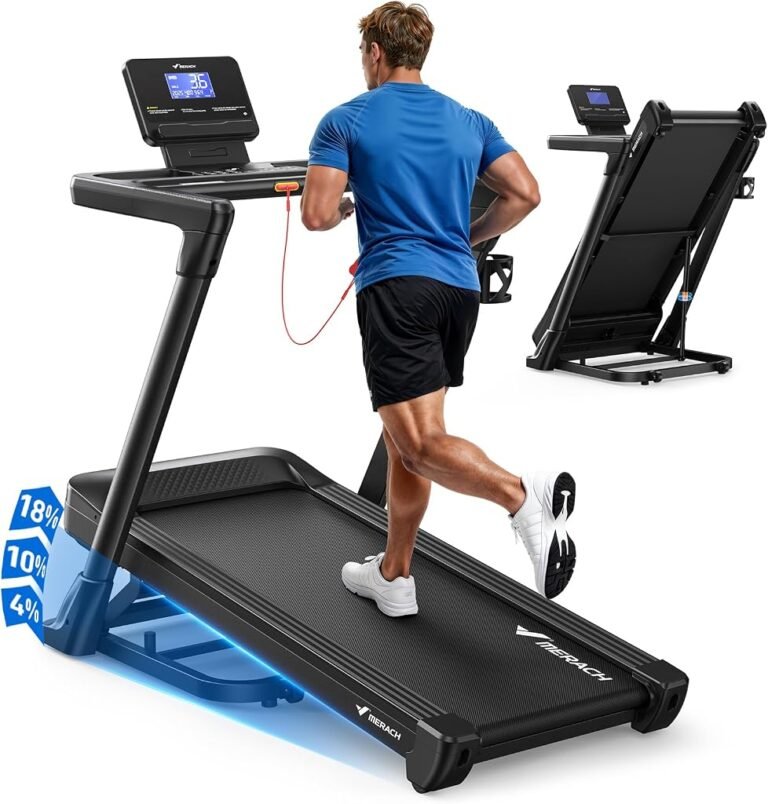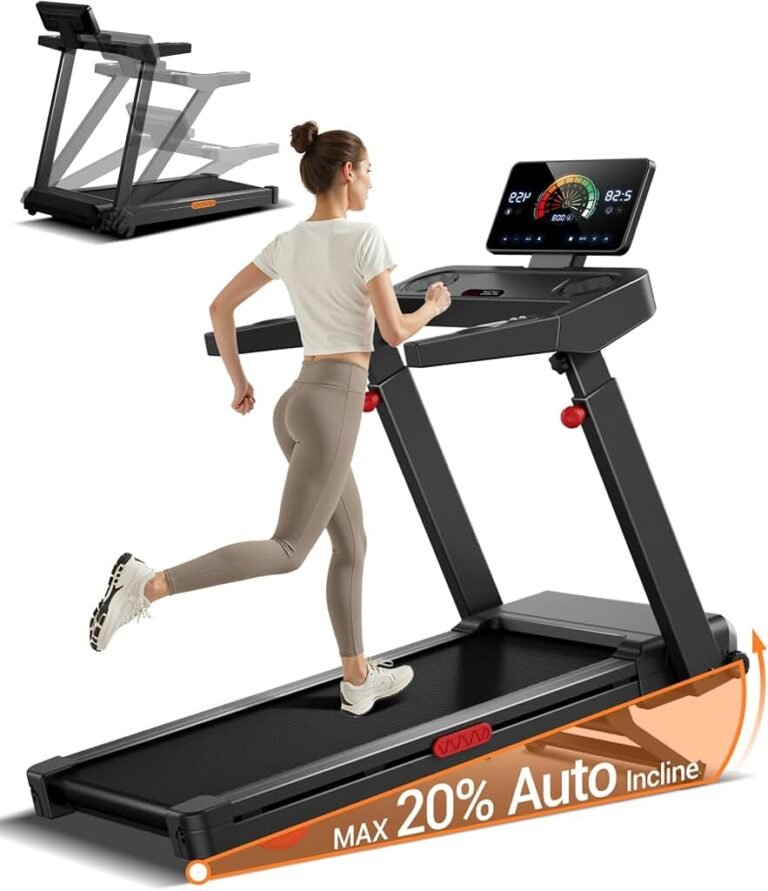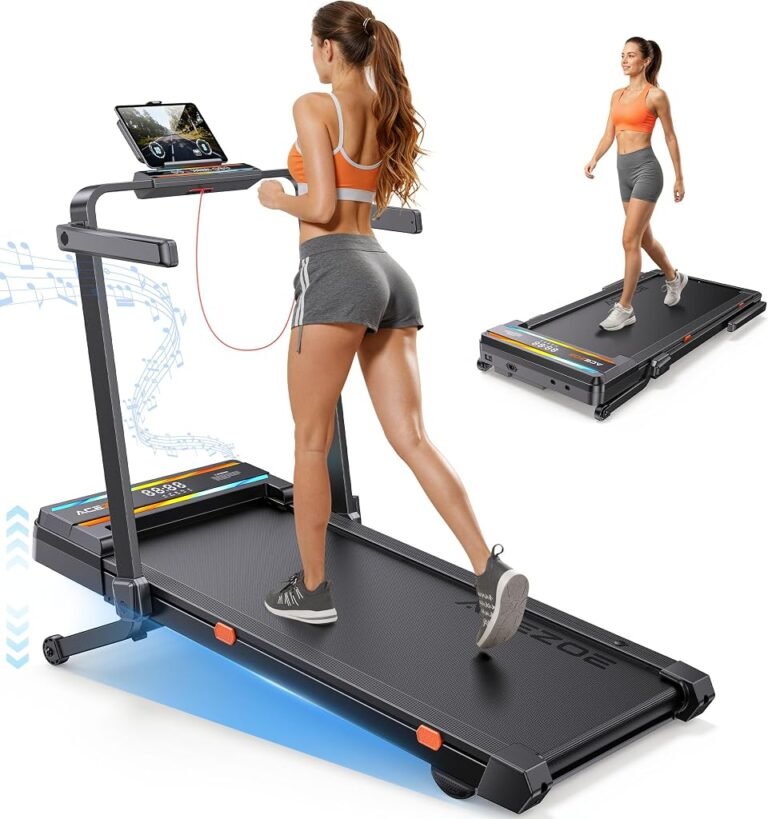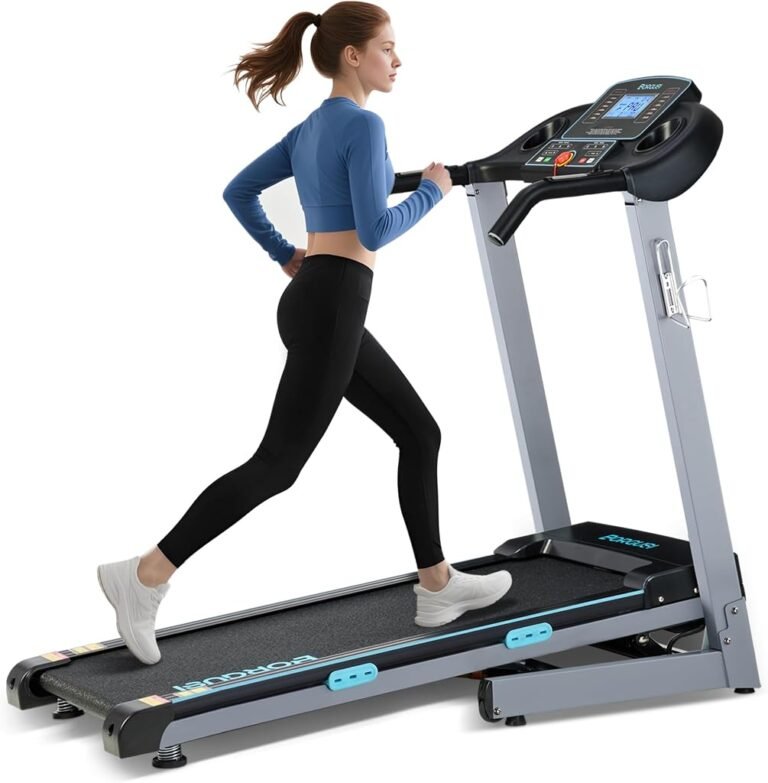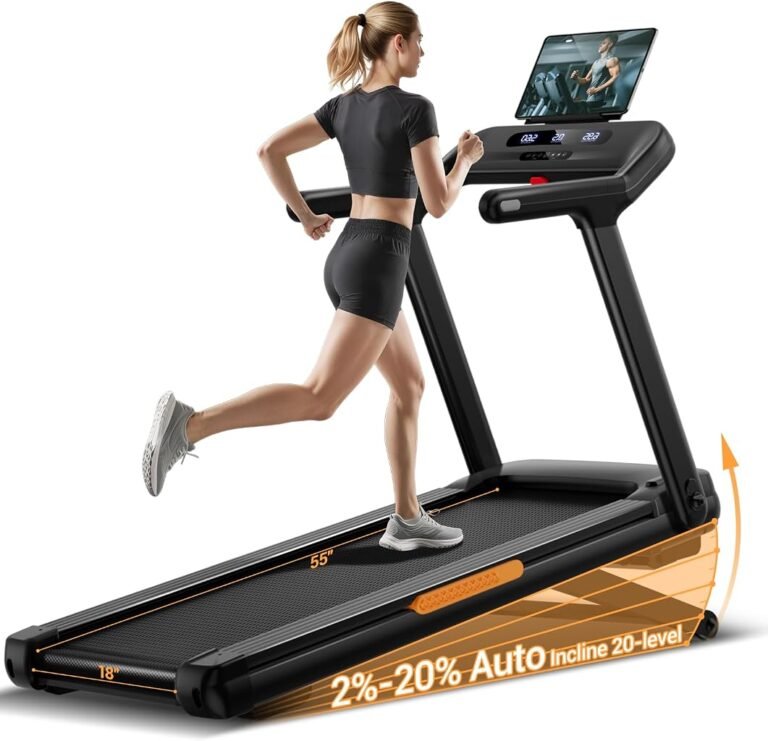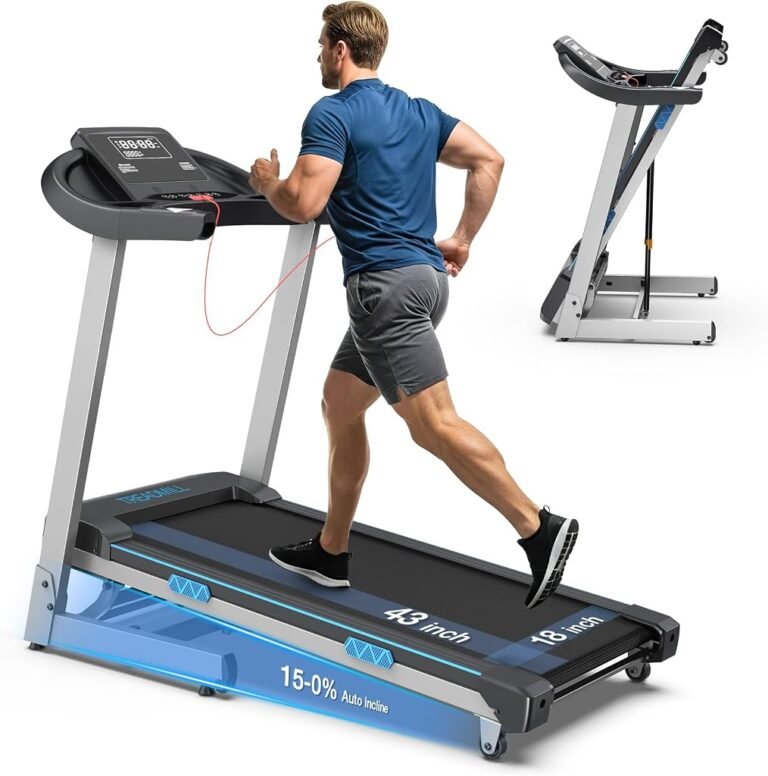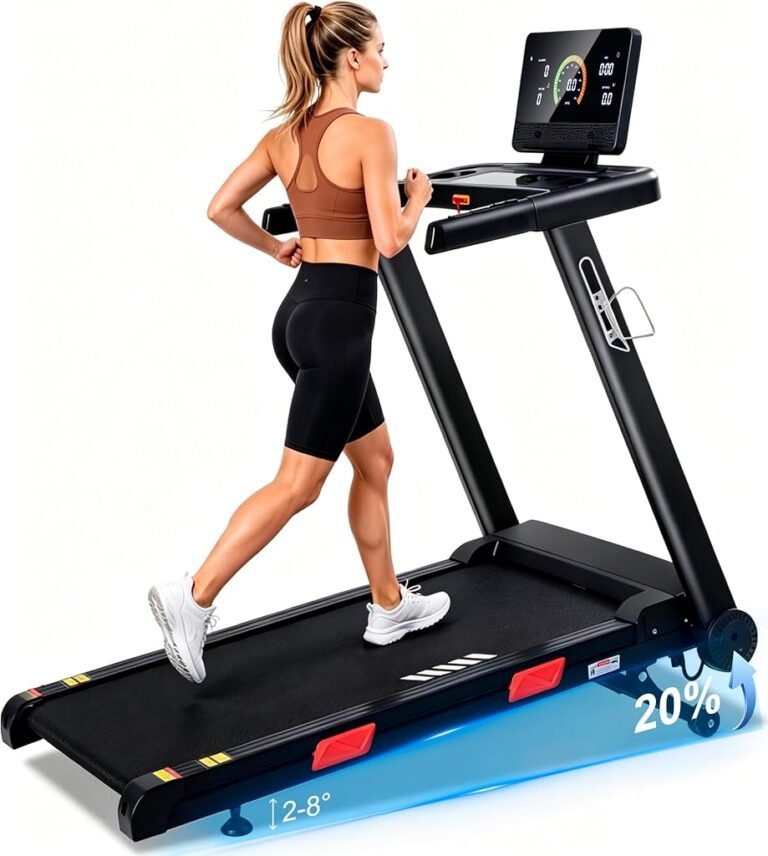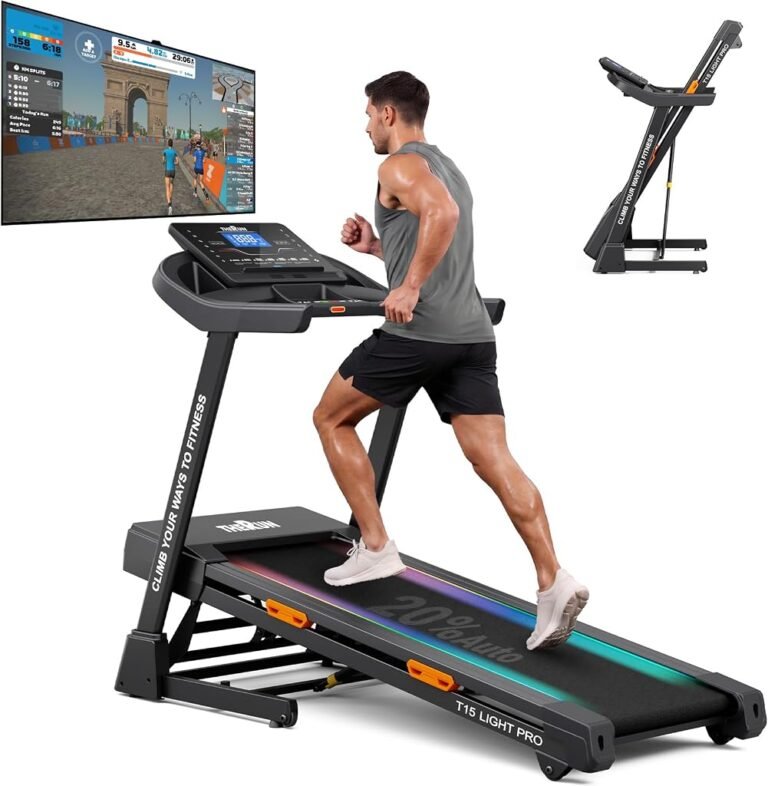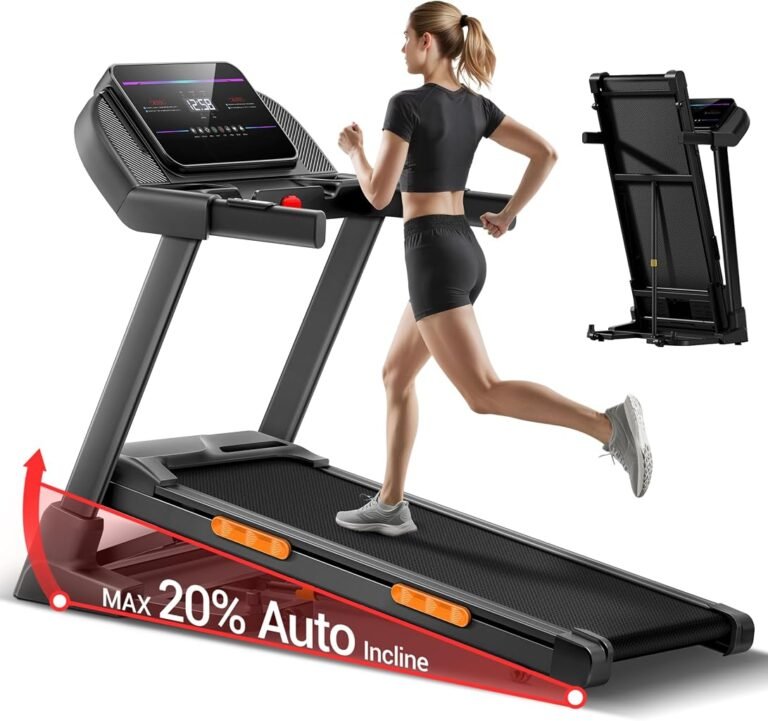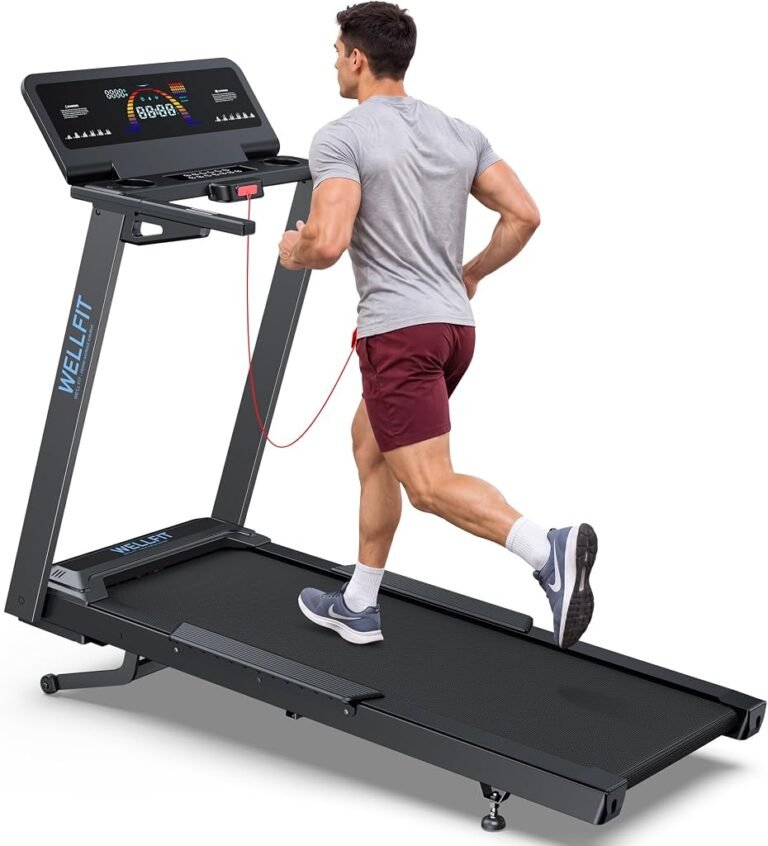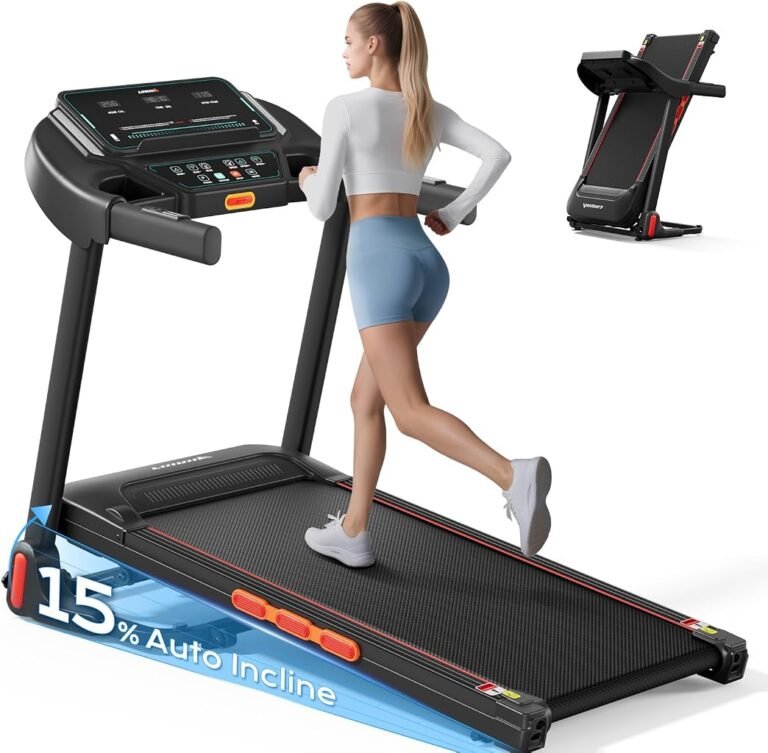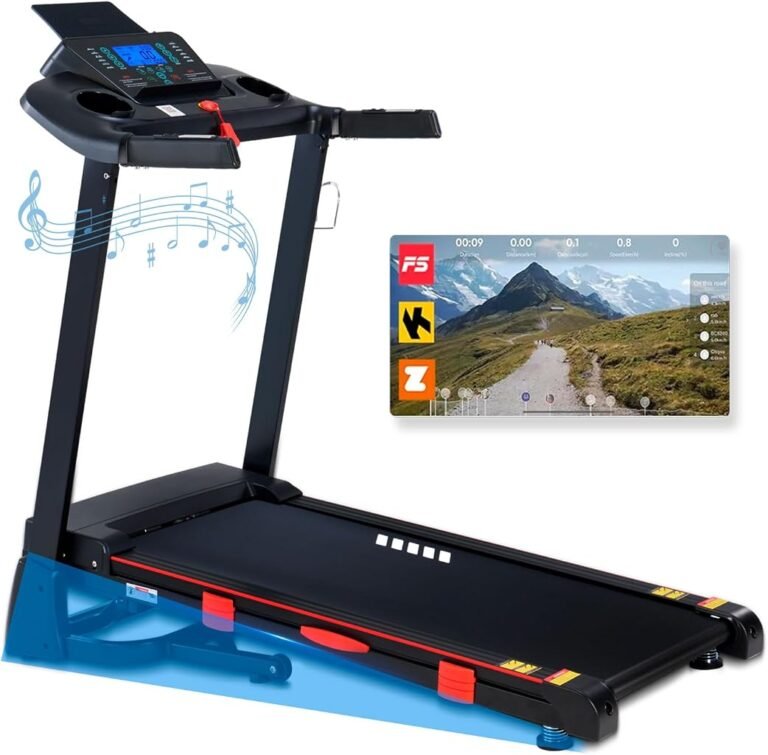
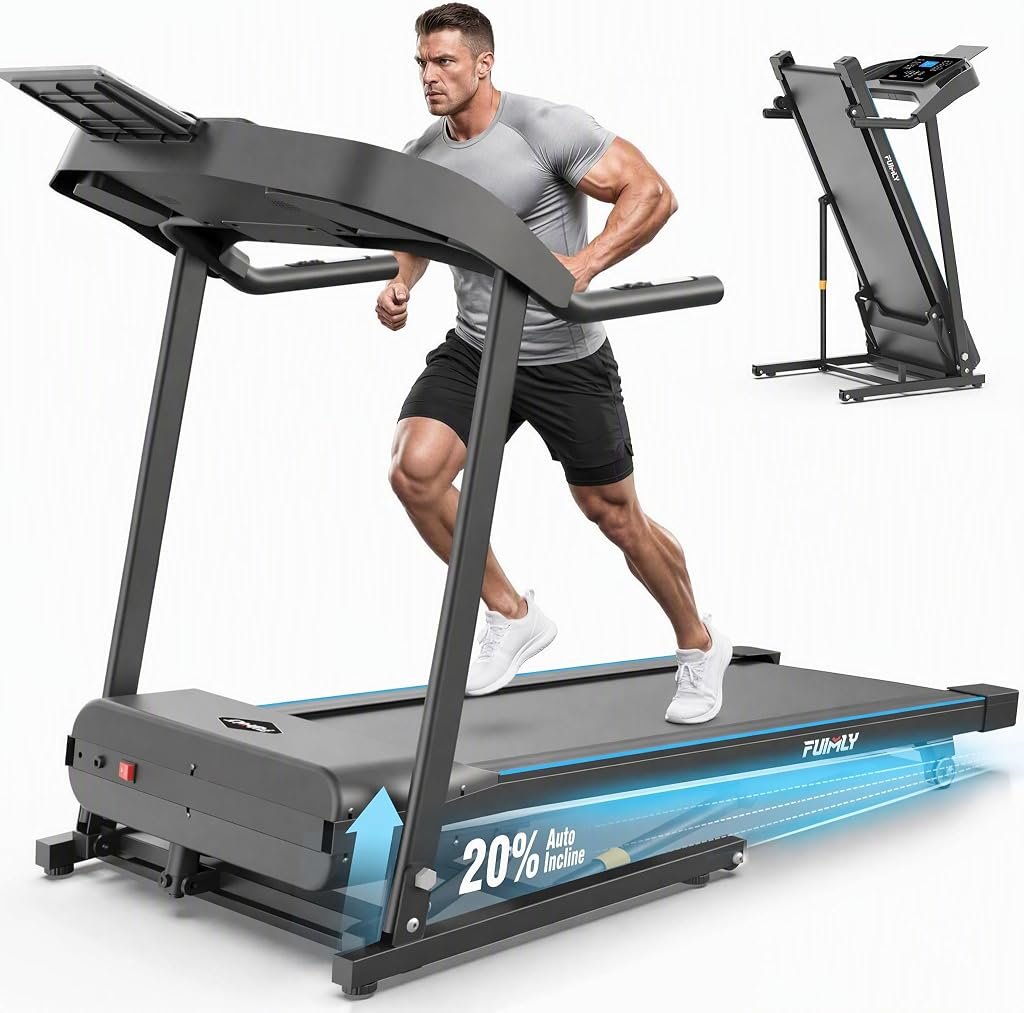
A treadmill priced at $534.72 sits in an interesting middle band of the home-fitness market. It costs far more than a basic walking pad, yet it remains well below the price of many larger running machines built around 12 mph speeds, 60-inch decks, and heavier frames. Buyers at this level are therefore paying for versatility: enough room to run, automatic incline, easier storage, a reasonably broad speed range, and controls that support more than casual walking.
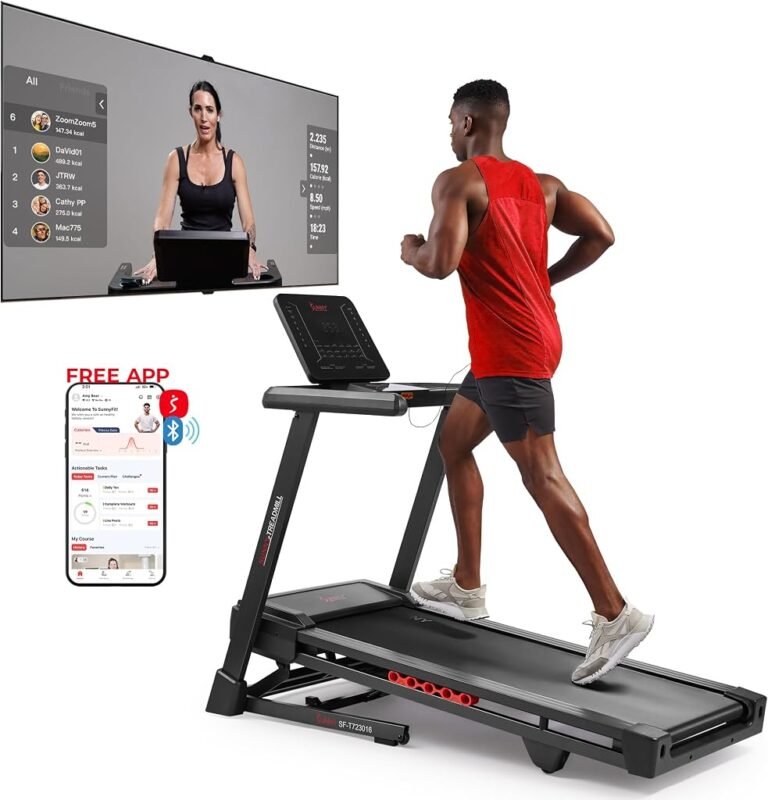
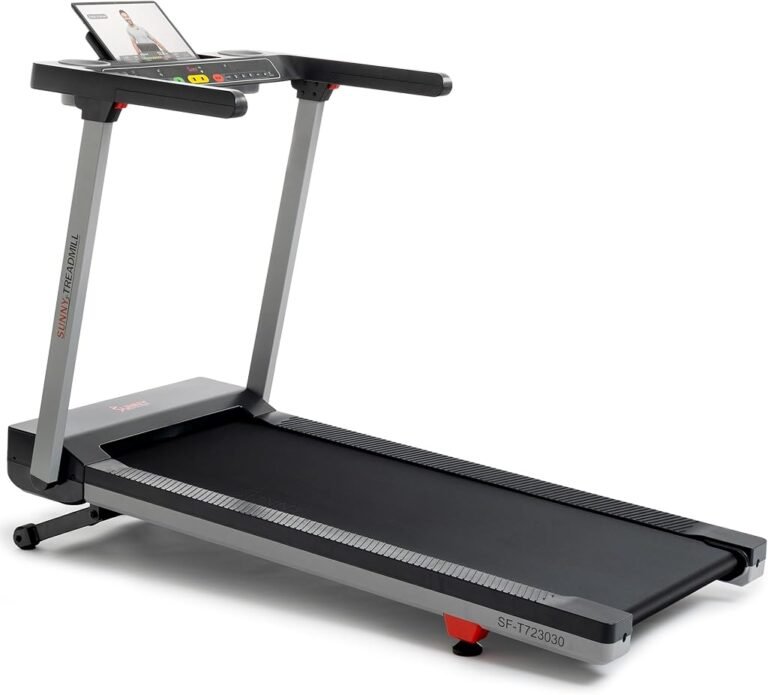
The first issue in this review appears before any discussion of running performance. The machine associated with the FUNMILY Auto Incline Folding Treadmill name is actually identifiable as a Sunny Health & Fitness product. Its configuration aligns with Sunny’s OneClick-Fold 20-inch Smart Auto Incline Treadmill, model SF-T723030, rather than a FUNMILY-branded machine.
That distinction matters because treadmill specifications are not interchangeable. Two visually similar folding machines can differ materially in belt size, incline range, speed, weight capacity, motor specification, and frame geometry. The Sunny Health & Fitness SF-T723030 product page identifies a 53.1-by-20.1-inch running surface, 0.6 to 10 mph speed range, 1.8% to 15% incline range, 300-pound stated user capacity, 2.5 peak-horsepower brushless motor, folding frame, and pre-assembled construction.
Those figures define the machine far more clearly than a marketplace label does.
Our score is 8.35/10. Customer Sentiment is 8.28, Buyer Confidence reaches 8.78, and Value is 8.15. The pattern is revealing. Confidence is the strongest element because the treadmill’s use case is fairly easy to identify: it is a folding home machine for walking, incline training, jogging, and moderate recreational running. Value is slightly lower because a price above $500 creates meaningful competition from other home treadmills, some of which offer different combinations of speed, deck length, and load capacity.
The Product Identity Issue Deserves Attention
Brand confusion in online retail is more than an administrative annoyance.
Fitness equipment is especially sensitive to misidentification because small specification changes alter the actual user experience. A treadmill with a 43-inch belt and another with a 53-inch belt might both be described as foldable auto-incline machines, yet they are aimed at different bodies and different training styles.
The verifiable Sunny machine has a 53.1-inch-long and 20.1-inch-wide running surface. That places it well beyond compact walking-pad dimensions. It also has a published maximum speed of 10 mph and a powered incline reaching 15%.
Those are not trivial differences.
A shorter belt can be perfectly adequate for walking, while a runner with a longer stride may feel constrained by it. A 10 mph ceiling can cover a wide range of recreational running but will not satisfy someone who routinely trains faster than a six-minute-mile pace. A 15% incline can substantially expand the workload available to walkers without requiring a transition into running.
For that reason, the machine should be judged as the Sunny SF-T723030 configuration rather than through assumptions attached to the FUNMILY name.
That clarification strengthens, rather than weakens, the buying assessment. A consumer can make better decisions when the machine’s actual dimensions and limits are known.
The 20.1-Inch Belt Width Is a Meaningful Advantage
The 20.1-inch running width is one of the strongest specifications in this price range.
Width matters because treadmill running is not perfectly linear. Foot placement moves slightly from side to side as speed changes, fatigue rises, arm swing shifts, or the runner looks toward the console. A wider belt provides more lateral margin during those ordinary movements.
A 20-inch class belt is therefore quite different from the narrow surfaces found on many compact folding treadmills.
Length matters just as much, but in another way.
At 53.1 inches, the deck gives many walkers and recreational runners enough room for natural movement. It does not match the 60-inch decks common on some larger running treadmills, so taller runners and people with long strides should compare the measurement with equipment they already find comfortable.
That distinction becomes more important as speed increases. A person walking at 3 mph needs far less deck length than a runner moving at 8 or 9 mph. Faster running usually produces a longer stride and greater rearward travel of the foot.
The design therefore lands in a useful middle position. It offers a genuine running surface without turning the treadmill into an oversized machine intended for a permanent exercise room.
For shoppers comparing the best treadmills for home, that middle ground can be more useful than chasing the largest possible deck. A machine that technically offers more space but cannot fit comfortably into the intended room is not automatically a better household choice.
The 15% Incline Extends the Machine Beyond Basic Cardio
Automatic incline changes the usefulness of this treadmill more than several electronic features combined.
Sunny specifies 15 incline levels, ranging from 1.8% to 15%. That gives the user another way to change workload besides increasing belt speed.
The practical effect is significant for walkers.
A person who prefers not to run can still create harder sessions by increasing grade. Someone moving from a low-activity routine toward regular cardiovascular exercise can adjust incline gradually. More experienced users can alternate steeper and flatter sections to create structured hill sessions.
This type of flexibility fits established exercise guidance well. The CDC states that adults should aim for 150 minutes of moderate-intensity activity or 75 minutes of vigorous-intensity activity each week, or an equivalent combination. The agency also explains that activity can be divided into smaller blocks across the week rather than completed all at once.
A treadmill does not create adherence by itself, but automatic incline gives users more ways to accumulate those minutes without making every session identical.
That matters in a home setting. Repetition can become one of the biggest barriers to treadmill use. A machine that permits changes in speed and grade can produce more variety than a flat walking pad whose only real variable is belt speed.
Ten Miles Per Hour Is Plenty for Many Users, but Not for Speed Specialists
The treadmill’s maximum speed is 10 mph.
That equals a six-minute-mile pace. For ordinary walking, jogging, steady running, and a large share of recreational interval training, that ceiling is sufficient.
It does impose a clear boundary.
A runner who routinely trains faster than six minutes per mile will reach the machine’s maximum quickly. Someone performing short, aggressive speed intervals may also prefer a treadmill capable of 12 mph or more so that normal training pace does not sit directly against the machine’s ceiling.
The difference is less relevant for most walkers and moderate runners.
At 6 mph, the treadmill is moving at a 10-minute-mile pace. At 7.5 mph, it is moving at an eight-minute-mile pace. At 8 mph, the pace is 7:30 per mile. Those speeds already cover a substantial portion of recreational running.
The 10 mph ceiling should therefore be interpreted as an intentional boundary rather than a defect. It makes the machine less suitable for faster athletes, but it does not diminish its usefulness for the audience it appears built to serve.
This is one reason the treadmill scores well without moving into the very top tier of our ratings. Its performance range is broad, but not universal.
The Brushless Motor Specification Should Be Read Carefully
Sunny lists a 2.5 peak HP brushless motor.
The word “peak” matters because peak horsepower does not describe sustained output under identical testing conditions across every manufacturer. Consumer treadmill motor figures can look precise while still being difficult to compare directly.
The brushless design is more interesting from an engineering perspective.
Brushless motors avoid the physical brushes used in conventional brushed motor designs. In suitable applications, that can reduce mechanical wear associated with brush contact and may offer benefits involving efficiency and heat management. Those general engineering characteristics should not be transformed into unsupported claims about exactly how long this treadmill will last.
The more useful question is whether the motor specification matches the operating envelope of the machine.
Here, the surrounding figures are coherent: 0.6 to 10 mph speed, automatic incline, 300-pound stated capacity, and a running surface large enough for genuine jogging and running.
A treadmill should be evaluated as a system rather than by one horsepower figure. Motor controller behavior, rollers, deck structure, belt tension, frame rigidity, cooling, and software all affect the way a machine performs.
The 300-Pound Capacity Is Adequate but Leaves Room for Comparison
Sunny gives the treadmill a stated maximum user weight of 300 pounds.
That will accommodate many households, but buyers near or above that figure should treat it as a firm selection criterion. Other home treadmills advertise 350- or 400-pound capacities, and those products are more appropriate for users who require a higher published limit.
Weight ratings also need sensible interpretation.
Running applies changing forces to a treadmill rather than a simple static load. Belt speed, foot strike, gait, and body movement all alter the stresses experienced by the deck, rollers, and frame.
A published 300-pound maximum therefore identifies the manufacturer’s stated boundary. It should not be read as a promise that every user below that figure will experience identical stability or comfort.
For someone well below the limit, deck size, speed, incline, and physical room fit are likely to matter more during everyday use.
Fully Assembled Construction Removes a Familiar Source of Friction
One of this treadmill’s less glamorous strengths is that Sunny lists the OneClick-Fold model as pre-assembled.
That matters more than it initially appears.
Treadmills can be awkward to assemble because they combine significant weight with upright frames, wiring, control consoles, bolts, and moving components. Even relatively straightforward assembly can become difficult when one person is trying to support a heavy frame while aligning hardware.
A pre-assembled machine removes much of that process.
It does not remove the need to plan delivery.
Buyers should still measure doorways, hallways, staircases, and turns between the entrance and the treadmill’s final location. A folding treadmill can save floor area after setup while remaining large and inconvenient to move through a narrow home.
This distinction is easy to overlook when buying online. Foldable does not mean lightweight, and pre-assembled does not mean easy to carry.
Folding Adds Real Value Only When the Space Is Reclaimed
The folding mechanism is useful, but only when owners actually gain something from folding the deck.
A treadmill placed permanently in a dedicated gym does not benefit much from storage engineering. In a bedroom, office, apartment, or mixed-use living space, the calculation is different.
Raising the deck can reopen floor area for a chair, walkway, desk access, or ordinary household movement.
Before buying, the room should be measured in both configurations.
The practical checklist includes:
- Open floor space during exercise.
- Storage space when folded.
- Clearance around doors and furniture.
- Ceiling height around the raised deck.
- Safe space behind the treadmill during use.
- Access to the electrical outlet.
- The path required to move the treadmill into the room.
The last point is often ignored. A treadmill can fit beautifully once installed and still be extremely difficult to get through a hallway or around a tight staircase.
Folding therefore earns its value through geometry, not through the word printed on a product page.
Safety Features Matter More Than Entertainment Extras
Treadmills place users on a powered moving surface, which makes basic safety engineering more consequential than apps, speakers, or cosmetic console features.
The active ASTM F2115-25 treadmill specification addresses treadmill stability, foot rails, handrails, rear-roller protection, moving-surface traction, accessible controls, pinch hazards, and emergency stopping. It requires a prominently labeled and user-accessible stop switch on motorized treadmills.
That requirement offers a useful perspective on product evaluation.
A treadmill might advertise connected software, workout libraries, or phone holders, but those additions do not replace basic mechanical safeguards.
Owners should:
- Use the emergency-stop mechanism during exercise.
- Keep children and pets away from the rear and underside of the moving belt.
- Maintain clear space behind the treadmill.
- Become familiar with speed and incline controls at low intensity.
- Keep hands away from folding joints when raising or lowering the deck.
- Confirm that the treadmill is stable before increasing speed.
- Avoid placing loose objects near the moving belt.
Automatic incline deserves particular respect because the user’s body angle changes as the deck rises. Fast changes in grade can alter balance more noticeably than small changes in belt speed.
Our Score: 8.35/10
Our score of 8.35/10 places this treadmill firmly in very good territory.
Its strengths are coherent rather than dramatic. A 53.1-by-20.1-inch belt offers credible space for walking and recreational running. A 15% maximum incline materially expands training options. Ten mph is enough speed for many users. Folding construction improves household practicality, while the pre-assembled design reduces setup friction.
The weaknesses are equally identifiable.
A 300-pound user capacity trails heavier-duty alternatives. The 10 mph speed ceiling limits suitability for faster runners. A 53.1-inch deck will not satisfy everyone who prefers 60-inch running surfaces.
The score therefore reflects a machine that fits a broad mainstream audience well without pretending to satisfy every specialist requirement.
Customer Sentiment: 8.28
Customer Sentiment is 8.28, slightly below the overall score.
That difference fits the category.
Treadmill satisfaction is unusually personal because physical dimensions matter every time the machine is used. Two buyers can encounter the same treadmill and reach different judgments because of stride length, body weight, floor construction, room acoustics, running pace, or storage needs.
Someone walking at 3.5 mph may regard the treadmill as spacious and powerful. A tall runner performing aggressive intervals might notice the deck length and speed ceiling much sooner.
An 8.28 score therefore reflects a generally positive user-fit picture while leaving room for those predictable mismatches.
Buyer Confidence: 8.78
Buyer Confidence is the strongest supporting score at 8.78.
The reason is straightforward: the machine’s major boundaries are reasonably easy to identify.
The running surface is published. Speed is published. Incline is published. Weight capacity is published. Motor classification is published. Folding and pre-assembled construction are clearly defined.
That allows several buying decisions to happen before money changes hands.
A user above 300 pounds can rule it out. A runner requiring more than 10 mph can rule it out. Someone who considers a 53.1-inch deck too short can move to another model. Buyers satisfied with those boundaries can proceed with considerably more certainty.
The identity mismatch between FUNMILY and Sunny prevents the confidence rating from moving higher, but the actual Sunny machine itself presents a clear use case once identified correctly.
Value: 8.15
Value reaches 8.15, the lowest of the four editorial figures but still a favorable result.
At $534.72, the treadmill sits above entry-level compact machines yet below many larger running platforms. That price makes its specification balance central to the judgment.
The 20.1-inch width is meaningful. Powered incline to 15% adds useful training range. A 10 mph ceiling supports legitimate running. Pre-assembled construction removes setup work, and the folding design addresses a real household problem.
Value drops slightly because this price also places the machine close enough to competing treadmills that buyers can make targeted comparisons.
A faster runner may find better value in a 12 mph model. A heavier user may prioritize a 350- or 400-pound capacity. Someone who only walks could spend less and still meet the primary exercise need.
Value therefore depends on using the capabilities being purchased.
Who This Treadmill Fits Best
The strongest buyer profile is someone seeking one household treadmill for walking, incline walking, jogging, and moderate running.
It is especially well suited to users who want:
- A roughly 20-inch-wide running belt.
- Powered incline rather than manual adjustment.
- A maximum speed high enough for recreational running.
- Folding storage for a shared room.
- Minimal assembly work.
- A machine that supports several different workout styles.
Shared households may benefit particularly from that flexibility. A walker, jogger, and recreational runner can use the same machine without requiring identical training habits.
That versatility is the core of the product’s appeal.
Who Should Look Elsewhere
Several buyers have straightforward reasons to choose another treadmill.
Faster runners should prioritize a higher speed ceiling. Users who strongly prefer a 60-inch deck should seek a longer platform. Anyone above the 300-pound stated capacity needs a treadmill rated for a higher load.
People with a permanent home gym may also place less value on folding. If floor space is abundant, a larger non-folding or less compact treadmill can make sense.
At the opposite end, someone who wants only slow walking while working at a desk may find this machine unnecessarily elaborate. A lighter walking pad could cost less and take up less space.
The distinction is useful because it prevents a very good general-purpose treadmill from being mistaken for a specialist machine.
Final Considerations
The FUNMILY Auto Incline Folding Treadmill name does not accurately identify the verifiable product. The machine associated with this listing is Sunny Health & Fitness’s SF-T723030 OneClick-Fold 20-inch Smart Auto Incline Treadmill.
Once that branding issue is separated from the hardware, the machine makes a coherent case for itself.
Its 53.1-by-20.1-inch running surface provides credible room for walking, jogging, and recreational running. Speeds from 0.6 to 10 mph cover a wide household range. Incline from 1.8% to 15% adds meaningful progression for walkers and runners alike. A 300-pound stated user capacity is adequate for many buyers, while folding and pre-assembled construction address two recurring problems in home treadmill ownership.
Its limitations are equally measurable.
The speed ceiling will not satisfy every runner. The deck is shorter than the 60-inch surfaces preferred by some taller or faster users. The weight limit leaves heavier-duty alternatives with a clear advantage for some households.
Our 8.35/10 score reflects that balance. Customer Sentiment at 8.28 shows a favorable experience profile tempered by differences in body size and training style. Buyer Confidence leads at 8.78 because most of the important physical boundaries can be checked in advance. Value at 8.15 recognizes substantial functionality at $534.72 while acknowledging credible alternatives at nearby prices.
The sensible buying process starts with dimensions and intended use rather than software extras. Prospective owners should decide whether a 53.1-inch belt is long enough, whether 10 mph leaves sufficient speed headroom, whether the 300-pound capacity fits the household, and whether the treadmill’s folded and open geometry makes sense in the intended room.
If those numbers align, this Sunny machine offers a balanced route into serious home cardio without demanding the footprint or price of a larger running platform.
That balance explains its rating better than any single feature. It is not trying to be a lightweight walking pad, a high-speed athlete’s treadmill, and a heavy-duty commercial machine at the same time. It instead offers a practical middle path: enough running area for many users, enough incline to make walking progressively demanding, enough speed for recreational running, and enough storage flexibility to coexist with ordinary household space.