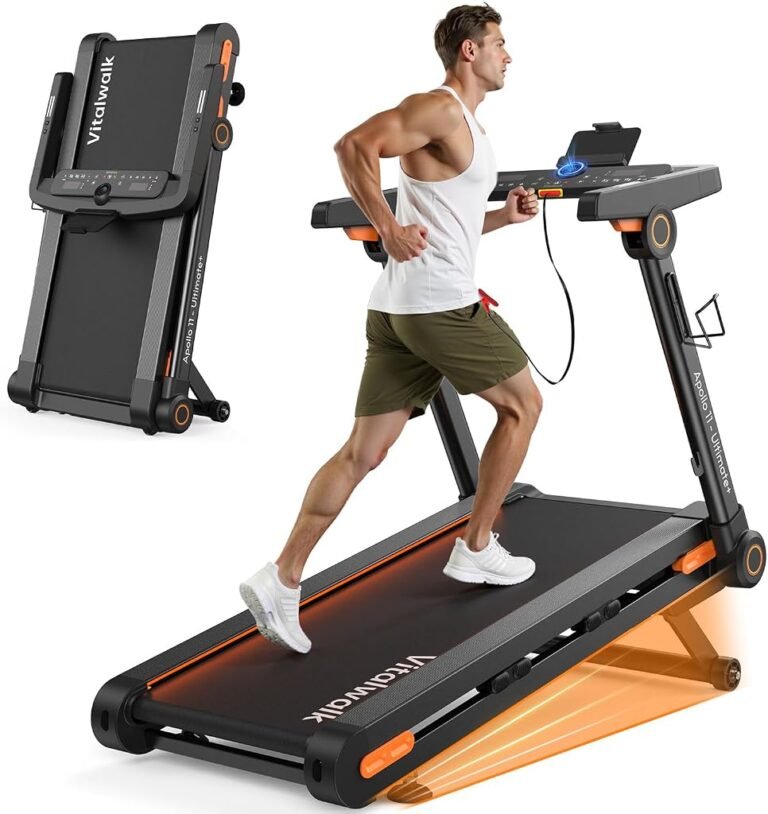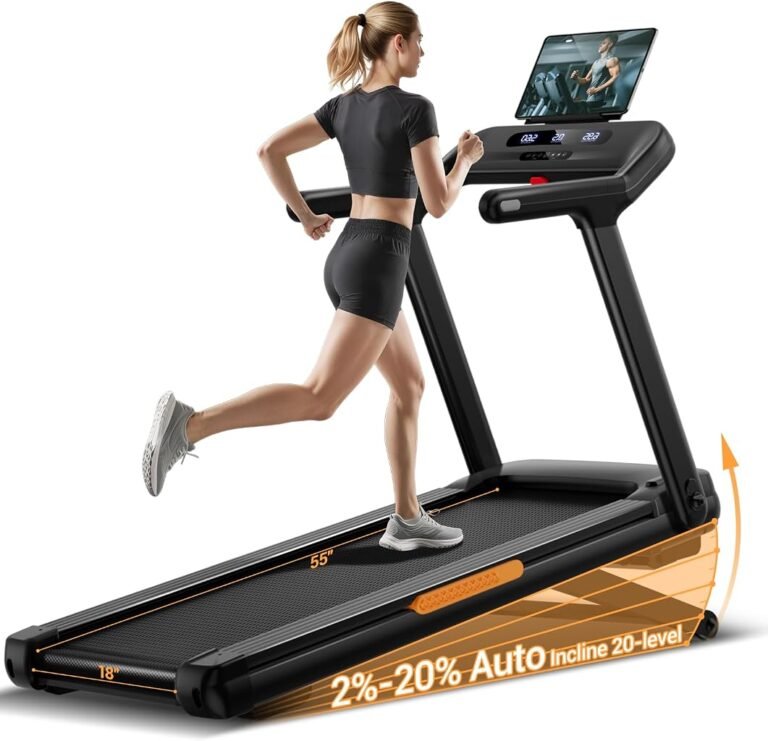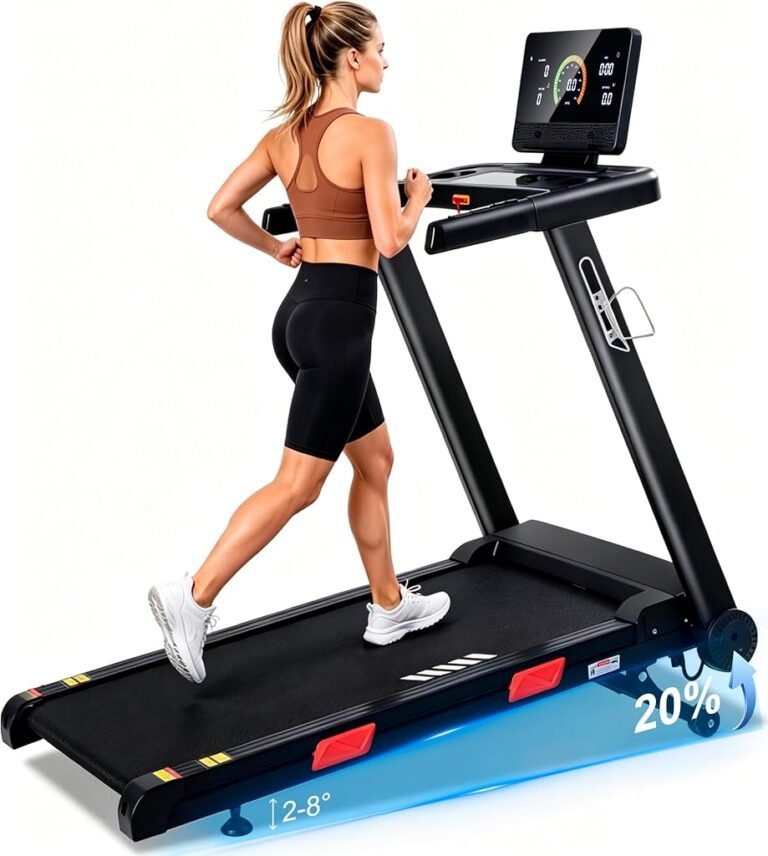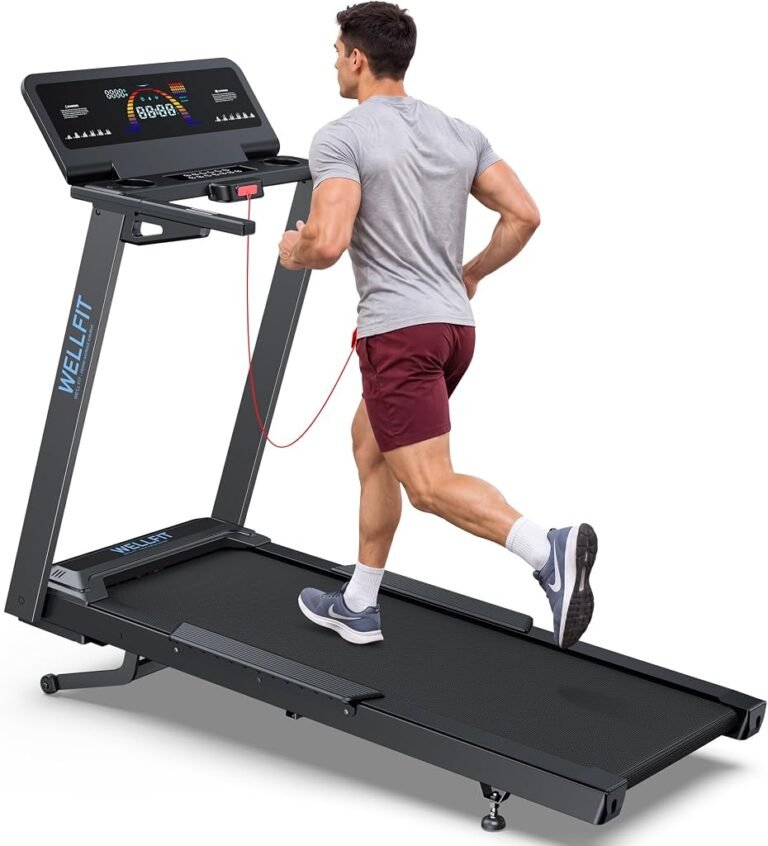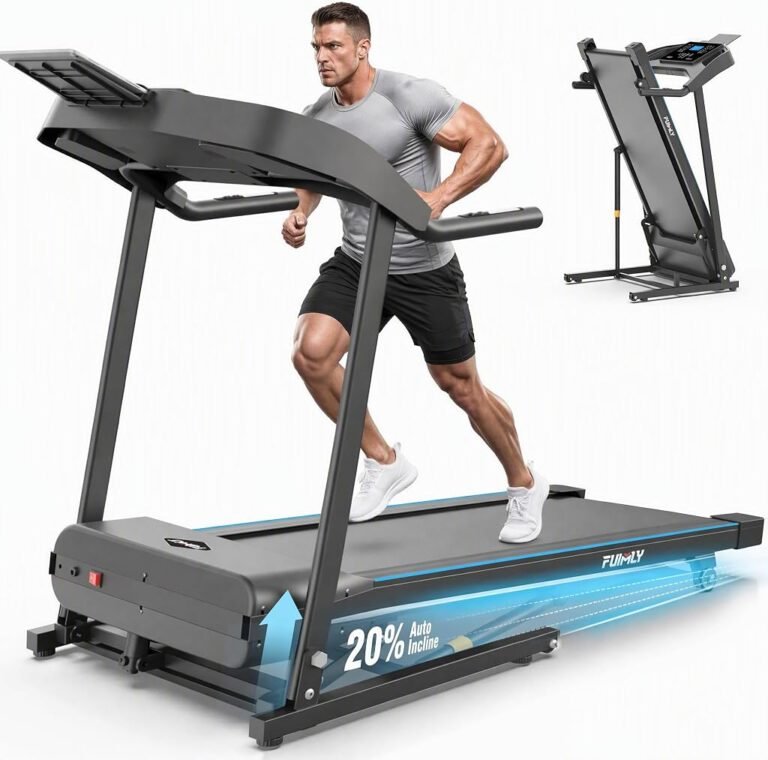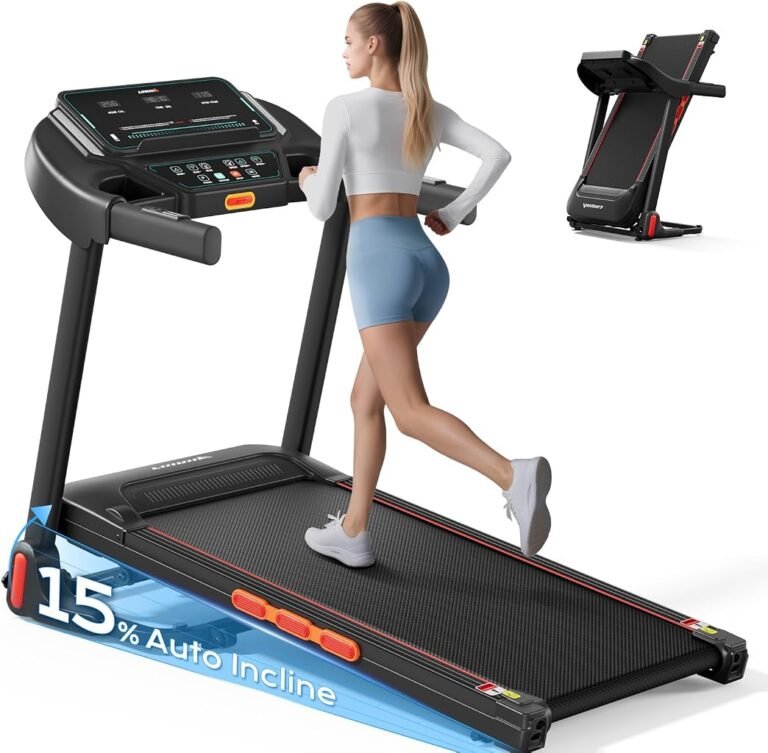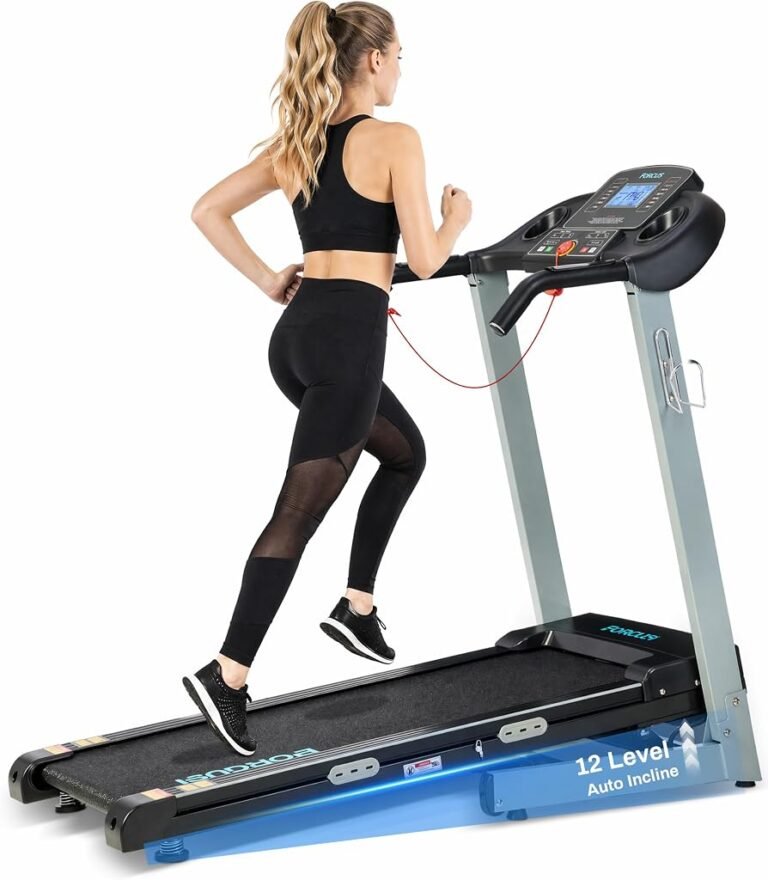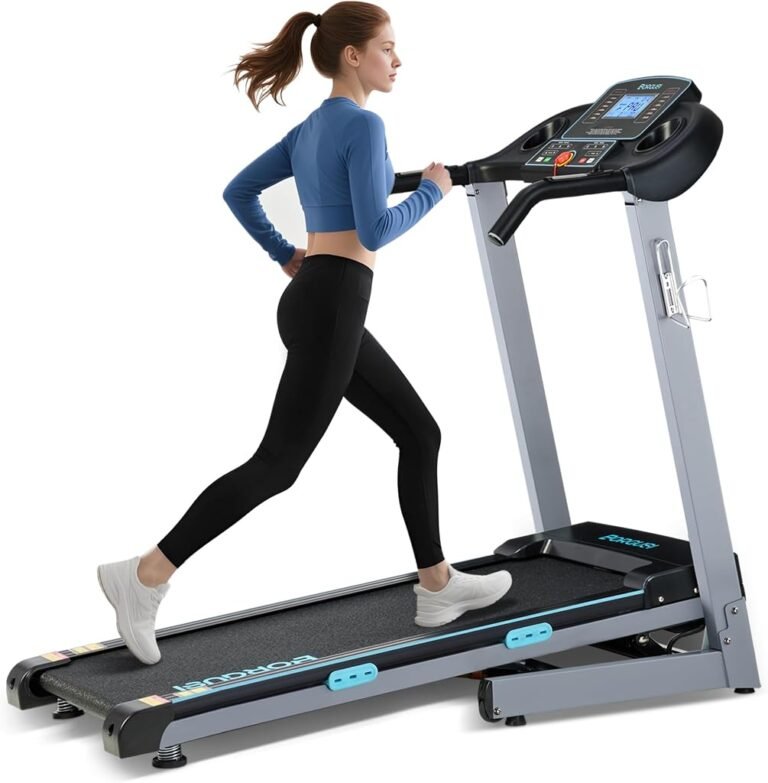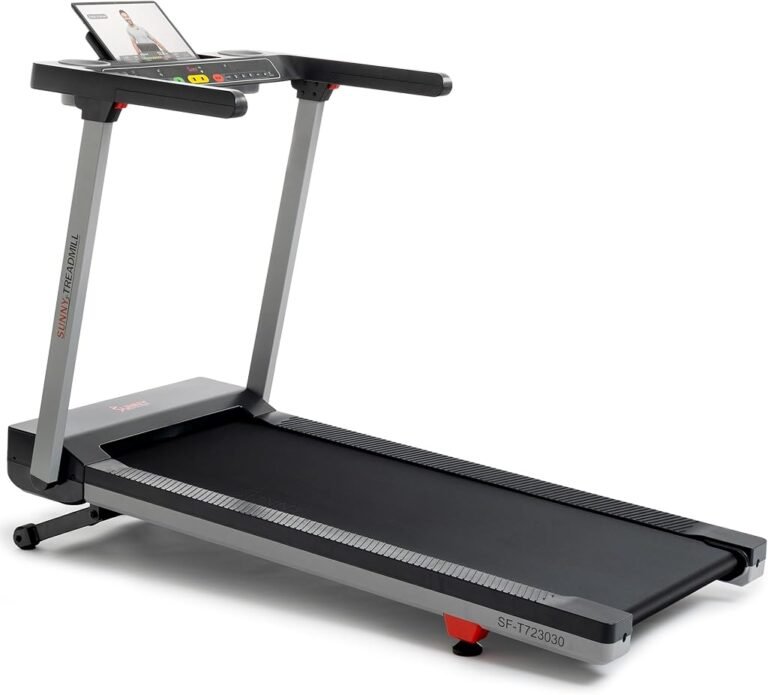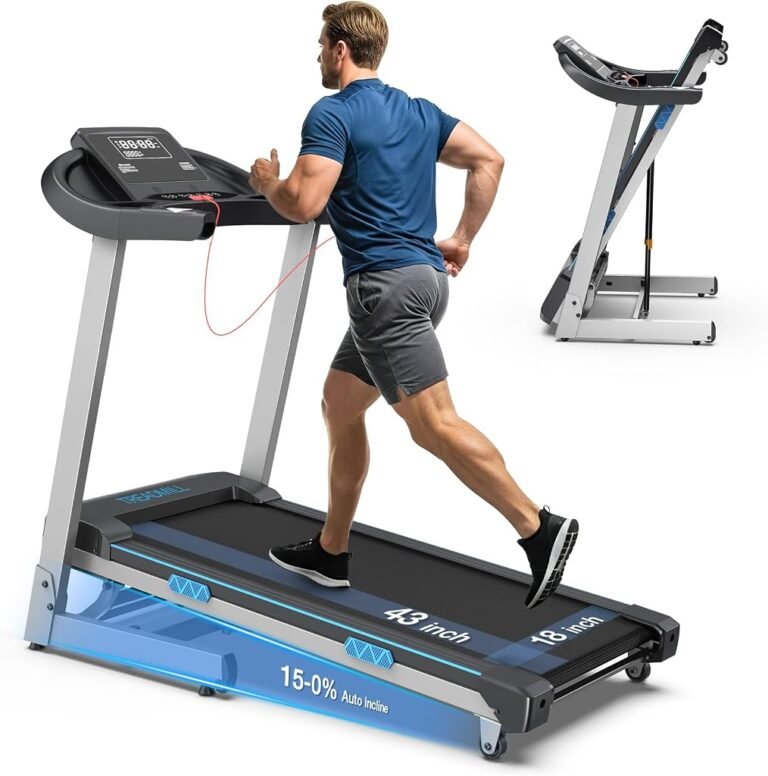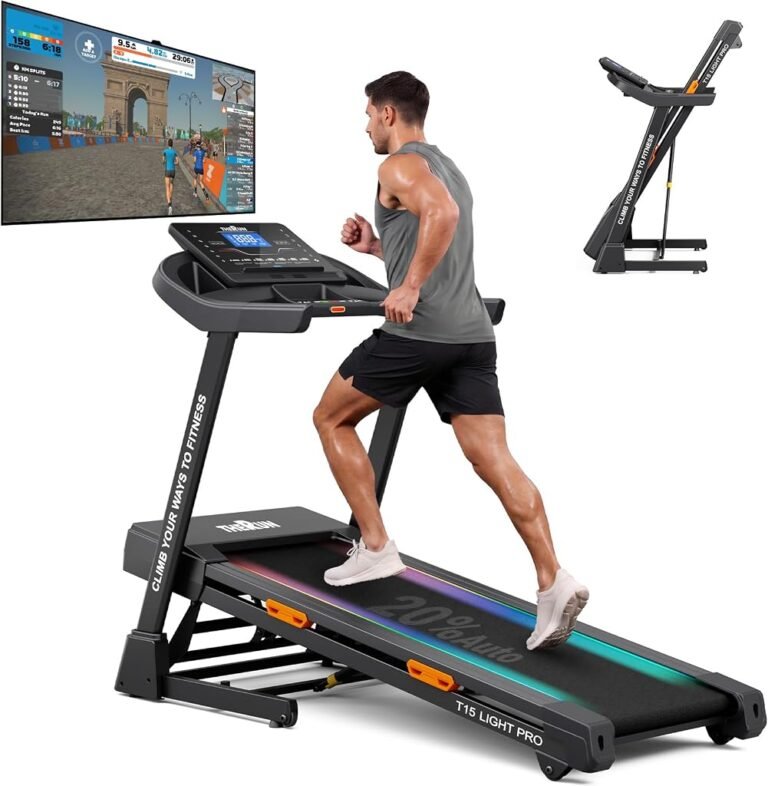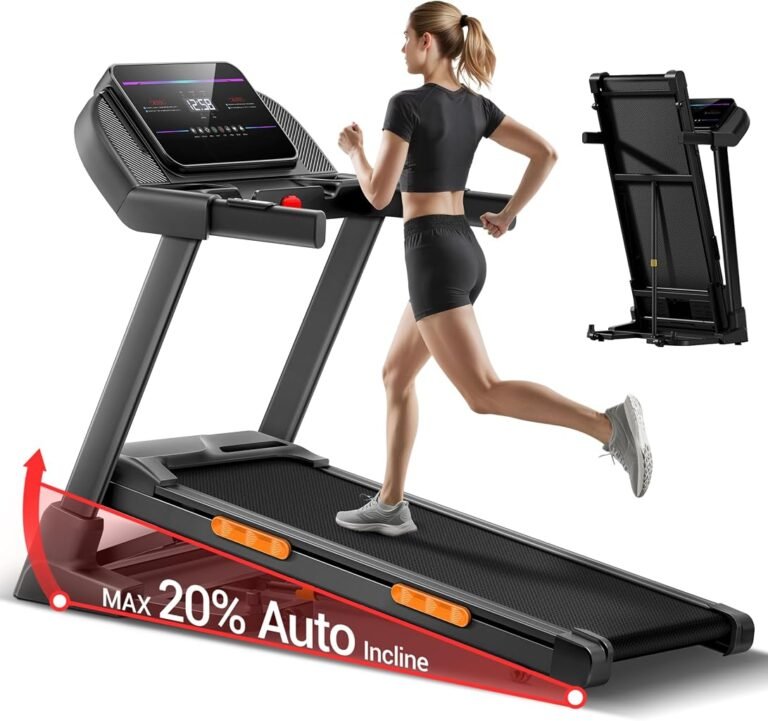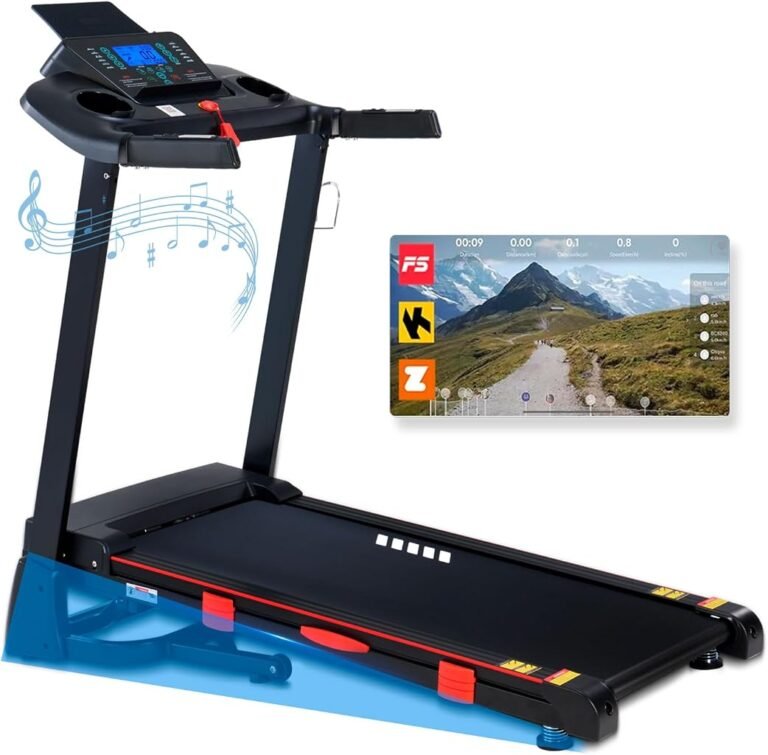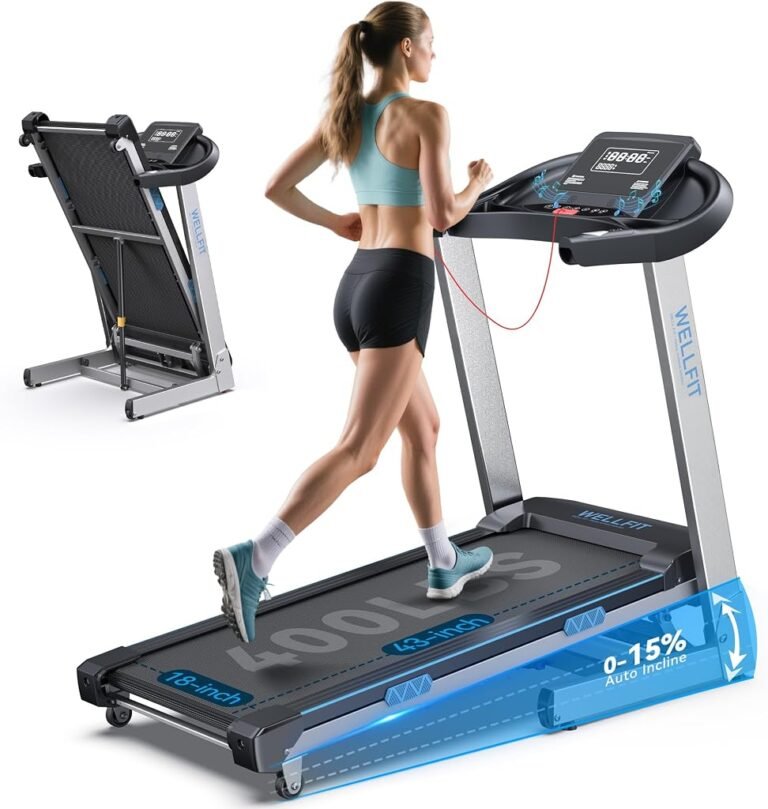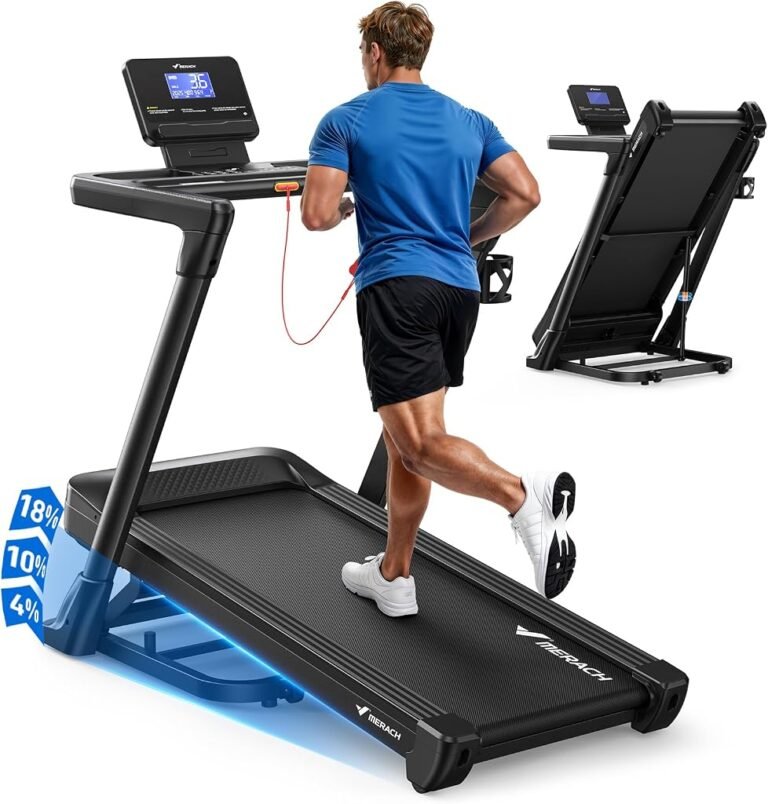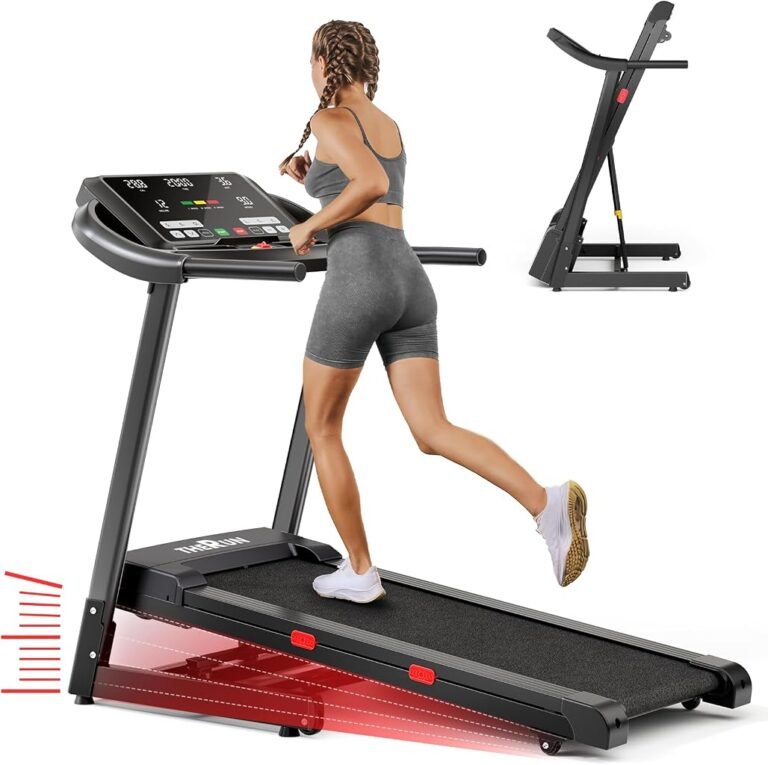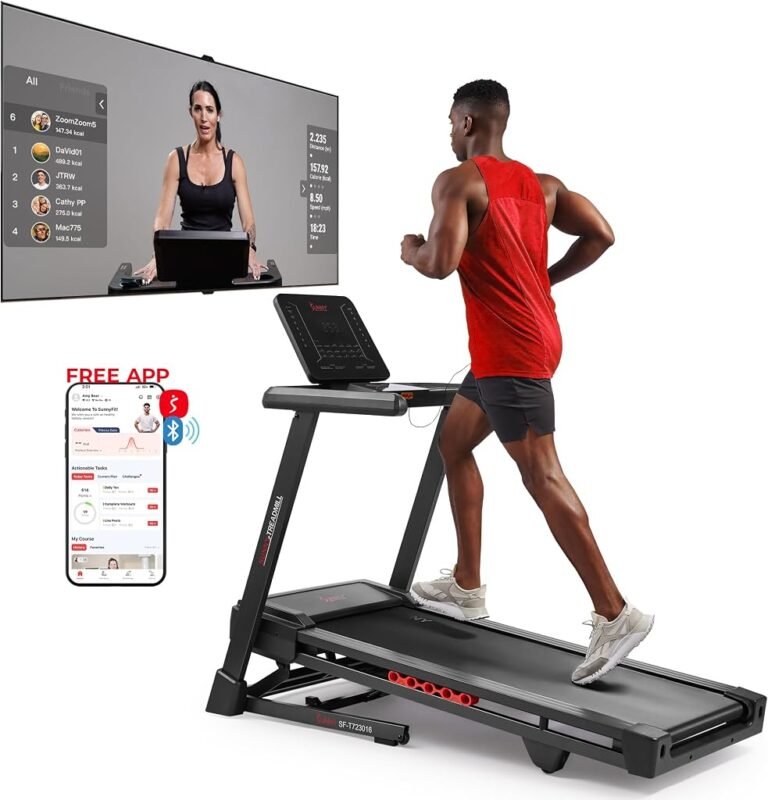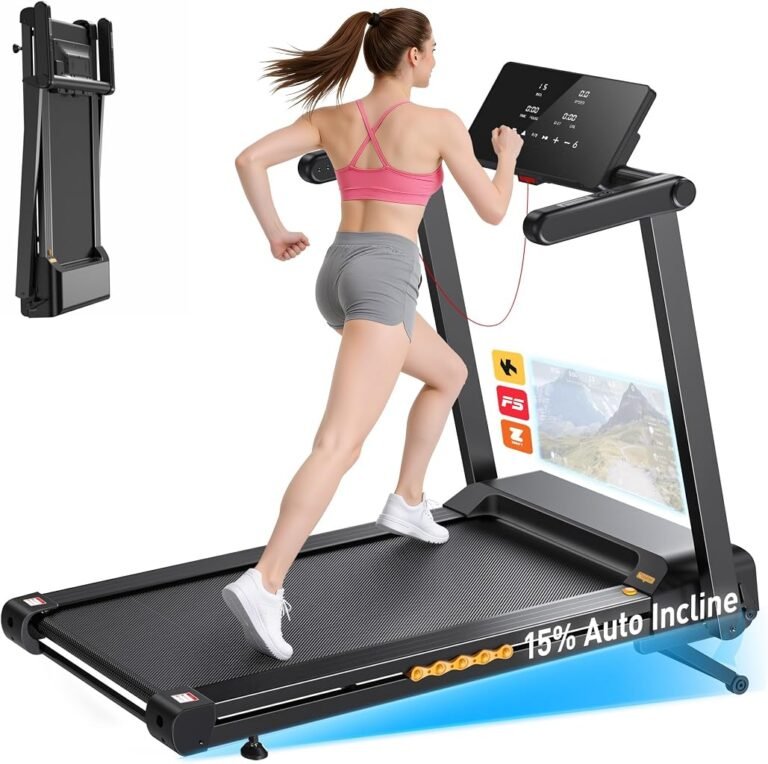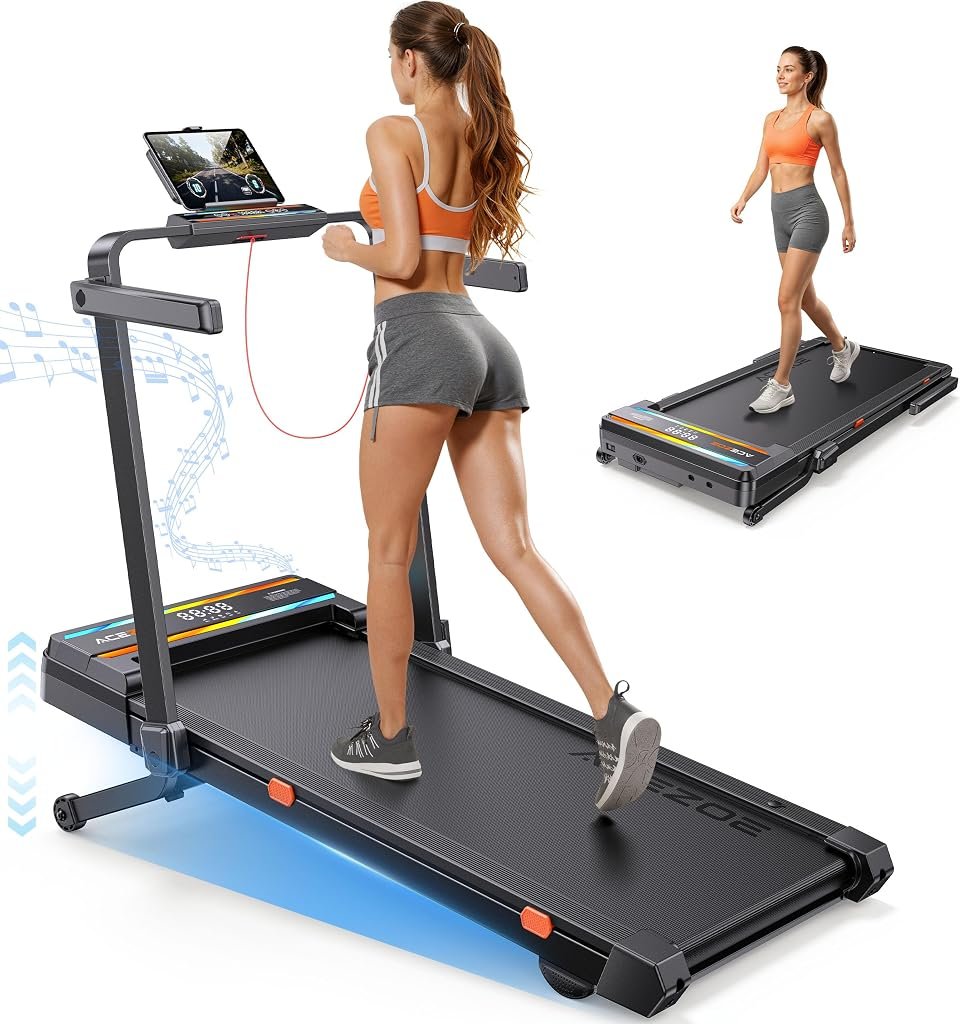
The Auto Incline Foldable Walking Pad with Handle Bar occupies an increasingly blurred space between the conventional walking pad and the full-size treadmill. The distinction matters. Walking pads traditionally emphasize compact dimensions and low-speed movement, while treadmills are expected to accommodate faster exercise, more substantial frames, incline training, and greater stability. This MERACH machine attempts to bridge those categories.
At $429.99, it is not priced like a minimalist under-desk walking pad. Its stated equipment package includes automatic incline, a foldable structure, a handlebar, a 3.5-horsepower brushless motor, screen and app functions, heart-rate monitoring, a stated 350-pound capacity, and configurations advertised with either a 15% or 18% maximum incline. The listing also references 47- and 55-inch lengths, 18- and 19-inch belt widths, and maximum speeds of either 8.7 or 10 mph depending on configuration.
Those variations demand attention. A shopper should establish exactly which configuration is being purchased rather than assuming the largest figures in a multi-variant listing apply universally.
Our Score is 8.87/10. Customer Sentiment reaches 8.94, Buyer Confidence is 9.09, and Value is 8.52. The pattern is revealing: confidence and perceived ownership quality lead the assessment, while value, although strong, is more restrained. At more than $400, this machine has to justify itself through capability and usability rather than merely being inexpensive.
It largely does.
More Treadmill Than the “Walking Pad” Name Suggests
The walking-pad label can undersell what this machine is intended to do.
A traditional walking pad is usually understood as a low-profile device built primarily for walking, often beneath a standing desk. A product advertising automatic incline, a substantial handle structure, heart-rate monitoring, a screen, and speeds potentially reaching 8.7 or 10 mph moves considerably closer to treadmill territory.
MERACH itself separates walking pads and treadmills within its current home-fitness range. Its lineup includes compact TrekPad products alongside foldable treadmills with automatic incline. That product taxonomy illustrates the problem neatly: modern compact cardio machines increasingly borrow features from both categories.
For the buyer, labels matter less than intended use.
Someone planning gentle walking while answering emails has very different requirements from someone expecting brisk incline sessions or sustained running. Belt dimensions, speed capability, handrail geometry, motor characteristics, and deck stability become increasingly consequential as pace rises.
This model’s proposition is therefore better understood as foldable home cardio equipment with walking-pad DNA rather than as a basic walking platform.
Automatic Incline Is the Defining Feature
Incline fundamentally changes what can be done without dramatically increasing belt speed.
Flat walking has an obvious place in everyday exercise. Raising the deck creates another intensity variable, allowing the user to increase workload while maintaining a comparatively controlled pace. For people who do not want to run-or cannot comfortably sustain running speeds-that flexibility can be particularly useful.
MERACH currently markets multiple incline systems across its treadmill family. Its T12, for example, is documented with up to 15% automatic incline, while other MERACH treadmill configurations are advertised with higher incline capabilities.
The product reviewed here is offered with 15%/18% incline language. Because multiple configurations are associated with the listing, buyers should verify the exact maximum incline of the selected version at checkout.
The practical advantage remains the same either way: powered adjustment allows grade to change during the workout without requiring the user to stop and manually reposition the deck.
That turns incline from a setup choice into a training variable.
A walker might begin flat, increase the grade for a harder section, return to a lower setting for recovery, and repeat. A more experienced user can combine speed and incline changes to create structured intervals.
This versatility is one reason automatic incline deserves substantial weight when comparing the best treadmills for home use. It expands training possibilities without demanding more floor space.
The Handlebar Changes the Safety and Usability Equation
The handlebar is another feature separating this machine from stripped-down walking pads.
Minimal walking pads make sense in specific environments, particularly at low speeds. Once speed and incline rise, however, a more conventional support structure becomes increasingly relevant.
The handle gives the user a stable point of contact when starting, stopping, adjusting settings, or regaining position. Heart-rate monitoring is also listed among the machine’s functions, adding another reason for an upright control structure.
That does not mean the handle should become a permanent crutch during every incline workout.
Holding substantial body weight through treadmill rails can change walking mechanics and reduce the effective workload. Users capable of walking safely without continuous support generally benefit from maintaining a natural upright posture and using the rails primarily when needed for stability or controls.
The handlebar nevertheless broadens the product’s practical identity. This is not merely a belt intended to disappear beneath furniture. It is built around deliberate exercise sessions.
Our Score: 8.87/10
An 8.87/10 overall score puts the machine near the upper end of our assessment scale.
That rating is driven by the balance between capability and home practicality. Automatic incline is useful rather than decorative. Folding addresses one of the persistent disadvantages of treadmills: the amount of domestic space they consume. The handlebar makes the format more suitable for deliberate training, while the stated speed options extend the potential use beyond slow walking.
The $429.99 price prevents an unqualified value endorsement. Buyers spending this amount should expect more than basic locomotion.
That is precisely why the feature set matters.
A basic walking pad can satisfy someone whose only objective is accumulating low-speed steps. Paying extra for automatic incline, higher speeds, a more substantial support structure, app functions, heart-rate monitoring, and a larger running surface makes sense only when those capabilities will actually be used.
Our 8.87 score therefore describes a strong multipurpose proposition, not a universal recommendation.
Customer Sentiment: 8.94
Customer Sentiment receives an 8.94 rating, slightly higher than the overall score.
That difference is small but meaningful. It indicates that the ownership proposition is one of the machine’s stronger dimensions.
Compact fitness equipment frequently encounters a difficult compromise. Reduce the footprint too aggressively and the machine can feel restrictive. Add substantial hardware and the product becomes harder to store. Increase speed and incline capabilities and structural demands rise again.
This MERACH configuration attempts to preserve foldability while offering a more treadmill-like exercise envelope.
The strong Customer Sentiment score suggests that this balance is broadly successful. Yet the figure should not erase individual fit. A treadmill belt that feels adequate to one person can feel narrow or short to another, particularly as running speed increases.
That makes the listing’s configuration differences unusually relevant.
A buyer comparing a 47-inch deck with a 55-inch deck, or an 18-inch belt with a 19-inch belt, is not examining trivial differences. Running surface changes can affect stride freedom and perceived space. Anyone planning substantial running should confirm the dimensions of the exact variant rather than treating the options as interchangeable.
Buyer Confidence: 9.09
Buyer Confidence is the highest editorial rating at 9.09.
Several characteristics support that result. MERACH has an established range of cardio equipment, publishes specifications for its current treadmill products, and offers multiple incline treadmill formats rather than treating this machine as an isolated experiment.
Its current T12 Pro, for example, uses a brushless motor, powered incline, a foldable frame, heart-rate monitoring, a digital display, and MERACH app compatibility. The exact specifications of that separate model should not be transferred to this product, but the overlap shows that these technologies are part of the manufacturer’s broader treadmill architecture.
A 9.09 confidence score does not remove the need for pre-purchase verification. In fact, the multi-configuration listing makes that step more necessary.
Before ordering, the buyer should confirm:
- Whether the selected version provides 15% or 18% maximum incline
- Whether its maximum speed is 8.7 or 10 mph
- The exact running-belt length and width
- The selected model’s assembled and folded dimensions
- The confirmed user-weight limit
- Which heart-rate functions are included
- Which features require the MERACH app
- Warranty coverage for the exact configuration
- Electrical requirements and recommended placement
- Clearance needed around the machine during operation
These are functional differences, not catalog trivia.
Value: 8.52
Value is rated 8.52, making it the lowest component score despite remaining firmly positive.
The reason is straightforward. At $429.99, the machine has entered a price range where buyers can compare it with conventional folding treadmills as well as premium walking pads. It therefore faces competition from two directions.
For a user who needs nothing more than flat walking at modest speeds, much of the hardware may be unnecessary. Automatic incline, higher maximum speed, heart-rate capability, and a more developed frame cost money whether the owner uses them or not.
For a household wanting one machine to cover walking, incline exercise, faster cardio, and potentially running, the economics look better.
Usage frequency sharpens the point.
At the $429.99 purchase price, 100 workouts correspond to roughly $4.30 of hardware cost per session. After 250 sessions, the figure falls to about $1.72. At 500 workouts, it is approximately $0.86.
Those calculations exclude electricity, maintenance, repairs, financing, and any other costs, but they illustrate why home-fitness value cannot be separated from adherence.
A cheaper treadmill used twelve times is expensive exercise equipment. A $429.99 machine used several hundred times can become comparatively economical.
A 350-Pound Stated Capacity Broadens the Audience
The product is advertised with a 350-pound maximum user capacity.
Weight ratings deserve careful interpretation. They are manufacturer limits, not promises that every person below the stated threshold will experience identical stability, comfort, or deck behavior.
Still, a higher stated capacity can broaden the range of potential users and may be relevant in a shared household.
Buyers near any equipment’s maximum limit should verify the exact selected model because this is another area where specifications can vary between superficially similar products. MERACH’s current treadmill range demonstrates that variation: different machines carry different capacity figures.
User weight is only one part of fit. Height, stride length, gait, intended speed, and running experience also matter.
A tall runner at high speed can place different spatial demands on a belt than a shorter person walking at 2.5 mph. Maximum load should therefore be treated as one specification within a larger ergonomic assessment.
Brushless Motor Design Has a Logical Place Here
The listing specifies a 3.5-horsepower brushless motor.
Brushless motor architecture is a reasonable choice for compact home exercise equipment because it eliminates the brushes used in traditional brushed motors. That distinction should not be inflated into unsupported claims about lifespan or noise for this particular machine, but it is technically relevant.
Motor power also needs context.
Horsepower figures alone do not establish treadmill quality. Control electronics, cooling, belt tension, user load, operating duration, drivetrain design, and manufacturer rating methods all affect actual behavior.
The appropriate question is therefore not whether “3.5 HP” sounds large. It is whether the selected configuration is rated for the user’s intended speed and exercise pattern.
The advertised speed range-up to either 8.7 or 10 mph depending on version-is considerably more ambitious than that of a conventional low-speed walking pad. Anyone intending to use the upper portion of that range should give running-surface dimensions and stability at least as much attention as motor labeling.
Folding Is Useful Only When Storage Is Realistic
“Foldable” is among the most overinterpreted descriptions in home fitness.
Folding does not mean invisible.
A folded treadmill still has mass and dimensions. It still requires somewhere to go. The path between its operating and storage positions must remain accessible, and the owner has to be willing to perform the folding process repeatedly.
MERACH’s current treadmill designs show that the company treats compact storage as a major design objective. Its T12, for instance, is advertised as a folding model aimed at smaller domestic spaces.
The concept suits apartments, multipurpose rooms, bedrooms, and offices particularly well-but only after measurement.
Before purchase, the buyer should mark the proposed operating footprint on the floor. The folded footprint should then be measured separately. Door swings, cabinets, radiators, desks, electrical outlets, and walking routes through the room should be considered.
A treadmill that technically fits but obstructs normal life will eventually become irritating. Irritating fitness equipment tends to be used less.
The Public-Health Context Favors Accessible Indoor Walking
The case for a home treadmill is ultimately less about machinery than repeated movement.
The latest National Center for Health Statistics analysis found that 47.2% of U.S. adults met federal aerobic physical-activity guidelines in 2024. The same analysis found substantial variation by age: 54.0% of adults aged 18-34 met the aerobic recommendation, compared with 38.4% among those aged 65 and older.
Federal guidance calls for adults to obtain 150 to 300 minutes of moderate-intensity aerobic activity each week, or 75 to 150 minutes of vigorous activity, or an equivalent combination.
A treadmill cannot guarantee any of those minutes. What it can do is alter the logistics.
Rain disappears from the equation. Darkness becomes irrelevant. A 20-minute session does not require a drive to the gym. Exercise can begin minutes after waking, between appointments, or after children are asleep.
That mundane accessibility is one of home cardio’s strongest attributes.
Incline Can Make Walking More Adaptable
One of the more compelling aspects of this MERACH design is that walking need not be treated as the preliminary stage before “real” exercise begins.
Walking is exercise.
A user can manipulate duration, speed, incline, and interval structure while remaining at a walking pace. For someone building fitness, that creates room for progression without immediately forcing a transition to running.
For example, a session could begin with several minutes of comfortable flat walking, progress to modest incline intervals, and finish with an easier cooldown. Over time, duration or incline could increase gradually.
There is no universal incline prescription suitable for every user. Age, conditioning, balance, medications, cardiovascular status, musculoskeletal issues, and exercise history can materially change what is appropriate.
The machinery provides the variable. The user still needs sensible progression.
How It Compares With a Basic Walking Pad
The central purchasing question is whether the added equipment is necessary.
A simple walking pad has genuine advantages. It can be lighter, cheaper, easier to place beneath a desk, and less visually dominant. Someone who only wants slow daily walking may prefer that simplicity.
The MERACH proposition becomes stronger when the buyer wants several modes of use from one machine.
Its advertised package supports a broader spectrum: low-speed walking, incline walking, faster cardio, and, depending on the selected configuration and individual fit, running.
That versatility has a cost in both money and physical bulk.
There is no contradiction there. Fitness equipment cannot simultaneously maximize running capability, structural support, minimal weight, tiny storage dimensions, and bargain pricing. Engineering choices have consequences.
This product chooses versatility over extreme minimalism.
Who Is Likely to Get the Most From It?
The strongest buyer fit is someone who wants a compact cardio machine but regards an ordinary walking pad as too restrictive.
That includes people who expect to progress from easy walking into harder incline sessions, households with users at different fitness levels, and buyers who value powered grade adjustment but cannot dedicate a permanent room to a full-size treadmill.
It also makes sense for users who anticipate alternating between walking and faster exercise.
The fit is weaker for someone seeking only under-desk walking. Such a buyer would be paying for capabilities that may remain unused.
Dedicated high-mileage runners should approach the decision from the opposite direction. They should focus heavily on exact belt dimensions, high-speed stability, long-session suitability, and the precise configuration being sold. Compact folding architecture is attractive, but serious running can place different demands on a treadmill than casual walking.
App and Screen Features Are Secondary, Not Central
The screen and app functions add convenience, but they should not determine the purchase.
Digital fitness features can make sessions more structured and provide useful tracking. They can also become distractions when shoppers allow software to overshadow the mechanical fundamentals.
The hierarchy should remain simple: belt dimensions, speed range, incline, stability, user capacity, controls, folding mechanism, and physical fit come first.
App functionality comes later.
A treadmill remains a physical machine. No interface compensates for a running deck that feels too short, a folded frame that does not fit its intended storage location, or a speed range mismatched to the user’s goals.
Buyers should therefore evaluate digital features as additions rather than foundations.
Where the Trade-Offs Appear
An 8.87/10 product still has compromises.
The first is price. $429.99 is reasonable for the breadth of the advertised equipment, but shoppers seeking straightforward walking can spend less by choosing simpler hardware.
The second is configuration complexity. Multiple incline, speed, and belt-size figures require buyers to pay attention before ordering. Selecting by product name alone is insufficient.
The third is space. Foldability helps, but a handlebar-equipped incline treadmill is fundamentally more substantial than an ultra-thin walking pad.
Finally, versatility creates expectations. A machine advertised at running speeds will naturally be evaluated more critically for deck dimensions and stability than a 4-mph walking pad. Buyers planning frequent running should choose their specific variant accordingly.
None of these issues undermines the machine’s central proposition. They define who should buy it.
Final Considerations
The Auto Incline Foldable Walking Pad with Handle Bar is better understood as a compact MERACH treadmill-walking-pad hybrid than as a basic device for accumulating steps.
Our Score of 8.87/10 reflects that broader capability. Customer Sentiment at 8.94 indicates a particularly favorable ownership proposition, while Buyer Confidence at 9.09 is the strongest element of the assessment. Value, at 8.52, trails the other ratings because the $429.99 price requires buyers to make genuine use of the expanded feature set.
Automatic incline is the defining advantage. The handlebar gives the machine a more conventional exercise structure. Folding improves its suitability for shared domestic space, while the stated brushless motor, screen, app support, heart-rate functionality, and broader speed range move it beyond minimalist walking-pad territory.
The main purchasing discipline is configuration verification. Buyers should confirm whether the exact version being ordered has a 15% or 18% maximum incline, an 8.7 or 10 mph top speed, and which belt dimensions apply. Those differences can materially alter suitability.
For someone who only needs gentle under-desk walking, this machine is more elaborate than necessary. For a dedicated high-mileage runner, exact dimensions and running characteristics deserve closer scrutiny.
Between those extremes lies a large group of home exercisers who want walking, incline training, faster cardio, compact storage, and physical support from one machine. That is where this MERACH model makes its strongest case among the best treadmills for home use.
Its appeal is ultimately practical rather than theatrical. A useful home treadmill reduces the distance-literal and psychological-between intending to exercise and actually doing it. With fewer environmental barriers, multiple intensity options, and a format that can be folded when the session ends, this machine is structured around that simple objective.
At $429.99 and an 8.87/10 editorial score, it earns a strong assessment for buyers who will exploit its incline and broader training range rather than treating it as an expensive flat walking belt. The hardware creates opportunities for movement; regular use determines whether those opportunities become meaningful.