Portable backup power looks deceptively simple until the electricity disappears. A refrigerator needs modest running power but considerably more at compressor startup. An RV air conditioner can impose a sharp starting load. A home well pump changes the arithmetic again. Battery power stations avoid exhaust and engine maintenance, yet stored watt-hours eventually run out. Fuel-burning generators can keep producing electricity as long as fuel remains available, but they bring noise, exhaust, maintenance and serious carbon-monoxide hazards.
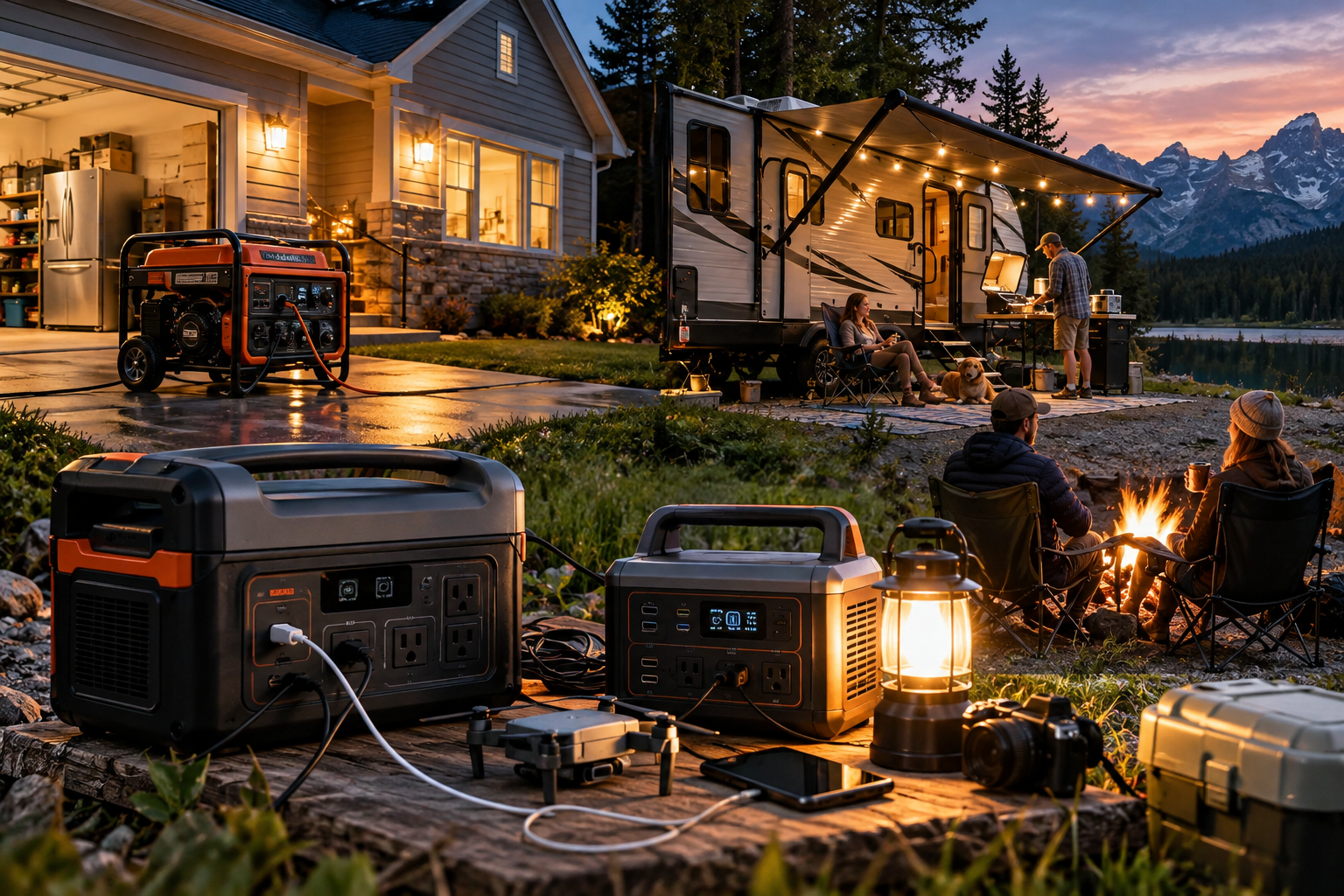
That leaves buyers with a more useful question than “Which generator is biggest?” The question is what must remain powered, for how long, under what conditions, and with what fuel or charging source.
This guide separates three broad approaches: conventional portable generators, inverter generators and battery power stations. Each solves a different version of the outage problem. The same 5,000-watt label can conceal meaningful differences in starting output, continuous output, fuel type, electrical connections, portability and operating behavior.
Safety sits above all of those specifications. The Centers for Disease Control and Prevention’s generator guidance says portable generators should operate outdoors more than 20 feet from windows, doors and vents. It also advises using battery-powered or battery-backup carbon-monoxide detectors in the home.
That distance is not optional housekeeping. Carbon monoxide is colorless and odorless, and combustion generators produce it. A generator in a garage with the door open is still in a garage.
Portable Power Station Vs Gas Generator For Backup Power
The portable power station vs gas generator for backup power question begins with energy storage versus energy production.
A battery station stores a finite amount of electrical energy. Its inverter converts battery output into AC electricity for household devices. Once the stored energy is depleted, the battery must be recharged from the grid, solar panels, a vehicle or another compatible source.
A fuel generator converts gasoline, propane or natural gas into electricity while its engine runs. Its practical energy reserve therefore depends heavily on available fuel. Refueling can extend an outage far beyond the endurance of a single battery charge.
Battery stations have substantial advantages indoors because they do not produce combustion exhaust at the point of use. They are also suited to overnight electronics, refrigerators, lights, communications equipment and campsites where engine noise would be disruptive. They still require normal electrical and battery-safety discipline, but carbon-monoxide exhaust is not part of their operation.
Fuel generators are better suited to prolonged high loads when adequate fuel can be stored or obtained. Large home-backup units can support pumps, refrigerators, freezers and selected household circuits for extended periods.
The distinction becomes stark during a multiday outage. A large battery may run essential equipment quietly for hours, but depleted capacity has to come from somewhere. A generator needs fuel, but a fresh fuel supply effectively resets its endurance.
Neither architecture wins every assignment.
How Many Generator Watts Do You Need For Home Backup?
“How many generator watts do you need for home backup?” has no responsible single-number answer because houses do not consume electricity uniformly.
Sizing begins with running watts and starting watts. Running wattage is the power equipment requires after reaching normal operation. Starting wattage accounts for the temporary surge demanded by motors and compressors when they begin operating.
A refrigerator, freezer, sump pump, well pump or air conditioner can therefore matter more than its steady-state number suggests.
A practical load worksheet should include:
- Refrigeration and freezer loads.
- Well or sump pumps.
- Furnace blower or boiler controls.
- Selected lights.
- Internet and communications equipment.
- Medical or accessibility equipment where applicable.
- Microwave or small cooking appliances.
- Window or portable air conditioning where required.
- RV air conditioning and converter loads for camping use.
- Any other motor-driven appliance expected to start while another load is already running.
The arithmetic is not simply the sum of every appliance nameplate in the building. It should reflect the loads that will actually operate together, plus the largest relevant startup demand.
This is why how to size a portable generator for home backup is fundamentally an exercise in prioritization. Keeping a refrigerator, gas-furnace blower, lights and router running is a different assignment from attempting to reproduce normal whole-house life during an outage.
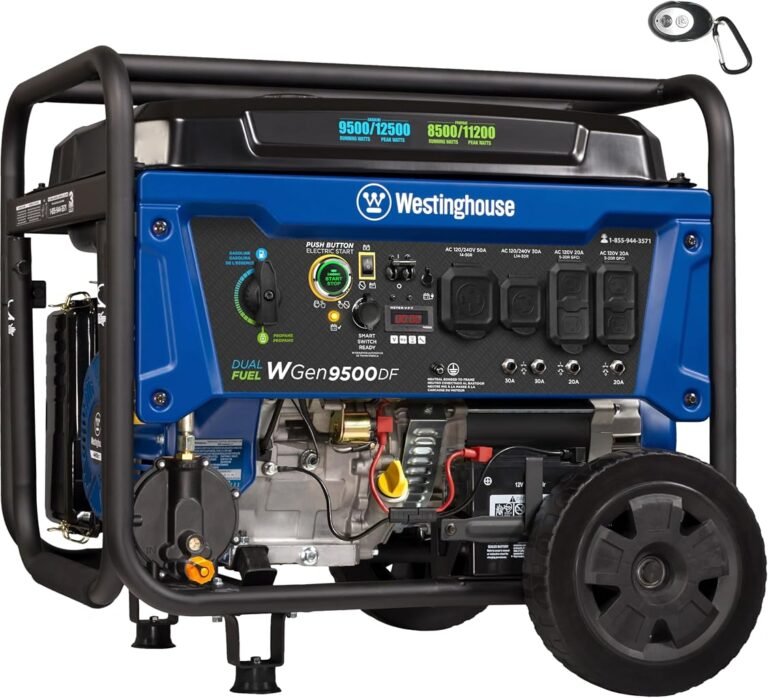
Large machines such as the Westinghouse 14500 Peak Watt Tri-Fuel Portable Generator, Westinghouse 13500 Peak Watt Dual Fuel Portable Generator, Westinghouse 12500W Dual Fuel Portable Generator, Generac 12500 Starting Watt Tri-Fuel Portable Generator, DuroStar DS13000MX 13000W Dual Fuel Portable Generator and DuroMax XP13000EH 13000W Dual Fuel Portable Generator belong in the higher-output discussion.
A Westinghouse 14500 Peak Watt Tri-Fuel Portable Generator review or DuroMax XP13000EH 13000W Dual Fuel Portable Generator review should therefore focus on substantial home-backup loads, fuel strategy, connections and installation planning rather than treating peak wattage as an abstract contest.
Peak Watts And Running Watts Are Different Numbers
Generator names frequently foreground their larger number. That is often peak or starting output rather than continuous running capacity.
This distinction matters because an appliance cannot be planned around a brief surge rating as though that power were continuously available. Buyers should locate both ratings in the manufacturer’s documentation for the exact configuration being considered.
The same discipline applies when reading a Westinghouse 5000 Peak Watt Gas Inverter Generator with Wheel Kit review, Westinghouse 5000 Peak Watt Gas Inverter Generator with 30A Outlet review, A-iPower GXS5000 5000W Portable Generator review or Oxseryn 5000W Portable Inverter Generator review. “5,000 watts” in a product name does not, by itself, describe the entire electrical capability.
That becomes even more important when comparing differently named machines. The WEN GN5600 5600W Portable Generator, Green-Power America GPD5000W Gas Portable Generator and Pulsar PG5250B 5250W Dual Fuel Portable Generator sit in a broadly similar numerical neighborhood, but wattage alone cannot establish equivalence.
Outlet configuration, running output, startup output, fuel system and intended connection method still need to match the job.
Inverter Generator Vs Conventional Generator
The inverter generator vs conventional generator choice is partly about how electricity is produced and managed.
A conventional portable generator uses an engine and alternator arrangement intended to maintain the speed needed for AC output. An inverter generator generates electricity and electronically conditions the output. Many inverter designs can adjust engine operation as demand changes rather than operating in the same manner across all loads.
For buyers, the practical questions are noise, efficiency at partial load, portability, electrical quality, price and required output.
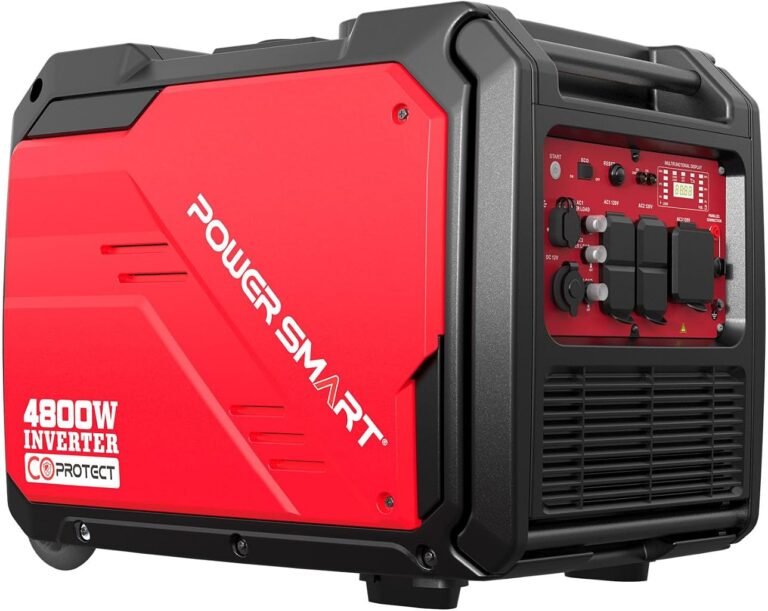
Smaller inverter generators are particularly attractive for RVs, campsites and electronics-heavy backup plans. Products in this group include the Champion 4000W RV Ready Inverter Generator, Aceup Energy 4000W Gas Inverter Generator, ERAYAK 4500W Portable Inverter Generator, PowerSmart 4000W Portable Inverter Generator, Pulsar PGD40ISCO 4000W Gas Inverter Generator and GENKINS 4200W Inverter Generator.
A Champion 4000W RV Ready Inverter Generator review naturally belongs in the RV discussion because its product identity explicitly targets that use. A PowerSmart 4000W Portable Inverter Generator review and Pulsar PGD40ISCO 4000W Gas Inverter Generator review fit buyers looking around the same nominal-output class.
At higher output, models such as the WEN DF680iX 6800W Dual Fuel Inverter Generator, GENMAX GM6000iED 6000W Dual Fuel Inverter Generator and AIVOLT 8000W Dual Fuel Inverter Generator push inverter architecture toward more demanding backup applications.
The 4,000-To-6,000-Watt Class Is Crowded For A Reason
Mid-output portable generators cover a useful middle ground: substantial enough for selected household loads or many RV requirements, but generally less imposing than 12,000- to 14,500-peak-watt home-backup machines.
The Oxseryn 5000W Open Frame Inverter Generator, maXpeedingrods 4000W Inverter Generator with Bluetooth, maXpeedingrods 5KW Inverter Generator, WEN 56477i 4800W Portable Inverter Generator and GENMAX GM6000XiE 6000W Open Frame Inverter Generator illustrate how varied this middle class has become.
The words around the wattage matter. “Open frame,” “dual fuel,” “Bluetooth,” “electric start” and “inverter” describe different attributes. None should be translated automatically into quieter operation, longer runtime or better electrical performance without verified manufacturer specifications.
That restraint is especially useful when reading a maXpeedingrods 4000W Inverter Generator with Bluetooth review. Bluetooth is a stated connectivity feature; it does not establish generator performance by itself. The same logic applies to a PowerSmart 4800W Electric Start Inverter Generator review: electric start changes starting convenience, not the fundamental wattage calculation.
The PowerSmart 4800W Electric Start Inverter Generator with 30A Outlet review introduces another practical feature: a named 30A connection. For RV or backup planning, outlet type can be as consequential as another few hundred watts on a product label.
Dual Fuel Vs Tri-Fuel Generators
The dual fuel vs tri-fuel generators decision is fundamentally about resilience and fuel logistics.
Dual-fuel designs commonly provide two fuel choices, frequently gasoline and propane. Tri-fuel models add a third fuel source, often natural gas. Exact compatibility must always be confirmed for the specific generator.
Gasoline is energy-dense and widely available during ordinary conditions, but long-term storage requires care. Propane stores differently and can simplify some emergency planning. Natural gas can be attractive where service remains available during an electrical outage, but a generator’s natural-gas capability must match the household installation.
The WEN DF475T 4750W Dual Fuel Portable Generator, Pulsar Products GD400BN 4000W Dual Fuel Inverter Generator, BILT HARD 4500W Dual Fuel Portable Generator, PowerSmart 3800W Dual Fuel Inverter Generator and DuroMax XP5500HX 5500W Dual Fuel Portable Generator all belong in the two-fuel conversation.
A WEN DF475T 4750W Dual Fuel Portable Generator review should therefore examine the value of fuel flexibility against the buyer’s actual storage plan. A DuroMax XP5500HX 5500W Dual Fuel Portable Generator review belongs to the same decision tree at a different named output.
Tri-fuel machines become more compelling when three genuinely usable fuel sources improve outage planning. A Generac 12500 Starting Watt Tri-Fuel Portable Generator review and Westinghouse 14500 Peak Watt Tri-Fuel Portable Generator review should be read through that resilience lens.
Three fuel choices are useful only when the owner can safely and practically access them.
Westinghouse 5000W Dual Fuel Inverter Generator Vs WEN DF480iX
The westinghouse 5000w dual fuel inverter generator vs wen df480ix comparison puts two similarly positioned inverter concepts beside each other.
The Westinghouse 5000 Peak Watt Dual Fuel Inverter Generator with CO Sensor names dual-fuel operation and a CO sensor. Another configuration, the Westinghouse 5000 Peak Watt Dual Fuel Inverter Generator with Wheel Kit, explicitly emphasizes mobility hardware.
The WEN DF480iX 4800W Dual Fuel Inverter Generator identifies dual-fuel capability and inverter architecture in a slightly lower named wattage class.
The decision should not be made from the 200-watt difference in their names. Buyers should compare verified running output on each intended fuel, startup capacity, outlet configuration, weight, dimensions, noise documentation, runtime at comparable load, warranty conditions and compatibility with the intended RV or home connection.
A Westinghouse 5000 Peak Watt Dual Fuel Inverter Generator with CO Sensor review is especially relevant where the named CO-sensing feature is a priority. Such technology does not alter the CDC’s placement rule: combustion generators still belong outdoors, more than 20 feet from doors, windows and vents.
WEN DF680iX Vs GENMAX GM6000XiE Inverter Generator Comparison
A wen df680ix vs genmax gm6000xie inverter generator comparison raises a similar issue at higher output.
The WEN DF680iX 6800W Dual Fuel Inverter Generator advertises dual-fuel operation in its identity. The GENMAX GM6000XiE 6000W Open Frame Inverter Generator identifies itself as an open-frame inverter model.
That makes fuel flexibility and physical architecture immediate comparison points, while the named wattage suggests different output ceilings.
The buyer should still verify continuous output rather than assuming 6,800 versus 6,000 tells the whole story. Fuel choice can also affect rated output, so gasoline-to-gasoline or propane-to-propane comparisons are more meaningful than mixing specifications across fuels.
A WEN DF680iX 6800W Dual Fuel Inverter Generator review and GENMAX GM6000XiE 6000W Open Frame Inverter Generator review should consequently be read beside the household load worksheet, not in isolation.
RV Generator Wattage Guide
An RV generator wattage guide starts with the largest simultaneous loads rather than RV length.
Air conditioning is often the defining demand because compressor startup can create a short surge. Microwave ovens, electric water heating, converters, coffee makers and other high-draw devices can then stack on top.
The sensible procedure is to identify each appliance’s actual electrical requirement from its label or manual and decide which loads need to run simultaneously. Load management can dramatically reduce the generator size required.
A 30A connection can also matter because many RV electrical systems are organized around a 30-amp service. Products explicitly naming 30A outlets deserve inspection by buyers whose RV connection uses that format, while adapters and wiring must be properly rated for the intended current.
The Westinghouse 5000 Peak Watt Gas Inverter Generator with 30A Outlet and PowerSmart 4800W Electric Start Inverter Generator with 30A Outlet therefore belong naturally in RV research.
Smaller alternatives include the PowerSmart 2500W Portable Inverter Generator, Generac 2500W Gas Inverter Generator, 2500W Portable Inverter Generator with CO Sensor and Westinghouse 1500 Peak Watt Gas Inverter Generator. Their appeal increases when the camping load is modest and portability matters more than running several high-demand appliances together.
A PowerSmart 2500W Portable Inverter Generator review should be approached very differently from a Westinghouse 6600W Home Backup Portable Generator review. They solve different electrical problems.
Home Backup Requires A Safe Connection Strategy
Extension cords can supply individual appliances when they are correctly rated and used according to generator and appliance instructions. Powering household circuits is another matter.
Backfeeding a house by improvising a connection through a receptacle can energize utility lines and endanger workers. FEMA explains that a manual transfer switch disconnects a facility from the commercial grid when generator power is selected, preventing generator electricity from backfeeding into the grid.
This is particularly relevant for larger units such as the Westinghouse 6600W Home Backup Portable Generator, Westinghouse 12500W Dual Fuel Portable Generator, Westinghouse 13500 Peak Watt Dual Fuel Portable Generator and DuroStar DS13000MX 13000W Dual Fuel Portable Generator.
A Westinghouse 6600W Home Backup Portable Generator review should therefore consider the connection plan alongside generator output. Large capacity without a safe method of delivering power to intended circuits is an incomplete backup system.
Battery Stations Change The Runtime Equation
Portable power stations replace fuel-tank thinking with watt-hours.
Watts describe power at a moment in time. Watt-hours describe stored energy. A 100-watt device theoretically consuming power for five hours uses 500 watt-hours, before accounting for conversion losses and other system effects.
That distinction makes battery sizing relatively transparent. First determine how many watts each device draws. Then estimate how many hours it needs to operate. Multiply watts by hours for an energy estimate and build a margin around the result.
The Jackery Explorer 1000 v2 Portable Power Station belongs in lighter backup and portable-use research, while the Jackery Explorer 2000 v2 Portable Power Station represents a larger named family. The Jackery HomePower 3000 Portable Power Station and Jackery HomePower 3600 Plus Power Station move further toward home-backup positioning, while the Jackery Explorer 5000 Plus Power Station targets still greater stored-power needs by product identity.
Other battery alternatives include the EF ECOFLOW DELTA 3 Max Portable Power Station, ALLPOWERS R2500 V2 Portable Power Station with Solar Panel and BROWEY 1600W Portable Power Station with Built-in Solar Panel.
The solar references require careful reading. A built-in panel or bundled solar panel does not mean instant or unlimited recharging. Solar yield changes with panel area, orientation, weather, season, shading and charging limits.
Jackery Explorer 2000 V2 Vs EF ECOFLOW DELTA 3 Max
A jackery explorer 2000 v2 vs ef ecoflow delta 3 max comparison should start with usable energy and output rather than ecosystem loyalty.
Both belong in the larger portable-power-station conversation, but buyers need verified battery capacity, continuous AC output, surge capability, charging rates, solar-input limits, expansion options, port selection, weight and battery chemistry for an exact comparison.
The intended load then determines which specifications matter.
For refrigerator backup, energy capacity and overnight endurance may dominate. For power tools, inverter output can matter more. For camping, weight and charging flexibility become more prominent. For a home system expected to recharge from solar after a long outage, solar-input capability deserves much closer attention.
A Jackery Explorer 2000 v2 Portable Power Station review and EF ECOFLOW DELTA 3 Max Portable Power Station review should therefore be read as energy-management assessments, not generator reviews without gasoline.
The same applies to a Jackery HomePower 3600 Plus Power Station review and Jackery Explorer 5000 Plus Power Station review. Battery capacity changes the duration of stored backup; it does not turn stored energy into an inexhaustible source.
Smaller Combustion Generators Reward Load Discipline
Not every outage requires home-scale output.
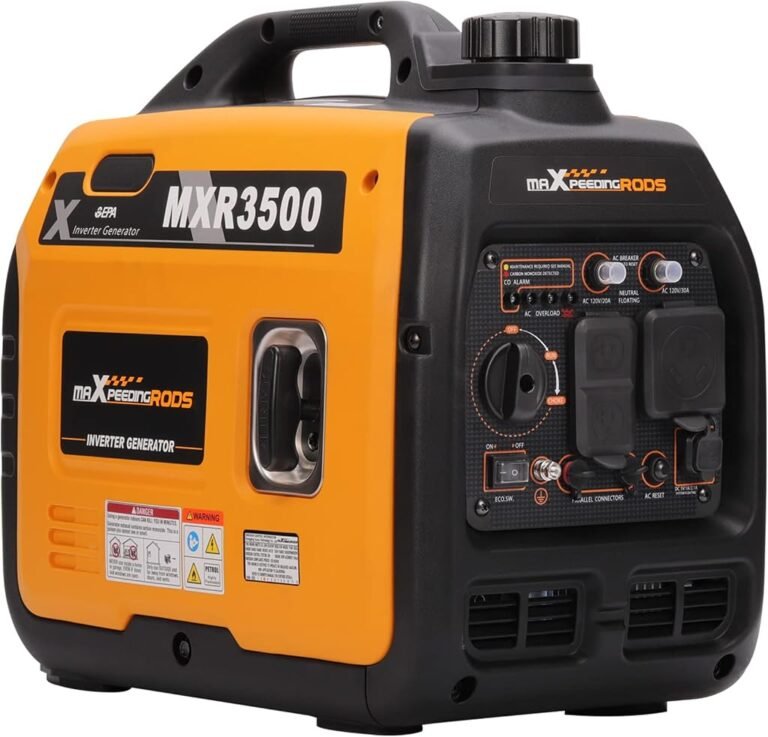
The maXpeedingrods 3500W Gas Inverter Generator, PowerSmart 3800W Dual Fuel Inverter Generator, Champion 4500W Electric Start Dual Fuel Inverter Generator and BILT HARD 4500W Dual Fuel Portable Generator fit users willing to prioritize loads rather than power everything simultaneously.
A Champion 4500W Electric Start Dual Fuel Inverter Generator review should appeal particularly to buyers seeking the combination named in the product itself: inverter architecture, dual-fuel capability and electric starting.
The ERAYAK 4500W Portable Inverter Generator review belongs in a similar output conversation, while a PowerSmart 4400W Dual Fuel Inverter Generator review adds fuel flexibility as a stated attribute.
Moving upward, the GENKINS 8000W Electric Start Inverter Generator and AIVOLT 8000W Dual Fuel Inverter Generator target more demanding applications by their named output. A GENKINS 8000W Electric Start Inverter Generator review should therefore be compared against the owner’s actual high-load requirements rather than smaller camping generators.
Oversizing has costs: purchase price, physical bulk and potentially greater fuel use. Undersizing has a different cost: overloads and the inability to start critical equipment.
The useful generator is the one sized to a deliberate load plan.
Carbon Monoxide Changes Where A Generator Can Be Used
No combustion-generator buying guide is complete without confronting the hazard directly.
The CDC says carbon monoxide “kills without warning” and reports that it claims hundreds of lives each year while making thousands more ill.
Its placement guidance is equally direct: never run a generator inside a home or garage, even with doors and windows open, and operate it outside more than 20 feet from windows, doors and vents. Battery-powered or battery-backup CO detection is also recommended.
That rule applies to gasoline, propane and other combustion-generator configurations. A CO sensor on a generator adds a safety feature; it does not grant permission for indoor operation.
Camping deserves the same caution. Tents, campers, open windows and neighboring sites can all be affected by exhaust placement. Wind direction should not be treated as a substitute for safe separation.
Battery stations have an obvious advantage in this narrow comparison: they produce no engine exhaust while discharging. That makes them far better suited to indoor electrical loads, subject to the manufacturer’s operating and charging instructions.
How To Store And Maintain A Portable Generator Between Uses
“How to store and maintain a portable generator between uses” should be answered before the first emergency, not during the second.
The owner’s manual for the exact machine governs maintenance intervals and fuel procedures. Engine oil, air filtration, spark plugs, battery condition on electric-start models and fuel-system care all deserve attention according to manufacturer schedules.
Fuel deserves particular discipline. Gasoline ages, and storage rules vary with container, formulation, stabilizer use and local fire regulations. Propane has different storage requirements. A generator stored with neglected fuel can become an expensive object that fails precisely when the grid does.
A sensible preparedness routine includes periodic inspection, checking oil according to the manual, examining cords and connectors, keeping ventilation openings unobstructed, confirming that the intended fuel is available, and testing CO alarms.
Owners should also know how the generator will reach its operating location. A heavy machine buried behind seasonal storage is not genuinely ready.
Wheel kits become meaningful in this context. A Westinghouse 5000 Peak Watt Gas Inverter Generator with Wheel Kit review or Westinghouse 5000 Peak Watt Dual Fuel Inverter Generator with Wheel Kit review should consider mobility as part of deployment, especially because safe outdoor placement may require moving the unit a substantial distance from the building.
When A Portable Inverter Generator Will Not Start
A portable inverter generator will not start for many mundane reasons, and frantic troubleshooting during an outage encourages mistakes.
The first reference should be the manufacturer’s troubleshooting sequence. Common checks can include fuel availability and condition, oil level where low-oil protection is fitted, switch and choke positions, battery state on electric-start systems and whether maintenance has been neglected.
The machine should remain outdoors during troubleshooting if starting attempts could produce exhaust. Moving it into a garage for convenience is not a reasonable diagnostic shortcut.
Long storage makes prevention more useful than improvisation. Following the manufacturer-prescribed storage procedure, maintaining the starting battery where applicable and periodically inspecting the machine can reduce failure risk.
Electrical overload should also be separated from engine-start failure. A generator that starts but trips when loads are connected may be facing a different problem from an engine that never runs.
When diagnosis moves beyond documented owner procedures into fuel-system, electrical or internal engine repair, qualified service is the more defensible route.
Reading The Remaining Midrange Options
Several products fill narrow spaces between the better-defined groups.
The PowerSmart 4800W Portable Inverter Generator review belongs beside the WEN 56477i 4800W Portable Inverter Generator review for buyers around the same named output. The WEN model identifies inverter architecture; exact differences require verification from each current manufacturer specification.
The Green-Power America GPD5000W Gas Portable Generator review and A-iPower GXS5000 5000W Portable Generator review belong with straightforward fuel-generator buyers who do not need the purchasing decision framed around a battery ecosystem.
The Oxseryn 5000W Portable Inverter Generator review and Oxseryn 5000W Open Frame Inverter Generator review address two differently described configurations under the same broad output banner. Frame design and exact specifications should be verified before treating them as substitutes.
The maXpeedingrods 5KW Inverter Generator review similarly belongs with buyers considering higher-output inverter machines, while the maXpeedingrods 3500W Gas Inverter Generator review makes more sense for restrained load plans.
The WEN DF480iX 4800W Dual Fuel Inverter Generator review and GENMAX GM6000iED 6000W Dual Fuel Inverter Generator review add fuel flexibility to the inverter discussion. The latter’s higher named output may appeal to heavier loads, but continuous ratings on the intended fuel remain the numbers that deserve comparison.
Final Considerations
Portable backup power is ultimately a resource-allocation problem disguised as an appliance purchase.
A household first needs to identify what cannot reasonably lose power. Refrigeration, medical equipment, sump pumps, well pumps, heating controls and communications often deserve priority over attempts to reproduce every convenience of grid electricity. Once those loads are measured, generator sizing becomes arithmetic rather than aspiration.
Combustion generators suit prolonged outages and heavier sustained loads when fuel is available. Inverter generators can make particular sense for RVs, camping and households balancing output with portability and partial-load operation. Dual-fuel and tri-fuel machines expand fuel choices, but extra fuel modes have value only when the owner can actually supply them.
Battery stations solve a different