Portable-generator shopping has an identity problem. Wattage numbers are large, model names are dense, and visually similar machines can differ materially in electrical output, engine design, outlet configuration, starting hardware, and generator architecture. That makes the exact model number more informative than the largest number printed in a product headline.
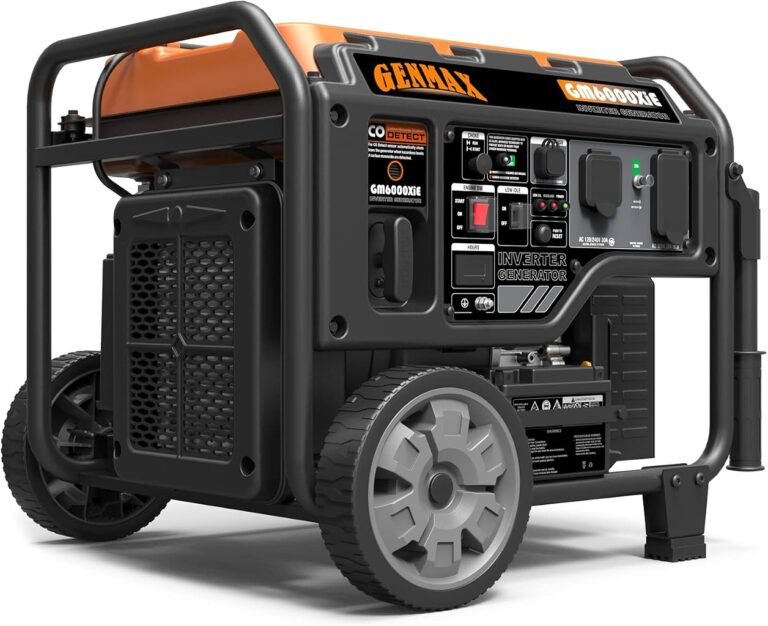
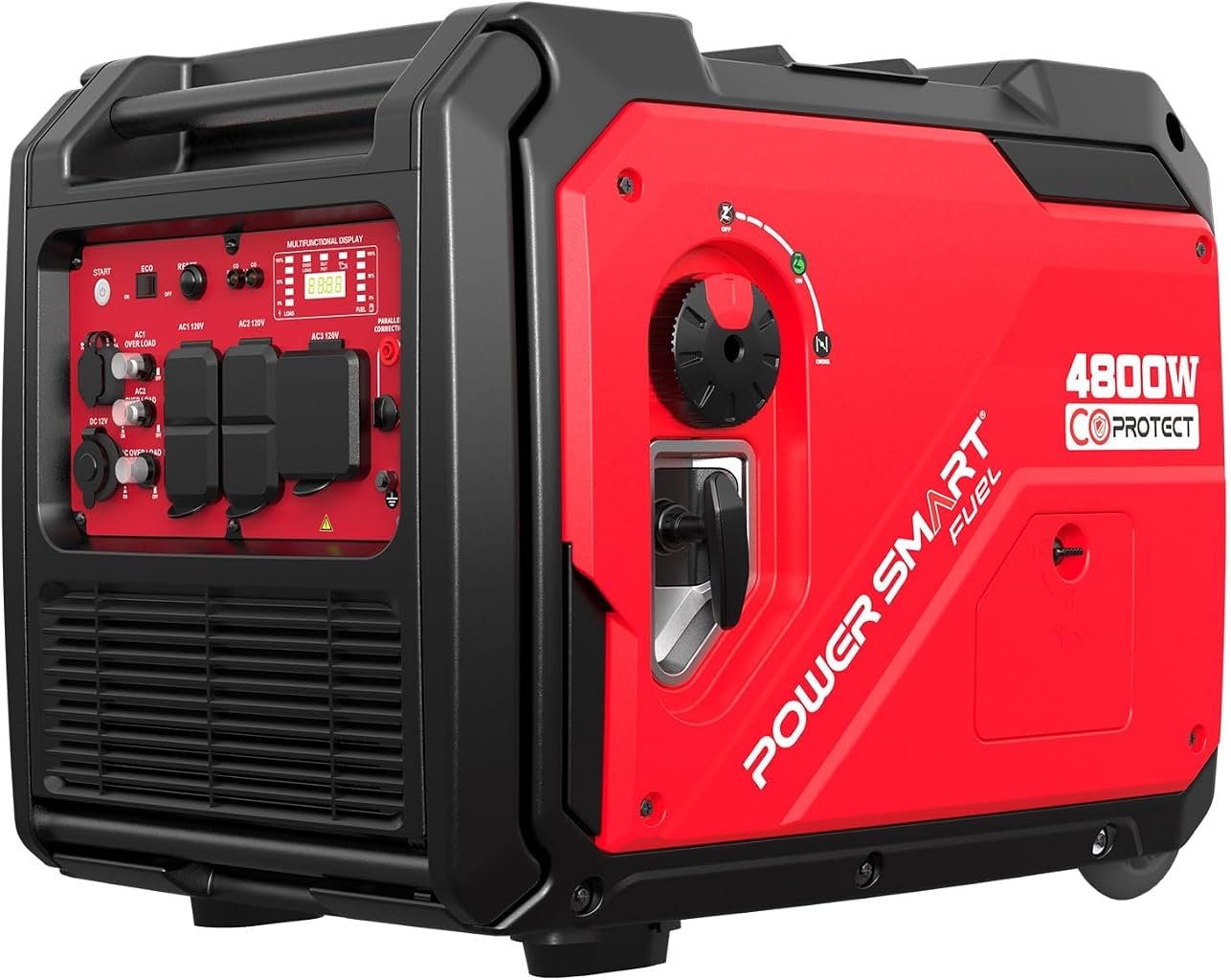
That distinction is unusually significant here. The identifiable generator associated with this review is the GENMAX GM6000XiE, not a PowerSmart 4,800-watt generator. GENMAX describes the GM6000XiE as a 6,000-watt open-frame inverter generator with electric start. Assigning a 4,800-watt PowerSmart identity to that machine would obscure rather than clarify what a buyer is getting.
The technical assessment therefore follows the verifiable GENMAX GM6000XiE configuration while preserving the broader question that matters to shoppers: whether this electric-start inverter generator offers a convincing mixture of usable output, portability, electrical quality, safety, and value.
Our score is 7.96/10. Customer Sentiment is 7.62, Buyer Confidence reaches 9.1, and Value stands at 7.79. Those ratings create an unusually revealing spread. Product identification and core specifications inspire considerably more confidence than the overall ownership proposition. At a reference price of $599.99, the generator has credible strengths, but they coexist with trade-offs that deserve careful examination.
The First Number to Understand Is 6,000, Not 4,800
GENMAX identifies the GM6000XiE as a gasoline-powered open-frame inverter generator rated at 6,000 starting watts and 5,250 running watts.
That distinction immediately changes the load-planning exercise.
Starting watts represent temporary capacity available when electrical equipment demands extra current during startup. Running watts describe the output available for sustained operation. Electric motors and compressors make this distinction particularly relevant because their initial electrical demand can exceed their steady-state consumption.
For the GM6000XiE, the 5,250-watt running figure is therefore the more useful number for everyday planning.
A portable generator buying guide should always separate starting and running capacity for precisely this reason. A household that adds appliance wattages until reaching 5,900 watts would not have a viable continuous-load plan simply because the generator carries a 6,000-watt headline figure.
The correct calculation begins with 5,250 watts and then preserves additional capacity for startup events.
That output gives the GM6000XiE considerably more sustained capacity than a typical 4,000-running-watt inverter generator. The difference can become meaningful when several household appliances, RV systems, or job-site tools need electricity simultaneously.
Open-Frame Inverter Design Creates an Interesting Middle Ground
The phrase “open-frame inverter generator” combines two design ideas that buyers sometimes assume are mutually exclusive.
Traditional open-frame generators generally expose much of the engine and alternator assembly within a tubular frame. Enclosed inverter generators typically surround their mechanical components with molded panels intended partly to manage sound and portability.
The GM6000XiE takes a different route. It uses inverter electronics while retaining an open-frame physical layout.
That matters because “inverter” describes the electrical architecture rather than the shape of the enclosure.
Inverter technology can provide regulated electrical output suited to a broader range of equipment, including electronics. GENMAX markets the GM6000XiE around inverter power while also positioning its open-frame construction for home backup and job-site applications.
The arrangement has an obvious logic. Buyers who prioritize higher output and straightforward physical access may not need the fully enclosed form common among camping-oriented inverter generators.
The trade-off is equally intuitive: open construction should not automatically be expected to reproduce the acoustic behavior of a smaller, heavily enclosed recreational inverter model.
Noise comparisons should therefore use measured figures from comparable operating conditions rather than relying on the inverter label alone.
5,250 Running Watts Changes What Can Be Powered
The difference between 4,000 and 5,250 running watts may look modest beside household utility service, but in portable-power planning it represents 1,250 additional continuous watts.
That extra capacity can materially change load combinations.
A refrigerator, freezer, communications equipment, lighting, chargers, television, and selected kitchen equipment can create a moderate baseline load. Pumps and compressor-driven appliances add startup demands. Electric heating appliances can consume capacity rapidly.
The GM6000XiE’s 5,250-running-watt ceiling gives users more room to construct a selective backup plan without moving into very large portable-generator classes.
Selective remains the operative idea.
A 5,250-watt portable generator is not equivalent to unrestricted household electricity. Central air-conditioning equipment, electric water heating, electric ranges, clothes dryers, resistance heaters, and other large loads can consume thousands of watts individually.
The most effective planning method is a written load inventory.
Each intended appliance should have its normal running demand recorded. Motor-driven equipment should also have its startup requirement identified. The combined running load must remain below generator capacity, with enough reserve for the largest realistic startup event.
This is less exciting than comparing peak-watt numbers, but it is how generator capacity becomes useful electricity rather than advertising arithmetic.
Electric Start Makes Sense at This Size
Electric starting is particularly appropriate as generator engines and output levels increase.
The GM6000XiE includes an electric-start system, reducing reliance on repeated manual recoil pulls during routine operation.
That convenience has practical relevance during outages and work-site use. Generator operation often begins under inconvenient circumstances: utility power has already failed, weather may be poor, lighting may be limited, or equipment needs to be brought online quickly.
Electric start reduces one piece of friction.
It does not turn a portable generator into an automatic standby system. The GM6000XiE still requires correct outdoor positioning, fuel, startup, load connection, and shutdown. It does not automatically assume household electrical demand when utility service disappears.
Buyers deciding between portable and permanently installed backup power should keep that distinction clear.
A portable generator exchanges automation for mobility and generally lower acquisition complexity. A standby system addresses a different use pattern, typically involving permanent installation and automatic transfer equipment.
The 30-Amp Question Requires Exact Outlet Verification
A 30A outlet can materially increase a generator’s usefulness, but outlet type matters as much as amperage.
RV receptacles and locking generator receptacles are not interchangeable merely because both may carry a 30-amp designation. Plug geometry, voltage, intended equipment, and electrical configuration must match the application.
For that reason, buyers should verify the exact receptacle arrangement on the GM6000XiE model being purchased rather than assuming compatibility from a generic “30A outlet” description.
This matters particularly for RV owners.
A TT-30R receptacle is associated with 120V 30-amp recreational-vehicle connections. Other 30A generator receptacles can use locking configurations intended for different connection arrangements.
Adapters can solve certain compatibility problems, but they do not increase generator capacity or alter the underlying electrical configuration.
The outlet panel should therefore be treated as part of the generator’s specification, not an accessory detail.
Our Score: 7.96/10
Our 7.96/10 score reflects a generator with credible electrical capacity and useful inverter architecture, tempered by a less compelling overall balance than its strongest specifications initially suggest.
A 6,000-starting-watt and 5,250-running-watt inverter generator has enough output to address serious portable-power jobs. Electric starting improves routine operation. The open-frame design aligns naturally with backup and work-site use.
Yet a score just below eight also recognizes that wattage alone cannot carry the entire assessment.
Generator ownership includes physical movement, storage, fuel management, noise, maintenance, safe outdoor operation, electrical connection, and eventual service requirements. The machine must make sense across that entire cycle.
Customer Sentiment at 7.62 sits below our overall rating. That difference is meaningful without being dramatic. It suggests a product whose specification sheet presents a somewhat stronger proposition than the ownership experience represented by the sentiment score.
Our editorial assessment therefore remains favorable but measured.
Buyer Confidence: 9.1
Buyer Confidence is the strongest score at 9.1, substantially above the 7.96 overall rating.
That separation deserves interpretation.
Confidence and enthusiasm are not the same thing. A product can be relatively easy to identify and evaluate while still carrying meaningful trade-offs.
The GM6000XiE has a defined manufacturer, model number, generator architecture, fuel type, starting method, and output class. Those facts allow a buyer to establish what the machine is intended to do.
That clarity reduces one of the most common generator-shopping risks: buying according to an ambiguous title rather than an exact model.
The 9.1 Buyer Confidence score therefore reflects specification certainty more than universal suitability.
A homeowner can compare 5,250 running watts against an appliance inventory. A work-site user can evaluate the output against tool requirements. A buyer who specifically wants an inverter generator can identify that architecture directly.
The stronger the product identification, the easier it becomes to say either yes or no for a particular workload. That ability has substantial editorial value even when the product does not dominate every other category.
Value: 7.79
Our Value score is 7.79.
At a reference price of $599.99, the GM6000XiE sits in a range where buyers should compare features rather than simply dollars per peak watt.
The generator’s 5,250 running watts are more relevant than the 6,000-watt headline when evaluating price against usable capacity. Inverter architecture and electric start also carry value beyond raw output.
Even so, approximately $600 opens a broad field of alternatives.
Some buyers may prioritize dual-fuel capability. Others may accept conventional generator architecture in exchange for greater output. RV owners may focus on receptacle compatibility and acoustic behavior. Home-backup users may prioritize connection options and runtime.
The 7.79 score reflects that competitive pressure.
The GM6000XiE can represent rational value when its particular combination of inverter power, output, electric start, and open-frame construction matches the job. Its case becomes weaker when a buyer pays for capabilities that do not align with the intended use.
Value, in this category, is inseparable from workload.
Inverter Power Has Particular Relevance for Mixed Loads
Modern emergency-power loads are increasingly electronic.
A refrigerator may sit beside a fiber or cable modem, Wi-Fi router, laptop, television, phone chargers, battery chargers, and electronically controlled appliances. A job site may combine conventional motor-driven tools with chargers and digital equipment.
That mixture gives inverter architecture practical relevance.
The generator still needs correct sizing, and sensitive electronics should always be operated according to manufacturer requirements. Yet the presence of inverter power makes the GM6000XiE conceptually different from a conventional open-frame generator focused principally on brute electrical output.
This hybrid identity is arguably the machine’s defining characteristic.
It aims to combine the physical straightforwardness and higher-output orientation of an open-frame generator with the electrical architecture associated with inverter models.
For buyers who want both characteristics, that is a coherent proposition.
Carbon Monoxide Remains the Non-Negotiable Safety Issue
Every gasoline generator produces exhaust, and every combustion-generator review eventually arrives at the same uncompromising physical reality: carbon monoxide can kill without providing a sensory warning.
The Centers for Disease Control and Prevention’s portable-generator guidance says generators should be used outdoors at least 20 feet away from doors, windows, and vents.
CDC’s guidance is explicit: “Never use a generator inside your home or garage, even if doors and windows are open.”
The warning is easy to understand once the hazard is separated from ordinary ideas about ventilation.
An open garage door does not transform a garage into an outdoor location. A porch, carport, basement, crawlspace, shed, or partially enclosed area can also create dangerous exhaust conditions.
Distance is part of the safety system.
Indoor carbon-monoxide alarms provide another layer of protection, but they do not justify placing a generator close to occupied structures.
A generator’s convenience should never determine its operating position. Exhaust safety should.
Home Backup Requires More Than Enough Watts
The GM6000XiE’s 5,250 running watts make it relevant to residential backup, but generating enough electricity is only half of the problem.
The other half is delivering that electricity safely.
Individual appliances can be supplied using correctly rated extension equipment where appropriate. Feeding installed household circuits is a different matter.
The U.S. Consumer Product Safety Commission has repeatedly warned about generator backfeeding hazards. Connecting a generator to household wiring through improvised male-to-male cords can energize exposed conductors and create electrocution and fire risks.
A proper household connection requires equipment intended to prevent unsafe interaction between generator power and utility service. Transfer equipment should be selected and installed according to applicable electrical requirements.
This distinction is especially relevant with a generator powerful enough to tempt owners into treating it like a small utility supply.
More output does not make improvised wiring safer.
Portability Is Relative at Higher Output Levels
Portable generators become less casually portable as output rises.
At this class, mobility should be understood as the ability to move a generator between storage, transport, and operating locations-not as an expectation that one person will casually carry it over significant distances.
This affects purchasing decisions in ways specification sheets can obscure.
A household needs a storage location. The generator then needs a safe outdoor operating location at least 20 feet from openings under CDC guidance. The path between those points may involve steps, gravel, slopes, narrow gates, or uneven ground.
RV and work-site users face similar logistics.
Generator mobility should therefore be assessed physically before purchase. Buyers need to consider who will move the machine, where it will be stored, how it will be transported, and whether its operating location can be reached safely.
These mundane questions often matter more after purchase than another few hundred peak watts.
Fuel Storage Is Part of the Ownership Cost
A gasoline generator is only as useful as the fuel available to it.
Gasoline storage brings its own management requirements. Fuel containers need appropriate storage, and local fire-safety rules can govern quantities and locations. Stored gasoline also changes over time, making fuel-management practices relevant for equipment that may sit unused between outages.
This is one area where a gasoline-only machine can be less flexible than a dual-fuel competitor.
Propane-capable generators allow owners to maintain another fuel option, though propane output can differ from gasoline output depending on the machine.
The GM6000XiE should therefore appeal most strongly to buyers comfortable with gasoline as their primary portable-power fuel.
For emergency preparedness, the fuel plan should be developed before the outage, not after nearby service stations lose electricity or face heavy demand.
Who Fits the GM6000XiE Profile?
The identifiable GM6000XiE configuration aligns most naturally with several user groups:
- Households seeking selective backup power with more than 5,000 watts of sustained capacity.
- Job-site users who value open-frame construction and inverter electrical architecture.
- Buyers who prefer electric starting over recoil-only operation.
- Users who need enough output for several moderate loads while retaining startup headroom.
- Owners who value inverter technology but do not require the fully enclosed form associated with many recreational models.
- Buyers prepared to manage gasoline storage, routine engine maintenance, outdoor placement, and safe electrical connections.
It is less naturally aligned with buyers seeking the smallest camping generator, automatic standby operation, or fuel flexibility as a primary requirement.
RV buyers should verify the exact outlet configuration before treating the machine as a direct recreational-vehicle match.
That verification step is simple, and it prevents one of the more frustrating generator-shopping errors: discovering after delivery that a high-output machine does not have the connection arrangement expected.
The Score Differences Tell the Real Story
The four editorial ratings become more useful when viewed together rather than independently.
Our Score of 7.96/10 represents the overall balance. Customer Sentiment at 7.62 introduces some restraint. Value at 7.79 sits close to the overall judgment, suggesting that the $599.99 reference price is defensible without making price the machine’s dominant advantage.
Buyer Confidence at 9.1 is the outlier.
That high confidence score reflects how much easier the generator becomes to assess once its identity is established correctly. The GENMAX GM6000XiE is a 6,000-starting-watt, 5,250-running-watt gasoline inverter generator with electric start. That is a substantially different proposition from a PowerSmart 4,800W model.
Correct identification resolves much of the uncertainty.
The remaining questions are ordinary purchasing questions: Is 5,250 running watts enough? Is gasoline the desired fuel? Does the outlet panel match the application? Is an open-frame inverter design suitable for the operating environment? Does approximately $600 make sense against alternatives?
Those are answerable questions, which is precisely why Buyer Confidence can be high while the overall score remains more measured.
Final Considerations
The PowerSmart 4800W Electric Start Inverter Generator with 30A Outlet review ultimately uncovers a more useful product story than its headline suggests. The identifiable machine is the GENMAX GM6000XiE, and its verified power class is higher: 6,000 starting watts and 5,250 running watts.
That correction changes the analysis rather than merely changing a name.
At 5,250 sustained watts, the GM6000XiE has enough capacity to support a serious selective-backup plan, a collection of work-site loads, or other applications requiring more power than smaller recreational inverter generators provide. Its inverter architecture gives it a different electrical proposition from a conventional open-frame machine, while electric start reduces routine operating effort.
Our 7.96/10 score reflects that credible foundation alongside meaningful trade-offs. Customer Sentiment at 7.62 tempers the assessment. Value at 7.79 is respectable at the $599.99 reference price but leaves ample reason to compare competing configurations. Buyer Confidence at 9.1 stands considerably higher because the core GM6000XiE identity and output specifications provide a firm basis for deciding whether it fits the intended workload.
The most productive buying process therefore begins with the model number rather than the marketing headline.
From there, the buyer should calculate continuous loads against the 5,250-watt running rating, identify startup requirements, verify the exact 30A receptacle configuration, plan gasoline storage, establish a safe outdoor operating position, and determine how household circuits will be supplied if direct appliance connections are insufficient.
No portable generator eliminates those responsibilities. The better machines simply provide enough clearly defined capability for an owner to manage them intelligently.
The GM6000XiE fits that description more convincingly than a vague 4,800-watt label suggests. Its value is not found in pretending portable power has no compromises. It is found in knowing exactly where the machine’s limits are-and building the power plan inside them.