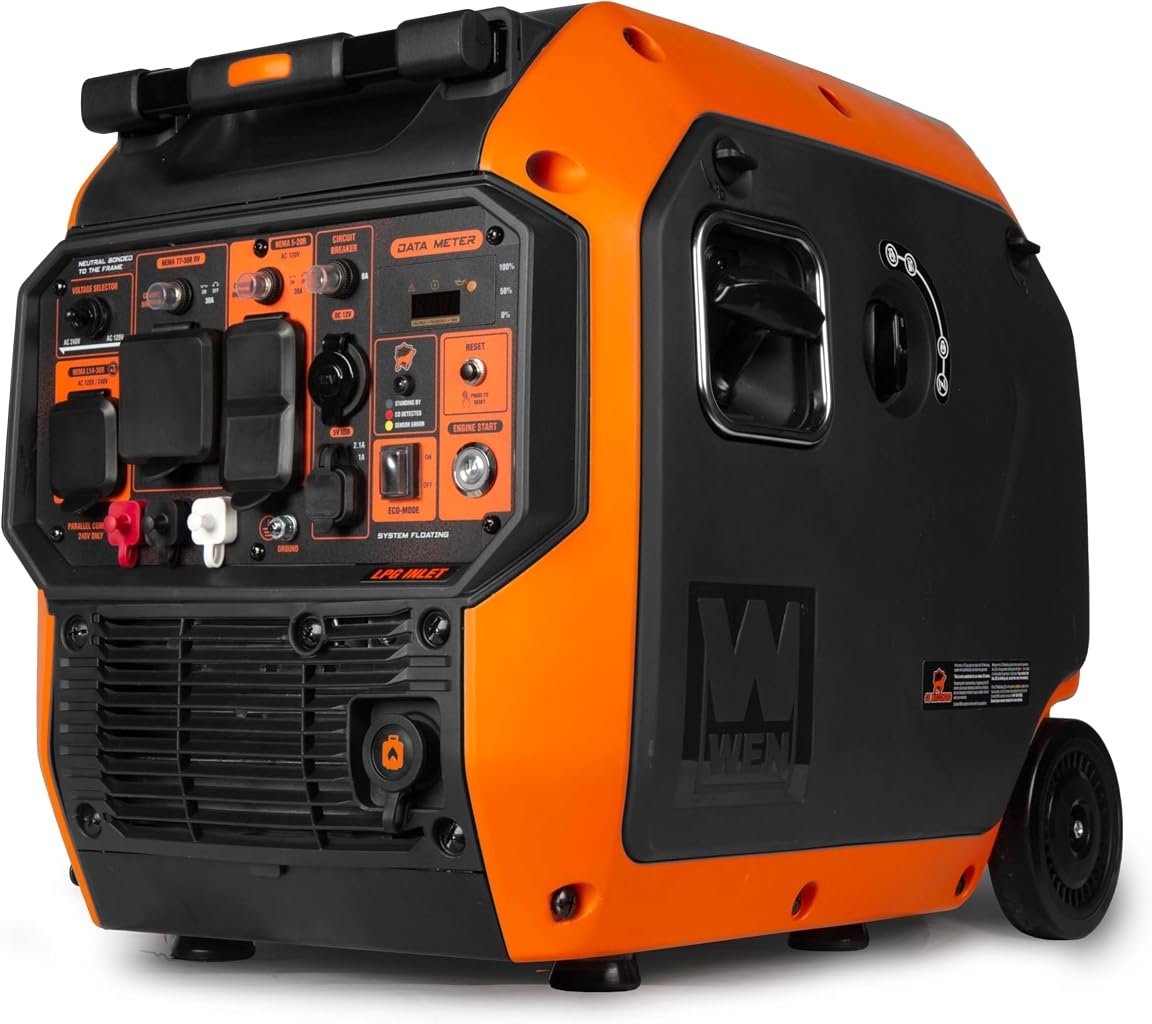
The WEN DF680iX sits in an increasingly important middle ground of portable backup power: large enough to address substantial household and RV loads, yet still conceived as movable equipment rather than permanent standby infrastructure. Its combination of dual-fuel operation, inverter electronics, 120/240V output, RV connectivity, electric start and carbon-monoxide shutdown gives it a broader job description than the wattage printed on the housing might suggest.
That breadth is also where scrutiny becomes necessary.
A 6,800W generator is not a 6,800W continuous power source. Fuel choice changes available output. A 240V receptacle does not make improvised household backfeeding safe. A carbon-monoxide sensor does not permit garage operation. And an inverter architecture does not eliminate the need to calculate motor-starting loads.
Our score for the WEN DF680iX is 8.46/10. Buyer Confidence is considerably higher at 9.36, while Customer Sentiment stands at 8.28 and Value at 8.15. That distribution tells more than the overall number alone. This is a generator whose documented capabilities inspire substantial confidence, while its economic appeal and ownership proposition require a more measured judgment.
The machine is technically versatile. Whether a buyer needs all that versatility is another question.
Our Assessment: 8.46/10
The 8.46/10 overall score reflects a favorable editorial assessment without treating the DF680iX as a universal answer to portable backup.
According to WEN’s DF680iX specifications, its 224cc dual-fuel engine produces 6,800 surge watts and 5,100 rated watts on gasoline. Propane reduces those figures to 6,000 surge watts and 4,500 rated watts.
Those four numbers should frame almost every serious buying decision involving this machine.
The difference between surge and rated output matters because electrical equipment does not consume power in a uniform manner. Motors and compressors can demand elevated power while starting. Refrigerators, pumps and air conditioners are familiar examples.
The fuel difference is equally consequential. A buyer planning around 5,000 watts of continuous demand may fit inside the gasoline specification while exceeding the propane rating.
That is why “6800W” is better understood as a capacity headline than as the machine’s everyday continuous output.
Buyer Confidence Is the Strongest Part of the Case
Our Buyer Confidence score of 9.36 is substantially higher than the overall rating.
That is the DF680iX’s defining editorial advantage.
The machine has an unusually broad and clearly specified capability set. WEN identifies a bonded-neutral 240V configuration, an L14-30R 120/240V receptacle, a TT-30R RV receptacle, two three-prong 120V receptacles, a 12V DC connection and two 5V USB ports. A voltage selector switch is also included.
Fuel switching is similarly concrete. The package includes a tool-free LPG quick connector and six-foot regulator hose, allowing propane operation without treating gaseous fuel as an afterthought.
The generator also has electric start with a recoil starter as backup, onboard wheels, a telescoping pull handle, fuel shutoff and WEN’s Watchdog CO Shutdown Sensor. WEN lists a three-year warranty.
For emergency equipment, documentation and clearly defined capabilities carry unusual weight. A generator may spend far more time waiting than running. When an outage arrives, uncertainty about receptacles, fuel selection or starting procedure becomes more than an inconvenience.
The DF680iX presents fewer mysteries than many portable machines. That supports the 9.36 confidence rating.
Understanding 6,800 Surge Watts and 5,100 Rated Watts
The distinction between surge and rated power is the first calculation a buyer should make.
On gasoline, the DF680iX can provide 5,100 rated watts with 6,800 watts available as its stated surge figure. On propane, rated capacity falls to 4,500 watts and surge capacity to 6,000 watts.
Continuous load planning should therefore begin with 5,100 or 4,500 watts, depending on fuel.
Imagine a backup plan requiring a refrigerator, freezer, furnace blower, lighting, communications equipment and a pump. Adding their normal operating wattages establishes a baseline. The buyer then needs to identify the largest plausible startup event while the other equipment is already operating.
If that combined event exceeds the generator’s capability, something must change. Loads can be sequenced, unnecessary equipment can be disconnected, or a larger generator can be selected.
This arithmetic is more useful than simply adding the wattage of every appliance in a house. Most households do not need every electrical device operating simultaneously during an outage.
A well-designed portable generator buying guide therefore treats load management as a form of capacity. Turning one large appliance off before starting another can reduce the size of generator required.
Dual Fuel Is About Logistics as Much as Convenience
Dual-fuel generators are often presented as convenience products. Their deeper advantage is logistical flexibility.
Gasoline and propane behave differently as emergency fuels.
For the DF680iX, gasoline delivers 600 more rated watts than propane: 5,100 versus 4,500. That is a 13.3% difference relative to the propane rating. Buyers operating close to the machine’s capacity therefore cannot treat the fuels as electrically interchangeable.
Runtime tells another part of the story.
WEN states that the 2.9-gallon gasoline tank provides up to 6.1 hours of operation at half load. With a 20-pound propane tank, the manufacturer states up to nine hours at half load.
Those are comparison figures under specified loading rather than guaranteed outage durations. A heavier electrical load can increase fuel consumption, while a lighter one can change the operating pattern.
Still, the trade is revealing. Gasoline offers higher output. The referenced propane configuration offers longer stated half-load runtime.
During an emergency, fuel availability can matter more than either laboratory-style figure. Gasoline stations may lose electrical service or experience heavy demand. Propane availability depends on local supply and what the household has stored beforehand.
Dual-fuel capability gives the owner another route rather than guaranteeing unlimited energy.
Value Scores 8.15
Our Value rating of 8.15 is the lowest of the four editorial measures.
That should not be mistaken for a poor value judgment. It indicates that the DF680iX’s broad capability has to be matched against an actual need.
A household requiring 1,500 watts for refrigeration, lighting and communications may gain little from paying for substantially more output, 240V architecture and several specialized receptacles.
Conversely, a household that needs selected 120/240V circuits, an RV owner with meaningful air-conditioning demand or someone seeking both gasoline and propane operation can use far more of the machine’s capability.
Value therefore rises as the buyer’s requirements begin to resemble the generator’s design.
The 8.15 score also recognizes that generator ownership extends beyond the machine itself. Fuel storage, engine oil, properly rated cords, weather protection and maintenance supplies can add expense. Circuit-level household backup can require professionally installed transfer equipment and an inlet.
Purchase price is only one line in the actual backup-power budget.
Customer Sentiment at 8.28
Customer Sentiment scores 8.28, slightly below the 8.46 overall rating.
That creates a useful counterweight to the 9.36 Buyer Confidence figure.
The generator is easy to understand on paper. Ownership is inherently more demanding.
Combustion equipment requires fuel management, oil service, safe placement and periodic inspection. Electric-start equipment introduces a starting battery that must remain usable. A dual-fuel system adds hoses, regulators and fuel-selection procedures.
Portability also needs realistic interpretation. Wheels and a telescoping handle make movement easier, but a generator in this output class is still equipment that must be stored, positioned and protected.
Those practical burdens do not negate the DF680iX’s strengths. They explain why confidence in the product can exceed the broader ownership sentiment score.
A well-specified generator still asks something from its owner.
Inverter Architecture Has Measurable Meaning Here
“Inverter generator” is sometimes used as a catch-all label implying quiet operation and electronics-friendly power. The DF680iX provides more concrete information.
WEN describes the unit as producing electricity without the voltage spikes and drops associated with less controlled output and markets it for electronics including phones, laptops, tablets and monitors.
The significance of inverter architecture is broader than device charging.
Household emergency loads fluctuate. Refrigerators cycle. Pumps start and stop. A furnace blower does not remain at one static operating state throughout an outage. Electronics finish charging and reduce demand.
An inverter generator can adapt its engine behavior as load changes rather than treating every moment as maximum demand.
That can improve the logic of using a medium-size generator for a variable collection of loads.
Still, inverter architecture does not alter the basic capacity calculation. A 5,100W rated generator remains a 5,100W rated generator on gasoline. Electronics cannot manufacture additional engine capacity when loads exceed that limit.
120/240V Capability Changes the Home-Backup Discussion
Many smaller inverter generators provide only 120V output. The DF680iX moves beyond that limitation.
Its L14-30R receptacle and bonded-neutral 240V configuration create options for applications that require 240V rather than only ordinary 120V receptacle power. WEN also identifies low-power Level 2 battery and hybrid electric-vehicle charging as one application of its 240V arrangement.
For home backup, however, voltage capability is only part of the system.
The generator cannot safely be improvised into household wiring.
The Occupational Safety and Health Administration states: “Never attach a generator directly to the electrical system of a structure” unless a qualified electrician has properly installed it with a transfer switch.
The reason is backfeeding. An improperly connected generator can energize wiring beyond the property and expose utility workers and other people to electrocution.
OSHA also advises using intact grounded extension cords rated for the intended load when equipment is connected directly and warns against overloading a generator because overheating can create a fire hazard.
The correct home-backup architecture therefore begins before the outage: identify loads, determine voltage, establish the connection method and then verify generator compatibility.
RV Owners Have a More Direct Use Case
The TT-30R receptacle makes the DF680iX immediately relevant to many 30A RV owners.
A 30A, 120V RV service has a theoretical maximum of:
120 volts × 30 amps = 3,600 watts
That figure provides useful context against the DF680iX’s rated output.
On gasoline, its 5,100W rating exceeds that arithmetic ceiling. Its 4,500W propane rating also exceeds it. The generator therefore has output capacity beyond the theoretical maximum of a single 30A, 120V RV connection.
That does not mean the RV can consume the generator’s entire rated capacity through the TT-30 connection. The RV electrical service and connection hardware still impose their own limits.
Air-conditioning startup is often the more interesting problem.
An RV air conditioner can demand additional power as its compressor starts. Microwave ovens, electric water heating and other appliances can add large simultaneous loads. Owners can often improve generator fit through sequencing: avoid operating several high-demand appliances at once.
The DF680iX’s capacity gives a 30A RV owner meaningful operating margin, but electrical discipline remains useful.
Noise Is Useful Only When the Test Condition Travels With the Number
WEN specifies 64 decibels at quarter load for the 224cc engine.
The second half of that specification matters as much as the first.
A decibel figure without load conditions can be misleading. Generator sound changes with engine demand, and comparisons become unreliable when one manufacturer publishes quarter-load data while another uses a different operating point or measurement procedure.
The 64 dB specification therefore establishes a reference, not a promise of identical acoustic output at every load.
This matters particularly for camping and RV use.
A generator that sounds acceptable while lightly charging batteries may be more conspicuous while carrying air conditioning and other substantial loads. Campsite regulations can also impose generator-hour restrictions independent of the machine’s acoustic rating.
Noise should consequently be evaluated alongside expected load rather than as an isolated specification.
Fuel Shutoff Addresses a Familiar Storage Problem
One of the less glamorous DF680iX features may prove especially useful for occasional owners.
The fuel-shutoff system stops gasoline flow and allows remaining fuel in the carburetor to be consumed before the engine shuts down. WEN describes the system as a way to limit maintenance and extend generator life.
That design directly addresses the awkward reality of emergency generators: long storage intervals.
Gasoline left sitting in small-engine fuel systems can contribute to starting and carburetion problems. A machine purchased for emergency preparedness can therefore become less prepared simply through neglect.
Fuel shutoff is not a replacement for the storage procedure in the owner’s manual. Oil, filters, starting systems, hoses and fuel condition still require attention.
Yet it is a feature with an obvious mechanical purpose rather than decorative complexity.
For equipment that may remain unused for extended periods, that matters.
CO Watchdog Is a Backup Layer, Not a Placement Strategy
The DF680iX includes WEN’s Watchdog CO Shutdown Sensor, which automatically shuts the generator down when the system detects dangerous carbon-monoxide levels.
That is useful protection.
It does not change where a combustion generator belongs.
The Centers for Disease Control and Prevention instructs generator users to operate generators outdoors more than 20 feet from windows, doors and vents. The agency also states: “Never use a generator inside your home or garage, even if doors and windows are open.”
The CDC further advises using a battery-powered or battery-backup carbon-monoxide detector inside the home.
Placement therefore remains a non-negotiable part of generator ownership.
A CO shutdown sensor is a secondary protection system. It is not permission to operate the generator in a garage, basement, enclosed porch or near an open window.
Weather protection creates another requirement. OSHA advises keeping generators dry and allowing three to four feet of clear space on all sides and above for ventilation and cooling.
A household without a safe outdoor operating location needs to resolve that issue before treating any combustion generator as its backup plan.
Electric Start Makes Sense, but Recoil Backup Matters Too
The DF680iX uses keyless electric start and retains a recoil starter as a backup method.
That combination is preferable to dependence on one starting route.
Electric start is convenient when a generator is used repeatedly, particularly around an RV or during an extended outage. Recoil backup provides another option if the electric starting system cannot perform.
The starting battery still requires appropriate maintenance. Backup mechanisms are useful only when the rest of the engine and fuel system are ready.
This returns the review to an often-neglected point: emergency power equipment needs to be maintained during non-emergencies.
A generator that has not been inspected, fueled correctly or operated according to its storage procedure is not genuinely ready merely because it sits in a garage.
Who Should Consider the DF680iX?
The strongest buyer fit emerges where several requirements overlap.
A household seeking selected-load backup can use the 5,100W gasoline rating or 4,500W propane rating to support a carefully planned group of appliances. The 120/240V architecture expands the range of possible properly configured household applications.
An RV owner gains a dedicated TT-30R connection and enough rated output to provide meaningful margin around a 30A service.
A buyer concerned about fuel availability gains the ability to choose between gasoline and propane.
Users running electronics gain an inverter-based architecture rather than a conventional generator design.
Those advantages become less compelling for very small loads.
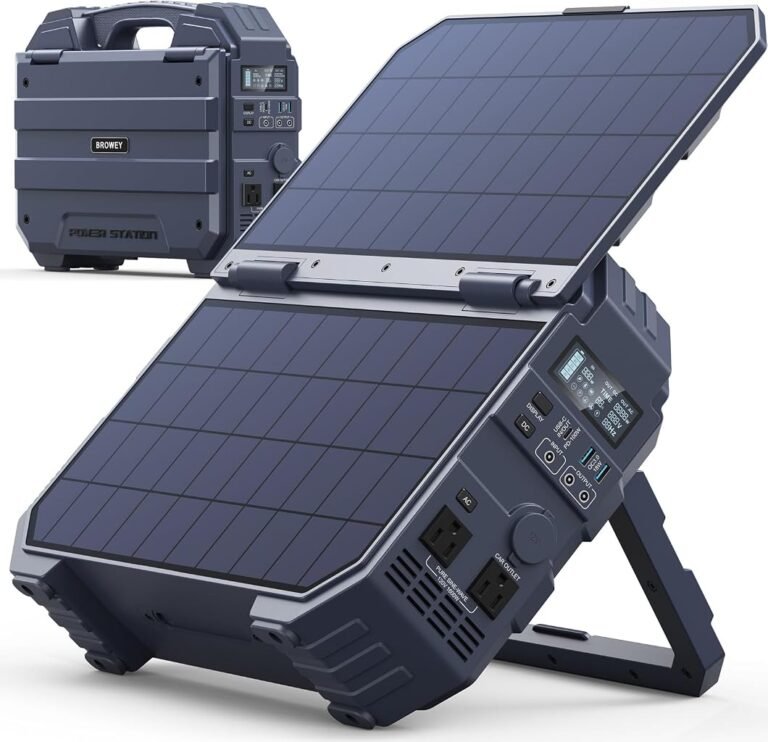
A camper primarily charging phones, lights and camera batteries may find a smaller generator or battery station easier to transport and live with.
At the other extreme, a household expecting simultaneous operation of central air conditioning, electric cooking, water heating and other large loads may need substantially more continuous output.
The DF680iX is strongest in the middle: more capable than a small recreational inverter, yet still fundamentally a portable generator requiring deliberate load management.
Final Considerations
The WEN DF680iX earns our overall score of 8.46/10, with Customer Sentiment at 8.28, Buyer Confidence at 9.36 and Value at 8.15.
Buyer Confidence is the defining score.
The reason lies in the generator’s clearly documented versatility. Its 224cc dual-fuel engine produces 6,800 surge and 5,100 rated watts on gasoline, or 6,000 surge and 4,500 rated watts on propane. It combines inverter architecture with 120/240V output, an L14-30R receptacle, TT-30R RV connection, ordinary 120V outlets, DC and USB outputs, electric start, recoil backup, fuel shutoff and CO shutdown.
Its compromises are equally identifiable.
Propane reduces available output. The 6,800W headline is a surge figure rather than continuous capacity. The 64 dB specification applies at quarter load. Fuel must still be stored and managed. Engine maintenance remains part of ownership. Safe home connection requires proper electrical hardware rather than improvisation.
That explains why Value at 8.15 trails Buyer Confidence by more than a full point. The DF680iX offers many capabilities, but value emerges only when a buyer needs enough of them.
For selected-load household backup, 30A RV use and situations where gasoline/propane flexibility matters, the machine presents a coherent engineering package. For minimal camping demand, it may be more generator than necessary. For heavy whole-house loads, its rated output may be insufficient.
The buying process should therefore begin with simultaneous running watts, startup demand, required voltage and preferred fuel. Those four variables reveal far more than the model’s 6,800W headline.
Once the electrical requirement is defined, the DF680iX becomes easier to judge: a versatile mid-size inverter generator whose strongest argument is not maximum wattage, but the number of different backup-power problems its architecture can address.