Portable generators are unusually unforgiving products to review. A mislabeled coffee maker may produce disappointing coffee; a misunderstood generator can overload, fail to run the intended equipment, expose electronics to unsuitable power, or create a carbon-monoxide hazard. Names, wattage figures, outlet types, starting systems, and generator architecture therefore deserve more scrutiny than the marketing shorthand typically gives them.
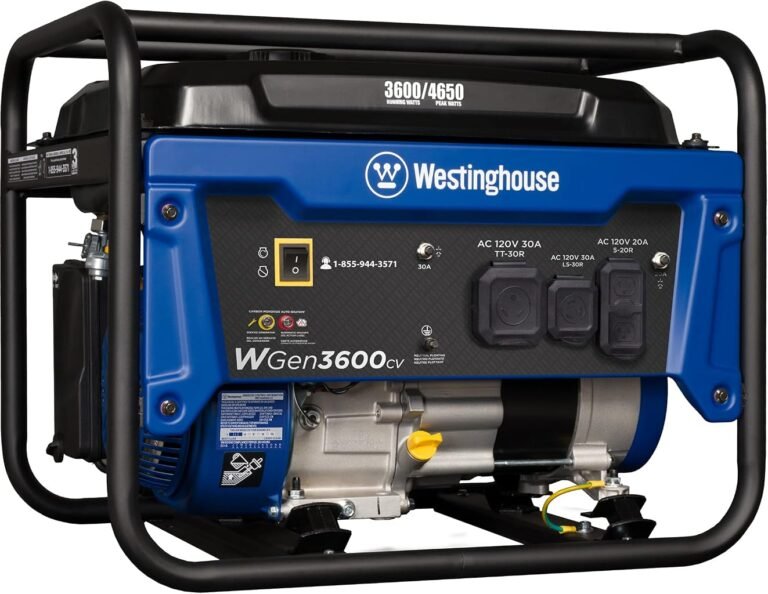
That scrutiny immediately uncovers an issue with the product commonly presented under the “PowerSmart 4800W Electric Start Inverter Generator” description examined here: the identifiable product is a Westinghouse portable generator listed at 4,650 peak watts, with an RV-ready 30-amp outlet, gasoline operation, and a carbon-monoxide sensor. Those are not minor naming differences.
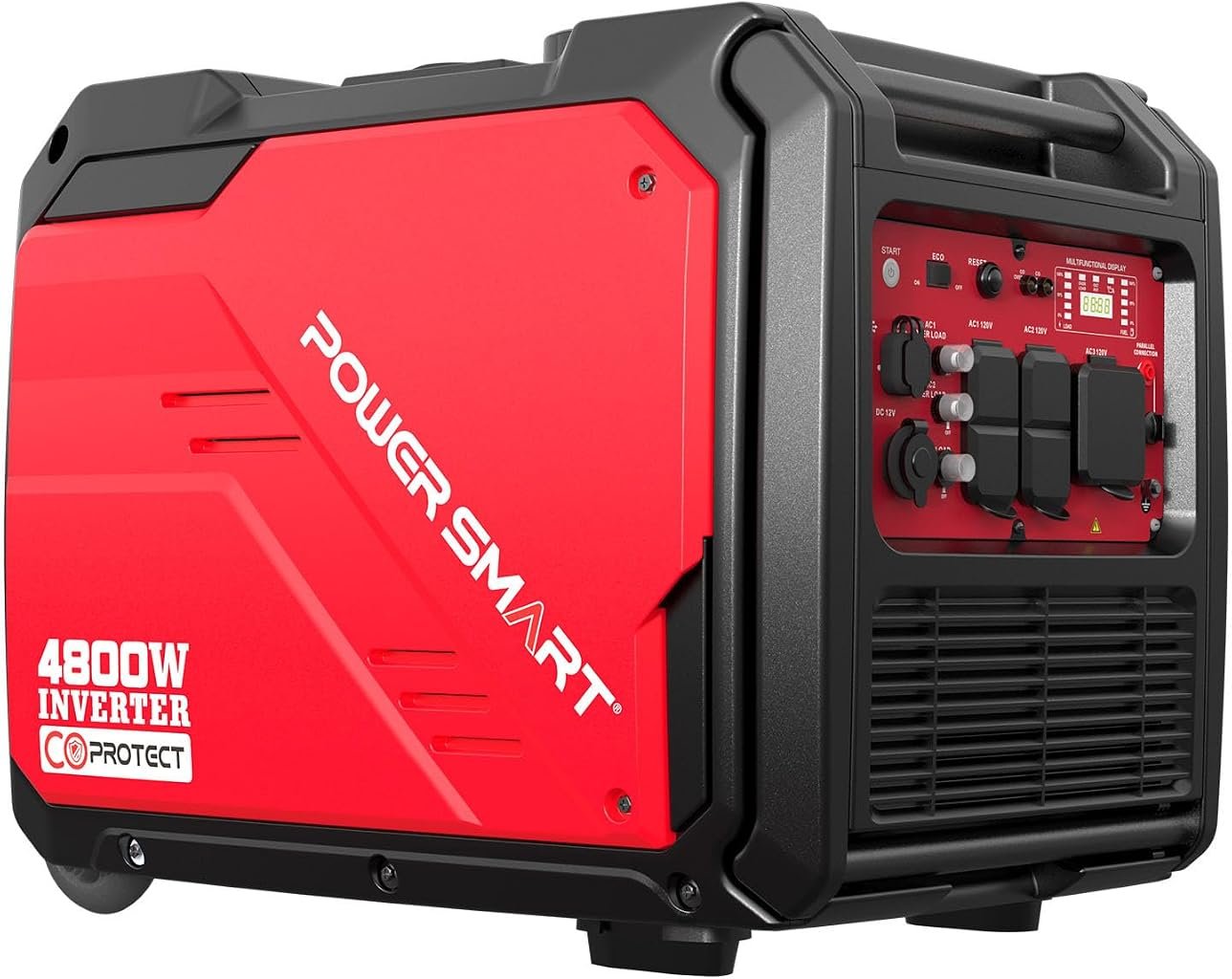
The distinction matters because “4,800 watts,” “electric start,” and “inverter generator” describe characteristics that can materially affect purchasing decisions. They should not be inferred from a loosely associated product name.
Our assessment therefore centers on what can be established about the identifiable Westinghouse configuration and, just as importantly, what buyers should refuse to assume.
Our score is 8.72/10. Customer Sentiment stands at 8.72, Buyer Confidence at 9.14, and Value at 8.4. Those numbers depict a product with a credible underlying proposition, particularly for RV and moderate backup-power duties, while leaving enough daylight between confidence and value to expose the central issue: a capable generator still needs to be the generator the buyer thinks is being purchased.
The First Finding Is the Name on the Machine
The most consequential discovery is also the least technical.
The identifiable generator associated with this product is a Westinghouse unit rather than a PowerSmart-branded 4,800-watt inverter generator. The relevant configuration is described as a 4,650-peak-watt gasoline portable generator with an RV-ready 30A outlet and CO sensing.
That specification pattern closely corresponds to the Westinghouse WGen3600c product family. Westinghouse states that the WGen3600c produces 4,650 peak watts and 3,600 running watts. The manufacturer also identifies a 212cc four-stroke OHV engine, four-gallon gasoline tank, built-in fuel gauge, low-oil shutdown, carbon-monoxide shutdown, and runtime of up to 14 hours at 25% load.
Those numbers fundamentally change how the generator should be evaluated.
Peak wattage describes short-duration capacity associated with starting demanding equipment. Running wattage describes the power available for sustained operation. A generator advertised around its peak figure can therefore appear substantially more powerful than it is under continuous load.
Here, 3,600 running watts is the more useful planning figure.
That is enough capacity to make the generator relevant to RV use, selected household loads during an outage, tools, refrigeration, lighting, and similar applications when the individual starting and running demands fit inside the available capacity. It is not a license to treat the machine as a substitute for unrestricted whole-house electricity.
Why 4,650 Peak Watts and 3,600 Running Watts Tell Different Stories
Generator shopping becomes easier once peak output stops dominating the discussion.
Electric motors and compressors can demand substantially more electricity during startup than during steady operation. Refrigerators, pumps, air conditioners, and certain power tools are familiar examples. Peak capacity gives a generator temporary headroom for such events.
Continuous loads are another matter.
A 3,600-running-watt generator operating a collection of appliances whose combined demand approaches that figure has little remaining capacity for a compressor or motor startup. Sensible load planning therefore requires more than adding the wattages printed on appliance labels. Starting demand must also be considered.
This distinction belongs near the beginning of any portable generator buying guide because the biggest number printed on a generator is rarely the number that should govern the household power plan.
For this Westinghouse configuration, the 4,650/3,600-watt relationship is reasonably balanced for a mid-sized portable generator. The manufacturer identifies both figures explicitly, avoiding the ambiguity created when sellers emphasize peak wattage alone.
The RV-ready TT-30R connection also makes the intended use unusually legible. This is not merely a box with several household receptacles. It has an electrical interface aimed directly at 30-amp RV applications.
That does not mean every combination of RV appliances can run simultaneously. Air-conditioning startup demand remains particularly relevant. The buyer still needs an appliance-level load calculation.
The “Inverter” Question Cannot Be Ignored
The inverter label deserves similar discipline.
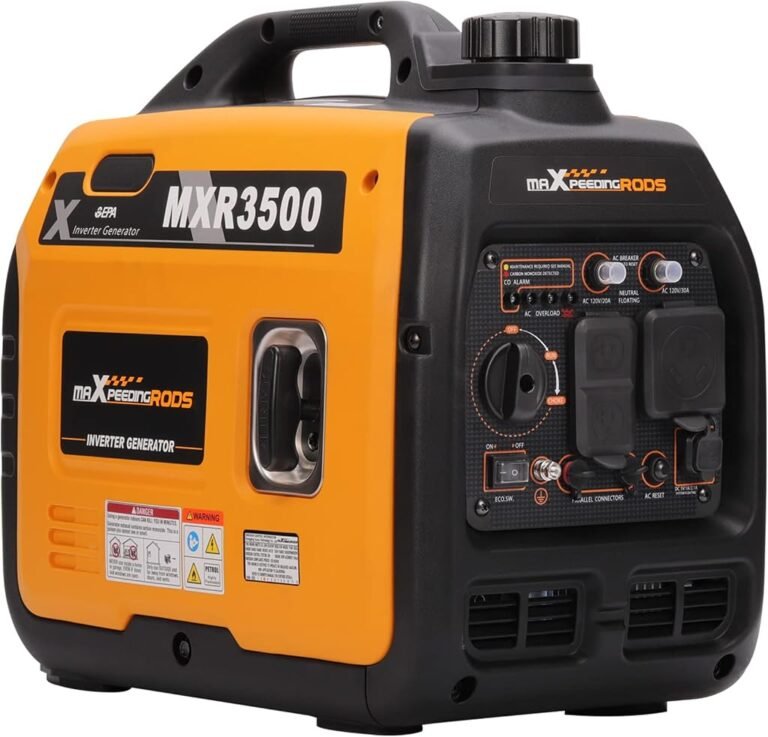
An inverter generator and a conventional portable generator are not interchangeable descriptions. Inverter designs generally use electronic power conversion and can offer advantages involving engine-speed management, acoustic behavior, and output characteristics. Those advantages are among the reasons consumers specifically search for inverter generators.
The identifiable Westinghouse 4,650-peak-watt WGen3600-series machines are presented by the manufacturer as portable generators, not as the sort of enclosed inverter generator implied by the review title. The manufacturer’s documentation for the WGen3600 and WGen3600v identifies them at 3,600 running watts and 4,650 peak watts.
A buyer specifically seeking an inverter generator should therefore verify the exact model number on the listing, carton, specification plate, and manufacturer page before payment.
That verification is not pedantry. Generator architecture is part of the product itself.
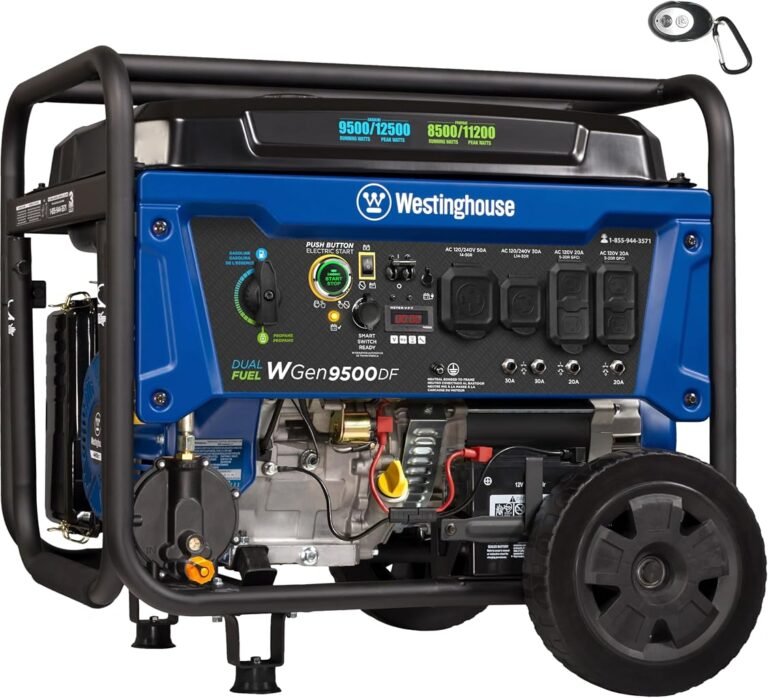
The same caution applies to electric start. Some Westinghouse WGen3600-family variants do provide electric or remote starting. For example, Westinghouse identifies the WGen3600DFc as having remote/electric starting, dual-fuel capability, 4,650 gasoline peak watts, and 3,600 gasoline running watts. But features belonging to one family variant cannot simply be transferred to another.
Buyers should insist on the exact suffix.
A few characters at the end of a generator model number can represent differences in fuel compatibility, starting hardware, CO protection, or other equipment.
Our Score: 8.72/10
Our 8.72/10 score places this generator in a favorable position for buyers whose needs match its actual configuration.
The score is driven less by headline wattage than by the practical combination of usable output, RV connectivity, CO protection, and the established Westinghouse generator platform. The machine makes the strongest editorial sense when treated as a mid-sized portable gasoline generator rather than imagined as an unrestricted home-backup system.
The 8.72 Customer Sentiment score tracks closely with the overall assessment. That alignment matters. There is no large gulf between the broader product judgment and owner-facing satisfaction signals represented by the score.
Buyer Confidence is higher at 9.14.
That is the strongest of the four figures, and the difference is revealing. The identifiable Westinghouse configuration has unusually concrete specifications available from the manufacturer. Wattage, engine displacement, tank capacity, outlet arrangement, runtime claim, and safety features can be checked rather than inferred.
Value, at 8.4, is lower.
At a reference price of $599.99, the machine enters territory where buyers should compare more than raw wattage. Fuel flexibility, noise priorities, portability, inverter architecture, starting method, warranty support, and the exact outlet panel can all change what represents sensible value.
An 8.4 Value score therefore reads as favorable rather than automatic. The generator can justify its cost for the right workload, but its price does not erase the need for comparison.
CO Shutdown Is Useful – but It Does Not Make Unsafe Placement Safe
The carbon-monoxide sensor deserves serious attention because portable-generator safety is not an abstract footnote.
Westinghouse states that the WGen3600c includes automatic carbon-monoxide shutdown. That is a meaningful protective feature. It should be treated as a backup layer, however, rather than permission to position the generator closer to occupied structures.
The Centers for Disease Control and Prevention generator guidance says portable generators should be operated outdoors, more than 20 feet from windows, doors, and vents. The agency also advises using a battery-powered or battery-backup CO detector inside the home.
Its warning is blunt: “Never use a generator inside your home or garage, even if doors and windows are open.”
That sentence deserves more weight than any convenience feature on a control panel.
CO has no color or odor. A sensor incorporated into a generator can add protection, but environmental conditions are variable. Wind direction, nearby walls, openings, neighboring structures, and exhaust movement can affect where combustion gases travel.
The safe operating model therefore remains physical separation plus indoor CO detection, not reliance on the generator’s shutdown system alone.
RV Use Is One of the Clearest Fits
The 30A TT-30R outlet gives this machine a particularly straightforward use case.
Westinghouse explicitly describes the WGen3600c as RV ready and lists a 120V AC 30A TT-30R outlet. For owners of compatible travel trailers, that removes some of the improvisation that accompanies generators equipped only with conventional household receptacles.
The appeal is practical rather than glamorous.
An RV owner typically needs to answer several questions: Can the generator connect correctly? Can it handle the air conditioner’s startup demand? How much capacity remains for the converter, refrigerator, microwave, water heater, or other appliances? How often will it need refueling?
The manufacturer’s claimed runtime of up to 14 hours at 25% load addresses the last question, though the qualifier matters. Quarter-load runtime is not the same as runtime under a heavy RV load. Fuel consumption rises as electrical demand increases, so buyers should not read “14 hours” as a universal refueling interval.
Still, a four-gallon tank paired with a stated 14-hour quarter-load figure suggests an operating profile aimed at extended use rather than brief emergency bursts.
Home Backup Requires a Different Mindset
For residential outages, a 3,600-running-watt generator rewards prioritization.
A refrigerator, selected lighting, communications equipment, a television, chargers, and certain other essentials may fit comfortably when managed intelligently. Add an electric water heater, large central air-conditioning system, electric range, clothes dryer, or several high-demand loads, and the arithmetic changes quickly.
The best strategy is a load hierarchy.
Buyers should record the running and startup demands of the equipment they actually intend to power, then build a margin beneath the generator’s continuous rating. That approach is far more reliable than asking whether a generator can “run a house,” because houses do not have one universal electrical demand.
Connection method also matters.
A portable generator should never be connected to household wiring through improvised backfeeding. The U.S. Consumer Product Safety Commission warning on generator backfeeding states that male-to-male extension cords used to feed residential electrical systems can create electrocution and fire hazards.
For installed household circuits, appropriate transfer equipment and professional electrical work are the responsible path. CPSC technical guidance explains that safely interfacing portable-generator output with installed household wiring requires a suitable means such as a transfer switch.
That distinction separates emergency power from dangerous improvisation.
Where the Generator Makes Sense
Viewed strictly through its verifiable capabilities, the machine has several credible strengths:
- 4,650 peak watts provide startup headroom above the 3,600-watt continuous rating.
- A TT-30R 30A connection gives it direct relevance for compatible RVs.
- The identifiable CO-sensor variant includes automatic carbon-monoxide shutdown.
- A four-gallon gasoline tank supports a manufacturer-rated runtime of up to 14 hours at 25% load.
- The 212cc four-stroke OHV engine and built-in fuel gauge give the design a conventional, easily understood operating layout.
- Our 9.14 Buyer Confidence score is the strongest rating attached to the product, reflecting a proposition that becomes much easier to judge once the exact model is established.
Those strengths point toward campers, RV owners, outage-prepared households, and users who need moderate portable power without stepping into much larger generator classes.
Where Buyers Should Be More Demanding
The product also presents several reasons for restraint.
First, the naming discrepancy is too substantial to dismiss. A buyer searching for a “PowerSmart 4800W Electric Start Inverter Generator” should not assume that a Westinghouse 4,650-peak-watt conventional portable generator is equivalent merely because the power figures sit in roughly the same neighborhood.
Second, gasoline-only operation offers less fuel flexibility than a dual-fuel model. Westinghouse itself sells WGen3600-family variants capable of operating on gasoline or propane, illustrating why the exact suffix matters.
Third, 3,600 running watts imposes real boundaries. The generator can support useful emergency loads, but load management is part of ownership rather than an optional exercise.
Fourth, buyers seeking the quieter operating character commonly associated with enclosed inverter machines should confirm architecture and published acoustic specifications for the exact model rather than extrapolating from the word “inverter” in a retailer title.
Finally, a CO sensor reduces risk without changing the fundamental rules of generator placement.
What to Verify Before Buying
For a product with conflicting naming signals, a short verification routine can prevent an expensive mismatch.
Before ordering, the buyer should confirm:
- The exact manufacturer and model number.
- Peak and continuous wattage separately.
- Whether the generator is genuinely an inverter design.
- Whether electric start is fitted to that exact variant.
- Whether the fuel system is gasoline-only or dual fuel.
- The presence and type of the 30A RV receptacle.
- Whether CO automatic shutdown is included.
- Tank capacity and runtime conditions.
- The electrical requirements of the intended appliances.
- The safe method of connecting the generator to any household circuits.
The model number should win every disagreement between a headline and a specification sheet.
That principle sounds mundane until one recognizes how many generator families contain visually similar machines with materially different capabilities.
Final Considerations
Our score of 8.72/10 reflects a generator with a credible practical foundation. Customer Sentiment at 8.72 reinforces that assessment, while Buyer Confidence at 9.14 is the standout figure. Value at 8.4 is positive but more conditional: at $599.99, buyers should expect the exact configuration they need rather than accept approximate equivalence.
The deeper finding of this PowerSmart 4800W Electric Start Inverter Generator review is therefore about identity as much as electricity.
The verifiable product characteristics point to a Westinghouse portable generator configuration centered on 4,650 peak watts, 3,600 running watts, RV-ready 30A output, gasoline operation, and CO protection. Official Westinghouse material supports those core figures for the corresponding WGen3600c configuration. What should not be casually grafted onto that machine are unverified claims of 4,800-watt output, inverter architecture, or electric starting.
For an RV owner who needs 30A connectivity, or a household assembling a disciplined emergency-power plan around refrigeration, lighting, communications, pumps, or other selected loads, the underlying Westinghouse proposition is sensible. For someone specifically shopping for an electric-start inverter generator, verification of the exact model becomes decisive.
And whatever model ultimately sits in the driveway, the safety rules remain unchanged. Operate it outdoors, keep it more than 20 feet from doors, windows, and vents, maintain working CO detection indoors, and never improvise a connection to household wiring.
A generator is ultimately an exercise in controlled limits: limited wattage, limited fuel, limited connection methods, and strict placement requirements. The better purchase is not the machine with the most impressive number in its title. It is the machine whose documented capabilities match the loads, connections, operating environment, and safety plan that will actually be used.