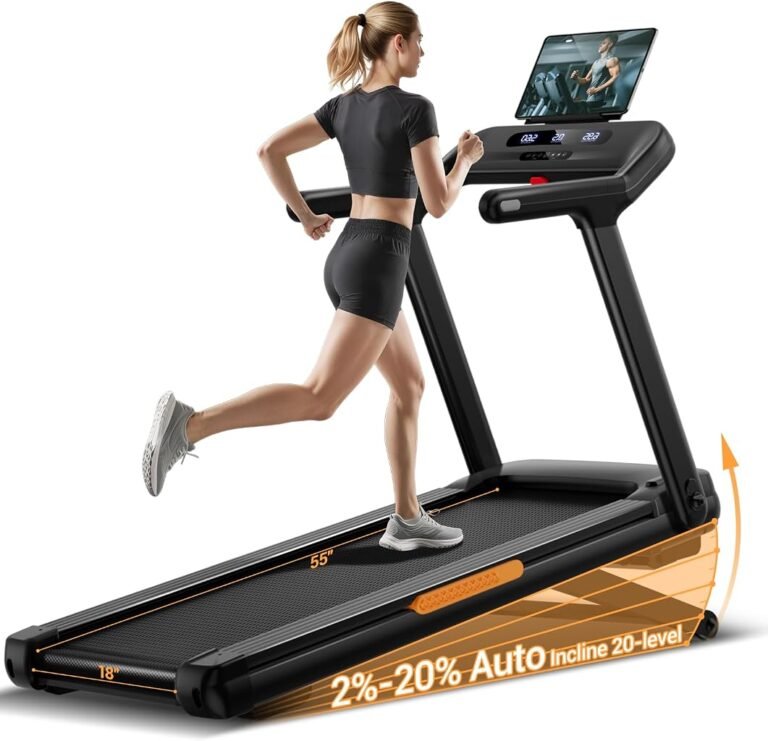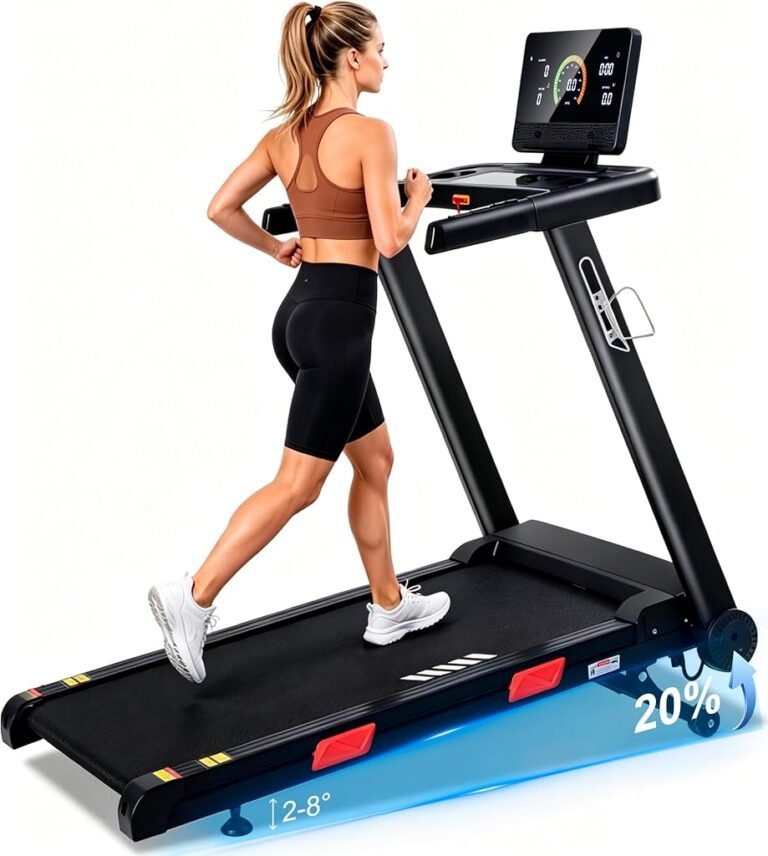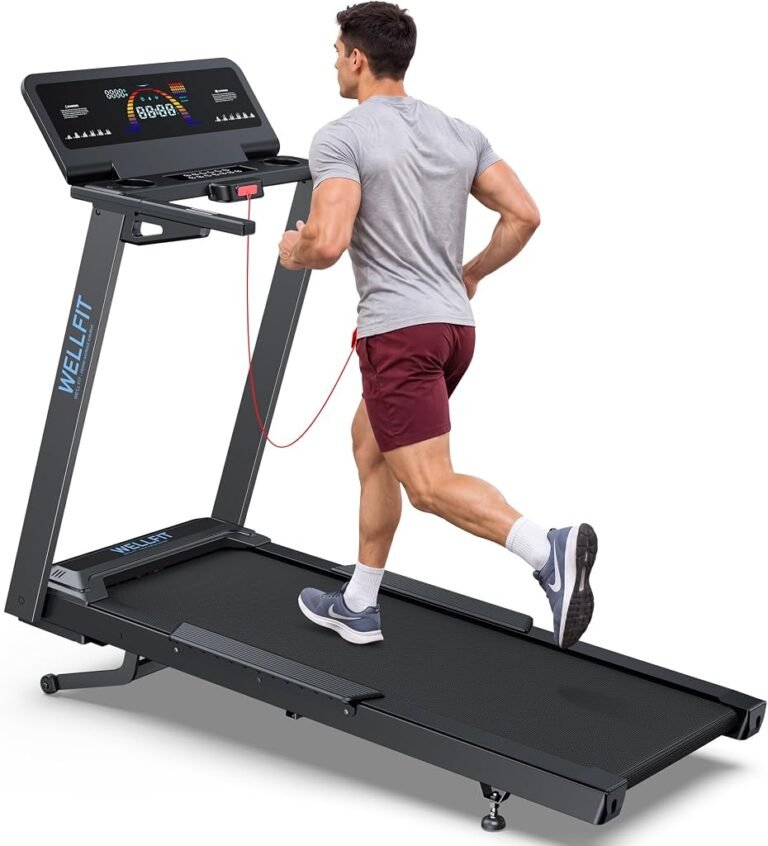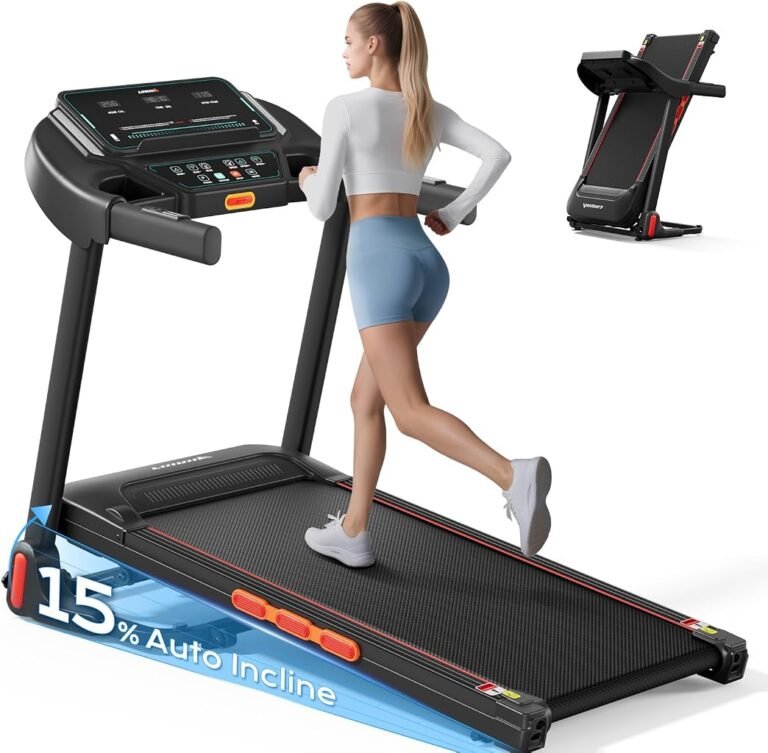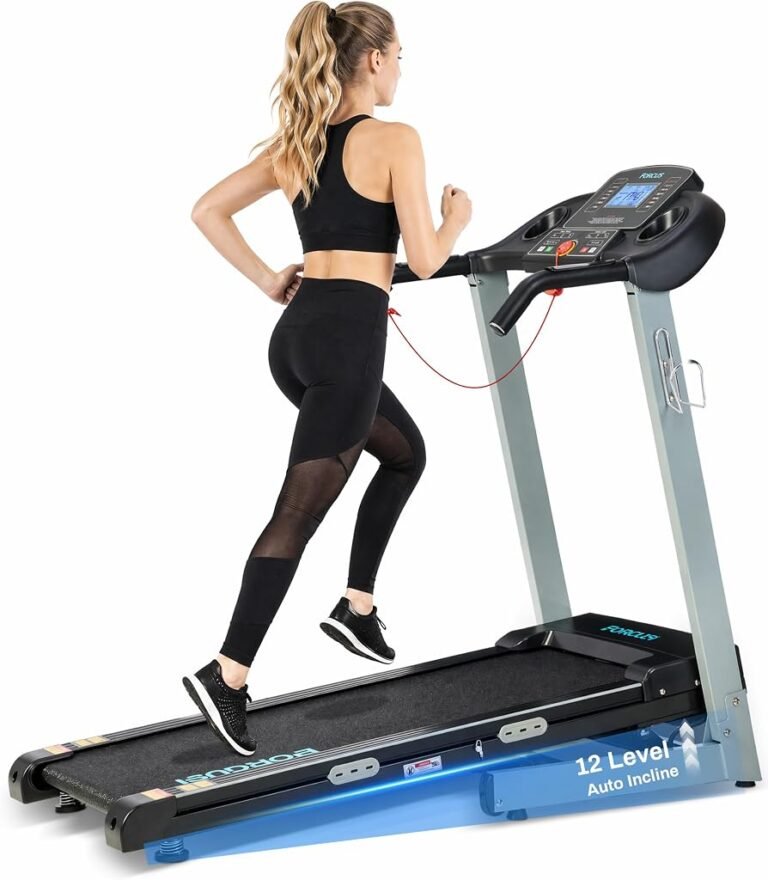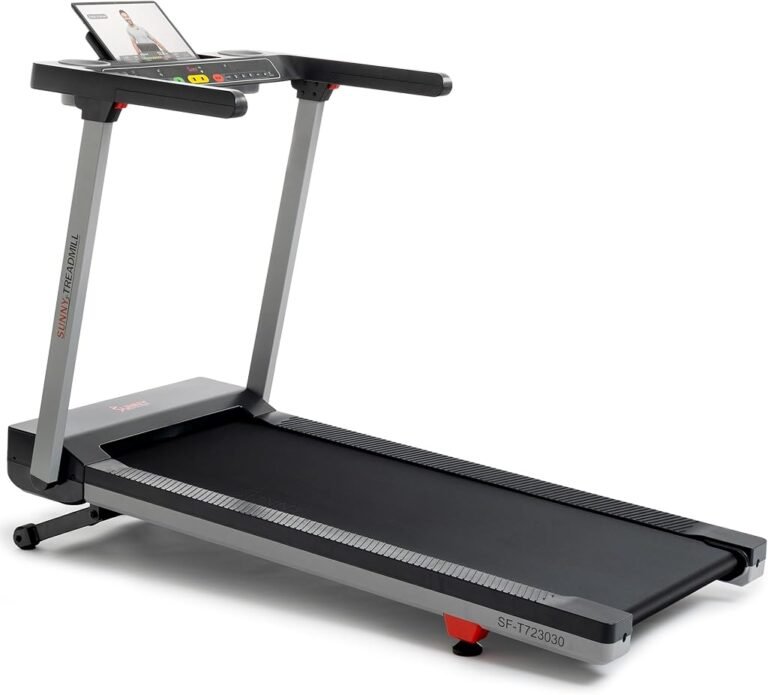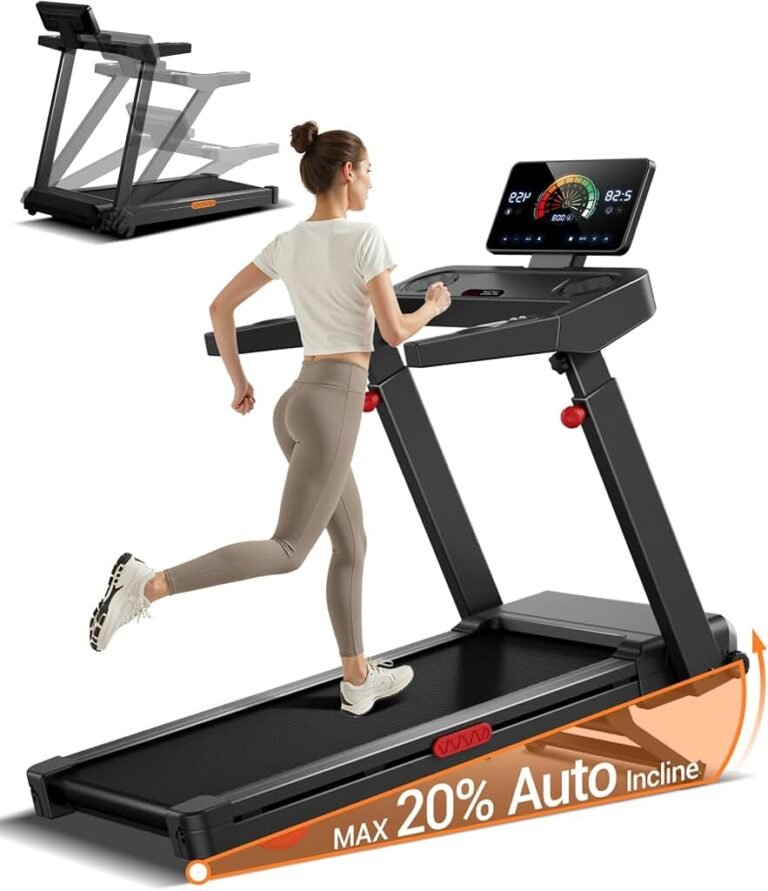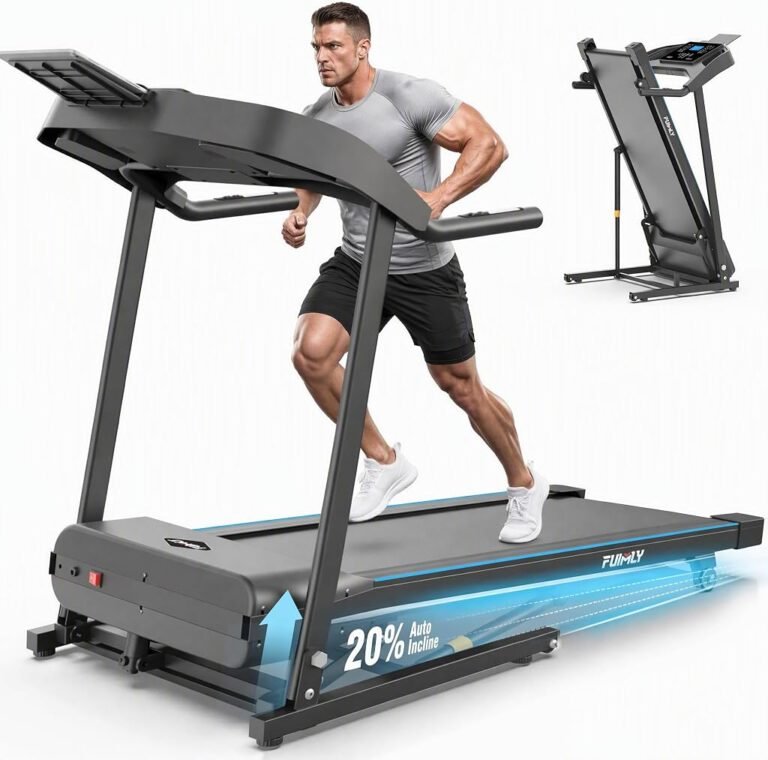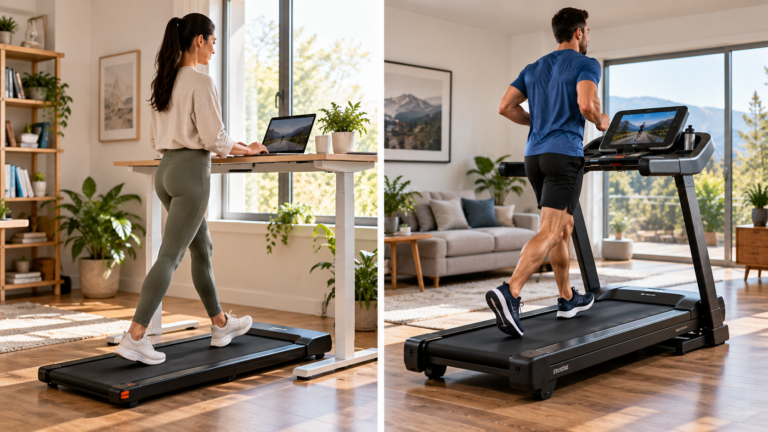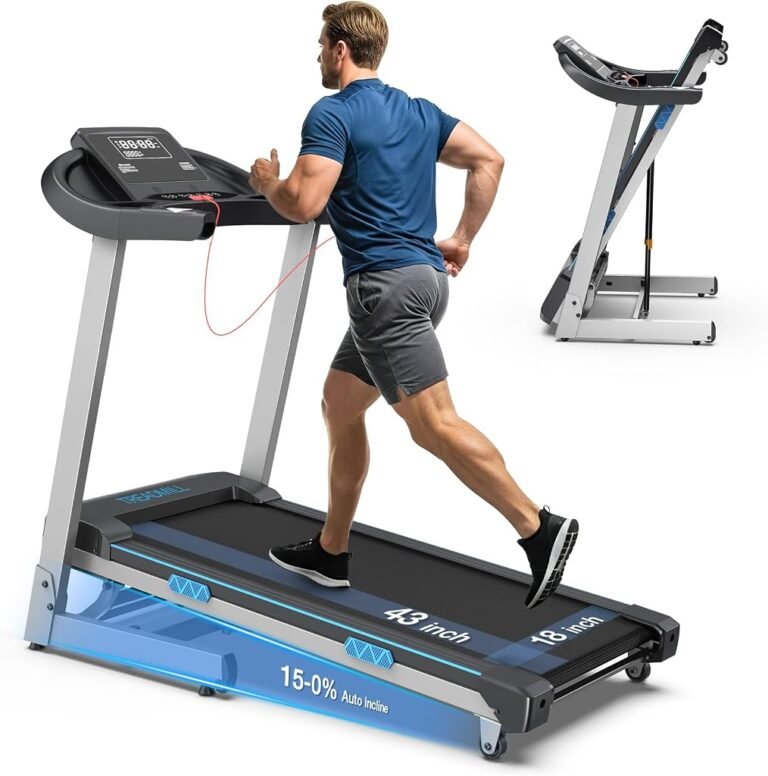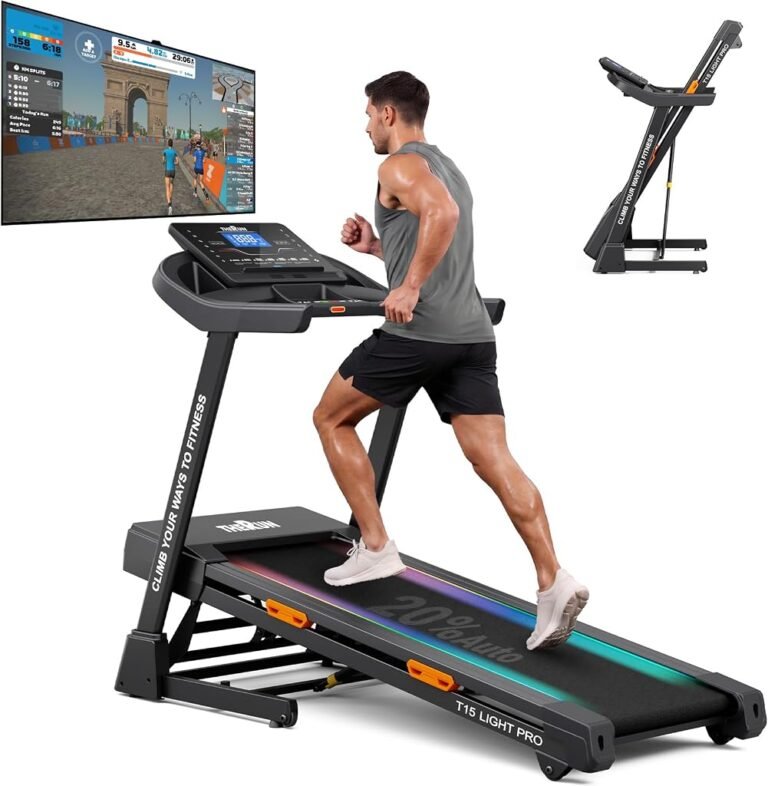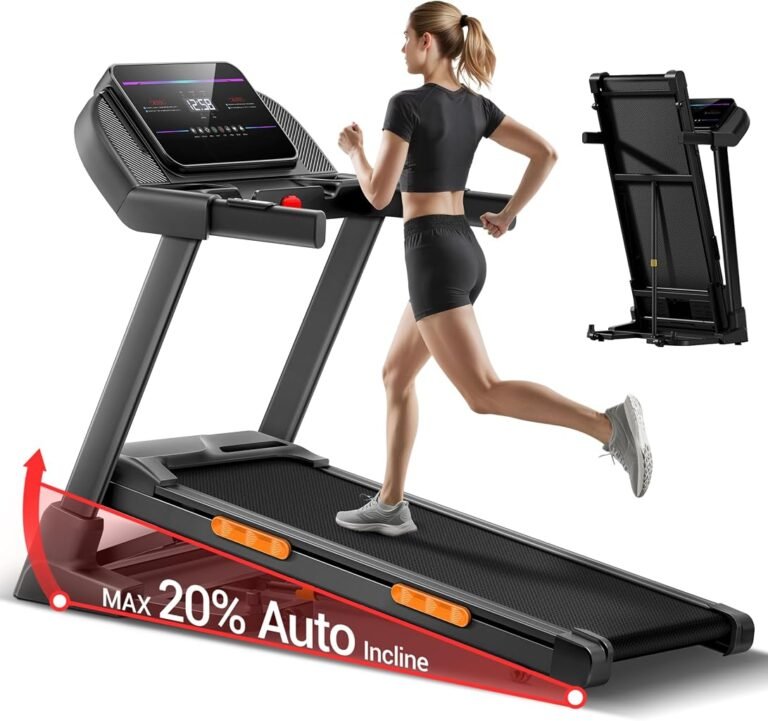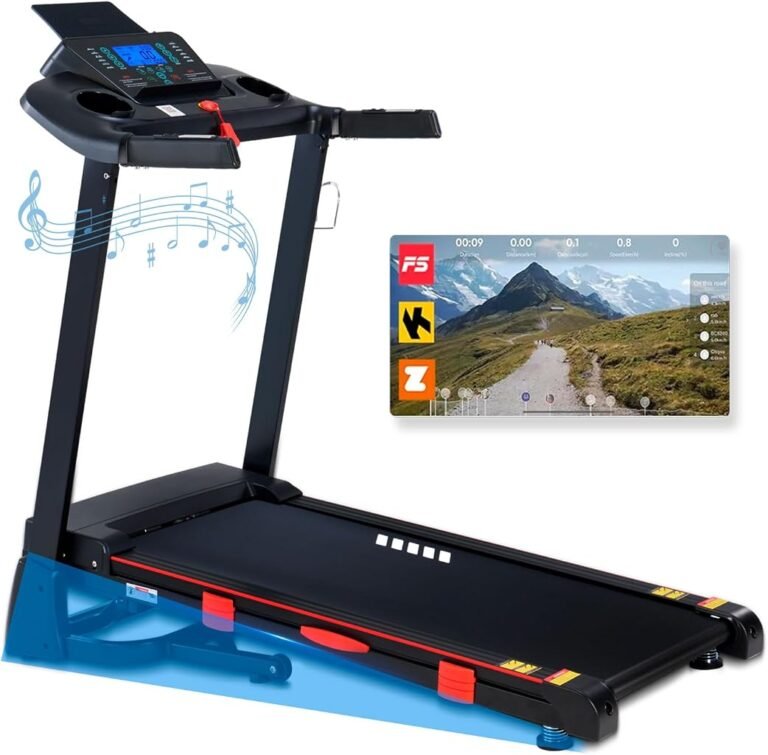
Home treadmills often force a compromise. Compact machines save floor space but can feel restrictive once walking turns into jogging or structured training. Larger running treadmills provide more speed, stability, and usable belt area, yet demand the kind of permanent floor space many homes cannot surrender.
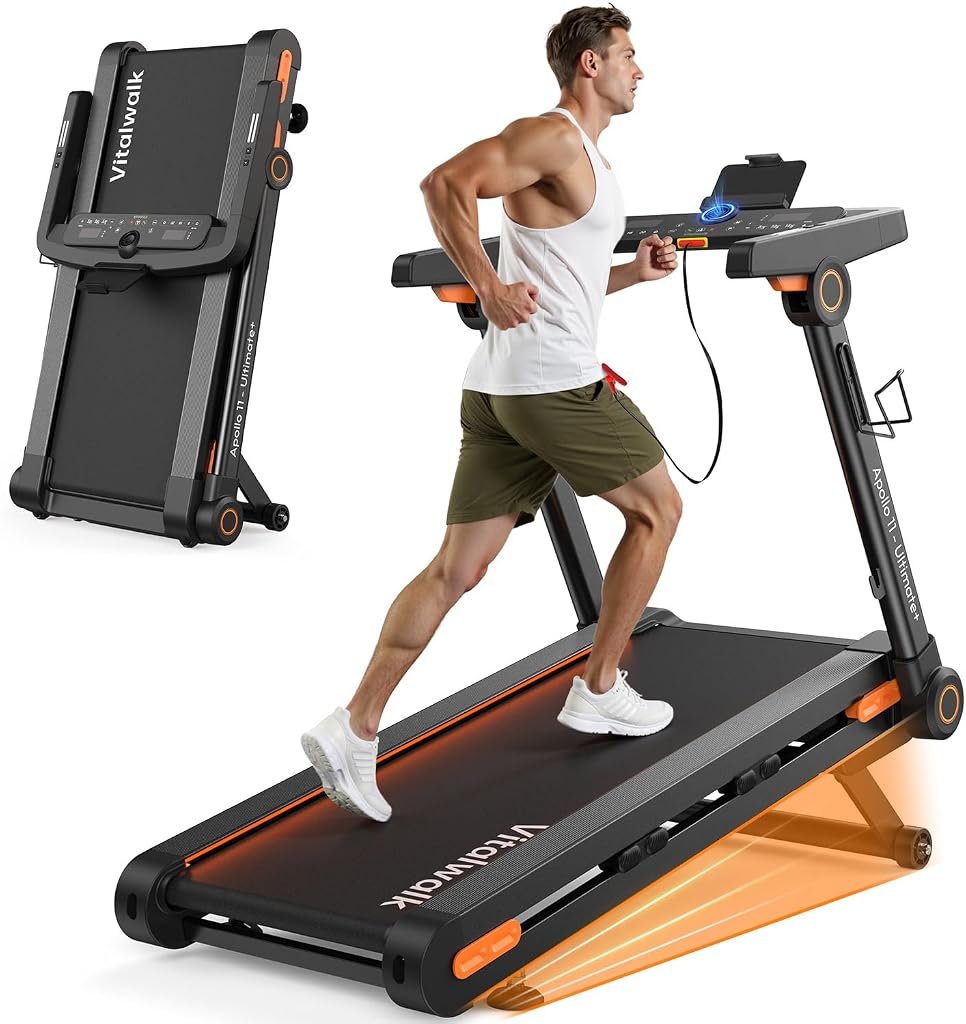
The Vitalwalk Foldable Auto Incline Treadmill attempts to narrow that divide. At $829.98 for the configuration assessed here, it sits well above inexpensive walking pads while remaining below many large premium training machines. Its case rests on a combination of automatic incline, a foldable frame, a full-deck running surface, and enough speed for walking, jogging, and running.
Our score is 8.09/10. Customer Sentiment stands at 7.84, Buyer Confidence at 9, and Value at 7.91. Those numbers describe a treadmill with a compelling hardware proposition and unusually broad training range for a folding design, but also one whose price requires buyers to have a genuine use for its stronger capabilities.
This is not simply a walking pad with a handrail attached. The official VitalWalk Apollo-11 Ultimate+ specifications list a 49-by-18-inch running area, a 3.5 HP brushless motor, speeds from 0.6 to 10 mph, a 350-pound user capacity, and automatic incline reaching 25% on the Ultimate+ version. Those specifications place the machine closer to a full home training treadmill than the slim under-desk category its folding credentials might initially suggest.
The Central Idea: More Training Range Without Surrendering a Room
The treadmill’s most consequential feature is not maximum speed. Ten miles per hour is useful, but plenty of home users rarely approach that pace. Automatic incline changes the training proposition more substantially.
The 20% and 25% configurations allow walking sessions to become considerably steeper without forcing the user to run faster. That distinction matters because treadmill intensity does not have to come solely from belt speed.
The Centers for Disease Control and Prevention guidance on exercise intensity describes moderate activity as an effort around 5 or 6 on a 0-to-10 relative-intensity scale, with vigorous activity beginning around 7 or 8. The agency also gives a useful conversational benchmark: during moderate activity, a person can generally talk but not sing; during vigorous activity, speaking more than a few words requires a pause for breath.
That framework explains why substantial incline capacity can be more useful than another increment of maximum running speed for many home users. A person can manipulate speed and grade independently, producing anything from easy flat walking to demanding hill sessions.
There is an important restraint, however. Claims about dramatic calorie multiplication should be treated cautiously unless they are attached to a clearly defined protocol involving speed, grade, duration, body mass, and measurement method. Incline unquestionably changes the mechanical demands of walking, but a universal calorie multiplier is not a sensible way to describe every user or workout.
The 49-by-18-Inch Deck Deserves Attention
Treadmill dimensions are frequently reduced to the overall footprint, yet the dimensions under the runner’s feet matter more during exercise.
Vitalwalk lists an 18-by-49-inch full-deck belt for the Apollo-11 Ultimate and Ultimate+ models. Both also share a 10 mph maximum speed and 350-pound stated user capacity.
Forty-nine inches of usable length gives the machine considerably more training flexibility than a short walking pad. The 18-inch width is also meaningful because lateral room influences how confined a treadmill feels.
Still, 49 inches is not an enormous running deck. Tall runners, people with long strides, and anyone expecting to spend substantial time near the machine’s 10 mph ceiling should pay particular attention to that measurement before ordering. A treadmill can technically reach a given speed without its deck dimensions being ideal for every person at that speed.
That is an important distinction in evaluating the best treadmills for home. Maximum motor speed is easy to compare on a specification sheet; whether the running area suits a particular stride is more personal and often more consequential.
The design therefore appears particularly well matched to walkers, incline walkers, joggers, and runners comfortable on a moderately sized home deck. Dedicated high-speed runners accustomed to expansive gym treadmills have a stronger reason to compare larger alternatives.
Automatic Incline Is the Defining Training Feature
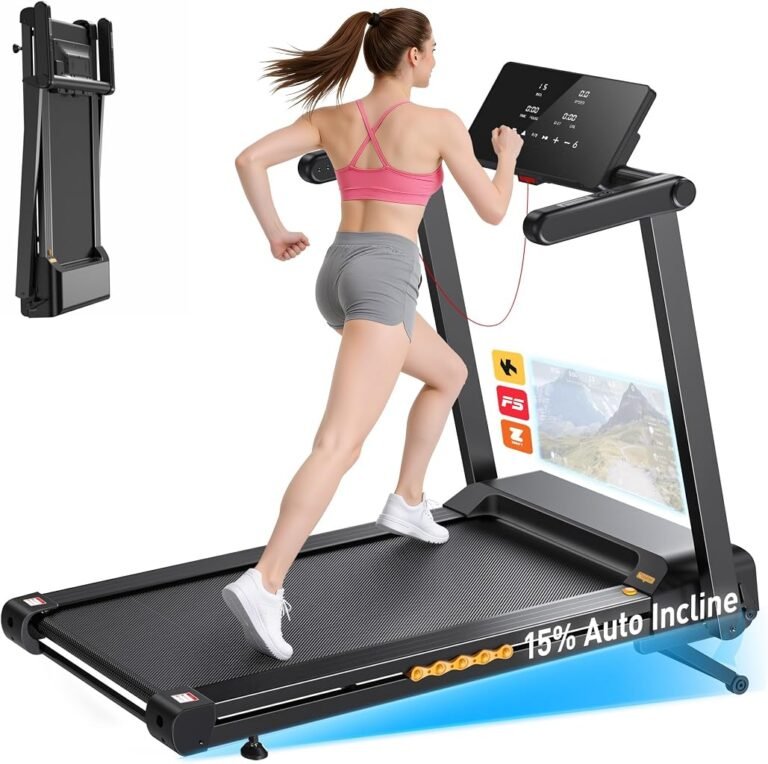
The Ultimate+ reaches a stated 25% maximum automatic incline across 25 levels, while its closely related Ultimate model reaches 20%. That is a substantial range for home exercise.
A steep maximum grade should not be confused with a recommendation to train at the maximum setting. Its real usefulness lies in progression.
A new or returning exerciser might begin with nearly flat walking. As fitness improves, grade can rise while speed remains manageable. Another user might alternate moderate inclines with flatter recovery periods. A runner can use lower grades for variation without turning every session into an all-out effort.
This flexibility also makes the treadmill relevant to the broader public-health argument for walking. The federal Physical Activity Guidelines for Americans state that adults gain most health benefits when completing the equivalent of 150 to 300 minutes of moderate-intensity aerobic activity each week. The same guidance recommends muscle-strengthening activity involving all major muscle groups on at least two days per week.
A treadmill cannot satisfy every part of those recommendations by itself, but it can remove several familiar barriers to aerobic activity: darkness, poor weather, inconvenient travel, and dependence on gym opening hours.
The machine’s incline system makes those indoor minutes more adjustable than flat walking alone.
Folding Changes the Space Equation, but Not the Physics
Calling a treadmill foldable can create the wrong mental image. A 105.2-pound machine does not suddenly become a lightweight object because its frame collapses.
Vitalwalk lists the Ultimate+ at approximately 105.2 pounds, or 47.7 kilograms. In normal use, its stated dimensions are 53.9 by 29.5 by 46.9 inches. Folded, the height falls to 9.5 inches, while the manufacturer also describes upright storage as using approximately 2.67 square feet. Four-wheel mobility is intended to assist repositioning.
Those are useful characteristics, particularly where exercise space must revert to ordinary living space after a session. Yet prospective owners should measure the complete storage route rather than merely the final destination.
That means checking:
- The intended operating area and clearance around it.
- Doorways and tight corners between the delivery point and exercise room.
- The planned folded or upright storage location.
- Access to a suitable electrical outlet.
- Whether the floor and household layout make moving a roughly 105-pound machine realistic.
The difference between “foldable” and “effortlessly portable” is substantial. This model belongs in the first category.
That weight may actually reassure buyers who dislike extremely light walking pads, but it also means storage should be planned before the box arrives.
A 3.5 HP Brushless Motor and 10 MPH Ceiling Broaden Its Audience
The manufacturer specifies a 3.5 HP brushless motor and a 0.6-to-10 mph speed range. It also includes 15 preset programs.
The meaningful figure for many households is not the 10 mph maximum itself but the breadth between the slowest and fastest settings. That range permits several distinct training styles on one machine: relaxed walking, brisk walking, hill walking, jogging, intervals, and faster running for users whose stride fits the deck.
That gives the treadmill a stronger multi-user argument. One household member can use it primarily for walking while another uses it for running, reducing the need to choose between a walking pad and a conventional running treadmill.
No responsible assessment should infer long-term motor durability solely from horsepower or motor type, however. Durability depends on engineering, heat management, user load, maintenance, operating conditions, component quality, and service support over time. Those questions become clearer only after extended ownership histories accumulate.
The company itself is relatively young. Its official brand history states that VitalWalk began in 2024, making it a newer name than several long-established fitness-equipment manufacturers. Buyer Confidence nevertheless earns a strong 9 in our assessment, reflecting the product’s clearly specified core capabilities and the availability of model-specific support rather than assuming decades of brand history that do not exist.
Cushioning, Controls, and Everyday Usability
The Ultimate+ incorporates cushioning beneath the deck, hand-grip pulse sensors, a device holder, charging connections, bottle storage, and a built-in fan. Compatible fitness apps can also support workout tracking and guided sessions.
These are secondary features, but secondary does not mean irrelevant. A treadmill used several times per week succeeds or fails partly through friction: how easily a session starts, whether controls are accessible, where a phone or tablet sits, and whether basic workout information can be seen without disrupting stride.
Pulse sensors deserve a narrower interpretation. Vitalwalk itself describes hand-grip pulse readings as workout estimates rather than medical measurements. That is the appropriate expectation. Anyone requiring medically reliable cardiovascular monitoring needs equipment and professional guidance intended for that purpose.
Cushioning should be treated similarly. Its presence is a legitimate design characteristic; it does not establish a universal orthopedic benefit or guarantee that every user will find the deck comfortable. Footwear, running mechanics, body mass, pace, previous injuries, and individual preference all affect perceived comfort.
Our Scores Explain the Trade-Off Better Than a Feature List
The overall score of 8.09/10 places the Vitalwalk firmly in Very Good territory. That rating reflects an unusually broad combination of incline capability, running speed, usable deck area, folding storage, and stated user capacity.
Customer Sentiment receives 7.84. That is positive without suggesting universal appeal. The treadmill asks buyers to accept a fairly substantial machine and a price above entry-level equipment in return for a much wider training envelope.
Buyer Confidence is the strongest individual measure at 9. The product’s central specifications are clearly defined, the manufacturer publishes model-specific dimensions and support material, and the Ultimate and Ultimate+ have clearly differentiated incline ceilings rather than vague model positioning.
Value comes in at 7.91. At the assessed $829.98 price, value depends heavily on utilization. A buyer who only wants gentle flat walking while working at a standing desk is paying for speed, incline, handrails, running capability, and structure that may go largely unused. A household expecting frequent hill walking, jogging, and running can extract considerably more from the same expenditure.
That explains why the overall 8.09 score is positive but not indiscriminate. The treadmill offers a lot; the right buyer needs a reason to use it.
What the Machine Does Particularly Well
Several strengths stand out when the specifications are considered together rather than separately.
First, the incline range meaningfully expands workout progression. Second, the 0.6-to-10 mph range prevents the treadmill from being locked into a single exercise style. Third, the 49-by-18-inch belt provides more usable space than minimalist walking pads while the folding system addresses storage after training.
The stated 350-pound user capacity also broadens potential fit, although every buyer near a manufacturer’s maximum rating should observe that limit strictly.
Perhaps the strongest design decision is that space efficiency has not been pursued solely by shrinking the exercise surface. The full-deck architecture attempts to devote more of the machine’s footprint to usable belt area. For apartment residents and households without a dedicated gym, that is a more interesting engineering objective than merely making the entire machine small.
Where Buyers Should Be More Critical
The first issue is price. At $829.98, this is not an impulse purchase. Less expensive walking pads make more sense for buyers who need nothing beyond low-speed daily movement.
Second, folding does not erase mass. At more than 100 pounds, this treadmill is movable equipment rather than genuinely portable fitness gear.
Third, the 49-inch deck should be evaluated against the user’s body dimensions and running style. People expecting long-stride, high-speed running should not assume that a 10 mph motor automatically makes every 10 mph session equally comfortable.
Fourth, a 20% or 25% incline is capability rather than necessity. Buyers attracted primarily by the largest number on the specification sheet risk paying for a range they seldom use.
Finally, a treadmill is only useful when its placement encourages repeated use. A machine that must undergo an elaborate furniture-moving ritual before every 20-minute walk can lose its practical advantage remarkably quickly.
Who Is the Best Fit?
The strongest case exists for households wanting one machine to cover several types of aerobic training.
It makes particular sense for:
- Walkers who expect to progress into steeper hill sessions.
- Users who alternate walking, jogging, and running.
- Couples or families with different preferred exercise intensities.
- People who need substantial training capability but cannot dedicate permanent floor space to a treadmill.
- Buyers who specifically value automatic incline over a basic flat walking platform.
It makes less sense for someone seeking an ultra-light under-desk pad, a low-cost walking-only machine, or a very long running deck for sustained fast running.
There is also little reason for an inexperienced user to select this treadmill merely because it can reach 25% incline. Fitness progression is more useful than specification chasing. The CDC’s adult activity guidance emphasizes that exercise can be spread throughout the week and broken into smaller chunks rather than completed in one punishing block. Consistency is a more defensible goal than routinely chasing maximum grade or speed.
How to Use Its Capabilities Sensibly
A treadmill with this much adjustment rewards restraint.
For someone returning to exercise, a sensible approach is to establish regular walking first and then alter one major variable at a time. Increasing speed and incline aggressively together makes it harder to judge which change caused excessive fatigue or discomfort.
Relative intensity offers a more useful everyday gauge than arbitrary settings. The CDC’s talk test is particularly accessible: moderate effort generally permits conversation but not singing, while vigorous activity makes continuous conversation difficult.
That approach also prevents the 25% figure from becoming a target in itself.
The federal exercise guidelines make another useful point: “Some physical activity is better than none.” A 20-minute walk completed repeatedly has more practical meaning than an ambitious training plan that makes the treadmill unpleasant to use.
Users should also follow the manufacturer’s setup, safety-key, folding, maintenance, and storage instructions. The Ultimate+ arrives assembled with a safety key and setup accessories, according to Vitalwalk, but pre-use checks still matter.
Warranty and Ownership Matter at This Price
Hardware specifications dominate treadmill comparisons, but after-sales support deserves nearly equal attention once prices approach four figures.
Vitalwalk lists a limited warranty consisting of five years on the structural frame, two years on the drive motor, and one year on other parts, subject to its coverage conditions and exclusions.
That structure is useful context because treadmills combine electronics, a motor, moving belts, rollers, incline hardware, controls, and load-bearing components. Even a well-designed treadmill is not maintenance-free.
Owners should retain purchase records, register the machine where appropriate, follow lubrication and belt-care instructions, and address unusual belt tracking or mechanical noises before a small problem becomes a larger one.
For prospective buyers, warranty conditions deserve reading before purchase rather than after a malfunction. Return logistics also matter because returning a roughly 105-pound treadmill is fundamentally different from sending back a pair of running shoes.
Value Against Simpler Home Treadmills
The most useful comparison is not whether another treadmill costs less. Many do. The question is what functionality disappears with the lower price.
A basic walking pad can satisfy someone seeking easy indoor steps. In that scenario, paying more than $800 for 10 mph running capability and aggressive automatic incline would be unnecessary.
The calculation changes for a buyer otherwise considering separate solutions for walking and harder cardio. The Vitalwalk’s combination of speed and grade permits a much broader progression on one platform.
Its Value score of 7.91 reflects precisely that tension. The equipment-to-price ratio is favorable for people who use the breadth of the machine, but merely average for people whose routine stays near the bottom of its performance range.
Price should therefore be evaluated against intended weekly use rather than against the longest specification list.
At $829.98, using the treadmill four times a week for several years would tell a very different value story from using it twice a month. Exercise equipment has an unusually direct relationship between value and habit: unused capability depreciates psychologically much faster than metal and electronics depreciate physically.
Final Considerations
The Vitalwalk Foldable Auto Incline Treadmill earns its 8.09/10 overall score by combining characteristics that do not always coexist comfortably in home equipment: substantial automatic incline, running speed up to 10 mph, a 49-by-18-inch usable deck, a 350-pound stated capacity, and folding storage.
Its strongest feature is the breadth of exercise it can accommodate. Walking can remain easy or become steep. Jogging does not require another machine. Running is available up to the stated speed ceiling. When the session ends, the frame can be folded and repositioned rather than permanently dominating the room.
The trade-offs are equally concrete. This is still a roughly 105-pound treadmill. Its deck is sensibly proportioned for a folding machine but not exceptionally long for fast running. Its $829.98 price is difficult to justify for a person who needs only casual walking. And its maximum incline is useful only when treated as training range rather than a number that must constantly be reached.
Customer Sentiment at 7.84 captures that measured appeal. Value at 7.91 recognizes substantial equipment for the money without pretending that every household needs it. Buyer Confidence at 9 reflects a comparatively clear specification set and ownership proposition.
For buyers comparing the best treadmills for home, the decisive question is therefore not whether this machine has enough features. It plainly has a wide set of them. The question is whether the household needs one foldable machine to bridge everyday walking and serious incline or running sessions.
Where that combination matches the intended routine, the Vitalwalk makes a coherent case. Where the objective is simply to walk gently indoors, a smaller and less expensive machine is the more rational purchase. The distinction is not glamorous, but it is what separates buying exercise equipment from buying exercise specifications.