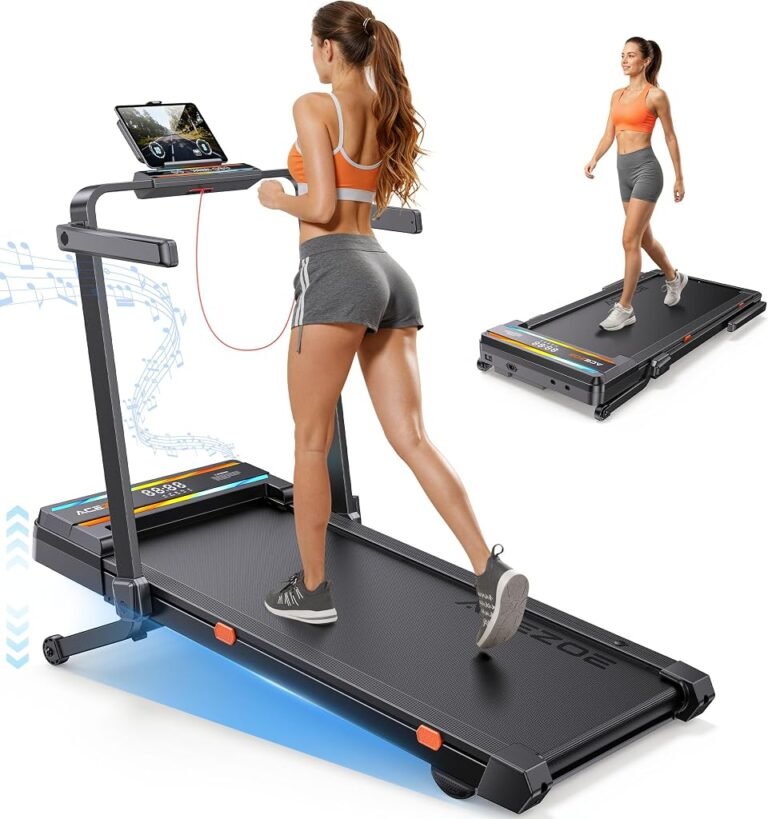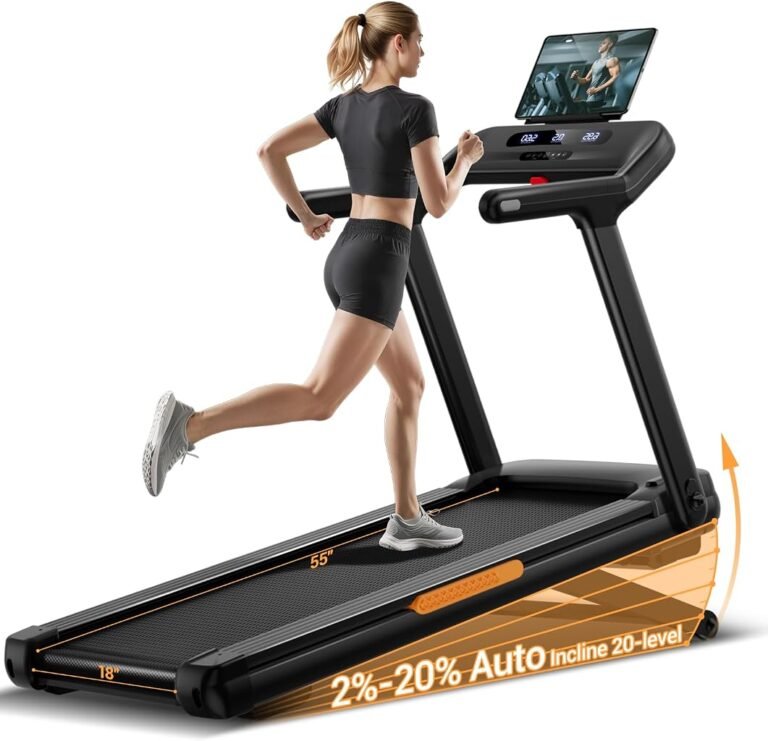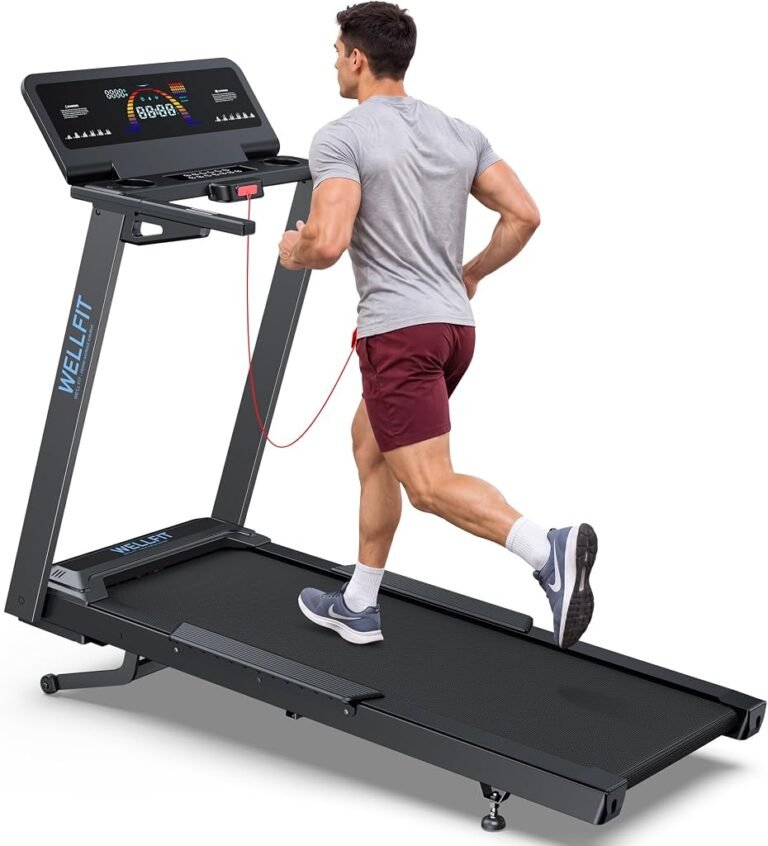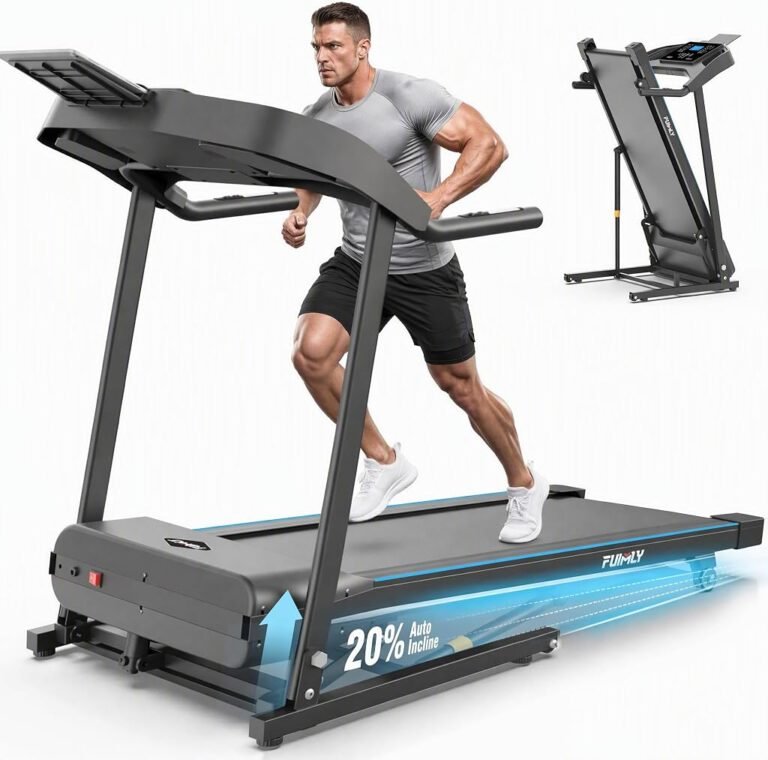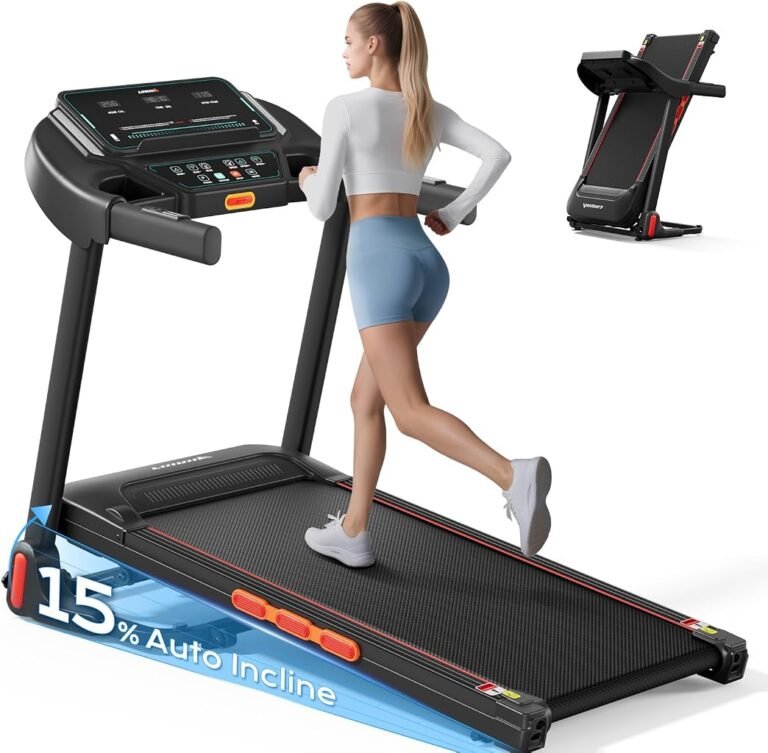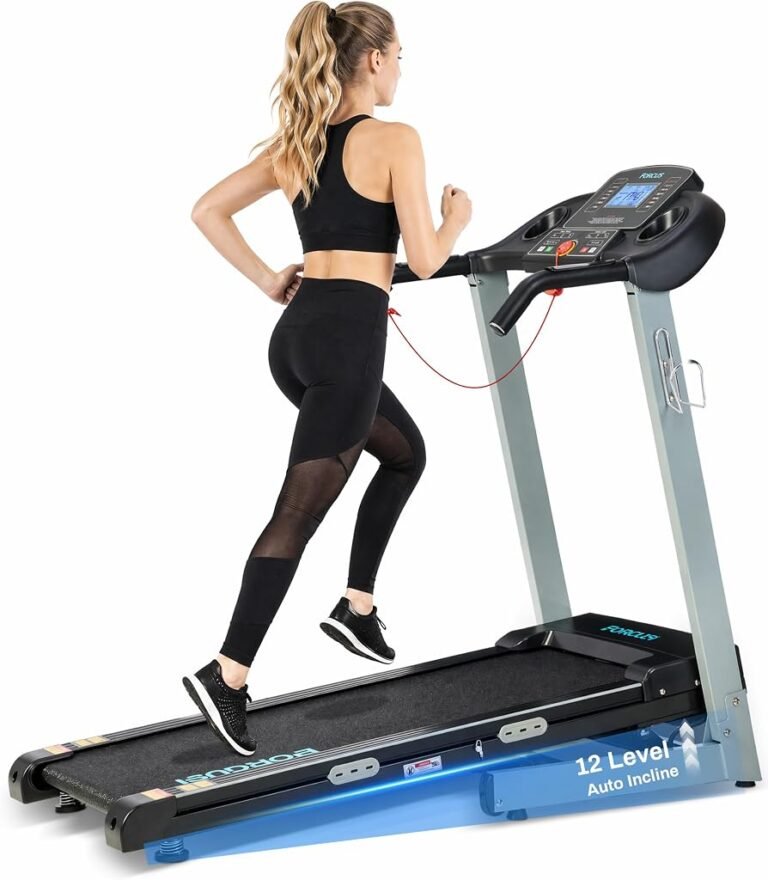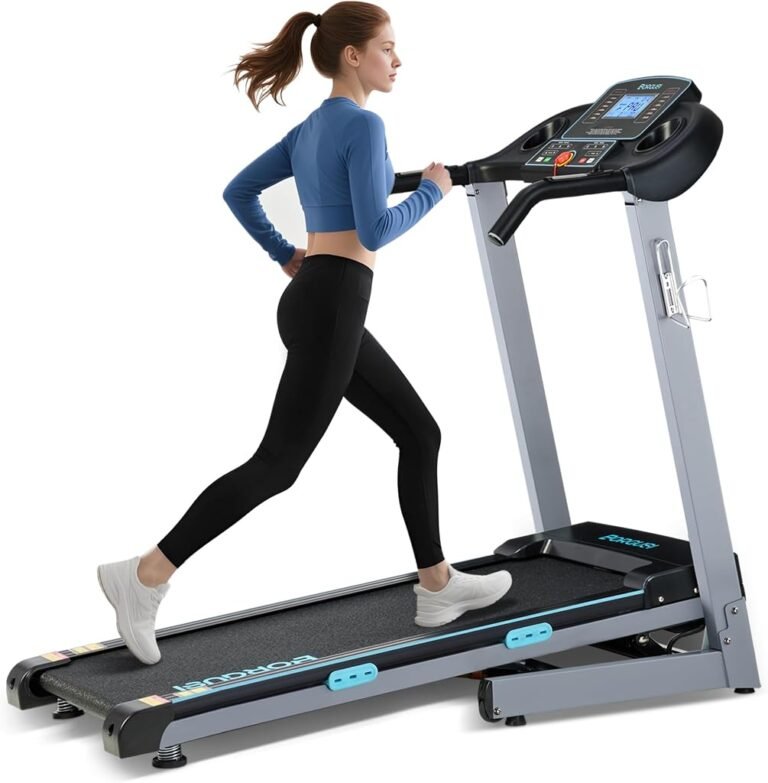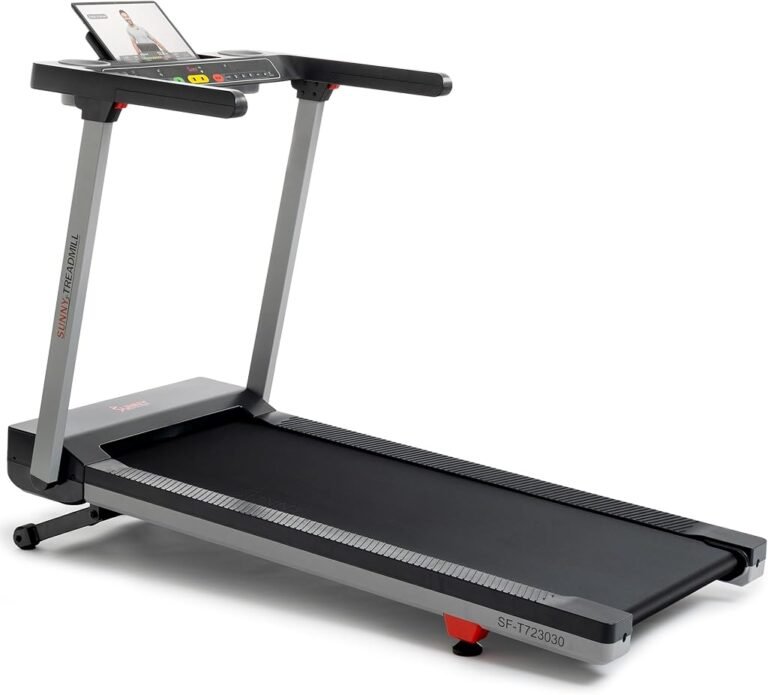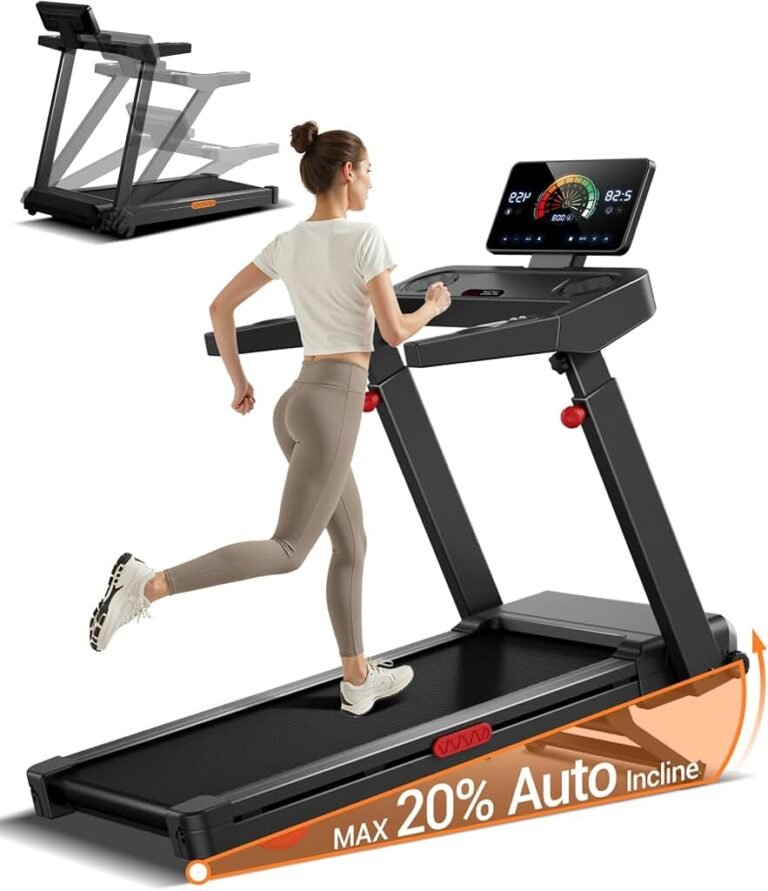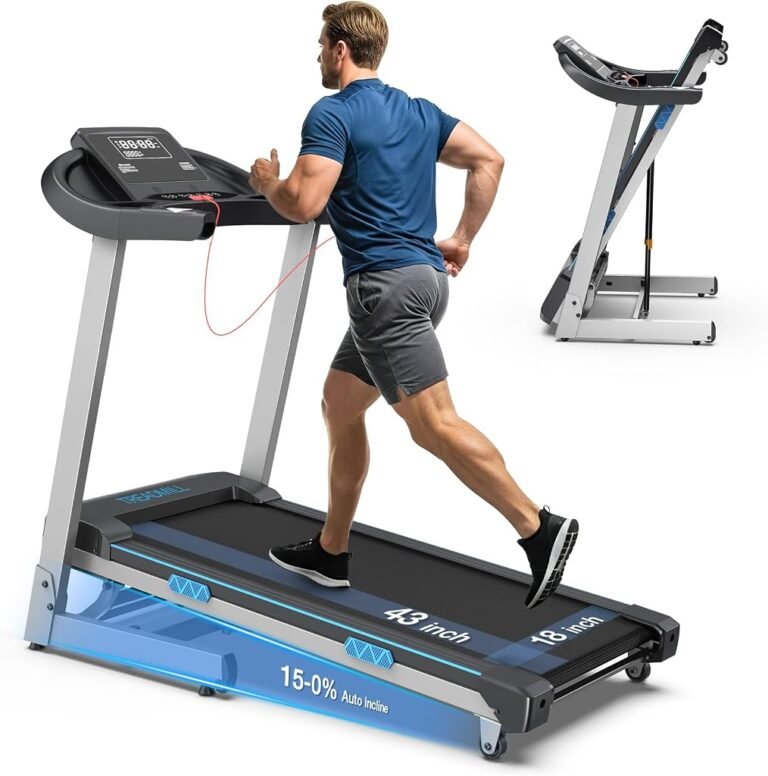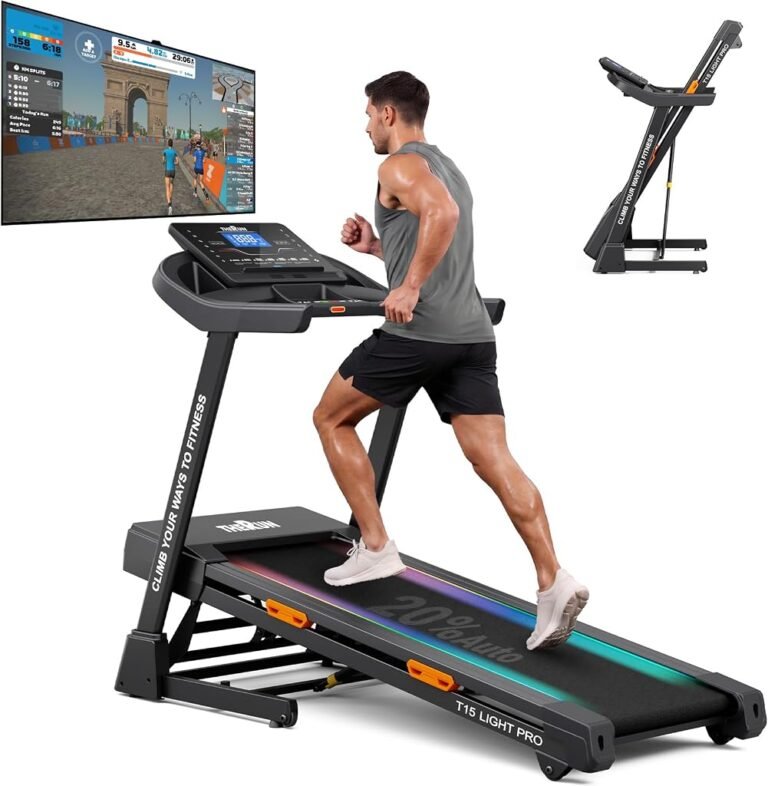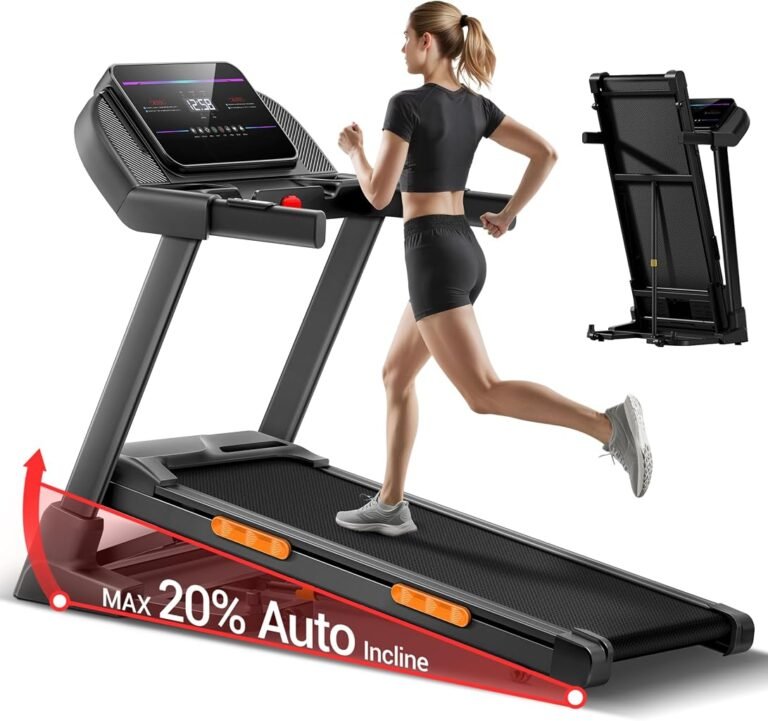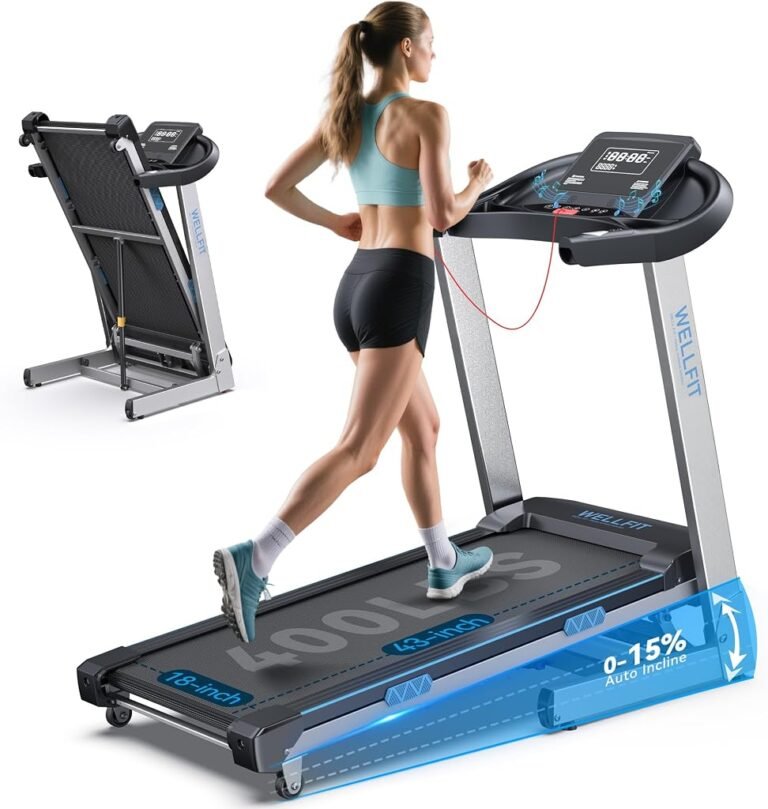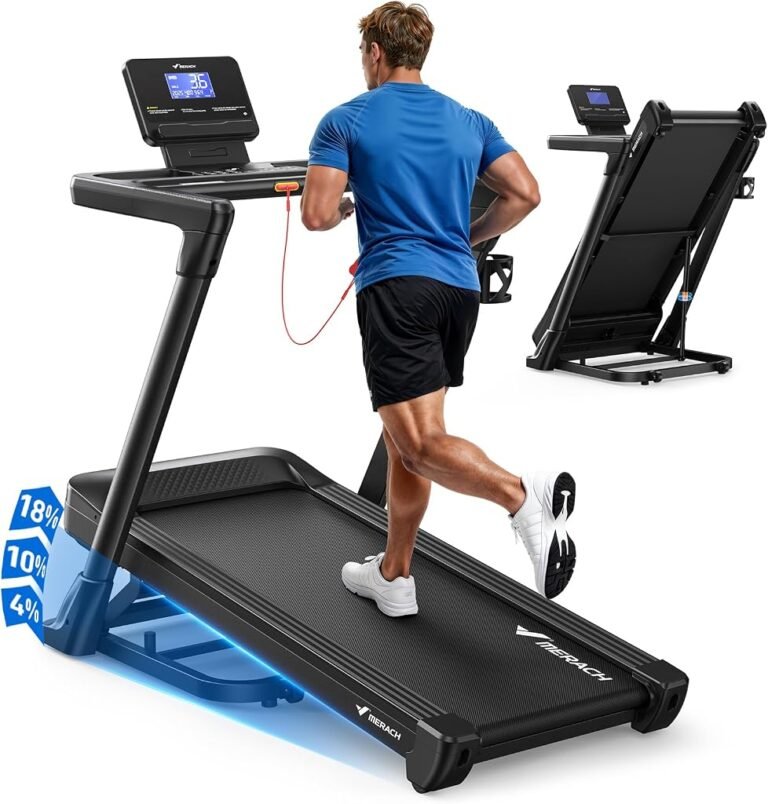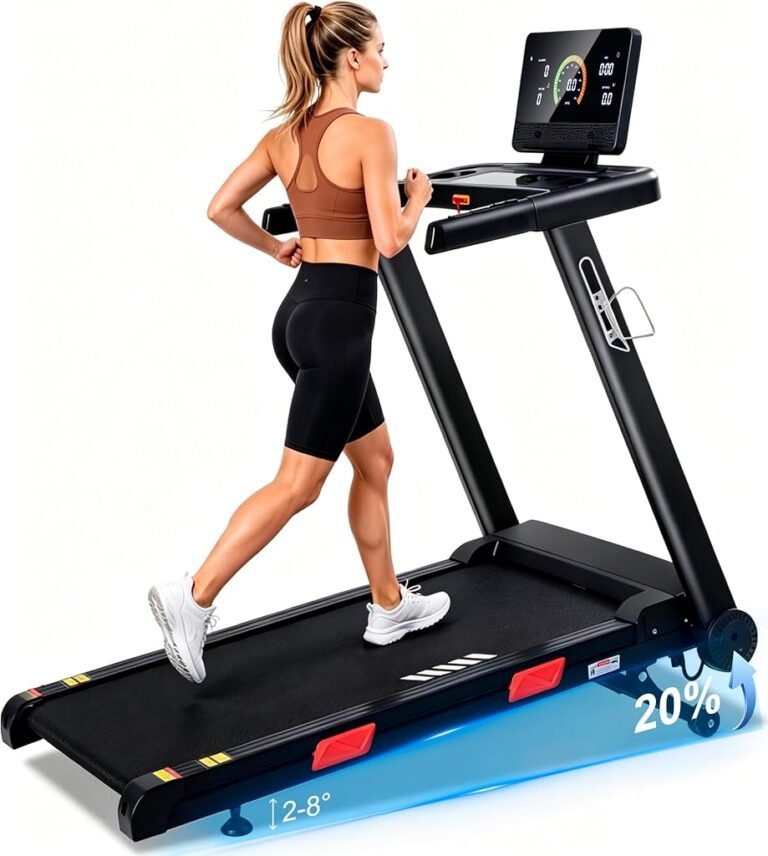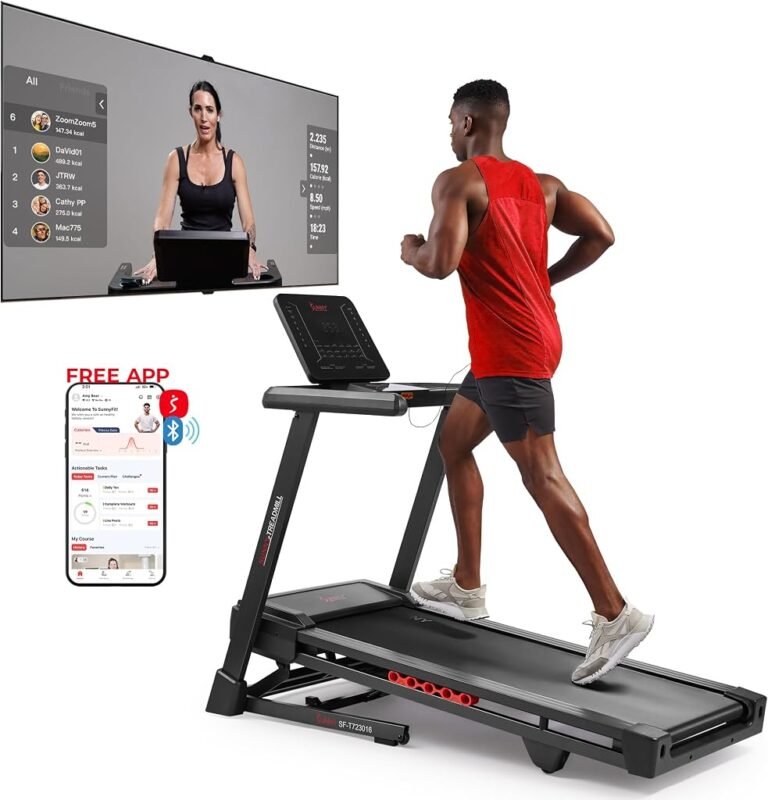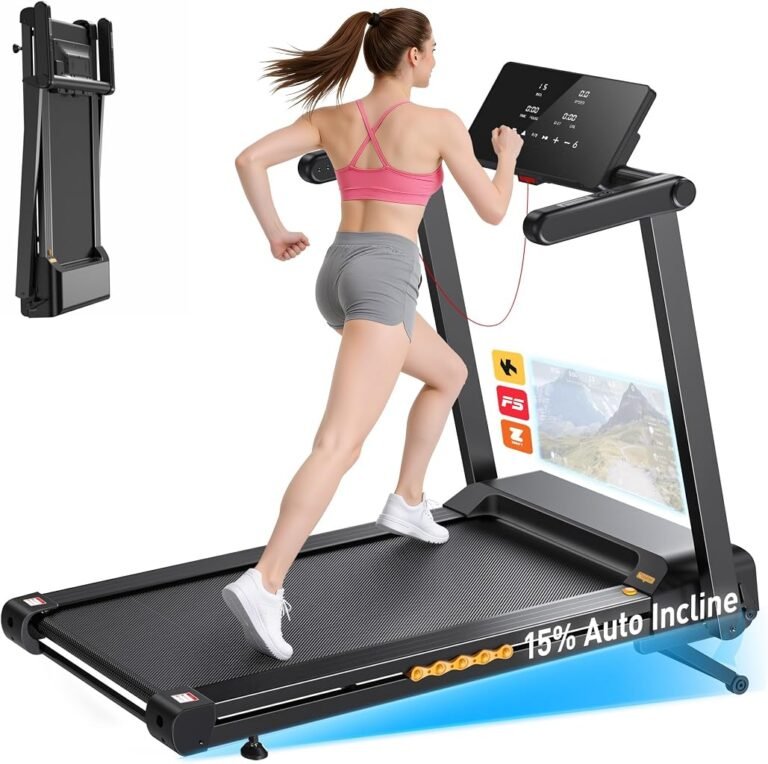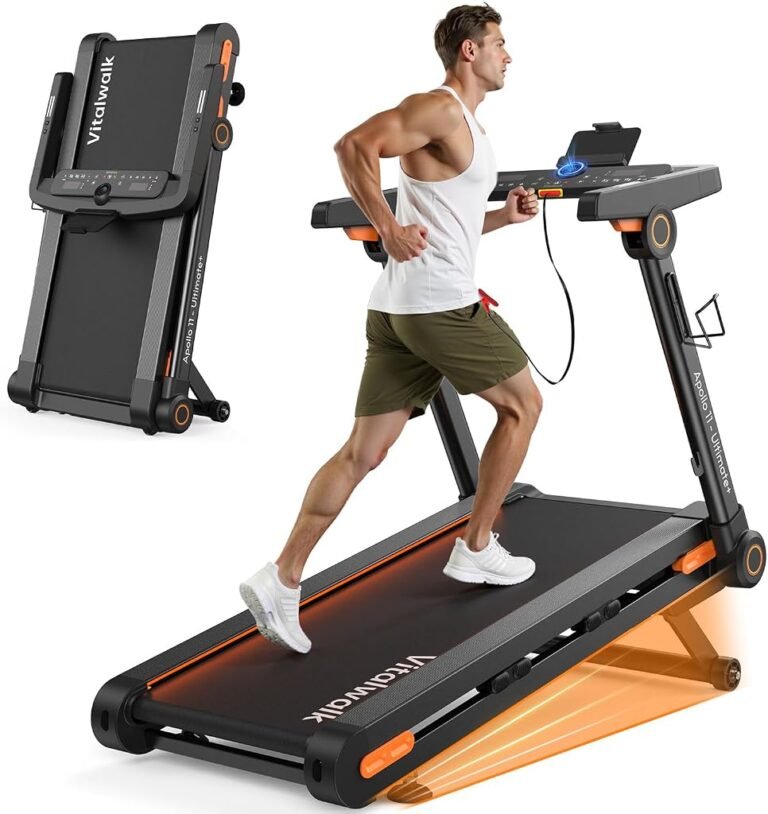
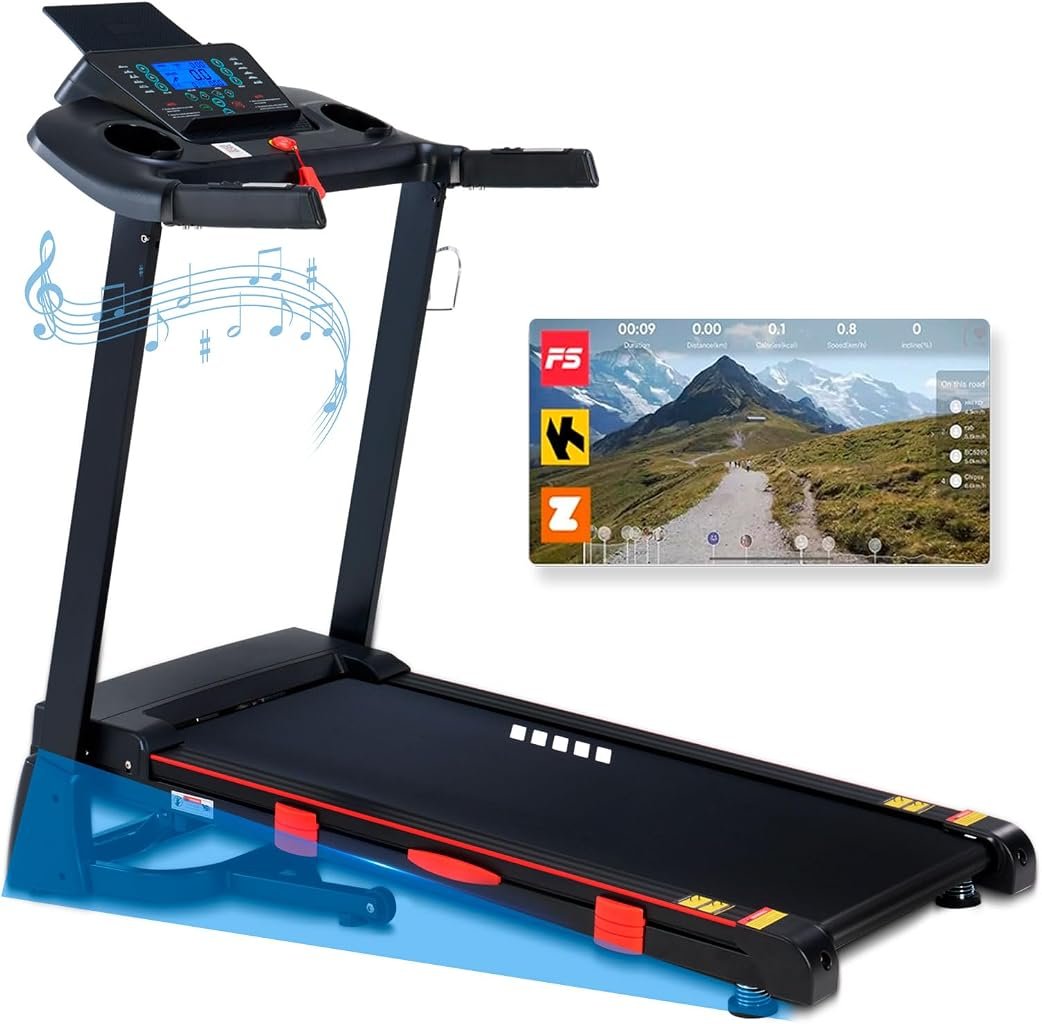
The ATEEDGE Auto Incline Foldable Treadmill presents an unusual reviewing problem before questions of speed, desk ergonomics, motor output, or storage even arise. The identifiable treadmill is not an ATEEDGE machine. It corresponds to an ANCHEER treadmill built around a height-adjustable desk workstation, 15% incline capability, a 3.5 HP motor, and a maximum speed of 7.5 mph.
There is a second distinction that matters just as much: the identifiable ANCHEER configuration uses manual incline adjustment rather than a powered automatic incline mechanism. ANCHEER’s own current documentation describes a 0% to 15% manually adjustable incline system. That directly conflicts with the “Auto Incline” wording associated with the review name.
Correcting those two points changes the product’s identity considerably.
This is best understood as a workstation treadmill capable of walking, jogging, steeper inclined exercise, and conventional treadmill use. It is not accurately characterized as an ATEEDGE treadmill with electronically controlled incline.
ANCHEER documentation specifies a removable 27.5-by-14-inch desktop, desk-height adjustment from approximately 47 to 50.5 inches on the documented version, a 3.5 HP motor, speeds reaching 7.5 mph, 15% manual incline, multiple control methods, and a stated maximum user capacity reaching 450 pounds.
At the evaluated price of $530.99, this is not an inexpensive walking pad. It needs to justify itself through versatility rather than minimalism.
Our score is 8.14/10. Customer Sentiment is 7.84, Buyer Confidence is 9.25, and Value is 7.91. The differences between those ratings reveal the machine’s central character. The product itself is relatively easy to understand once correctly identified, explaining the high Buyer Confidence figure. The lower Value and Customer Sentiment ratings reflect a more complicated reality: a treadmill desk asks one machine to perform several jobs, and not every buyer needs all of them.
The Product Is ANCHEER, Not ATEEDGE
Brand identity is the first issue to settle.
The recognizable machine belongs to ANCHEER’s desk-treadmill range. Its combination of a 15% incline, adjustable-height workstation, 3.5 HP motor, and high stated user-weight limit corresponds to ANCHEER’s current treadmill-with-desk configuration.
That matters because treadmills are specification-dependent products.
A buyer needs to know the actual manufacturer before relying on claims involving incline adjustment, replacement components, weight capacity, controls, warranty coverage, or assembly.
The ATEEDGE name should therefore not drive the purchasing assessment.
ANCHEER’s configuration is the machine that can be documented, and that is the machine evaluated here.
The correction also exposes a more consequential discrepancy.
The 15% Incline Is Manual, Not Automatic
“Auto incline” implies that the treadmill changes deck angle through a powered mechanism controlled from the console, handrail, remote, program, or software.
That is not how the identifiable ANCHEER configuration is documented.
ANCHEER describes a manually adjustable incline reaching 15%. The incline position must therefore be physically configured rather than electronically changed during exercise.
This distinction affects day-to-day use.
With powered incline, a walker can move from flat exercise to a moderate hill and back again without leaving the belt. That enables interval-style workouts in which speed and grade change repeatedly.
Manual incline works differently.
The user selects the desired grade before the relevant portion of exercise and physically adjusts the treadmill. That can still produce demanding uphill walking, but it is less convenient for sessions built around frequent grade changes.
The difference becomes particularly relevant at an evaluated price above $500.
A buyer specifically seeking electronically controlled incline should not treat a manually adjustable 15% system as equivalent.
On the other hand, someone who usually chooses one incline setting and leaves it there may care much less about the distinction.
Fifteen Percent Is Still a Substantial Grade
The absence of powered adjustment does not make the 15% maximum insignificant.
A 15% grade represents 15 units of vertical rise for every 100 units of horizontal travel. It is a steep walking configuration compared with flat indoor exercise.
Incline can raise exercise demand without requiring high belt speeds. That gives the ANCHEER an interesting dual personality.
At a low belt speed and flat setting, it can function as a walking workstation. At a steeper setting, the same machine becomes much more exercise-focused, making simultaneous computer work less realistic.
That separation matters.
Walking while answering email at a gentle pace and climbing a 15% grade are not merely different intensities of the same office activity. They impose very different demands on posture, balance, attention, and breathing.
The machine can support both uses, but users should not assume both should occur simultaneously.
A steep incline is better treated as dedicated exercise time.
The Desk Is More Than a Decorative Shelf
The workstation is one of the ANCHEER’s defining physical features.
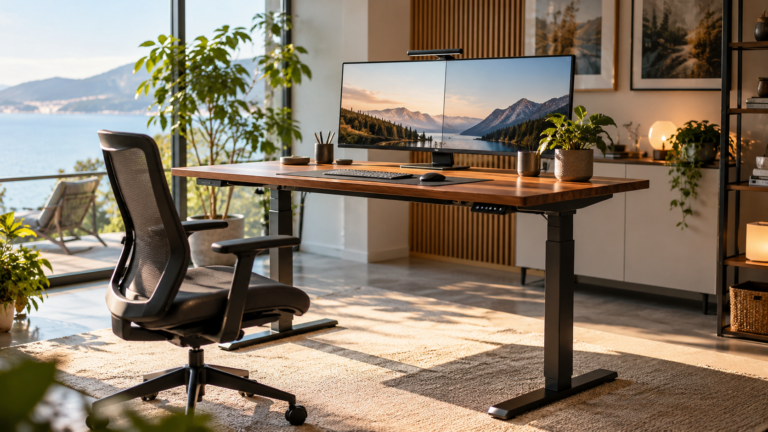
The documented desktop measures approximately 27.5 by 14 inches and is removable. The current ANCHEER configuration also offers height adjustment, giving users some ability to position a laptop, tablet, documents, or other work materials at a more suitable level.
That is a meaningful difference from treadmills that merely include a small tablet holder.
A real work surface can support actual computer use.
Yet desk size alone does not establish ergonomic suitability.
A treadmill desk places the user in motion while interacting with a screen and input devices. Monitor position, keyboard height, wrist alignment, shoulder position, viewing angle, and walking speed all influence whether the arrangement feels sustainable.
The Occupational Safety and Health Administration’s workstation guidance emphasizes neutral body positioning, including keeping the head level and forward-facing, shoulders relaxed, elbows close to the body, and hands, wrists, and forearms aligned. OSHA also recommends changing working positions during the day rather than remaining in one posture for prolonged periods.
That guidance is highly relevant to treadmill desks.
A height-adjustable work surface helps, but it cannot correct every ergonomic problem automatically.
Walking While Working Requires a Different Speed Strategy
The ANCHEER’s maximum speed reaches 7.5 mph on the documented configuration.
That gives the treadmill far more speed than ordinary desk walking requires.
Seven and a half miles per hour corresponds to an eight-minute-mile running pace. Nobody should interpret that as a sensible speed for typing an email or manipulating a spreadsheet.
The workstation and maximum-speed specifications therefore represent separate operating modes.
At low speeds, the desk can support light computer work, reading, calls, or similar activities. As speed rises, attention should shift toward exercise rather than productivity.
This distinction is one of the machine’s better design arguments.
The ANCHEER is not restricted to being an under-desk walking pad that becomes irrelevant when the workday ends. Its higher speed ceiling allows jogging and recreational running after the desktop is no longer central to the activity.
For buyers comparing the best treadmills for home, that broader operating range can be more useful than owning separate walking and running devices.
The limitation is that a multifunction machine must still fit each use reasonably well.
A 3.5 HP Motor Sounds Impressive but Needs Context
ANCHEER identifies the motor as a 3.5 HP unit.
Horsepower is one of the most aggressively marketed treadmill specifications because it reduces a complicated electromechanical system to a single number.
That simplicity can be misleading.
Consumer treadmill motor ratings are not always reported under identical sustained-load conditions. A headline horsepower figure therefore cannot independently establish durability, cooling performance, electrical efficiency, sustained output, or long-run reliability.
The motor should instead be interpreted beside the machine’s operating range.
ANCHEER pairs the 3.5 HP specification with speeds from approximately 0.6 to 7.5 mph and a high published user-weight limit.
Those characteristics provide a more useful description of what the treadmill is intended to do.
For workstation use, low-speed consistency matters more than maximum motor output. For jogging, predictable acceleration and belt movement matter. For inclined walking, the entire frame and drive system need to work together.
Horsepower alone cannot establish any of those qualities.
The High Weight-Capacity Claim Deserves Measured Interpretation
ANCHEER’s current documentation for this desk-treadmill configuration states a maximum user capacity of up to 450 pounds.
That is substantially higher than the 250- and 300-pound ratings common among many compact walking pads.
A high published limit broadens the potential user population, but it should not be transformed into claims the number cannot support.
A manufacturer’s maximum user-weight figure is a stated operating boundary. It does not independently prove long-run durability, stability for every body type, or identical performance across the entire load range.
A heavier walker may also care about dimensions differently from a lighter user.
Belt width, frame geometry, rail position, step-up height, desk clearance, and walking gait can become just as consequential as the headline capacity.
Anyone close to a treadmill’s maximum rating may reasonably prefer additional margin rather than treating the upper limit as a target.
The Three Control Methods Add Practical Flexibility
ANCHEER describes three control interfaces on the documented configuration: remote operation, handrail controls, and a touchscreen interface.
That is particularly relevant on a workstation treadmill.
A person walking while working may not want to interrupt a task to reach toward a conventional console. Accessible controls can make low-speed adjustments easier.
Handrail buttons are also useful when the treadmill is being used more conventionally because the user can change settings while maintaining contact with the frame.
The remote adds another option.
Multiple interfaces are not automatically better if they create confusion, but the logic here is sound. Workstation mode and exercise mode place the user’s hands and attention in different positions.
Control redundancy can therefore improve usability.
The emergency stop remains more consequential than any convenience interface.
Workstation Ergonomics Should Shape the Setup
A treadmill desk can reduce stationary sitting time while introducing a new problem if the computer arrangement forces awkward posture.
OSHA’s guidance on computer desks and work surfaces recommends enough surface area to position components appropriately and minimize awkward reaching. It also advises placing the monitor directly in front of the user and arranging frequently used devices so they can be reached easily.
Those principles should guide ANCHEER setup.
The desktop should not merely be raised until a laptop fits underneath the user’s arms. The screen, keyboard, and pointing device need to work together.
Laptop use creates a particular compromise because the keyboard and display are physically attached. Raising the screen also raises the keyboard.
For extended computer sessions, users may find that an external keyboard, mouse, or monitor arrangement creates a more neutral posture.
Walking speed should also remain low enough that typing does not require constant bracing against the desk.
The objective is not to prove that office work can be performed while moving as quickly as possible. The objective is to introduce manageable movement without degrading posture or concentration.
A Treadmill Desk Should Not Mean Walking All Day
The idea of replacing sitting with continuous walking sounds attractive until the practical demands of work are considered.
Different tasks require different levels of precision and concentration.
Reading, attending a routine meeting, or handling a phone call may pair naturally with gentle walking. Detailed graphic work, intensive typing, numerical analysis, or tasks requiring very fine mouse control may not.
OSHA recommends changing working positions frequently and specifically warns against remaining in one posture or sitting still for prolonged periods.
That principle supports variety rather than replacing one unbroken behavior with another.
The ANCHEER makes the most sense as one part of a changing work pattern: sitting, standing, walking gently, and taking periods away from the workstation.
That is more realistic than trying to accumulate an entire workday on the moving belt.
Folding Capability Matters in a Work-From-Home Environment
The treadmill is described as foldable, which addresses a persistent problem with combining exercise equipment and office space.
Home offices are rarely unlimited.
A room may need to function as a workspace during business hours, exercise area before or after work, and ordinary living space at other times.
Folding can reduce the treadmill’s spatial claim when it is not being used.
That benefit should still be evaluated practically.
Buyers should determine:
- The treadmill’s usable position relative to the desk, walls, and furniture.
- Whether the folding motion can be completed without moving other objects first.
- Where the machine will rest when folded.
- Whether the intended user can reposition it safely.
- Whether power-cord placement creates a trip hazard.
- Whether adequate open space remains behind the belt during exercise.
- Whether the desktop needs to be removed or repositioned for storage.
A treadmill that technically folds but is too inconvenient to fold regularly may function as permanent furniture.
That is not necessarily a problem, but it changes the value of the feature.
Safety Matters More When Work Divides Attention
A conventional treadmill already requires awareness of a moving belt. A treadmill desk adds a laptop, documents, messages, meetings, and other sources of divided attention.
That makes basic safety discipline more consequential.
The current ASTM F2115-25 treadmill specification addresses stability, handrails, foot rails, accessible controls, rear-roller protection, moving-surface traction, pinch and catch hazards, and stopping systems.
For a desk treadmill, the practical lesson is straightforward: work should never make the user forget that the floor is moving.
Several habits deserve priority:
- Learn the emergency-stop system before the first working session.
- Keep walking speed modest while typing or reading.
- Stop the belt before making major desk-height adjustments.
- Keep power cables and charging cords away from the walking surface.
- Do not place drinks where a spill can reach electrical components.
- Keep children and pets away from the moving belt and rear roller.
- Avoid abrupt speed changes while attention is on a screen.
- Use steeper incline settings for dedicated exercise rather than demanding computer tasks.
- Maintain clear floor space behind the treadmill.
- Step off only after the belt has stopped whenever possible.
These behaviors are more consequential than any app, preset, or display feature.
The 15% Incline and Desk Should Be Viewed as Separate Strengths
The ANCHEER combines two unusual features: a substantial manual incline and a functional desktop.
The temptation is to imagine using both aggressively at the same time.
That is not where the machine makes the most sense.
The desk is most useful during low-speed walking. The 15% incline is most useful during dedicated exercise when attention can remain on movement and balance.
Separating those modes produces a more coherent ownership experience.
Morning email might involve gentle walking on a flatter setting. A later workout could involve steeper incline after the computer has been removed or attention has shifted fully to exercise.
The machine’s versatility lies in switching roles.
Trying to maximize every feature simultaneously is less convincing.
Our Score: 8.14/10
Our score of 8.14/10 places the ANCHEER configuration in very good territory.
The machine earns that rating through breadth.
It combines a real adjustable workstation, speeds reaching 7.5 mph, 15% manual incline, a 3.5 HP motor specification, multiple control methods, folding construction, and a high published user-weight limit.
That combination allows one piece of equipment to cover gentle desk walking, ordinary walking, incline exercise, jogging, and moderate running.
The deductions come from equally concrete issues.
The incline is manual rather than automatic. The ATEEDGE naming mismatch creates unnecessary confusion. Workstation ergonomics require thoughtful setup rather than simply placing a laptop on the included surface. At $530.99, buyers should also be confident that they need the desk functionality because less elaborate treadmills can cost considerably less.
The machine’s strength is versatility, not specialization.
Customer Sentiment: 7.84
Customer Sentiment is 7.84, below the overall 8.14 score.
That difference reflects the highly personal nature of treadmill-desk ownership.
A buyer who works from home and wants to introduce low-speed movement into office hours can find the workstation highly useful. Someone who rarely works at a computer gains far less from the same hardware.
Height also matters.
A workstation can be adjustable without fitting every body perfectly. Keyboard position, screen angle, arm length, walking gait, and preferred pace all affect comfort.
The manual incline creates another divide. Users who choose one hill setting and leave it there may find the mechanism perfectly adequate. Anyone expecting electronically controlled hill intervals will see a much larger limitation.
The 7.84 rating therefore reflects good underlying capability paired with unusually user-specific fit.
Buyer Confidence: 9.25
Buyer Confidence is 9.25, substantially higher than Customer Sentiment and Value.
That rating reflects how clearly the identifiable ANCHEER configuration can be screened before purchase.
The manufacturer documents a 27.5-by-14-inch removable desktop, adjustable workstation height, 15% manual incline, 3.5 HP motor, 7.5 mph maximum speed, multiple control methods, and a high stated weight capacity.
Those specifications answer many of the questions that should be settled before a treadmill enters a home.
A buyer seeking powered automatic incline can reject this configuration. A user who needs faster running capability can look elsewhere. Someone who does not need a workstation can avoid paying for one. A home worker who wants one machine for desk walking and after-hours exercise has a much clearer reason to keep it under consideration.
The naming conflict prevents a still higher degree of simplicity, but the underlying machine is identifiable.
Value: 7.91
Value is 7.91 at the evaluated price of $530.99.
That rating is positive but restrained.
The ANCHEER offers substantially more functionality than a basic walking pad. The adjustable desktop, higher speed, incline capability, handrail controls, folding structure, and broader exercise range all add utility.
Yet value depends heavily on whether those functions replace other equipment.
If a buyer otherwise planned to purchase both a treadmill and a separate adjustable workstation, the combined design can make economic and spatial sense.
If the desk is rarely used, $530.99 becomes harder to justify.
Likewise, a buyer primarily interested in automatic incline should not pay a premium for this configuration under the mistaken belief that its 15% grade changes electronically.
The Value score therefore sits below Buyer Confidence because understanding the machine is easier than proving every household needs what it offers.
Who This Treadmill Fits Best
The ANCHEER is best suited to users who genuinely want to combine low-speed walking with computer work while retaining enough treadmill capability for separate exercise sessions.
Its strongest buyer profile includes households seeking:
- A removable 27.5-by-14-inch work surface.
- Adjustable desk height.
- Walking and jogging capability in one machine.
- Speeds reaching 7.5 mph.
- A 15% manually adjustable incline.
- Multiple control interfaces.
- A high published user-weight limit.
- Folding storage.
- One treadmill that can shift between office and exercise roles.
Remote workers are the obvious audience, but the workstation can also support reading, study, video calls, or other low-intensity tasks.
Who Should Consider Another Machine
Buyers specifically seeking automatic incline should choose another treadmill.
That is the clearest limitation.
Runners who routinely exceed 7.5 mph also need a faster machine. Someone training seriously for high-speed running may prefer a larger conventional treadmill without workstation hardware.
People who already own an ergonomic sit-stand desk may find a simpler under-desk walking pad more economical.
At the other extreme, users who care primarily about running may see the desktop as unused structure.
The ANCHEER is therefore strongest when both halves of its identity matter: workstation and treadmill.
Remove either requirement and the competitive field becomes much larger.
Final Considerations
The ATEEDGE Auto Incline Foldable Treadmill name does not accurately identify the machine that can be verified. The product corresponds to an ANCHEER treadmill with an adjustable desk workstation, and its 15% incline is manually adjusted rather than powered automatically.
Those corrections are not minor editorial details.
They determine how the machine should be used and who should buy it.
ANCHEER documents a removable 27.5-by-14-inch desktop, adjustable workstation height, a 3.5 HP motor, speeds reaching 7.5 mph, 15% manual incline, multiple control methods, folding construction, and a high stated user-weight capacity.
Taken together, those features create an unusually flexible home machine.
It can support gentle walking during suitable work tasks. It can function as a conventional treadmill when the workday ends. Its speed range allows jogging and moderate running. Its steepest incline setting can produce substantially harder walking sessions without requiring faster belt speed.
The workstation also creates obligations.
Desk height must suit the user. Screen and keyboard position need attention. Walking pace should remain compatible with the task. Steep incline is better reserved for dedicated exercise. Safety controls need to remain accessible even when a laptop or documents are present.
Our 8.14/10 score reflects that balance.
Customer Sentiment at 7.84 recognizes that treadmill desks produce highly individual experiences. Buyer Confidence at 9.25 is much stronger because the ANCHEER’s main characteristics can be identified clearly. Value at 7.91 acknowledges considerable functionality at $530.99 while recognizing that buyers who need only a treadmill or only a walking pad have cheaper alternatives.
Among the best treadmills for home, workstation models deserve their own evaluation criteria. Maximum speed and motor output still matter, but so do desk dimensions, height adjustment, control accessibility, cable management, posture, and the ease of changing between work and exercise.
The ANCHEER makes sense when those two activities genuinely need to share one footprint.
Its 15% incline adds meaningful exercise range, but the manual mechanism should be understood before purchase. Its 7.5 mph ceiling is broad enough for many recreational users without turning the machine into a high-speed running platform. The adjustable desktop gives the design a purpose beyond exercise alone.
For the right household, that combination can reduce the friction between movement and sedentary work. For a buyer expecting an ATEEDGE-branded treadmill with automatic incline, however, the distinction is decisive: that is not the machine documented here.
The better buying decision begins with the corrected identity. From there, the question becomes simpler: whether a manually inclined ANCHEER treadmill with an adjustable workstation matches the way the household will actually work, walk, and exercise.