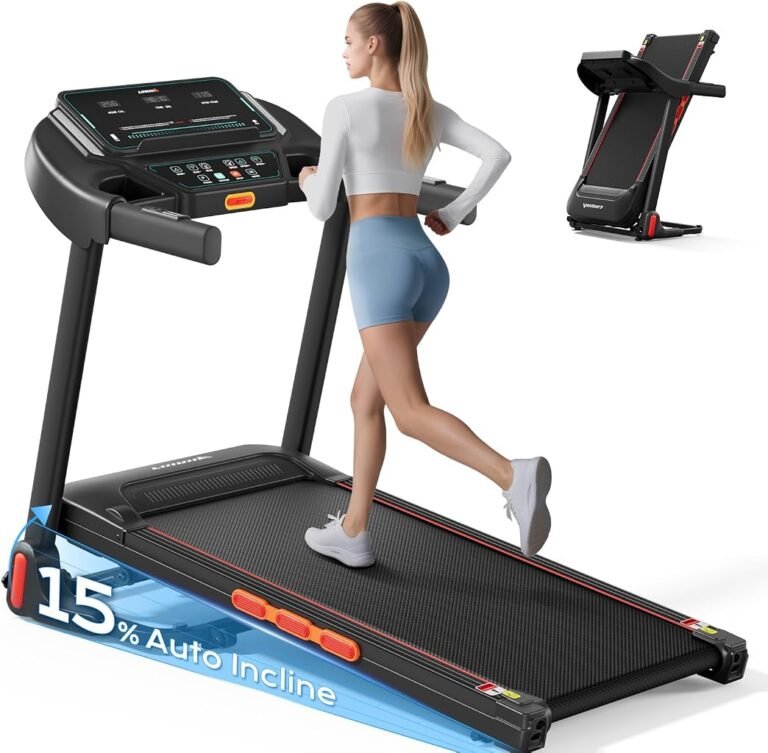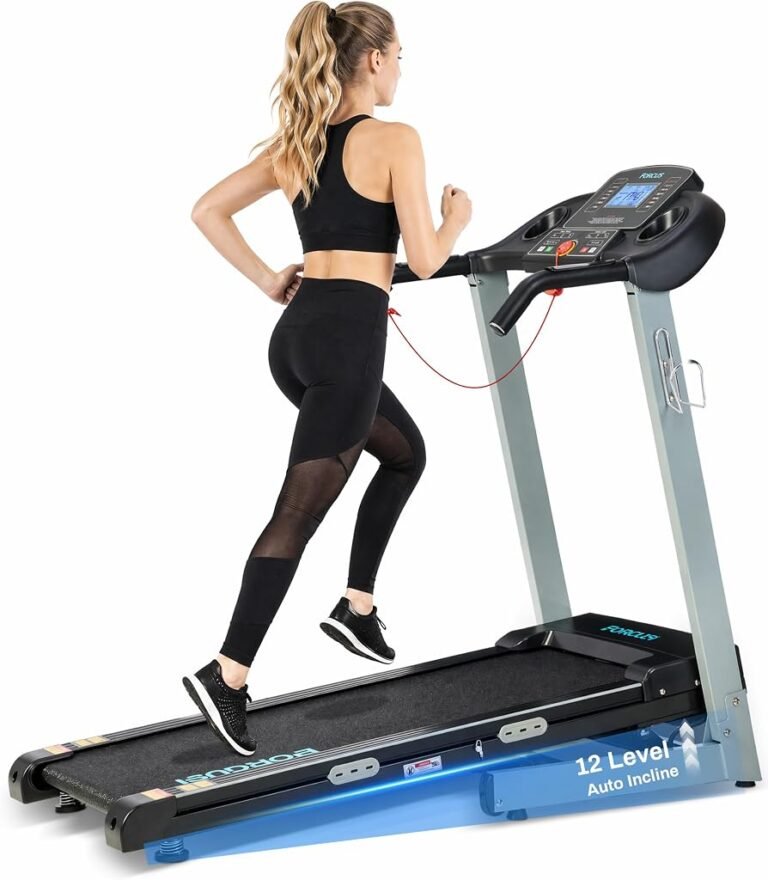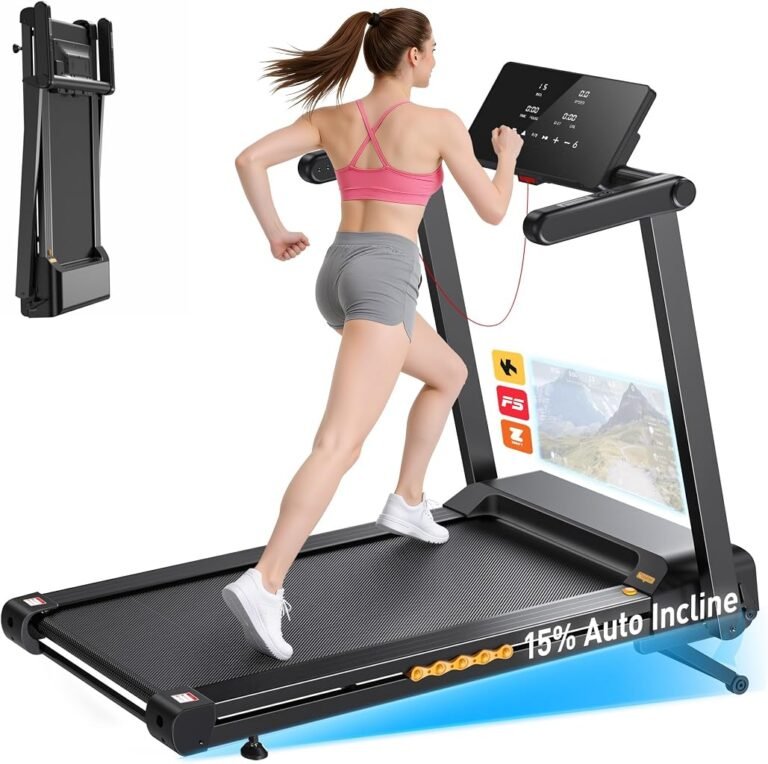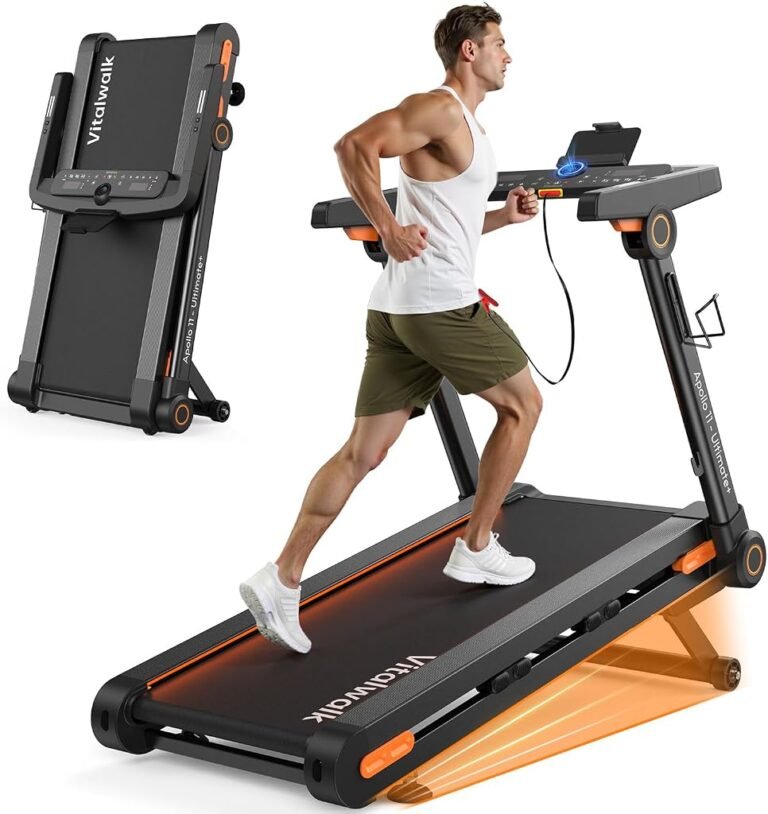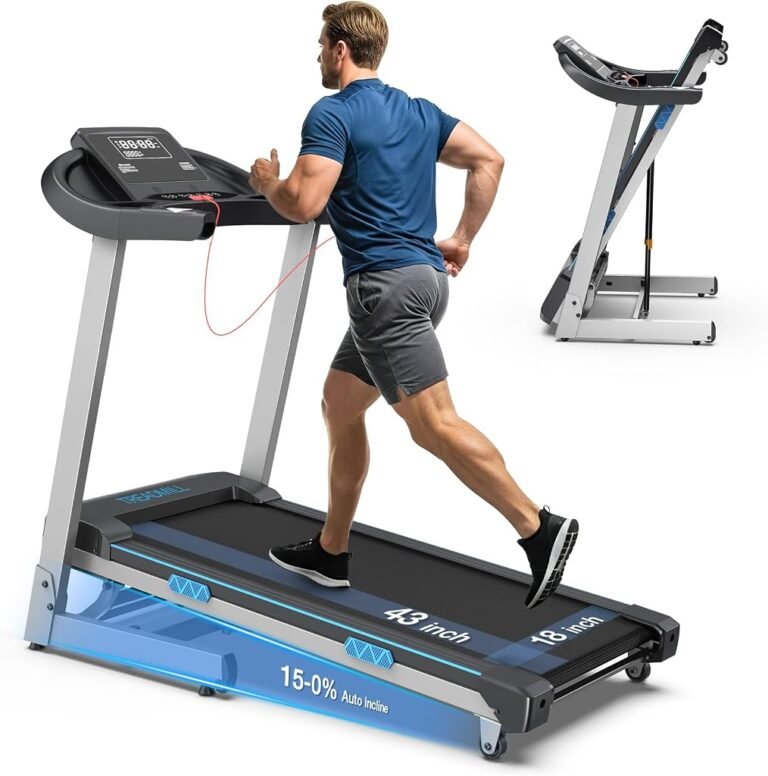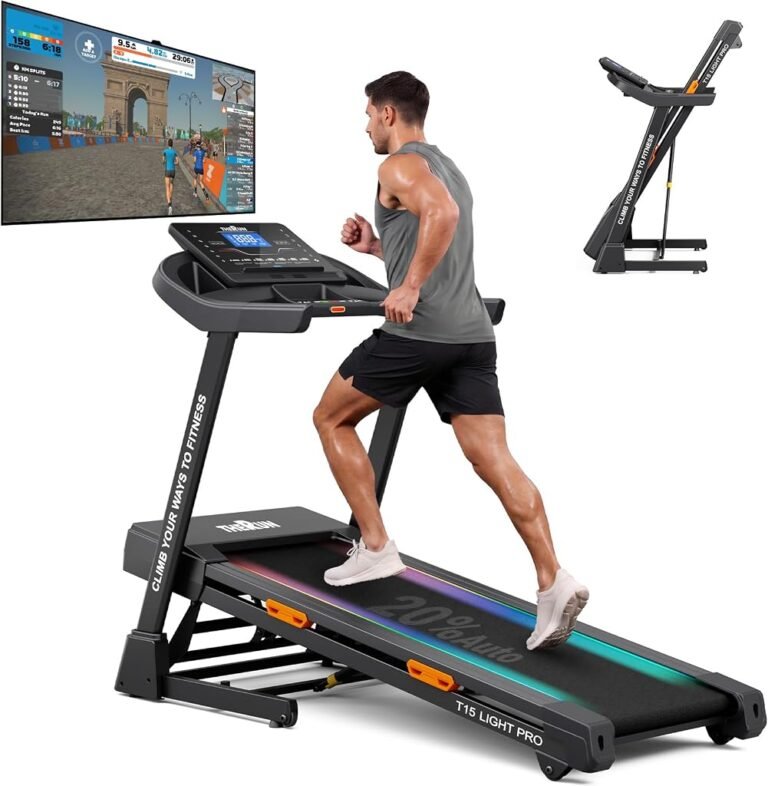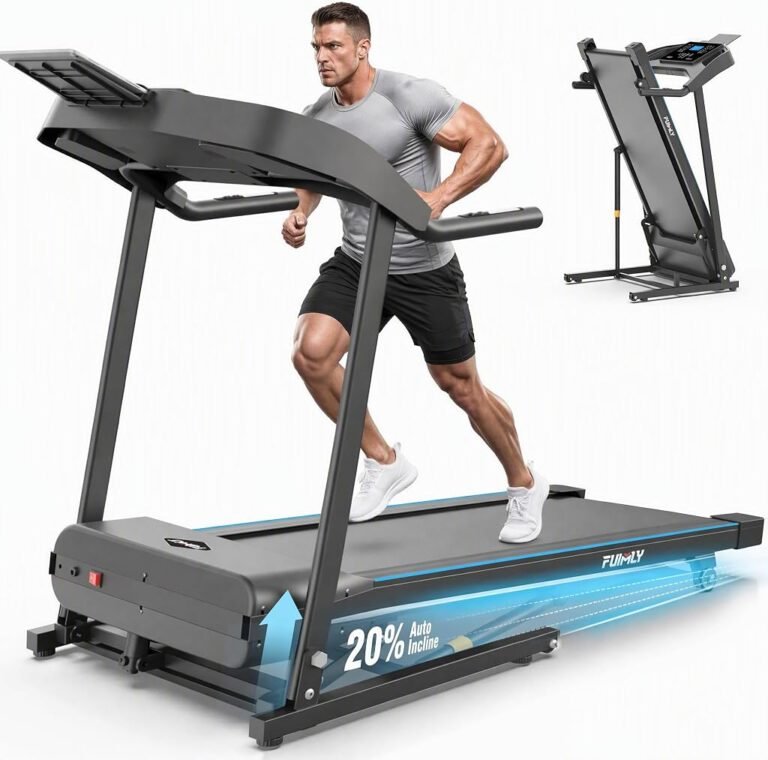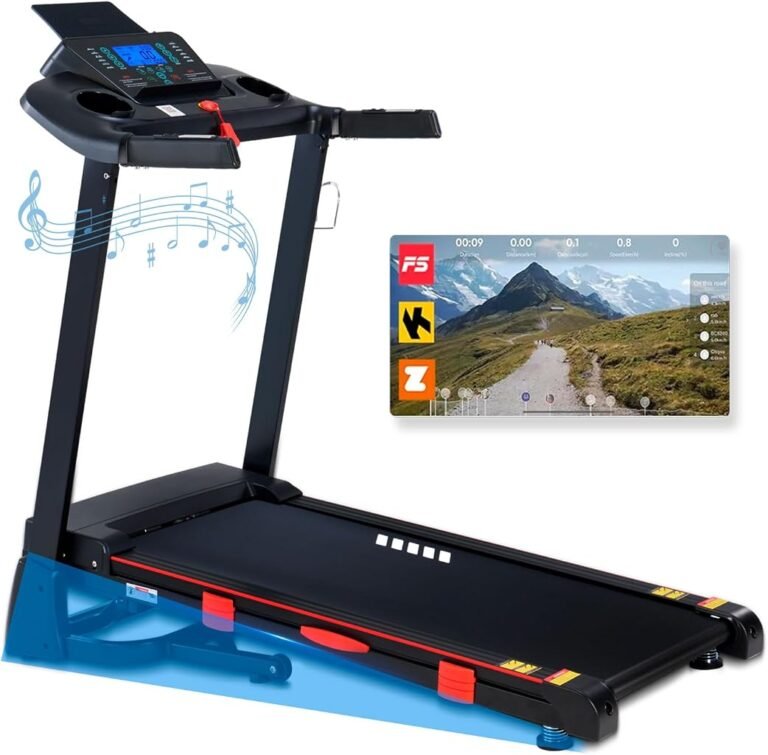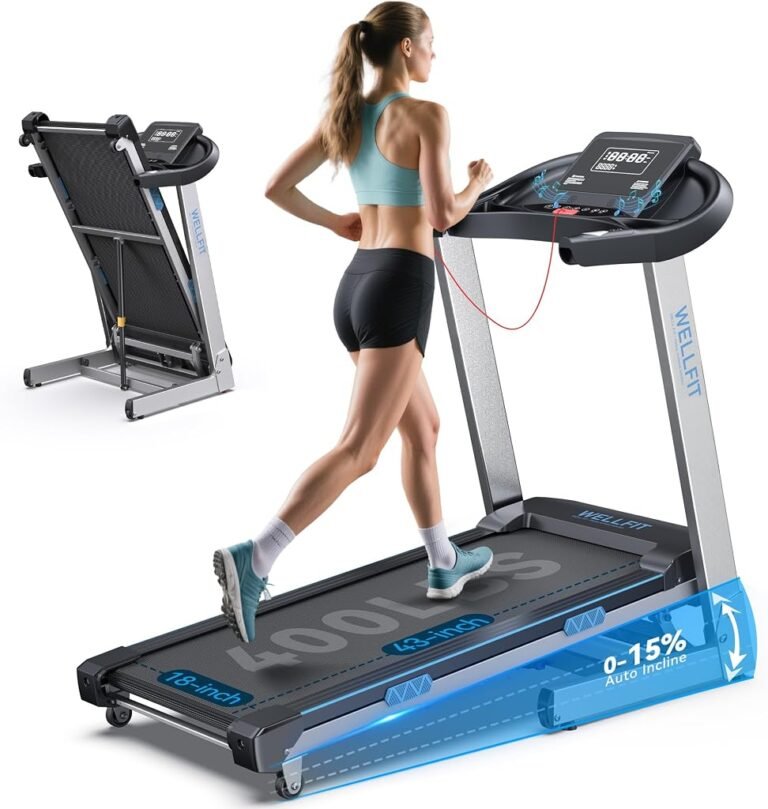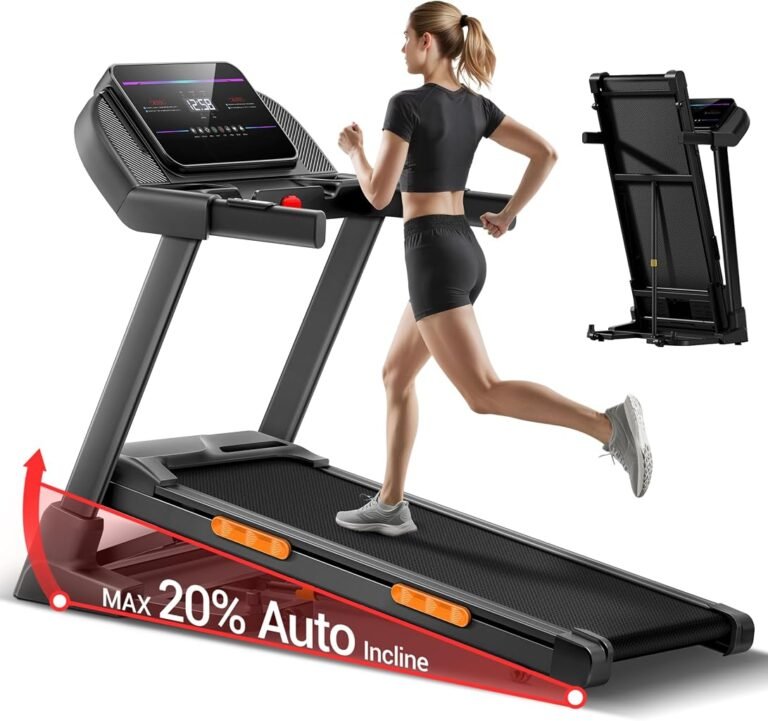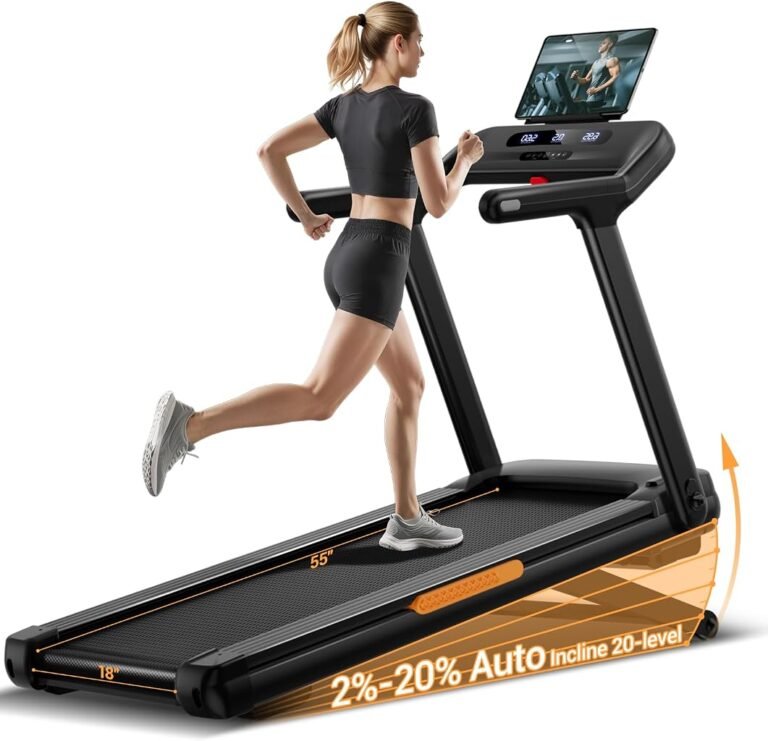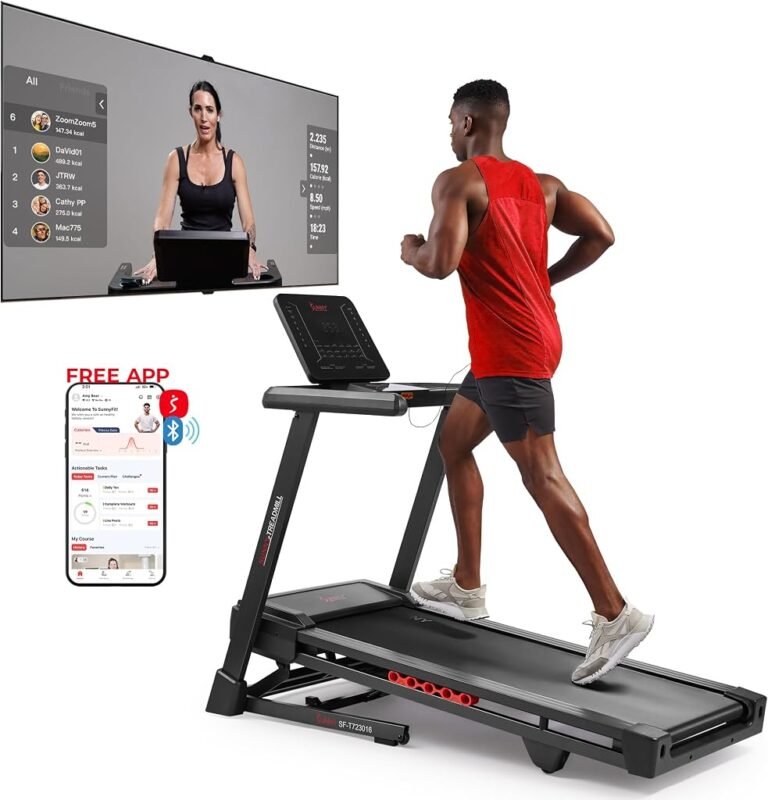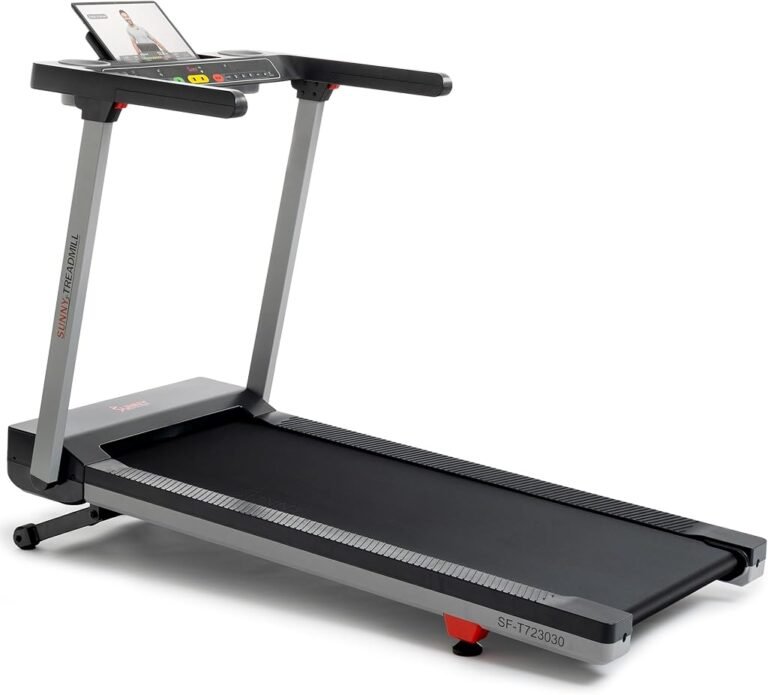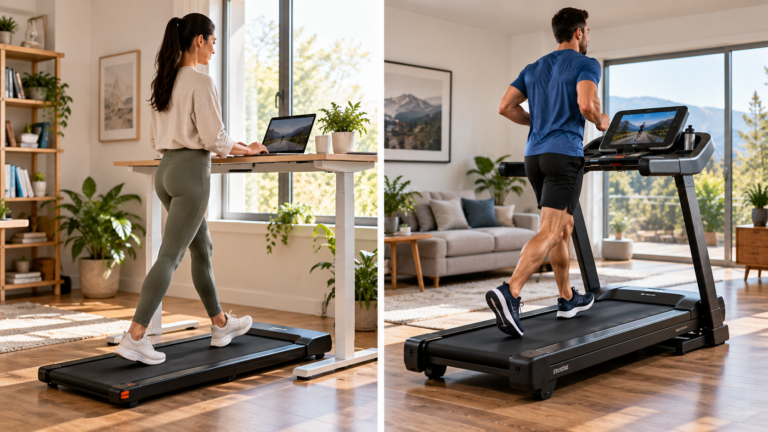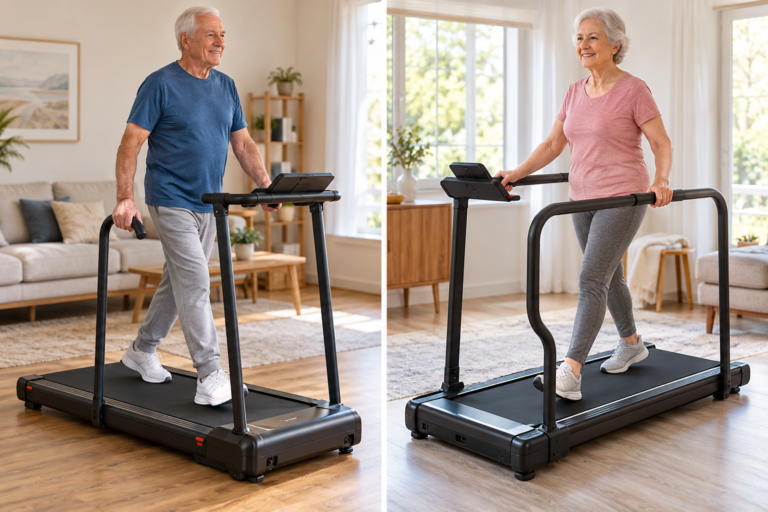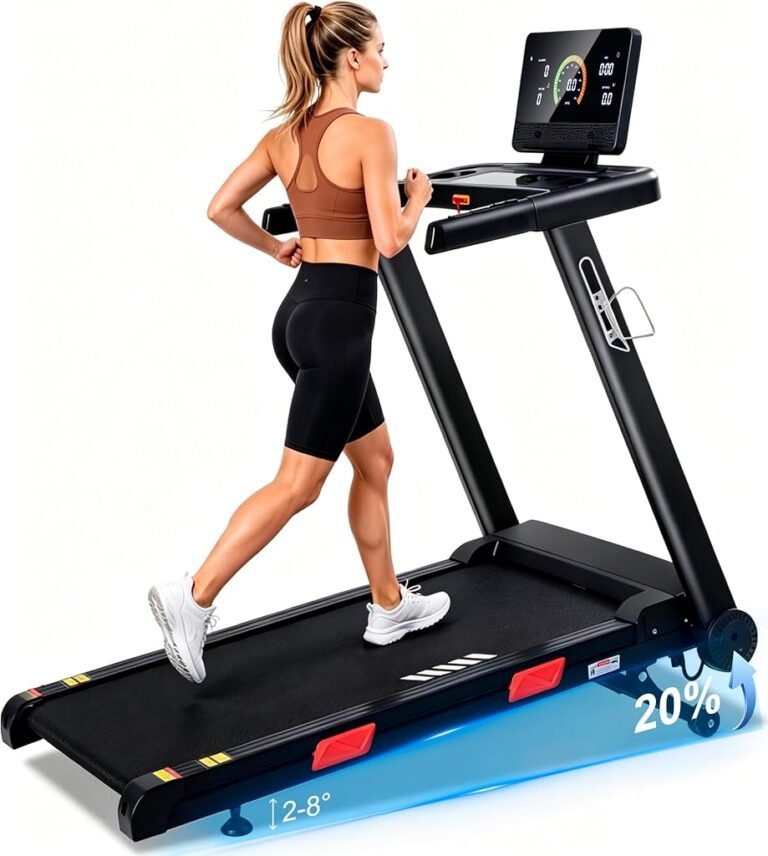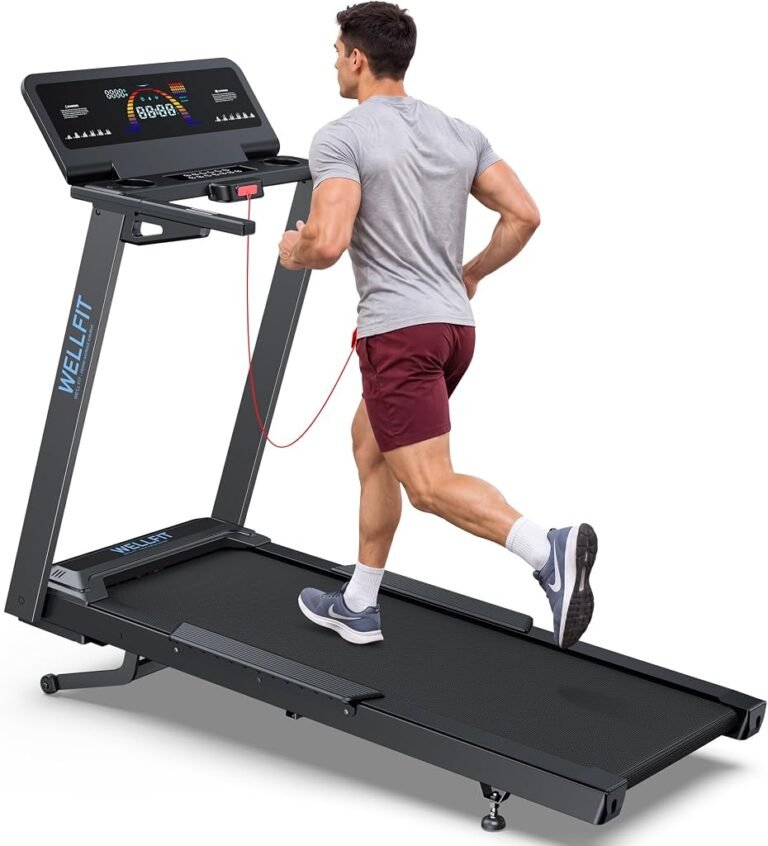
The modern home treadmill market has split into two distinct camps. At one end sit full-size machines built around running, higher speeds and permanent floor space. At the other are compact walking pads designed to slide beneath desks, beds or furniture. The UMAY Fitness Auto/Manual Incline Treadmill occupies the increasingly crowded territory between those categories.
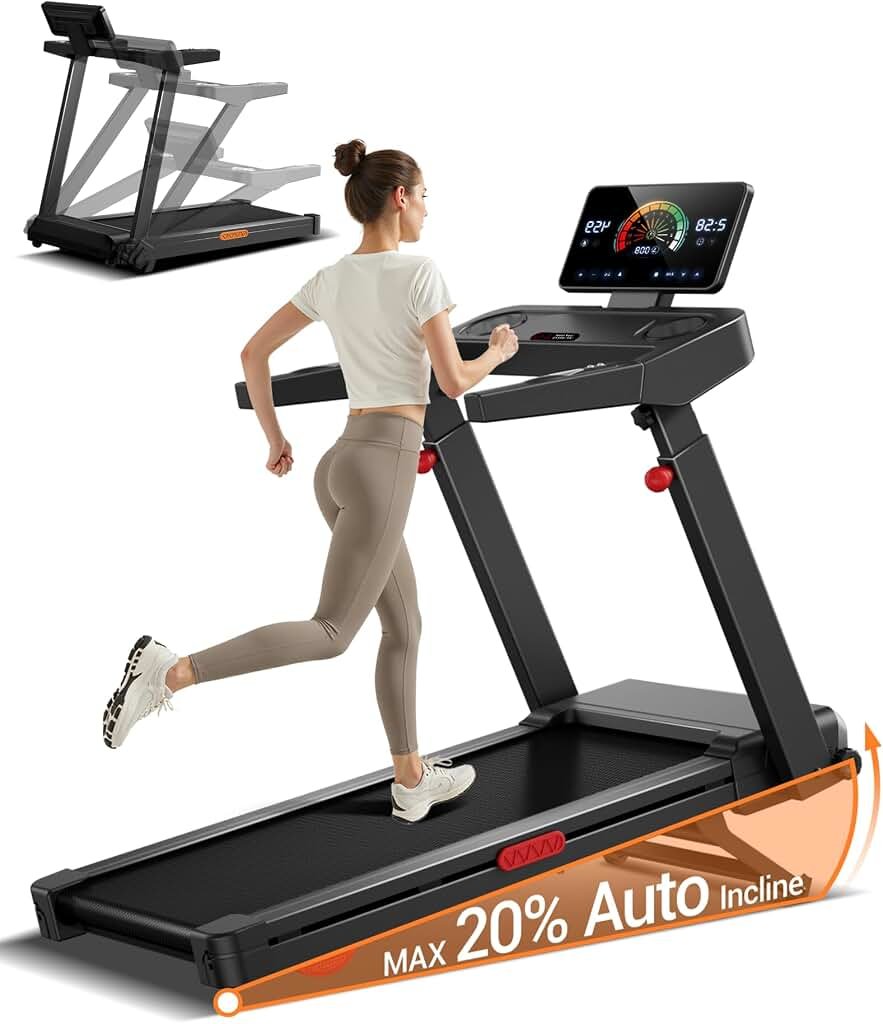
At $309.99, it combines a foldable walking-pad format with a stated 0-15% automatic incline range, a handlebar, a 300-pound weight capacity, a 3.0 HP motor rating, integrated speaker, app connectivity and remote control. That mixture is unusual because most products marketed as walking pads emphasize compactness above training versatility. Here, incline is not a minor addition. It is central to the machine’s identity.
Our overall score is 7.71/10. Customer Sentiment stands at 7.4, Buyer Confidence reaches 8.63, and Value is 7.67. That distribution tells a useful story. The machine presents a clear and relatively credible buying proposition, but its appeal is more conditional than the feature list might initially suggest. Buyers who genuinely need compact storage plus steep incline have a stronger case than those seeking either a dedicated running treadmill or an ultra-simple under-desk pad.
The result is a product with a compelling niche rather than universal appeal.
A Hybrid Design With an Obvious Purpose
The most interesting aspect of this treadmill is that it refuses to behave like a basic walking pad.
Traditional walking pads are typically flat, low-profile machines intended for slow indoor walking. Many are designed to disappear under a desk or sofa after use. That simplicity is attractive, but it also limits training variety.
This UMAY model adds a handlebar and a stated incline range reaching 15%. It also carries a 300-pound stated capacity and a 3.0 HP motor specification.
Those additions change the product category.
A machine capable of substantial incline work is no longer merely a tool for accumulating steps while answering email. It can also support structured aerobic sessions where effort changes through elevation rather than speed alone.
That distinction matters for buyers comparing the best treadmills for home, because compact dimensions and meaningful incline are often difficult to find together at lower price points.
The 0-15% Incline Is the Feature That Matters Most
A 15% incline ceiling is the headline specification because it gives users a substantial range of potential workloads without forcing them to run.
That has practical physiological significance.
The CDC defines moderate aerobic activity as activity vigorous enough to make a person breathe harder and raise heart rate. The agency deliberately frames intensity around bodily response rather than a universal walking speed. One person may reach moderate intensity at a pace that another considers easy.
Incline changes that equation.
Walking uphill raises energy demand even when speed remains modest. The American Heart Association provides a concrete illustration in its discussion of walking intensity. Barry Franklin, Ph.D., explained that walking at 2 mph on a treadmill with a 3.5% grade can produce an energy cost comparable to faster level walking. His advice was succinct: “But build up slowly.”
That makes a 15% maximum more useful as a range than as a destination.
The buyer should not interpret 15% as the grade every workout ought to reach. Its greater value is the space it creates between flat walking and steep hill work. A user can progress through modest grades, use short incline intervals or sustain a manageable uphill walk without increasing pace aggressively.
For people who dislike jogging, that is a meaningful alternative.
Why Incline Can Matter More Than Maximum Speed
Treadmill advertising often places maximum speed near the center of the discussion, even though many home users rarely approach those limits.
Incline offers another route to intensity.
Professional Heart Daily, published by the American Heart Association, explains that at a walking speed of 2 mph, each additional 3.5% of treadmill grade adds roughly one metabolic equivalent to gross energy expenditure. At 3 mph, each additional 2.5% of grade adds roughly one metabolic equivalent.
Those numbers illustrate why a modest walking pace can become physically demanding once elevation increases.
For a treadmill built around compact home use, this is strategically sensible. High-speed running requires more deck length, greater stability and more stride room. Incline walking can increase workload without demanding the same speed-oriented geometry.
That does not make incline walking equivalent to every form of running. It does mean that a compact treadmill can create greater training variety without transforming itself into a large running machine.
Auto Incline Changes How the Machine Can Be Used
Automatic incline is materially different from manual incline.
Manual systems usually require the user to stop, step off the treadmill and physically change the deck angle. That works for users who want one fixed grade per session, but it is poorly suited to changing intervals.
Automatic adjustment turns incline into a variable that can be changed during exercise.
That opens the door to several practical training structures:
- A flat warm-up followed by gradual incline increases.
- Alternating uphill and recovery intervals.
- Longer steady-state walks at moderate grade.
- Lower-speed sessions where intensity comes primarily from elevation.
- Progressive sessions that raise incline over time while keeping speed stable.
That flexibility is particularly relevant in a machine positioned as both a walking pad and a more capable home treadmill.
The incline system gives the product a stronger identity than its speaker, app or remote control. Those secondary features improve convenience. Incline changes the workout itself.
A 300-Pound Capacity Broadens the Audience
The stated 300-pound maximum user weight is another important specification.
Capacity limits define who can reasonably consider a treadmill. A lightweight walking pad with a lower maximum may be perfectly suitable for some households but automatically exclude others.
A 300-pound rating therefore increases the machine’s potential usefulness.
Still, user capacity should be interpreted narrowly.
It does not establish long-term durability, frame fatigue resistance or motor longevity. Nor does it prove that the treadmill will feel identical for a 150-pound user and a 295-pound user.
Maximum capacity is an operating limit, not a lifetime-performance guarantee.
For buyers near the upper end of that rating, maintaining some margin below the stated maximum may be desirable from a practical standpoint, particularly if the treadmill will be used frequently or at steeper grades.
The broader editorial point is that weight capacity deserves attention, but it should never replace examination of the machine’s other limitations.
The 3.0 HP Rating Needs Context
The treadmill carries a stated 3.0 HP motor specification.
Horsepower attracts attention because it appears precise, but treadmill motor figures can be difficult to compare directly across brands. Marketing specifications do not always reveal whether a number represents peak output, sustained output or another measurement convention.
For that reason, the 3.0 HP figure should not be treated as independent proof of performance.
Its more useful role is contextual.
A 3.0 HP rating is consistent with a product intended to do more than passive low-speed walking. Combined with incline capability and a 300-pound user limit, it reinforces the treadmill’s positioning as a more ambitious compact cardio machine.
Still, shoppers should resist the tendency to convert horsepower into assumptions about durability, noise or sustained high-load performance.
One number cannot answer all of those questions.
The Handlebar Changes the Product’s Identity
A handlebar may appear mundane, but on a walking pad it is an important design choice.
Traditional under-desk treadmills often eliminate front structures so that the machine can fit beneath a standing desk. That maximizes portability but also limits the physical cues associated with a conventional treadmill.
A handlebar creates a more familiar exercise posture and can make structured incline sessions feel more natural.
It also signals that the machine is designed for more than passive desk walking.
That said, buyers who intend to use it primarily beneath a desk should evaluate whether the handle configuration suits that setup. Features that improve exercise functionality can sometimes reduce under-desk flexibility.
The machine is therefore best understood as a hybrid treadmill that can function as a walking pad rather than a pure walking pad with no compromises.
Folding Matters Because Storage Friction Matters
Compact cardio equipment lives or dies by storage practicality.
The treadmill’s foldable format addresses a problem that full-size machines frequently create: permanent floor-space consumption.
In apartments, guest rooms, offices and shared living areas, exercise equipment competes with ordinary furniture. A folding design can make regular use more realistic.
Yet foldability should not be confused with invisibility.
The machine still requires storage clearance, a practical path through doorways and enough room to deploy safely. Buyers should measure where the treadmill will sit while in use and where it will go afterward.
That sounds obvious, but treadmill purchases are often made from product photographs that make scale difficult to judge.
A machine that technically folds but remains awkward to move can create enough friction to reduce exercise frequency.
Convenience is therefore not a cosmetic matter. It can affect whether the treadmill becomes part of a routine or slowly turns into unused furniture.
The App, Remote and Speaker Are Useful but Secondary
The product also includes app compatibility, remote control and a built-in speaker.
Those features improve the experience, but none should dominate the purchase decision.
A remote can make speed or other adjustments easier, particularly in walking-pad mode. App integration may help users record workouts or interact with the machine through a phone. A speaker can add convenience for music or audio.
Still, these are supporting features.
The incline mechanism, user capacity, storage design and basic walking experience matter more.
This hierarchy is worth maintaining because connected features can quickly dominate product descriptions despite having relatively little influence on whether the treadmill matches the buyer’s body, room and exercise habits.
A mediocre treadmill does not become a good treadmill because it has an app. A well-matched treadmill does not become obsolete because its speaker is basic.
Our Score: 7.71/10
Our overall score of 7.71/10 places this treadmill in good territory.
The rating reflects a product with a distinct purpose and several meaningful strengths.
The 0-15% automatic incline is the strongest attribute. A 300-pound stated capacity broadens the usable population. The 3.0 HP rating aligns with the machine’s more ambitious positioning. Folding construction supports domestic practicality.
At $309.99, the feature combination is also reasonably accessible.
The score remains below 8 because the machine is fundamentally a hybrid. Hybrids gain versatility by avoiding narrow specialization, but they also inherit compromises.
A dedicated walking pad can be simpler and easier to store. A dedicated running treadmill can provide more space and a more performance-focused platform. This machine tries to sit between those categories.
That trade-off is acceptable when the buyer actually needs both sides of the equation.
Customer Sentiment: 7.4
Our Customer Sentiment score is 7.4.
That is the lowest of the primary ratings, and the gap deserves attention.
A 7.4 score indicates generally positive reception but enough friction to prevent stronger enthusiasm.
Hybrid equipment often produces this pattern because users arrive with different expectations.
Someone seeking a compact incline treadmill may find the feature combination unusually useful. Someone expecting the feel of a larger running machine may be less impressed. Another buyer may focus almost entirely on under-desk walking and view the added structure as unnecessary.
The machine therefore rewards correct expectations.
Its appeal grows when the buyer wants a compact treadmill with meaningful incline rather than when the buyer merely wants the cheapest way to walk indoors.
Buyer Confidence: 8.63
Buyer Confidence is substantially higher at 8.63.
That difference is revealing.
The treadmill’s central proposition is easy to understand. It offers automatic incline up to a stated 15%, a 300-pound capacity, a 3.0 HP motor rating, folding functionality, app control, remote operation, speaker integration and a handlebar at $309.99.
These are specific, understandable features.
The associated product listing can be checked directly before purchase for current seller details, warranty language and any specification changes.
The stronger Buyer Confidence score reflects a product that is relatively easy to evaluate on paper.
The more restrained Customer Sentiment score suggests that living with the machine may depend more heavily on personal preferences than the specification sheet can reveal.
Value: 7.67
Our Value score is 7.67.
That places the treadmill in favorable territory without suggesting that $309.99 is automatically inexpensive.
Value depends on usage.
For a buyer who intends to use incline regularly, needs folding storage and wants both remote and app control, the price becomes easier to justify.
For someone seeking simple level walking, part of the cost pays for capability that may never be used.
The same applies to the speaker and handlebar. These additions are only valuable when they solve an actual need.
This explains why Value sits below Buyer Confidence.
The machine is easy to understand, but its feature package does not generate equal economic benefit for every household.
What the Treadmill Gets Right
Several design choices work together effectively:
- A stated 0-15% automatic incline gives the machine unusually broad training range for a compact treadmill.
- The 300-pound capacity expands the potential user pool.
- The 3.0 HP specification supports its positioning above basic walking pads.
- Folding functionality addresses household storage.
- The handlebar creates a more conventional treadmill experience.
- App and remote control add useful flexibility.
- The speaker offers convenience without requiring separate audio equipment.
The most successful aspect is not any single feature.
It is the way incline, compactness and multiple control options combine into a machine that can be used differently across the day.
It can function as a walking device, a structured incline trainer or a general indoor cardio platform.
That flexibility is meaningful when floor space is limited.
Where Buyers Should Be More Critical
The first question is whether the buyer genuinely needs incline.
If the answer is no, much of the machine’s differentiation disappears.
The second question is whether the buyer wants a walking pad or a conventional treadmill.
This model blends the categories. That is useful for some households but less attractive for buyers who already know they need one extreme or the other.
The third issue is motor interpretation.
A 3.0 HP label should not be read as an automatic guarantee of high-end treadmill performance.
The fourth issue is user capacity.
A 300-pound rating is respectable, but larger users who need greater operating headroom should look at machines built around higher limits.
Who Is the Best Fit?
This treadmill makes the strongest case for users who want incline walking in a compact format.
It also suits people who work from home but want more capability than a flat under-desk walking pad provides.
Users who prefer brisk walking over running may benefit particularly from the 15% incline range.
The CDC’s current guidance recommends at least 150 minutes of moderate-intensity physical activity per week for adults, and those minutes can be distributed across shorter sessions.
That flexibility aligns well with a home treadmill that can be used in shorter blocks throughout the week.
People who dislike jogging may also find the incline system appealing because grade can raise exercise demand without requiring aggressive speed increases.
Who Should Look Elsewhere?
Dedicated runners should evaluate larger machines with running-focused geometry.
Buyers who only want slow desk walking may find a simpler walking pad easier to justify.
Users above the stated 300-pound capacity need a treadmill with a higher maximum.
People uninterested in apps, speakers or remote operation may find comparable utility in a more basic machine if incline is not a priority.
The most important fit question is whether the hybrid design solves two problems at once.
If it does, the machine makes sense.
If the buyer only has one problem to solve, a more specialized treadmill may be the better tool.
How to Use the Incline Intelligently
A 15% incline ceiling can tempt users to treat maximum grade as a goal.
That is rarely necessary.
The CDC notes that adults can accumulate activity in smaller portions and that some physical activity is better than none.
A more sustainable approach is gradual progression.
A beginner might start with flat or lightly inclined walking. Once that feels manageable, short uphill intervals can be introduced. Over time, the duration or grade can increase.
The American Heart Association’s guidance supports that measured approach. Franklin’s recommendation to “build up slowly” is particularly appropriate for treadmill incline.
The same principle applies to people returning to exercise after long periods of inactivity.
The machine’s full incline range is available capacity, not a weekly assignment.
Why This Category Makes Sense
The rise of compact incline treadmills reflects a larger shift in home exercise.
Many households do not have space for permanently installed cardio equipment. At the same time, buyers increasingly expect more capability than a flat walking pad can provide.
A foldable incline treadmill attempts to resolve that tension.
It allows exercise to become more demanding without requiring a much larger footprint.
That strategy is especially relevant for walking because walking remains one of the most accessible forms of aerobic activity. CDC guidance identifies brisk walking as a standard example of moderate-intensity exercise and recommends at least 150 minutes weekly for adults.
The machine’s value therefore does not rest on turning every owner into a runner.
Its stronger argument is that it gives walking more range.
Final Considerations
The UMAY Fitness Auto/Manual Incline Treadmill earns its place as a credible hybrid between a walking pad and a conventional home treadmill.
Its most important feature is the stated 0-15% automatic incline range. That capability makes moderate-speed walking substantially more adaptable and gives users a progression tool beyond speed alone.
The 300-pound stated capacity broadens its potential audience, while the 3.0 HP rating, handlebar and folding structure position it above minimalist under-desk models. App connectivity, remote control and speaker integration add convenience, though they remain secondary to the machine’s core mechanical purpose.
Our 7.71/10 overall score reflects a product with a coherent niche rather than broad dominance.
Customer Sentiment at 7.4 suggests that expectations matter greatly. Buyer Confidence at 8.63 is considerably stronger because the treadmill’s main attributes are straightforward and easy to understand before purchase. Value at 7.67 is favorable when buyers intend to use the incline, folding design and connected controls rather than merely owning them.
The treadmill is most persuasive for people who want compact storage but refuse to settle for flat walking. It also makes sense for users who prefer raising workload through elevation rather than faster running.
Its weaker audience includes dedicated runners, buyers who need more than a 300-pound capacity and people who only want basic under-desk walking.
Among the best treadmills for home, versatility has value only when it solves real constraints. This machine addresses two of the most common ones: limited space and limited workout variety.
At $309.99, that combination is credible. The buyer who needs a compact treadmill capable of steep incline work will find a more coherent proposition here than someone simply hunting for the lowest-cost walking pad.