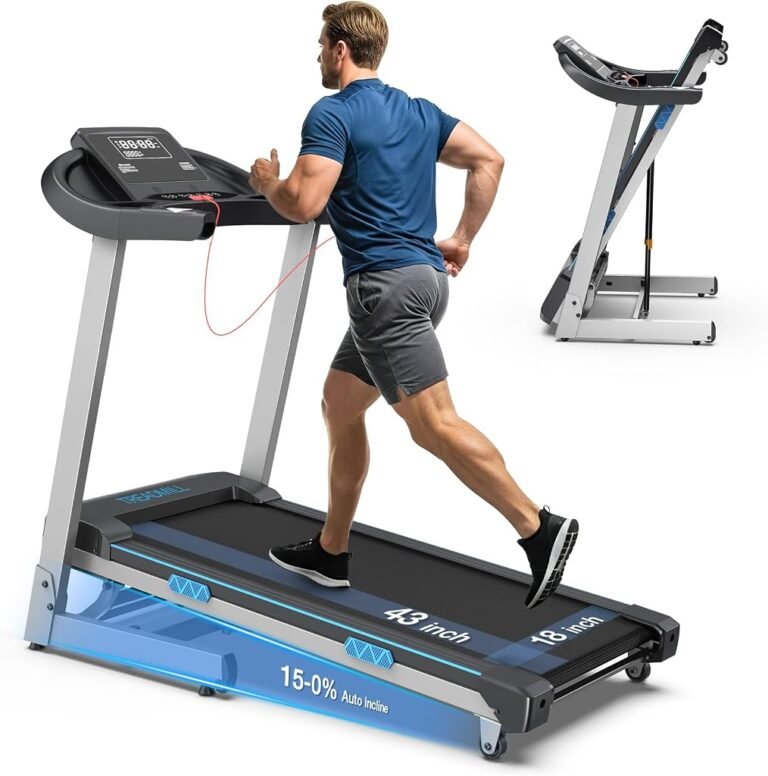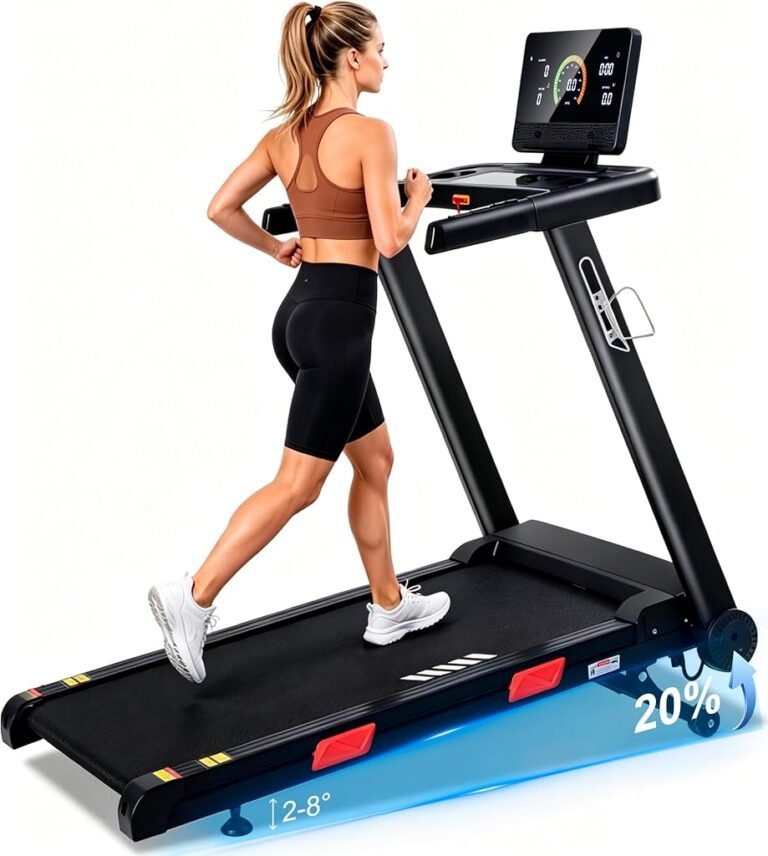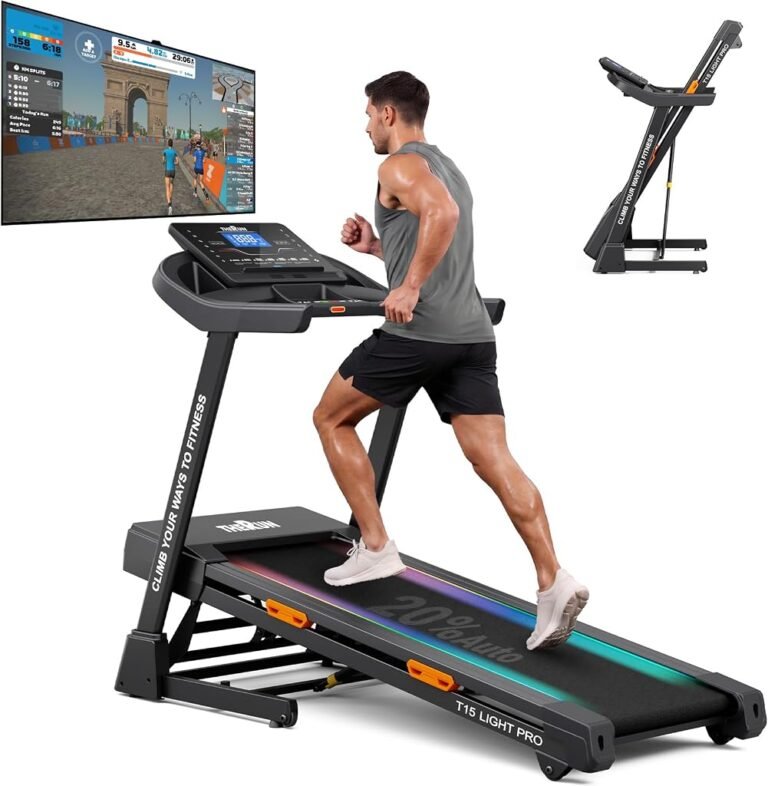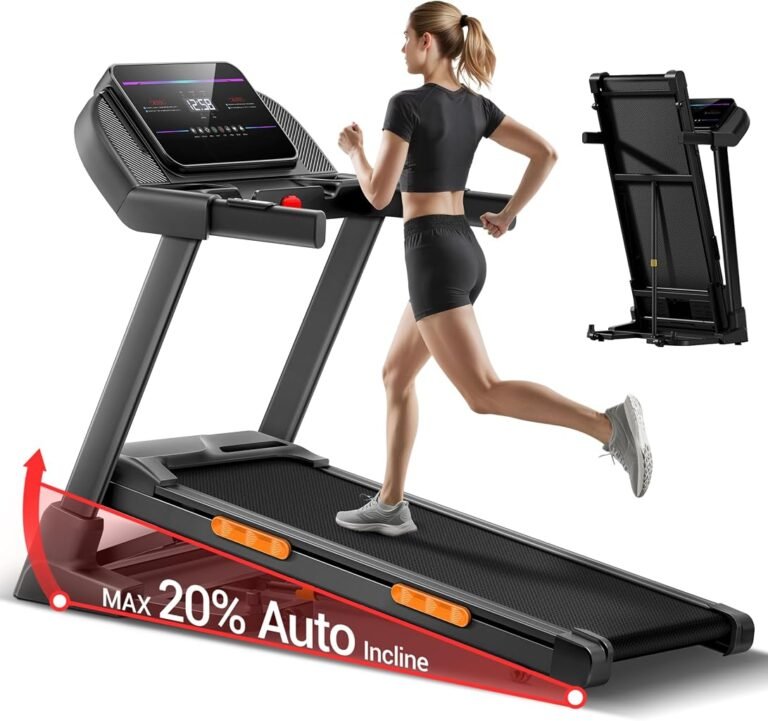
Incline is one of the few treadmill features capable of changing the physical character of a workout without requiring the user to run faster. Raise the deck and an ordinary walk becomes uphill walking. Raise it further and the cardiovascular and muscular demands can change substantially.
The disagreement begins with how that incline should be controlled.
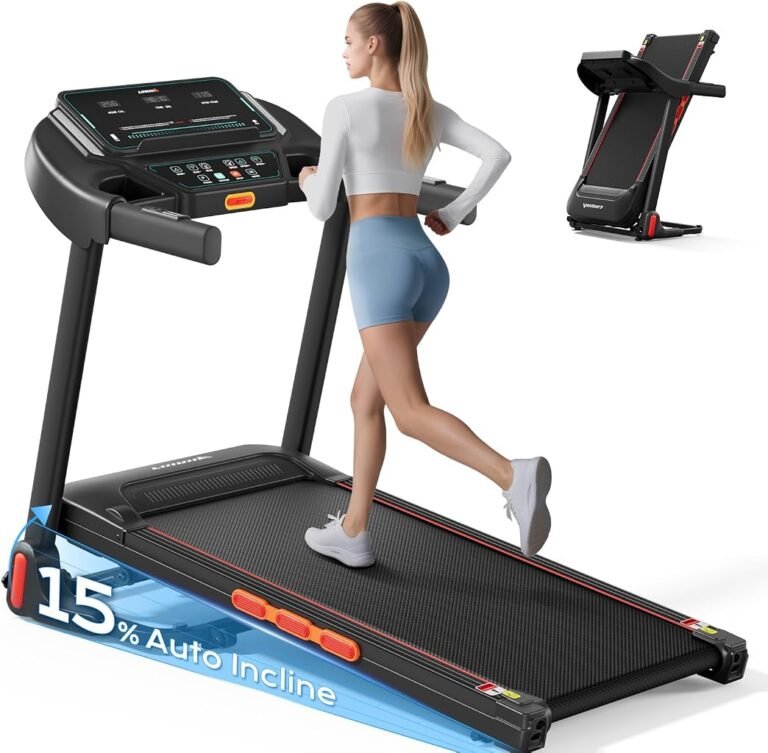
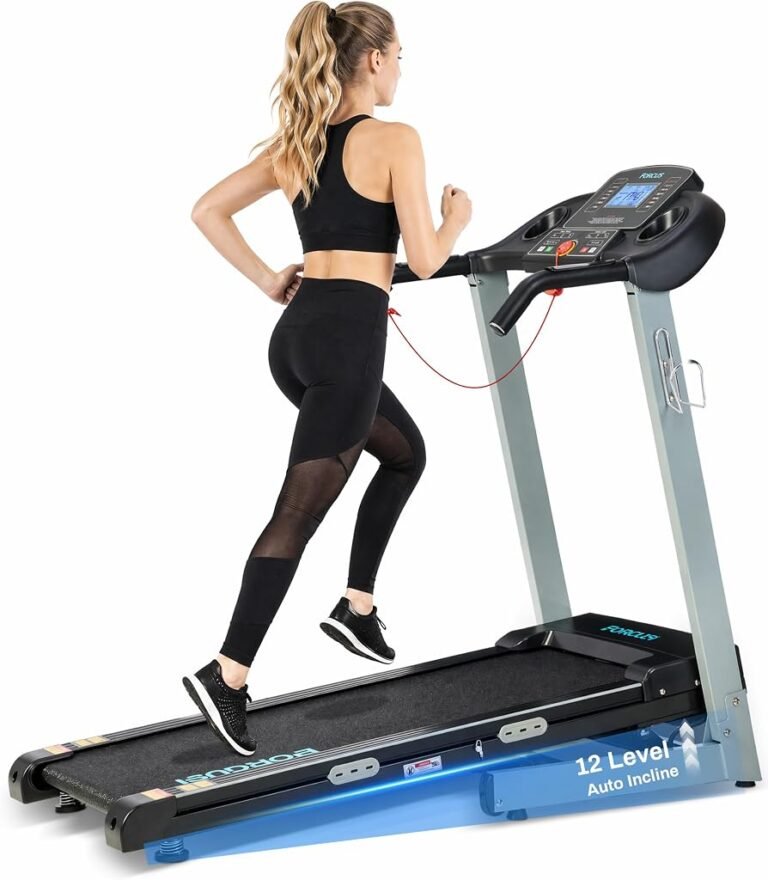
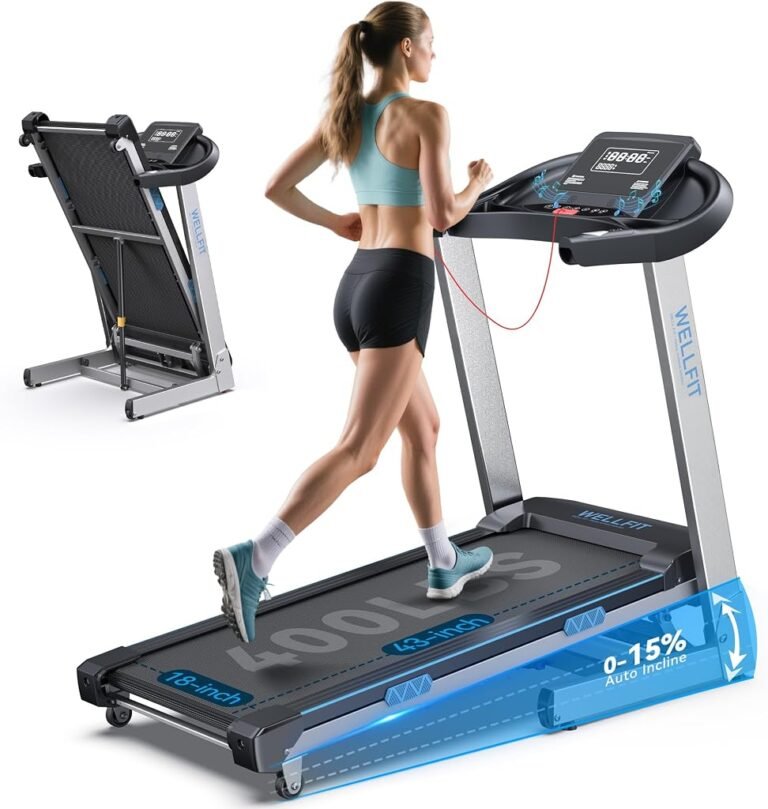
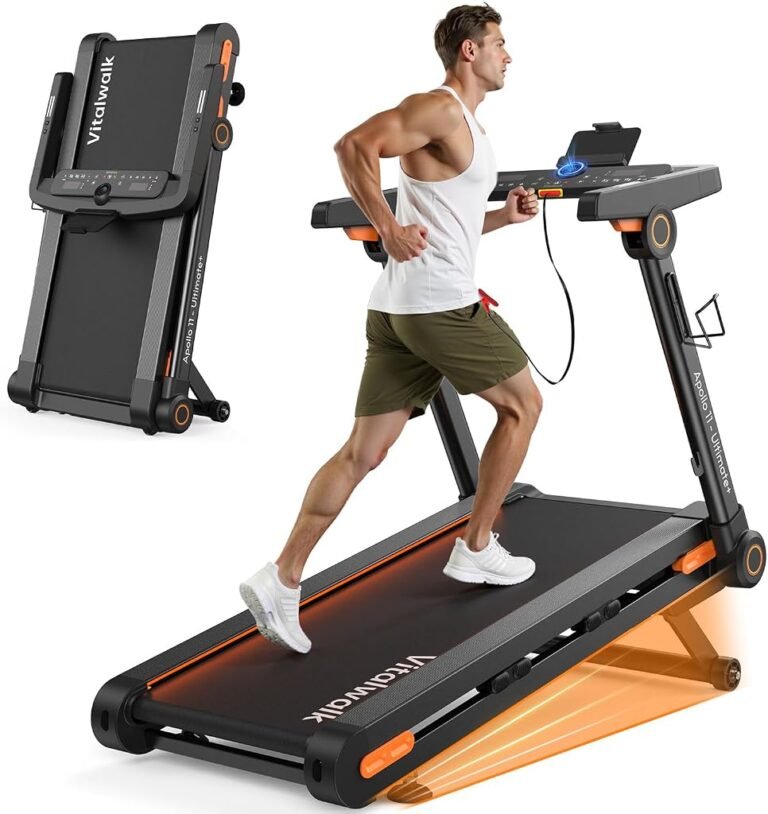
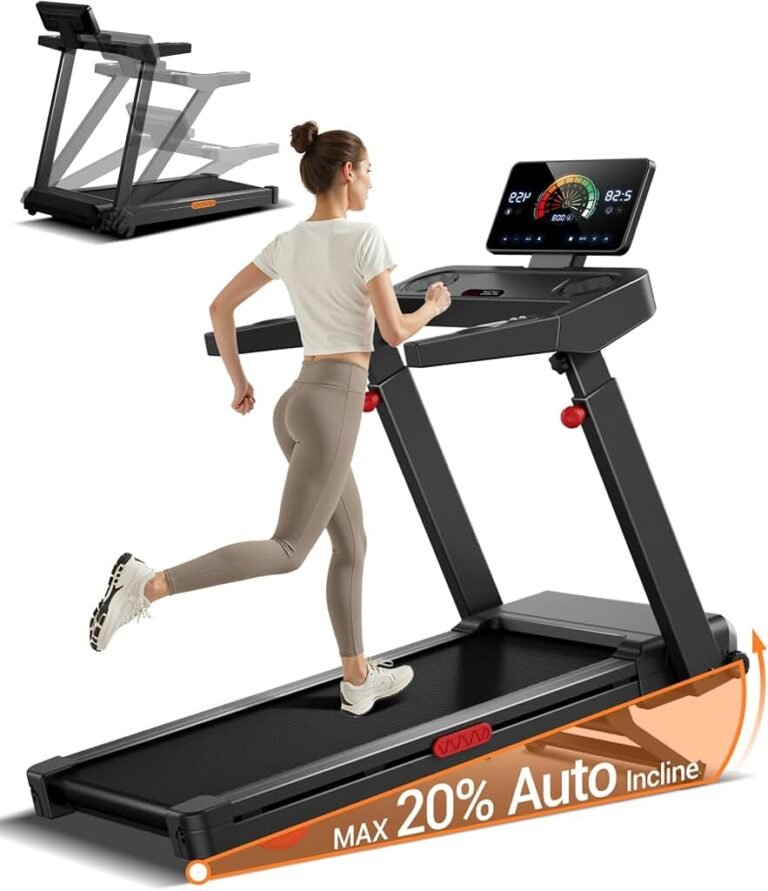
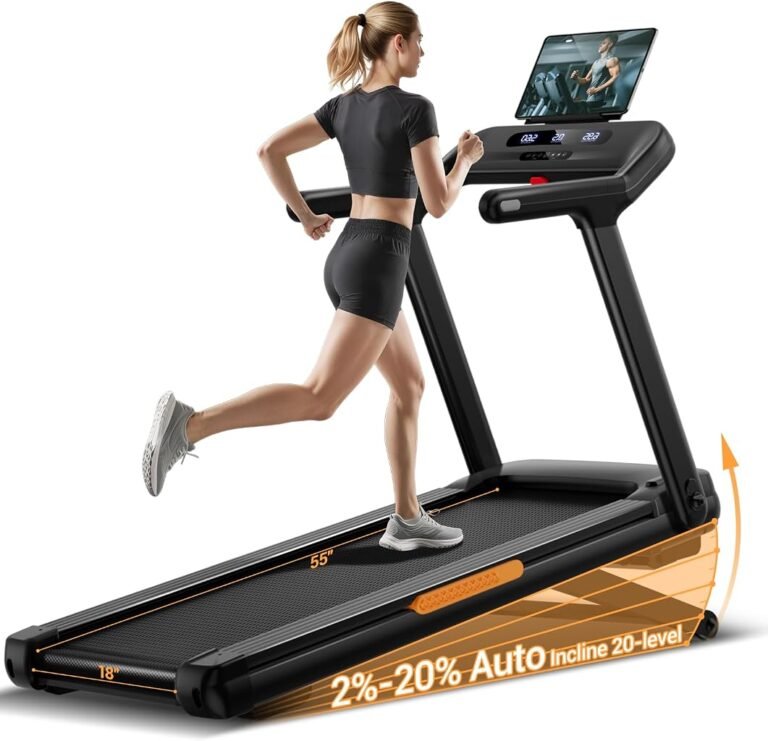
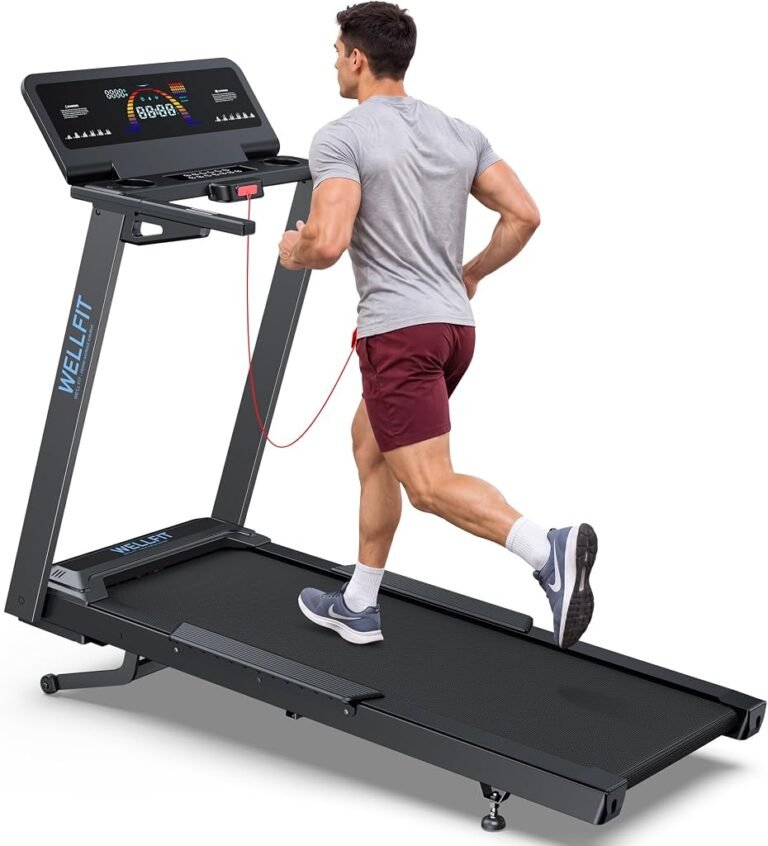
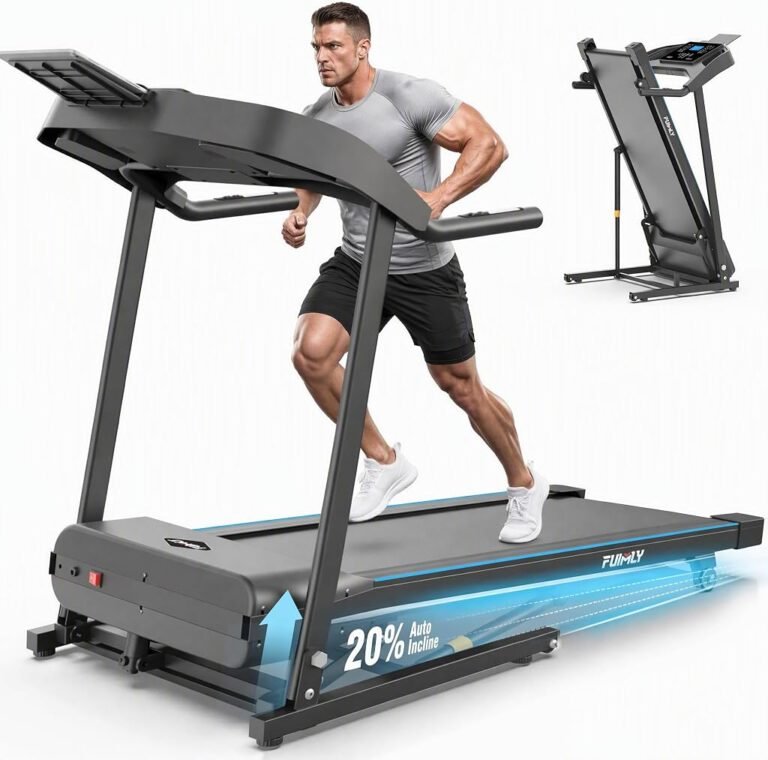
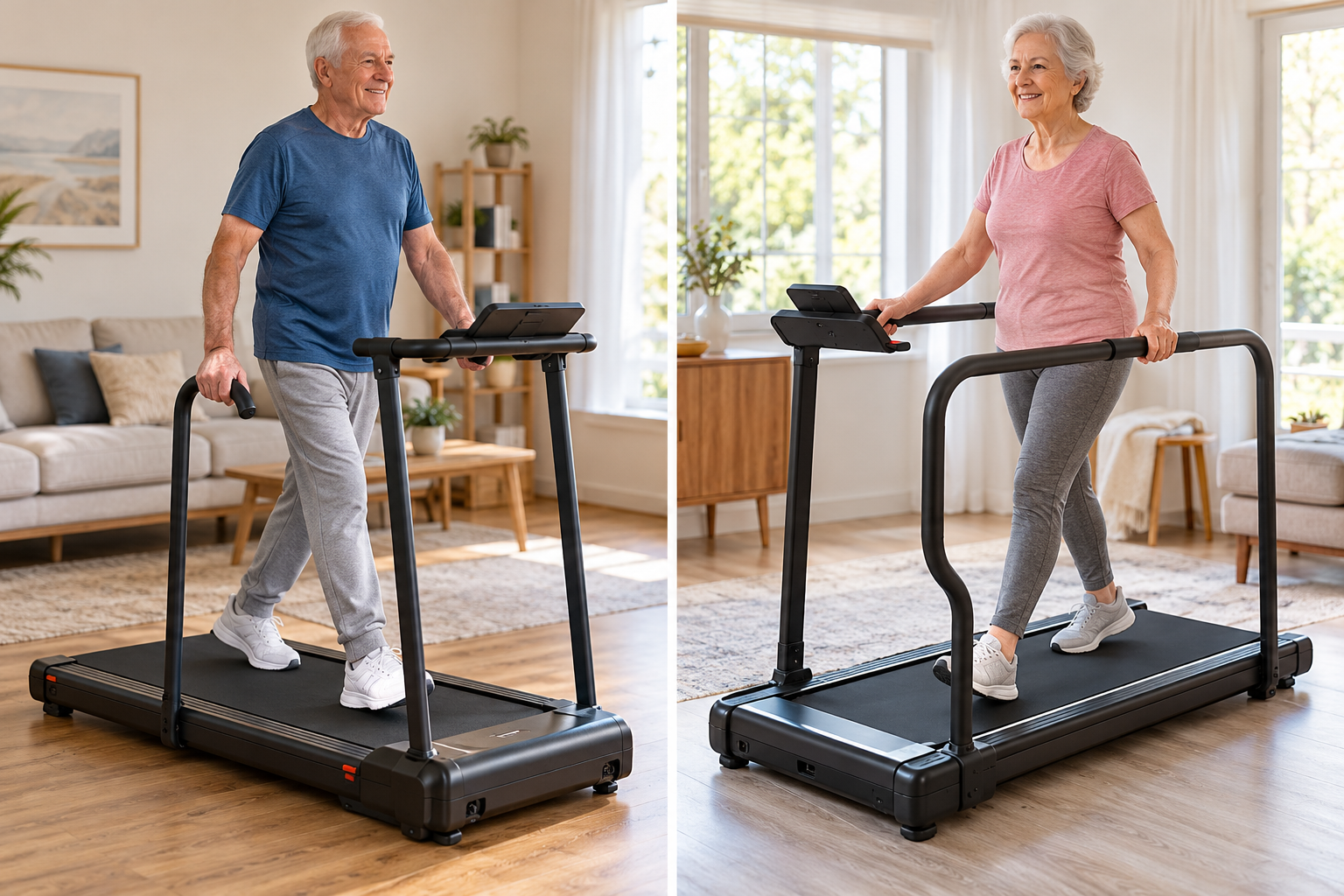
An auto incline treadmill changes its grade through the machine’s controls, typically while the belt is moving. A manual incline treadmill requires the user to stop and physically reposition part of the deck or incline mechanism. Both can create an uphill surface. They differ sharply in convenience, workout flexibility, mechanical design, and how likely the user is to alter the grade during an ordinary session.
That distinction matters more than the marketing labels suggest.
For someone who walks at one preferred grade for 30 minutes, manual incline may accomplish the task with little fuss. For someone who wants rolling hills, progressive climbs, intervals, or frequent grade changes, automatic incline transforms the experience because adjustments no longer require stopping the workout.
The better choice therefore starts with behavior rather than specifications.
Auto Incline vs Manual Incline: The Basic Difference
Manual incline is mechanically straightforward.
Depending on the treadmill, the user typically stops the machine, steps off, and adjusts the deck position through a pin, support, foot, or similar mechanism. The number of available positions varies by model.
Once adjusted, the treadmill remains at that grade until the user physically changes it again.
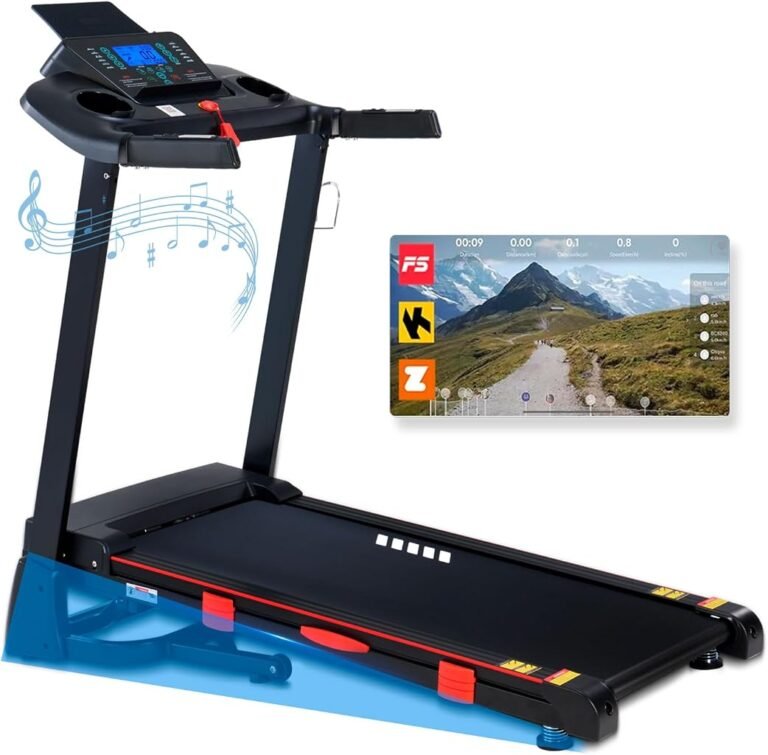
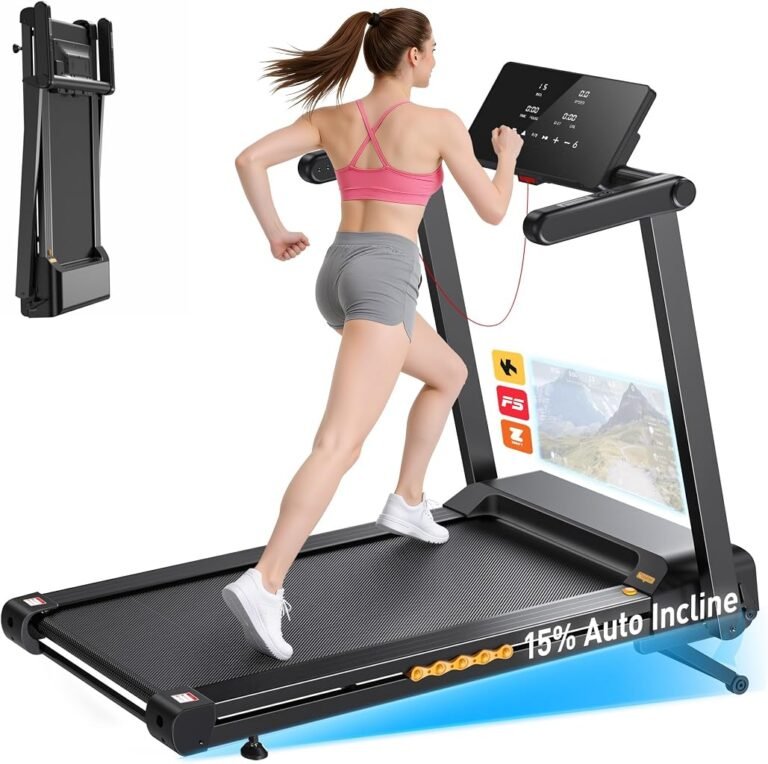
Auto incline replaces that process with powered adjustment. The user selects an incline setting through the console or controls, and the treadmill changes deck angle through its incline mechanism. Some connected machines can also change incline as part of programmed workouts.
The practical difference can be expressed simply:
- Manual incline is best understood as a preset choice.
- Automatic incline functions as an active workout variable.
- Manual systems generally require interruption for adjustment.
- Automatic systems permit grade changes during exercise.
- Automatic incline adds powered components.
- Manual incline can make sense when price and mechanical simplicity outrank frequent adjustment.
Neither design changes the underlying physics of walking uphill. The difference lies in access to that slope.
That access can influence how incline actually gets used.
Why Incline Matters Physiologically
Incline is not merely a way to make a treadmill feel more difficult. Controlled research has measured substantial physiological changes as treadmill grade increases.
A study involving 24 healthy older adults compared level treadmill walking with walking at 10% and 16% grades. The researchers reported that net cardiopulmonary metabolic energy cost increased by 22.9% at 10% grade and 44.2% at 16% grade compared with level walking.
Muscle activity changed as well.
That research involved a defined population under controlled conditions, so its percentages should not be treated as universal predictions. A person’s response to incline varies with age, body size, fitness, walking speed, gait, health, and other factors.
The broader lesson is still useful: changing grade can materially alter exercise demand even when the activity remains walking.
This gives incline a different function from many treadmill extras. Speakers, displays, device holders, and entertainment systems can affect the ownership experience. Incline can directly change the exercise being performed.
Auto Incline Makes Variation Easier
Automatic incline earns its strongest argument when a workout contains multiple grades.
Consider a simple 30-minute walking session. A user might begin with five minutes at level grade, gradually increase incline over the next ten minutes, alternate between climbing and recovery periods, and return to level walking before stopping.
On an auto incline treadmill, those changes can occur without leaving the belt.
With manual incline, the same pattern becomes cumbersome. The user would have to stop, step off, alter the mechanism, restart, and repeat the process for each desired grade change.
Technically possible is not the same as behaviorally convenient.
As a result, manual incline often works best when the grade is selected before exercise and left there. Automatic incline makes slope practical as a continuously adjustable training variable.
For buyers who already know they enjoy hill intervals or varied walking sessions, that distinction can justify additional cost.
Manual Incline Has a Simplicity Advantage
Automatic adjustment is convenient because a powered system performs work that the user would otherwise perform manually. That convenience requires additional mechanical and electronic hardware.
Manual incline avoids that powered adjustment system.
This can appeal to buyers seeking a simpler treadmill for straightforward walking. If the intended routine is 20 or 30 minutes at a consistent pace and grade, repeated automatic adjustment may offer little practical benefit.
Manual incline can also encourage a useful question before purchase: How often will the grade genuinely change?
If the answer is “rarely,” paying more for automatic control may solve a problem the buyer does not have.
The decision resembles other equipment choices where convenience carries a price. A feature is valuable when it removes friction from something the owner regularly does. It is less valuable when it automates an action performed twice a year.
Incline Can Increase Intensity Without Faster Running
One of incline’s most compelling uses is increasing exercise demand while keeping speed comparatively moderate.
That can matter for walkers who do not want to transition into running simply to make a session harder.
Research involving adults with obesity has examined this relationship directly. A biomechanical study of slower uphill versus faster level walking found that slower uphill walking could produce moderate-intensity exercise while reducing several lower-extremity loading measures compared with faster level walking.
In one comparison, peak knee-extension moments were 19% lower and peak knee-adduction moments were 26% lower during slower uphill walking than during faster level walking at a similar metabolic intensity.
Those results should not be turned into medical advice for people with knee pain or joint disease. The study involved a specific experimental population and controlled walking conditions.
They do challenge the assumption that increasing treadmill difficulty always requires increasing speed.
For some users, grade offers another route.
Steeper Is Not Automatically Better
Once a treadmill offers incline, there is a temptation to treat the maximum setting as a target.
Exercise does not work that way.
Higher grade generally increases demand, but an effective session does not require using the machine’s steepest position. The appropriate incline depends on fitness, walking speed, exercise duration, familiarity with treadmill walking, and individual limitations.
Older adults provide a useful example.
A study comparing younger and older adults during uphill treadmill walking reported that older participants had 13-17% greater metabolic cost across tested slopes and 25% more leg-muscle co-activation. The tested conditions ranged from level walking to a 7.5% grade.
The same displayed incline can therefore represent different physical demands for different users.
This is why an automatic incline system should be judged by controllability rather than merely its maximum number. Small, convenient adjustments can be more useful than an extreme setting that rarely fits the owner’s routine.
Automatic Incline Is Better for Structured Intervals
Interval training depends on controlled changes in workload.
Speed can create those changes. Incline can create them too.
A walker might alternate two minutes at a moderate grade with three minutes at a lower grade. A runner might introduce short climbs without substantially changing pace. Another user might gradually increase incline throughout the central portion of a workout.
Automatic incline makes these patterns practical.
Manual incline does not prevent interval training, but repeated physical adjustment undermines continuity. Stopping every few minutes to reposition the deck changes both the physiological rhythm and the experience of the session.
For buyers interested in structured hill workouts, auto incline therefore has a functional advantage rather than a merely cosmetic one.
For buyers who dislike programmed workouts and prefer steady walking, that advantage shrinks.
Manual Incline Can Be Entirely Adequate for Steady Walking
Not every treadmill session needs variation.
There is nothing inherently inferior about choosing a modest grade and walking steadily. For many people, consistency matters more than elaborate programming.
The CDC recommends that adults obtain at least 150 minutes of moderate-intensity aerobic activity each week, or 75 minutes of vigorous-intensity activity, or an equivalent combination. Muscle-strengthening activity is also recommended on at least two days each week.
A treadmill does not need automatic incline to contribute toward that aerobic activity.
Thirty minutes of suitable walking on five days produces 150 minutes. Whether the deck angle changed electronically during those sessions is secondary to whether the activity actually occurred at an appropriate intensity.
This is where manual incline can make economic sense.
If simplicity makes the treadmill affordable and the owner uses it consistently, the absence of powered grade adjustment is hardly a failure.
The Convenience Question Is Really an Adherence Question
Fitness equipment is often compared as if every purchased feature will be used regularly.
Actual behavior is less orderly.
A buyer may imagine complex hill intervals and later settle into one comfortable walking routine. Another buyer may initially dismiss automatic incline and discover that easy grade changes make indoor walking substantially less monotonous.
The useful pre-purchase question is not “Which technology is better?”
It is “Which adjustment pattern is realistic?”
Someone who changes grade several times per workout will interact with automatic incline constantly. Someone who leaves the treadmill at the same grade for months will barely notice the difference.
Convenience matters when it changes behavior.
That is why automatic incline can have greater practical value than its mechanical description suggests. By reducing the interruption required to change grade, it lowers the effort needed to vary a session.
Manual incline asks the user to make a deliberate decision, stop, adjust, and resume.
Automatic incline asks for a button press.
Over hundreds of workouts, that difference can become substantial.
How to Choose an Incline Range
Buyers often compare incline percentages before determining what they intend to do with them.
That reverses the decision.
The workout should define the required range.
A person buying a treadmill primarily for level walking needs little incline capability. Someone who enjoys brisk uphill walking needs adjustable grade but may not require the steepest settings available. A runner training for undulating routes may place greater value on quick changes and a broader range.
The method of adjustment matters alongside the range.
A manual treadmill offering several incline positions can work well for someone who selects one before starting. An auto incline machine with fine electronic adjustment better suits a person who treats grade as part of workout progression.
Buyers should examine:
- The lowest available grade.
- The highest stated grade.
- The size of adjustment increments.
- Whether incline can change while the belt is moving.
- How easily the controls can be reached.
- Whether programmed workouts can alter grade.
- Whether the user actually expects to use those capabilities.
Maximum incline alone is a poor buying criterion.
The Best Treadmills for Home Must Fit the User’s Routine
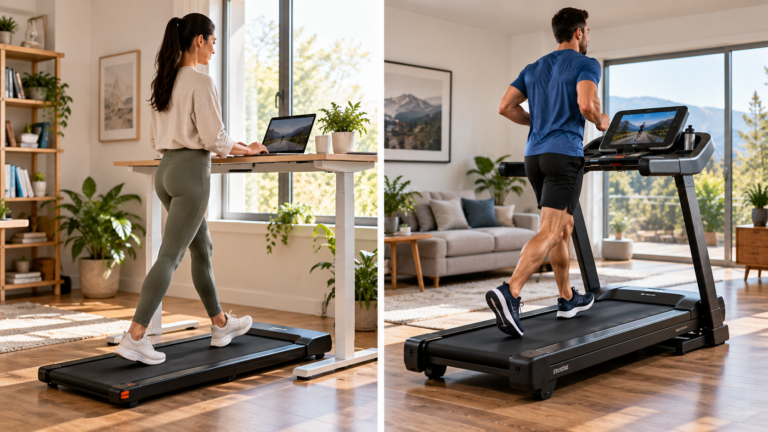
The best treadmills for home are frequently described through horsepower, maximum speed, display size, incline range, and running-area dimensions.
Those specifications matter, but a residential treadmill also competes with everyday life.
A machine may be used before work, after dinner, during bad weather, or while another family member watches television. Exercise sessions may be squeezed between obligations rather than conducted according to an ideal training schedule.
In that environment, reducing friction has value.
Automatic incline reduces one form of friction by allowing grade changes without stopping. Manual incline reduces another by keeping the machine mechanically simpler and, depending on the model, potentially more accessible at lower price points.
Neither advantage exists in isolation.
A buyer who values uncomplicated steady walking may find manual incline perfectly aligned with the routine. A buyer who becomes bored walking at one unchanging grade may find automatic adjustment disproportionately useful.
The better treadmill is the one whose controls match actual habits.
Maintenance Deserves a Place in the Decision
Every additional powered mechanism introduces another system that has to function correctly.
That does not make automatic incline unreliable by definition. It means the treadmill contains an incline motor or actuator, controls, sensors, and associated components that a manual incline system does not need in the same form.
Manual incline is mechanically simpler in this respect.
Yet incline design is only one part of treadmill maintenance.
The running belt, deck, rollers, motor, electronics, and frame still require appropriate care regardless of how grade is adjusted. Belt lubrication and alignment can matter far more frequently than the incline mechanism itself.
Sunny Health & Fitness, for example, advises in its treadmill lubrication guidance that applicable machines be unplugged before cleaning, lubrication, or repair and describes silicone-based belt lubrication procedures. Owners should always follow instructions for their exact model.
The broader purchasing lesson is that “manual” does not mean maintenance-free, just as “automatic” does not automatically imply excessive upkeep.
The entire machine matters.
Auto Incline Makes Connected Workouts More Meaningful
Connected treadmill platforms can use automatic incline in ways that manual systems cannot readily duplicate.
When a programmed session calls for a climb, compatible equipment can alter grade during the workout. Some systems can coordinate these adjustments with guided sessions or terrain simulations.
The usefulness depends entirely on whether the owner wants that experience.
A person who exercises while watching television and controls the treadmill manually may gain little from automated programming. Someone who follows structured sessions several times per week may regard changing grade as part of the experience rather than an optional extra.
This distinction deserves attention because buyers sometimes pay for connected capabilities without considering the recurring behavior those capabilities require.
Technology earns its place when it gets used.
Manual Incline Can Suit Budget-Focused Buyers
Price varies widely across treadmill categories, so no universal premium can be assigned to automatic incline. Other differences in motor design, frame construction, display hardware, running area, cushioning, connectivity, and capacity can overwhelm the cost of the incline system itself.
Still, manual incline is common on simpler machines because it eliminates the need for powered grade adjustment.
For budget-focused walking, that can be rational.
The buyer should avoid assuming that an inexpensive treadmill with manual incline is deficient merely because the grade does not move electronically.
The better questions concern basic suitability:
- Is the walking area appropriate for the user?
- Is the stated capacity sufficient?
- Does the treadmill operate at the needed speeds?
- Is the machine stable in its intended location?
- Are the controls accessible?
- Can the incline be adjusted safely?
- Is the maintenance procedure manageable?
- Does the machine fit the available space?
A powered incline cannot compensate for a treadmill that fails the user’s more basic requirements.
Auto Incline Better Supports Progression
Exercise routines often change as fitness changes.
A person may begin with level walking and gradually increase duration. Later, adding modest incline can increase workload without forcing a transition to running. Eventually, structured hill intervals may become appealing.
Automatic incline makes that progression easier to manipulate.
A user can make small adjustments during a session and observe how the effort changes. Grade can be reduced immediately when the workload becomes excessive and increased again when appropriate.
Manual incline offers progression too, but it is coarser operationally. The user generally decides on a position before beginning and changes it between bouts or workouts.
For gradual conditioning, either approach can work.
For continuous experimentation with grade, automatic control is more flexible.
Safety Depends on More Than Incline Type
Neither incline system makes a treadmill inherently safe.
A moving treadmill belt presents hazards regardless of whether the deck angle changes manually or electronically.
Users should understand the emergency-stop mechanism, keep children and pets away from operating equipment, maintain clear space around the treadmill, and follow manufacturer instructions for mounting, dismounting, storage, and maintenance.
The U.S. Consumer Product Safety Commission has repeatedly treated treadmill safety as a serious household issue. Children and pets should be kept away from moving treadmill equipment, and safety instructions for the exact machine should be followed.
Incline introduces another reason to remain attentive.
A steep grade changes posture and effort. Sudden changes can be uncomfortable for someone unfamiliar with them. Automatic adjustment should therefore be controlled deliberately rather than treated as an invitation to chase the machine’s maximum setting.
With manual incline, adjustment should occur according to the manufacturer’s procedure, generally while the treadmill is stopped rather than through improvised changes during operation.
Who Should Choose Auto Incline?
Automatic incline is the stronger fit when grade is expected to be used dynamically.
It particularly suits buyers who:
- Want hill intervals or varied walking sessions.
- Expect to change grade several times during a workout.
- Prefer adjusting incline without stepping off the treadmill.
- Want gradual progression through small grade changes.
- Use programmed or connected workouts that can incorporate incline.
- Prefer increasing workload through slope rather than relying only on additional speed.
- Are willing to pay for the added convenience and mechanical capability.
For these users, automatic incline is not simply an extra feature. It changes how the treadmill can be used during every session.
Its value rises with frequency.
Who Should Choose Manual Incline?
Manual incline makes more sense when the desired grade is relatively static.
It particularly suits buyers who:
- Primarily want straightforward walking.
- Usually exercise at one consistent grade.
- Do not mind setting incline before starting.
- Have little interest in hill intervals.
- Prioritize mechanical simplicity.
- Are shopping within a tighter budget.
- Prefer focusing expenditure on fundamentals such as suitable walking area, capacity, or construction rather than powered incline adjustment.
Manual incline is not a lesser form of exercise.
Once the deck is elevated, the user is still walking uphill. What disappears is the ability to alter that hill conveniently during the session.
For some buyers, that distinction is decisive. For others, it barely matters.
A Practical Decision Test
A buyer uncertain between the two systems can reduce the decision to a simple imagined workout.
Consider a normal 30-minute session.
If the plan looks like this-
five minutes level, five minutes at a modest grade, three minutes steeper, four minutes easier, another climb, another recovery, then a gradual return to level walking-
automatic incline has an obvious operational advantage.
If the plan looks like this-
set a modest incline, walk for 30 minutes, stop-
manual incline can perform the central task without requiring powered adjustment.
That difference is more informative than comparing feature counts.
The question is not whether automatic technology is more advanced. It plainly offers greater adjustment flexibility.
The question is whether that flexibility will materially change the owner’s workouts.
Final Considerations
Auto incline vs manual incline treadmills is ultimately a comparison between dynamic control and mechanical simplicity.
Both can create uphill walking.
Both can increase exercise demand relative to level walking when grade is raised appropriately.
Both can contribute to a useful home exercise routine.
Automatic incline becomes the stronger choice when slope is intended to change during the workout. It allows grade adjustments without interrupting the session, supports hill intervals more naturally, integrates better with programmed workouts, and gives users another convenient way to alter intensity without simply increasing speed.
Manual incline is better aligned with steady walking and budget-conscious simplicity. A user who selects one grade before starting and leaves it unchanged gains little from paying solely for powered adjustment.
Research gives incline itself a credible physiological foundation. In healthy older adults, controlled treadmill testing found net cardiopulmonary metabolic energy cost 22.9% higher at 10% grade and 44.2% higher at 16% grade than during level walking. Separate biomechanical research found that slower uphill walking could achieve moderate exercise intensity while reducing certain knee-loading measures compared with faster level walking under the tested conditions.
Those findings do not establish a universally ideal incline. They demonstrate why grade deserves to be treated as a genuine training variable rather than a decorative specification.
For the buyer, the decision can therefore be surprisingly ordinary.
How often will the incline change?
If the answer is frequently, automatic adjustment is likely to earn its place.
If the answer is rarely, manual incline may deliver the uphill walking that matters without adding a powered system that sees little use.
Among the best treadmills for home, specifications matter most when they translate into behavior. Automatic incline offers more control. Manual incline offers simpler control. The stronger choice is the one that makes the intended workout easier to repeat, week after week, without paying for complexity that remains untouched.