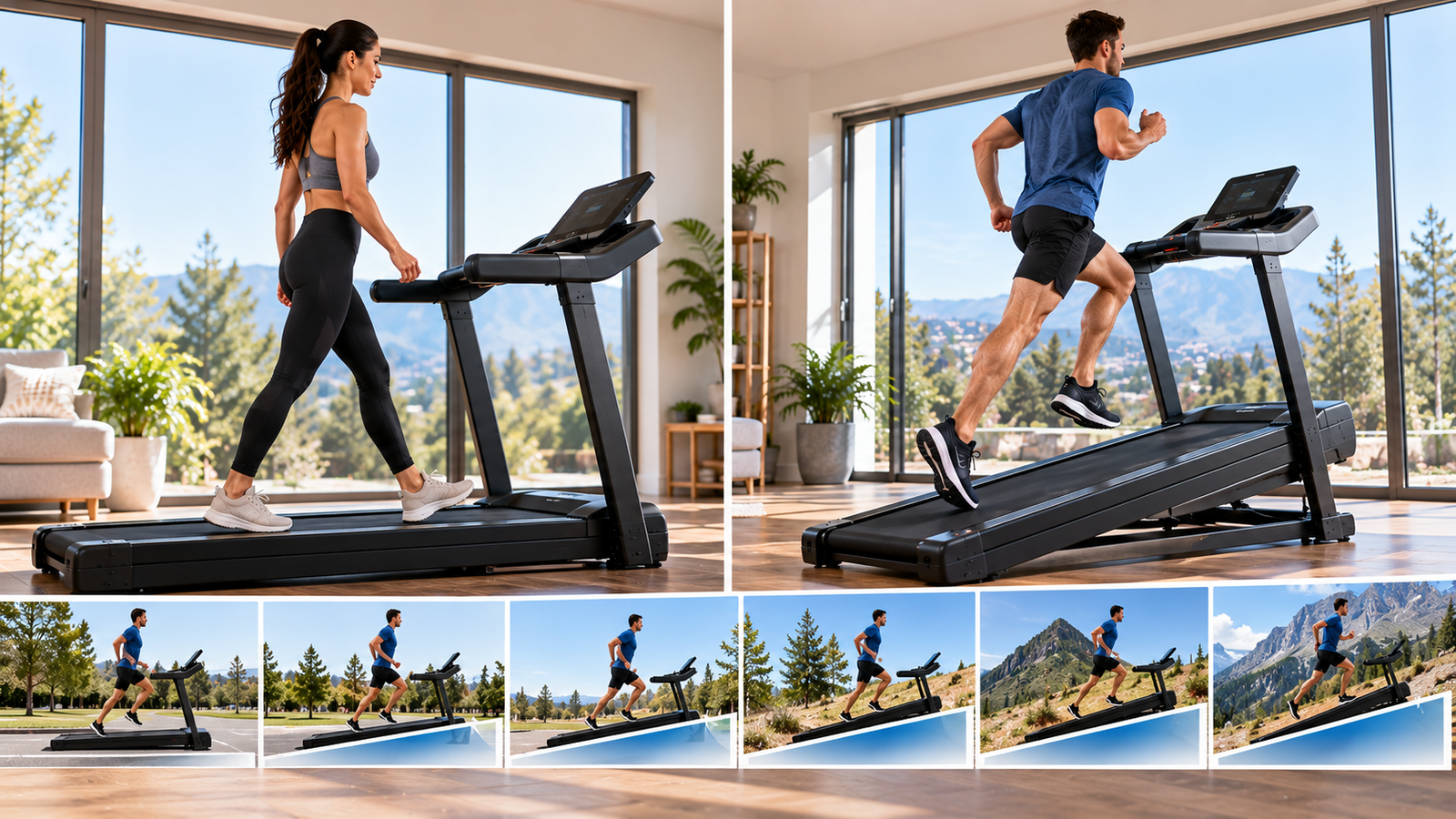
A walking pad and a full-size treadmill perform the same basic mechanical trick: a motorized belt moves beneath a person who walks forward without traveling across the room.
That similarity can make the two categories appear interchangeable.
They are not.
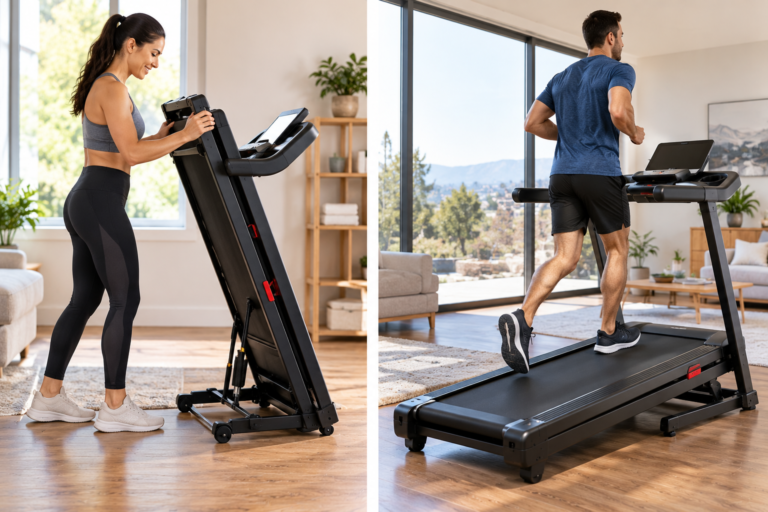
A walking pad is generally designed around low-speed movement, compact storage, and use in spaces where a conventional treadmill would be inconvenient. Many are associated with standing desks and workday walking. A full-size treadmill usually adds a larger frame, more substantial console or handrail structure, broader speed capability, and, depending on the model, incline and running-oriented features.
The central buying question is therefore not which machine is universally better.
It is what kind of movement the household is actually trying to make easier.
Someone attempting to add gentle walking to several hours of computer work faces a different problem from someone training indoors when weather prevents a five-mile run. Someone in a small apartment may value a machine that can slide beneath furniture. Someone with a dedicated exercise room may regard storage as almost irrelevant.
Walking pads trade exercise range for spatial convenience. Full-size treadmills usually trade space and portability for a broader training envelope.
That trade deserves more scrutiny than the labels receive.
Walking Pad vs Treadmill: Start With Intended Activity
The first distinction is behavioral.
Walking pads are primarily walking machines. Full-size treadmills can also be walking machines, but many are designed to accommodate jogging or running as well.
That difference should determine the first stage of the purchase.
If the planned activity consists of slow walking during work, short movement breaks, or additional low-intensity steps during the day, a walking pad can match the task closely.
If the intended routine includes brisk walking, substantial incline, running, intervals, or progressive speed training, a conventional treadmill generally provides a more suitable architecture.
This sounds obvious until storage begins dominating the buying process.
Compactness is seductive because it is immediately visible. Exercise limitations often become apparent only after the machine arrives.
A treadmill that fits perfectly beneath a sofa but cannot support the speed, stride, controls, or workout progression the owner eventually wants is not space-efficient. It is simply underspecified.
Walking Pads Solve a Different Space Problem
Full-size treadmills ask a household to dedicate floor area to exercise, at least while the machine is open.
Walking pads attempt to reduce that demand.
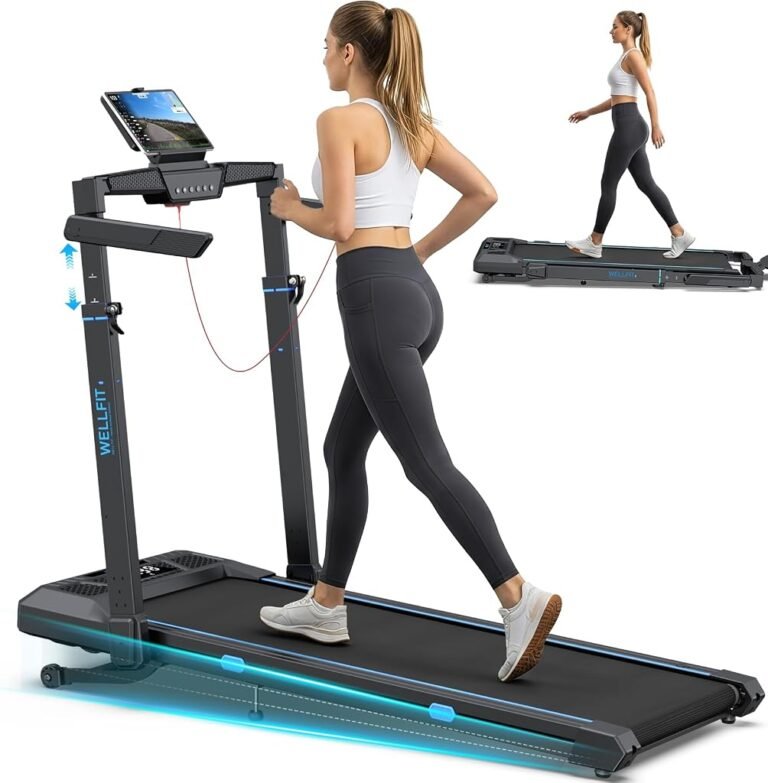
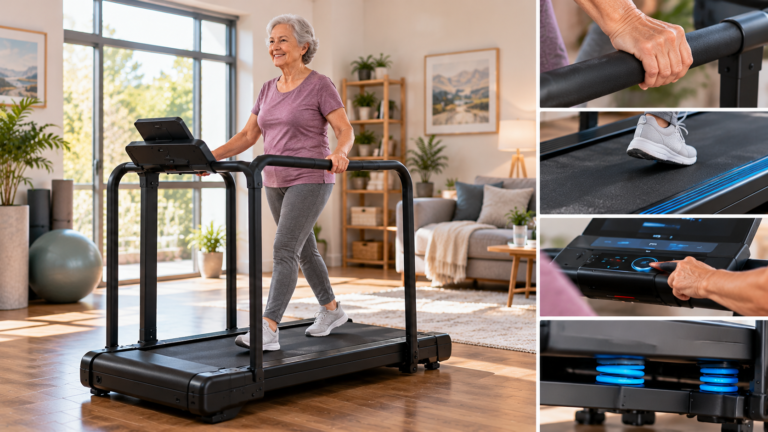
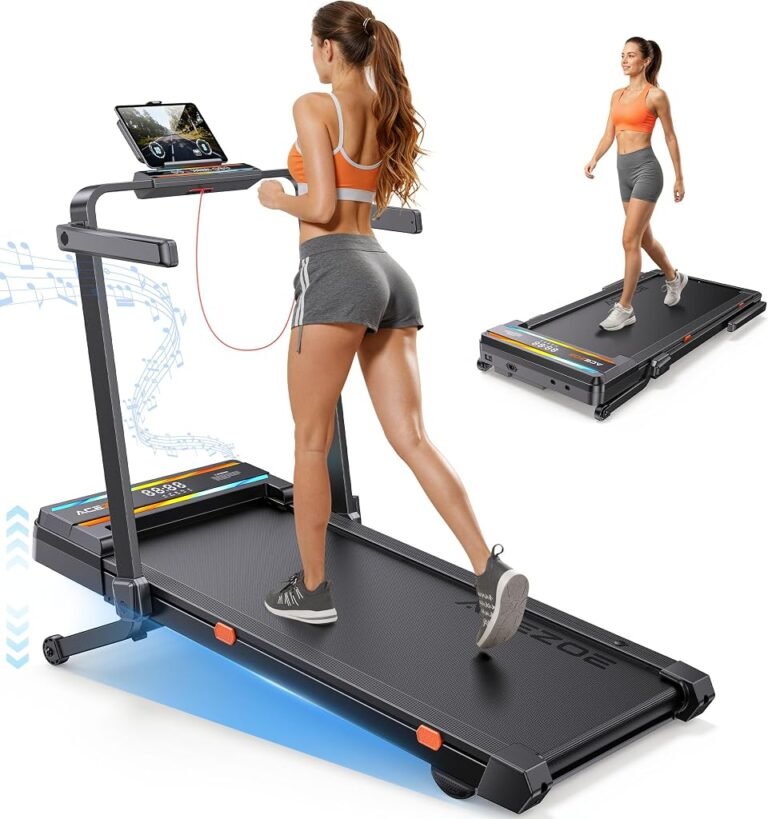
Many omit the large upright console associated with conventional treadmills. That can lower the machine’s profile substantially and make storage beneath a bed, desk, or other furniture possible when dimensions permit.
This is not merely an aesthetic difference.
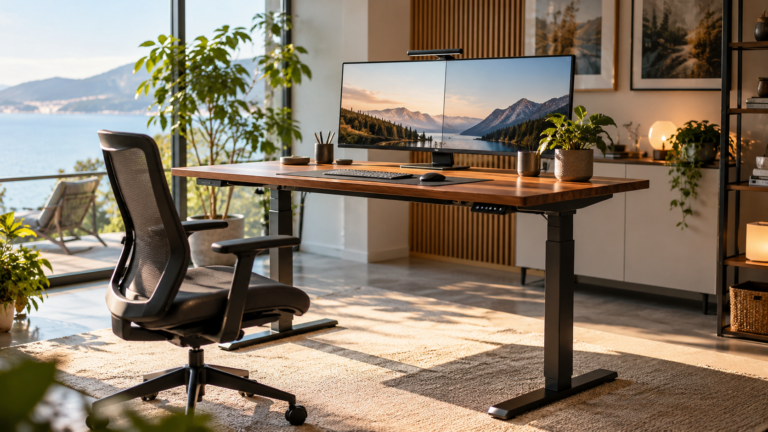
In a home office, the same floor area can alternate between ordinary desk use and walking. In a small apartment, equipment that can be repositioned after exercise may interfere less with normal circulation through the room.
Yet “compact” still needs measurement.
A walking pad has length, width, height, and weight. The intended storage opening must exceed those dimensions. Furniture clearance matters. So does the route between storage and use.
A machine that technically fits beneath a bed but requires lifting an awkward object several times per day may solve the geometric problem while creating a behavioral one.
Full-Size Treadmills Use Space to Expand Capability
A larger footprint is not automatically waste.
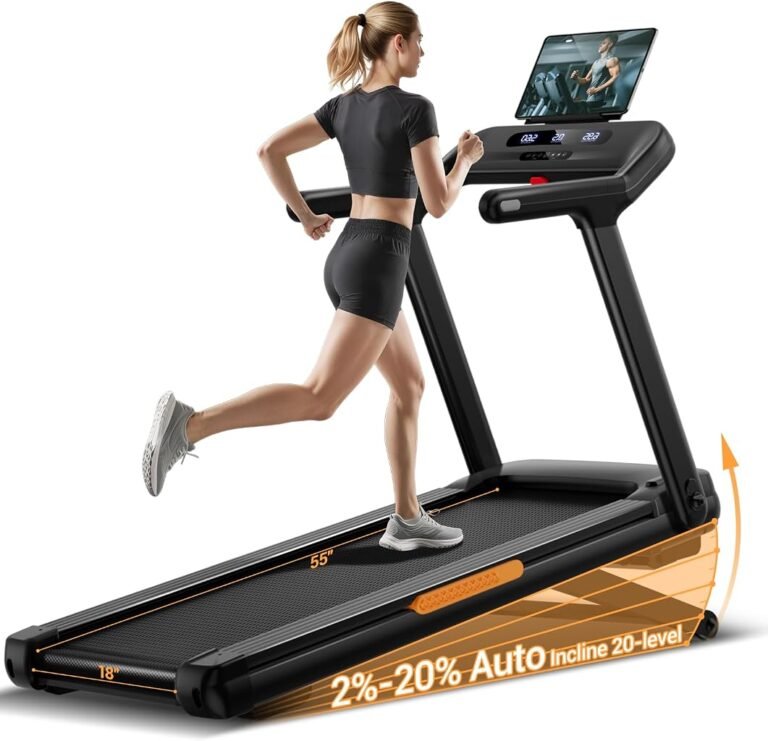
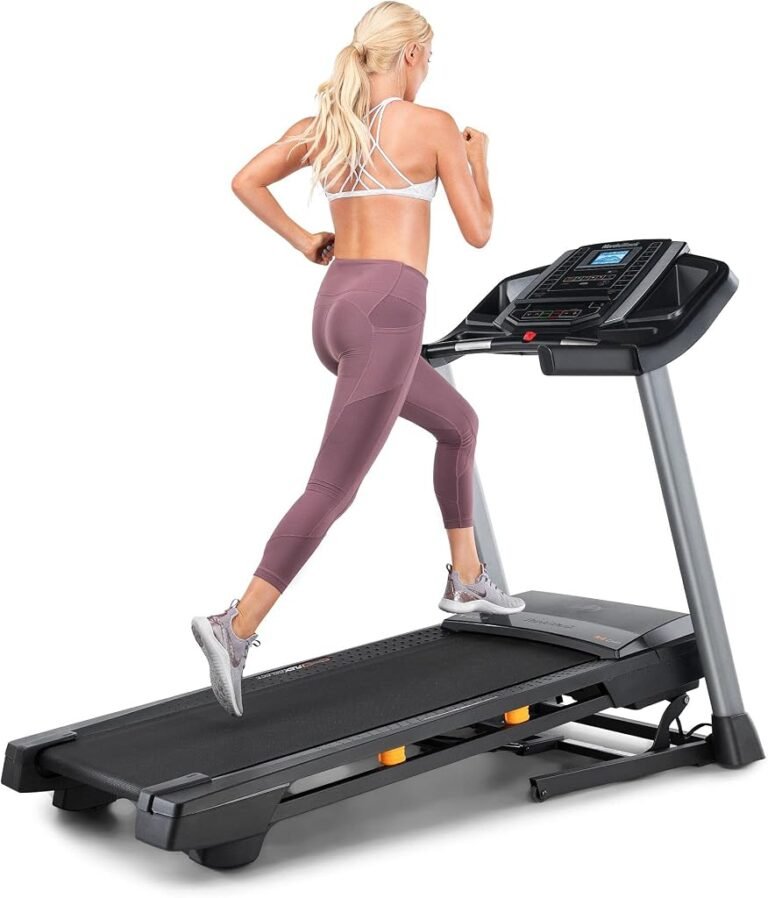
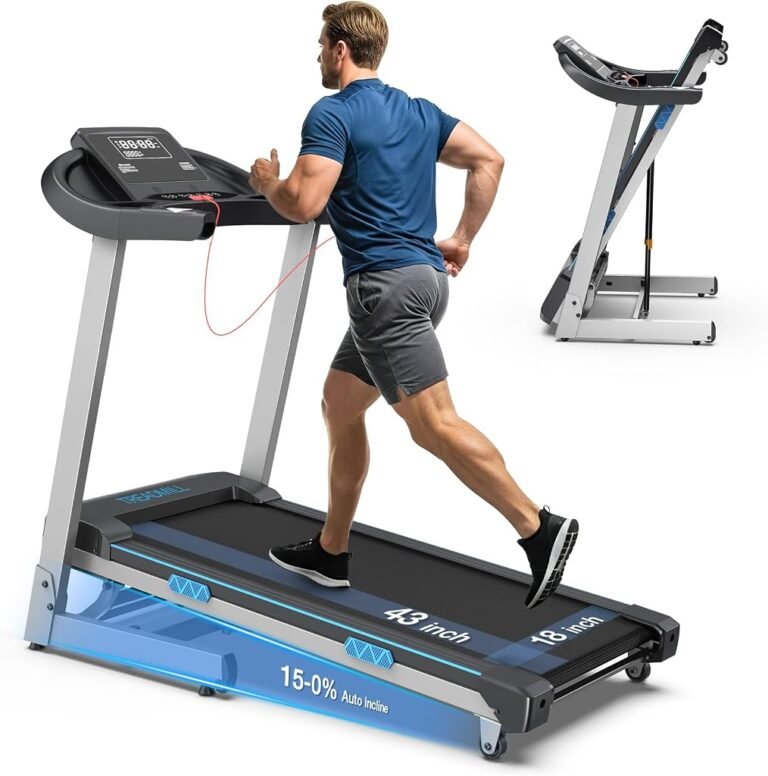
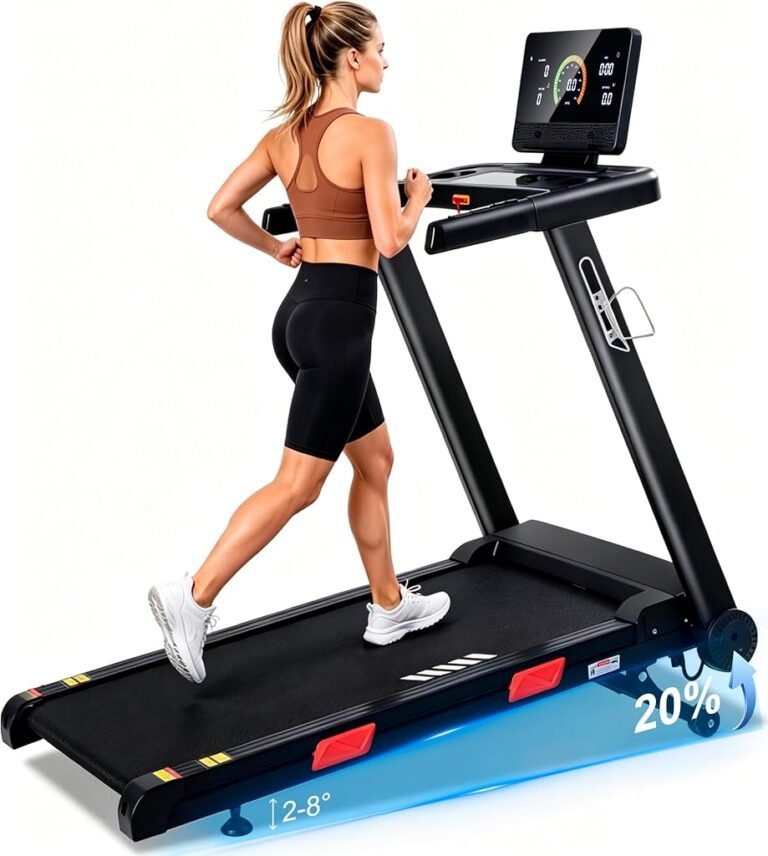
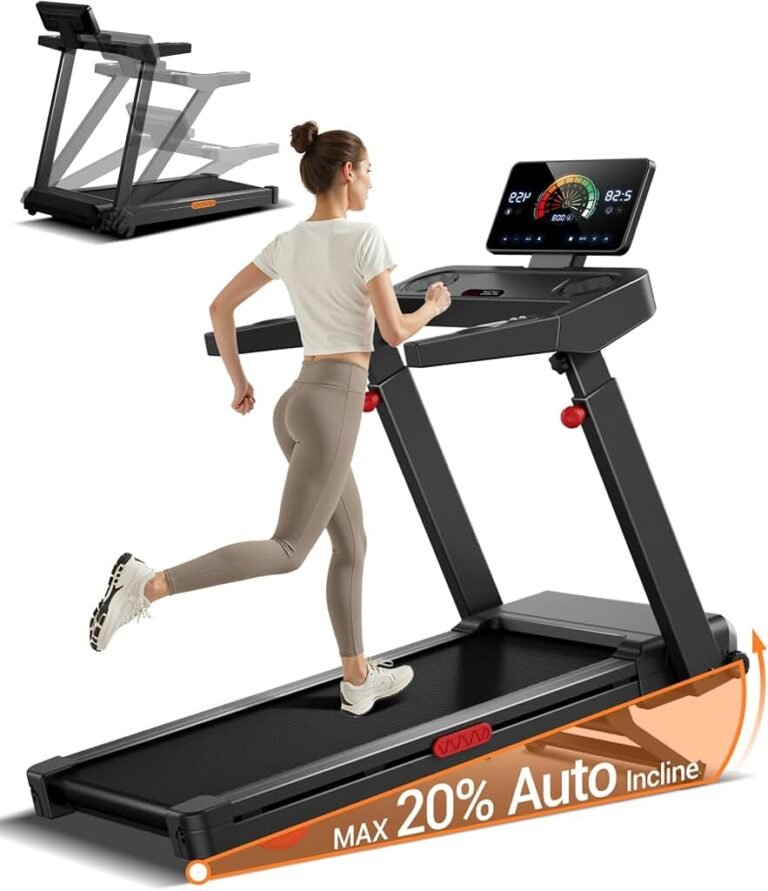
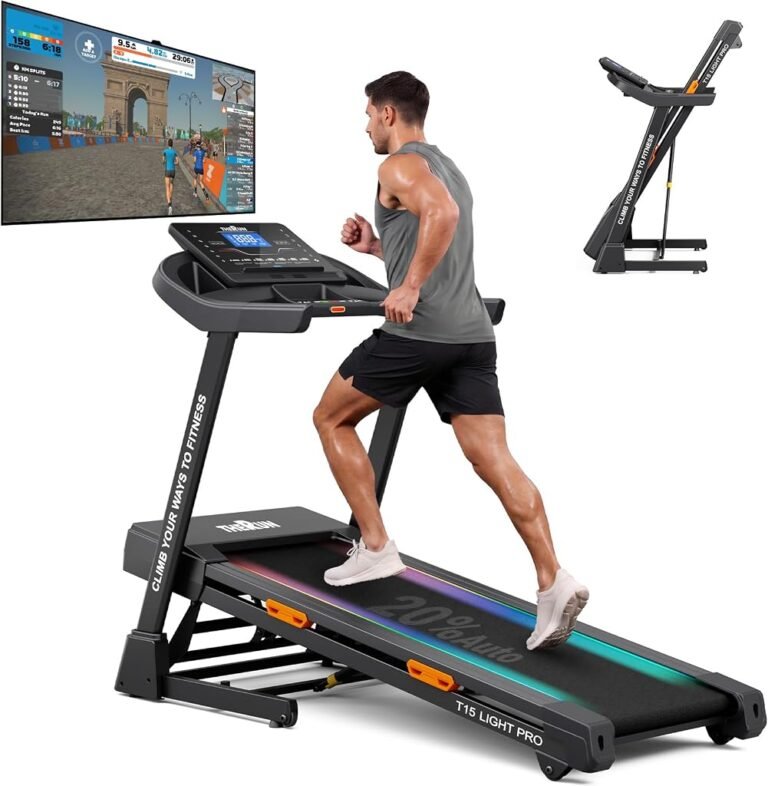
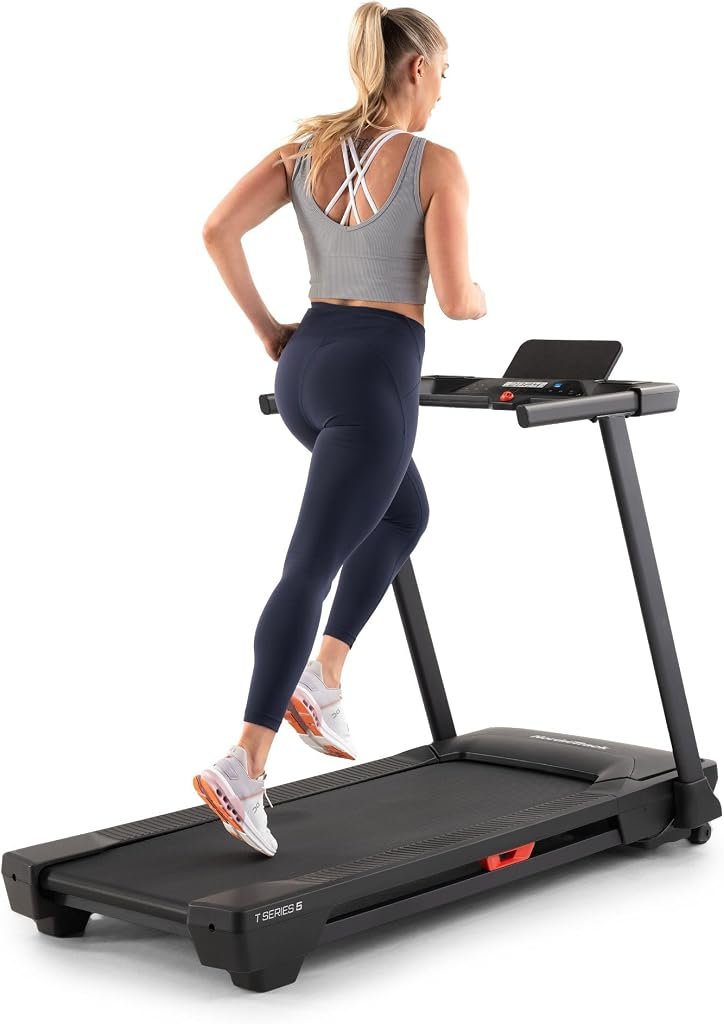
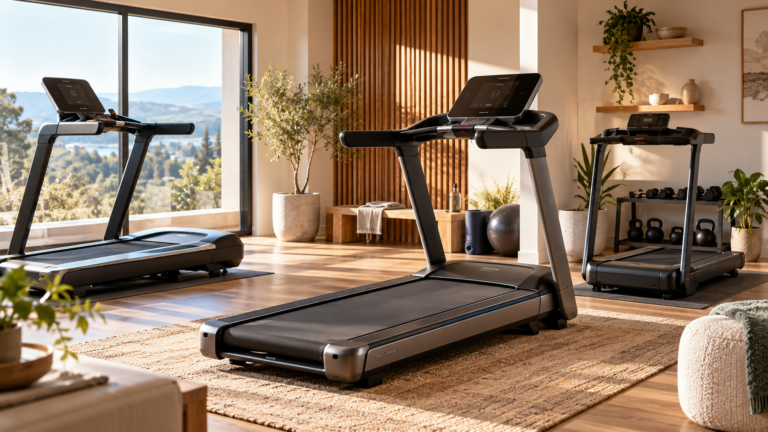
Full-size treadmills use that space for a longer deck, wider belt, upright supports, controls, handrails, and other components. Many models also include powered incline systems and higher maximum speeds.
Those additions matter when exercise moves beyond slow walking.
A runner needs enough usable belt length to accommodate stride at speed. Faster movement also makes convenient controls increasingly important. A person changing incline during a workout benefits from accessible buttons rather than having to stop and physically alter the machine.
The larger frame can therefore support a different kind of exercise experience.
For a dedicated home gym, this trade can be rational. There is little benefit in buying the smallest possible machine when the room already exists for exercise and the smaller machine restricts the intended activity.
Space efficiency should be judged against function, not simply square footage.
Walking While Working Has Real Research Behind It
The walking-pad category is closely associated with desk work, and that use deserves evidence rather than lifestyle slogans.
A 2021 systematic review and meta-analysis of treadmill desks examined 13 studies involving 351 participants. In pooled laboratory studies, treadmill-desk use increased energy expenditure by 105.23 kilocalories per hour compared with sitting conditions. Workplace studies also found a reduction in sitting time, although the review did not find statistically significant changes across other metabolic outcomes.
That distinction matters.
Walking while working can increase movement and energy expenditure. It should not be converted into exaggerated claims about transforming health outcomes.
Another randomized workplace trial involving overweight or obese office workers found that a shared treadmill-desk intervention increased daily steps by 1,622 relative to the control group and increased light physical activity during working hours.
The value of a walking pad therefore can be remarkably ordinary.
It can turn some seated time into moving time.
That may be exactly what the buyer needs.
A Walking Pad Is Not Automatically a Substitute for Exercise
The ability to walk during work can create a conceptual trap.
Movement and structured exercise overlap, but they are not always identical.
The CDC recommends that adults obtain at least 150 minutes of moderate-intensity aerobic activity each week, or 75 minutes of vigorous-intensity activity, or an equivalent combination. Adults are also advised to perform muscle-strengthening activity on at least two days each week.
Very slow walking during computer work may increase activity without necessarily reaching moderate intensity for a particular person.
Intensity depends on the individual and the workload.
A walking pad can therefore be useful for reducing prolonged sitting and accumulating movement without automatically replacing faster aerobic exercise or strength training.
This distinction protects the device from two opposite errors.
It should not be dismissed as meaningless simply because the walking is gentle.
It should not be credited with doing more than the activity actually demands.
Work Performance Is More Complicated Than Marketing Suggests
Walking while typing sounds efficient: work and physical activity happen simultaneously.
Human attention and motor control make the story less tidy.
A study involving 75 healthy participants compared sitting with treadmill walking at 1.5 mph. Researchers found that the walking group performed worse on several typing measures and some cognitive outcomes, although short- and long-delay recall did not differ between groups.
Other research has produced more reassuring results for certain tasks. A study of 66 participants found no significant differences between sitting and self-selected treadmill walking in response speed or accuracy on the tested cognitive tasks.
The broader literature therefore does not support the claim that walking either destroys productivity or reliably improves it.
Task type matters.
Reading an uncomplicated document is different from editing a spreadsheet with precision mouse movements. Listening during a meeting is different from drafting technical material. Routine email processing is different from work demanding fine visual attention.
Walking-pad users should match walking speed to the task rather than treating movement as mandatory throughout the workday.
Typing Speed Can Be Sensitive to Walking Speed
Walking speed deserves particular attention at a workstation.
One experiment tested 24 participants under seated conditions and while walking at three speeds. The researchers found that treadmill walking could impair typing performance, but the effect varied by speed. At 2.25 kilometers per hour, typing performance did not differ from seated typing in that study, whereas the slower and faster tested walking conditions performed worse than sitting.
That result should not be transformed into a universal ideal desk-walking speed.
The sample was small, and individual comfort varies.
It does demonstrate something practically useful: faster is not necessarily better when walking and working are combined.
A walking pad should allow the user to find a pace at which movement becomes background activity rather than a competing task.
For some work, the correct speed may be zero.
Full-Size Treadmills Are Better Suited to Exercise Progression
A person may begin a home fitness routine by walking.
What happens six months later?
This question can change the purchase.
A full-size treadmill generally leaves more room for progression from easy walking toward brisk walking, incline work, jogging, running, or interval sessions, assuming the exact machine supports those activities.
A walking pad is more specialized.
Specialization is not inherently a weakness. A kitchen chair is not defective because it cannot become a bed. Problems arise when the buyer expects one category to perform the job of another.
Someone certain that slow walking is the long-term objective can benefit from a specialized machine.
Someone who views walking as the first stage of a broader conditioning plan may outgrow a walking pad’s capabilities.
Future exercise intentions therefore deserve a place beside present ones.
Incline Creates a Major Separation
Incline can change exercise demand without requiring proportionally faster movement.
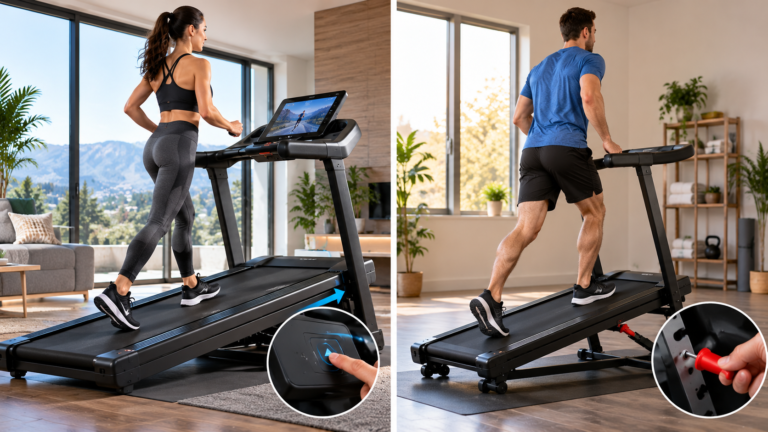
Many conventional treadmills offer adjustable incline. Walking pads vary widely, and numerous low-profile models either lack incline or offer more limited adjustment.
For users who enjoy hill walking, that difference can be decisive.
Incline allows workload to increase while speed remains comparatively moderate. It also makes varied sessions easier when the machine provides automatic grade adjustment.
A walking pad purchased primarily for desk use has little need for steep dynamic incline. Raising exercise intensity substantially while simultaneously performing detailed office work would undermine the very low-intensity use case that makes desk walking practical.
For dedicated workouts, the equation changes.
A full-size treadmill with suitable incline capability provides another dimension of progression.
Running Surface Matters More at Higher Speeds
Walking pads often pursue compactness by reducing machine dimensions.
Physics does not provide free storage space.
A smaller machine may have a shorter or narrower usable walking area than a larger treadmill. Whether that matters depends on the user and activity.
At slow speeds, a compact belt may feel entirely adequate to a particular walker. As speed rises, available room becomes more consequential because stride length and positional variation matter more.
Running magnifies the issue.
This is one reason buyers should never infer running suitability from the mere presence of a moving belt.
The exact model’s intended use, maximum speed, running-area dimensions, user capacity, and manufacturer instructions should govern the decision.
A machine that can physically reach a certain speed is not automatically designed for every type of running.
Handrails Change the Interaction With the Machine
A conventional treadmill often places handrails and controls around the user.
A low-profile walking pad may intentionally remove much of that structure so it can fit beneath a desk.
That creates both advantages and trade-offs.
The absence of a large console makes desk integration easier. It can also leave fewer physical reference points around the walker.
Some walking pads use remotes or mobile controls. Others have folding rails or consoles. Designs vary enough that category assumptions become unreliable.
Buyers should inspect how the exact machine starts, stops, changes speed, and handles emergency stopping.
Those details matter more than sleek appearance.
Someone who specifically wants substantial handrails for confidence, balance, or easier access should not assume that a minimalist walking pad will provide them.
Weight Capacity Still Functions as a Hard Filter
Compactness should never distract from user capacity.
Every treadmill or walking pad has a stated maximum user weight. The intended user should remain within that limit.
The same purchasing discipline applies to both categories.
Capacity also should not be confused with physical comfort. A walking pad can technically support a person’s weight while still offering a belt width or deck length that feels unsuitable.
Conversely, a large-looking treadmill should not be assumed to have a particular capacity merely because its frame appears substantial.
The manufacturer’s specification decides the limit.
Body fit requires a wider assessment.
Walking Pads Usually Win the Storage Contest
When storage is the dominant constraint, walking pads have an obvious structural advantage.
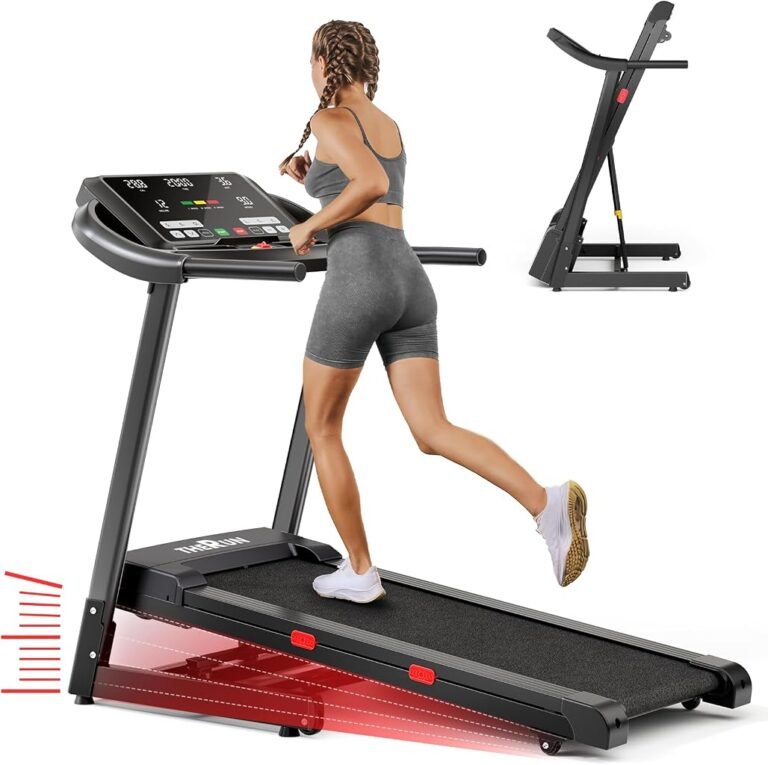
Removing or reducing upright hardware can make the machine easier to place beneath furniture or against a wall. Some designs fold further, though the exact storage procedure varies.
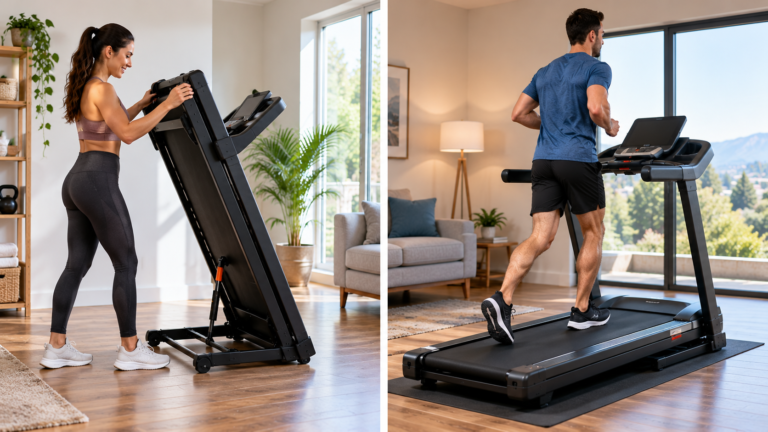
Full-size treadmills can also fold, but a folded conventional treadmill usually remains a large object.
The difference is especially relevant in rooms that change function repeatedly.
A home office may need open floor area after work. A bedroom cannot always surrender permanent space to exercise equipment. A small living area may require the machine to disappear from the normal walking path.
In these situations, the walking pad’s limited exercise range may be an acceptable price for equipment that can actually coexist with the room.
A treadmill that does not fit the home has no performance advantage.
Full-Size Treadmills Usually Win on Workout Range
The opposite becomes true when exercise versatility is the dominant criterion.
A suitable full-size treadmill can accommodate easy walking while leaving room for faster training.
That creates asymmetry in the comparison.
A running-capable treadmill can usually be used for walking.
A walking-only machine cannot simply be converted into a running treadmill by asking more of it.
This is why buyers who are uncertain about future exercise intensity should examine the cost of specialization carefully.
The smaller machine may fit today’s routine beautifully while limiting tomorrow’s.
The larger machine may appear excessive for current walking yet provide room for progression.
Neither argument wins automatically. The buyer’s likely behavior decides which compromise is more expensive.
Noise Depends on More Than Machine Size
Walking pads are sometimes assumed to be quiet because they are small.
Full-size treadmills are sometimes assumed to be loud because they are large.
Neither shortcut is reliable.
Sound can come from the motor, belt, rollers, foot strikes, vibration, flooring, speed, user gait, and room structure.
Walking slowly generally produces a different acoustic environment from running, which can make walking-pad use seem quieter in practice. But that difference may come from the activity as much as the machine.
Apartment users should think about vibration transmission as well as audible motor noise.
A machine operating above another residence can transmit repeated foot-strike energy through the floor.
The intended speed, floor construction, machine placement, and neighboring rooms all matter.
Maintenance Applies to Both Categories
Compact does not mean maintenance-free.
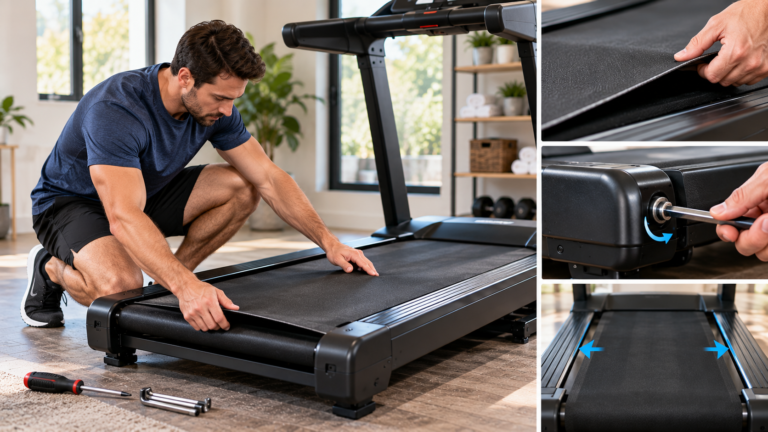
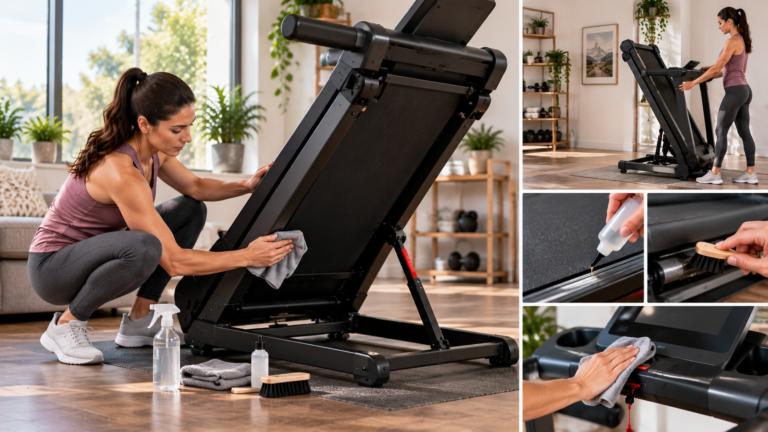
Walking pads still contain belts, motors, rollers, electronics, and moving surfaces. Full-size treadmills contain the same basic systems, often with additional mechanisms such as powered incline.
The manufacturer should specify cleaning, lubrication, belt adjustment, storage, and inspection requirements for the exact model.
This is especially relevant when a walking pad is repeatedly stored beneath furniture. Dust, pet hair, and debris do not respect product categories.
Frequent movement can also make cable management and storage discipline more important.
A machine that is convenient enough to use daily should be convenient enough to maintain properly.
The Best Treadmills for Home Depend on Where Exercise Fits
The best treadmills for home cannot be identified solely by speed, motor specifications, displays, or compact dimensions.
The machine must fit the role exercise has in the household.
A walking pad can integrate movement into something the user was already doing: working, reading, watching a presentation, or taking a call.
A full-size treadmill more often asks the user to devote time specifically to exercise.
Neither pattern is inherently superior.
For a person struggling with long periods of sitting, integrating gentle movement into existing work may be more realistic than finding another uninterrupted hour for training.
For someone who already has a structured running routine, a walking pad may fail to reproduce the exercise that matters.
The machine should solve the real behavioral problem.
Who Should Choose a Walking Pad?
A walking pad is generally better aligned with users who:
- Primarily want low-speed walking.
- Want to walk during desk work or other compatible activities.
- Have severe storage constraints.
- Need equipment that can be repositioned relatively easily.
- Do not require substantial incline.
- Do not intend to use the machine for conventional running.
- Are comfortable with the controls and support structure of the exact model.
- Value frequent light movement more than broad workout variety.
For these users, compactness is not a cosmetic benefit.
It is what makes indoor walking possible without permanently reorganizing the room.
Who Should Choose a Full-Size Treadmill?
A conventional treadmill is generally better aligned with users who:
- Want brisk walking, jogging, running, or a mixture.
- Expect exercise intensity to increase over time.
- Want a larger running surface.
- Prefer substantial handrails or a conventional console.
- Want adjustable incline where the selected model provides it.
- Plan structured intervals.
- Have sufficient permanent or foldable storage space.
- Prefer one machine capable of supporting several styles of aerobic exercise.
The additional footprint buys capability only if those capabilities are used.
A large treadmill purchased exclusively for slow desk walking can be unnecessarily cumbersome.
Can One Household Need Both?
For some households, the walking pad and treadmill are not substitutes.
One person may use a walking pad beneath a desk during the workday while another uses a full-size treadmill for running. A single person might also use low-speed desk walking separately from structured exercise.
That arrangement obviously requires more money, storage, and maintenance.
It illustrates the deeper distinction between the categories.
One machine is particularly well suited to embedding movement into sedentary time.
The other is better suited to making treadmill exercise itself the primary activity.
Trying to force one device into both jobs can create compromises at each end.
A Better Buying Test
Before choosing, the buyer can imagine three ordinary days rather than one ideal workout.
On a busy workday, would the machine be used beneath a desk?
On a weekend, would the user want to run?
After six months, is incline or faster training likely to become appealing?
Where will the equipment sit when nobody is exercising?
Who else will use it?
The answers create a more useful specification list:
- Intended walking and running speeds.
- Required belt dimensions.
- Maximum user weight.
- Need for handrails.
- Need for incline.
- Operating footprint.
- Storage dimensions.
- Product weight.
- Control method.
- Emergency-stop design.
- Maintenance procedure.
- Compatibility with a standing desk, if relevant.
- Likelihood of future workout progression.
The smallest machine is not automatically the smartest purchase.
Neither is the largest.
Final Considerations
Walking pad vs full-size treadmill for home workouts is less a contest between two versions of the same machine than a choice between two different relationships with movement.
The walking pad is strongest when exercise has to coexist with something else.
Its compact architecture can fit beneath a standing desk, reduce the spatial commitment of indoor walking, and make low-intensity movement available during periods that might otherwise be sedentary. Research on treadmill workstations supports the basic premise: desk walking can increase energy expenditure, increase daily steps, and reduce sitting time under studied conditions.
That does not turn every work task into a good walking task.
Research on typing and cognition is mixed enough to demand restraint. Some experiments have reported reduced typing or learning performance during treadmill walking, while others have found little difference in selected cognitive tasks. Walking speed, task type, individual adaptation, and the demands of the work all matter.
A full-size treadmill solves another problem.
It provides a platform for dedicated exercise across a wider range of intensities. Depending on the exact machine, that can include easy walking, brisk walking, incline work, jogging, running, and intervals. A larger deck, conventional controls, handrails, and broader speed capability become increasingly relevant as movement becomes faster and the treadmill becomes the workout rather than the background.
The trade is space.
A walking pad can often be stored more easily because its architecture is stripped down around walking. A full-size treadmill asks the household to accommodate more machine in exchange for more exercise range.
Neither category deserves automatic preference.
A remote worker seeking to replace part of an eight-hour seated day with gentle movement may get far more practical use from a walking pad than from a large running treadmill across the house.
A runner trying to maintain training through winter will likely find a walking pad fundamentally mismatched to the task.
Someone between those two cases should pay particular attention to future progression. If slow walking is likely to remain the objective, specialization can be efficient. If walking is expected to develop into incline training, jogging, or running, the limitations of a walking pad can become more important than its storage advantage.
Among the best treadmills for home, size matters only in relation to purpose.
A walking pad asks, “How can more movement fit into the day?”
A full-size treadmill asks, “How much can be done during the workout?”
The stronger choice is the machine that answers the question the household is actually asking.