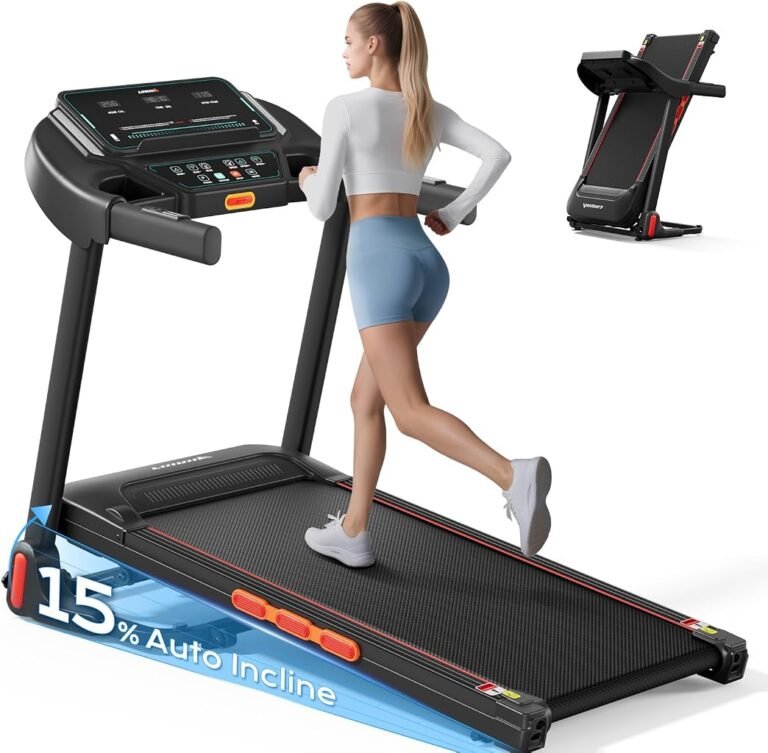
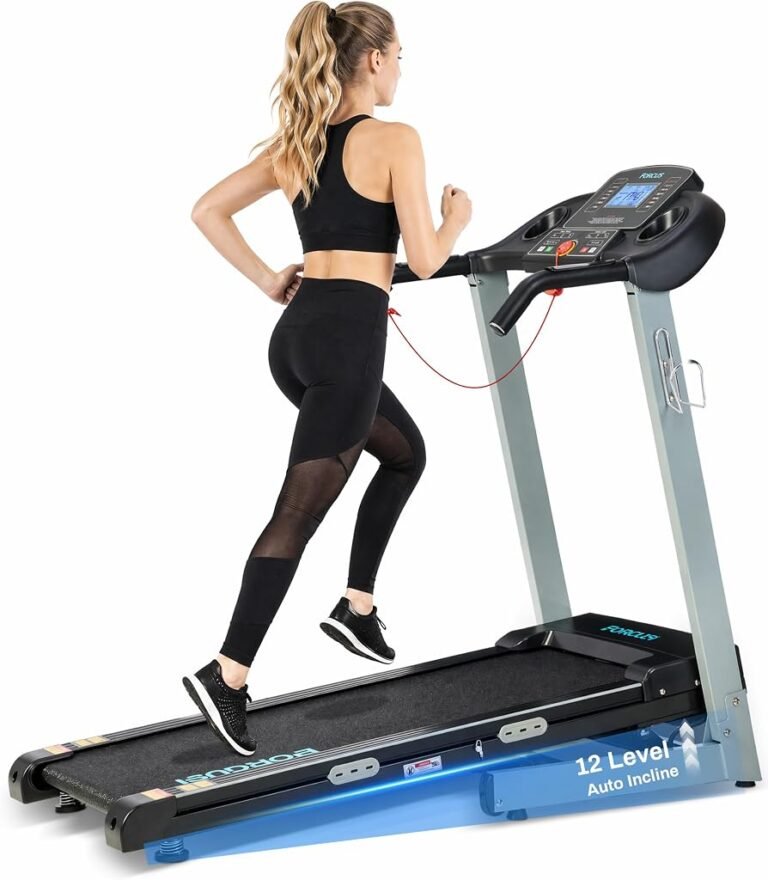
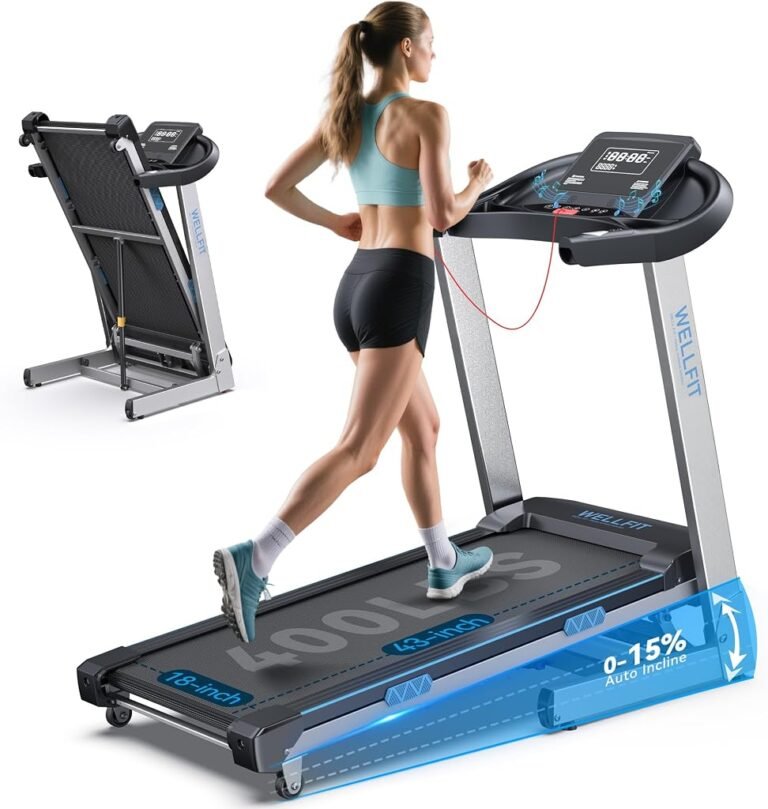
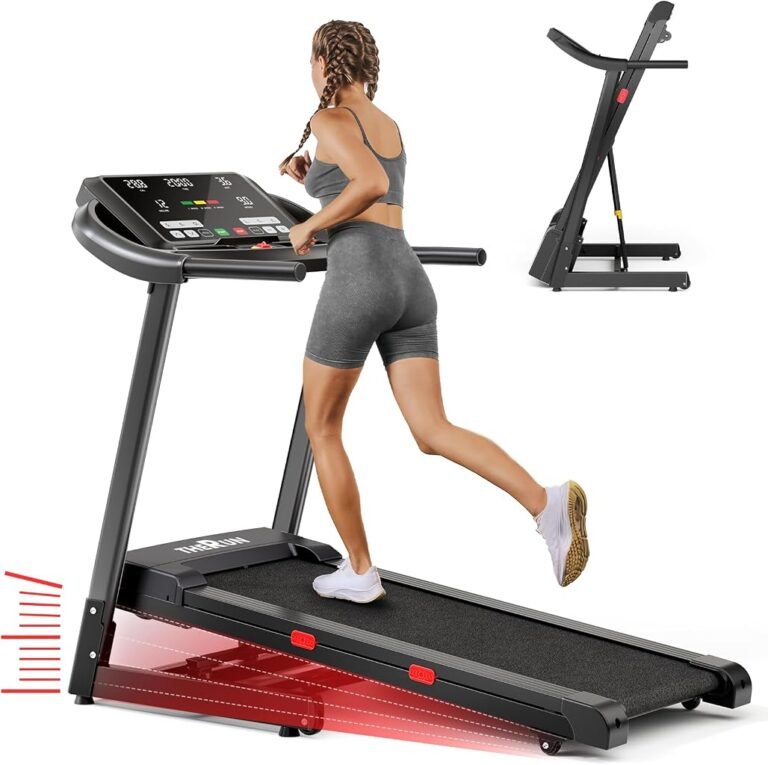
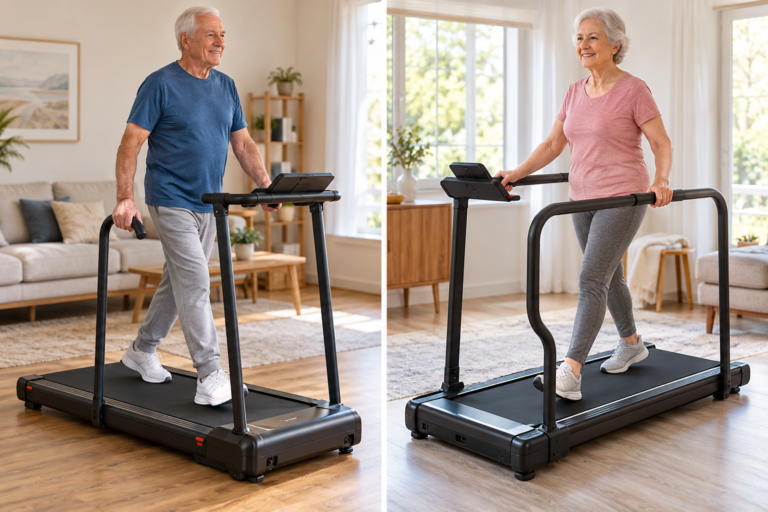
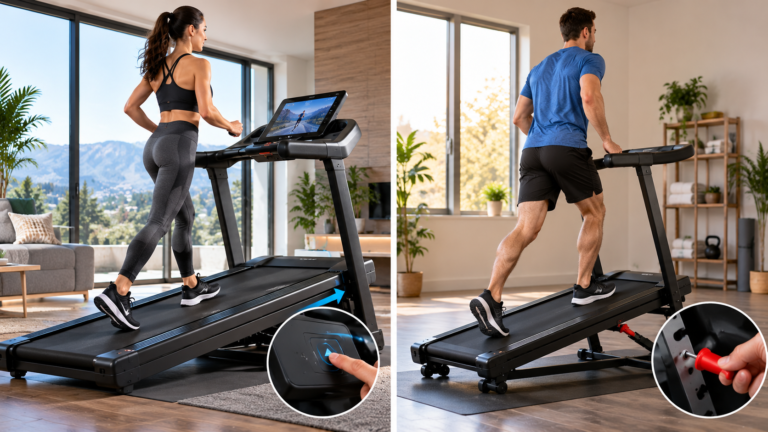
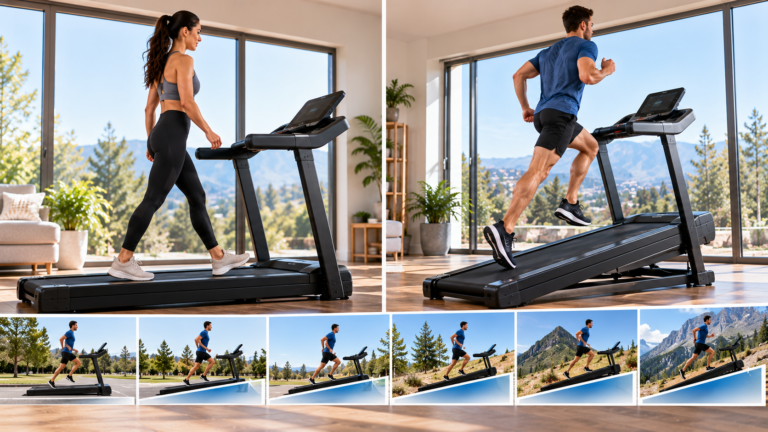
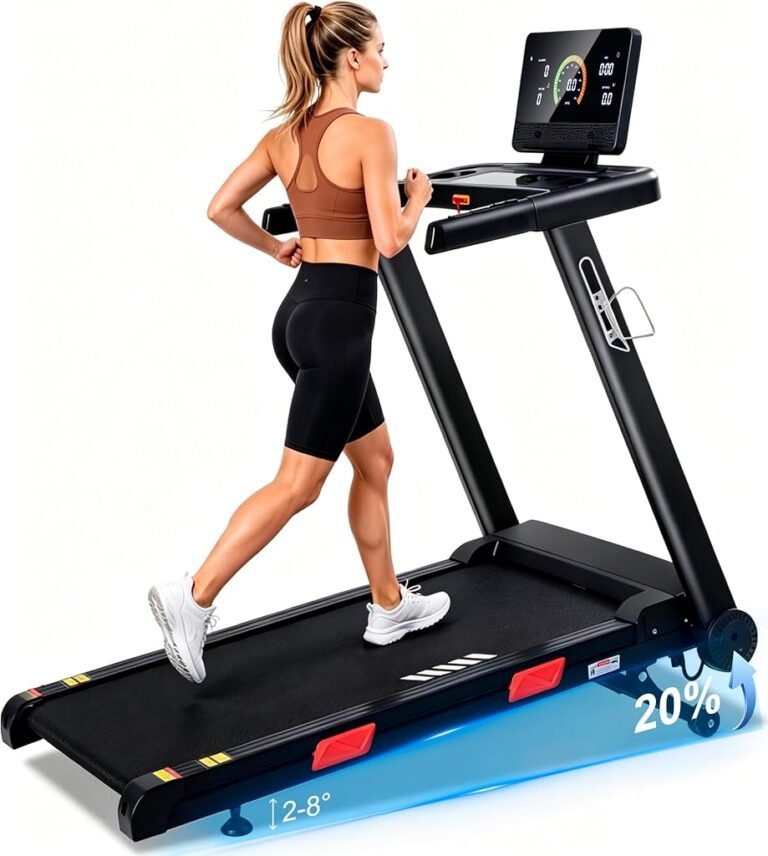
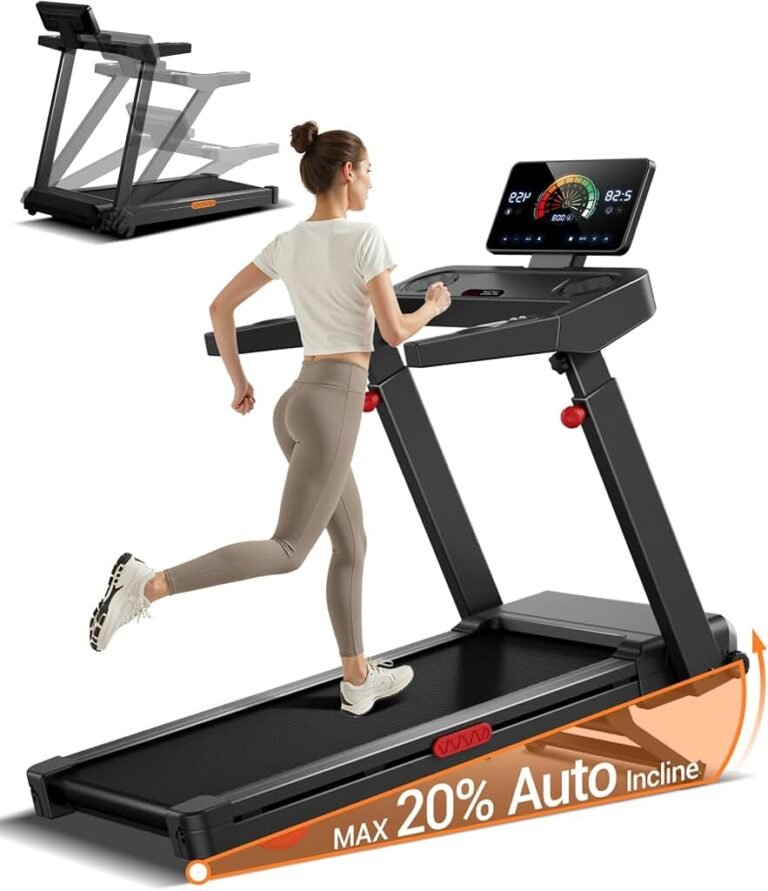
The incline button on a treadmill looks deceptively simple. Raise the deck, and the workout becomes harder. Lower it, and the effort eases. Yet choosing an incline intelligently requires more than deciding how much discomfort feels tolerable.
Incline changes the physiological cost of movement, the muscles doing the work, stride mechanics, loading patterns, balance demands, and the relationship between speed and cardiovascular intensity. A person walking briskly at 8% grade can be working considerably harder than someone jogging slowly on level ground. Conversely, increasing incline too aggressively can turn a carefully planned aerobic session into an unsustainable calf-and-glute endurance test.
That distinction matters because incline is not merely an accessory setting. It is one of the treadmill’s primary workload controls, alongside speed and duration.
The correct incline therefore begins with a question: What is the session supposed to accomplish?
For general aerobic fitness, modest grades are often enough. For hill preparation, greater inclines can reproduce some of the muscular and metabolic demands of climbing. For walkers trying to raise exercise intensity without increasing speed substantially, moderate uphill work can be particularly useful. Runners, meanwhile, need to distinguish between using incline to approximate outdoor effort and using it deliberately as hill training.
The most effective approach is not to chase the highest number the machine permits. It is to select the lowest grade that produces the intended training response while preserving controlled movement.
Step 1: Understand What Incline Percentage Actually Means
A treadmill showing 5% incline is not tilted five degrees.
Grade is calculated as vertical rise divided by horizontal distance. A 5% grade means approximately five units of elevation gain for every 100 units traveled horizontally. Because percentage and angle are different measurements, 10% grade is only about 5.7 degrees.
This distinction becomes useful when comparing treadmill workouts with road or trail profiles, which are commonly described by percentage grade.
Even relatively small changes in grade can materially alter energy demand. In one treadmill walking experiment, participants walked at 4 km/h while researchers increased grade from 0% to 2.5%, 5%, 7.5%, and 10%. Each 2.5-percentage-point increase produced a measurable increase in oxygen uptake.
That finding illustrates a practical principle: incline progression does not need to be dramatic.
A person who increases a treadmill from 2% to 4% has doubled the grade. The display may make two percentage points look trivial, but the body may disagree.
Step 2: Choose the Desired Exercise Intensity Before Choosing the Incline
Incline should follow intensity, rather than intensity being allowed to emerge accidentally from the incline setting.
The CDC guidance for measuring exercise intensity classifies activities requiring 3.0 to 5.9 metabolic equivalents, or METs, as moderate intensity and activities requiring at least 6.0 METs as vigorous intensity. One MET approximates the energy used while sitting quietly.
For people without metabolic testing equipment, the CDC offers a remarkably useful field test. During moderate exercise, a person generally “can talk, but not sing.” During vigorous activity, the person cannot speak more than a few words without stopping for breath.
That makes the talk test useful when adjusting incline during an actual workout.
If a planned moderate walking session suddenly leaves a walker unable to finish a sentence, the incline or speed is probably producing vigorous rather than moderate effort. That may be appropriate during intervals, but it changes the character of the workout.
Heart rate provides another reference point. The American Heart Association’s exercise guidance places moderate intensity at roughly 50% to 70% of estimated maximum heart rate and vigorous activity at roughly 70% to 85%, while stressing that these figures are general guides.
The best incline is therefore not a fixed number shared by everyone. A 6% grade might represent comfortable aerobic walking for one person and a near-maximal effort for another.
Fitness level, body mass, speed, age, treadmill familiarity, training history, medications, cardiovascular capacity, and musculoskeletal limitations all affect the response.
Step 3: Establish a Level-Ground Baseline
Before manipulating grade, the walker or runner needs a baseline.
A useful procedure is straightforward:
- Begin at 0% incline.
- Select a sustainable walking or running speed.
- Continue for roughly five minutes after the initial warm-up.
- Observe breathing, posture, stride control, heart rate if available, and perceived effort.
- Increase incline only after the baseline feels mechanically stable.
This separates two variables that treadmill users frequently alter simultaneously.
If speed and incline rise together, it becomes harder to determine which change pushed the workout beyond the desired intensity. Altering one variable at a time provides cleaner feedback.
For a beginner walker, even 0% can produce adequate cardiovascular work. A conditioned walker may require 2% to 5% to obtain the same relative effort without walking unusually fast.
The objective is calibration, not proving that a particular grade can be tolerated.
Step 4: Use Low Inclines for Easy Walking
For ordinary aerobic walking, 0% to roughly 3% is a practical starting range for many healthy adults.
These figures are programming ranges rather than clinical thresholds. Individual responses vary substantially.
A useful sequence is:
0% to 1%: warm-ups, recovery walking, novice sessions, and easy aerobic work.
1% to 3%: brisk sustained walking when level walking has become relatively comfortable.
At these grades, a treadmill can add workload without requiring steep climbing mechanics.
The intensity should still be judged by breathing and perceived effort rather than by the display alone.
This distinction matters particularly for people using walking to accumulate weekly aerobic activity. The Physical Activity Guidelines for Americans recommend 150 to 300 minutes of moderate-intensity aerobic activity per week, or 75 to 150 minutes of vigorous-intensity aerobic activity, or an equivalent mixture. Adults are also advised to perform muscle-strengthening activity involving major muscle groups on at least two days per week.
There is no requirement that aerobic walking be steep. Consistency and sufficient intensity matter more than an impressive incline number.
Step 5: Move Into Moderate Inclines When Walking Needs More Challenge
Once 1% to 3% walking becomes comfortable, increasing grade into roughly the 3% to 6% range can raise cardiovascular demand while allowing speed to remain moderate.
Research helps explain why.
A study of 22 adults who walked for eight minutes at 1.3 meters per second across 0%, 5%, 10%, and 15% grades found progressively changing physiological demands as the slope increased. Oxygen consumption and heart-rate responses became substantially greater at the steeper grades.
Another study examining 5%, 7.5%, and 10% grades found that heart rate and oxygen consumption rose incrementally as grade increased.
This makes 3% to 6% useful territory for sustained incline walking because relatively small changes can provide meaningful workload adjustments.
Rather than moving immediately from 3% to 8%, the walker can add a single percentage point and evaluate the response.
A simple progression might resemble:
- Five minutes at 0% to 1%.
- Ten minutes at 2% to 3%.
- Five to ten minutes at 4%.
- Return to 1% to 2% if breathing or mechanics deteriorate.
- Add more time at 4% before progressing to 5%.
This progression favors duration before steepness.
Step 6: Use Steeper Walking Strategically
Grades around 6% to 10% create a different kind of walking session.
The cardiovascular load rises, but so does muscular demand. Calves, hamstrings, and hip extensors are asked to produce more climbing work, while stride characteristics change.
One investigation comparing treadmill walking at 0%, 5%, 10%, 15%, and 20% found changes in knee joint mechanics as grade increased. Peak internal knee-abduction moment decreased at most uphill grades compared with level walking.
Another study comparing slow uphill walking with faster level walking produced an especially interesting result. Participants walking slowly uphill had lower early-stance tibiofemoral compressive forces than during faster level walking: approximately 23% lower among participants with obesity and 35% lower among participants without obesity.
A related experiment involving adults with obesity found that walking at 0.75 m/s on a 6-degree incline reduced peak knee extension and adduction moments by about 19% and 26%, respectively, compared with level walking at twice the speed. The study, published in Medicine & Science in Sports & Exercise, examined slow uphill walking as an alternative method of producing moderate cardiovascular effort.
These studies do not establish incline walking as universally easier on every joint or appropriate for every painful condition. They show that speed and grade interact mechanically. Slower uphill walking can sometimes produce substantial metabolic work without the same loading pattern as faster level walking.
That can be useful for people whose cardiovascular capacity exceeds the speed their movement mechanics comfortably support.
Step 7: Treat 10% and Above as Dedicated Hill Work
Once incline moves into double digits, the session should generally be regarded as hill training rather than ordinary walking.
A 10% to 15% grade can be appropriate for conditioned walkers, hikers preparing for sustained climbs, or interval sessions, but the workload rises quickly.
A 2023 study of self-paced inclined treadmill walking found that uphill walking reduced preferred speed and altered gait stability while increasing activation in several lower-limb muscle groups. Researchers reported substantial changes in hamstring and gastrocnemius activation during uphill walking.
That is why steep walking should usually begin with short exposures.
For example:
- 60 to 90 seconds at 8% to 10%.
- Two or three minutes at 2% to 4%.
- Repeat several times while gait remains controlled.
After adaptation, either the duration or grade can increase. Raising both simultaneously makes the progression harder to interpret and harder to recover from.
Holding the treadmill rails also deserves scrutiny. A person who selects 15% but must lean backward while supporting substantial body weight through the arms is not performing the same exercise as someone walking unsupported at 15%.
If balance permits, reducing incline until normal arm swing and stable posture can be maintained usually produces a cleaner training stimulus.
Step 8: Choose Running Incline Differently From Walking Incline
Running changes the problem.
Many treadmill runners have heard that 1% incline is necessary to “simulate outdoor running.” The advice comes largely from a widely cited 1996 study by Andrew Jones and Jonathan Doust.
Nine trained male runners completed six-minute trials at speeds ranging from 2.92 to 5.0 meters per second while researchers compared treadmill oxygen consumption at several grades with outdoor road running. The researchers found that 1% grade most closely reproduced outdoor energetic cost across much of the tested speed range. The original study on 1% treadmill grade and outdoor running energy cost remains an influential reference, but its experimental conditions were specific.
That finding does not mean every treadmill run should automatically be performed at 1%.
The participants were trained men. The tested speeds were relatively fast, beginning at roughly 10.5 km/h and rising to 18 km/h. At the two lowest tested speeds, road-running oxygen consumption was not significantly different from running at either 0% or 1% treadmill grade.
Modern treadmills, individual running economy, airflow, room temperature, deck characteristics, belt mechanics, and the purpose of a training session all complicate attempts to assign a universal correction factor.
For easy treadmill running, 0% to 1% is therefore reasonable. Neither number is mandatory.
Step 9: Use 1% to 3% for Rolling Running Effort
A runner seeking mild hill stimulus can generally begin around 1% to 3%.
At these grades, intensity rises without transforming the movement into steep hill running. The exact speed should usually fall as grade rises if the intention is to keep cardiovascular intensity stable.
That relationship is frequently misunderstood.
Running 10 km/h at 0% and then running 10 km/h at 5% are not equivalent workouts with different scenery. The second condition requires substantially more positive work against gravity.
For steady aerobic running, incline and speed should therefore be traded against one another.
When the grade rises, pace can fall.
When the grade falls, pace can rise.
The treadmill display rewards speed and incline independently, but physiology does not.
Step 10: Use 3% to 6% for Purposeful Running Hill Repeats
For trained runners, approximately 3% to 6% provides a practical range for many hill-repeat sessions.
These grades can raise cardiovascular demand and increase lower-body muscular work without requiring extremely slow running mechanics.
Research on inclined running shows that uphill running changes where and how work is produced. In a study of collegiate distance runners tested at 0%, 4%, and 8%, investigators reduced running speed as incline increased so metabolic workload remained comparable. At steeper grades, ankle and hip positive work increased while total lower-extremity negative work decreased. The 2024 joint-work study illustrates why uphill running cannot be understood simply as level running with a tilted belt.
This supports an important programming idea: hill sessions can change mechanical loading even when overall aerobic demand is held approximately constant.
A practical workout might use:
- 10 to 15 minutes of easy running at 0% to 1%.
- Four to eight repeats of 60 to 180 seconds at 3% to 6%.
- A controlled speed that keeps posture stable.
- Two to three minutes of easy running or walking between repetitions.
- Five to ten minutes of easy running afterward.
The grade should fall if stride becomes excessively short, the runner bends sharply from the waist, or the calves become the sole limiting factor before the intended cardiovascular work is reached.
Step 11: Reserve Very Steep Running for Specific Training
Running above roughly 6% is increasingly specialized.
At steep inclines, running mechanics change substantially. The runner generally shortens stride, shifts work toward climbing, and increases muscular demands associated with vertical propulsion.
Research comparing inclined and level running has found increased activation of several lower-extremity muscles during uphill conditions. At extreme grades, the locomotion strategy can become markedly different from ordinary running. A biomechanical study of high-speed incline running found greater stance-phase activation in the gastrocnemius, soleus, quadriceps, and gluteus maximus during the inclined condition.
For trail runners or athletes preparing for steep races, that specificity can be useful.
For a recreational runner seeking an ordinary aerobic workout, 8%, 10%, or 12% running is rarely necessary.
Walking the steepest sections may actually be the more specific movement strategy for mountain events. Research on very steep slopes has shown that athletes alter gait substantially as gradient rises, helping explain why experienced uphill athletes often transition between running and walking rather than insisting on running every climb.
Step 12: Progress Incline Without Letting Form Deteriorate
The safest practical progression changes one major variable at a time.
A walker can:
- Increase total duration.
- Increase incline.
- Increase speed.
- Increase interval density.
A runner can use the same hierarchy.
If all four increase simultaneously, training load can jump far more sharply than the treadmill numbers suggest.
Good incline mechanics generally include an upright or mildly forward body angle originating through the whole body rather than a sharp bend at the waist, controlled foot placement, stable hips, and minimal reliance on the handrails.
The calves and Achilles region also deserve attention. Incline increases ankle plantar-flexor demand. A person who has performed almost exclusively level walking or running should not treat 12% climbing as a trivial variation simply because speed is lower.
Muscles and connective tissues adapt to repeated loading patterns. Gradual exposure allows those tissues to accommodate the new demand.
Step 13: Use Perceived Effort as a Continuous Feedback System
Treadmill numbers are inputs. The body’s response determines whether those inputs are appropriate.
A simple 0-to-10 perceived-effort scale works well:
- 2 to 3: easy recovery effort.
- 4 to 6: moderate aerobic work.
- 7 to 8: vigorous intervals or sustained hard work.
- 9: very hard, typically brief.
- 10: maximal effort.
The CDC uses a similar relative-intensity framework, describing moderate effort around 5 or 6 on a 10-point scale and vigorous effort around 7 or 8.
A planned moderate session that repeatedly reaches 8 is not behaving like a moderate session, regardless of whether the treadmill incline seems modest.
The response should govern the adjustment.
Step 14: Match the Incline to the Goal
Rather than searching for one perfect incline, a treadmill user can match grade to the session.
| Training Goal | Practical Starting Range | Primary Adjustment |
|---|---|---|
| Easy walking | 0%-2% | Add duration first |
| Brisk aerobic walking | 2%-5% | Adjust grade in 1% steps |
| Hill walking | 5%-10% | Reduce speed as grade rises |
| Steep walking intervals | 8%-15% | Keep intervals short initially |
| Easy running | 0%-1% | Use conversational effort |
| Rolling-hill running | 1%-3% | Slightly reduce pace |
| Running hill repeats | 3%-6% | Control duration and recovery |
| Steep running | Above 6% | Use for specific hill preparation |
These ranges are programming guides for generally healthy exercisers, not medical prescriptions.
A person recovering from injury, managing cardiovascular disease, experiencing unexplained chest discomfort or dizziness, or dealing with persistent exercise-related pain requires individualized guidance rather than an internet-derived incline target.
Step 15: Consider the Treadmill Itself
Incline selection also depends on the machine.
Different treadmills can produce different physiological and muscular responses even when displayed speed and grade appear identical. A 2024 experiment comparing two treadmill deck systems found differences in heart rate, perceived effort, impact acceleration, and muscle activation under matched incline conditions.
That is relevant when comparing workouts performed on different machines.
Home equipment buyers researching the best treadmills for home should therefore look beyond maximum incline. Useful characteristics include stable speed control, smooth incline transitions, adequate belt dimensions, a secure deck, accessible emergency stopping, and incline increments small enough to permit controlled progression.
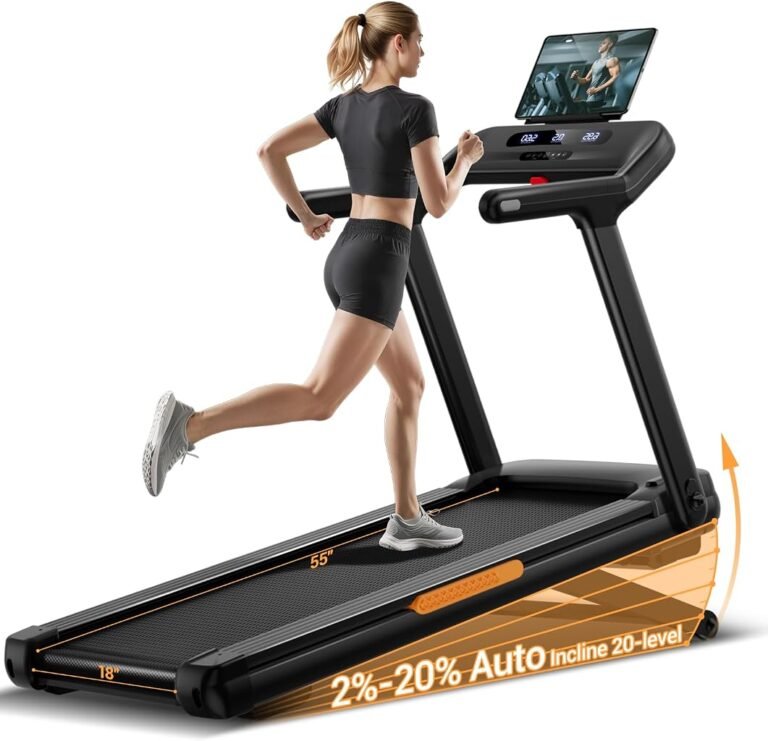
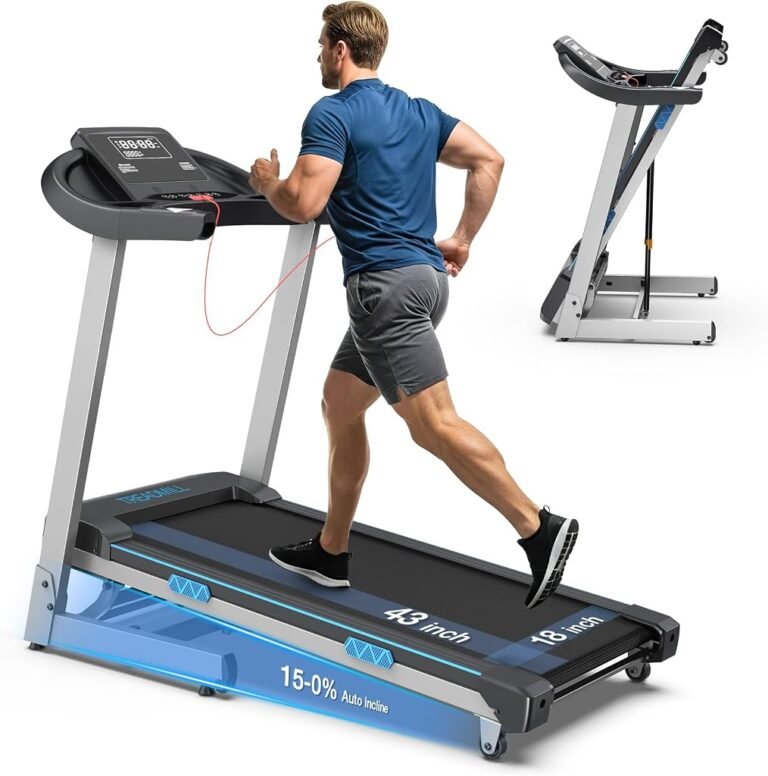
A machine offering 15% or 20% grade is not automatically more useful than one offering a lower maximum. The more meaningful question is whether the machine permits precise, repeatable training at the grades a person will actually use.
A Practical Incline-Selection Test
For someone uncertain where to begin, a single session can establish a workable baseline.
After warming up, the person can maintain the intended walking or running speed for three to five minutes at 0%. Incline can then rise by one percentage point every two or three minutes.
At each stage, four questions should be assessed:
- Is breathing still consistent with the intended intensity?
- Can normal posture be maintained without gripping the rails?
- Does the stride remain controlled?
- Does muscular fatigue match the purpose of the workout?
When one of those answers becomes no, the previous grade is often a sensible working incline.
For a walker, that threshold might appear at 4%. For another, it might appear at 10%. A runner might discover that 2% produces the desired steady aerobic effort while 4% pushes the session into interval territory.
That individualized threshold is more useful than copying another person’s treadmill setting.
Final Considerations
Treadmill incline is most effective when treated as a dose rather than a difficulty badge.
Small increases can substantially raise oxygen consumption and heart rate. Moderate uphill walking can create meaningful cardiovascular work without requiring fast belt speeds. Steeper walking recruits the lower body differently and can prepare hikers and runners for climbing. Running incline requires additional care because increasing grade alters both metabolic demand and mechanics, even when pace is reduced.
The familiar rules-1% for runners, 10% for a “good” hill workout, 15% for serious incline walking-are too crude when separated from speed, fitness, duration, and training purpose.
A better method is progressive and measurable. Establish a level baseline. Decide whether the session should be easy, moderate, vigorous, or hill-specific. Increase grade gradually. Allow speed to fall when incline rises. Monitor breathing, heart rate where useful, perceived effort, posture, and stride quality. Add duration before repeatedly chasing steeper settings.
That approach turns incline from a number on a console into a controllable training variable.
The resulting workout may not display the steepest slope in the gym. It is far more likely, however, to produce the physiological and mechanical stimulus the session was meant to deliver.