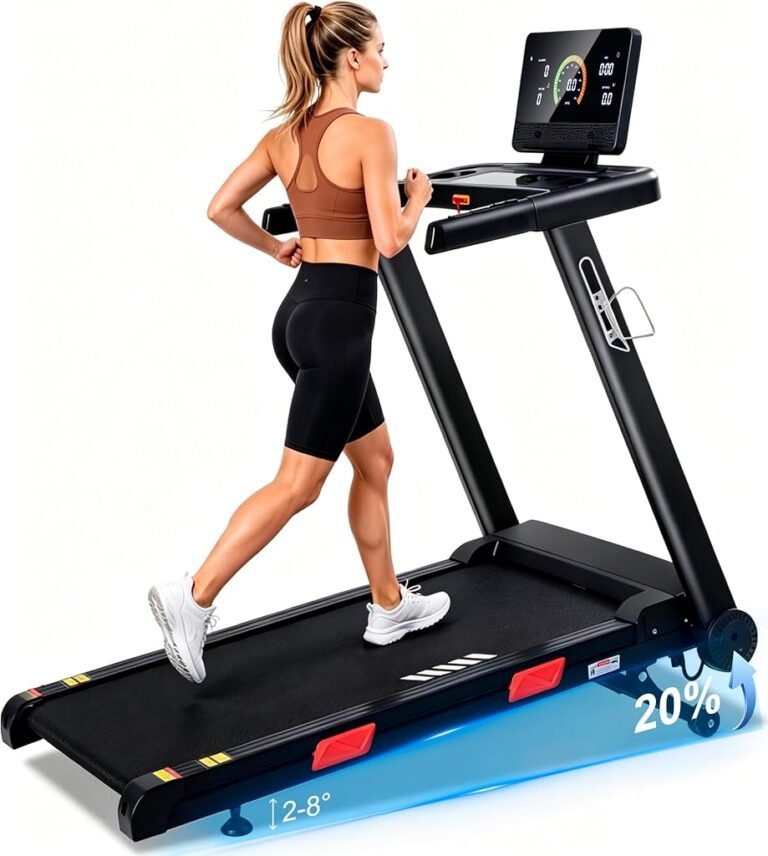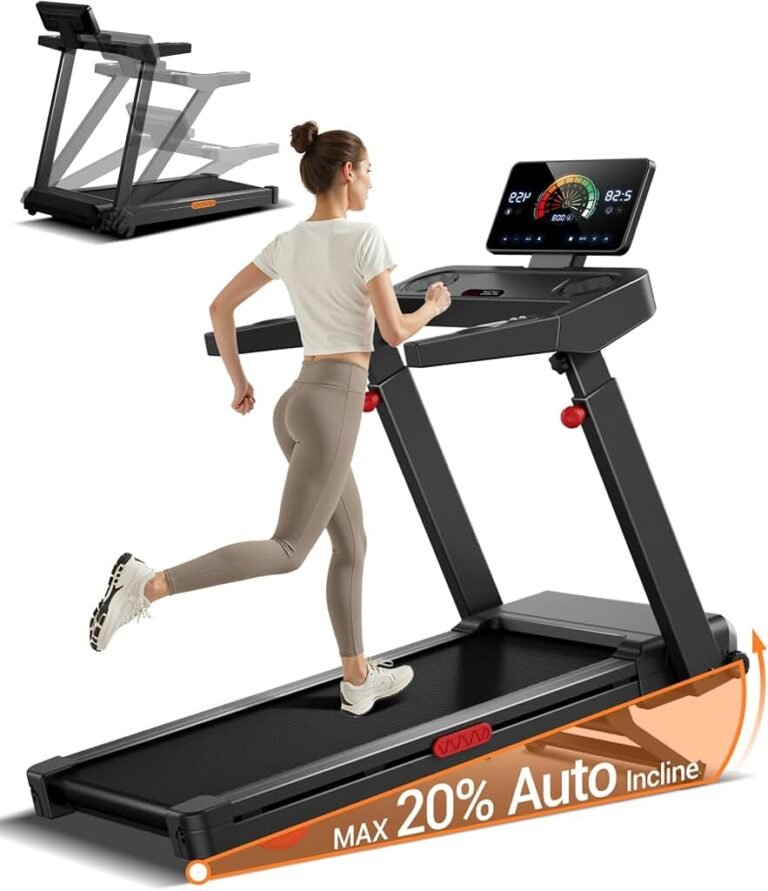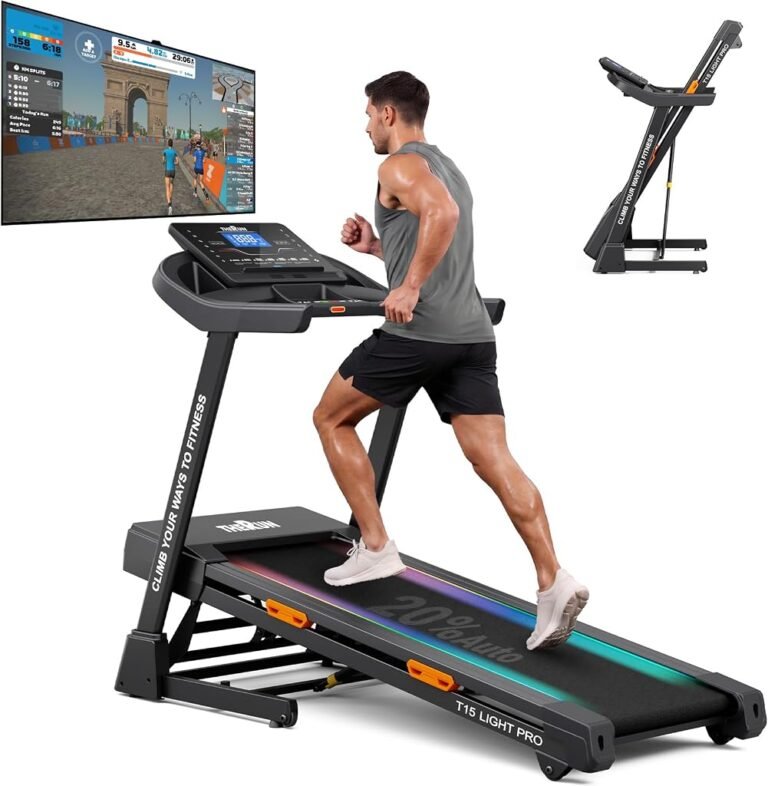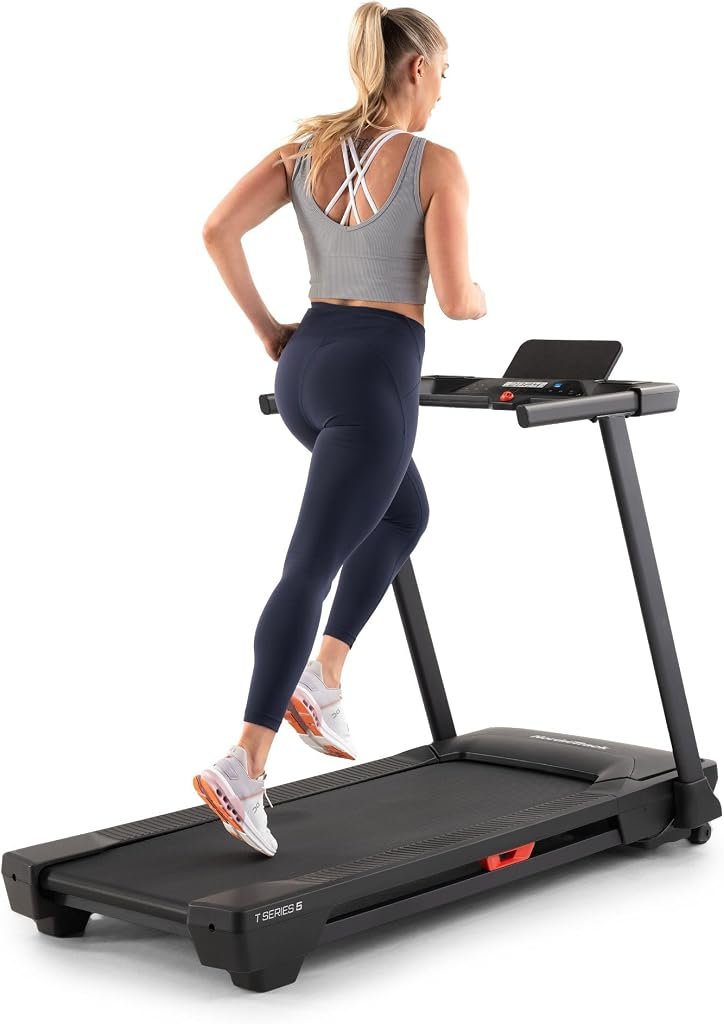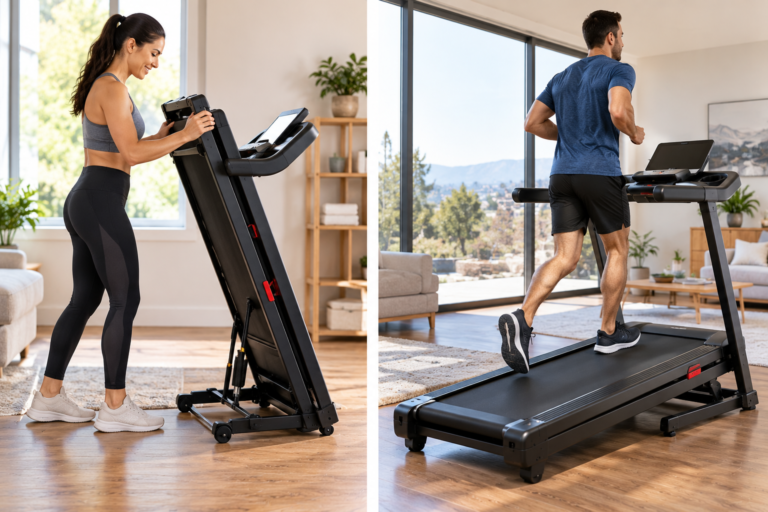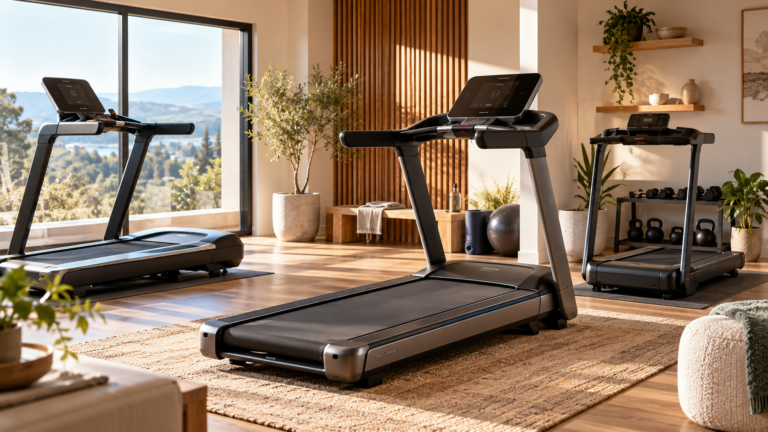
A treadmill built to advertise a high maximum speed can look impressive on a comparison chart. For an older adult walking at 1.5 mph, or someone gradually returning to walking after illness, injury, or a period of reduced mobility, that headline number may be almost meaningless.
The priorities change.
Low-speed control matters. So do stable handrails, a manageable step-up height, an adequately sized walking belt, uncomplicated controls, emergency stopping, appropriate user capacity, and a machine that does not force the walker to rush when getting on or off.
This is where treadmill shopping becomes less about accumulating features and more about removing hazards and friction.
Recovery walking adds another layer. “Recovery” covers very different situations: orthopedic rehabilitation, stroke recovery, cardiac rehabilitation, deconditioning after hospitalization, return to activity after injury, and many others. A feature appropriate for one person may be unsuitable for another. Medical restrictions and rehabilitation plans therefore take precedence over generic treadmill advice.
For independent older adults, however, the buying principles can be examined clearly. The machine should accommodate the walker rather than requiring the walker to adapt to a poorly chosen machine.
Start With the Walker, Not the Specification Sheet
The most useful treadmill feature is one that addresses a real limitation or goal.
That sounds simple. Product pages encourage the opposite behavior.
Touchscreen size, app libraries, maximum speed, speakers, connectivity, and elaborate workout programs are visually prominent. Entry height, rail geometry, minimum speed, button size, and emergency-stop placement receive less attention despite being potentially more relevant to a senior walker.
A better evaluation begins with questions about the person:
- Is balance reduced?
- Is a handrail normally used when walking or climbing stairs?
- Can the user step comfortably onto an elevated deck?
- Is vision reduced?
- Is hand dexterity limited?
- Will the treadmill be used independently?
- Is the person recovering under medical or rehabilitation supervision?
- Is walking speed unusually slow?
- Is fatigue unpredictable?
- Does the person need room to shorten or vary stride?
- Can the user safely mount and dismount the machine?
Only then should the treadmill enter the discussion.
Low-Speed Control Deserves More Attention
Maximum speed dominates treadmill marketing because it is easy to compare.
For recovery walking, minimum usable speed can matter more.
Someone rebuilding walking tolerance may need to move slowly. A treadmill that begins too abruptly or feels uncomfortable at its lowest setting can make gradual progression harder.
The issue is not merely the published minimum speed. Control behavior matters too.
A walker should be able to start the belt predictably, increase speed in manageable increments, and reduce it without searching through menus. Controls should be reachable from a natural walking position.
Large, clearly labeled physical buttons can be useful when fine touchscreen interaction is difficult during movement.
A touchscreen may provide excellent visual information while still being a poor primary interface for someone who needs immediate tactile control.
For seniors and recovery walkers, speed adjustment is not an entertainment function. It is part of the interaction between balance, confidence, and movement.
Handrails Can Matter, but Their Use Is Contextual
Handrails are among the first features buyers notice on senior-oriented treadmills.
They deserve careful treatment.
Research shows that handrail use can alter walking mechanics and stability. A 2024 study of treadmill handrail use in stroke survivors compared walking without holding, self-selected handrail support, and light touch. Self-selected support increased the anteroposterior margin of stability for both legs, while other stability measures changed differently. The researchers argued for contextual decisions about rail use rather than treating it as universally beneficial or harmful.
That nuance matters.
A rail can provide a physical point of contact when mounting the treadmill, stopping, or regaining position. Extended rails may offer more reachable support than short handles clustered around a console.
Yet gripping rails continuously can also change normal arm movement and walking mechanics.
For a person in rehabilitation, whether and how rails should be used can be a clinical decision.
For ordinary home purchasing, the physical design can still be evaluated.
Rails should be reachable without an awkward forward lean. They should not require the walker to narrow the arms unnaturally. They should extend far enough to be useful for the intended person rather than merely looking substantial in a photograph.
Extended Handrails Can Solve a Real Accessibility Problem
Standard treadmill rails often concentrate around the front portion of the deck.
That arrangement is adequate for many users.
It may be less useful for someone who wants support farther back along the walking area.
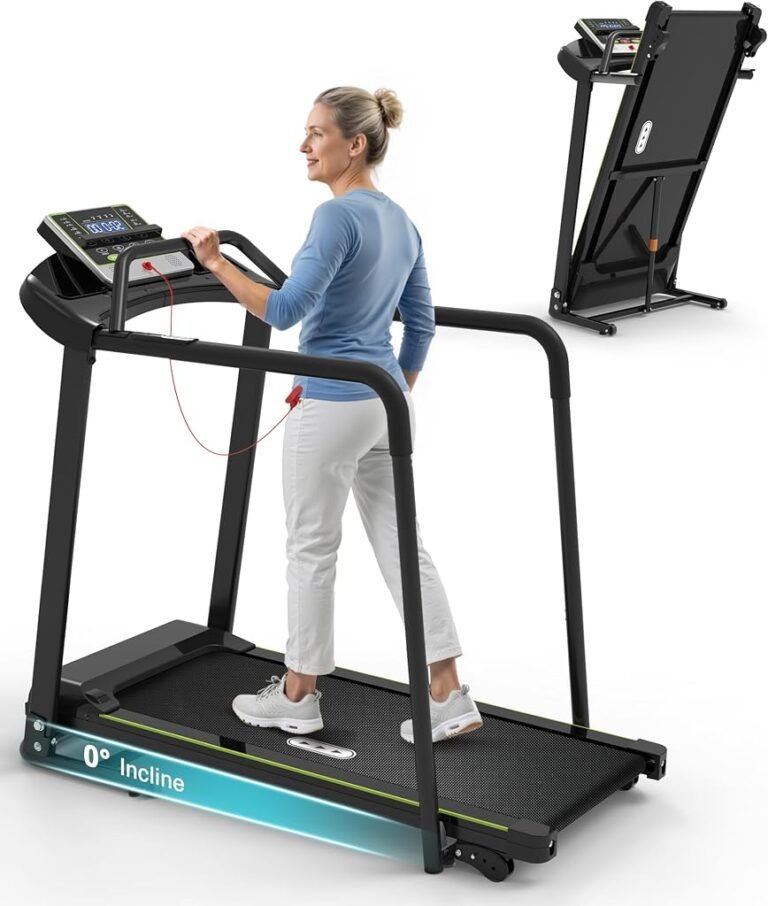
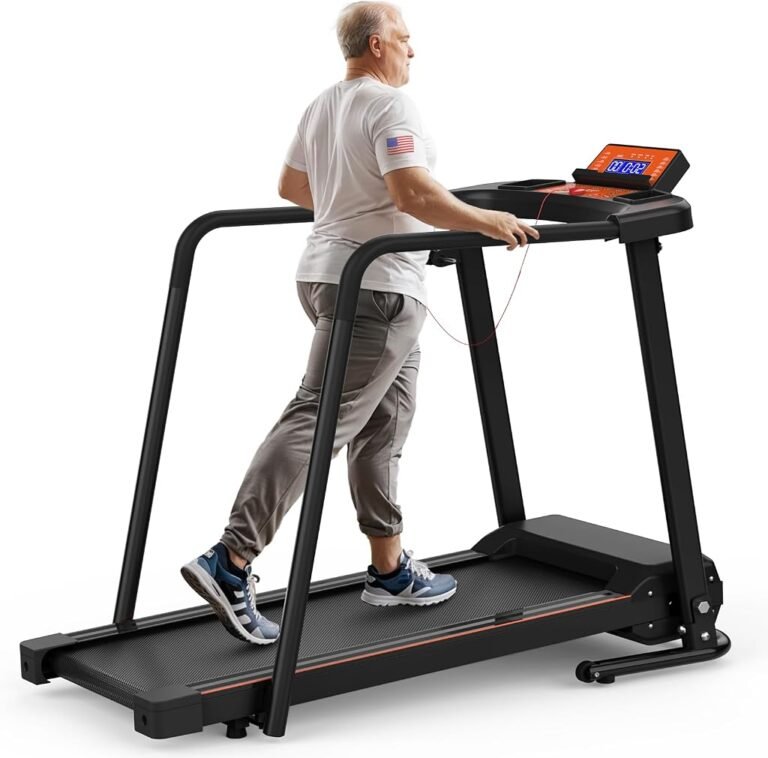
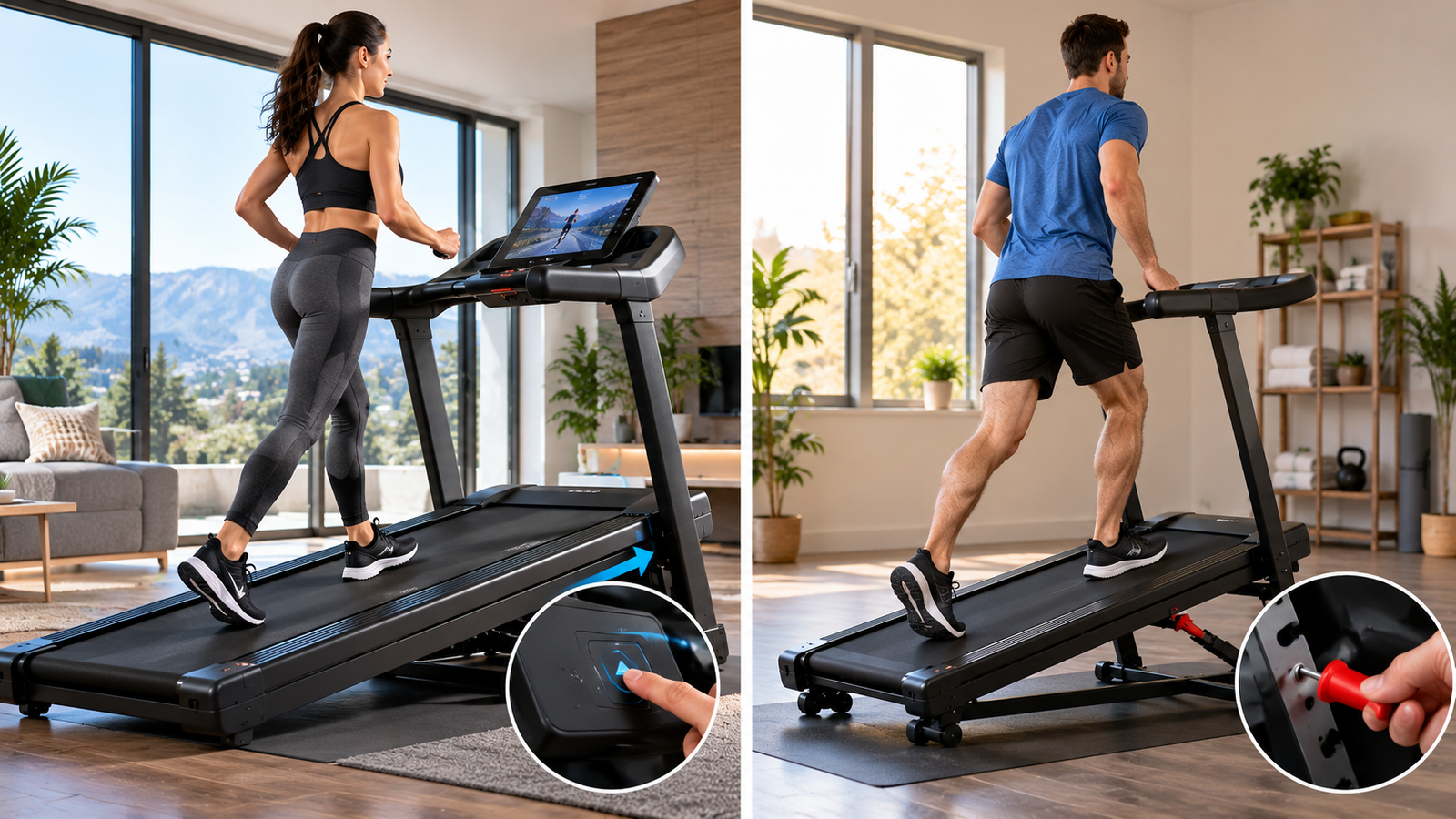
This explains the appeal of senior-oriented treadmills with extended side rails. The additional rail length can provide more places to establish hand contact while entering, walking, slowing, or preparing to exit.
The feature should not be romanticized as a universal safety solution.
A rail does not replace suitable balance, appropriate walking speed, medical clearance where needed, or supervision for someone who cannot safely use a treadmill alone.
Still, rail geometry is one of the rare treadmill specifications that can immediately change how a person physically interacts with the machine.
That makes it more consequential than many digital features.
Deck Height Can Determine Whether the Treadmill Gets Used
A treadmill may offer appropriate speed, capacity, and rails yet remain difficult to access because its deck sits too high above the floor.
Step-up height deserves measurement.
A person with limited hip or knee mobility, reduced leg strength, balance concerns, or difficulty climbing steps may find a tall deck inconvenient or unsafe to mount.
The problem becomes especially obvious when no stable support is available during entry.
A lower deck can reduce the vertical step required to reach the walking surface.
Buyers should not rely on photographs to judge this dimension. Perspective can make a deck look lower than it is.
The measurement should be compared with steps the intended user already negotiates comfortably.
The same issue applies when leaving the machine. After exercise, fatigue can make a step that seemed manageable at the beginning feel less forgiving.
Belt Width Is About Usable Space, Not Prestige
A narrow treadmill can save valuable room.
The question is whether the savings come from space the walker needs.
Walking is not mechanically identical from one step to the next. Foot placement varies. Balance corrections occur. Some older adults walk with a wider step pattern or greater side-to-side movement.
That makes usable belt width relevant.
There is no single belt width that is correct for every senior or recovery walker. Body dimensions, gait, speed, rail use, and comfort differ.
The practical test is straightforward: the walking surface should provide enough lateral room for the intended gait without encouraging the user to stare continuously at foot placement.
That last behavior deserves attention.
A person who feels compelled to monitor the belt edges constantly is devoting visual attention to staying on the treadmill rather than walking naturally.
Compactness has a price when it removes usable walking space.
Belt Length Still Matters at Slow Speeds
Recovery walking is usually slower than running, which can reduce the need for an exceptionally long deck.
It does not eliminate the need for sufficient length.
A person may drift slightly forward or backward. Stride length can change with fatigue. Someone learning to use a treadmill may not maintain a perfectly fixed position relative to the console.
Adequate belt length provides room for those ordinary variations.
Extremely compact walking surfaces can demand greater positional discipline.
Again, there is no universal measurement that fits every user.
The intended person’s height, stride, walking speed, and mobility should determine whether the deck is appropriate.
A small treadmill is only useful when the walking area remains large enough for the person standing on it.
Emergency Stopping Should Be Obvious
Emergency-stop systems are not decorative accessories.
A treadmill should allow the belt to be stopped quickly when something goes wrong.
Safety keys commonly use a clip and cord attached to the user. If the user moves far enough away from the console, the key disengages and the machine stops according to its design.
For older adults, the system should be easy to understand and practical to use.
The clip needs to attach securely to clothing. The cord should not interfere with ordinary movement. The stop control should be visually obvious.
A household should also understand what happens after activation.
The belt does not necessarily stop with zero distance instantaneously. A moving mechanical system requires time and distance to decelerate.
That is another reason appropriate walking speed matters.
A Treadmill Is Not a Replacement for Balance Training
Walking is valuable aerobic activity, but treadmill walking should not be mistaken for a complete older-adult exercise program.
The CDC recommends that adults 65 and older combine aerobic activity, muscle-strengthening work, and balance activity. The aerobic recommendation is at least 150 minutes of moderate-intensity activity each week, or 75 minutes of vigorous activity, or an equivalent combination. Muscle-strengthening activity is recommended on at least two days, alongside activity that improves balance. (cdc.gov)
A treadmill can contribute to the aerobic component.
It does not automatically provide the other components.
This distinction is particularly relevant for someone buying a treadmill because of concern about falls. Ordinary treadmill walking is not synonymous with a structured fall-prevention program.
The machine can be one part of physical activity rather than the entire plan.
Treadmill Training and Balance Research Require Careful Reading
There is legitimate research examining treadmill training in older adults.
A randomized trial involving 30 community-dwelling older adults with balance limitations assigned 15 participants to treadmill training and 15 to a control group. The treadmill group completed 30 minutes of forward and backward training three times per week for four weeks. The researchers evaluated gait speed and balance before and after training. (pubmed.ncbi.nlm.nih.gov)
Such studies show why treadmill walking appears in rehabilitation research.
They do not mean an unsupervised household should reproduce clinical protocols.
Backward treadmill walking, perturbation training, and other specialized methods introduce demands beyond ordinary forward walking. Clinical research often involves screening, supervision, safety equipment, and carefully controlled protocols.
A home treadmill should not be turned into a rehabilitation experiment.
Perturbation Research Shows the Difference Between Equipment and Therapy
Some of the most interesting treadmill research in older adults involves deliberately disturbing balance.
A 2023 randomized clinical trial included 140 community-dwelling adults aged 65 or older. Participants receiving perturbation-based balance training completed four 20-minute treadmill sessions involving slips, trips, or mixed perturbations. The control group performed ordinary treadmill walking.
The intervention produced a statistically nonsignificant 22% reduction in daily-life fall rates, while laboratory fall rates improved significantly at post-training and follow-up assessments. (pubmed.ncbi.nlm.nih.gov)
This is informative for treadmill buyers partly because of what it does not justify.
A conventional home treadmill is not a perturbation-training system.
Specialized therapeutic methods cannot be inferred from the presence of a belt and handrails.
The research instead reinforces a broader principle: walking ability, reactive balance, and fall risk are related but distinct targets.
Recovery Walking Needs Individual Rules
The phrase “recovery walking” can sound reassuringly generic.
It is not medically generic.
Someone recovering from knee surgery may have restrictions different from a person returning to activity after hospitalization. Stroke rehabilitation can involve asymmetry and balance issues. Cardiac rehabilitation may involve prescribed intensity limits. Neurological conditions can affect gait in entirely different ways.
The treadmill cannot determine those rules.
Where a physician, physical therapist, cardiac rehabilitation team, or other qualified clinician has set walking restrictions, those restrictions govern speed, duration, incline, support, and progression.
A treadmill feature can make a prescribed activity easier to perform.
It cannot decide whether that activity is appropriate.
Simple Controls Often Beat Feature Density
Interface design becomes more consequential when reaction time, vision, dexterity, or confidence is reduced.
A console with dozens of small controls may look capable while being harder to operate during movement.
Senior-friendly control design generally favors clarity:
- Easily identifiable start and stop functions.
- Accessible speed controls.
- Readable displays.
- Predictable button behavior.
- Minimal navigation for basic walking.
- Controls reachable without excessive forward leaning.
- An emergency-stop system that does not require interpretation.
The distinction between physical buttons and touch controls deserves particular attention.
Touchscreens can display large information clearly, but smooth glass offers little tactile confirmation. Physical buttons can sometimes be located by feel.
Neither interface is automatically superior. The intended user should be able to operate the basic functions confidently.
Display Readability Matters More Than Display Size
A large screen can still be difficult to read.
Contrast, font size, information density, glare, viewing angle, and the distance between the user and display all affect readability.
For recovery walking, the useful information may be remarkably simple:
Speed.
Elapsed time.
Distance.
Possibly heart rate, where an appropriate and accurate monitoring method is being used.
A display crowded with graphics can make basic numbers harder to find.
The best interface is not necessarily the one showing the most data. It is the one that makes relevant information easy to locate while the user is moving.
Weight Capacity Needs Real Headroom
Maximum user weight should be treated as a firm limit.
The intended user should not exceed it.
For senior-oriented treadmills, buyers should also avoid unnecessary proximity to the ceiling when an appropriate higher-capacity alternative is available. Normal body-weight fluctuation, clothing, and household sharing can narrow a small margin.
A 295-pound user on a treadmill rated for 300 pounds has only five pounds of numerical headroom.
That does not create a universal rule requiring a particular buffer. It simply demonstrates how close the person is to the manufacturer’s boundary.
Capacity should be checked before displays, apps, speakers, or connected features.
A machine that does not appropriately accommodate the user fails the first purchasing test.
Incline Should Be Treated as Workload
Incline can be useful for walkers who are medically and physically suited to it.
It also changes exercise demand.
That matters for older adults and anyone returning gradually to physical activity.
Incline should not be treated as a decorative feature that ought to be maximized merely because the machine provides it. A person comfortable walking on level ground may experience a substantially different workload when grade rises.
Recovery programs may specifically limit incline.
For ordinary senior fitness, progression should match ability and health status.
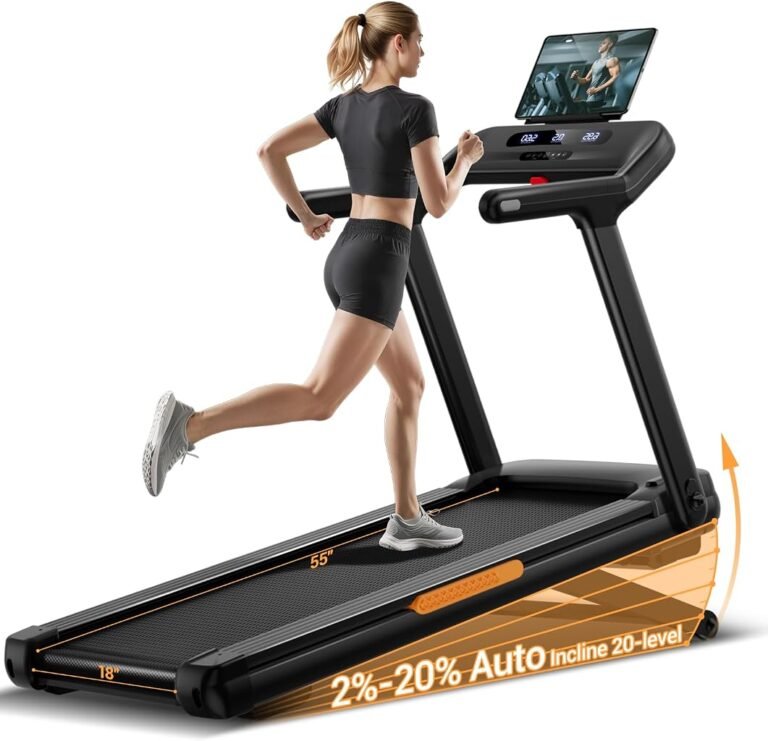
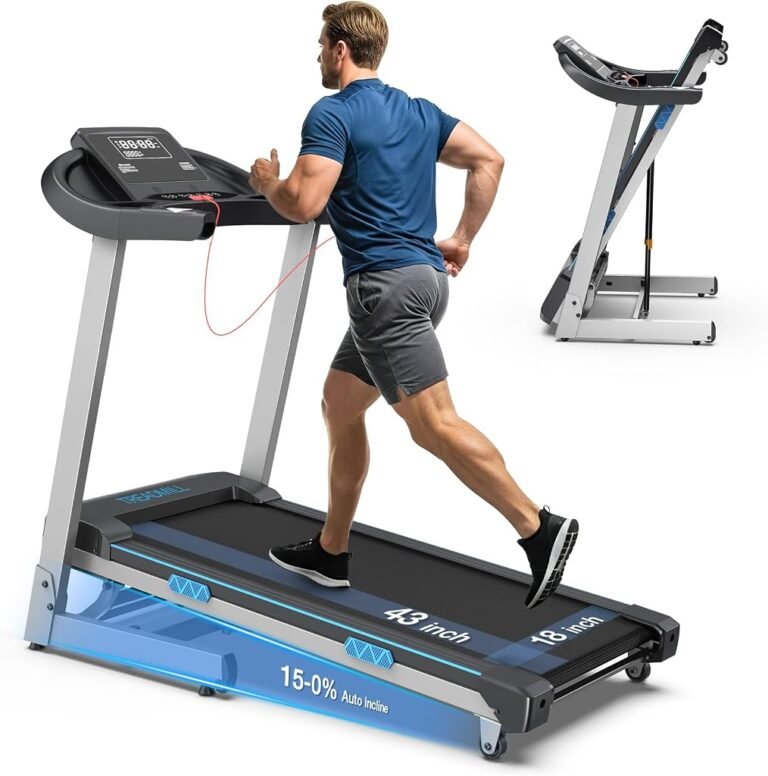
Automatic incline can offer convenient adjustment because the user does not have to leave the belt to change the machine manually. But convenience does not determine appropriate intensity.
Cushioning Is Harder to Compare Than Marketing Makes It Look
Treadmill cushioning attracts broad claims about comfort and joint impact.
The problem for buyers is comparison.
Manufacturers use different deck systems, materials, construction methods, and proprietary descriptions. There is no universal consumer-facing cushioning scale allowing a buyer to say that one machine provides precisely 20% more useful cushioning than another.
Comfort also depends on footwear, walking mechanics, speed, body weight, and individual sensitivity.
A person with orthopedic concerns should not assume that a treadmill advertised as cushioned is medically appropriate.
Cushioning can be a relevant comfort feature.
It should not be converted into a treatment claim.
Foldability Can Help or Hurt
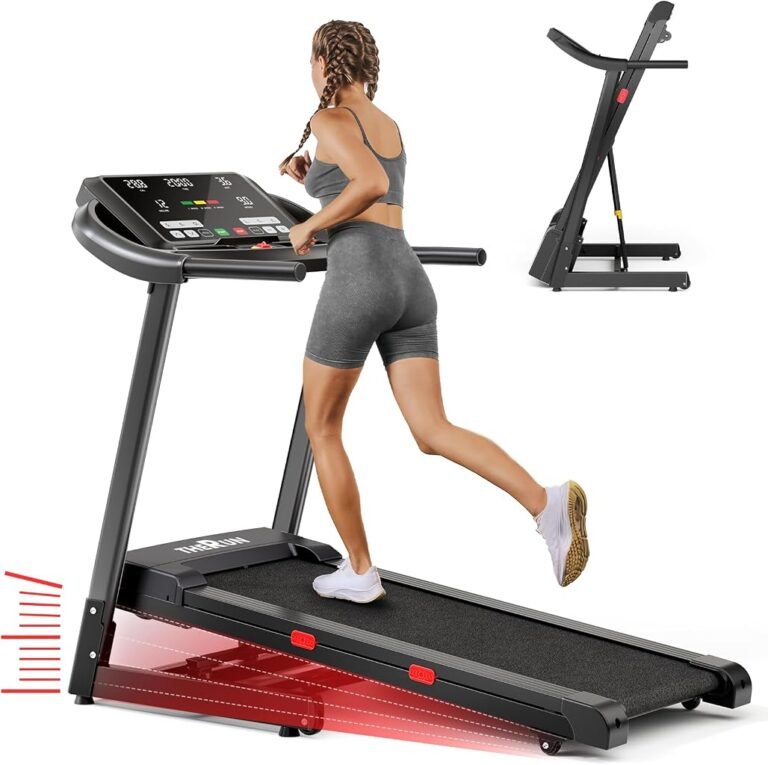
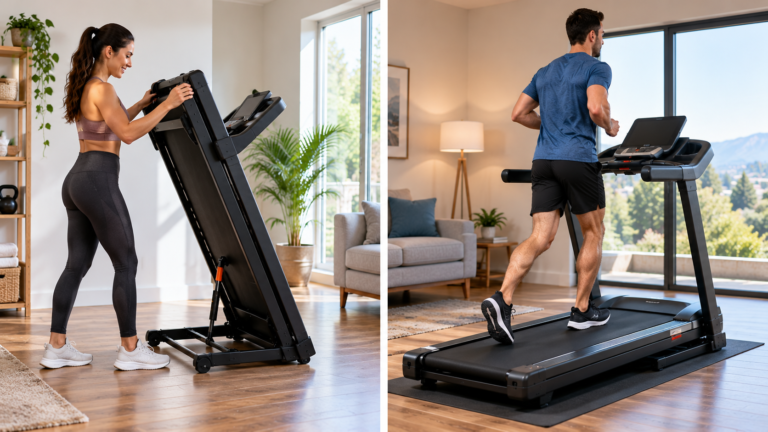
A folding treadmill can reclaim floor space after use.
For some seniors, however, the more important question is who will fold it.
A mechanism that requires bending, lifting, pulling, balancing, or moving a heavy frame may be impractical for someone with limited strength or mobility.
Hydraulic or assisted folding systems can reduce some of that effort, depending on design.
Yet the ideal arrangement may be to leave the treadmill open if space permits.
This is a useful example of how a generally desirable home feature can become less desirable for a particular user.
A treadmill stored out of the way has little value if setting it up becomes a physical barrier to exercise.
Transportation Wheels Do Not Mean Easy Movement
Wheels appear on many treadmills.
They should not be confused with effortless portability.
A heavy machine may need to be tilted before its wheels engage. That movement can require substantial force and balance.
For an older user living alone, repeatedly moving the treadmill may be unrealistic even when the product is technically described as transportable.
Room planning should therefore assume the treadmill will remain where it is unless the intended user can safely move the exact machine.
The most useful storage feature is one the household can actually operate.
Redliro and FYC Illustrate Why Rail Design Gets Attention
Senior-oriented treadmill comparisons often focus on machines such as the Redliro Treadmill for Seniors and the FYC Treadmill for Seniors with Extended Handrails because the category emphasizes walking support rather than running performance.
Our editorial scores place Redliro at 8.64/10 and FYC at 7.85/10. Redliro also leads on our Customer Sentiment, Buyer Confidence, and Value assessments overall, while the FYC’s defining attraction is the extended-handrail concept and lower $319.99 price compared with Redliro at $399.99.
That creates an $80 difference.
The meaningful question is not whether an extended rail sounds safer in the abstract.
It is whether the intended user benefits from having reachable support farther along the deck.
Someone who walks confidently and mainly wants a straightforward senior-oriented treadmill may place less weight on rail extension. A user who strongly prefers continuous side support may give the FYC design greater consideration.
Neither product should be treated as medical rehabilitation equipment merely because it is marketed toward seniors.
The suitability of any treadmill still depends on the individual walker.
Price Should Follow Accessibility, Not Lead It
A lower price can be attractive when two treadmills appear broadly similar.
For seniors and recovery walkers, accessibility features can justify paying more when they solve a real problem.
An $80 saving is not a saving if the cheaper treadmill has a deck the user struggles to enter, controls the user cannot operate comfortably, or rails that fail to provide the desired support.
The reverse also applies.
Paying hundreds more for a sophisticated screen, high running speed, or connected training library provides little benefit to someone whose entire program consists of controlled walking.
Value should be measured against the features that will actually be used.
The Best Treadmills for Home Can Be Surprisingly Modest
The best treadmills for home are not necessarily those with the longest feature lists.
For a senior walker, a modest machine with suitable capacity, manageable deck height, adequate belt dimensions, clear controls, useful rails, predictable low-speed operation, and an accessible stop system can make more sense than a technologically elaborate running treadmill.
This is a broader lesson in equipment design.
Capability is valuable when it matches the user.
Unused capability is merely hardware.
A 12-mph maximum speed means little to someone whose walking program never approaches half that figure. A giant touchscreen contributes little if the walker mainly needs to see speed and elapsed time.
Accessibility can look boring on a specification sheet.
During daily use, it can become the specification that matters most.
A Room-Safety Check Belongs in the Purchase
The treadmill itself is only part of the walking environment.
The surrounding room deserves inspection.
Power cords should not create a trip route. The area used to enter and leave the machine should remain clear. Furniture should not force awkward side-stepping around the deck. Lighting should make the belt edges and controls easy to see.
Loose rugs near entry points deserve particular scrutiny.
Pets and children add another consideration because a treadmill contains moving components and can start or remain powered when others are nearby.
A well-chosen treadmill placed badly can still create avoidable problems.
Home safety begins before the belt moves.
A Senior and Recovery Walking Checklist
A useful buying inspection should cover the following:
- Minimum speed and the size of speed increments.
- Start-up behavior.
- Ease of slowing and stopping.
- Emergency-stop design.
- Handrail length, height, and reach.
- Whether rails interfere with natural walking.
- Step-up height.
- Running-belt width.
- Running-belt length.
- Maximum user capacity.
- Display readability.
- Physical versus touchscreen controls.
- Incline range and adjustment method.
- Operating footprint.
- Folded dimensions where applicable.
- Product weight.
- Whether the intended user can fold or move it.
- Clearance around the treadmill.
- Maintenance requirements.
- Electrical placement.
- Suitability for the user’s medically approved activity.
The checklist deliberately places entertainment features near the margins.
For this use case, they belong there.
Final Considerations
Treadmill features that matter for seniors and recovery walking are often the features that receive the least dramatic advertising.
Low-speed control matters because gradual walking requires precision at the bottom of the speed range, not spectacle at the top.
Handrails matter because their location, length, and usability can change how someone enters, walks on, and leaves the treadmill. Research in stroke survivors demonstrates that handrail support can alter stability measures, while also showing why rail use should be treated contextually rather than as an automatic prescription.
Deck height matters because every treadmill session begins and ends with a step.
Belt dimensions matter because a walker needs enough physical room to move without devoting constant attention to staying centered.
Emergency stopping matters because a moving belt must be controllable when the unexpected occurs.
Weight capacity matters because the manufacturer’s maximum is a boundary, not a challenge.
And simple controls matter because the person should not have to solve an interface puzzle while walking.
Research also provides a useful corrective to exaggerated expectations. Treadmill training appears in studies of older adults, gait, balance, stroke rehabilitation, and fall-related interventions. Specialized treadmill programs can produce measurable changes under controlled conditions. That does not transform an ordinary household treadmill into a clinical rehabilitation system.
The distinction protects the user.
Someone recovering from surgery, stroke, cardiac illness, serious injury, hospitalization, or another medical event needs an exercise plan appropriate to that condition. A treadmill can help deliver prescribed walking. It should not invent the prescription.
For independent older adults, current public-health guidance supports regular aerobic activity alongside muscle-strengthening and balance work. (cdc.gov) A treadmill can make the aerobic portion more accessible when weather, traffic, darkness, uneven sidewalks, or transportation make outdoor walking inconvenient.
That accessibility can be powerful precisely because it is ordinary.
A person can walk for a few minutes without leaving home. Speed can be controlled. Distance can be measured. Sessions can be repeated in a familiar environment.
Among the best treadmills for home, the stronger senior-oriented machine is therefore not automatically the fastest, largest, most connected, or most expensive.
It is the treadmill that fits the person’s gait, strength, balance, body size, vision, dexterity, room, and approved activity closely enough that walking feels manageable rather than intimidating.
For seniors and recovery walkers, good treadmill design is ultimately about reducing unnecessary demands.
The exercise itself can provide the challenge.