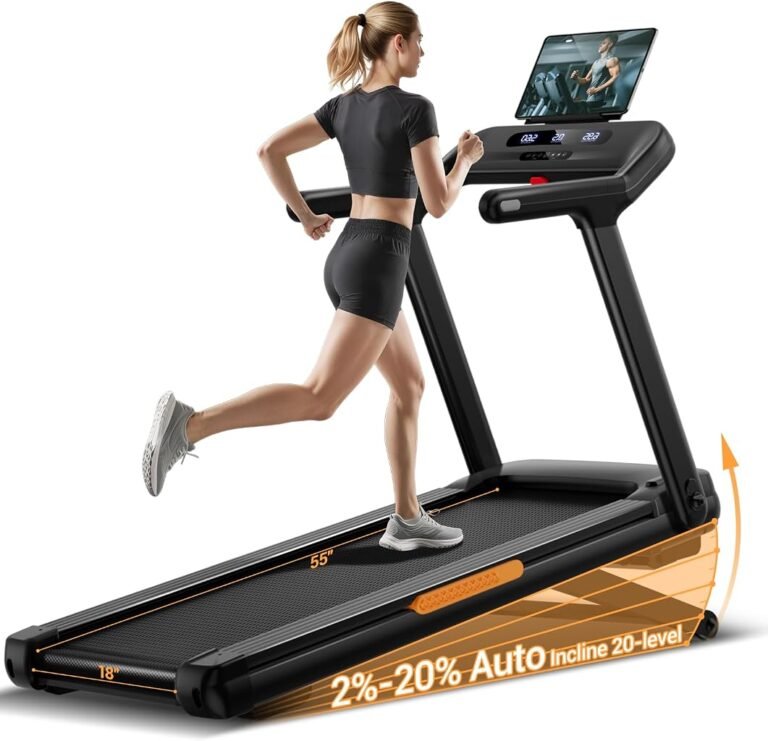
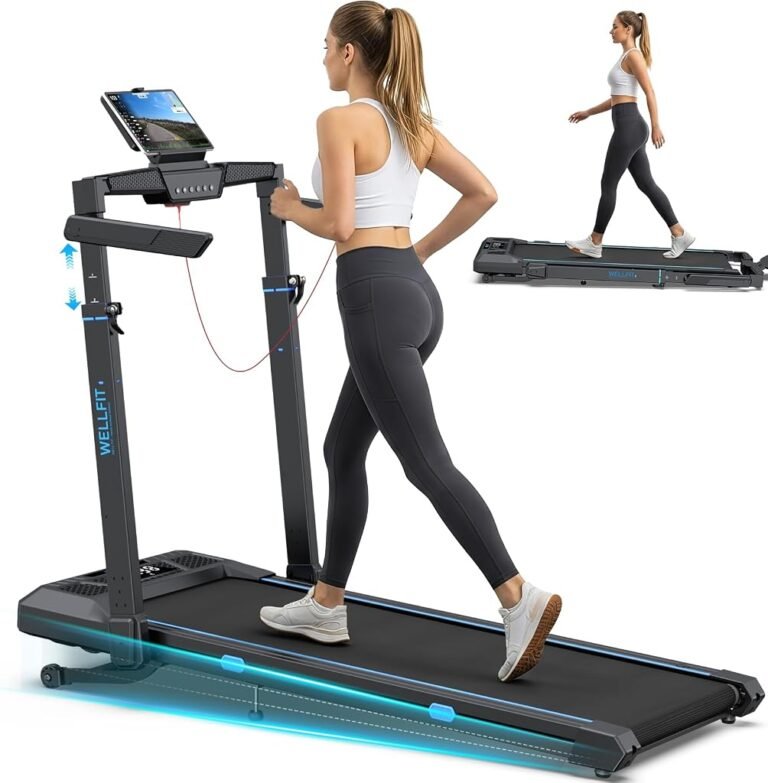
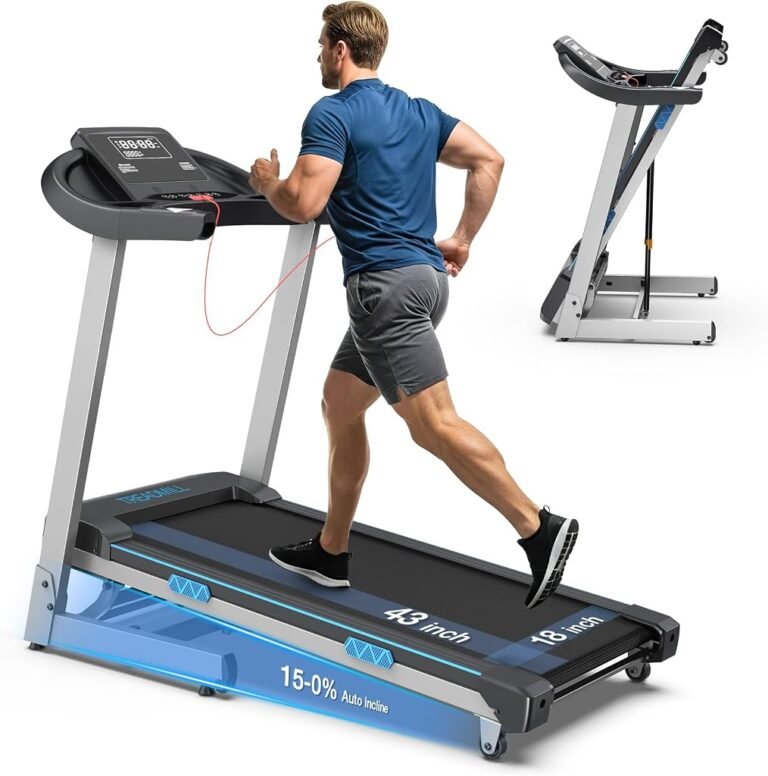
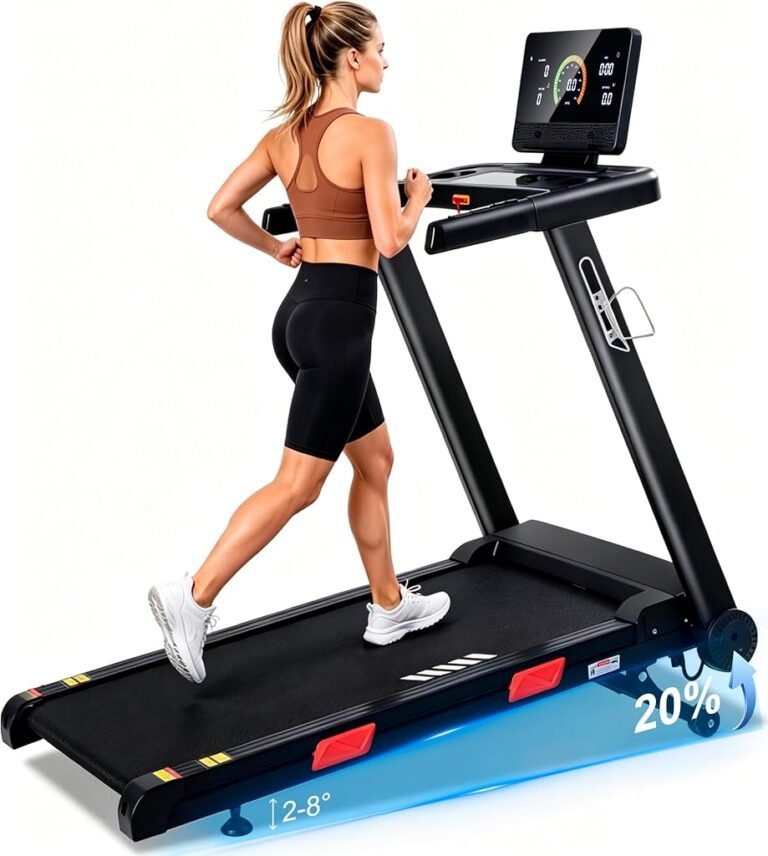
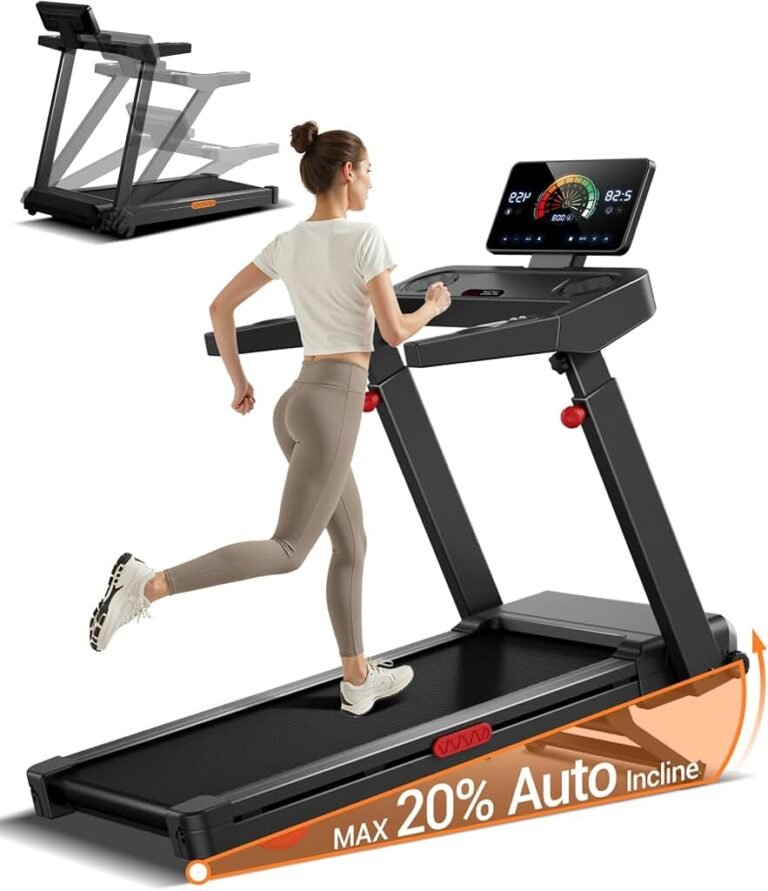
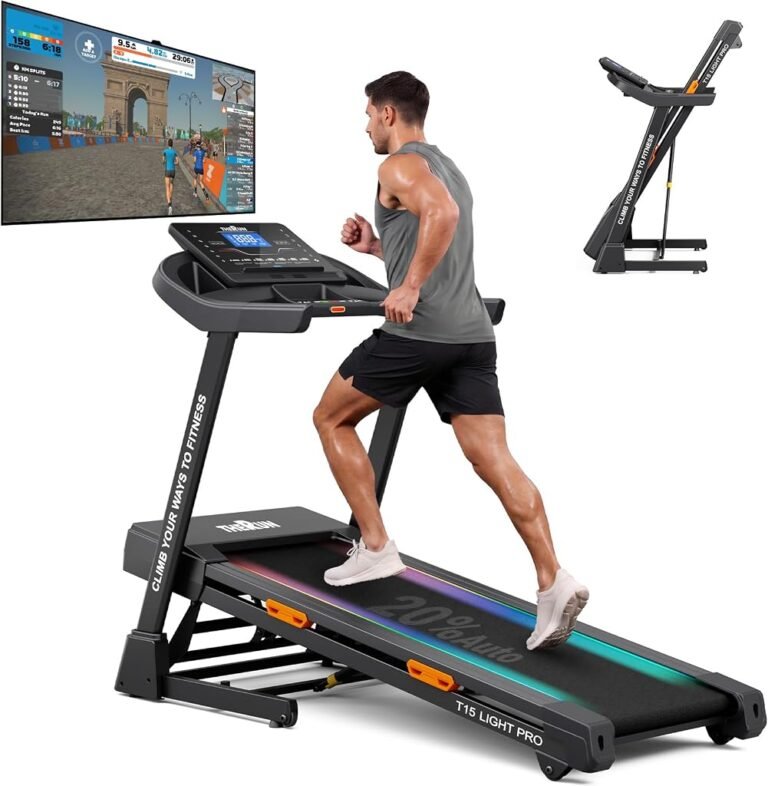
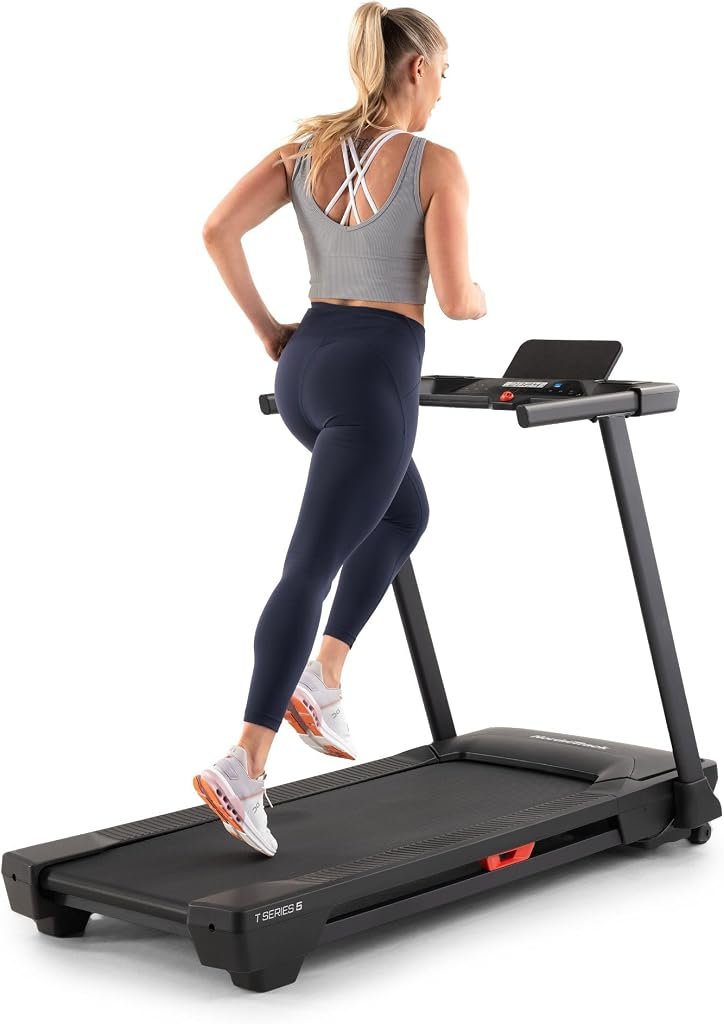
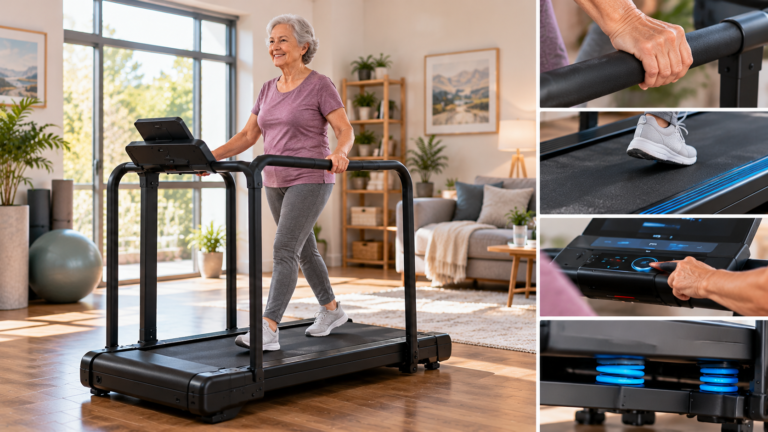
A treadmill marketed toward older adults should be judged differently from one built around fast running, giant displays, or elaborate entertainment systems. The central questions are more practical: Can the user get onto the machine comfortably? Are the controls understandable? Is support available where it is needed? Can walking begin at a manageable pace? Does the machine fit the person’s abilities rather than demanding that the person adapt to the machine?
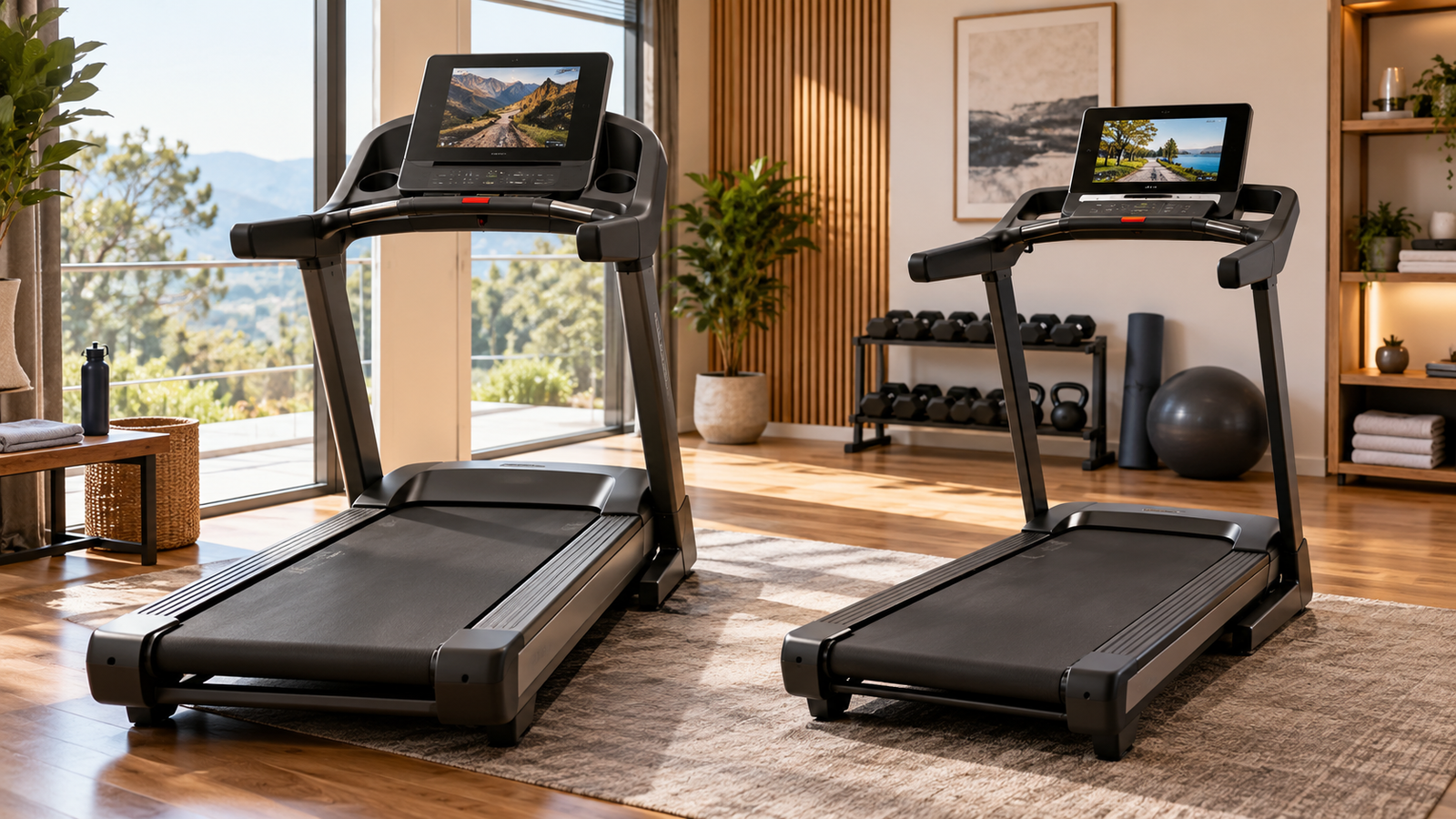
That framework makes the Redliro Treadmill for Seniors vs FYC Treadmill for Seniors with Extended Handrails comparison more meaningful than a conventional feature contest.
Our editorial scoring favors Redliro by a substantial margin. The Redliro Treadmill for Seniors earns an 8.64/10 Our Score, compared with 7.85/10 for FYC. Redliro also leads in Customer Sentiment, Buyer Confidence, and Value. FYC responds with a lower price and an explicitly stated extended-handrail design, a feature that can carry considerable weight for a buyer seeking more places to establish hand contact.
The difference is $80: $399.99 for Redliro against $319.99 for FYC.
Whether that saving justifies FYC’s lower editorial scores depends heavily on the intended user. With senior-oriented fitness equipment, ergonomics should outrank decorative features, and safety requirements should outrank bargain hunting.
Redliro vs FYC at a Glance
The editorial numbers establish a useful starting point.
Redliro receives:
- Our Score: 8.64/10
- Customer Sentiment: 8.72
- Buyer Confidence: 8.73
- Value: 8.40
- Price: $399.99
FYC receives:
- Our Score: 7.85/10
- Customer Sentiment: 7.62
- Buyer Confidence: 8.57
- Value: 7.79
- Price: $319.99
The differences are larger than they were in many closely matched treadmill comparisons.
Redliro leads by 0.79 points on Our Score, 1.10 points on Customer Sentiment, 0.16 on Buyer Confidence, and 0.61 on Value.
FYC’s measurable advantage is price. At $319.99, it costs about 20% less than the $399.99 Redliro.
That makes the purchasing question unusually direct. FYC appeals to a buyer trying to keep the initial expenditure down while specifically seeking extended handrails. Redliro asks for another $80 but produces the stronger editorial profile across every scoring category.
Why a Senior Treadmill Requires Different Priorities
Age alone does not determine what someone needs from exercise equipment. A physically active 70-year-old who walks several miles a day can have entirely different requirements from a 70-year-old recovering from illness or managing balance limitations.
“Senior treadmill” is therefore most useful as an ergonomic category, not a diagnosis.
The distinction matters because aging populations are remarkably diverse. Some older adults run. Others walk briskly. Some need occasional support when getting onto exercise equipment. Others have neurological, orthopedic, cardiovascular, visual, or balance conditions that change what safe treadmill use looks like.
The CDC’s guidance for adults 65 and older recommends at least 150 minutes of moderate-intensity aerobic activity each week, or 75 minutes of vigorous activity, or an equivalent mixture. It also recommends muscle-strengthening activity on at least two days and activities that improve balance.
That final component is particularly relevant.
A treadmill can provide aerobic activity, but treadmill walking is not automatically a substitute for a varied exercise program incorporating strength and balance work. Nor does a handrail-equipped treadmill eliminate fall risk.
A senior-oriented treadmill should make suitable walking more accessible without creating false confidence about what the equipment can accomplish.
Handrails Are More Complicated Than They Look
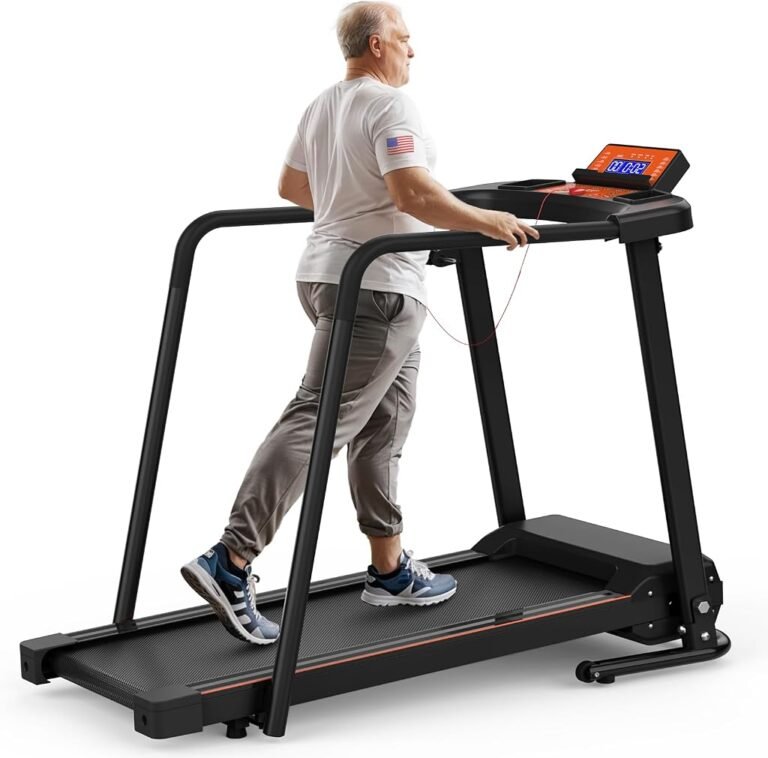
FYC puts extended handrails directly into the product identity. That makes them central to the comparison.
The attraction is easy to understand. A longer rail can provide more opportunities for hand contact along the walking area. For someone who feels uncertain when stepping onto a moving belt, that geometry may feel more reassuring than the shorter front rails common on conventional running treadmills.
Yet handrail use has a more complicated relationship with gait than marketing language tends to suggest.
A 2024 study indexed by PubMed examining treadmill handrail use after stroke compared no holding, light touch, and self-selected support. Self-selected handrail support significantly increased the front-to-back margin of stability for both legs. The researchers concluded that the context in which handrails are used should guide their application for fall prevention or balance training.
That is useful evidence, but it should not be stretched beyond the population studied. The participants were stroke survivors, not a generic sample of every older treadmill user.
A separate study of handrail holding during treadmill walking examined healthy younger adults during split-belt treadmill adaptation. Researchers found that holding the rails reduced aspects of locomotor learning. Again, the population and task were specialized, but the result demonstrates why constant rail dependence should not automatically be interpreted as ideal walking mechanics.
The practical interpretation is restrained: rails can be useful support, but more rail contact is not automatically better exercise.
For a buyer comparing Redliro with FYC, the question should therefore be whether extended rails solve a genuine accessibility problem.
FYC’s Strongest Argument: Lower Price and Extended Support
The FYC Treadmill for Seniors with Extended Handrails costs $319.99 in our comparison.
That $80 saving is meaningful in a category where a buyer may be assembling a broader home exercise setup rather than purchasing a treadmill alone.
Its extended handrails are also a clearly stated design characteristic. For someone specifically shopping for additional hand-contact area, that characteristic deserves more attention than a difference in app support, entertainment functions, or cosmetic design.
FYC nevertheless trails Redliro in our editorial assessment.
Its 7.85/10 Our Score is respectable, but Redliro reaches 8.64. FYC’s Customer Sentiment score of 7.62 is also materially behind Redliro’s 8.72.
Value tells an equally interesting story. A cheaper product does not automatically receive the stronger Value score. FYC costs less, yet we rate its Value at 7.79 compared with 8.40 for Redliro.
That difference reflects a broader buying principle: value measures what the buyer receives relative to cost, not simply which price tag contains the smaller number.
Redliro’s Stronger Editorial Position
Redliro’s advantage is consistency across the scoring framework.
An 8.64/10 Our Score puts it 0.79 points ahead of FYC. Its 8.72 Customer Sentiment is one of the strongest components of its profile, while Buyer Confidence reaches 8.73.
The 8.40 Value score is especially relevant because Redliro is the more expensive machine.
Paying $399.99 instead of $319.99 represents a 25% premium relative to FYC’s price. Yet Redliro still receives the higher Value assessment. That makes the additional $80 easier to defend when the buyer’s budget allows it.
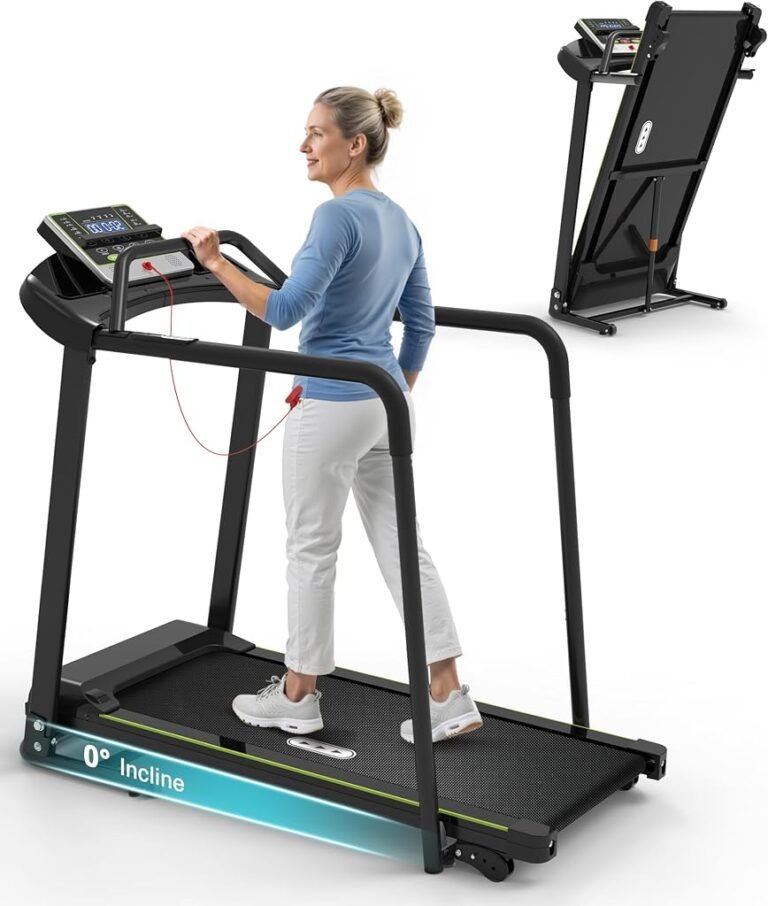
Redliro also maintains a dedicated senior-treadmill range. The manufacturer’s current treadmill collection includes several senior-focused configurations and explicitly emphasizes front and side handrail designs and very low starting speeds on selected models. Because specifications vary across Redliro models, those characteristics should be checked against the exact machine being purchased rather than assumed across the entire range.
That model-specific verification is particularly relevant in senior fitness equipment. A difference that appears small on paper-a control location, starting speed, rail position, deck height, or emergency-stop arrangement-can materially change usability for an individual.
Starting Speed Deserves More Attention
Maximum speed dominates conventional treadmill advertising. For many older users, minimum speed deserves equal scrutiny.
A treadmill that begins too quickly can create an unnecessarily abrupt transition from standing to moving. Someone using a machine for gentle walking, rehabilitation under professional direction, or gradual conditioning may value fine low-speed control more than a high maximum speed.
This is another reason generic labels such as “senior treadmill” are insufficient.
The buyer should verify:
- The exact minimum starting speed.
- How speed is increased and decreased.
- Whether controls can be reached comfortably while walking.
- Whether speed changes occur in suitably small increments.
- Where the emergency stop is positioned.
- Whether the user can operate the controls without releasing needed support.
These are mundane details until the moment they are not.
A touchscreen animation is optional. The ability to slow the belt immediately is not.
Entry, Exit, and Deck Geometry
Treadmill comparisons often begin after the user is already walking. For an older person with mobility limitations, the moments before and after the workout can be equally consequential.
Getting onto the deck requires a change in surface height. Starting the belt introduces movement beneath the feet. Getting off reverses the process when the user may already be fatigued.
Handrails can help, but their usefulness depends on position rather than mere existence.
A prospective buyer should examine where the rails begin, how far they extend, whether they can be gripped naturally, and whether the user’s arms can reach them without leaning into an awkward posture.
FYC’s extended-handrail design is therefore potentially meaningful. Its value is greatest when the additional rail length corresponds to the user’s actual reach and support needs.
Redliro’s higher editorial score does not erase that ergonomic question. If a particular user can move more confidently with FYC’s rail arrangement, the lower-scoring machine can still be the more appropriate individual choice.
Product rankings cannot measure someone’s reach.
Treadmill Walking and Balance Are Not the Same Exercise
There is a tempting assumption that because treadmill walking requires balance, any treadmill session necessarily trains balance effectively.
Research is more nuanced.
A randomized clinical trial of 140 community-dwelling adults aged 65 or older compared specialized treadmill perturbation training with ordinary treadmill walking. Participants receiving perturbation training experienced a statistically nonsignificant 22% reduction in daily-life fall rates, although laboratory fall rates improved significantly at post-training and follow-up assessments.
The intervention was specialized training involving deliberate slip and trip perturbations. It should not be confused with walking on a consumer treadmill at home.
Another randomized study involving 30 community-dwelling older adults examined forward and backward treadmill training three times per week for four weeks and reported improvements in measured balance outcomes in the treadmill-training group.
Taken together, such research makes treadmill walking interesting as part of physical activity for older adults, but it does not justify treating an ordinary home treadmill as a stand-alone fall-prevention device.
That distinction matters when evaluating both Redliro and FYC.
The Best Treadmills for Home Need to Fit the Room
A senior-oriented treadmill is still a large moving machine inside a residence.
Placement should be planned around the user rather than around whichever empty wall happens to be available.
The best treadmills for home need enough surrounding space for safe access. A user should not have to squeeze between furniture to reach the deck. Power cords should not create trip hazards. The machine should stand on an appropriate surface, and the route to it should be adequately illuminated.
For an older adult, environmental design can be as meaningful as equipment design.
A machine with extended handrails loses part of its practical advantage if furniture blocks access to those rails. A treadmill intended for regular walking becomes less useful if reaching it requires navigating stairs that the user avoids.
Home fitness works best when the equipment removes friction rather than adding another obstacle.
Price and Value: The $80 Question
The financial comparison is unusually easy to calculate.
Redliro costs $399.99.
FYC costs $319.99.
The difference is $80.
FYC is therefore about 20% cheaper when the difference is measured against Redliro’s price. Viewed from FYC upward, Redliro costs roughly 25% more.
Yet our Value score favors Redliro 8.40 to 7.79.
For a buyer with enough budget for either machine, Redliro’s higher overall assessment makes the extra expenditure defensible. It also carries stronger Customer Sentiment and slightly stronger Buyer Confidence.
For a buyer with a hard ceiling around $320, the comparison changes. FYC provides access to a senior-oriented treadmill format at the lower price, and its extended handrails may align particularly well with a user who prioritizes continuous support.
That is not a contradiction. Budget is part of suitability.
Who Is Better Suited to Redliro?
Redliro is the stronger default choice in our comparison.
It fits buyers who:
- Place greater weight on the stronger overall editorial score.
- Are comfortable spending another $80.
- Prioritize the higher Customer Sentiment score of 8.72.
- Value Redliro’s 8.73 Buyer Confidence.
- Want the stronger Value assessment despite the higher purchase price.
- Prefer shopping within a manufacturer range explicitly developed around senior walking configurations.
Its 8.64/10 Our Score gives it a meaningful lead rather than a decimal-place victory.
That does not mean every older adult should choose it. Physical fit still needs to be established before purchase.
Who Is Better Suited to FYC?
FYC has a narrower but legitimate argument.
It fits buyers who:
- Need to remain close to a $320 budget.
- Specifically prioritize extended handrails.
- Place more weight on rail geometry than on the editorial score difference.
- Expect low-intensity walking rather than performance-oriented treadmill training.
- Have confirmed that the exact machine’s controls and dimensions suit the intended user.
The FYC Treadmill for Seniors with Extended Handrails receives a 7.85/10 Our Score and 8.57 Buyer Confidence. Those figures keep it competitive even though Redliro leads the overall comparison.
Its $319.99 price is its strongest measurable advantage.
When Medical Guidance Should Override a Product Comparison
Neither treadmill should be selected from a ranking alone when the intended user has a significant fall history, unstable cardiovascular symptoms, neurological impairment, severe joint limitations, substantial visual impairment, or another condition affecting exercise safety.
A treadmill is not automatically safer because its product name references seniors.
The CDC advises older adults who cannot meet standard physical-activity recommendations to be as active as their abilities and conditions allow.
For someone with substantial mobility or health limitations, a clinician or physical therapist familiar with that person’s condition can help determine whether treadmill walking is appropriate and what support should be used.
That judgment sits outside any consumer-product score.
Final Considerations
The Redliro Treadmill for Seniors vs FYC Treadmill for Seniors with Extended Handrails comparison produces a clearer editorial result than many treadmill matchups.
Redliro wins on Our Score, 8.64 to 7.85. It leads Customer Sentiment, 8.72 to 7.62. Buyer Confidence favors Redliro 8.73 to 8.57, while Value favors it 8.40 to 7.79.
FYC wins decisively on initial cost: $319.99 against $399.99.
That $80 difference gives FYC a credible place for budget-sensitive buyers, especially when extended handrails correspond closely to the intended user’s needs. The rails should be evaluated as functional support rather than as proof that the machine is universally safer.
Redliro is the stronger general recommendation because its advantage extends across every editorial scoring category despite its higher price. FYC becomes the more targeted choice when budget and extended rail geometry carry greater weight than the scoring gap.
For older users, however, the final decision should happen at a more human scale.
Can the person step onto the machine comfortably? Can the controls be reached without fumbling? Is the starting pace manageable? Can the emergency stop be activated immediately? Do the rails fall naturally under the hands? Is there enough clear space around the treadmill? Does the person actually feel capable of using it regularly?
Those questions are less glamorous than maximum speed, apps, or display technology. They are also far more likely to determine whether a treadmill becomes part of a sustainable routine.
Among the best treadmills for home, the strongest senior-oriented choice is therefore not simply the machine with more rail or the higher score. It is the machine whose ergonomics, price, controls, support structure, and intended pace match the person who will stand on its belt.