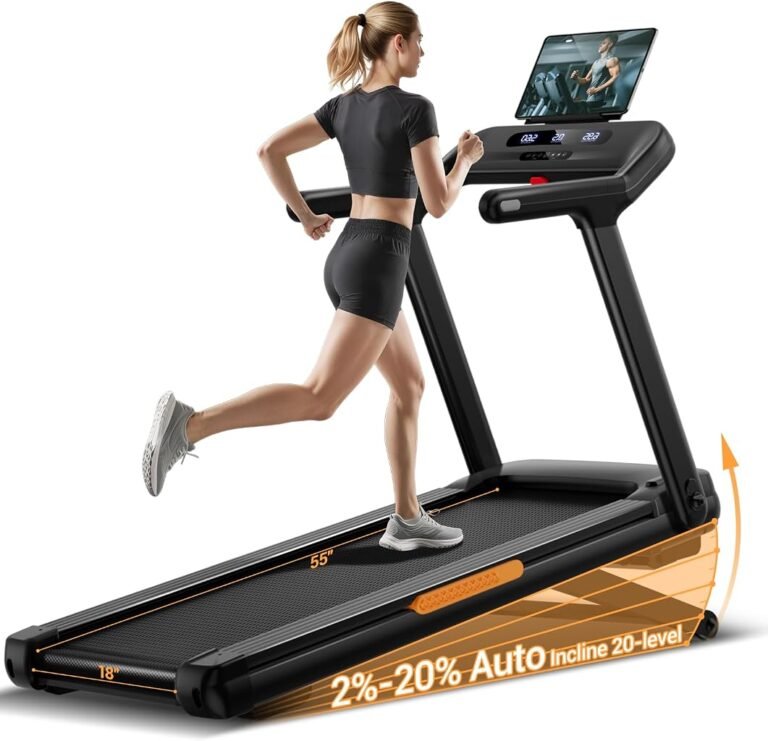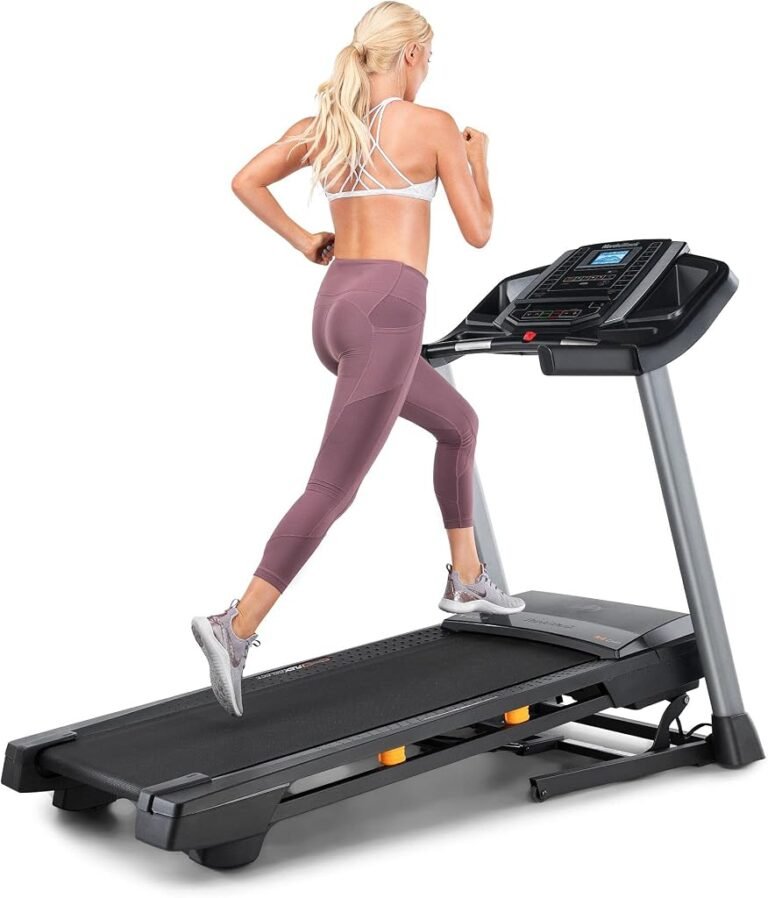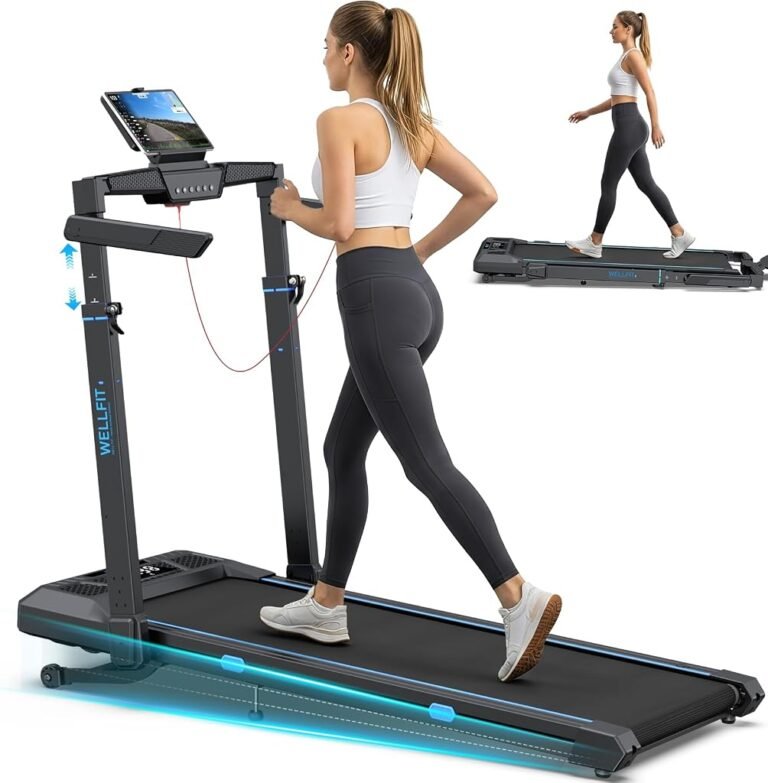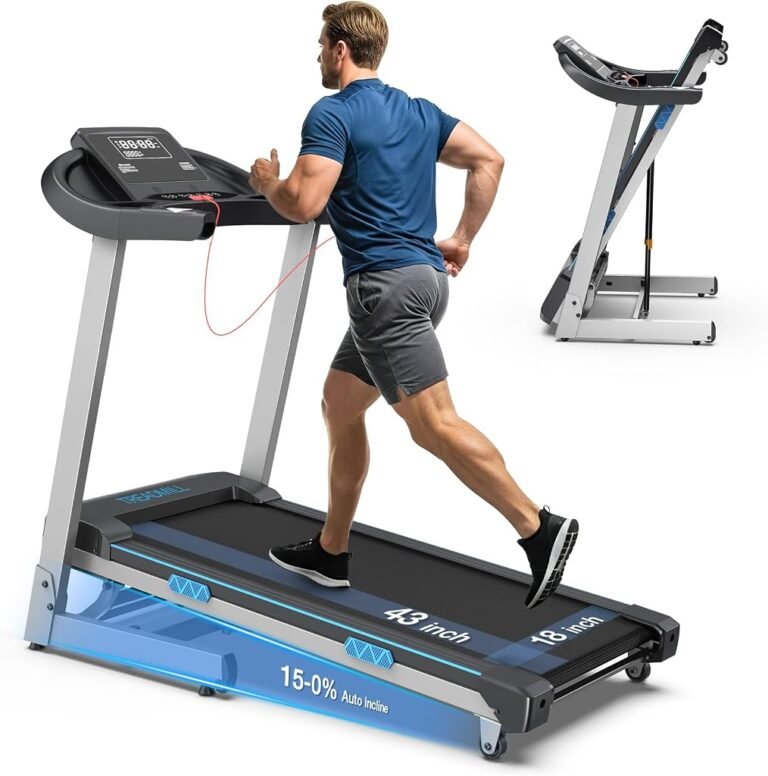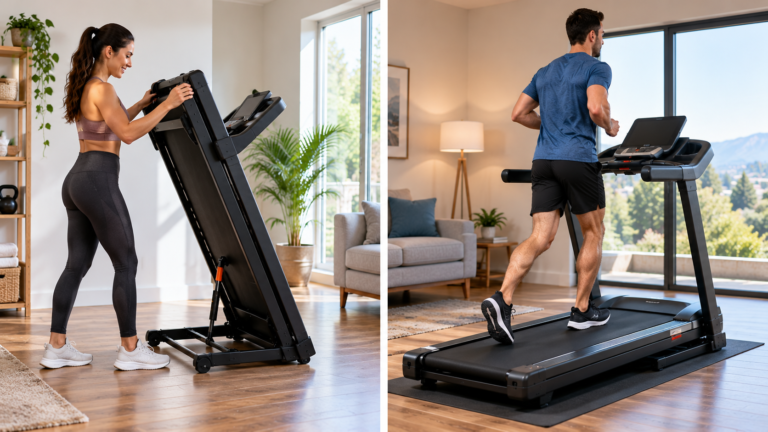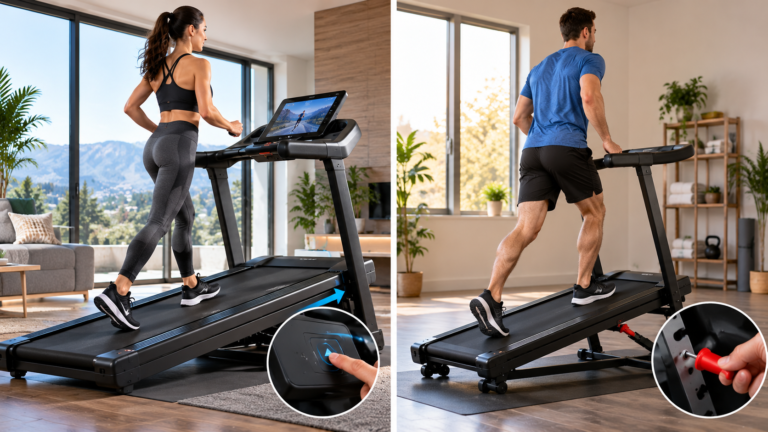
Treadmill weight capacity looks wonderfully simple on a specification sheet. A machine says 250 pounds, 300 pounds, 350 pounds, or perhaps 400 pounds. The buyer knows a body weight. Compare one number with the other and the decision appears finished.
It is not.
Maximum user weight is a limit established by the manufacturer for a particular treadmill. It should be treated as a hard purchasing boundary. Yet the more difficult question is how far below that boundary a user should remain.
Internet buying advice often answers with neat rules: leave 25 pounds of headroom, leave 50 pounds, choose a treadmill rated 100 pounds above body weight, or add some fixed percentage. Such formulas sound reassuringly precise. There is no universal evidence-based headroom rule that applies to every treadmill, every user, every walking or running pattern, and every manufacturer’s capacity determination.
That leaves buyers with a more demanding task.
Weight capacity must be considered alongside activity, user weight variability, running surface, frame construction, treadmill dimensions, product weight, warranty conditions, intended frequency, and the needs of everyone who will use the machine.
Headroom is useful. False precision is not.
What Treadmill Weight Capacity Actually Means
A stated maximum user weight establishes the manufacturer’s limit for the machine.
If a treadmill carries a 300-pound maximum user weight, someone above 300 pounds should not reinterpret the specification as a loose suggestion. The appropriate response is to select equipment rated for a higher weight.
The more interesting situation involves someone below the limit.
Consider a 280-pound user looking at a treadmill rated to 300 pounds.
The person is technically below the stated maximum. But the margin is only 20 pounds, or about 6.7% of the treadmill’s capacity.
Now consider the same person on a 350-pound machine. The margin becomes 70 pounds, or 20%.
At 400 pounds of rated capacity, the margin reaches 120 pounds, or 30%.
Those calculations are easy. Deciding which margin is necessary is harder because the capacity number does not independently describe every part of treadmill behavior.
It does not reveal belt dimensions, deck construction, motor characteristics, machine weight, frame geometry, cushioning, speed range, warranty terms, or suitability for running.
Capacity is a screening specification, not a complete engineering biography.
There Is No Universal 50-Pound Rule
The common recommendation to buy a treadmill rated 50 pounds above the user’s body weight has intuitive appeal.
It creates a buffer.
The problem is universality.
Fifty pounds represents very different proportions depending on the user. For someone weighing 150 pounds, a 50-pound margin equals one-third of body weight. For someone weighing 300 pounds, it equals about one-sixth.
A fixed margin also treats a lightly used walking treadmill and a machine used for frequent running as though they experience identical conditions.
They do not.
Rather than treating one number as a law, buyers should use headroom as part of a broader risk-management decision. More margin generally reduces the chance that ordinary body-weight variation will place the user at or beyond the published limit, but the exact amount required should come from the manufacturer’s specifications and intended use rather than an invented universal threshold.
Body Weight Is Not Perfectly Static
One reason headroom makes practical sense is that human body weight changes.
Hydration, food intake, clothing, shoes, and longer-term weight change can all move the number on a scale. A person whose morning body weight sits only a pound or two beneath a treadmill’s maximum has almost no practical buffer.
That does not require a complicated physiological model.
Suppose a user’s typical weight is 297 pounds and the treadmill limit is 300.
The nominal margin is only 3 pounds.
Heavy clothing, shoes, normal fluctuation, or gradual weight gain can erase it.
By contrast, someone weighing 250 pounds on the same machine has a 50-pound numerical buffer.
This does not prove that 50 pounds is the universally correct margin. It illustrates why buying directly against the ceiling can create unnecessary uncertainty.
Capacity should accommodate ordinary reality, not merely the lightest number seen on a bathroom scale.
Walking and Running Do Not Load a Treadmill Identically
Body weight is static. Exercise is dynamic.
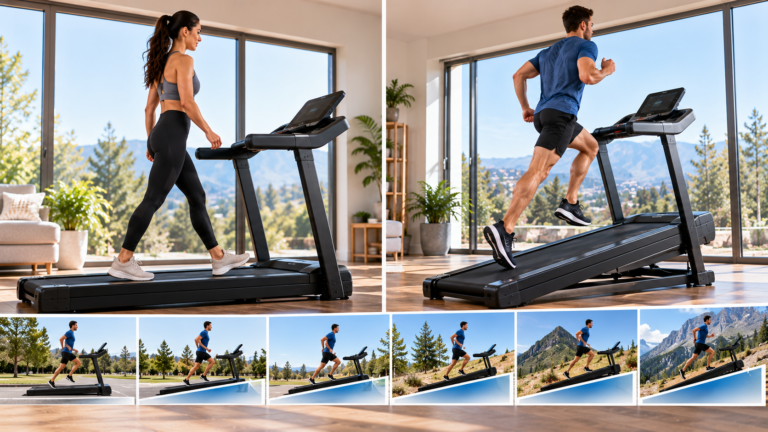
During walking and running, forces are transmitted through the feet into the moving belt, deck, frame, and floor. Running generally produces different loading patterns from walking because the gait contains flight phases and larger impacts.
Research into human locomotion provides useful context.
A classic biomechanics study indexed by PubMed examined ground-reaction forces during walking and running and documented the distinct force patterns associated with the two forms of locomotion.
The exact force experienced by a treadmill is not reducible to body weight multiplied by one universal factor. Speed, gait, running technique, footwear, incline, body mass, and individual movement all influence loading.
That matters when evaluating headroom.
Two people of identical body weight can use the same treadmill very differently. One may walk gently for 20 minutes several times per week. The other may run regularly at higher speeds.
A maximum user-weight specification applies to the machine, but purchasing judgment should also consider what the user intends to do on it.
More Capacity Does Not Automatically Mean a Better Treadmill
A 400-pound rating can look inherently superior to a 300-pound rating.
For a person who needs more than 300 pounds of capacity, the higher figure is obviously relevant.
For a 160-pound walker, the situation is different.
Once adequate capacity and reasonable headroom have been established, other specifications may matter more. A buyer could sacrifice an appropriate running area, convenient controls, usable incline, better room fit, or other desired characteristics merely to obtain capacity that will never be approached.
The best treadmills for home should therefore not be ranked by maximum user weight alone.
Capacity is similar to ceiling height in a room. Insufficient height can make the room unusable for a purpose. Once sufficient clearance exists, making the ceiling indefinitely higher does not automatically make every other part of the room better.
The objective is adequate capacity with sensible margin, followed by evaluation of the whole treadmill.
Current Home Treadmills Show How Widely Capacity Can Vary
Manufacturer specifications demonstrate that residential treadmills span a broad range of user capacities.
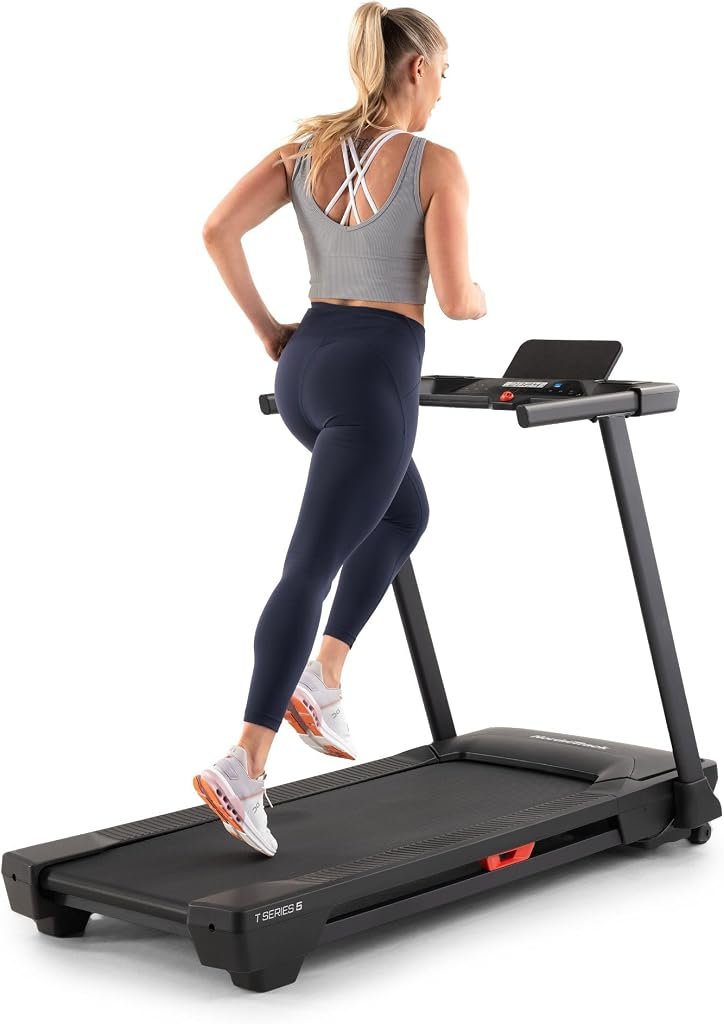
For example, the current NordicTrack T Series lists a 325-pound user capacity for its current T Series 10 and T Series 16 models.
Sunny Health & Fitness models vary by product. Its Platinum Smart One-Click Fold treadmill lists a maximum user weight of 300 pounds.
These figures should not be generalized to every treadmill sold by either manufacturer. They demonstrate why capacity needs to be checked at the exact-model level.
A brand does not have one universal treadmill capacity.
Neither does a price category.
Capacity and Product Weight Are Different Numbers
A surprisingly common source of confusion is the difference between maximum user weight and treadmill weight.
A machine might weigh 150 pounds and support a user weighing considerably more. Another might weigh more or less while carrying a different capacity rating.
The treadmill’s own weight matters for delivery, flooring, repositioning, and stability. User capacity determines the manufacturer’s stated maximum body weight for operation.
The numbers answer different questions.
For home placement, both matter.
A heavy treadmill plus a heavy user creates a combined load on the floor. Anyone installing substantial exercise equipment in a location where structural capacity is uncertain should seek appropriate building or engineering guidance rather than assuming that a user-capacity specification addresses floor loading.
It does not.
The treadmill manufacturer is describing the equipment’s user limit, not certifying the structure beneath the house.
A Practical Headroom Method
Without pretending that one universal buffer exists, buyers can use a structured process.
First, establish the heaviest realistic user.
If several people will use the treadmill, capacity should be selected around the heaviest person rather than the average household user.
Second, avoid purchasing at or extremely close to the stated maximum when reasonable alternatives exist.
Third, account for normal weight variability rather than relying on one unusually low measurement.
Fourth, consider exercise style. Regular running, frequent use, and multiple users may justify a more conservative approach than occasional low-speed walking.
Fifth, examine the manufacturer’s documentation for any usage restrictions or warranty conditions.
Sixth, compare the remaining specifications. Once sufficient capacity is established, running area, speed, incline, controls, dimensions, maintenance, and room fit return to the foreground.
This method does not produce a magical number. It produces a more defensible purchase.
A Percentage Can Be More Informative Than a Fixed Number
Although no percentage should be treated as a universal requirement, calculating the available margin as a percentage can help buyers compare situations.
The formula is straightforward:
Headroom percentage = (treadmill capacity − user weight) ÷ treadmill capacity × 100
For a 250-pound user:
- On a 275-pound treadmill, headroom is about 9.1%.
- On a 300-pound treadmill, headroom is about 16.7%.
- On a 325-pound treadmill, headroom is about 23.1%.
- On a 350-pound treadmill, headroom is about 28.6%.
- On a 400-pound treadmill, headroom is 37.5%.
These percentages are descriptive, not prescriptions.
They reveal how close the user sits to the published ceiling.
That is more informative than saying a treadmill has “plenty” of capacity without defining what plenty means.
Why Buyers Near the Limit Should Look Beyond Capacity
When body weight approaches the treadmill’s stated maximum, secondary specifications deserve closer inspection rather than less.
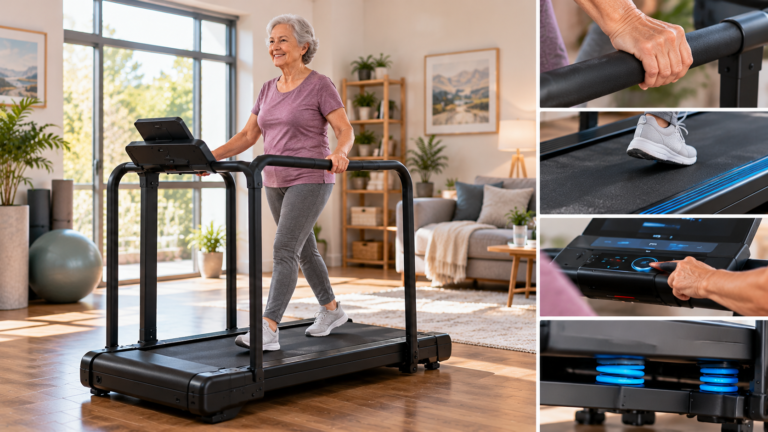
Running-area width can matter because larger users may value additional lateral room. Belt length can matter for stride. Handrail geometry can affect entry and exit. Deck height can influence accessibility. Frame dimensions affect stance and room fit.
The buyer should also examine whether the treadmill is primarily designed for walking, running, or both.
A high user-capacity number does not automatically guarantee a spacious belt.
Nor does it guarantee that the controls, rails, or deck geometry suit a particular person.
This is where shopping by one specification becomes dangerous. A treadmill can pass the capacity test and fail the human-fit test.
Weight Capacity Should Be Checked Before Entertainment Features
Treadmill shopping pages often make displays, apps, Bluetooth connectivity, speakers, scenic workouts, and touchscreen sizes visually prominent.
Capacity is less glamorous.
It should be checked earlier.
If the intended user exceeds the stated maximum, the rest of the feature list becomes largely irrelevant. A beautiful display cannot repair a fundamental mismatch between user and machine.
A rational buying sequence therefore starts with eligibility:
- User capacity.
- Running-area suitability.
- Intended activity.
- Physical dimensions.
- Speed and incline needs.
- Accessibility and controls.
- Maintenance requirements.
- Connected and entertainment features.
This ordering prevents decorative technology from dominating a mechanical purchase.
Heavier Users Should Not Be Treated as an Edge Case
Discussions of treadmill capacity sometimes frame higher body weight as an unusual complication.
Population data says otherwise.
According to the CDC’s adult obesity statistics, obesity affects a substantial share of the U.S. adult population. Exercise-equipment capacity is therefore a mainstream product-design and accessibility issue, not a niche concern.
A treadmill marketed for home use should be evaluated against the people likely to use it.
That includes people across a wide range of body sizes.
The editorial question should not be whether a user needs “too much” capacity. It should be whether the equipment’s published limits and dimensions fit that user safely and practically.
Equipment should be matched to bodies, not the reverse.
Capacity Matters for Weight-Loss Plans Too
Someone buying a treadmill with the goal of losing weight may assume that capacity becomes progressively less relevant.
That reasoning starts from the desired future rather than the present.
The treadmill has to accommodate the user on the first workout.
A person weighing 320 pounds should not buy a 300-pound-capacity treadmill on the assumption that body weight will soon fall below the limit.
Future weight change is uncertain.
The machine should fit the person who exists at purchase.
If weight decreases later, the available headroom simply becomes larger.
This principle also removes unnecessary pressure from the purchase. Exercise equipment should not require someone to achieve part of a fitness goal before becoming suitable for use.
Multiple Users Change the Calculation
A household treadmill may have several users with very different bodies and routines.
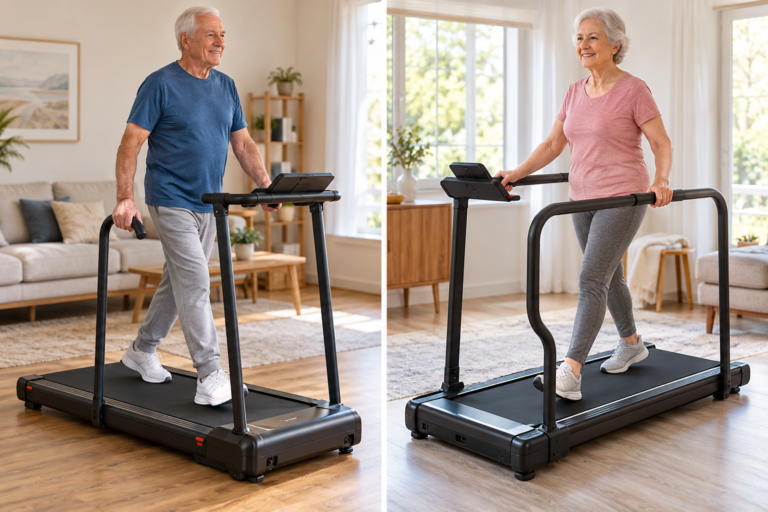
One person may weigh 150 pounds and run. Another may weigh 230 pounds and walk. A third may weigh 275 pounds and use the treadmill occasionally.
Capacity should be selected for the heaviest user.
But the rest of the machine should account for everyone.
The tallest runner may determine required belt length. The heaviest user may determine capacity. A less mobile user may make handrail design particularly relevant. The most frequent user may place the greatest importance on controls and maintenance.
There is no reason all purchasing criteria have to come from the same person.
Shared equipment needs to fit the household as a system.
User Capacity Is Not the Same as Durability
Another common mistake is using weight capacity as a proxy for lifespan.
A treadmill rated for 400 pounds is not automatically proven to last longer than one rated for 300 pounds.
Durability depends on materials, engineering, manufacturing, maintenance, environment, usage frequency, belt care, electronics, motor operation, and numerous other factors.
A higher capacity may correspond with more substantial construction in some machines, but that relationship cannot be assumed without model-specific evidence.
This distinction matters because buyers sometimes purchase far more capacity than needed under the belief that the machine will therefore last indefinitely.
Capacity tells the buyer what maximum user weight the manufacturer allows.
It does not supply a guaranteed lifespan.
Maintenance Still Matters Below the Weight Limit
Operating comfortably below the stated capacity does not remove maintenance requirements.
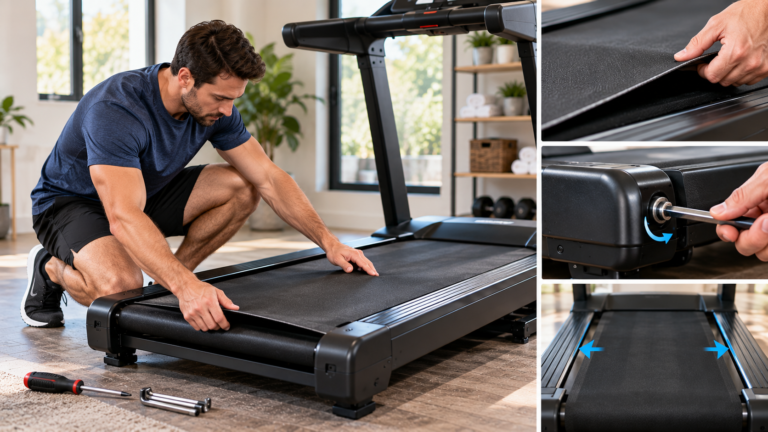
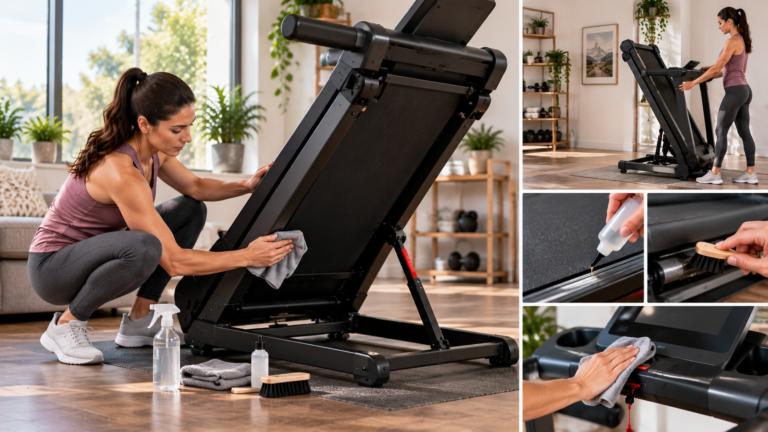
A treadmill belt still needs to remain appropriately aligned and tensioned. Lubrication requirements still apply where specified. Dust, debris, and unsuitable placement can still affect the machine.
Sunny Health & Fitness, for example, explains in its treadmill lubrication guidance that applicable treadmills should be unplugged before cleaning, lubricating, or repair and describes silicone-based lubrication procedures.
Capacity and maintenance solve different problems.
Adequate capacity reduces one form of mismatch. Maintenance addresses ongoing mechanical care.
Neither substitutes for the other.
Running Surface Can Matter as Much as Headroom
A buyer focused on weight capacity can easily overlook the belt.
That is a mistake.
The user’s body interacts with the running surface on every step. Width affects lateral room. Length affects available stride space. Speed and gait alter how much usable deck feels comfortable.
A treadmill rated far above someone’s weight can still be unsuitable if the running area does not fit the intended activity.
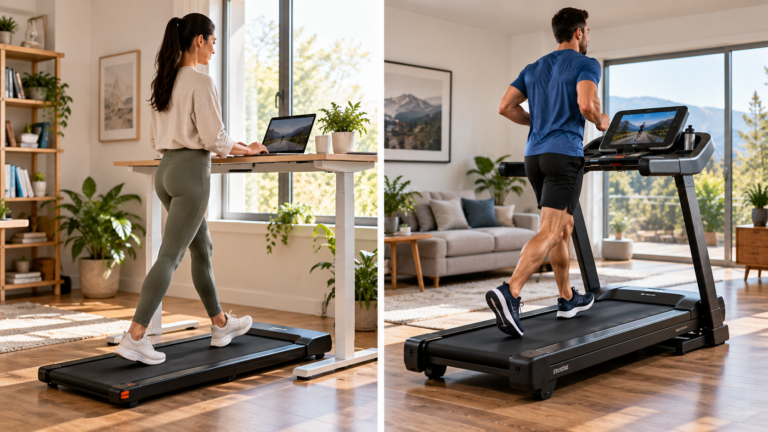
This becomes particularly relevant when comparing compact folding treadmills or walking-focused machines with larger running treadmills.
A buyer should resist a false trade: capacity versus dimensions.
Both have to work.
Space Becomes Harder as Capacity Rises
Higher-capacity treadmills can sometimes be physically substantial, although capacity alone does not determine machine size.
That creates a residential problem.
A buyer may find a treadmill with comfortable capacity headroom only to discover that it does not fit through the intended doorway or leaves insufficient space in the room.
The correct response is not to compromise below the necessary capacity.
It is to search for a machine satisfying both requirements.
This is where the best treadmills for home differ from theoretically impressive treadmills. Residential equipment has to fit both the person and the building.
The user limit answers only half of that equation.
Safety Begins With Respecting Published Limits
Manufacturers establish maximum user weights for a reason.
The safest editorial position is straightforward: do not exceed the stated limit.
There is no responsible basis for advising a person to treat a 300-pound treadmill as suitable at 310 pounds because the difference “probably” does not matter.
Nor should someone attempt to infer hidden safety factors and use them as permission to exceed the published specification.
Engineering products may incorporate design margins, but those internal decisions are not user-facing capacity extensions.
The number available to the consumer is the number that should govern the purchase.
Headroom begins below the limit, not above it.
What About Someone Exactly at the Limit?
A user whose body weight exactly matches the stated maximum is technically at the published boundary, assuming the specification is expressed as an inclusive maximum.
From a purchasing perspective, however, that leaves no numerical buffer for normal fluctuation.
If an appropriate higher-capacity alternative is reasonably available, selecting more capacity creates breathing room without requiring speculative calculations about hidden engineering margins.
The closer someone is to the ceiling, the more relevant that consideration becomes.
Someone weighing 299 pounds comparing 300- and 350-pound machines faces a different capacity decision from someone weighing 175 pounds comparing the same two machines.
The specification is identical.
The relationship to the specification is not.
A Useful Capacity Checklist
Before buying, the household should establish several numbers and facts:
- The heaviest intended user’s realistic body weight.
- The treadmill’s exact stated maximum user weight.
- The numerical difference between those figures.
- The headroom as a percentage of capacity.
- Whether body weight fluctuates near the limit.
- Whether the treadmill will be used primarily for walking or running.
- How frequently the machine will be used.
- Whether several household members will share it.
- The running area’s width and length.
- The treadmill’s own product weight.
- Operating and stored dimensions.
- Delivery-route constraints.
- Manufacturer warranty and usage conditions.
- Maintenance requirements.
No single item replaces the others.
Capacity starts the evaluation. It should not end it.
Final Considerations
Treadmill weight capacity is one of the clearest specifications on a product page and one of the easiest to misuse.
The first rule is firm: the intended user should not exceed the manufacturer’s stated maximum user weight.
The second requires more judgment: being below the limit does not automatically answer how much headroom is appropriate.
There is no universal evidence-based requirement that every treadmill buyer leave exactly 25 pounds, 50 pounds, 100 pounds, or a fixed percentage between body weight and machine capacity.
Those formulas can be useful as rough shopping heuristics, but they should not be presented as engineering laws.
A better approach begins with the heaviest realistic user, establishes the manufacturer’s limit, calculates the available margin, accounts for ordinary body-weight variability, considers walking versus running, and then evaluates the rest of the treadmill.
A user weighing 280 pounds on a 300-pound machine has 20 pounds of numerical headroom. The same user on a 350-pound treadmill has 70. Neither number independently proves how the machine will perform. The second simply places the user farther from the published ceiling.
That distance can be useful, particularly when alternatives exist without sacrificing more relevant features.
More capacity is not automatically better once sufficient capacity has been established. A 400-pound rating should not distract a 160-pound user from an unsuitable belt, inconvenient dimensions, poor room fit, or features that do not match the intended exercise.
Nor should capacity be confused with durability. It is a user-weight limit, not a lifespan guarantee.
For heavier users, the issue deserves particular seriousness rather than stigma. The treadmill should accommodate the person using it from the first workout, not a hypothetical future body weight. Someone pursuing weight loss should buy for present weight. A shared household should buy for its heaviest user while checking dimensions and ergonomics for everyone else.
Among the best treadmills for home, adequate weight capacity functions as an entry requirement. Once that requirement is comfortably satisfied, the decision broadens to running area, speed, incline, accessibility, frame dimensions, maintenance, room fit, and intended activity.
Headroom is therefore less about finding one magical number than avoiding unnecessary proximity to a hard limit.
A treadmill should fit the person who steps onto it today, with enough margin that ordinary life does not turn a specification into a daily calculation.