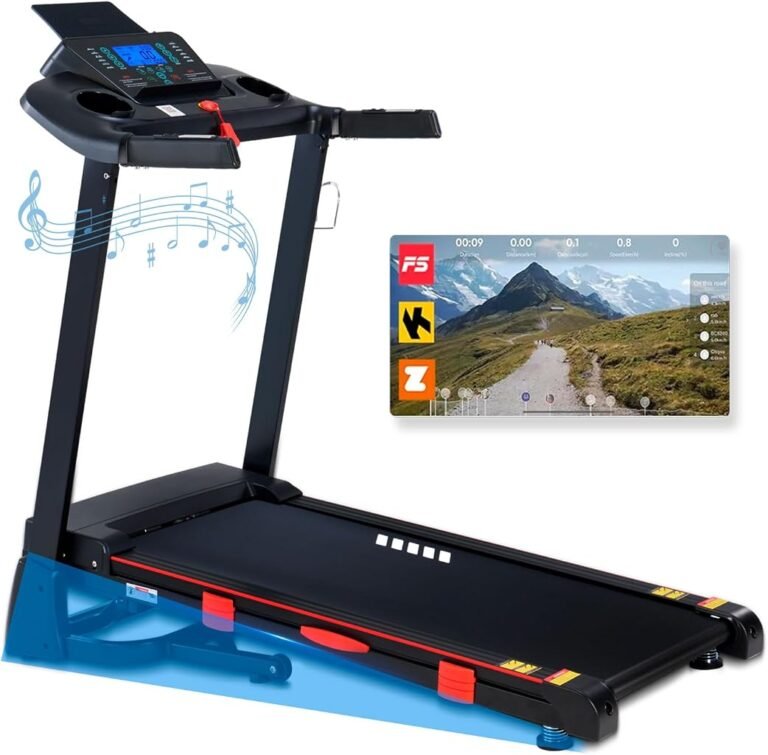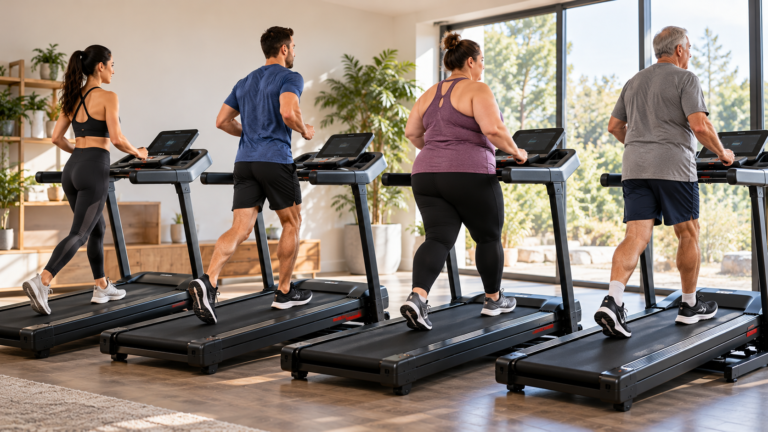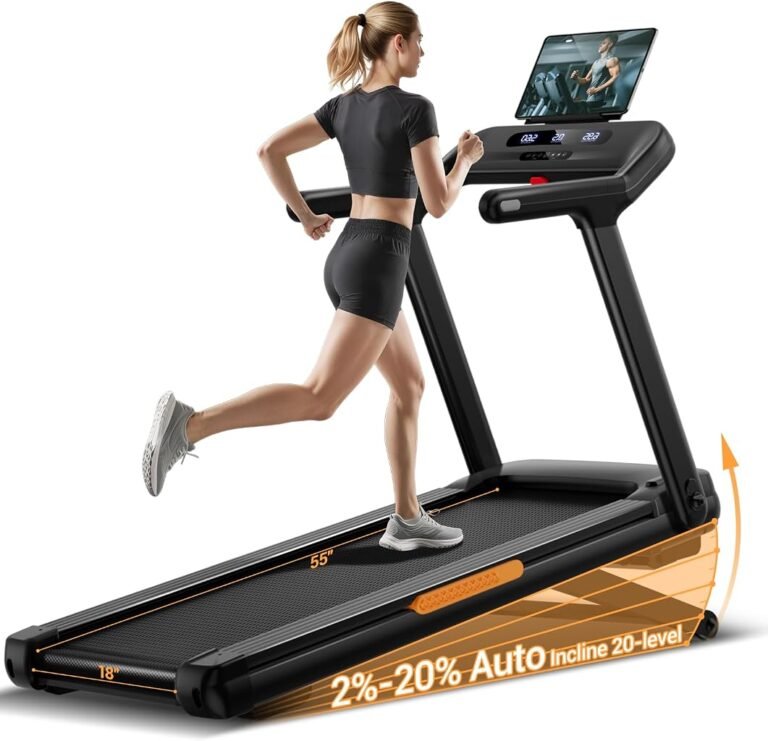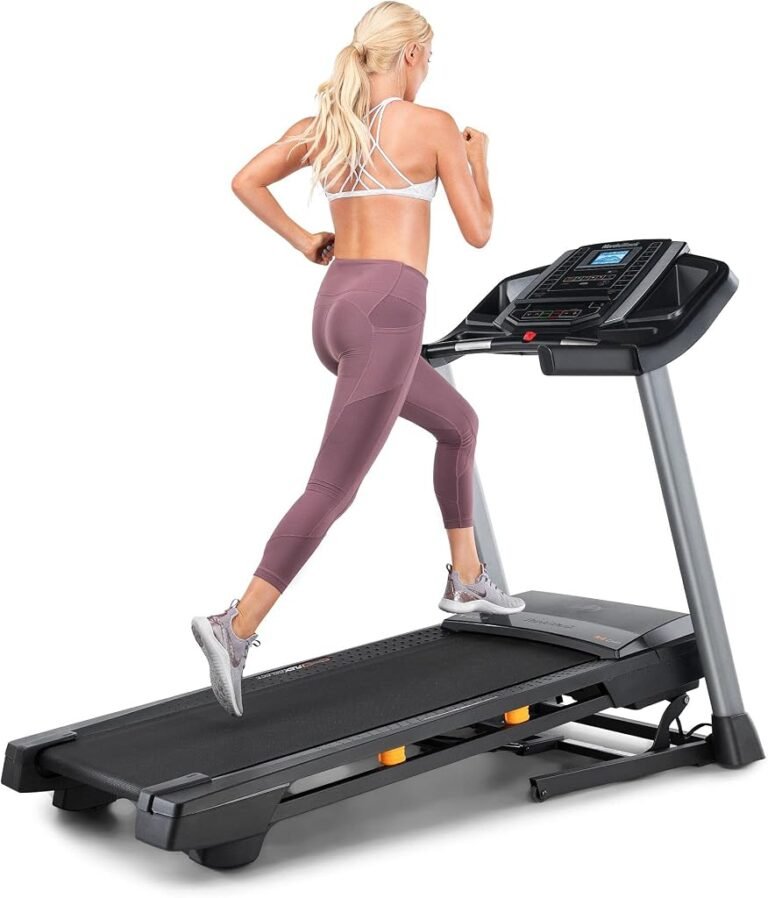
A treadmill is one of the few pieces of home exercise equipment that can be used for gentle rehabilitation-style walking, demanding cardiovascular sessions, and structured running workouts. Yet this versatility creates a difficult purchasing decision. A machine suitable for occasional walking may not satisfy a regular runner, while a sophisticated connected treadmill can introduce costs and complications that a simpler model avoids.
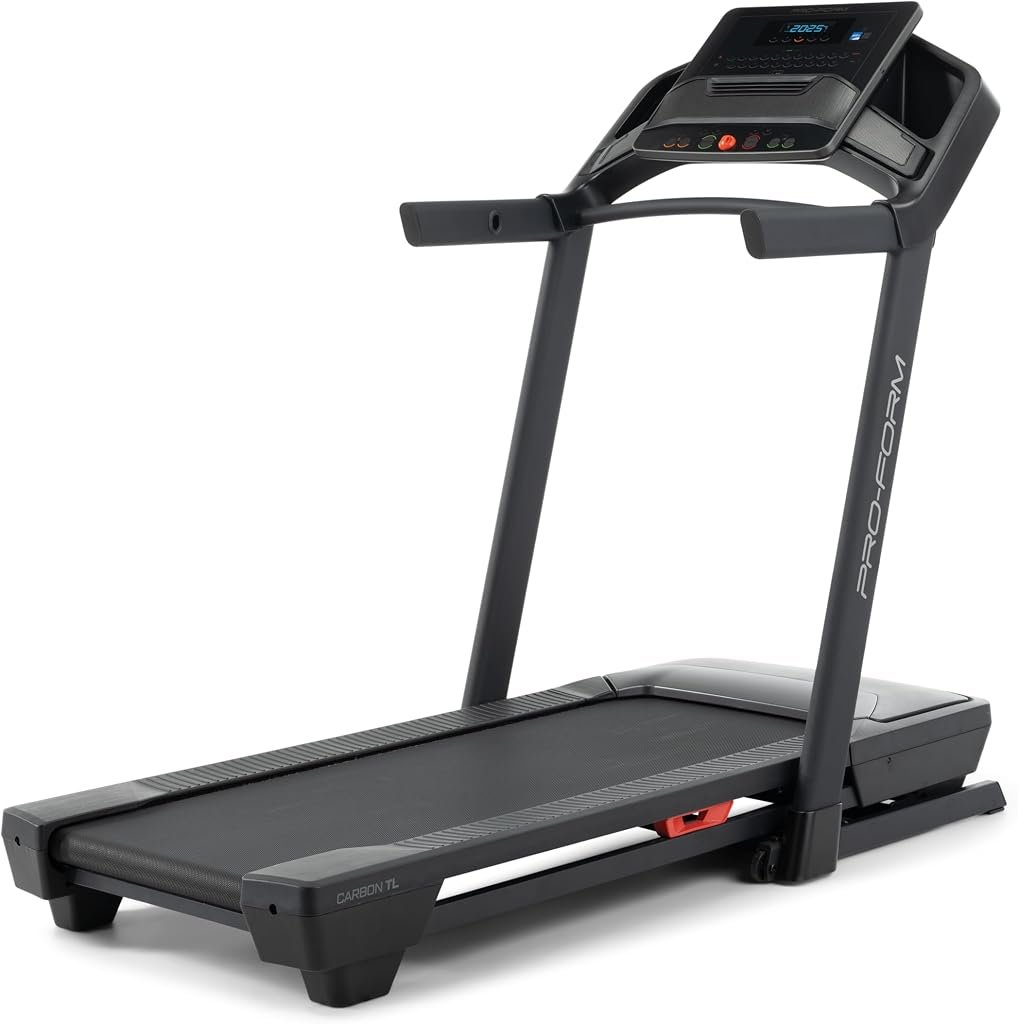
The ProForm Carbon occupies an interesting position in this market. It belongs to an established family of home treadmills associated with structured exercise, connected training, and the practical requirements of indoor walking and running.
At a listed price of $764.04, the Carbon is not a minimal-cost walking machine. Buyers at this price level can reasonably expect a thoughtful balance of mechanical performance, usability, and long-term ownership support.
Our editorial score is 8.3/10, placing the ProForm Carbon in the Very Good category. Customer Sentiment receives 8.28/10, Buyer Confidence stands at 8.54/10, and Value earns 8.15/10.
The narrow spread between these ratings is revealing. The Carbon presents a generally balanced proposition, without a single assessment category dramatically outperforming the others. Buyer Confidence leads, reflecting the appeal of a recognizable equipment brand and an established treadmill family. Value trails slightly, reflecting the need to justify a $764.04 purchase through consistent use and a suitable feature set.
The Carbon deserves a favorable assessment, but its strongest audience is not simply anyone seeking a treadmill. It is the household prepared to use a dedicated exercise machine regularly and willing to assess the differences between connected features, mechanical performance, and total ownership costs.
Product Overview: What Defines the ProForm Carbon?
The ProForm Carbon is part of a home treadmill family intended to support cardiovascular exercise through walking, jogging, and running.
The Carbon identity is associated with ProForm’s wider approach to home fitness, which includes conventional treadmill operation alongside digital training options on supported configurations.
Its principal details are:
- Brand: ProForm.
- Product family: Carbon.
- Product type: Home treadmill.
- Listed price: $764.04.
- Our Score: 8.3/10.
- Customer Sentiment: 8.28/10.
- Buyer Confidence: 8.54/10.
- Value: 8.15/10.
The Carbon family includes different configurations, making precise model identification important when assessing individual specifications.
Running deck dimensions, speed ranges, incline capabilities, console arrangements, and storage mechanisms may vary across versions.
The most sensible evaluation therefore begins with the machine’s intended purpose.
A walking-focused household may prioritize low-speed comfort, simple controls, and manageable installation requirements.
A recreational runner will place greater emphasis on running surface dimensions, consistent belt movement, and the ability to sustain an appropriate pace.
A buyer interested in interactive workouts may value digital compatibility and guided training.
The Carbon’s appeal lies in its ability to address these priorities within the broader framework of home treadmill exercise.
Running and Walking Performance: The Core Requirement
A treadmill’s primary responsibility is to provide a predictable moving surface that supports natural walking and running mechanics.
Everything else, including connected applications and advanced displays, is secondary to this requirement.
For walking, belt consistency is particularly important at lower speeds.
A beginner should be able to establish a comfortable rhythm without abrupt changes in belt movement.
For jogging and running, the demands increase.
Longer strides require sufficient running surface length, while sustained movement places greater demands on the motor and drive system.
The ProForm Carbon’s suitability for these activities should be judged through the specifications of the exact configuration.
A treadmill capable of comfortable walking is not automatically suitable for demanding running sessions.
Similarly, a machine designed for recreational jogging may not meet the needs of someone training for long-distance events.
Our favorable assessment recognizes the Carbon’s position as a general-purpose home treadmill, while placing the greatest emphasis on matching its operating characteristics to the user’s exercise routine.
Motor Performance: Why Horsepower Is Only Part of the Story
Treadmill motors are commonly described through horsepower ratings.
These figures can be useful, but they do not provide a complete description of operating performance.
Manufacturers may distinguish between peak output and continuous operating capacity.
Peak output describes a short-duration capability, while continuous performance is more relevant to sustained exercise.
Other mechanical components also influence how smoothly a treadmill operates.
The drive controller, rollers, belt tension, deck friction, and cooling arrangements can all affect the experience.
For walking-focused users, predictable acceleration and steady movement at modest speeds may be more useful than an impressive maximum output figure.
For runners, sustained speed under load becomes increasingly important.
The Carbon’s motor should therefore be evaluated alongside its running surface and intended workload.
A household using the treadmill for moderate walking several times per week creates different mechanical demands from one completing long running sessions every day.
The strongest purchasing decision is based on the expected workload rather than a single advertised motor figure.
Running Deck Dimensions and Stride Comfort
The treadmill deck determines how much room the user has to move.
Running surface length is especially relevant to taller individuals and those with longer strides.
Width affects lateral freedom of movement and the sense of available space.
A belt that feels comfortable during slow walking may become restrictive during faster running.
Stride length also changes with speed and individual running mechanics.
The Carbon’s running surface should therefore be assessed against the user’s height, gait, and intended exercise intensity.
Comfort is not simply a matter of having a large deck.
A stable surface, predictable belt movement, and appropriate cushioning all contribute to the experience.
Footwear also matters.
Running shoes vary in support, flexibility, and impact response, and the interaction between footwear and treadmill construction can influence comfort.
For users who plan to exercise frequently, these physical characteristics may affect long-term satisfaction more than the size of the console display.
Cushioning and the Question of Joint Comfort
Treadmill cushioning is often presented as an advantage over harder outdoor surfaces.
The underlying idea is that the deck can respond to foot strikes in ways that alter the sensation of impact.
However, cushioning should not be interpreted as a guarantee of reduced injury risk.
Walking and running involve complex interactions between body weight, speed, stride mechanics, footwear, and surface properties.
A more flexible deck may feel comfortable to one person while feeling less stable to another.
Research in running biomechanics has shown that runners can adjust leg stiffness and movement patterns in response to different surface conditions.
This means the body does not respond to cushioning in a purely passive way.
The ProForm Carbon’s comfort should be judged through its complete deck construction rather than assumptions about cushioning alone.
For people with recurring joint discomfort, a manageable exercise pace and controlled progression may be more important than any individual comfort feature.
The treadmill should support natural movement without requiring the user to alter posture or stride excessively.
Incline Training: Expanding Exercise Intensity
Incline adjustment is a useful feature on treadmills that support it.
Raising the walking surface increases the mechanical work required to maintain a given pace.
This allows users to make walking more demanding without necessarily increasing speed.
For people who prefer walking over running, incline workouts can provide an alternative route to higher cardiovascular intensity.
A moderate uphill walk may create a substantial exercise challenge while keeping belt speed manageable.
However, incline settings should be introduced gradually.
Steep gradients change walking mechanics and can increase demands on the calves, ankles, and other lower-body structures.
The Carbon family’s incline capabilities vary by configuration, so the exact range and adjustment mechanism should be confirmed before purchase.
A useful incline system is one that supports gradual progression and convenient control, not simply the highest possible gradient.
Connected Fitness and the ProForm Ecosystem
ProForm is closely associated with connected exercise equipment, and digital training has become a significant part of the wider treadmill market.
Connected systems can provide guided workouts, progress tracking, interactive training environments, and integration with supported devices.
For some users, these functions make indoor exercise more engaging.
A structured workout can reduce the effort required to plan a session, while progress records can help users recognize improvements over time.
However, digital features can also introduce additional ownership considerations.
Application compatibility, software updates, subscription arrangements, and account requirements may affect how the treadmill is used.
The Carbon’s connected capabilities depend on the exact configuration.
Buyers should distinguish between functions included directly with the treadmill and services requiring additional payment.
This distinction matters because a connected training subscription can change the long-term cost of ownership.
The treadmill should remain useful for basic walking and running even when the owner chooses not to participate in a digital training program.
For many households, straightforward operation will remain more important than advanced entertainment or interactive features.
The Motivation Advantage of Structured Workouts
Home exercise creates an unusual challenge: the equipment is always nearby, but there is no guarantee it will be used.
Work schedules, family responsibilities, fatigue, and competing activities can interfere with consistency.
Structured training programs attempt to reduce this problem by providing a clear exercise plan.
A guided session can establish a duration, pace, or progression target.
Progress tracking can also make completed workouts visible, helping users recognize patterns over time.
Nevertheless, technology cannot replace the decision to exercise regularly.
A person who prefers quiet walking may gain little from elaborate interactive sessions.
Another user may find that guided training provides the structure needed to maintain a routine.
The Carbon’s digital features are therefore most valuable when they support the owner’s established preferences rather than requiring a different style of exercise.
The most effective treadmill routine is one that can be repeated consistently.
Exercise Effectiveness: From Equipment Ownership to Physical Progress
The strongest reason to purchase a treadmill is the opportunity to establish regular cardiovascular exercise without relying on outdoor conditions.
Walking and running support endurance, cardiovascular health, and general physical fitness.
The Centers for Disease Control and Prevention recommends that adults complete at least 150 minutes of moderate-intensity aerobic activity per week, or 75 minutes of vigorous activity, alongside muscle-strengthening exercise on two or more days. These adult physical activity recommendations provide a useful framework for assessing the practical benefits of treadmill ownership.
Five 30-minute walking sessions can provide 150 minutes of weekly activity, provided the exercise reaches a moderate intensity.
However, the same treadmill settings do not produce identical physical demands for every user.
A beginner may find a modest walking pace challenging, while a well-conditioned runner may require faster movement or greater incline to achieve a comparable effort.
The CDC’s guidance on exercise intensity explains that moderate aerobic activity increases breathing and heart rate, while vigorous exercise produces a greater level of exertion.
The Carbon can support this progression through its basic treadmill functions, with additional training options depending on the configuration.
Its practical contribution is not that it guarantees improved fitness. It provides an accessible setting in which repeated exercise can take place.
Consistency remains the deciding factor.
Folding Design and Home Storage
Home treadmills compete for floor space with furniture, work areas, and ordinary household activities.
A machine that is convenient during exercise may become inconvenient when left permanently positioned in a shared room.
The ProForm Carbon Series includes folding designs intended to reduce storage demands. ProForm also identifies cushioning and connected training capabilities within the family, although the precise configuration varies between models.
Folding construction can make treadmill ownership more practical in smaller homes.
However, folding does not eliminate the need for adequate operating space.
A treadmill requires room for the full frame, safe access, and clearance behind the moving belt.
Ceiling height also matters because the deck raises the user’s standing position, particularly when incline is engaged.
Before purchase, buyers should measure the intended room and compare those measurements with the exact machine’s assembled and folded dimensions.
Weight is another consideration.
A folding treadmill may still require considerable effort to move, and its wheels or lifting mechanism should be used according to the manufacturer’s instructions.
The strongest storage arrangement is one that allows the machine to be used regularly without creating a complicated setup routine.
Safety and Everyday Operation
Treadmills introduce hazards that differ from ordinary walking.
The moving belt continues operating independently of the user’s pace, and a momentary loss of balance can lead to a fall.
Users should understand the controls before beginning exercise.
The emergency stop mechanism and any safety key should be used according to the manufacturer’s instructions.
Speed and incline adjustments should be gradual, particularly for beginners.
The treadmill should stand on a stable, level surface with adequate clearance around the machine.
Children and pets should remain away from the operating equipment.
Connected displays and exercise applications should not distract users from maintaining stable footing.
For the ProForm Carbon, the strongest safety approach combines proper installation, familiarity with the controls, and exercise intensity appropriate to the individual.
Noise, Maintenance, and Long-Term Reliability
A treadmill’s operating sound comes from several sources.
The motor, rollers, belt, deck movement, and footfalls all contribute to noise.
Running generally produces different impact patterns from walking, while flooring can influence how vibration travels through a home.
Maintenance is equally relevant.
Treadmill belts require appropriate alignment and tension, and lubrication requirements vary by model.
The owner’s manual should govern these procedures.
Incorrect maintenance can increase friction, accelerate wear, or create mechanical problems.
Connected features introduce additional ownership considerations, including software compatibility and subscription arrangements.
ProForm’s published Carbon TLX specifications illustrate how model-specific details can include cushioning, folding construction, incline adjustment, and connected training features. These characteristics should not automatically be attributed to every Carbon configuration.
Warranty coverage and replacement-part availability also deserve attention.
A treadmill that can be maintained economically may provide better long-term value than one with a lower purchase price but limited service options.
Our Editorial Ratings: A Balanced Assessment
Our overall score for the ProForm Carbon is 8.3/10, placing it in the Very Good category.
This reflects a favorable assessment of its home-fitness positioning, recognizable brand identity, and potential suitability for regular cardiovascular exercise.
The individual ratings are relatively close, suggesting a balanced proposition rather than one dominated by a single exceptional feature.
Customer Sentiment: 8.28/10
Our Customer Sentiment rating of 8.28/10 reflects a positive assessment of the Carbon’s appeal to home treadmill buyers.
The machine addresses familiar priorities: indoor exercise convenience, adaptable training, and access to a recognized fitness equipment ecosystem.
Its appeal is strongest among users who want a dedicated treadmill for an ongoing exercise routine.
However, the exact configuration remains important for buyers with specialized requirements.
A general-purpose treadmill may be suitable for recreational exercise without meeting the demands of sustained high-intensity running.
Buyer Confidence: 8.54/10
Buyer Confidence receives 8.54/10, the highest of our editorial ratings.
This reflects confidence in the Carbon’s general purchase proposition and the advantages associated with an established manufacturer.
ProForm’s recognizable product family provides a useful foundation for investigating specifications, warranties, and connected training options.
Nevertheless, buyers should confirm the precise model and its operating characteristics.
The modest difference between Buyer Confidence and Customer Sentiment suggests that the Carbon’s general proposition is slightly stronger than its suitability for every exercise preference.
Value: 8.15/10
Our Value rating is 8.15/10, slightly below the overall score.
At $764.04, the Carbon represents a meaningful household purchase.
Its financial appeal improves when the owner exercises regularly and makes use of the machine’s capabilities.
However, additional costs may arise through delivery, assembly, maintenance, repairs, or connected training services.
A buyer who primarily wants occasional walking may find that a simpler treadmill provides sufficient functionality at a lower price.
The Carbon’s value is strongest when its features match a consistent exercise routine.
Price Analysis: What Does $764.04 Buy?
The ProForm Carbon’s listed price of $764.04 places it above many basic walking-focused treadmills.
At this price, buyers should expect a more developed home-exercise proposition than a simple motorized walking surface.
However, a higher purchase price does not automatically establish better performance.
A less expensive treadmill may be entirely adequate for gentle walking.
A more expensive machine may provide greater running capacity, a larger deck, or more sophisticated connected features.
The Carbon occupies a middle position where general-purpose exercise capability and brand support are central considerations.
Its value should be assessed through expected frequency of use.
A household using the treadmill four or five times per week may derive considerably more practical benefit than one using it only occasionally.
The purchase should also be compared with alternative exercise arrangements, including gym memberships and transportation costs.
Those comparisons vary according to individual circumstances.
The strongest financial justification is consistent use over an extended period.
How the Carbon Compares With Other Home Treadmill Categories
The best treadmills for home are not necessarily the machines with the highest maximum speed or the largest digital displays.
Different categories serve different needs.
Compact walking treadmills emphasize reduced floor-space requirements and straightforward operation.
General-purpose home treadmills seek a balance between walking, jogging, and running.
Performance-oriented running machines prioritize sustained motor operation, generous running surfaces, and demanding workouts.
Connected treadmills emphasize guided exercise, progress tracking, and integration with digital training platforms.
The ProForm Carbon is most appropriately considered within the general-purpose and connected home-fitness categories, depending on the configuration.
Its strongest appeal is the combination of conventional treadmill exercise with access to ProForm’s broader equipment ecosystem.
For buyers interested primarily in walking, comfort and ease of operation should remain leading considerations.
For runners, belt dimensions and sustained performance deserve greater emphasis.
For digitally engaged users, subscription arrangements and compatible training features may influence the decision.
The appropriate choice follows the intended exercise routine rather than a ranking of feature counts.
Who Should Consider the ProForm Carbon?
The ProForm Carbon is a reasonable option for people seeking a dedicated home treadmill for regular cardiovascular exercise.
Its strongest buyer profiles include:
- Adults establishing a consistent walking or jogging routine.
- Households seeking an alternative to outdoor exercise during poor weather.
- Recreational runners who can match the machine’s specifications to their needs.
- Users interested in connected training options.
- Buyers who appreciate an established fitness equipment brand.
- Households prepared to invest $764.04 in dedicated exercise equipment.
The Carbon may be less compelling for users who require specialized athletic performance or have very limited installation space.
People with significant mobility limitations may also require equipment designed for additional support.
The machine is best understood as general home-fitness equipment rather than specialized rehabilitation machinery.
Building a Sustainable Treadmill Routine
The practical value of treadmill ownership emerges through repeated exercise.
Beginners can start with short walking sessions at a comfortable pace.
As endurance improves, duration can be increased gradually.
More experienced users may incorporate brisk walking, running intervals, or incline changes where supported.
A typical session can include an easy warm-up, a sustained period of exercise, and a gradual reduction in speed before stopping.
Users can track duration, perceived effort, and changes in comfort.
Digital tracking may support this process when compatible functions are available.
However, the routine should remain manageable without relying entirely on technology.
Increasing several exercise variables simultaneously can make it difficult to identify the cause of fatigue or discomfort.
A gradual approach provides a clearer path toward sustainable progress.
Strengths and Drawbacks
The ProForm Carbon has several characteristics that support its favorable editorial assessment.
Its principal strengths include:
- An established home-fitness product family.
- Suitability for general cardiovascular exercise.
- Access to the broader ProForm training ecosystem.
- Potential for walking, jogging, and running workouts.
- A balanced set of editorial ratings.
- An overall score of 8.3/10.
Its limitations are equally relevant.
The Carbon family includes different configurations, making exact model identification important.
Connected training may involve additional subscription costs.
The machine’s suitability for demanding running routines depends on its specific mechanical characteristics.
Household space, maintenance, assembly, and service arrangements can also affect ownership satisfaction.
At $764.04, the treadmill should be purchased with a clear expectation of regular use.
These considerations define the Carbon’s strongest audience without diminishing its general appeal.
Final Considerations
The ProForm Carbon Treadmill offers a credible foundation for home cardiovascular exercise, combining the familiarity of conventional treadmill training with the broader possibilities of connected fitness.
Our overall score of 8.3/10 reflects a Very Good assessment.
Customer Sentiment at 8.28/10, Buyer Confidence at 8.54/10, and Value at 8.15/10 reinforce that judgment while recognizing the financial and practical considerations associated with ownership.
At $764.04, the Carbon is best suited to households prepared to exercise regularly and willing to match the exact configuration to their needs.
Its strongest appeal lies in supporting consistent walking, jogging, or running within a familiar home environment.
Connected features may provide additional motivation, while folding construction and cushioning can contribute to convenience and comfort on supported models.
However, the machine’s long-term worth depends on more than its feature set.
Appropriate installation, manageable exercise intensity, routine maintenance, and sustained use remain central to a successful ownership experience.
The ProForm Carbon earns a favorable editorial recommendation for buyers seeking a general-purpose home treadmill from an established manufacturer.
For the right household, it can provide a practical setting for regular physical activity without requiring every workout to involve advanced technology or demanding performance targets.