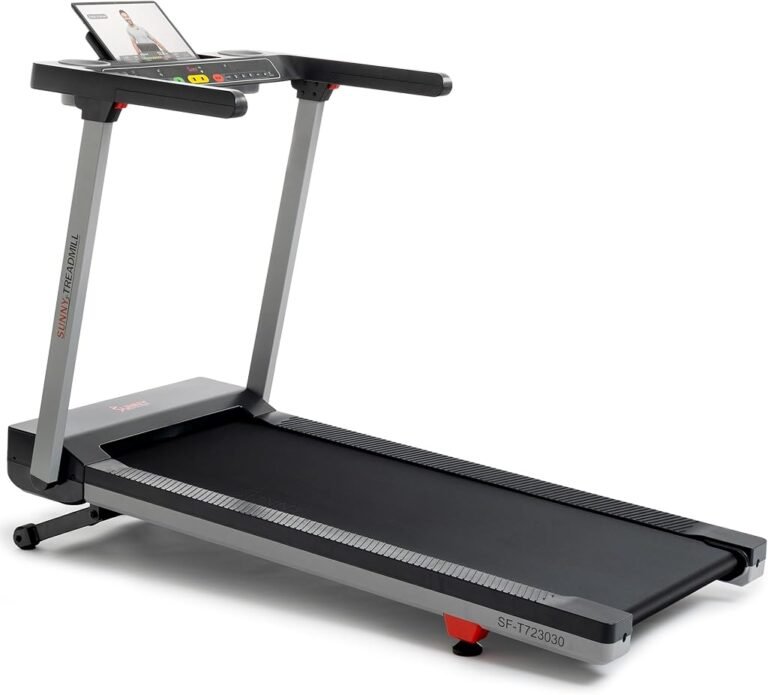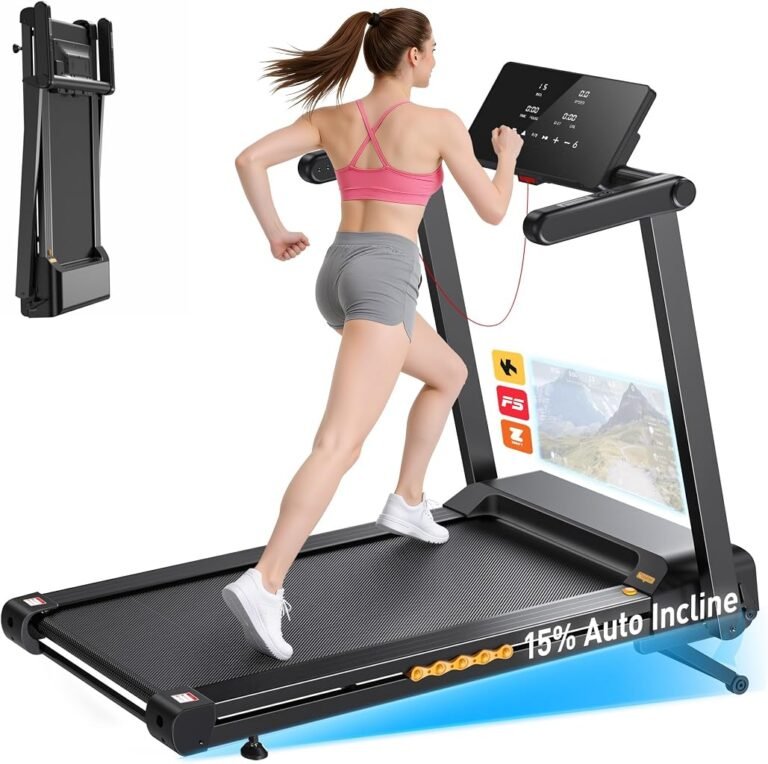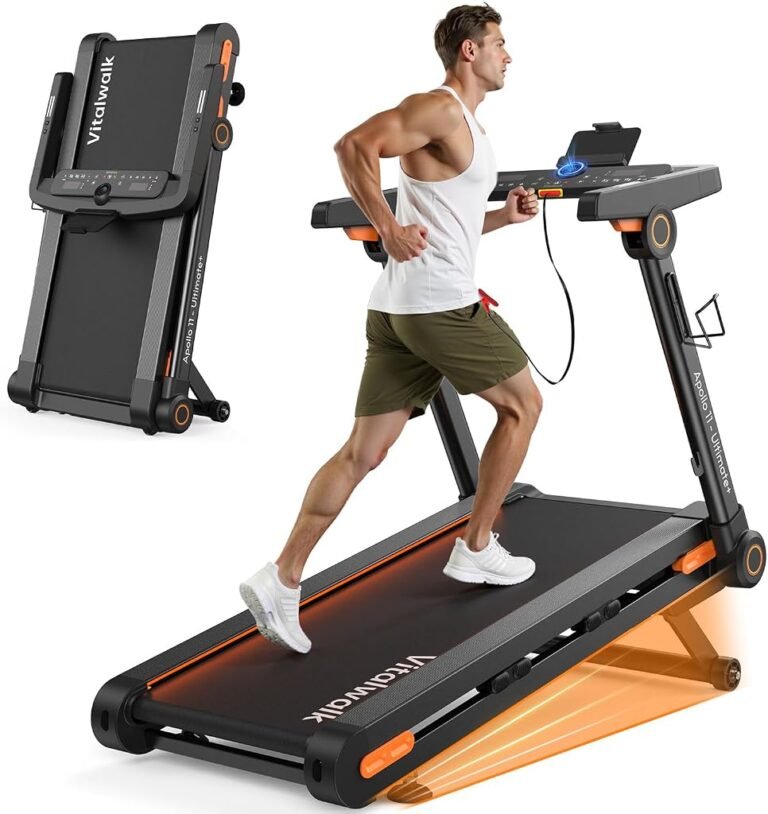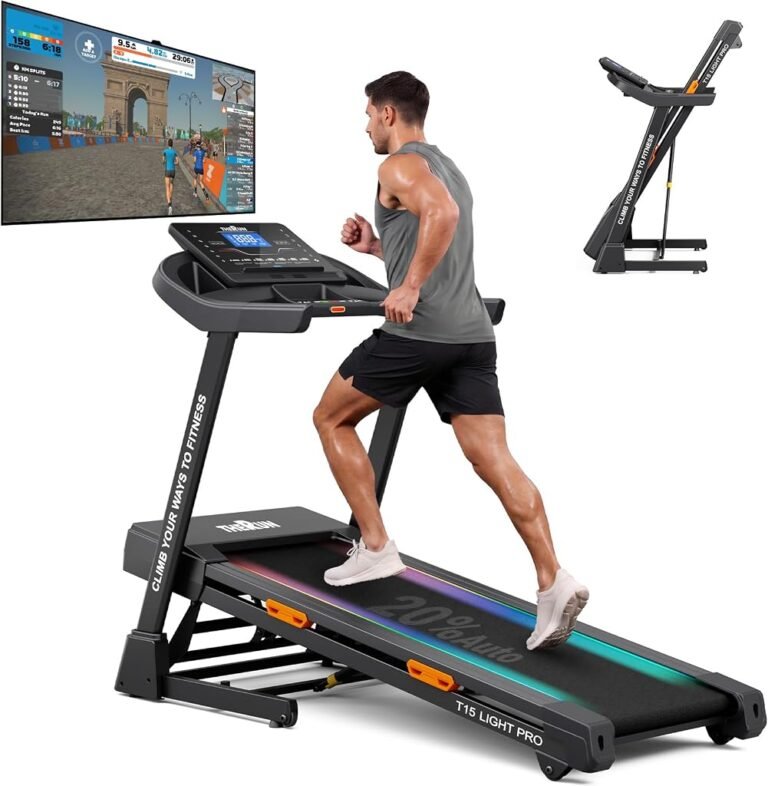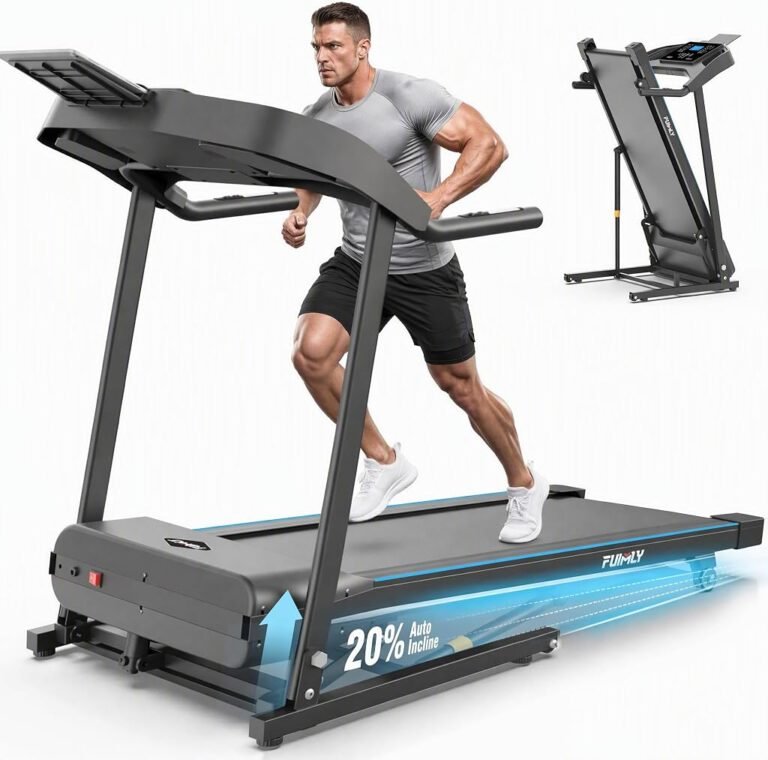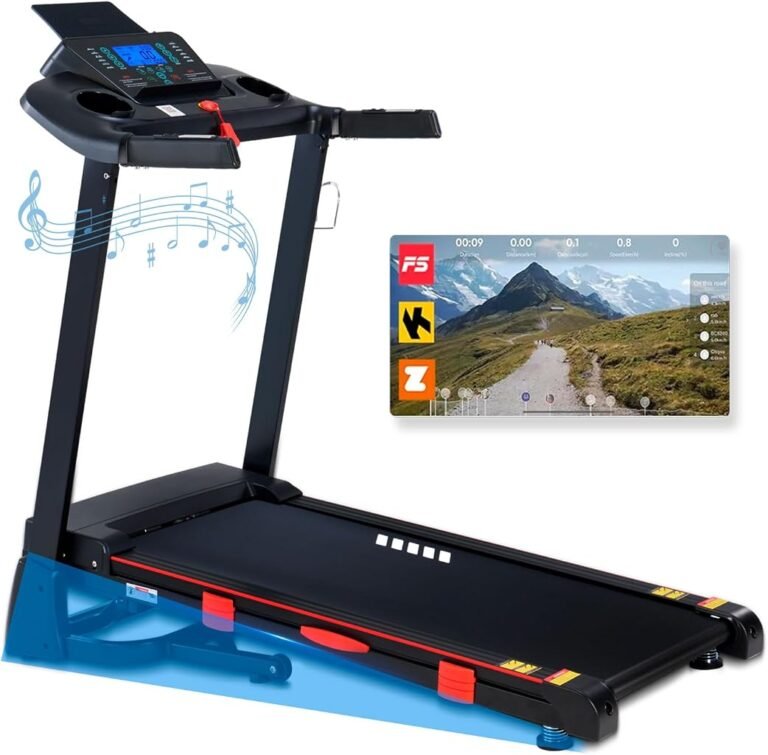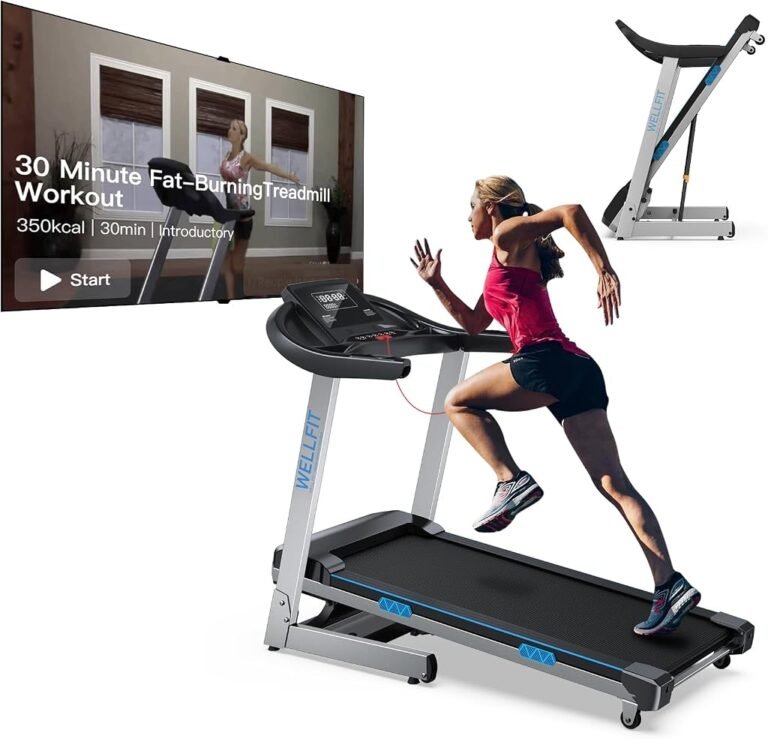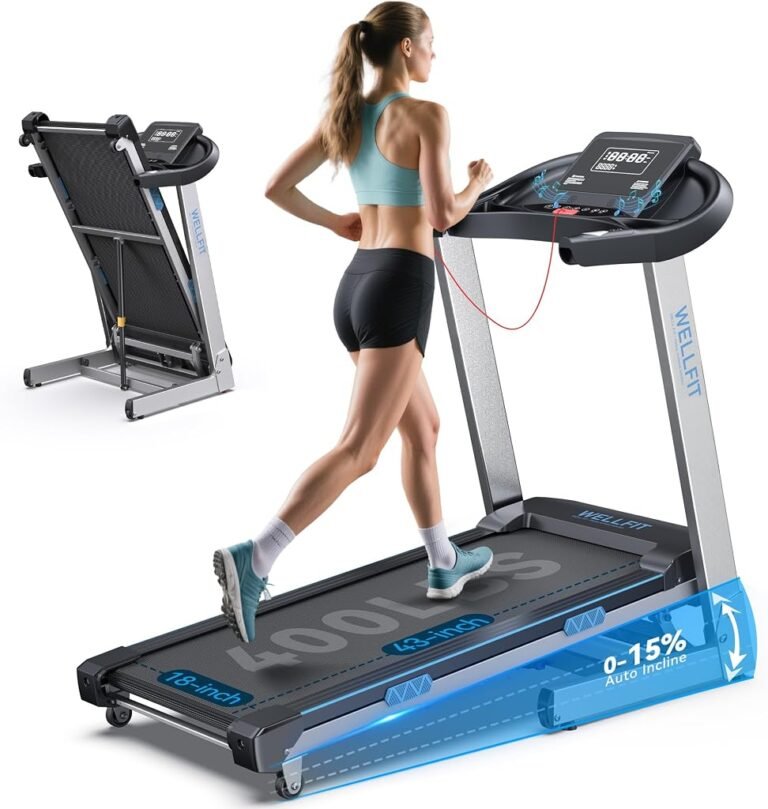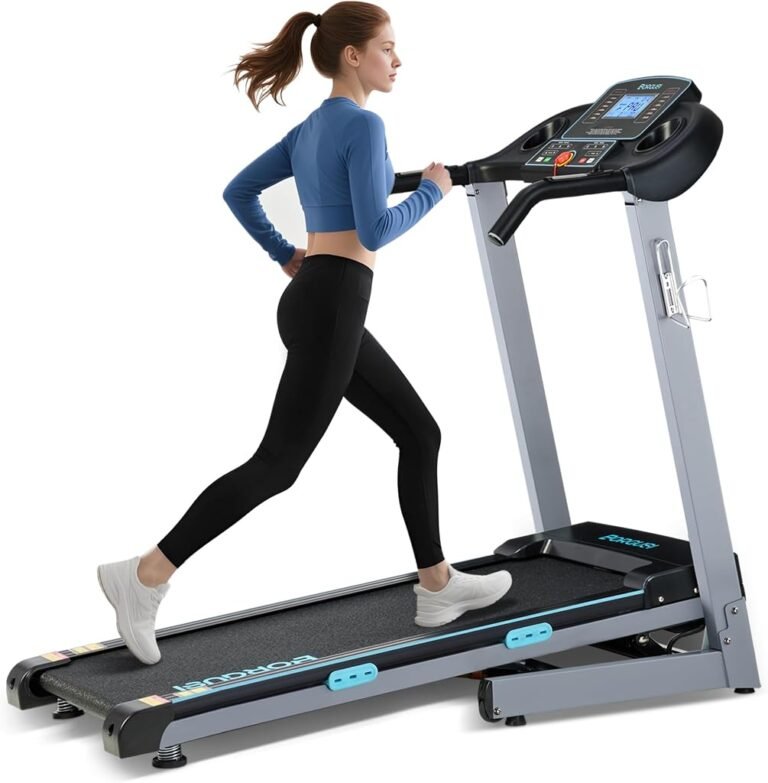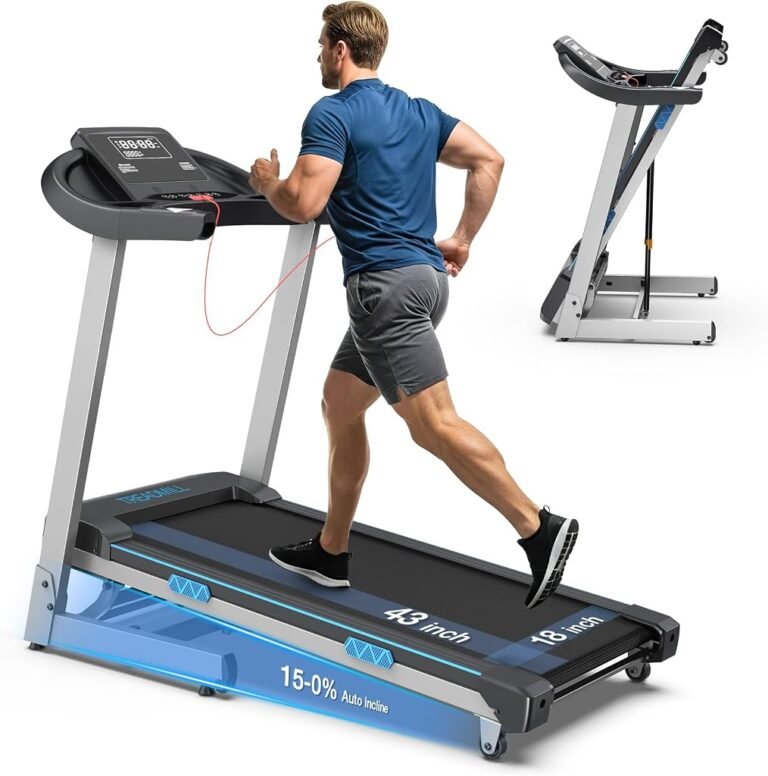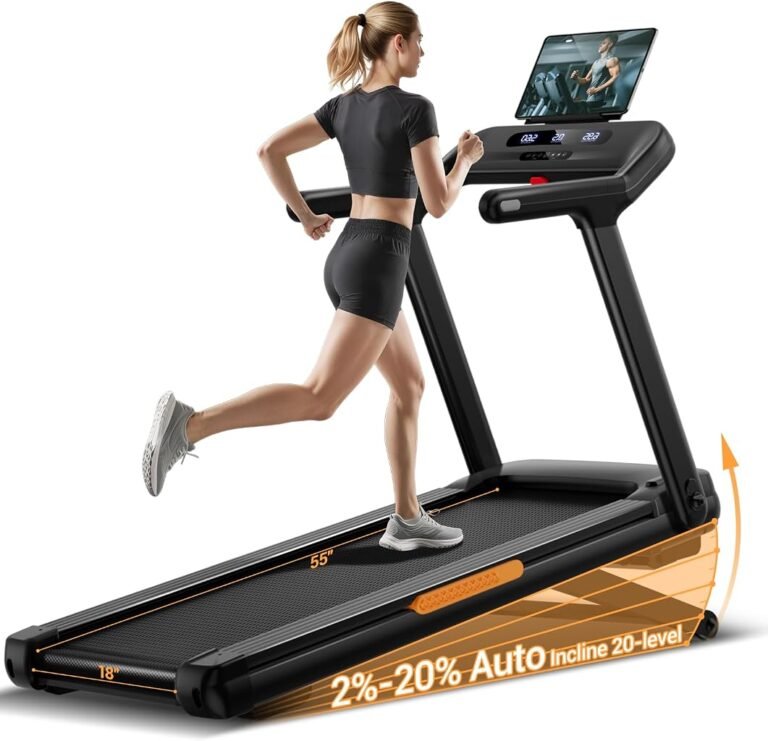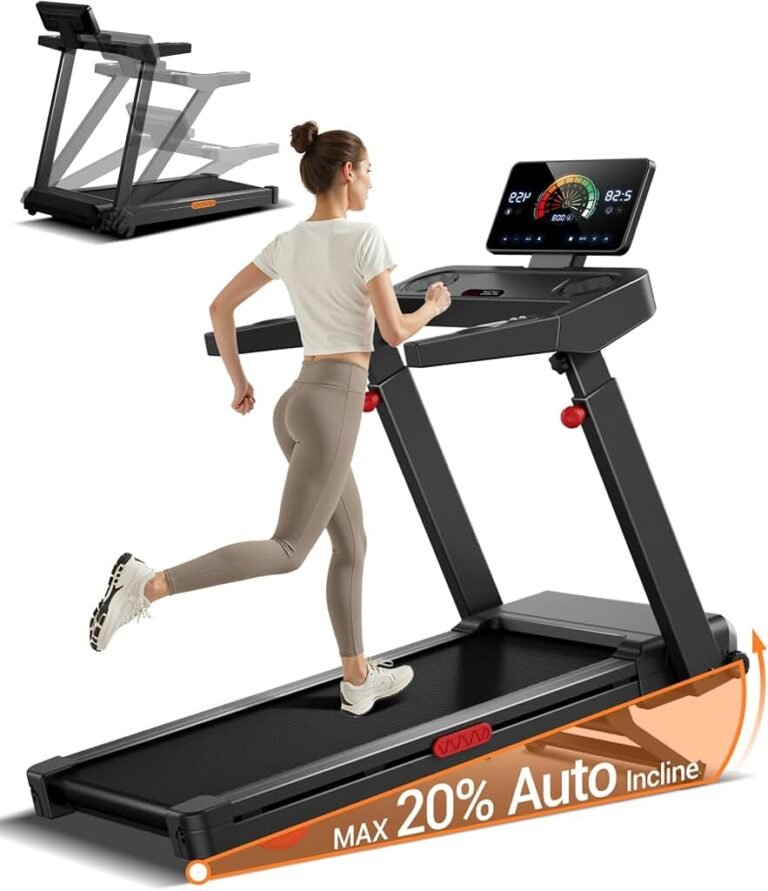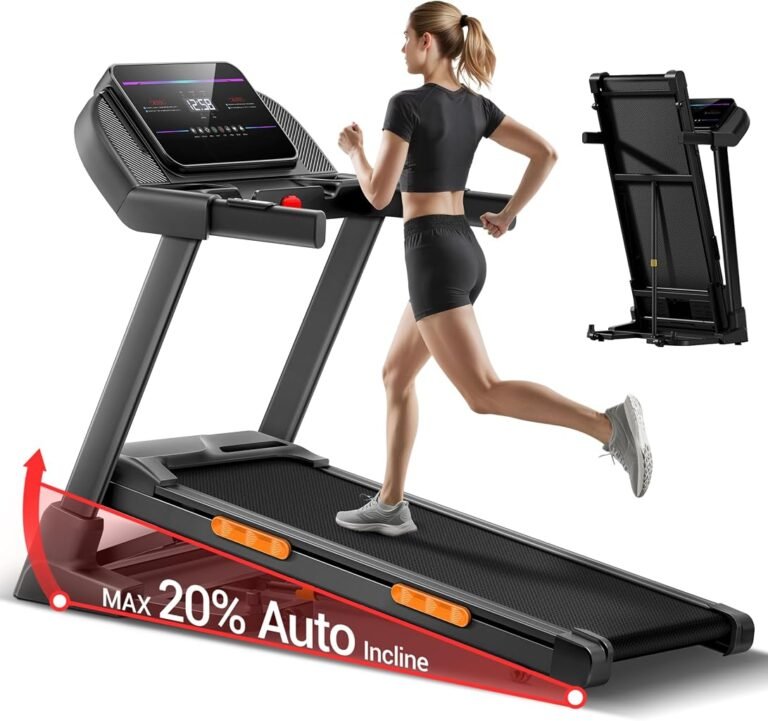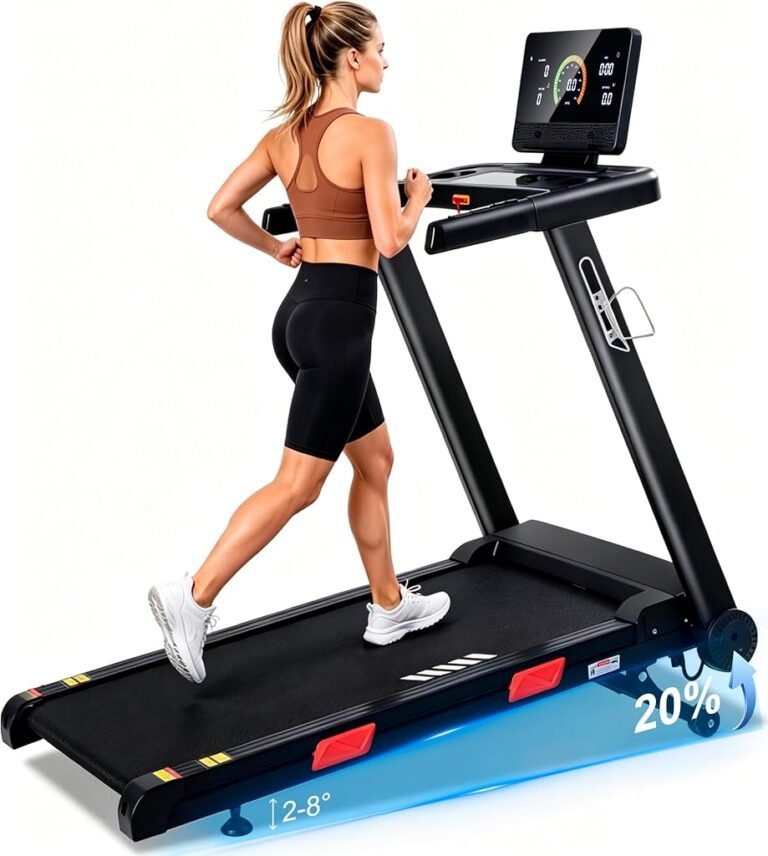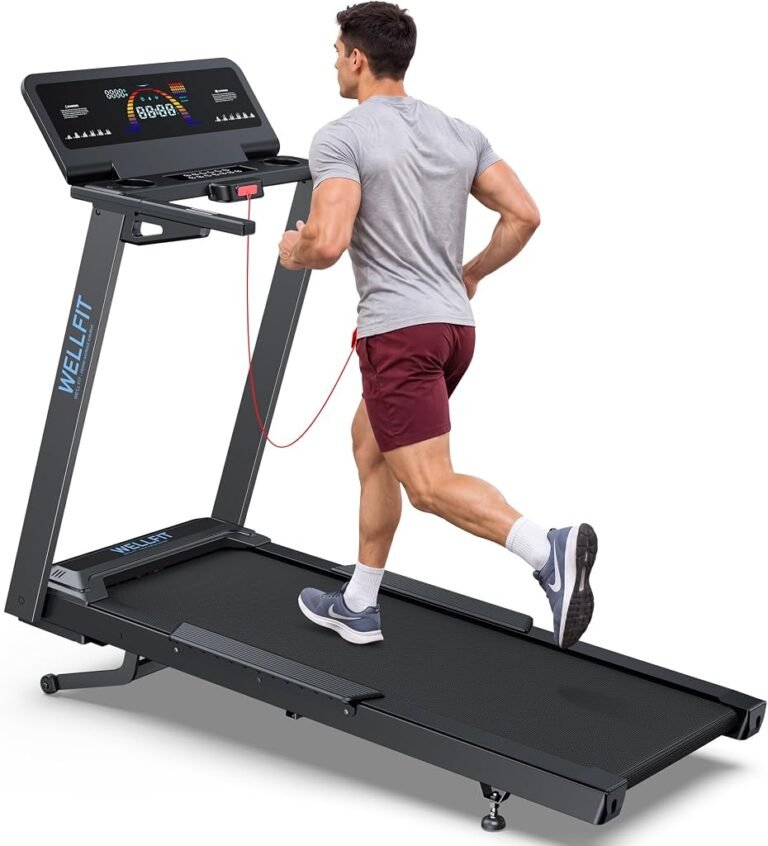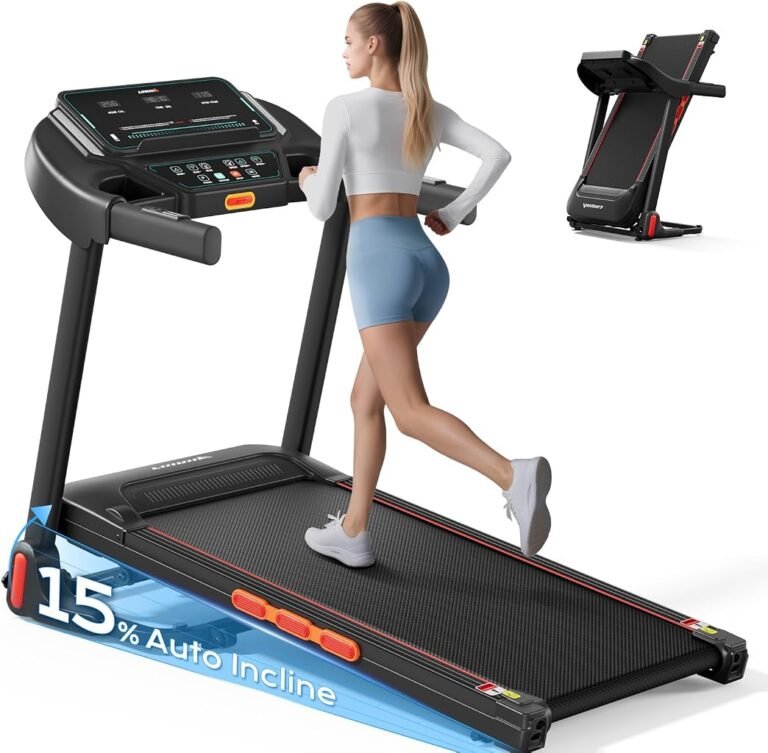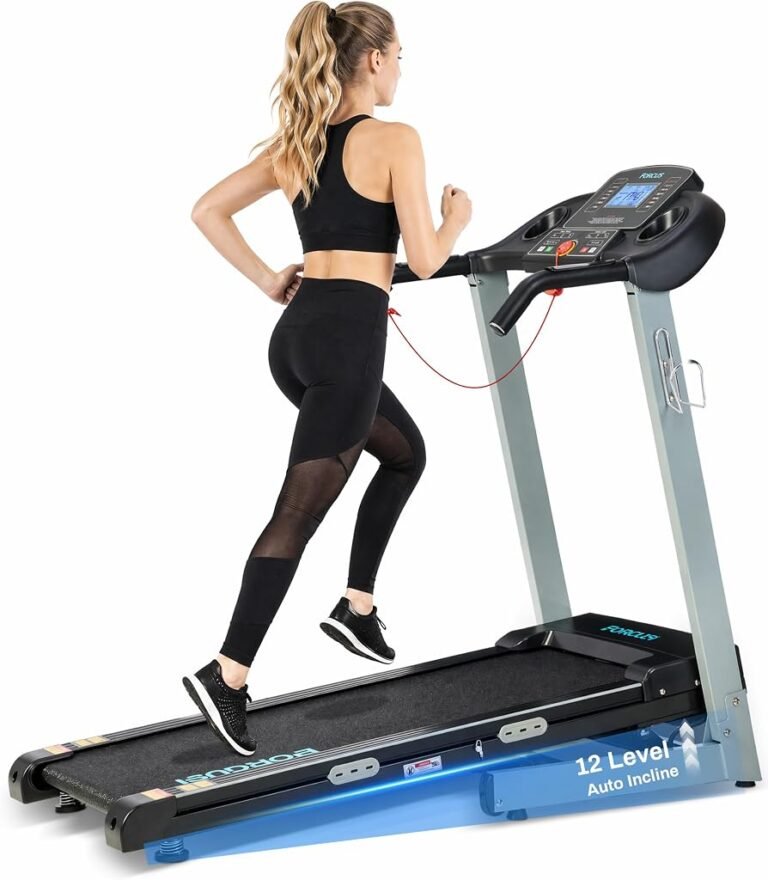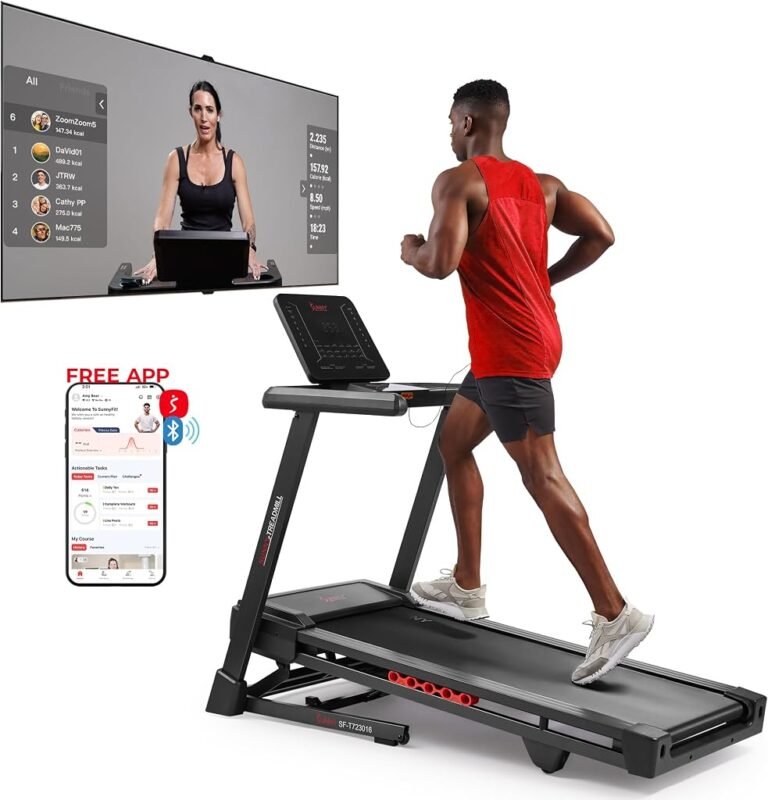
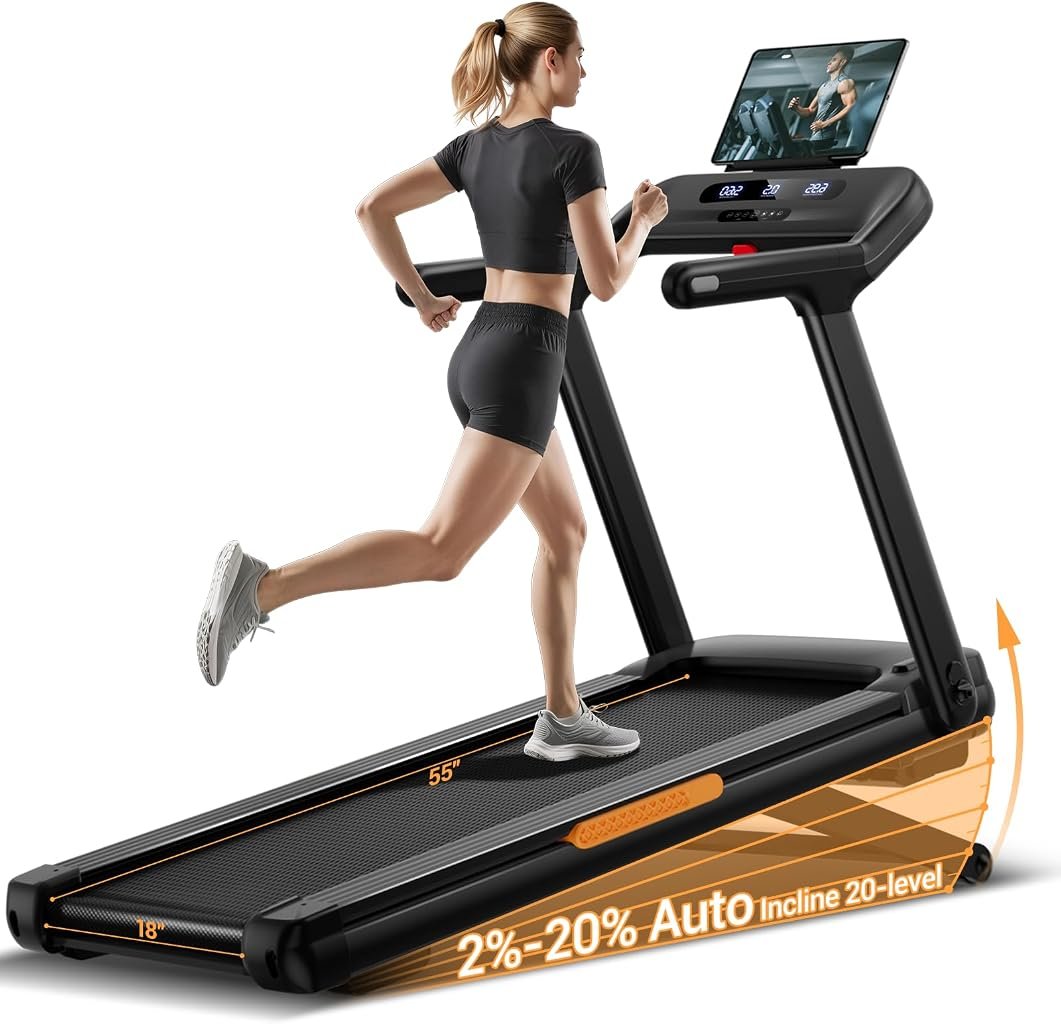
The UMAY Heavy Duty Auto Incline Treadmill presents the kind of specification sheet that immediately changes expectations. A stated 20% automatic incline, 4.0HP brushless motor, 400-pound weight capacity, 55-by-18-inch belt, and 9.5 mph maximum speed place it well beyond the conceptual territory of a basic walking pad.
The price makes the proposition more interesting.
At $398.99, UMAY is attempting to combine several characteristics commonly associated with more substantial home treadmills while keeping the purchase below $400. That creates obvious appeal, but it also raises the standard of scrutiny. Large numbers on a specification sheet matter only when the underlying machine fits the user, room, training style, and expected workload.
Our Score is 7.93/10, placing the treadmill in good territory. Buyer Confidence is considerably stronger at 8.94, Customer Sentiment is 7.62, and Value is 7.79.
The differences are revealing. Buyer Confidence exceeds Customer Sentiment by 1.32 points and Value by 1.15 points. Our assessment therefore sees a credible and unusually ambitious treadmill proposition, but not one whose specifications should automatically translate into universal enthusiasm.
The UMAY makes its strongest argument through capability per dollar. Its weaknesses emerge where headline numbers meet individual requirements.
A $398.99 Treadmill With Ambitious Specifications
The UMAY is not positioned as minimalist cardio equipment.
Its stated 400-pound weight capacity immediately differentiates it from many compact home treadmills. The 55-by-18-inch running surface gives it more longitudinal room than short walking-oriented belts, while the stated 9.5 mph maximum speed extends its intended use beyond gentle walking.
Then there is the 20% automatic incline.
That figure is substantial enough to make grade adjustment a central part of the treadmill’s identity rather than an incidental feature.
The 4.0HP brushless motor specification adds another layer. Brushless motors eliminate the brushes used in traditional brushed DC motor designs, reducing one category of mechanical wear. Yet buyers should resist interpreting a horsepower figure in isolation. Motor behavior under sustained load, controller design, thermal management, belt tension, user weight, speed, and incline all affect the actual operating experience.
Specifications describe capability boundaries.
They do not replace the need to evaluate how those boundaries match real exercise.
Our Score: 7.93/10
We rate the UMAY Heavy Duty Auto Incline Treadmill at 7.93/10.
That score recognizes an unusually broad set of stated capabilities for $398.99 without treating specifications as a guarantee of perfect fit.
The treadmill’s appeal is easy to identify. Automatic incline reaches a stated 20%. Maximum speed is 9.5 mph. The running surface measures 55 by 18 inches. Maximum supported weight is stated at 400 pounds. A 4.0HP brushless motor powers the system.
Individually, each specification addresses a different buyer concern.
The longer belt provides additional fore-aft movement space. The weight rating broadens the potential user population. Incline allows workload to change without depending entirely on speed. The 9.5 mph ceiling permits substantially faster exercise than walking-only equipment.
Yet our 7.93 score is more restrained than the 8.94 Buyer Confidence rating.
That difference reflects the need to judge the treadmill as a complete home machine rather than as a collection of impressive numbers.
At this price, UMAY’s proposition is compelling. The real question is whether its particular dimensions and performance boundaries suit the intended user.
Buyer Confidence: 8.94
Buyer Confidence reaches 8.94, the strongest of the four editorial ratings.
The score reflects the coherence of the product concept.
A 55-inch-long belt, high stated user capacity, automatic incline, and running-capable speed range all address recognizable needs. This is not a machine whose purpose has to be invented after purchase.
UMAY also maintains an official fitness-equipment presence with multiple treadmill formats. The brand’s current treadmill catalog provides a useful reference for its broader approach to home cardio equipment.
Still, 8.94 is not a substitute for model-specific verification.
Before purchase, buyers should confirm:
- Exact operating dimensions
- Folded or storage dimensions, if applicable
- Machine weight
- Incline adjustment range and increments
- Maximum supported user weight
- Running-belt dimensions
- Maximum speed
- Electrical requirements
- Safety-stop arrangement
- Control layout
- Assembly requirements
- Warranty coverage
- Maintenance schedule
- Recommended operating clearance
The product makes sense on paper. Physical compatibility decides whether that confidence survives inside a particular home.
Customer Sentiment: 7.62
Customer Sentiment is 7.62, the lowest rating in the score profile.
The 1.32-point gap between Customer Sentiment and Buyer Confidence deserves more attention than a simple declaration that both scores are positive.
Heavy-duty home treadmills ask buyers to reconcile conflicting priorities.
A larger machine can feel more appropriate for structured exercise while demanding more room. A longer belt can improve usable movement space while increasing the equipment footprint. A high incline ceiling expands training possibilities while being irrelevant to someone who rarely changes grade.
User expectations also rise when specifications become more ambitious.
A treadmill claiming a 400-pound capacity and 4.0HP motor naturally invites assumptions about robustness. A 20% incline invites expectations about demanding hill sessions. A 9.5 mph maximum speed signals that the machine is intended to support more than casual walking.
Customer Sentiment at 7.62 suggests greater restraint around the ownership experience than Buyer Confidence alone would communicate.
Our editorial position follows the same logic: the UMAY deserves serious consideration, but buyer fit matters enormously.
Value: 7.79
Value is rated at 7.79.
At $398.99, that may initially look conservative given the specification list.
The restraint is deliberate.
Value is not calculated by counting features and dividing by price. A feature contributes to value only when it addresses a requirement the owner actually has.
A 400-pound weight capacity can be highly relevant to one household and economically meaningless to another. A 20% incline ceiling is useful only when grade becomes part of exercise. A 9.5 mph maximum speed adds little for somebody who never intends to run.
Frequency matters as well.
At $398.99, the initial equipment price corresponds to approximately $3.99 per workout after 100 sessions. After 250 workouts, it falls to about $1.60. At 500 sessions, the initial purchase cost is roughly $0.80 per workout.
Those figures exclude electricity, maintenance, repairs, financing, and accessories.
They demonstrate why consistent use has more influence on long-run value than an impressive feature list.
The 20% Incline Is a Serious Training Variable
A stated 20% maximum incline deserves attention because grade materially changes treadmill walking.
A controlled experiment involving 24 healthy older adults compared walking at 0%, 10%, and 16% treadmill grades. Researchers reported that net cardiopulmonary metabolic energy cost increased 22.9% at 10% incline and 44.2% at 16% incline compared with level walking. Several lower-limb muscles also demonstrated increased activity as incline rose.
Those findings should not be transferred directly to every UMAY user. Individual fitness, body size, speed, age, biomechanics, and exercise history all matter.
The research nevertheless establishes why incline is more than a cosmetic specification.
Grade changes the workload.
For a treadmill capable of a stated 20% maximum incline, the practical benefit lies in the settings below the maximum as much as the maximum itself.
A user can create gradual climbs, alternating hill intervals, moderate sustained grades, or flatter recovery periods without continually increasing speed.
That makes incline particularly relevant for walkers who want a demanding workout without converting every progression into running.
Twenty Percent Should Not Become the Goal
A treadmill’s maximum incline is a mechanical limit, not an exercise target.
That distinction becomes particularly important when the advertised maximum reaches 20%.
Research examining walking at multiple grades has found substantial changes in energetic demand as slope rises. One study had participants walk at 0%, 5%, 10%, 15%, and 20% treadmill grades while researchers examined the interaction among speed, slope, energetic cost, and preferred walking behavior.
The lesson for a home user is straightforward.
More incline means different physical demands. It does not automatically mean a better session.
If a steep grade causes the user to lean heavily on the rails, lose normal walking mechanics, or struggle to remain positioned safely on the belt, reducing grade is rational.
A treadmill with a 20% ceiling can still be most useful at much lower settings.
Its advantage is range.
Incline Provides Another Route to Exercise Intensity
Speed receives disproportionate attention in treadmill shopping because miles per hour are easy to understand.
The body responds to more than belt speed.
Research involving adults with obesity compared slower uphill walking with faster level walking. Investigators found that slower uphill walking could produce moderate cardiovascular stimulus while reducing several lower-extremity loading measures.
The study should not be interpreted as individualized orthopedic guidance. Different bodies, injuries, medical histories, and training backgrounds require different decisions.
Its broader relevance is useful for evaluating the UMAY.
A treadmill with automatic incline gives the user more than one way to change exercise demand.
Speed can rise.
Grade can rise.
Duration can increase.
Intervals can alternate harder and easier periods.
Progress does not need to follow a single path.
A 55-Inch Belt Length Deserves Attention
The UMAY’s stated 55-by-18-inch running surface may matter more during everyday use than several digital features combined.
Belt dimensions define the physical workspace available to the user.
The 55-inch length provides considerably more fore-aft room than very short walking pads and compact treadmills. That becomes increasingly relevant as speed rises and stride characteristics change.
The 18-inch width deserves separate consideration.
It provides a defined lateral space that may feel perfectly suitable for many users, particularly walkers and moderate runners. Buyers accustomed to wider treadmill decks should compare that dimension carefully rather than focusing only on length.
This is especially relevant for larger users.
A 400-pound weight rating describes one type of compatibility. Running-surface dimensions describe another.
Maximum supported weight does not tell a buyer whether the belt will feel spacious.
Both measurements matter.
The 400-Pound Capacity Broadens the Potential Audience
A stated 400-pound user capacity is one of the UMAY’s most consequential specifications.
Many buyers encounter an uncomfortable problem when shopping for exercise equipment: machines intended to support physical activity may impose weight limits that exclude the people who most want accessible home exercise.
A higher stated capacity broadens the potential user base.
That matters both functionally and psychologically.
Yet capacity should be interpreted correctly.
The maximum supported user weight is not the same measurement as running-surface size, machine stability, comfort, or ease of mounting and dismounting.
A heavier user should examine the entire physical design.
Belt width and length matter. Handrail arrangement matters. Step-up height may matter. Available room around the machine matters.
The 400-pound figure is therefore meaningful, but it is only one part of body-to-machine fit.
The 9.5 MPH Maximum Speed Is More Than Most Walkers Need
At 9.5 mph, the treadmill’s stated maximum speed corresponds to a pace of roughly 6 minutes 19 seconds per mile.
That is running, not casual jogging.
Many home treadmill users will never approach that ceiling, and that is perfectly reasonable.
Maximum speed is useful primarily as an indication of the machine’s operating range. It should not become a performance objective.
For walking, speeds are dramatically lower. Jogging and recreational running also cover a broad range below 9.5 mph.
A buyer should therefore ask a more practical question than whether 9.5 mph sounds impressive: Is the speed range appropriate for the intended routine?
For many households, the answer will be yes.
Dedicated faster runners may have different priorities, including belt width, deck length, sustained motor performance, stability, and long-session durability.
The 4.0HP Brushless Motor Needs Context
Motor horsepower is among the most aggressively marketed treadmill specifications.
It is also easy to oversimplify.
The UMAY lists a 4.0HP quiet brushless motor. Brushless motor architecture has legitimate mechanical advantages, including eliminating brushes as wear components.
Still, the treadmill experience cannot be reduced to horsepower.
Motor control, cooling, drivetrain design, belt friction, incline, user weight, operating duration, and electrical conditions all affect performance.
The word “quiet” also requires restraint. Noise in a treadmill comes from multiple sources: motor operation, belt movement, rollers, foot impact, deck response, flooring, and room acoustics.
A brushless motor may address one source of mechanical sound. It cannot make foot strikes disappear.
Apartment buyers should therefore think beyond motor descriptions.
Floor construction and vibration transmission can matter as much as the treadmill itself.
Walking Is Already Legitimate Exercise
The UMAY’s speed and incline capabilities can make it easy to frame the machine around demanding workouts.
Walking should not become an afterthought.
The Centers for Disease Control and Prevention recommends that adults accumulate at least 150 minutes of moderate-intensity physical activity each week, with brisk walking offered as an example. Muscle-strengthening activity is also recommended on at least two days each week.
Five 30-minute brisk walks reach the 150-minute aerobic target.
That makes a treadmill useful even when its 9.5 mph ceiling remains untouched.
Incline broadens the possibilities further.
A user might perform flatter brisk walking on one day and moderate hill intervals on another. A longer low-grade session can coexist with shorter, more demanding workouts.
The machine’s broad performance envelope does not require every session to use the extremes.
Heavy Duty Does Not Mean Small-Space Friendly
The phrase “heavy duty” carries an unavoidable physical implication.
Equipment built around higher user capacities, longer running surfaces, and stronger structural ambitions still has to exist somewhere.
The UMAY’s 55-inch belt alone establishes a meaningful length requirement before the surrounding frame is considered.
Buyers should measure the operating space rather than estimating visually.
The treadmill needs room for the machine itself and appropriate clearance. Doors, furniture, shelving, desks, and normal routes through the room all need to remain usable.
Flooring also deserves attention.
A treadmill concentrates weight and repetitive movement in one location. The interaction among machine, floor surface, matting, and room acoustics can affect the ownership experience.
Home cardio is partly an exercise problem and partly a space-planning problem.
Who Is the UMAY Best Suited To?
The strongest fit is a buyer who wants more capability than a basic walking treadmill while keeping the purchase near $400.
The stated 400-pound capacity makes it particularly relevant for users excluded by lower-capacity machines.
The 55-inch belt length favors people who want more fore-aft exercise space than compact walking equipment provides.
Automatic incline reaching a stated 20% is attractive for walkers and runners who expect grade to become a regular training variable.
The 9.5 mph maximum speed gives the treadmill room for running rather than limiting its identity to walking.
The fit becomes weaker for somebody who needs only slow under-desk movement. That buyer would be paying for considerable unused capability.
Dedicated runners with high weekly mileage should scrutinize the machine from another angle, emphasizing verified long-session suitability, belt dimensions, stability, warranty coverage, and motor behavior rather than focusing on maximum specifications.
How It Fits Among the Best Treadmills for Home Use
The best treadmills for home use are rarely the machines with the largest number in every category.
Homes impose compromises.
A larger belt requires more room. Higher capacity can mean a more substantial structure. Incline hardware adds mechanical complexity. Running capability places different demands on a treadmill than slow walking.
UMAY’s proposition is therefore notable because it attempts to combine a 55-by-18-inch belt, 400-pound capacity, 9.5 mph speed ceiling, 4.0HP brushless motor, and 20% automatic incline at $398.99.
Our 7.93 overall rating recognizes the ambition without confusing ambition with perfection.
The treadmill makes considerable sense for the right household.
The 7.62 Customer Sentiment score and 7.79 Value score keep that judgment disciplined.
What Buyers Should Verify Before Ordering
A treadmill with ambitious specifications deserves equally serious pre-purchase measurement.
Buyers should verify:
- Exact incline range and adjustment increments
- Maximum speed
- Running-surface dimensions
- Maximum supported user weight
- Overall operating dimensions
- Storage dimensions, if relevant
- Total machine weight
- Motor specification
- Electrical requirements
- Safety-stop mechanism
- Handrail and control arrangement
- Assembly requirements
- Warranty coverage
- Maintenance schedule
- Recommended operating clearance
The intended exercise area should then be marked physically.
Tape on the floor can reveal spatial conflicts that product photographs conceal. Door swings, desk chairs, cabinets, and walking routes through the room all matter.
For a heavier machine, the delivery path deserves attention as well.
A treadmill is useful only after it reaches the room where it will be used.
Where the UMAY Gives Ground
The UMAY’s 7.93/10 score reflects meaningful strengths without ignoring trade-offs.
The first is size. A 55-inch running belt contributes to usability but cannot avoid taking physical space.
The second is width. An 18-inch belt may suit many users, but buyers who prefer broader running surfaces should compare dimensions carefully.
The third is specification relevance. A 20% incline, 400-pound capacity, and 9.5 mph maximum speed have little economic value to someone who does not need them.
The fourth appears in the scores themselves.
Buyer Confidence at 8.94 is materially stronger than Customer Sentiment at 7.62 and Value at 7.79. Our editorial assessment therefore regards the UMAY’s proposition with greater confidence than its universal ownership appeal.
That distinction is central to understanding the machine.
Final Considerations
The UMAY Heavy Duty Auto Incline Treadmill earns a 7.93/10 overall score by delivering an unusually ambitious group of stated specifications at $398.99.
A 20% automatic incline gives users substantial grade range. The 55-by-18-inch running surface provides meaningful length for a home treadmill. A stated 400-pound user capacity broadens the potential audience. The 9.5 mph maximum speed allows the machine to extend beyond walking, while the 4.0HP brushless motor specification reinforces its heavy-duty positioning.
Buyer Confidence is the strongest score at 8.94. Customer Sentiment is more restrained at 7.62, and Value reaches 7.79.
Those differences sharpen the editorial verdict.
The UMAY is easy to take seriously. It is harder to recommend indiscriminately.
Someone seeking basic flat walking can find simpler equipment and avoid paying for unused performance. A demanding high-mileage runner should investigate verified dimensions, sustained performance, stability, warranty coverage, and long-session suitability before being persuaded by maximum numbers.
The strongest fit lies between those extremes: a home exerciser who expects regular walking or running, values automatic incline, benefits from the higher stated user capacity, and has enough space for a treadmill built around a 55-inch belt.
The exercise case for incline is legitimate. Published research demonstrates that increasing treadmill grade can materially increase metabolic demand, while public-health guidance recognizes brisk walking as meaningful moderate-intensity activity.
That gives the UMAY flexibility.
Its 20% maximum grade does not need to be reached to be useful. Its 9.5 mph maximum speed does not need to be approached to justify the machine. Its 400-pound capacity does not make belt dimensions irrelevant.
Each specification is a boundary, not a command.
At $398.99, the treadmill’s strongest argument is the breadth of capability available inside those boundaries. The 7.93 overall score reflects a product that offers a great deal on paper while still demanding careful matching between user, machine, room, and training goals.
For the buyer who performs that matching carefully, the UMAY presents a credible route to structured home cardio without moving into a dramatically higher price bracket. For everyone else, the specification sheet should remain exactly what it is: a starting point for judgment, not a substitute for it.