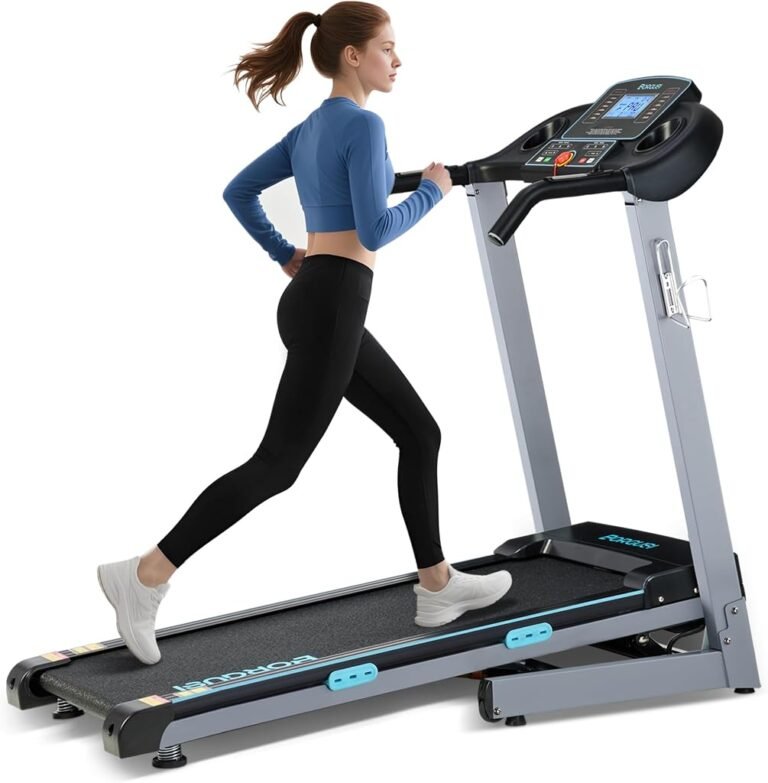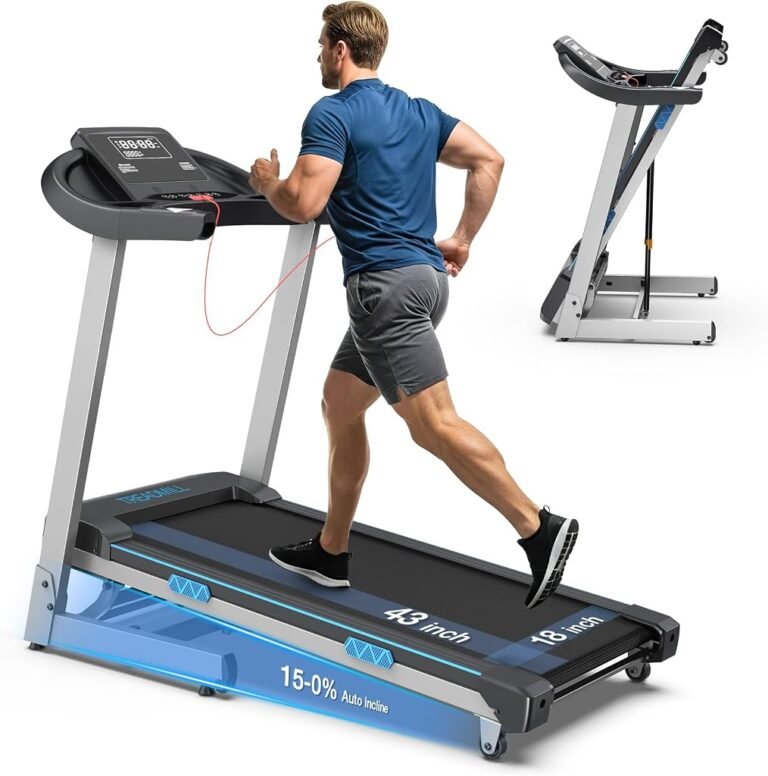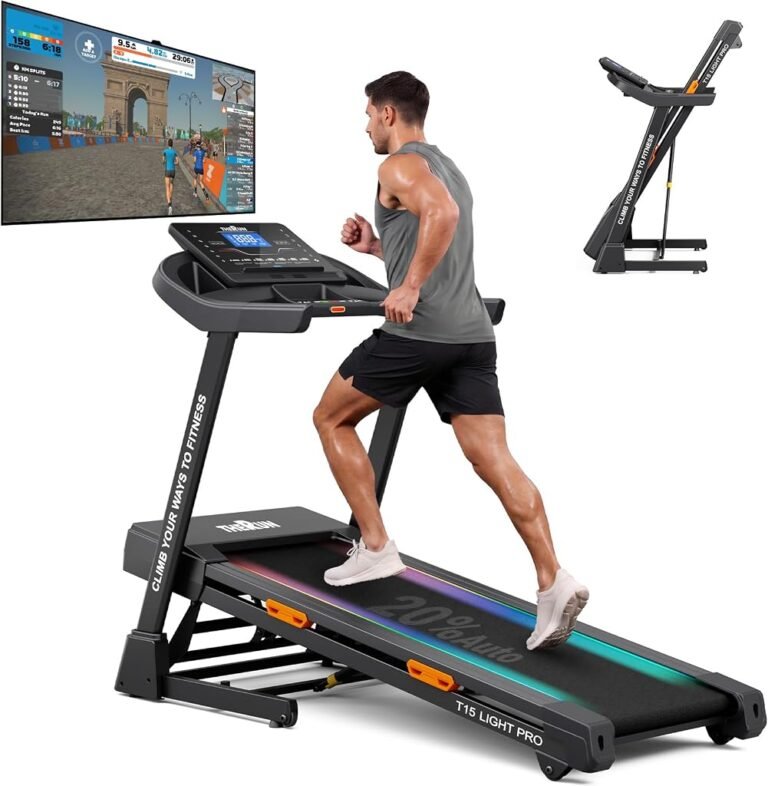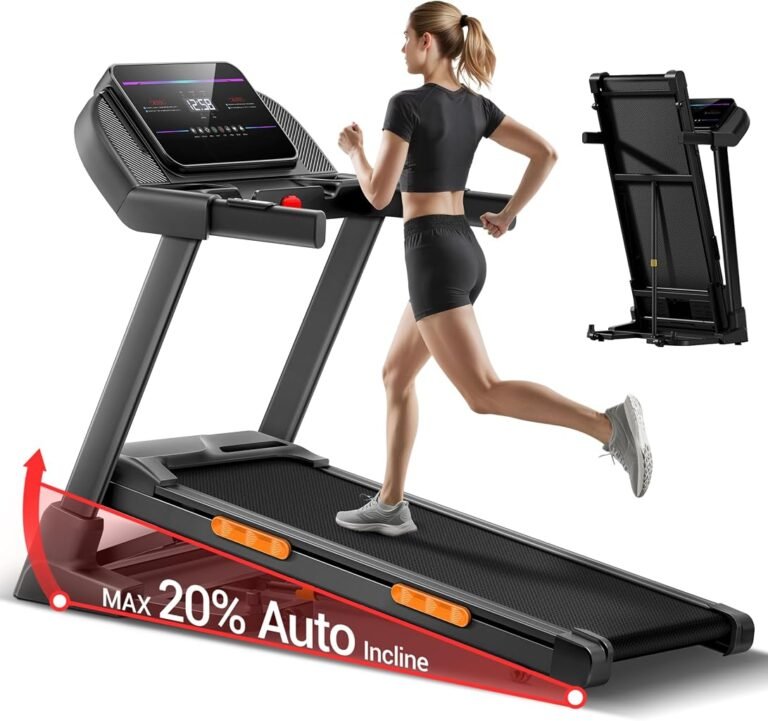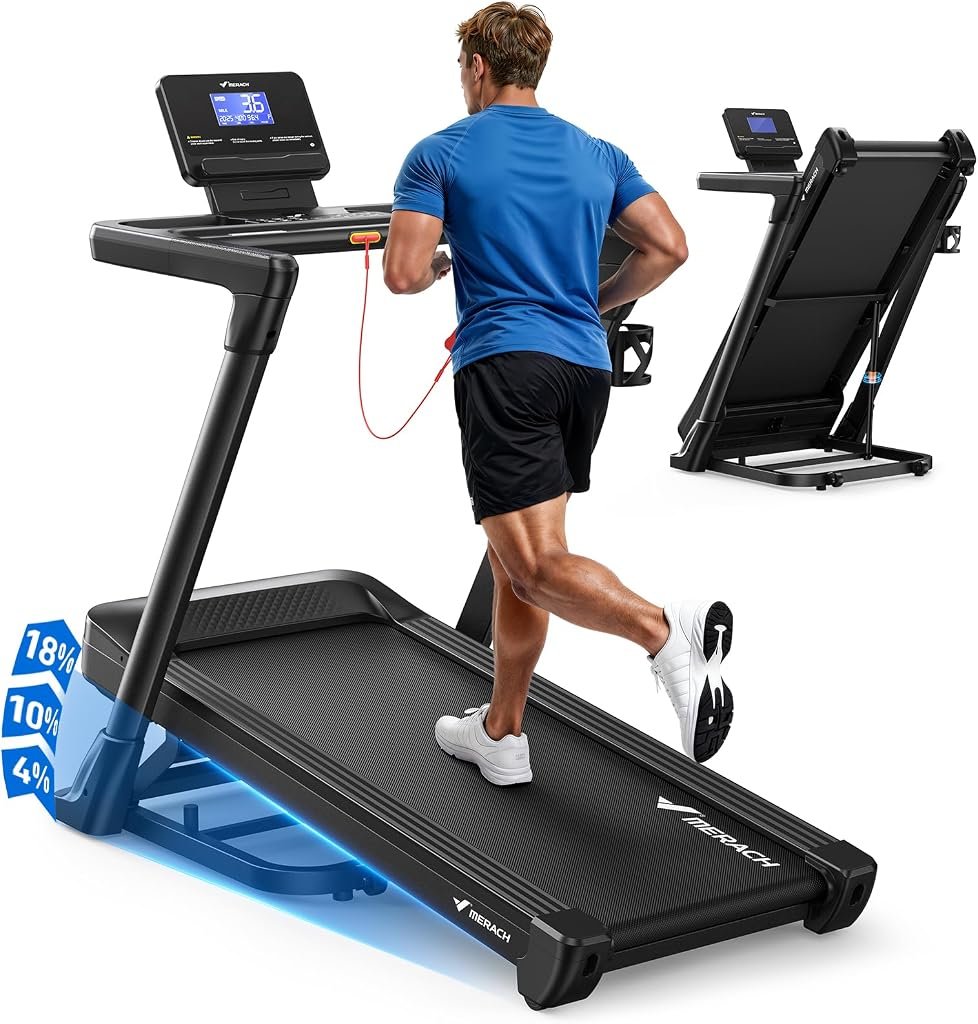
The MERACH Auto Incline Foldable Treadmill presents a surprisingly ambitious specification package for a machine priced at $449.99. Depending on configuration, the family includes 15% or 18% automatic incline, running surfaces around 47 or 55 inches long and 18 to 19 inches wide, speed ceilings reaching 8.7 or 10 mph, a stated 3.5 HP brushless motor, a 350-pound user capacity, folding hardware, app connectivity, a screen, and heart-rate functionality.
That is a substantial collection of features for less than $500. It is also exactly the kind of specification list that requires careful interpretation. A treadmill can look formidable on paper while still being a poor match for a particular runner, room, or training routine.
Our score is 8.33/10, placing the MERACH in Very Good territory. Customer Sentiment stands at 8.06, Buyer Confidence at 9.43, and Value at 8.03. The spread between those ratings tells an interesting story. Confidence is exceptionally high because the basic proposition is unusually clear: a foldable home treadmill with meaningful automatic incline, a brushless motor, connected functions, and a comparatively high stated user capacity. Value and Customer Sentiment are slightly more restrained because buyers still need to choose the correct configuration and determine whether the running surface, speed range, digital functions, and folding arrangement match their actual routines.
The MERACH is therefore more interesting as an exercise machine than as a collection of electronics. Its defining feature is incline.
The 15% and 18% Variants Need to Be Kept Separate
MERACH sells more than one treadmill configuration around this design concept, and that distinction matters.
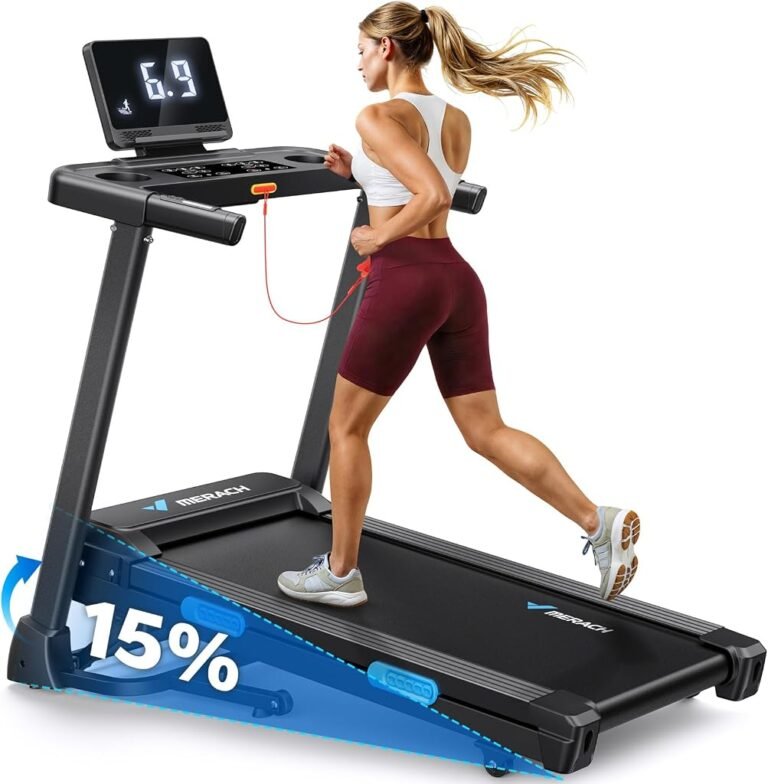
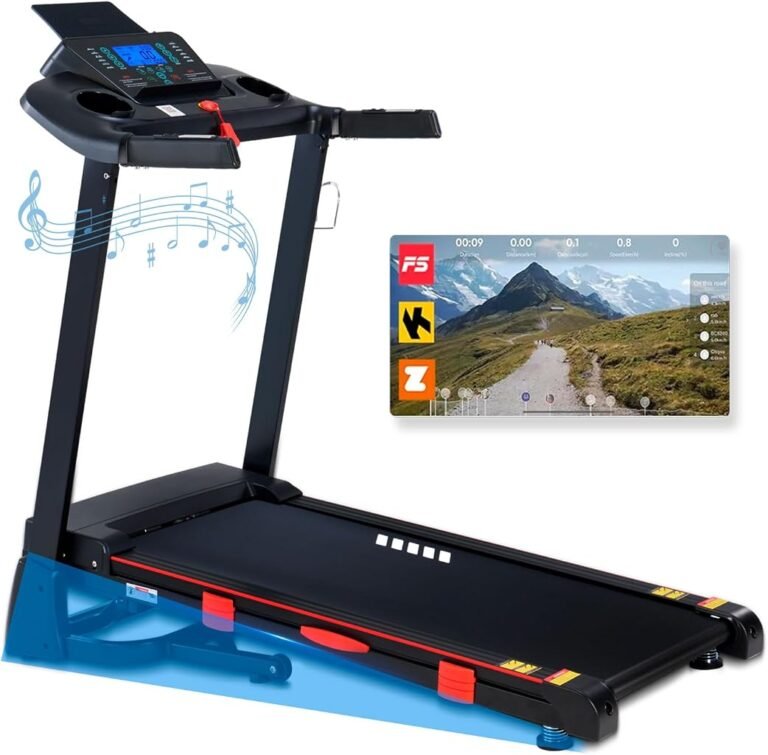
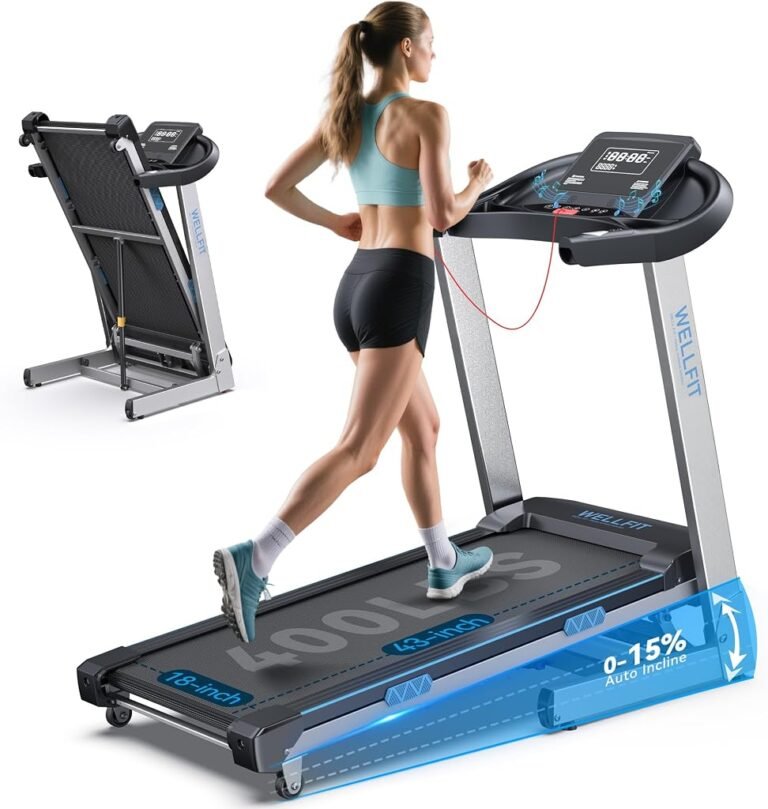
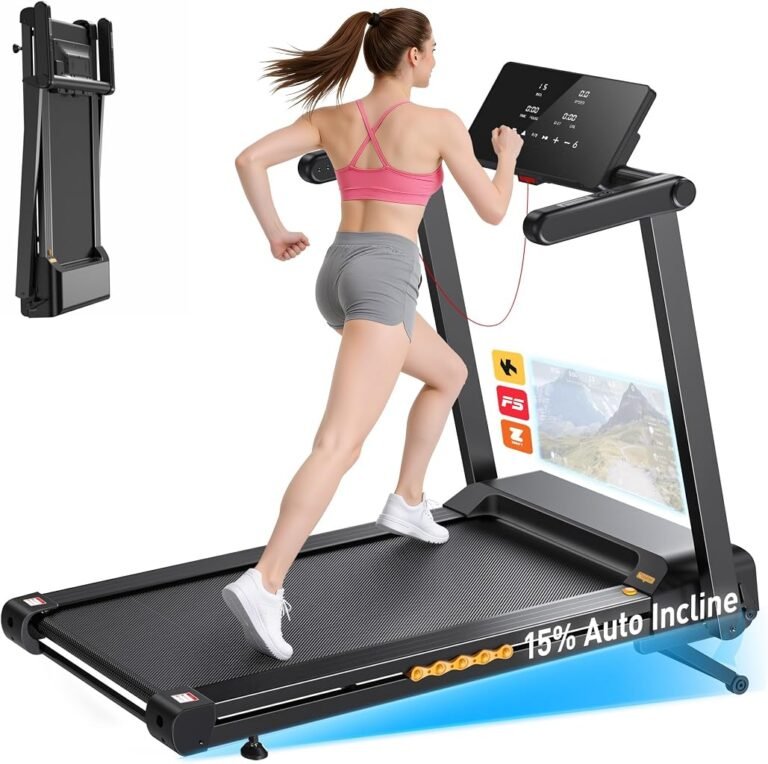
The company’s 15% automatic-incline model is listed with a 3.5 HP motor, a 47.2-by-18.9-inch running belt, a 350-pound capacity, 40 preset programs, app connectivity, Bluetooth audio, hydraulic folding, and a shock-absorbing deck. MERACH also lists an 18% automatic-incline treadmill with a 3.5 HP motor and 350-pound capacity.
Those variants should not be blended into a fictional single machine.
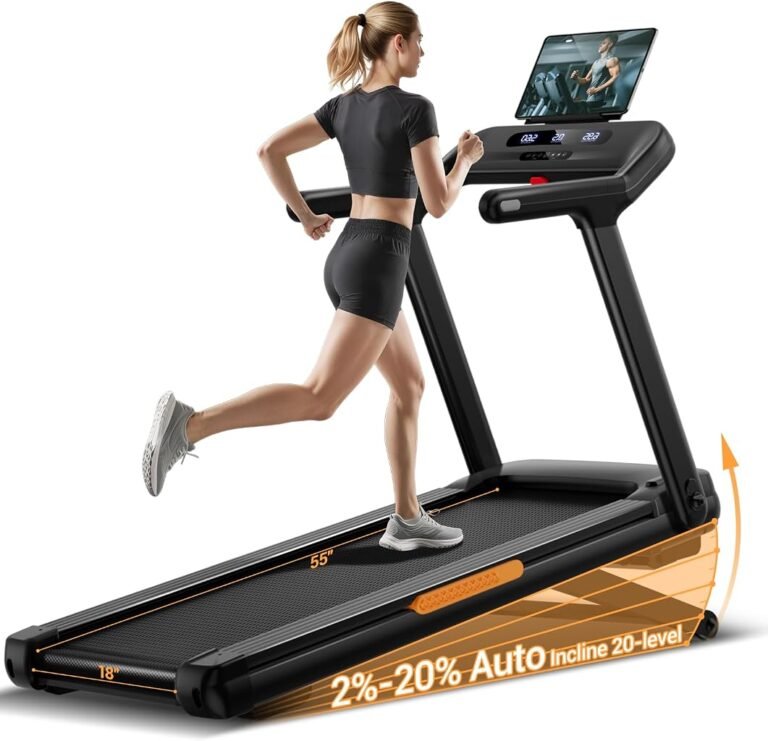
The distinction affects purchasing decisions because 47 and 55 inches are meaningfully different running-surface lengths, just as 8.7 and 10 mph represent different upper speed limits. The same applies to 15% and 18% maximum incline.
Buyers should therefore verify the exact model selected at checkout rather than assuming every specification associated with the MERACH family accompanies every configuration.
That discipline matters especially when a treadmill is expected to support running rather than primarily walking.
Automatic Incline Is the Feature That Changes the Training Case
Incline is more consequential than another app icon or another number on a display.
A flat treadmill allows exercise demand to rise primarily through speed and duration. An incline treadmill introduces grade as another variable. That gives the user more ways to alter workload without simply making the belt move faster.
The MERACH’s 15% and 18% configurations therefore create a wider training range than a basic flat walking treadmill.
A user can walk relatively slowly while increasing grade, alternate flatter periods with climbing intervals, or reserve steeper settings for dedicated hill sessions. Runners can also use incline strategically rather than treating maximum grade as a setting that should be reached during every workout.
The American College of Sports Medicine includes treadmill grade in its metabolic calculations for walking and running, reflecting the basic exercise-science principle that speed and incline both influence workload. ACSM’s current certification resources reference the metabolic equations used to analyze exercise intensity in its exercise-testing guidance.
That makes the MERACH’s automatic incline more than a convenience feature.
It expands the number of ways the treadmill can be used.
Maximum Incline Is Not the Same as Everyday Incline
Large incline numbers are easy to market because they create an obvious hierarchy: 18% looks more capable than 10%, and 15% looks more capable than 5%.
Training is not that simple.
A steep treadmill grade can dramatically alter how walking feels. The cardiovascular demand rises, lower-body involvement changes, and users may instinctively shorten their stride or reach for the handrails.
Maximum incline should therefore be understood as available range, not a target.
Someone returning to exercise may spend most sessions at much gentler grades. A conditioned walker might use steeper settings for intervals. Another user may prefer moderate incline for longer periods.
The automatic adjustment is valuable precisely because it allows that variation without requiring the workout to stop for manual changes.
The machine’s high-end grade exists when needed. It does not need to dominate the routine.
Our 8.33/10 Score Reflects an Ambitious Home Treadmill
An overall score of 8.33/10 reflects a product that offers unusually broad training flexibility for its $449.99 price.
The automatic incline is the strongest part of that equation. Folding construction addresses household space. App connectivity and the screen add training feedback. Heart-rate functionality provides another reference point during exercise. The 350-pound stated capacity broadens potential user fit compared with machines built around substantially lower limits.
Customer Sentiment at 8.06 is positive but lower than the overall score. That difference is reasonable for a product with several configurations and many features. More capability creates more purchasing variables.
Buyer Confidence at 9.43 is the standout figure. The machine’s central specifications create a well-defined proposition, and MERACH maintains a wider catalogue of fitness equipment rather than presenting this treadmill as an isolated product.
Value at 8.03 is positive without suggesting that price alone makes the treadmill a universal bargain.
A $449.99 treadmill is valuable when its capabilities correspond to the owner’s exercise habits. A person who never uses incline, app functions, or running speeds has paid for flexibility that remains dormant.
The 3.5 HP Brushless Motor Deserves Context
MERACH states that these treadmill configurations use a 3.5 HP brushless motor. That is a meaningful product specification, but horsepower numbers should not be interpreted in isolation.
Treadmill performance is influenced by the entire drive system, control electronics, belt tension, rollers, user load, speed, grade, ventilation, and workout duration.
The more useful distinction here is the brushless design.
Brushless motors avoid the physical brushes used for electrical commutation in traditional brushed motors. In general engineering applications, removing brushes eliminates one wear component and changes how motor control is managed electronically.
That does not prove a specific service life for the MERACH, nor does it guarantee silent operation under every load.
It does give the treadmill a technically credible motor architecture for a modern home machine.
The 350-pound user-capacity rating should likewise be treated as a firm operating specification rather than an invitation to infer durability beyond that number.
The Running Belt May Decide Who Should Buy It
Running-surface dimensions receive less attention than incline percentages, but they can have greater influence on everyday comfort.
MERACH configurations around this treadmill family include shorter and longer belt options. The 15% model is officially listed with a 47.2-by-18.9-inch surface, while another configuration is associated with a longer 55-inch belt.
That difference matters.
Walking generally requires less fore-aft room than running because stride characteristics change as speed rises. Taller users and runners with longer strides can be more sensitive to deck length than people using a treadmill for controlled walking.
Width matters as well.
An 18- to 19-inch belt is different from the broader running surfaces found on some larger gym-oriented treadmills. That does not make it inadequate, but buyers should think physically rather than abstractly.
The question is not whether a belt is described as wide.
The question is whether its measured dimensions suit the intended user at the intended speed.
The Speed Range Defines Different Versions of the Same Idea
The listed family spans configurations with maximum speeds around 8.7 mph and 10 mph.
Those ceilings correspond to very different use cases from low-speed walking.
At 8.7 mph, the treadmill is moving at roughly a 6:54-per-mile pace. At 10 mph, the equivalent pace is 6:00 per mile.
Those calculations do not mean the machine should be used continuously at maximum speed. They simply illustrate that the upper range extends beyond casual jogging.
For many home users, maximum speed will matter far less than control at ordinary training speeds.
A walker exercising at 3 mph does not benefit merely because the machine can reach 10. A runner performing faster intervals may care considerably more.
Speed should therefore be evaluated as usable range, much like incline.
The best specification is not automatically the largest number. It is the range that accommodates the workouts a person will actually perform.
Folding Construction Addresses a Real Home-Fitness Problem
A treadmill can be excellent exercise equipment and terrible furniture.
This tension explains the enduring appeal of folding designs.
Dedicated gyms have the luxury of permanent equipment placement. Homes often do not. A treadmill may share space with a bedroom, office, garage, guest room, or multipurpose area.
MERACH’s folding design addresses that conflict by allowing the deck to be repositioned when the machine is not being used.
The 15% model’s official product description specifies a hydraulic folding system.
Folding does not make a treadmill disappear. Nor does it make a substantial motorized machine effortless to relocate.
Floor dimensions still matter. Ceiling clearance matters when the deck is raised. The user also needs enough operational space around the machine when it is open.
The advantage is flexibility, not invisibility.
The $449.99 Price Is Central to the Appeal
At $449.99, the MERACH competes in a difficult section of the market.
Below it are inexpensive walking pads and simpler motorized treadmills. Above it are larger running machines, established premium brands, and connected treadmills costing four figures or more.
The MERACH attempts to compress many higher-tier features into the middle.
Automatic incline is the most obvious example. A 350-pound capacity, brushless motor, app integration, folding construction, screen, and heart-rate functionality add breadth.
That explains why Value reaches 8.03.
Yet value cannot be measured by counting features and dividing by price.
Every feature introduces a question about usefulness. Someone who trains independently may barely open the app. Someone interested exclusively in walking may never approach the maximum speed. A user with permanent gym space may care little about folding.
The $449.99 price becomes most persuasive when several of these functions solve actual problems for the same household.
The App Should Support Exercise Rather Than Define It
App connectivity has become common enough in fitness equipment that its mere presence no longer deserves much praise.
What matters is whether it reduces friction.
A useful training app can preserve workout records, display progress, organize sessions, and create enough variation to make repeated indoor exercise less monotonous.
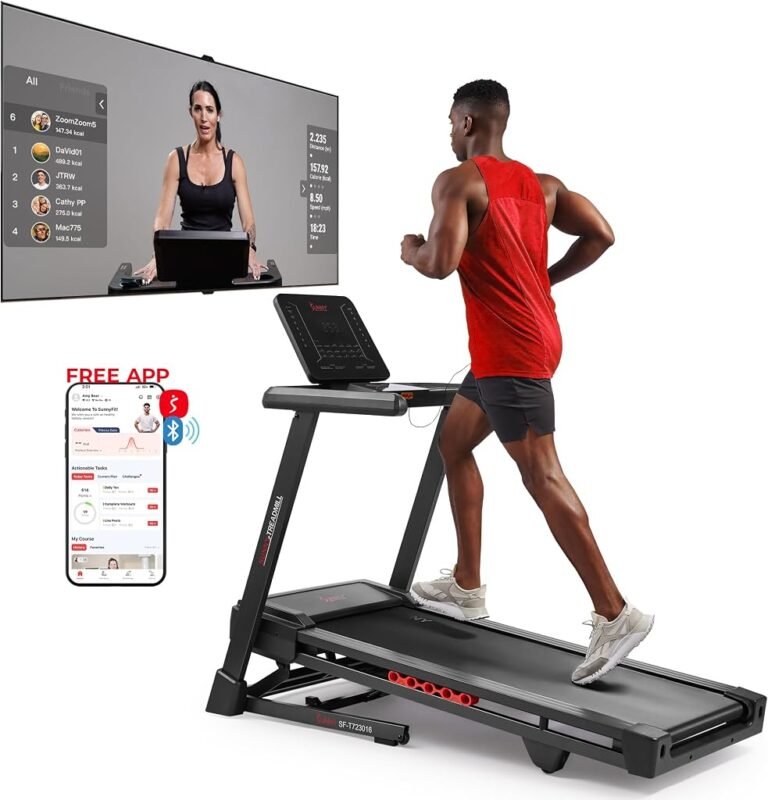
The MERACH ecosystem provides connected training functions, while the 15% configuration is also listed with compatibility for the MERACH fitness app and KINOMAP.
That can be useful for people who enjoy digital structure.
Others will prefer direct treadmill controls.
Neither approach is inherently superior. A disciplined runner with an established program may need little software assistance. A newer exerciser may appreciate guidance and visible records.
The machine should remain useful in both situations.
A treadmill’s physical usefulness should not disappear when a phone battery does.
Heart-Rate Data Needs Sensible Interpretation
Heart-rate functionality can help users observe how exercise intensity changes with speed and incline.
It should not be confused with medical monitoring.
Heart rate responds to more than treadmill workload. Temperature, hydration, caffeine, stress, medication, sleep, illness, fitness level, and individual physiology can all influence it.
That makes trends more useful than isolated numbers for many recreational exercisers.
A user may notice that the same walking speed produces a higher heart rate when incline rises. Over time, repeated workouts can also provide a personal frame of reference.
But treadmill heart-rate functions should not be used to diagnose medical conditions or replace clinical equipment.
Their strongest role is feedback.
Public-Health Guidance Makes Walking More Significant Than It Looks
Treadmill marketing often focuses on dramatic workouts because intensity photographs well.
Public-health recommendations are considerably less theatrical.
The CDC states that adults should aim for at least 150 minutes of moderate-intensity aerobic activity each week, or 75 minutes of vigorous activity, or an equivalent combination. That activity can be distributed across the week rather than completed at once.
Brisk walking qualifies as a moderate-intensity activity for many adults.
That gives the MERACH a much broader purpose than running.
Five 30-minute brisk walks produce 150 minutes of weekly aerobic activity. A user could also divide exercise into shorter sessions.
The CDC further notes that adults need muscle-strengthening activity on at least two days each week, meaning treadmill exercise should not be mistaken for an entire fitness program by itself.
That is a useful limitation.
A treadmill can handle a substantial portion of aerobic exercise. It cannot replace every form of training.
Incline Creates Another Route to Intensity
Speed is not the only way to make treadmill exercise harder.
That fact gives the MERACH’s automatic incline practical relevance for walkers.
A user who does not want to run can increase grade instead of continually increasing belt speed. This can create more demanding walking sessions while preserving a walking gait.
The CDC describes moderate intensity in practical terms: breathing and heart rate increase, and a person can generally talk but not sing. Vigorous activity makes conversation much more difficult.
That talk test can be more useful than chasing arbitrary treadmill numbers.
An 8% grade does not produce identical effort for every person. Neither does 3 mph.
Fitness, body size, age, training history, and other factors alter the experience.
Automatic incline gives users a tool. Perceived effort helps determine how aggressively that tool should be used.
Buyer Confidence at 9.43 Is the Strongest Rating
A Buyer Confidence score of 9.43 is unusually high relative to the treadmill’s other ratings.
The reason is not that every buyer should purchase it.
Confidence refers to how clearly the product proposition can be understood and matched to a user.
The MERACH has specific, meaningful differentiators: substantial automatic incline, folding construction, a stated 3.5 HP brushless motor, a 350-pound capacity, connected functions, and multiple belt and speed configurations.
Those features make comparison relatively straightforward.
A buyer can ask whether incline matters. Whether 350 pounds provides sufficient capacity. Whether the intended running surface is long enough. Whether the speed ceiling matches training. Whether folding is necessary.
Clear specifications support informed decisions.
That is preferable to equipment whose marketing language is elaborate but whose practical identity is difficult to determine.
Customer Sentiment at 8.06 Introduces Useful Restraint
The 8.06 Customer Sentiment score is the lowest of the editorial ratings, though it remains favorable.
That difference helps keep the review grounded.
Hybrid home treadmills attempt to satisfy several audiences at once: walkers, runners, incline users, app users, households with limited space, and people seeking higher capacity.
The more jobs a product attempts, the greater the chance that an individual buyer will care strongly about some features and barely use others.
There is also a practical distinction between specification appeal and daily ownership.
A maximum incline sounds exciting on a product page. After six months, the questions become more mundane: Is the treadmill comfortable? Is it easy to start? Does it fit the room? Does folding remain convenient? Does the user still exercise on it?
Long-term satisfaction is usually decided by those ordinary interactions.
How It Fits Among the Best Treadmills for Home
The MERACH deserves consideration among the best treadmills for home because it addresses several constraints specific to domestic exercise.
It folds. It provides automatic incline. It supports app connectivity. It offers a stated 350-pound user capacity. Its configurations extend beyond walking-pad speeds into genuine running territory.
Most importantly, its incline system gives walkers and runners another way to vary training.
That does not make it the correct machine for every home.
A dedicated runner may prefer a longer or wider deck depending on stride and training style. Someone who wants only low-speed walking can find cheaper and smaller equipment. A buyer uninterested in connected functions may place little value on the app.
The MERACH’s strongest audience sits between those groups: people seeking a versatile cardio machine that can handle walking, hill work, jogging, and at least some faster running without requiring a permanent gym-sized footprint.
What Buyers Should Verify Before Ordering
The existence of multiple configurations makes careful selection especially important.
Before purchasing, buyers should verify:
- Whether the selected model uses 15% or 18% maximum incline.
- The exact running-belt length and width.
- Whether maximum speed is 8.7 or 10 mph.
- The current 350-pound capacity specification for the selected configuration.
- Folding and unfolded dimensions.
- Available ceiling clearance at maximum incline.
- Electrical requirements.
- Current app compatibility.
- Heart-rate hardware and how measurements are taken.
- Warranty coverage.
- Delivery and assembly requirements.
- Available clearance around the treadmill in its intended room.
These details are more useful than choosing whichever variant displays the largest number.
A treadmill must fit three things simultaneously: the user, the training plan, and the house.
Failure in any one of those categories can undermine the purchase.
A Sensible Training Strategy Uses the Range Gradually
The presence of an 18% maximum incline does not require an 18% workout on the first day.
The same principle applies to speed.
That guidance suits an incline treadmill particularly well.
Initial sessions can establish comfort at flat or modest grades. Incline can then increase progressively. Faster running can be introduced separately according to experience and fitness.
This approach also makes it easier to identify which variable is causing fatigue.
Changing speed, incline, and duration dramatically at the same time may produce a harder workout, but it makes progression difficult to interpret.
The MERACH provides several adjustment tools. Good training does not require using all of them simultaneously.
Space Saving Does Not Mean Space Free
The phrase “foldable treadmill” can create unrealistic expectations.
A folded treadmill remains a treadmill.
It retains mass, width, height, a motor assembly, a console, and structural components. Hydraulic assistance can make folding more manageable, but the machine still requires a legitimate storage position.
Potential buyers should measure twice: once for operation and once for storage.
Flooring deserves attention as well. A treadmill mat may help protect some surfaces and manage debris, but the suitability of any installation depends on the floor, machine weight, household layout, and building.
Upper-floor users should also think about vibration and sound transmission rather than relying solely on motor-noise claims.
Mechanical footfall is different from motor sound.
That distinction matters in apartments and shared buildings.
Final Considerations
The MERACH Auto Incline Foldable Treadmill earns an 8.33/10 overall score because it combines a genuinely useful training feature—substantial automatic incline—with a broad set of home-oriented functions at $449.99.
Its 15% and 18% configurations offer different levels of grade, while belt lengths, widths, and maximum speeds also vary. Those differences should be treated as distinct configurations rather than merged into a single specification sheet.
The stated 3.5 HP brushless motor, 350-pound user capacity, folding design, app integration, screen, and heart-rate functionality give the treadmill considerable breadth. Yet incline remains the feature most likely to change how a workout is structured. It allows intensity to increase without relying exclusively on speed and gives walking workouts more room for progression.
Our Buyer Confidence score of 9.43 reflects the clarity of that proposition. Customer Sentiment at 8.06 and Value at 8.03 are slightly more restrained because practical fit still depends on choosing the right variant and actually using the features being purchased.
The $449.99 price strengthens the case, but price should not override fit. Belt dimensions deserve careful attention from runners. Maximum speed should match the intended training style. Folding dimensions should be measured against the actual room. App features should be regarded as support rather than the reason the treadmill exists.
For a household seeking regular walking, incline training, jogging, or moderate running in one foldable machine, the MERACH presents a coherent package. Someone needing only casual walking can choose something simpler. A highly demanding runner may reasonably prioritize a larger running surface or other specialized characteristics.
The treadmill is most convincing when its capabilities are treated as a range rather than a checklist to maximize. The owner does not need to run at top speed, climb at maximum grade, monitor heart rate, and use an app during every session.
Its flexibility is valuable precisely because those choices can remain separate.
A flat recovery walk on Monday, an incline session on Wednesday, and a faster workout on Saturday can all happen on the same machine. That adaptability, more than any single headline specification, explains why the MERACH reaches Very Good territory in our assessment.