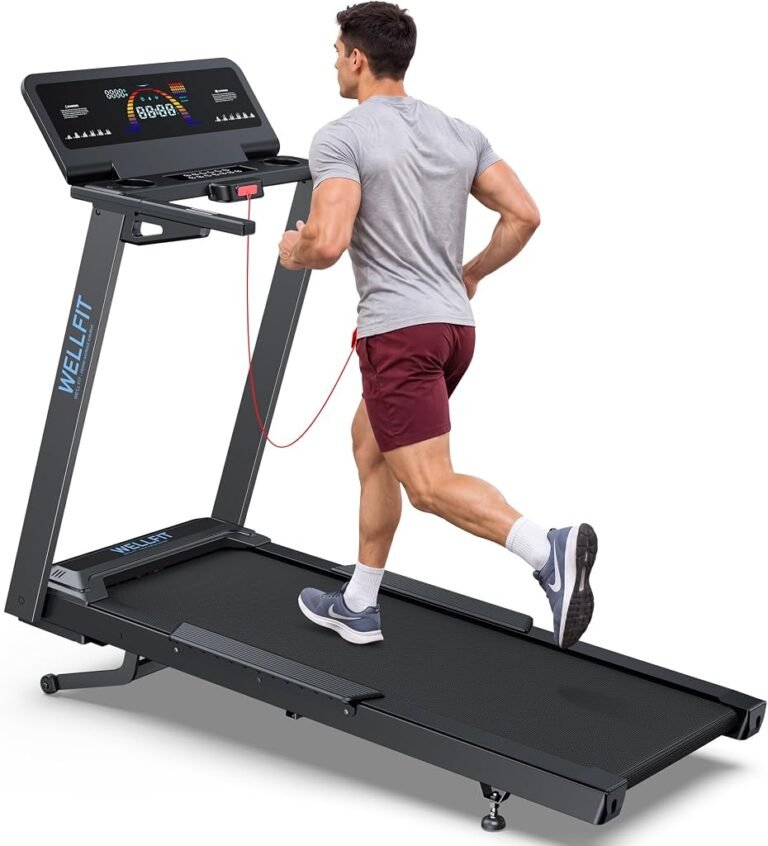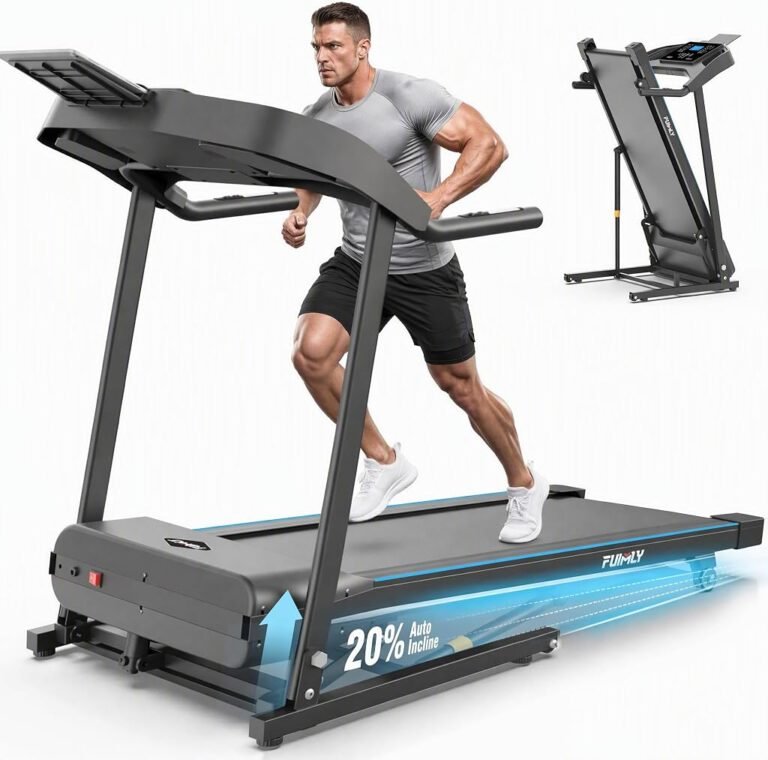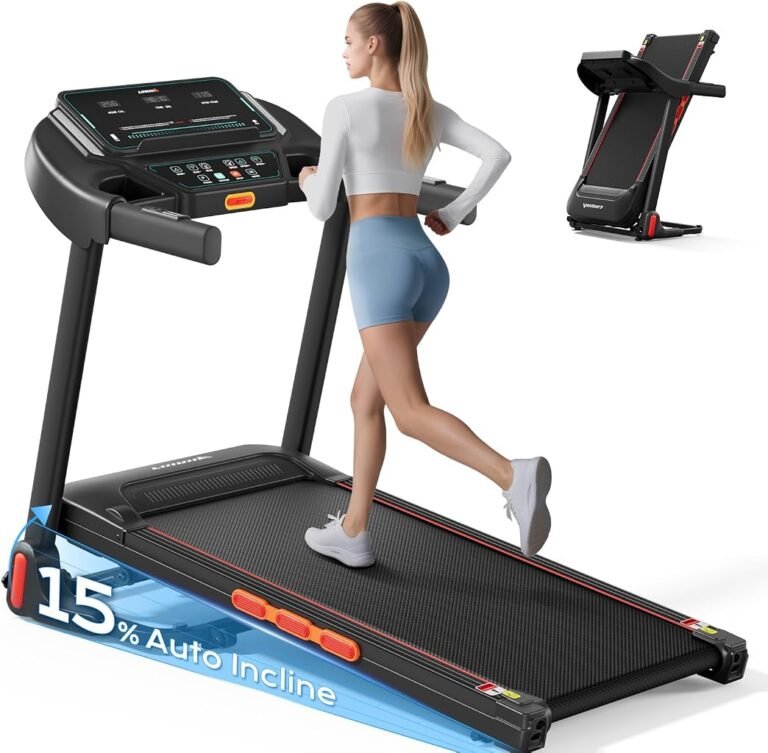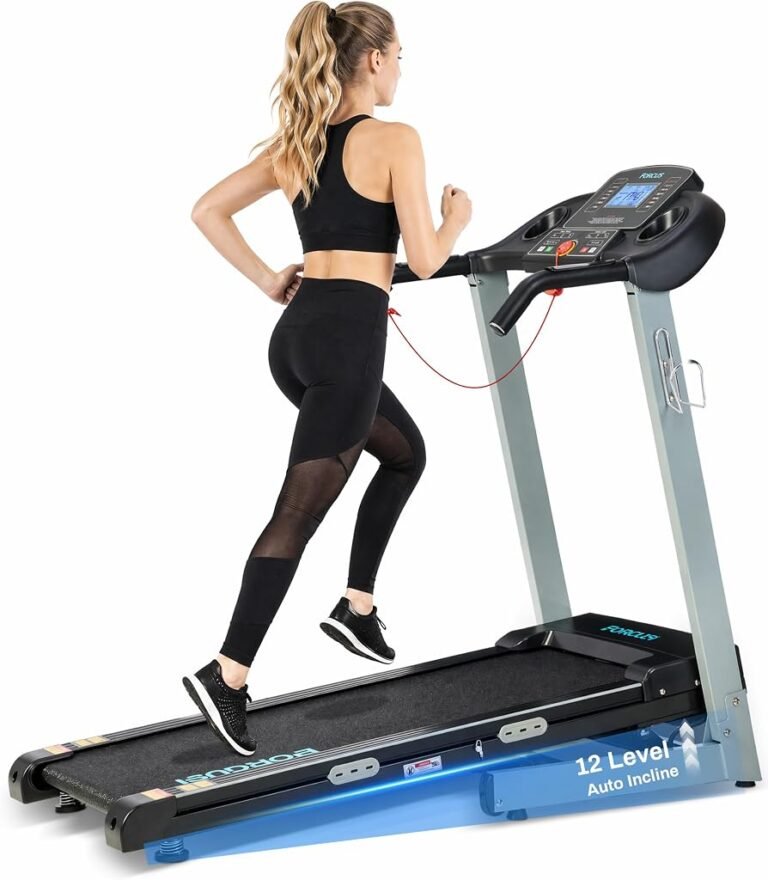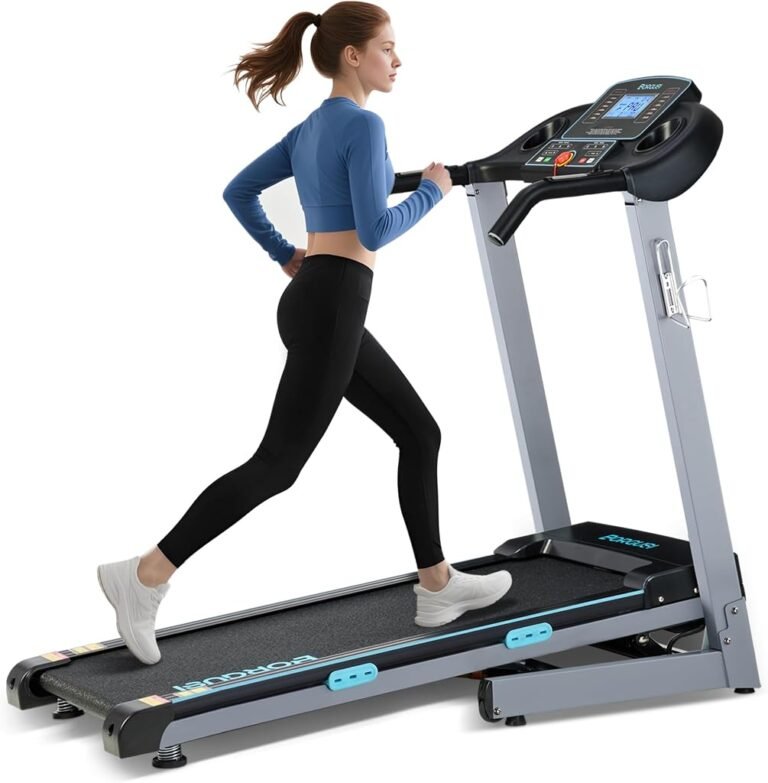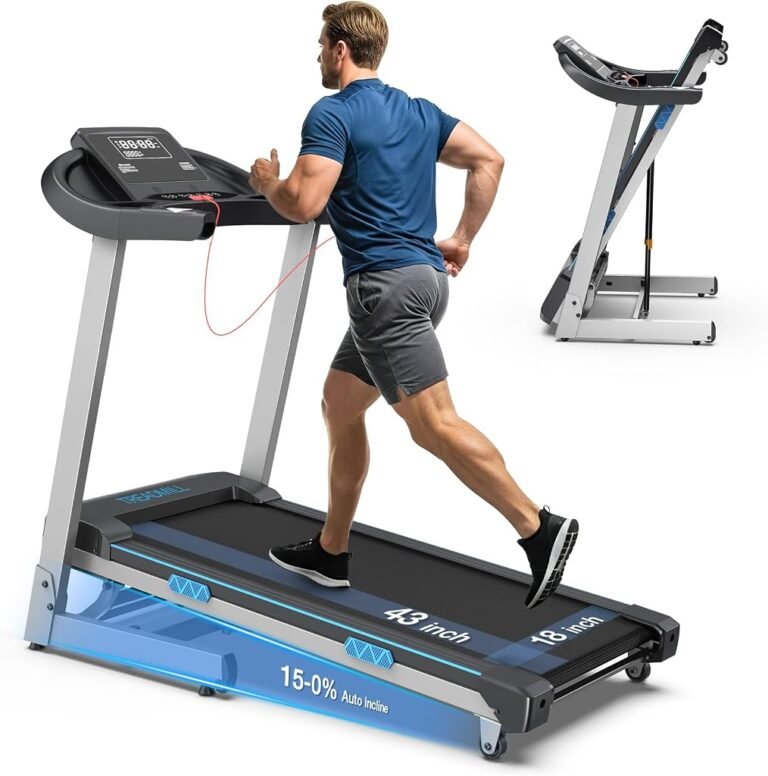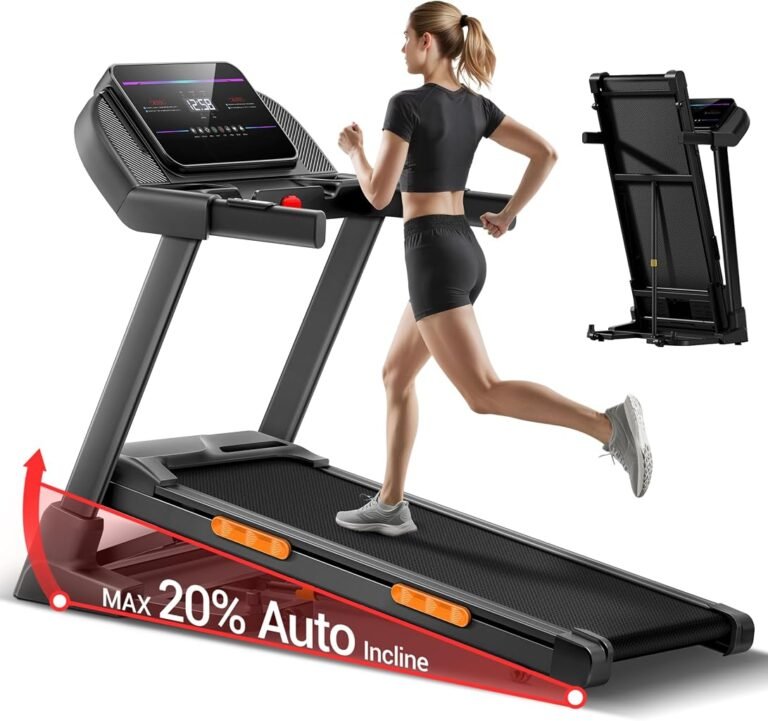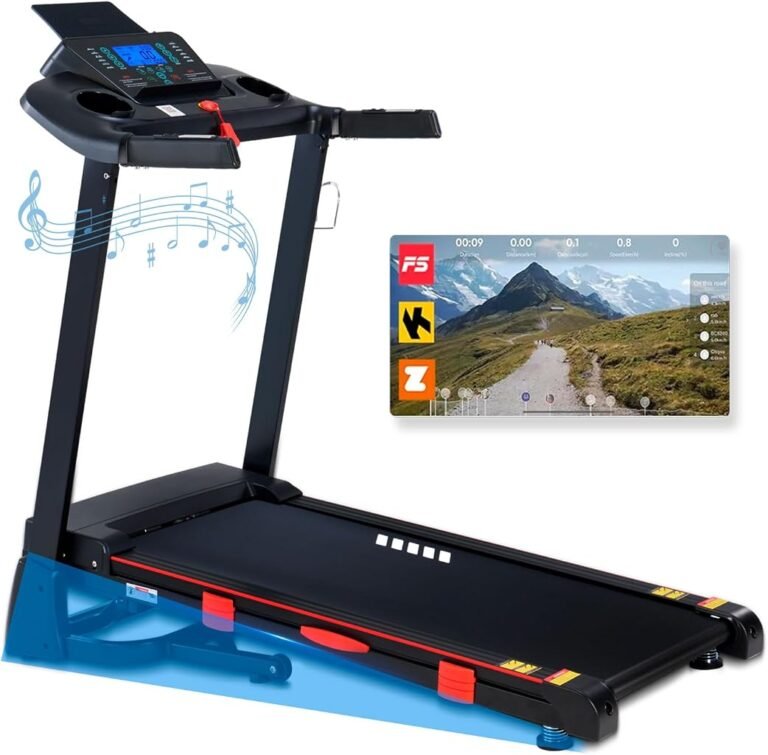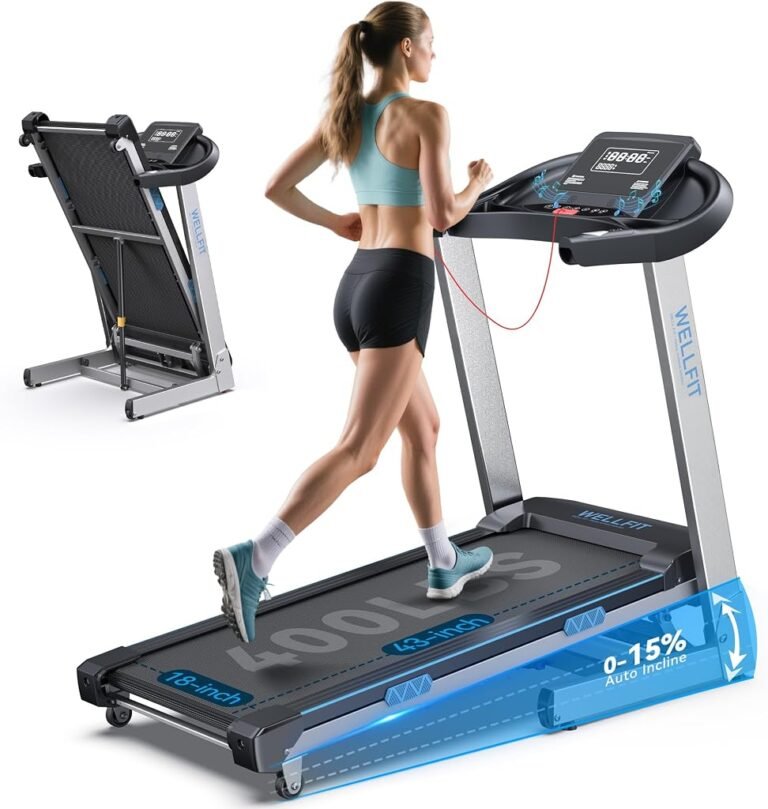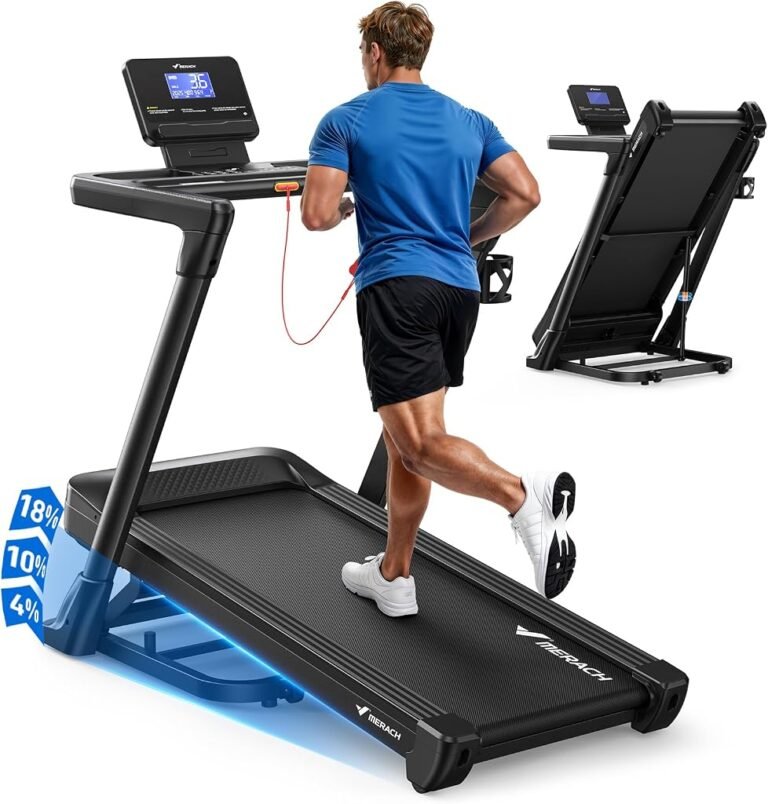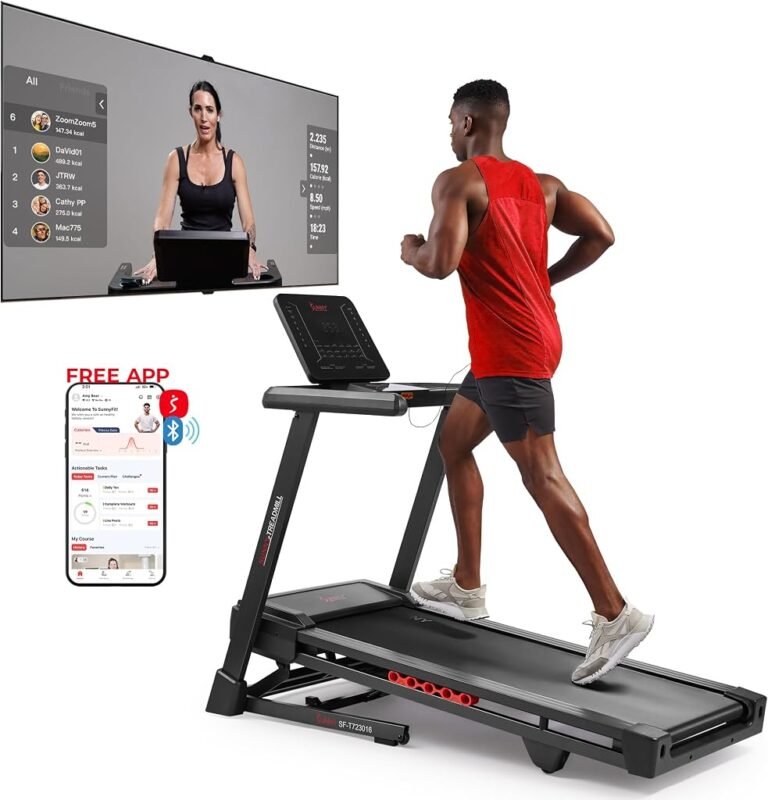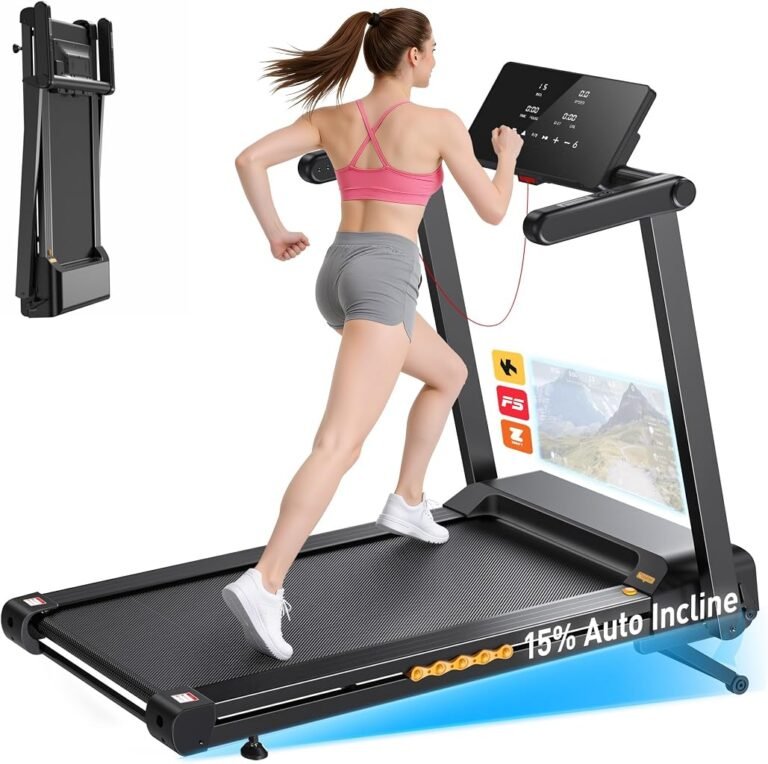
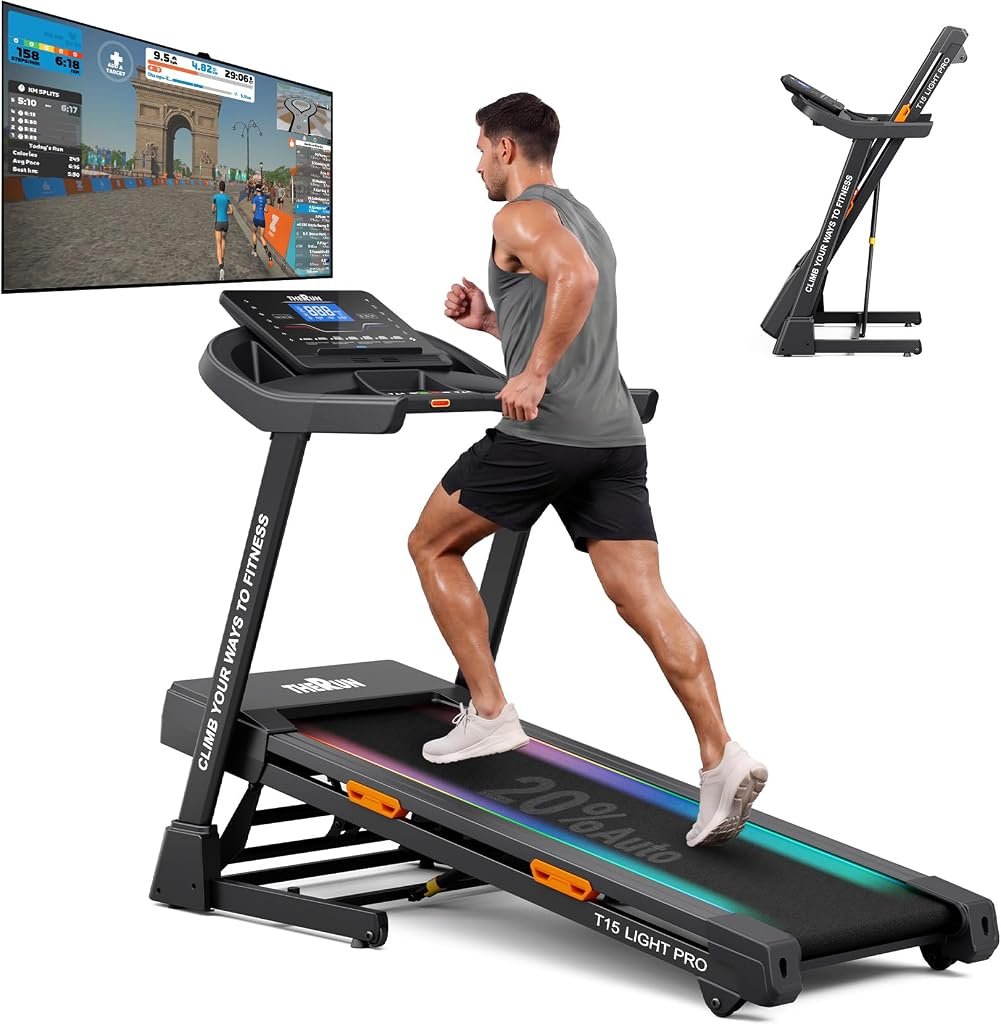
Home treadmills are often sold through a contest of numbers. Maximum speed, motor power, incline percentage and user-weight capacity crowd product pages, while practical questions receive less attention. How easily does the machine fit into a normal household? Does the incline system meaningfully expand training options? Is the running surface appropriate for the intended user? Does folding actually reduce the spatial burden? And, perhaps most fundamentally, is the treadmill being sold under a brand identity that buyers can clearly verify?
The treadmill examined here presents a particularly interesting case.
At $899.99, it is positioned well above entry-level walking pads and inexpensive folding treadmills. It carries a stated 300-pound capacity and automatic incline, and it is designed to fold for home storage. Those features create a credible home-cardio proposition, particularly for users who want both walking and running capability rather than a machine limited to low-speed movement.
Our overall score is 8/10. Customer Sentiment is 7.84, Buyer Confidence reaches 8.54, and Value is 7.91. The pattern is favorable but not uniformly enthusiastic. Confidence in the product proposition is strongest, while customer sentiment and value are slightly more restrained.
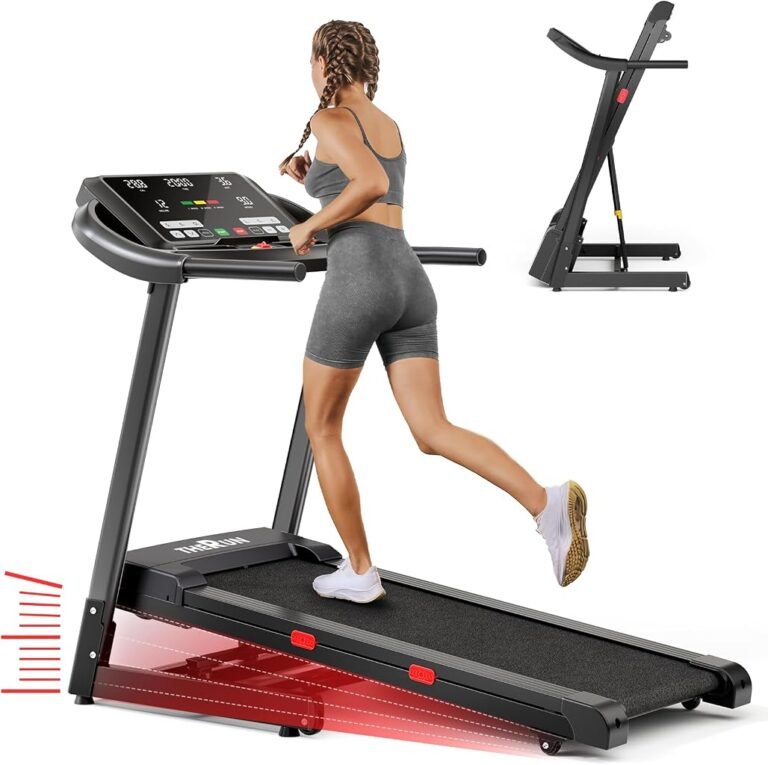
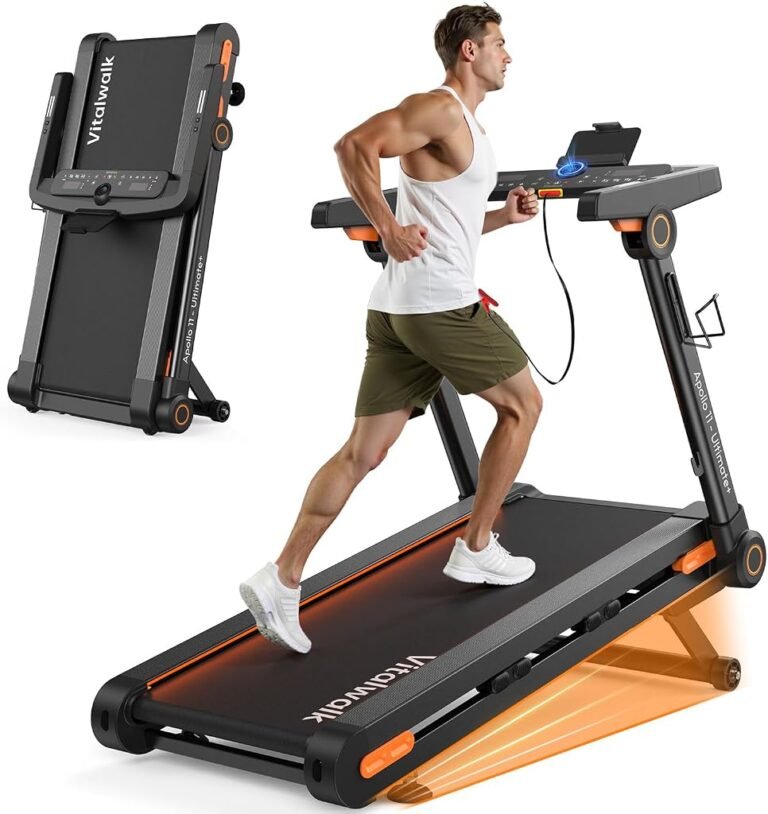
There is also a naming problem that should be addressed at the start. Although this review concerns the THERUN Auto Incline Foldable Treadmill, the identifiable associated product is branded BORGUSI. BORGUSI’s own product page describes a treadmill with 12% automatic incline, a 300-pound capacity, a 3.0 HP motor, an 8.5 mph maximum speed and a 43.5-by-17.5-inch running surface.
That mismatch matters. Brand identity affects warranty support, manuals, replacement parts and customer service. Buyers should verify the exact model and company shown on the live listing rather than assuming THERUN and BORGUSI are interchangeable names.
The Product Sits in a Different Price Class
A $899.99 treadmill should be judged differently from a $300 walking pad.
At this price, the machine must do more than simply move a belt under the user’s feet. It should provide a credible platform for regular cardio sessions, usable controls, meaningful speed range, incline adjustment and enough structural capacity for a broad segment of home users.
The associated BORGUSI model claims a 3.0 HP motor, an 8.5 mph maximum speed, 12% automatic incline and a 300-pound capacity. Taken together, those specifications describe a machine intended for walking, jogging and moderate running rather than desk walking alone.
That distinction matters when comparing the best treadmills for home.
Many lower-cost treadmills satisfy only one narrow use case. Some are excellent for light walking but unsuitable for running. Others offer higher speed but lack incline. Some fold compactly but compromise deck size or user-weight capacity.
This model tries to balance several priorities at once.
That approach raises expectations, but it also gives the machine broader appeal.
The 12% Automatic Incline Is the Most Meaningful Training Feature
Automatic incline is the feature that most clearly separates this machine from basic home treadmills.
Incline changes exercise intensity without requiring the user to keep increasing speed. This matters for walkers who want a harder workout, runners building hill sessions and users who prefer slower but more demanding movement.
The physiological rationale is straightforward. The CDC explains that moderate aerobic activity raises breathing and heart rate, while vigorous activity requires still greater effort. Intensity reflects how hard the body is working rather than a fixed treadmill speed. The agency recommends at least 150 minutes of moderate-intensity aerobic activity per week for adults, or 75 minutes of vigorous activity, plus muscle-strengthening activity on at least two days.
Incline gives users another route toward that workload.
The American Heart Association offers an unusually concrete example. In a discussion of walking intensity, Barry Franklin, Ph.D., explained that walking at 2 mph on a treadmill with a 3.5% incline can produce the same energy cost as faster level walking. His advice on progression was concise: “But build up slowly.”
That makes the stated 12% maximum incline more meaningful than it first appears.
The value does not lie in reaching 12% during every workout. The value lies in having a wide operating range below that ceiling. Users can alternate low and moderate grades, create hill intervals or maintain a steady incline without forcing themselves into faster speeds.
For many buyers, that is more useful than an extremely high maximum-speed figure that may rarely be used.
Automatic Adjustment Changes the Character of a Workout
Manual incline sounds similar on paper, but the experience is different.
With a manually adjusted deck, changing incline generally interrupts the session. The user must stop, step off and reposition the machine. That makes frequent grade changes impractical.
Automatic incline turns elevation into a live training variable.
A user can warm up at a low grade, raise the incline for several minutes, return to a flatter setting for recovery and repeat the cycle. The same machine can support easy walking one day and a more demanding hill-focused session the next.
This flexibility matters because intensity is individual.
A speed that feels easy to one person may be challenging to another. The CDC specifically defines aerobic intensity by physiological response rather than prescribing one universal treadmill pace.
Incline therefore gives households with multiple users a practical way to customize effort without forcing everyone toward the same speed.
The 300-Pound Capacity Is Useful, but It Should Be Interpreted Narrowly
The associated BORGUSI model lists a 300-pound user capacity.
That is a useful specification because it determines who can reasonably use the treadmill. Weight capacity is not merely a marketing number; it defines part of the machine’s operating envelope.
Still, it should not be treated as proof of durability.
A 300-pound rating does not establish how the treadmill will perform after years of repeated high-load use. Nor does it reveal bearing quality, frame fatigue resistance, controller longevity or long-term belt behavior.
The appropriate interpretation is simpler: the machine is stated to accommodate users up to 300 pounds.
That gives it wider relevance than many compact walking pads, while still placing it below some heavy-duty models designed around higher capacities.
For buyers approaching the upper end of the rating, operating margin may matter. A machine used close to its maximum capacity places different demands on the frame, belt and motor than one used far below the limit.
This is where careful buyer matching becomes more useful than chasing the largest number on the page.
The Running Surface Deserves Close Attention
The associated model lists a running area of 43.5 by 17.5 inches.
That number deserves more attention than it often receives.
Deck length and width influence comfort, stride freedom and confidence, particularly at higher speeds. A shorter or narrower surface may suit walking and shorter-stride jogging well while feeling restrictive to taller users or runners with longer natural strides.
The 43.5-inch length suggests a footprint oriented toward home practicality rather than expansive running geometry.
That is not inherently negative. Smaller decks are easier to fit into multipurpose rooms and folding designs. But the compromise should be understood.
A user primarily interested in walking may find the dimensions entirely suitable. A dedicated runner should pay closer attention to stride length and preferred pace before deciding.
This illustrates a broader truth about home treadmills: space efficiency and running freedom often pull in opposite directions.
The 8.5 MPH Maximum Speed Defines the Intended Use
The associated BORGUSI model lists a maximum speed of 8.5 mph.
That is roughly a 7-minute-per-mile pace, which is faster than many recreational users need for ordinary home workouts.
For walking, jogging and moderate running, the available speed range should therefore be adequate for a large portion of buyers.
It is less likely to satisfy athletes who routinely perform fast interval work or high-speed treadmill training.
This is another example of why specifications should be interpreted through intended use.
A higher maximum speed is not automatically better if the buyer never approaches it. More useful questions are whether the machine supports the pace that will actually be used and whether it does so within a comfortable deck size and stable operating range.
For the likely target audience, 8.5 mph is a sensible ceiling rather than an obvious limitation.
Our Score: 8/10
Our overall score of 8/10 reflects a treadmill with a convincing mix of incline, speed, folding convenience and user capacity.
The score is strong because the product’s main characteristics reinforce one another.
A 12% automatic incline creates meaningful training variety. An 8.5 mph maximum speed expands the machine beyond walking-only use. A 300-pound capacity accommodates a broad population. The foldable structure improves household practicality.
The score stops at 8 because the $899.99 price raises expectations, the deck dimensions may not suit every runner, and the THERUN/BORGUSI identity discrepancy introduces unnecessary uncertainty.
An 8/10 machine does not need to satisfy every buyer.
It needs to make sense for a clearly identifiable group of users and deliver enough capability to justify its position in the market.
This treadmill does that.
Customer Sentiment: 7.84
Our Customer Sentiment score is 7.84.
That figure is favorable, but it sits below Buyer Confidence.
The difference suggests a familiar pattern in home fitness equipment: the buying proposition can be strong even when the ownership experience is not universally ideal.
Treadmills are highly dependent on user context.
One owner may value the folding mechanism because the machine lives in a guest room. Another may never fold it. One runner may find the belt dimensions adequate, while a taller user may prefer more stride room. Someone primarily interested in incline walking may see the 12% grade as the machine’s defining feature, while another buyer may rarely use it.
A 7.84 Customer Sentiment score reflects that variability.
The treadmill makes a favorable impression overall, but its strengths are not equally meaningful to every user.
Buyer Confidence: 8.54
Buyer Confidence is the strongest of our major ratings at 8.54.
That is a significant editorial signal.
The machine has a relatively understandable purpose. Its principal capabilities are concrete: automatic incline, a 300-pound stated capacity, an 8.5 mph top speed, folding construction and a running surface with published dimensions.
These specifications allow buyers to make a reasonably informed judgment before purchase.
The higher Buyer Confidence score also reflects the coherence of the feature set.
Nothing about the machine’s positioning appears conceptually confused. It is intended as a serious home treadmill that can support walking, jogging and moderate running while folding for storage.
The main complication is branding.
A product sold or discussed under THERUN while the identifiable associated machine is BORGUSI requires an extra verification step. That does not erase the treadmill’s merits, but it makes careful listing review more important than usual.
Value: 7.91
Our Value score is 7.91.
At $899.99, the treadmill cannot rely on low price as its primary advantage.
Instead, value depends on how many of its major features the buyer will actually use.
For someone who walks only on a flat surface, a cheaper treadmill may offer similar practical utility. For someone who uses incline regularly, wants jogging or running capability and needs a foldable frame, the economic case becomes stronger.
This is why the Value score sits close to the overall rating but below Buyer Confidence.
The treadmill offers a coherent feature package, but the price requires those features to matter.
A buyer who needs only one or two of them may find better value elsewhere. A buyer who needs most of them can justify the higher price more easily.
Folding Design Solves a Real Problem
Full-size treadmills consume meaningful floor space.
Folding construction therefore deserves more than a passing mention.
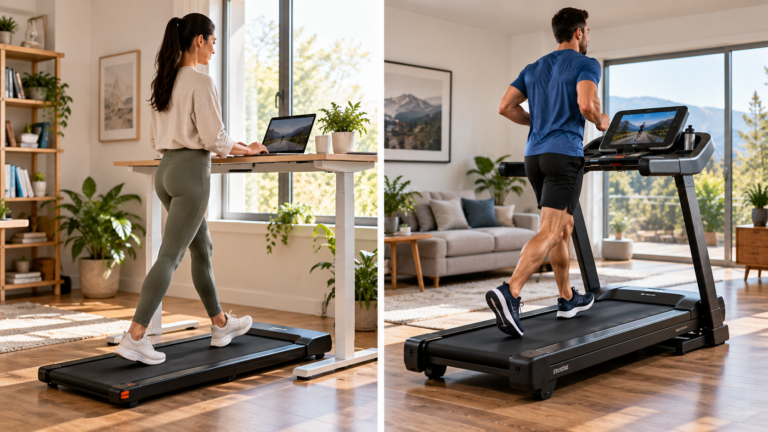
In apartments, guest rooms, home offices and multipurpose rooms, the ability to reduce the machine’s footprint can determine whether treadmill ownership is practical.
The associated BORGUSI model also describes a soft-drop folding system and transport wheels intended to make storage easier.
Those are useful features, but buyers should still measure carefully.
A folded treadmill remains a large mechanical object. Room dimensions, storage clearance, stair width and doorway geometry can matter as much as the machine’s listed footprint.
The delivery path should be considered before purchase rather than after the box arrives.
This is especially relevant when comparing the best treadmills for home use. A treadmill that performs well but creates constant spatial friction can become difficult to live with.
Preset Programs and Bluetooth Are Secondary, Not Central
The associated model lists 15 preset programs, an LCD panel and Bluetooth speakers.
These features are useful, but they should not dominate the buying decision.
Preset programs can add structure to workouts by changing speed or incline automatically. A display showing time, distance, speed, calories, incline and pulse gives users basic session feedback.
Bluetooth audio is convenient for some households.
None of these features, however, is as consequential as deck geometry, incline control, speed range or weight capacity.
That hierarchy matters because treadmill marketing often gives disproportionate visual emphasis to screens and entertainment functions.
The machine’s real value rests in movement quality and usability, not in whether a phone can play music through integrated speakers.
What the Treadmill Gets Right
The machine has several meaningful strengths:
- A 12% automatic incline allows substantial variation in training intensity.
- The 8.5 mph top speed supports walking, jogging and moderate running.
- The 300-pound stated capacity covers a broad range of users.
- The folding design improves household practicality.
- The 43.5-by-17.5-inch running surface balances compactness with usable exercise space.
- Preset programs provide structure for users who prefer guided session changes.
- The product concept is coherent and easy to understand.
These strengths reinforce one another.
The treadmill is not merely a walking machine with an extra feature added for marketing. It is structured around the idea of flexible home cardio within a foldable footprint.
That is a credible proposition.
Where Buyers Should Be More Critical
The first issue is the brand mismatch.
The treadmill is being discussed under THERUN, while the identifiable associated model is BORGUSI. Buyers should verify the exact brand, model, seller and warranty terms before purchasing.
The second issue is deck size.
A 43.5-inch-long running surface may be entirely appropriate for walking and jogging, but taller runners or users with longer strides may prefer more room.
The third issue is price.
At $899.99, this machine sits far above entry-level treadmills. Buyers who do not need incline, moderate running speed and folding functionality may be paying for capability they rarely use.
The fourth issue is specialization.
Serious runners training at high speeds or for long-distance events may prefer a larger running surface and a platform designed more explicitly around sustained running.
Who Is the Best Fit?
This treadmill makes the strongest case for users who want one machine to handle several forms of indoor cardio.
Incline walkers are an obvious audience.
Joggers who occasionally run faster will also find the 8.5 mph ceiling more flexible than walking-focused treadmills.
Households with limited space can benefit from the folding system.
Users under the 300-pound capacity who want a machine that feels more substantial than a minimalist walking pad may also find the design appealing.
The machine is particularly well suited to people who prefer changing workload through both speed and grade rather than relying on one variable alone.
Who Should Look Elsewhere?
Dedicated runners should examine deck size carefully.
Users who regularly train above 8.5 mph will require a faster machine.
People who have no interest in incline may find more economical choices.
Very heavy users who require capacity above 300 pounds should consider machines with a higher stated limit.
Buyers who dislike uncertainty around branding should verify whether the machine being offered is actually THERUN, BORGUSI or another related listing before ordering.
These are not minor distinctions. Treadmill satisfaction depends heavily on matching the machine to the intended use.
Incline Can Make Moderate Speeds More Productive
The most interesting physiological advantage of this treadmill is that users do not have to run fast to make a session demanding.
American Heart Association material explains that incline meaningfully raises the energy cost of walking. Franklin’s example of 2 mph walking at a 3.5% incline demonstrates how modest speed paired with elevation can produce a substantially different workload.
Professional Heart Daily provides additional context. Its cardiopulmonary exercise guidance notes that, at 2 mph, each 3.5% increase in treadmill grade adds roughly one metabolic equivalent to gross energy cost. At 3 mph, each 2.5% increase adds roughly one metabolic equivalent.
That illustrates why automatic incline matters.
The treadmill can increase exercise demand without forcing the user into progressively higher speeds.
For older adults, beginners or users who simply prefer walking, that can make the machine more adaptable.
A Sensible Progression Strategy
The machine’s capabilities are best used gradually.
The CDC recommends at least 150 minutes of moderate aerobic activity per week for adults and explicitly allows those minutes to be divided into smaller sessions.
That makes a home treadmill well suited to repeated shorter workouts.
A beginner might start with comfortable level walking. Once that becomes routine, modest incline can be introduced. Later, alternating uphill and flatter segments can create a more structured session.
The American Heart Association also recommends gradual increases in exercise intensity rather than abrupt jumps. Its guidance suggests beginning with level walking and progressing toward hills or more vigorous activity as tolerance develops.
That approach fits this treadmill particularly well.
Its 12% ceiling should be treated as available capacity rather than a target to reach as quickly as possible.
Final Considerations
The THERUN Auto Incline Foldable Treadmill presents a strong home-cardio proposition, but buyers should address the product’s identity discrepancy first. The identifiable associated model is branded BORGUSI, not THERUN, and that difference should be resolved before purchase.
Once the branding issue is set aside, the machine’s appeal is easy to understand.
The associated BORGUSI model combines a 12% automatic incline, 300-pound capacity, 3.0 HP motor, 8.5 mph maximum speed and 43.5-by-17.5-inch running surface in a folding format.
Our 8/10 overall score reflects a treadmill with a coherent feature set and a credible target user.
Customer Sentiment at 7.84 is positive but restrained, suggesting that ownership fit depends heavily on individual expectations. Buyer Confidence at 8.54 is stronger because the machine’s major characteristics are concrete and relatively easy to evaluate. Value at 7.91 is favorable, though the $899.99 price makes the treadmill most sensible for households that will genuinely use its incline, speed range and folding design.
Its strongest audience includes incline walkers, recreational joggers, moderate runners and households that need a foldable treadmill with more capability than an entry-level walking machine.
Its weaker fit includes high-speed runners, users who need more than a 300-pound capacity and buyers who have little interest in automatic incline.
Among the best treadmills for home, the most useful choice is rarely the one with the most imposing specification sheet. The better choice is the machine whose speed range, incline capability, dimensions and storage design line up with the user’s actual routine.
On that measure, this treadmill has a credible argument. Its combination of automatic incline, moderate running capability and folding practicality gives it genuine utility, provided the buyer verifies exactly which brand and model is being purchased.