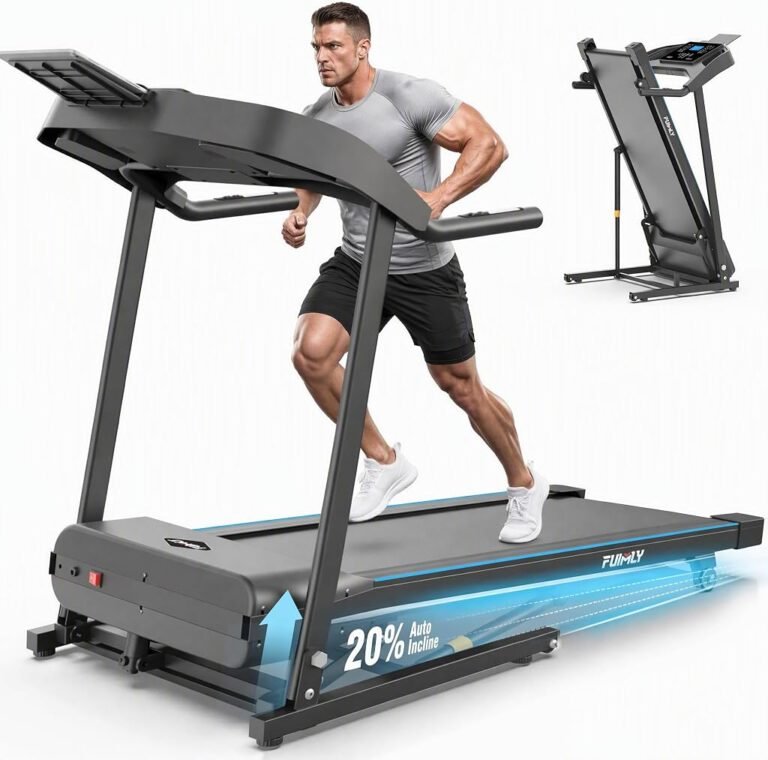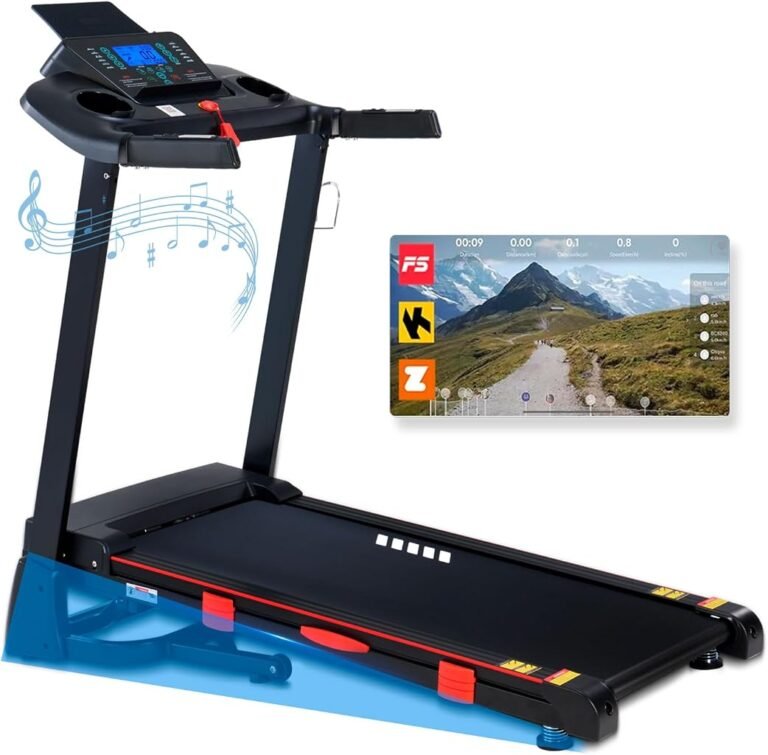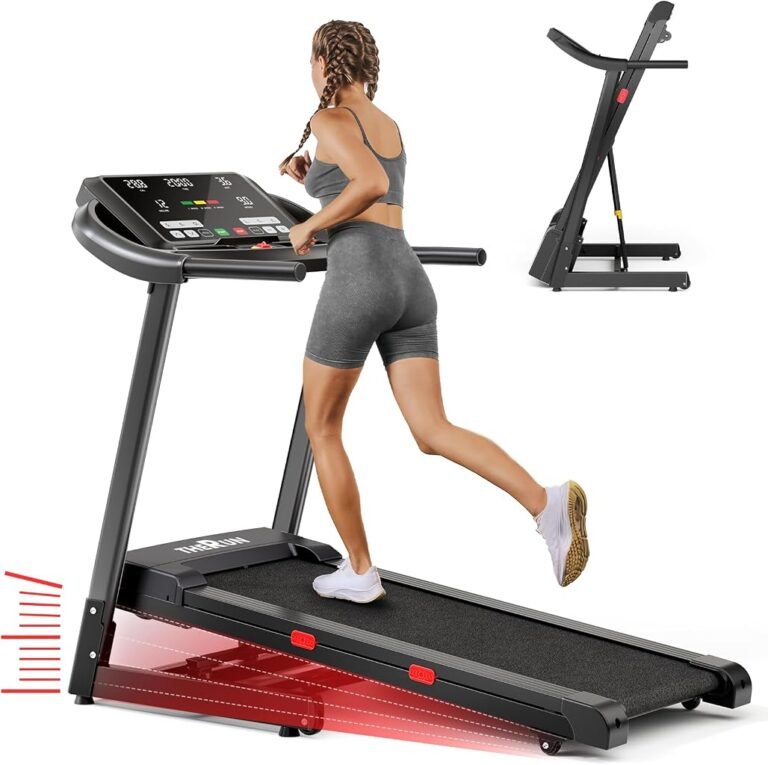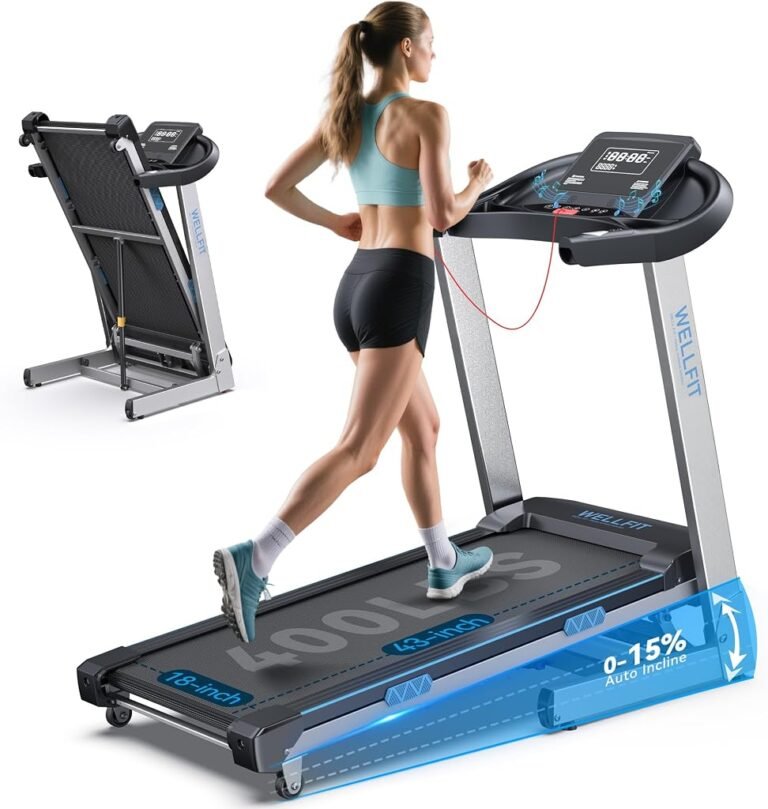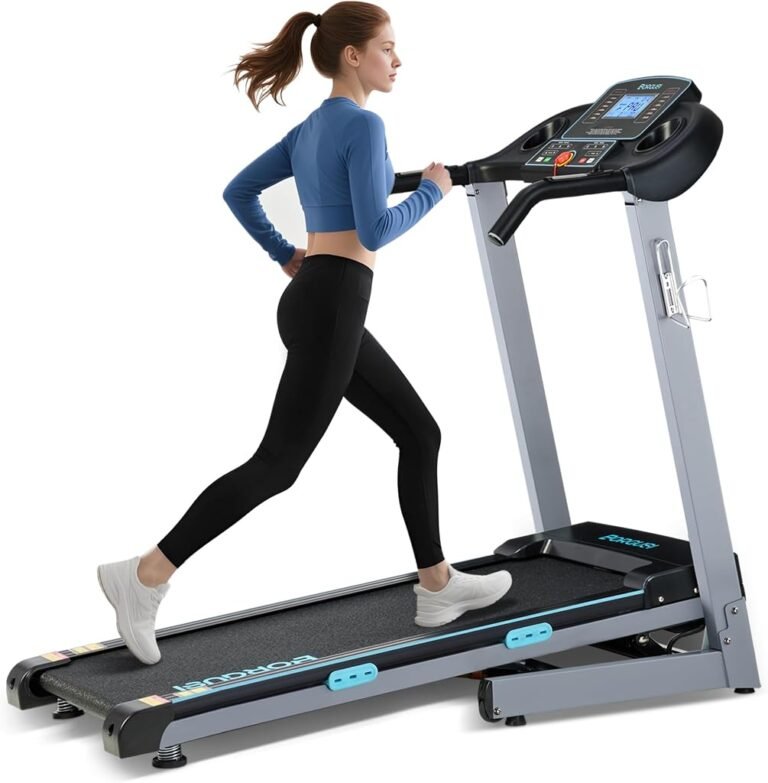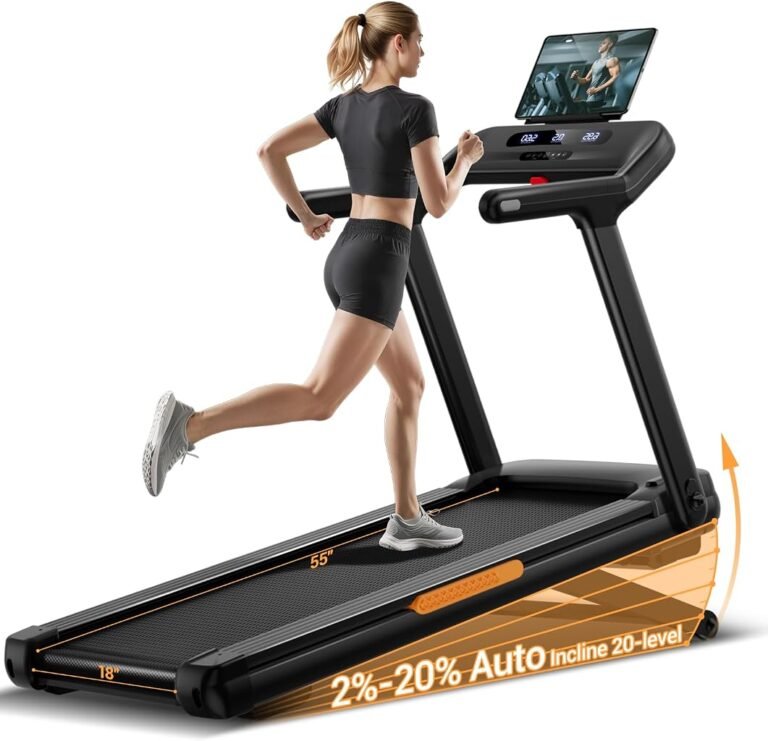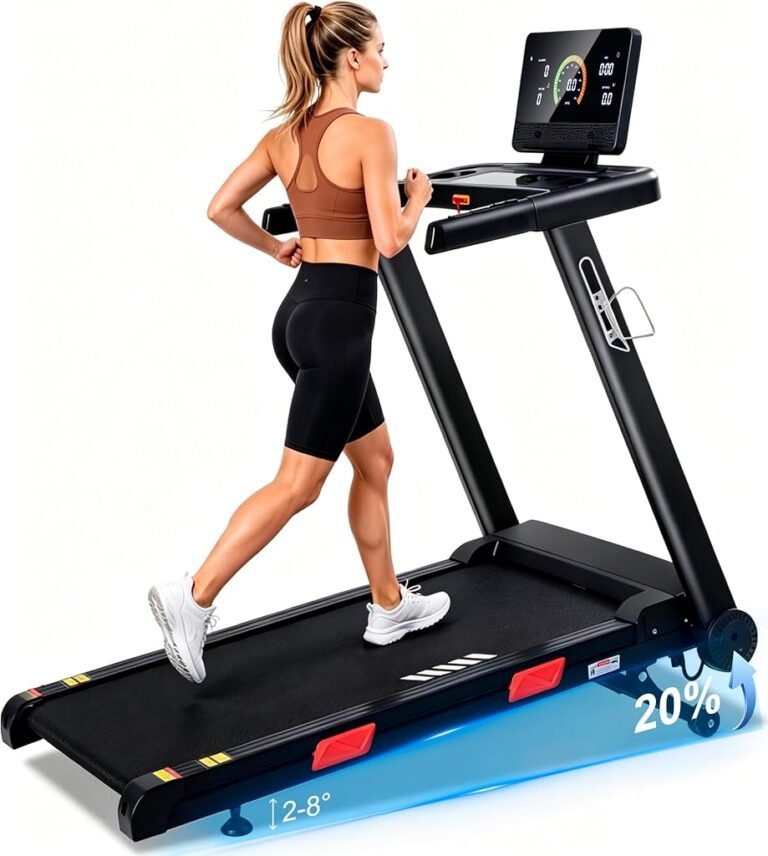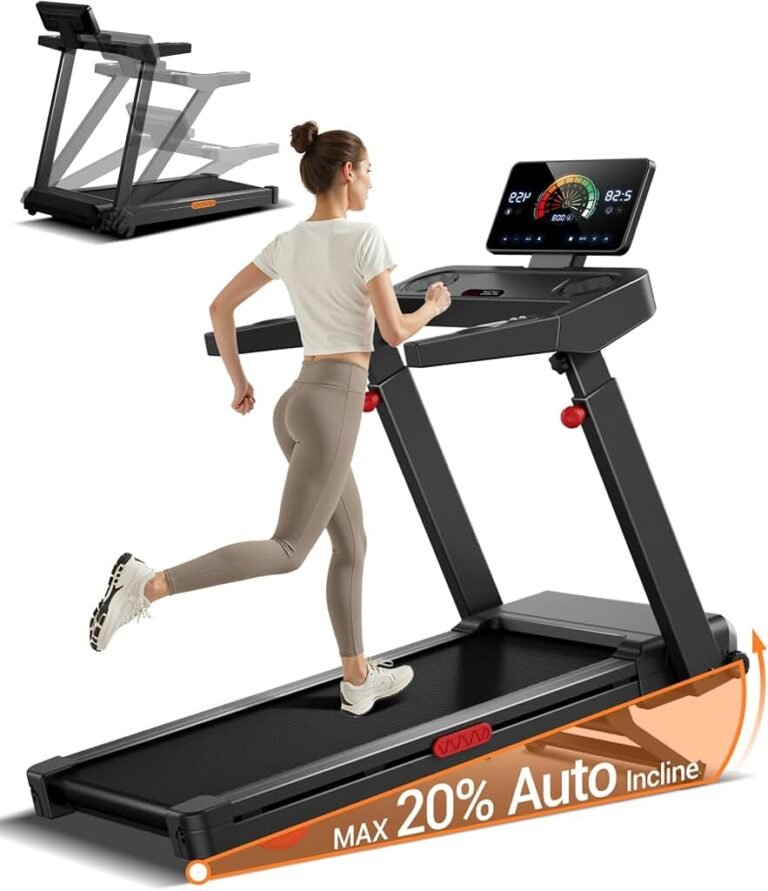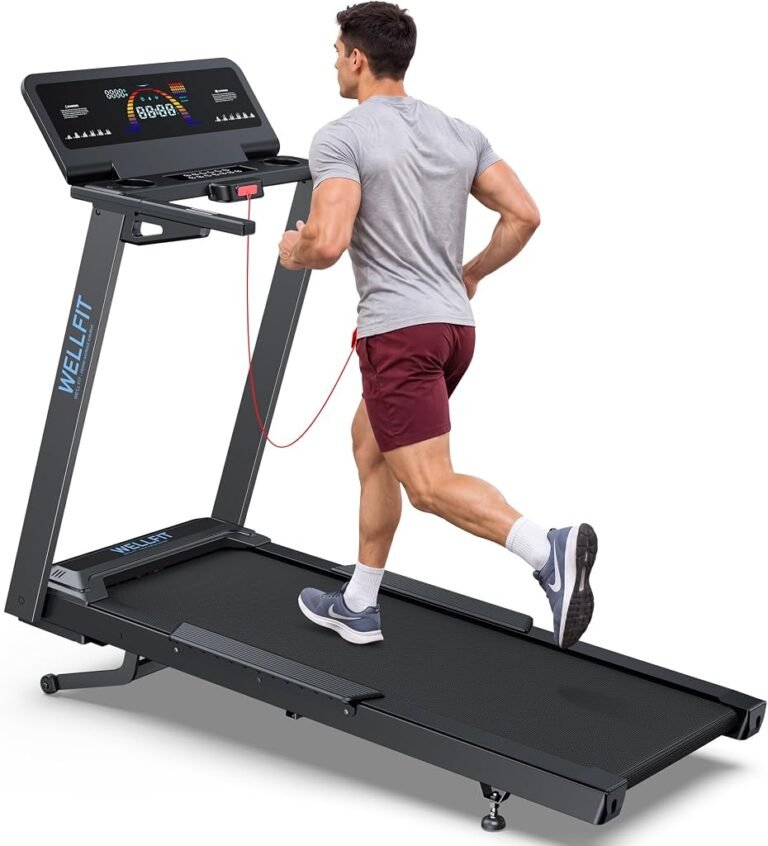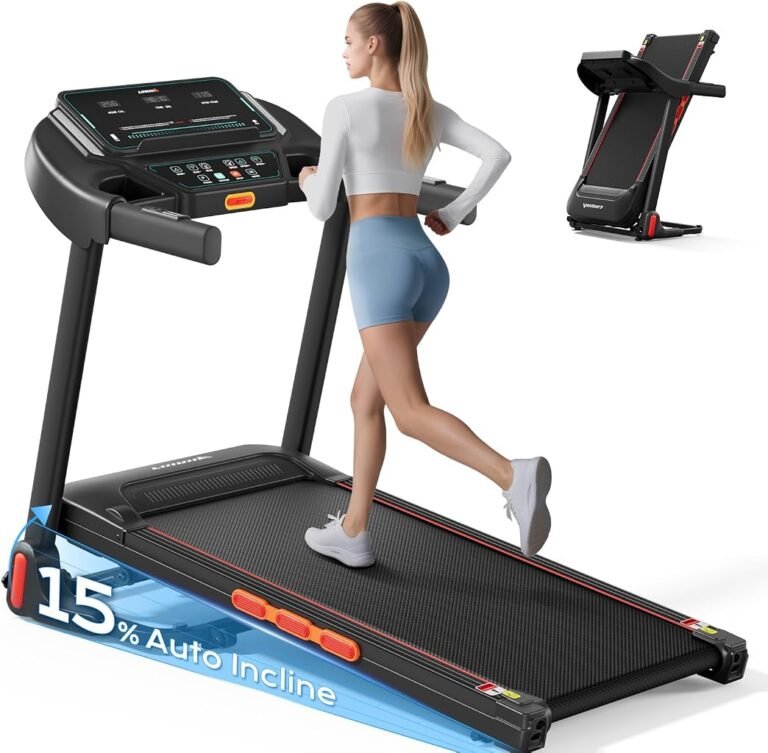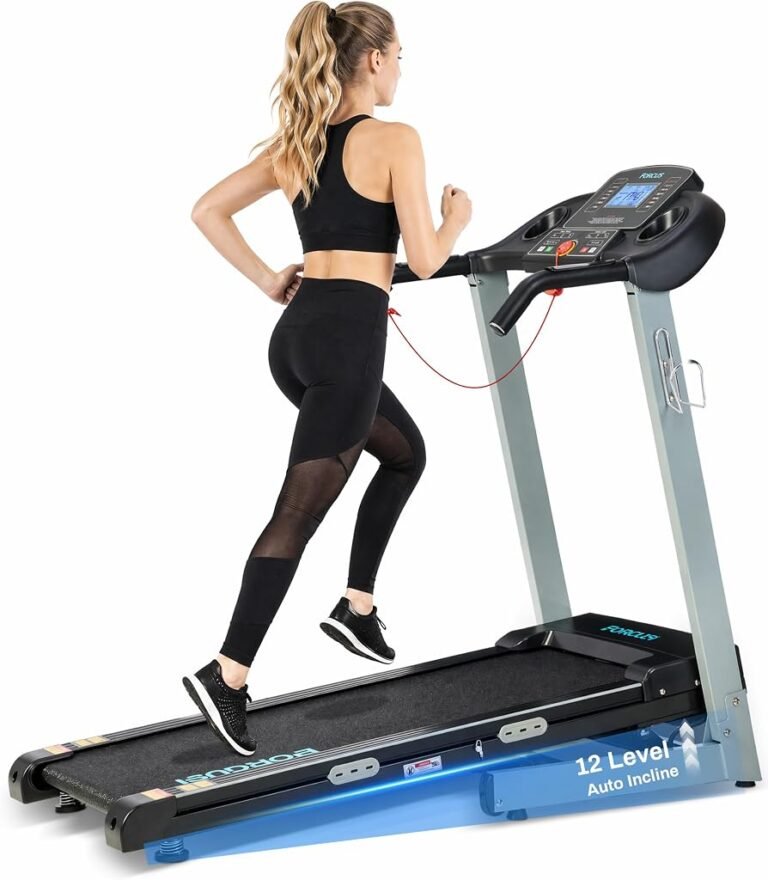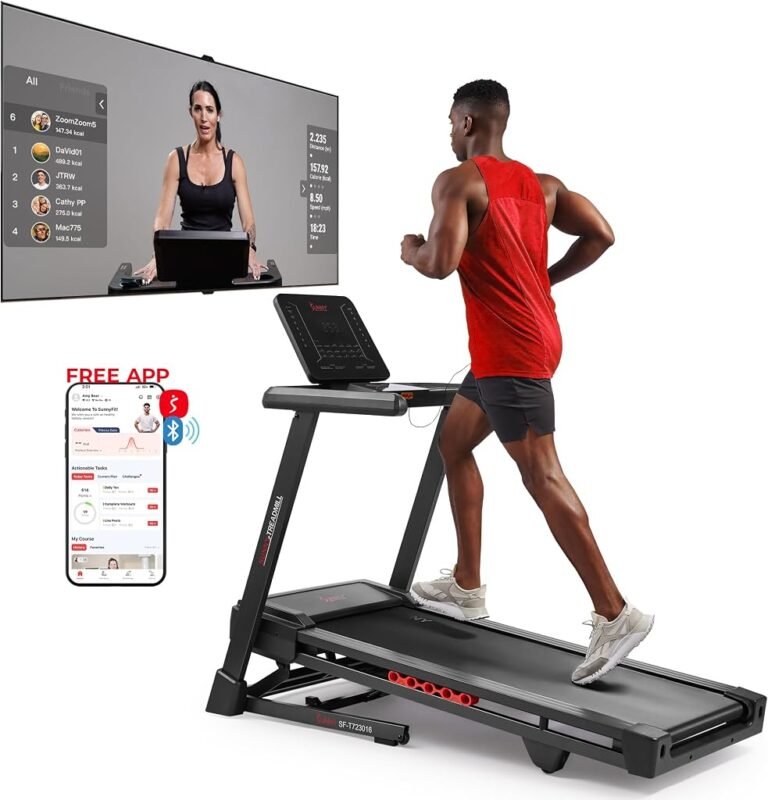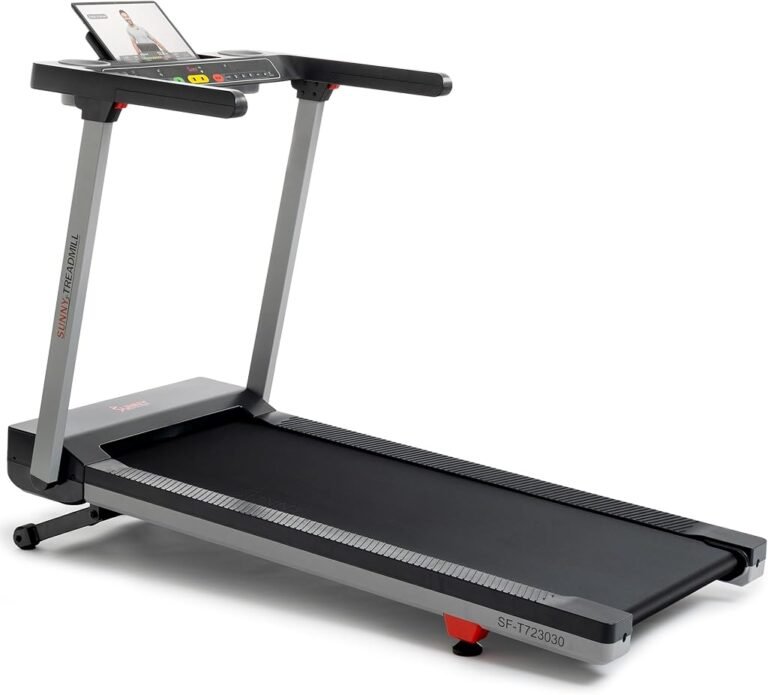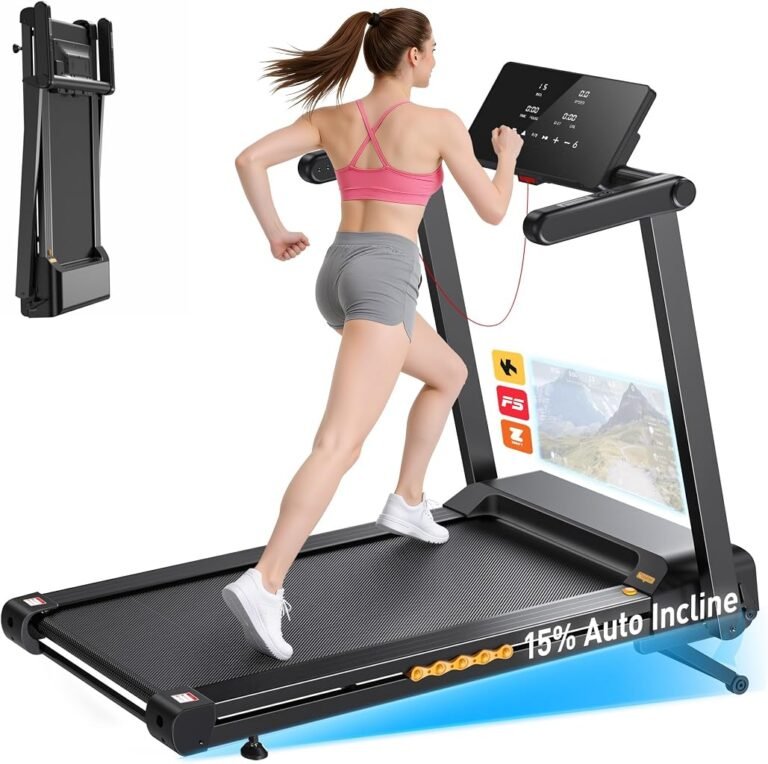
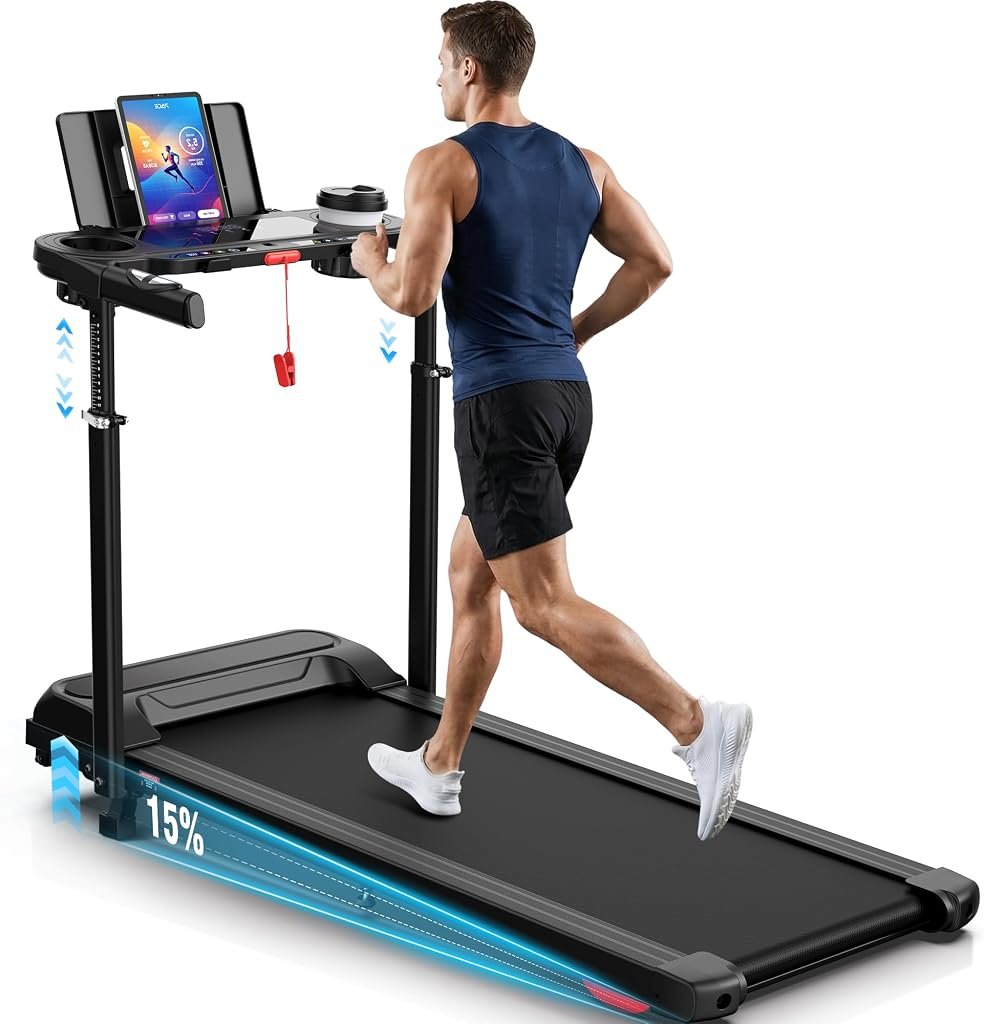
The ANCHEER 15% Incline Treadmill with Desk Workstation occupies an unusual position in home fitness. It is neither merely an exercise machine nor simply a standing workstation. At $329.99, it attempts to combine an incline treadmill with an adjustable-height desk, creating a machine intended for conventional exercise as well as low-intensity movement during suitable work tasks.
That combination deserves closer examination than the familiar promise of “walking while working.” A treadmill desk introduces two sets of requirements that do not always cooperate. The exercise side needs usable controls, stable movement, sensible progression, and enough training flexibility to justify taking up floor space. The workstation side must accommodate body dimensions, screen placement, typing posture, and the practical reality that some forms of computer work become harder when the floor is moving.
Our score is 7.83/10, placing the ANCHEER in Good territory. Customer Sentiment stands at 7.62, Buyer Confidence at 8.46, and Value at 7.79. The pattern is revealing. Confidence is the strongest element because the central proposition is straightforward: an adjustable workstation and treadmill combined with incline capability. The slightly lower Customer Sentiment and Value scores reflect the compromises inherent in combining exercise and desk functions at a relatively accessible $329.99 price.
The result is best understood not as a replacement for every desk or every treadmill, but as a hybrid for people whose routines genuinely benefit from both.
The Desk Is More Than an Accessory
A workstation attached to a treadmill can easily be dismissed as a shelf for a laptop. That interpretation misses the ergonomic issue.
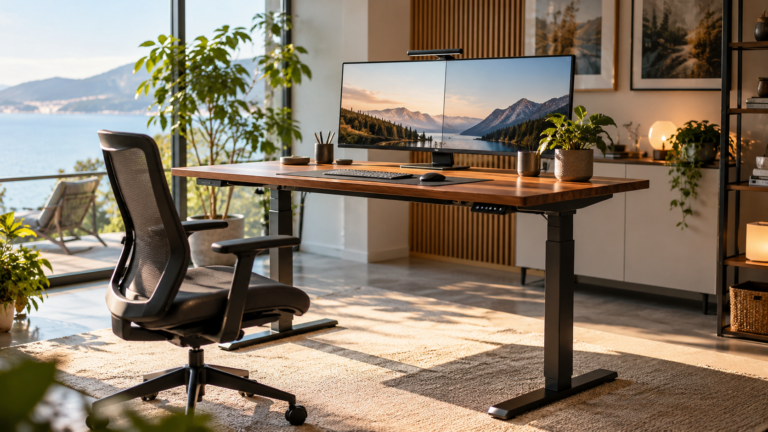
The ANCHEER’s adjustable-height workstation is central to its identity because desk height determines how comfortably different users can position their arms and work equipment. A fixed work surface might suit one person’s dimensions and create awkward shoulder or wrist positions for another.
The U.S. Occupational Safety and Health Administration’s computer workstation guidance advises that shoulders should remain relaxed, elbows close to the body, and wrists straight and aligned with the forearms. OSHA also states that the elbows should sit at about the same height as the keyboard.
That gives adjustable height a practical purpose. It is not enough for a treadmill desk to hold a laptop securely. The work surface needs to meet the user rather than forcing the user’s upper body to adapt continuously to the equipment.
This becomes especially relevant during longer walking sessions. A mildly poor workstation position that seems harmless for five minutes can become irritating when repeated for an hour.
The desk therefore strengthens the ANCHEER’s case, but only when adjusted thoughtfully.
A 15% Incline Changes the Exercise Proposition
The 15% incline capability separates this model conceptually from basic walking pads intended mainly for flat, low-speed movement.
Incline gives a user another variable besides speed. Instead of continually accelerating the belt to make exercise harder, the grade can rise. That creates a broader progression path for walking workouts and makes the treadmill relevant after the novelty of working while walking has faded.
The distinction between workstation use and dedicated exercise matters here. A steep incline and concentrated keyboard work are not natural partners. Higher-grade walking requires greater attention to balance and movement, making the desk less relevant as exercise intensity rises.
That is not a design failure. It reveals the machine’s two operating personalities.
During work, the sensible objective is likely controlled, comfortable movement that does not interfere with the task. During a dedicated workout, the 15% incline becomes far more interesting because the user no longer needs to divide attention between movement and a screen.
The treadmill consequently offers more training range than its workstation branding might suggest.
The Case for Moving During Desk Time
The health argument for treadmill desks begins with a straightforward observation: conventional office work involves substantial sedentary time.
The World Health Organization defines sedentary behavior as waking behavior involving energy expenditure of 1.5 metabolic equivalents or less while sitting, reclining, or lying. Desk-based office work is among the examples identified by WHO. Its published figures also estimate that 27.5% of adults are insufficiently physically active.
A treadmill workstation attacks that problem in a literal fashion. Rather than requiring a separate exercise period to break a long block of sitting, it allows selected work activities to occur while walking.
Research provides useful context without supporting exaggerated promises. A systematic review and meta-analysis of treadmill desks identified 13 studies involving 351 participants. In pooled laboratory research, treadmill-desk use increased energy expenditure by 105.23 kcal per hour compared with sitting, with a 95% confidence interval of 90.41 to 120.4 kcal per hour. Workplace studies also found a statistically significant reduction in sitting time.
Those figures should not be converted into a universal prediction for ANCHEER owners. Energy expenditure varies with body size, walking speed, grade, duration, and other factors. The research concerns treadmill desks as a category rather than this specific model.
Its relevance lies elsewhere: replacing stationary desk time with walking changes the physical character of that time.
Working While Walking Is Not Automatically More Productive
The workstation idea becomes less convincing when manufacturers or users assume that every office task belongs on a moving treadmill.
Research on work performance is mixed.
A systematic review of active workstations initially identified 3,303 articles, but only seven met its eligibility criteria. The researchers reported that some treadmill and cycling workstation studies found potential reductions in performance, although the evidence was limited by factors including small samples and short study periods. Longer studies did not show a significant effect on workplace productivity.
The practical lesson is more useful than any sweeping claim about productivity.
Walking appears better suited to some tasks than others.
Activities that may pair reasonably with slow treadmill use include:
- Reading material that does not require intensive annotation.
- Watching presentations or training material.
- Listening to meetings.
- Taking calls where extensive typing is unnecessary.
- Reviewing documents.
- Performing light administrative work that tolerates slower input.
Tasks demanding precise mouse control, sustained rapid typing, detailed graphic work, or intense manipulation of spreadsheets may be less comfortable while walking.
A controlled study involving 75 healthy participants illustrates the problem. Participants walking at 1.5 mph performed worse across the study’s typing measures than seated participants, while some learning and attention outcomes also declined modestly.
Other research has produced different results, including experiments where active workstations caused little overall disruption to cognition. The evidence therefore argues against treating treadmill work as either inherently productive or inherently distracting.
The task matters.
Why Adjustable Height Deserves Serious Attention
The ANCHEER’s adjustable workstation is particularly relevant because treadmill users cannot compensate for poor desk height by changing chair position.
A conventional seated workstation offers several adjustment points: chair height, seat position, keyboard location, monitor placement, and sometimes desk height. Walking removes the chair from the equation, placing greater responsibility on the work surface itself.
OSHA’s purchasing guidance states that keyboard height for standing tasks should be adjustable from 36 to 46.5 inches and that the keyboard should sit around elbow height.
That guidance is not a product-specific certification, nor does it establish that the ANCHEER desk covers those exact dimensions. It does explain why height adjustment is preferable to a single fixed workstation position.
Monitor placement creates another issue. OSHA advises placing the monitor directly in front of the user, with a preferred viewing distance generally between 20 and 40 inches, and positioning the top line of the screen at or below eye level.
Laptop users face an inherent compromise because the screen and keyboard are physically connected. Raising the laptop for better screen height raises the keyboard with it. Lowering it for comfortable typing can force the head downward.
For extended work, an external keyboard or separate display can therefore make more ergonomic sense than relying on a laptop alone, provided the workstation has enough usable surface and the setup remains stable.
The $329.99 Price Changes Expectations
Price provides essential context for this treadmill.
At $329.99, the ANCHEER sits in a different economic category from large home treadmills costing well into four figures. Expectations should reflect that difference.
Its Value score of 7.79 is positive because the combination of treadmill, adjustable workstation, and 15% incline gives the buyer several possible use patterns from one purchase. A user might walk while attending a morning meeting, perform a conventional workout later, and use incline walking when more intensity is desired.
Yet versatility alone does not guarantee value.
A buyer who never uses the desk is partly paying for workstation functionality without receiving much benefit from it. Conversely, someone interested only in gentle walking during work may have little reason to prioritize 15% incline.
The strongest value case therefore comes from overlap: buyers who genuinely want both a treadmill and an active workstation.
That distinction prevents feature quantity from being mistaken for usefulness.
Our 7.83/10 Score Reflects a Good but Specialized Proposition
Our overall score of 7.83/10 is deliberately below the level that would suggest an easy recommendation for nearly every home exerciser.
The ANCHEER has a focused identity. Its 15% incline broadens its exercise usefulness, while the adjustable-height workstation gives it a credible role in home-office routines. At $329.99, that combination is financially more accessible than buying a substantial treadmill and a separate active workstation.
Customer Sentiment at 7.62 indicates a generally positive proposition with meaningful room for buyer-product mismatch. Hybrid fitness equipment tends to be more dependent on routine than conventional equipment. Someone who loves the idea of answering email while walking may discover that typing while moving feels awkward. Another user may find that calls, reading, and video meetings pair naturally with slow walking.
Buyer Confidence is considerably stronger at 8.46. The core proposition is easy to understand and does not depend on exotic technology: incline training, treadmill movement, adjustable desk height, and home use.
Value at 7.79 sits close to the overall score. That relationship is appropriate. The ANCHEER’s attraction is not luxury construction or a long catalogue of premium electronics. Its case is functional consolidation at a moderate price.
Incline and Desk Work Should Be Treated as Separate Modes
One of the easiest mistakes with a product like this is assuming every feature should be used simultaneously.
There is little reason to conduct demanding computer work while walking at a steep grade merely because the machine allows both activities.
A more rational routine divides usage into modes.
A low-intensity workstation session can prioritize stable movement and comfortable computer positioning. A dedicated exercise session can prioritize incline and physical effort without requiring simultaneous typing. Flat or modestly inclined walking can fill the middle ground.
This approach makes the treadmill more adaptable and reduces the pressure to transform every workout into a productivity exercise.
It also aligns better with public-health guidance. The World Health Organization’s physical activity and sedentary behavior guidelines address both insufficient activity and sedentary behavior, recognizing that the two concepts deserve attention rather than treating them as interchangeable.
A treadmill desk is particularly interesting because it can address sitting time without requiring every walking period to become vigorous exercise.
How the ANCHEER Fits Among the Best Treadmills for Home
Lists of the best treadmills for home often compare products as if every household were building a miniature commercial gym. That misses a large part of the market.
Home fitness equipment exists inside bedrooms, offices, spare rooms, and shared living spaces. The equipment competes with furniture, work schedules, family routines, and limited floor area.
The ANCHEER’s workstation changes how it should be compared.
Against a conventional running treadmill, its strongest distinction is not raw athletic performance but integration with desk activity. Against a simple walking pad, its 15% incline creates a more credible path toward dedicated exercise.
That makes it particularly interesting for remote workers and other desk-bound users who want one piece of equipment to support both movement breaks and intentional workouts.
Someone training primarily for sustained running has a different set of priorities. Running-deck dimensions, belt speed, motor performance, cushioning characteristics, and long-duration stability become more significant than workstation functionality.
Those specifications should be evaluated directly before buying any treadmill intended mainly for running. They should not be inferred from the presence of an incline mechanism or desk.
Ergonomics Can Determine Whether the Desk Gets Used
The adjustable-height workstation sounds compelling until the practical details of typing are considered.
Walking causes small movements through the shoulders, arms, and hands. A task that requires repeated precision can expose those movements quickly. Mouse selection, spreadsheet manipulation, graphic editing, and fast typing may feel noticeably different from the same activities at a stationary desk.
Research does not support one universal response. A randomized study of 137 healthy young adults found no significant differences between treadmill and cycling workstations across the cognitive and typing outcomes compared between those two active conditions, while active sessions produced a mixture of better and worse outcomes across different cognitive measures.
That variability argues for matching treadmill use to task demands.
The desk should also be adjusted before movement begins rather than while trying to work. The user can check whether shoulders remain relaxed, elbows sit naturally, wrists stay relatively straight, and the screen does not require prolonged downward neck flexion.
The objective is not a photogenic standing-desk posture. It is a position that can be sustained without repeatedly fighting the workstation.
The Strongest Use Case Is Habit Integration
Exercise equipment often fails for mundane reasons rather than mechanical ones. The workout requires changing clothes, clearing a room, traveling somewhere, or finding a free hour. Eventually friction wins.
A workstation treadmill tries to alter that equation by attaching movement to something that is already happening.
A 30-minute online meeting can become 30 minutes of gentle walking. Reading a long report can become another movement period. A lunch break can become a dedicated incline session.
That does not mean every office hour should occur on the treadmill. The more plausible strategy is alternation.
Walking, standing, and sitting can each have a place. Work demanding precision can return to a conventional desk. Calls and passive viewing can migrate to the treadmill. Exercise sessions can use the incline independently of office tasks.
This is where the ANCHEER concept is strongest. It does not need to eliminate sitting to alter a sedentary routine.
What Buyers Should Examine Before Ordering
A $329.99 price can encourage quick purchasing, but treadmill-workstation fit deserves physical measurement before checkout.
Buyers should assess:
- Where the treadmill will stand during exercise and desk use.
- Whether the adjustable desk can accommodate the intended keyboard, laptop, tablet, or other equipment.
- Whether the user’s preferred screen arrangement can achieve a comfortable viewing position.
- Whether 15% incline is genuinely useful for the planned workouts.
- Whether the machine will primarily support walking, exercise sessions, or a mixture of both.
- How often work tasks actually permit movement without harming accuracy or concentration.
- The electrical and floor-space requirements of the intended location.
The buyer should also verify current manufacturer specifications for any factor central to individual fit, particularly maximum user capacity, belt dimensions, speed range, folded dimensions, and warranty coverage.
Those details can decide whether a treadmill is suitable for a particular body, stride, room, and training style. They should never be guessed.
Who Should Consider It
The ANCHEER makes the strongest argument for a home worker who spends substantial time at a computer but also wants an exercise machine with more range than a basic flat walking pad.
Its workstation may be particularly useful for people whose work includes calls, reading, online presentations, training sessions, and other activities that tolerate gentle movement.
The 15% incline also makes sense for users who want their treadmill to remain useful outside working hours. Instead of owning equipment restricted largely to low-speed desk walking, they gain another way to increase workout demand.
Its appeal is weaker for dedicated runners seeking a machine primarily around high-speed training. It is also less compelling for someone who already owns a well-configured standing desk and only needs a minimal walking pad underneath it.
Likewise, a user whose work consists predominantly of precision mouse control, rapid data entry, illustration, video editing, or similar tasks may find the workstation less useful during actual working hours.
The product’s identity is therefore broad in function but narrower in ideal audience than its feature list initially suggests.
A Better Way to Use a Treadmill Workstation
The sensible approach is experimentation rather than immediately scheduling hours of daily walking.
Initial sessions can be short and attached to tasks with low precision requirements. The user can establish a comfortable desk height and learn which activities transfer naturally to movement.
From there, treadmill time can expand gradually.
Dedicated incline exercise should be treated separately when the grade becomes demanding. There is no productivity prize for attempting a difficult hill workout while answering messages.
The broader objective is accumulated movement.
Research into treadmill desks suggests that their most defensible benefit is exactly that: increasing energy expenditure and reducing sedentary time rather than turning office work into athletic training.
That modest framing actually makes the concept more credible.
Where the ANCHEER Falls Short Conceptually
Every hybrid product carries the risk of doing two jobs less elegantly than two specialized products.
A purpose-built office desk can offer more workspace, monitor flexibility, cable management, storage, and seating options. A conventional exercise treadmill can devote its entire design to training.
The ANCHEER asks the buyer to accept some degree of consolidation.
The workstation is therefore most persuasive when space, budget, or routine makes consolidation useful. Someone with a dedicated home gym and a separate ergonomic office has less reason to combine the two.
The treadmill also cannot solve sedentary behavior by itself. Ownership does not create movement. The desk must actually be used, and it must be comfortable enough that walking does not become a chore abandoned after several weeks.
That is why the 7.83 overall score is appropriate. The design has genuine practical logic, but that logic depends heavily on the user’s daily behavior.
Final Considerations
The ANCHEER 15% Incline Treadmill with Desk Workstation is an intriguing $329.99 hybrid because its two central features address different problems. The adjustable-height workstation addresses the practical challenge of integrating movement into desk time, while the 15% incline gives the treadmill a life beyond low-intensity office walking.
Our score of 7.83/10 reflects a Good product proposition rather than an automatic choice for every household. Customer Sentiment at 7.62 suggests respectable appeal tempered by the personal nature of treadmill-desk use. Buyer Confidence at 8.46 is the strongest rating because the product’s purpose is coherent and its major differentiators are easy to understand. Value at 7.79 reflects a reasonable price for buyers who will use both sides of the design.
The workstation deserves as much scrutiny as the treadmill. Desk height, monitor placement, wrist position, task type, and walking intensity can determine whether working while moving feels natural or distracting. OSHA’s ergonomic guidance makes clear that work-surface adjustment and equipment positioning matter even when a person is standing still; adding treadmill movement does not make those principles disappear.
The 15% incline, meanwhile, is best viewed as exercise capacity rather than a setting to combine routinely with computer work. Gentle walking and office tasks belong together more naturally than steep hill climbing and precise keyboard input.
For people comparing the best treadmills for home, that distinction defines the ANCHEER’s place. It is not merely competing with running machines. It also competes with walking pads, standing desks, and the ordinary office chair.
Its strongest buyer is someone who sees those categories as connected: a person seeking more movement during sedentary hours, enough incline to make separate workouts worthwhile, and an adjustable workstation that allows the same machine to support both habits.
Used that way, the ANCHEER has a coherent purpose. The desk is not a novelty bolted onto exercise equipment, and the treadmill is not simply a moving platform under a laptop. The value lies in switching intelligently between work, movement, and exercise rather than trying to perform all three at maximum intensity at once.