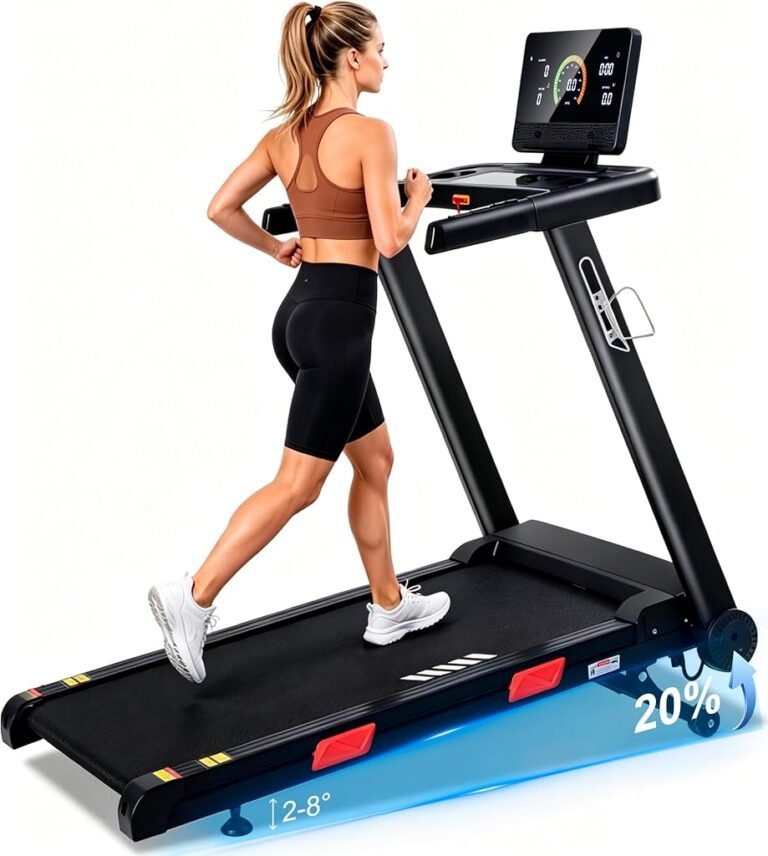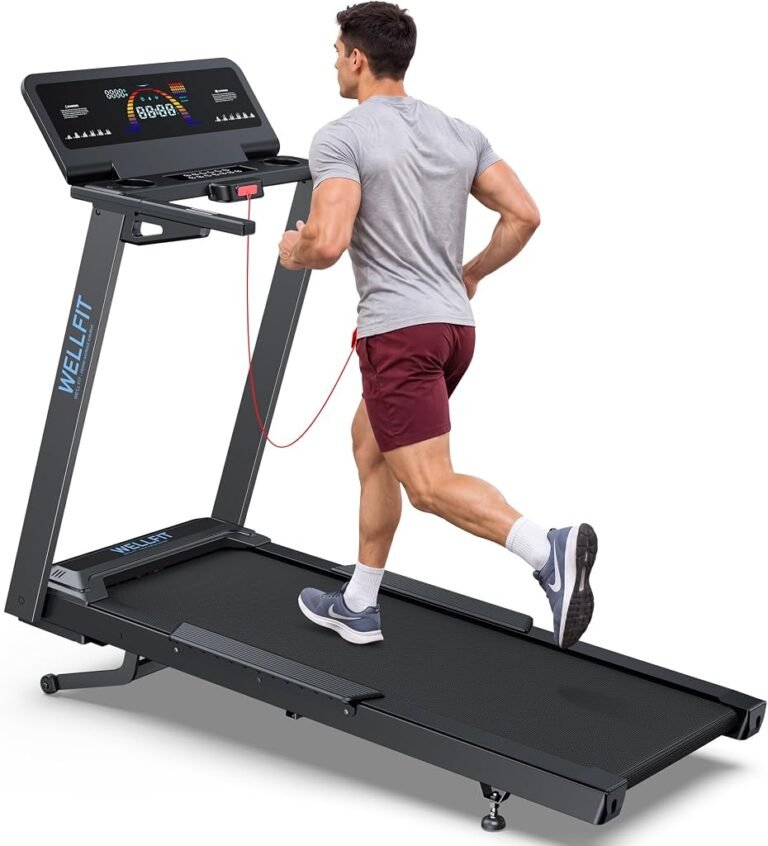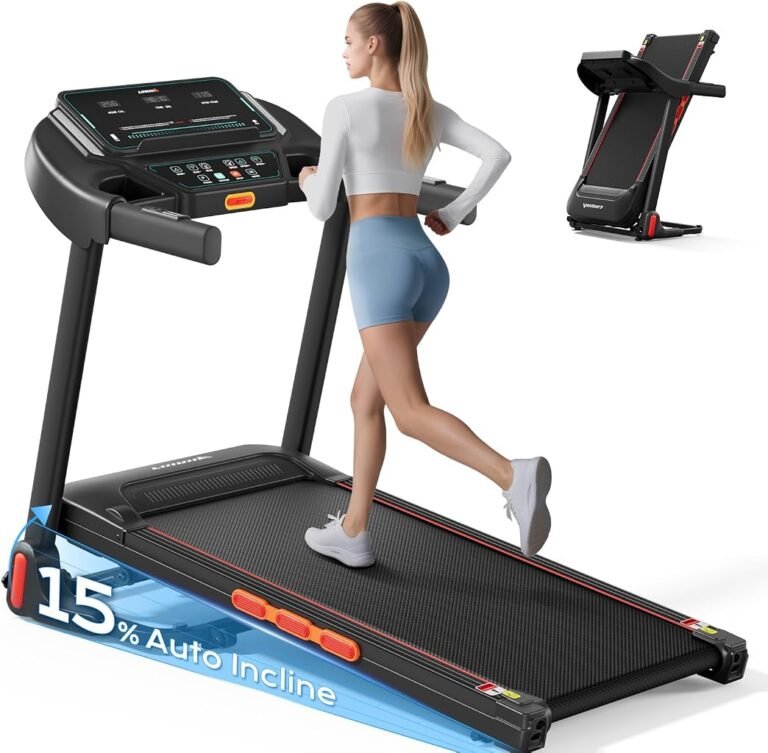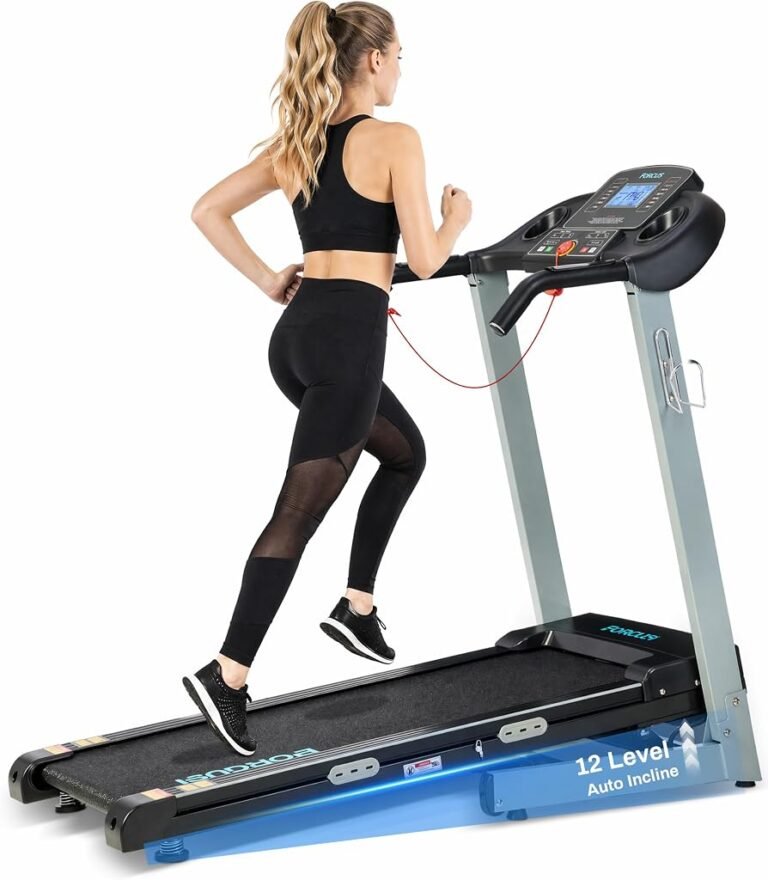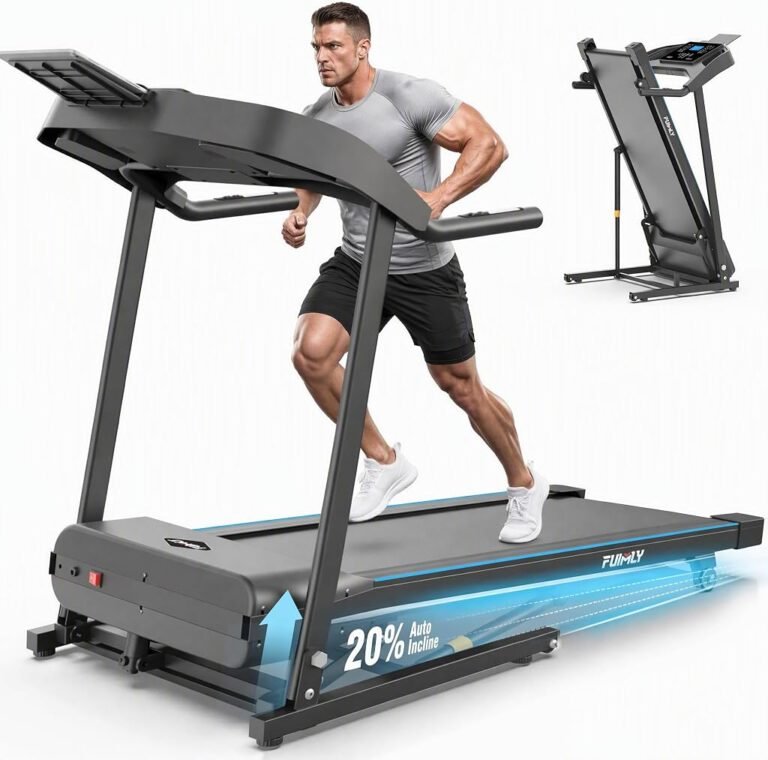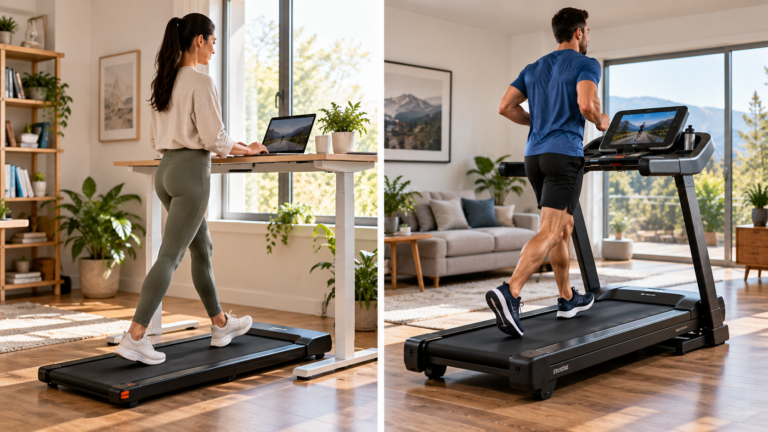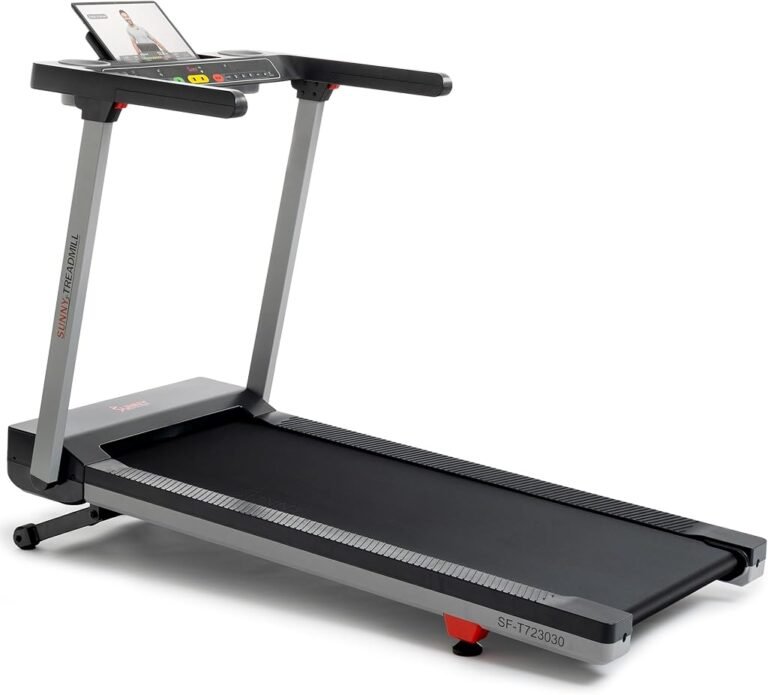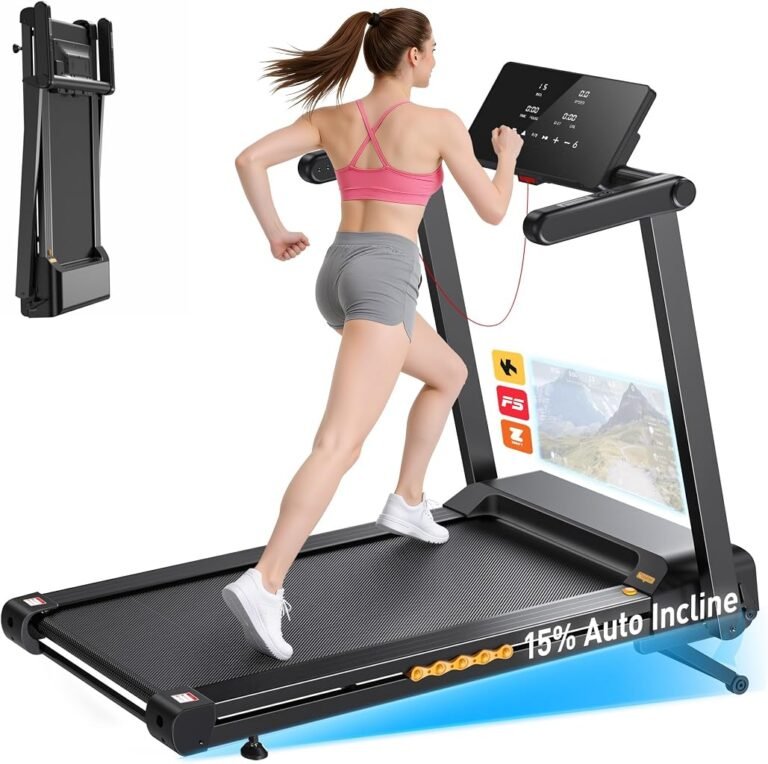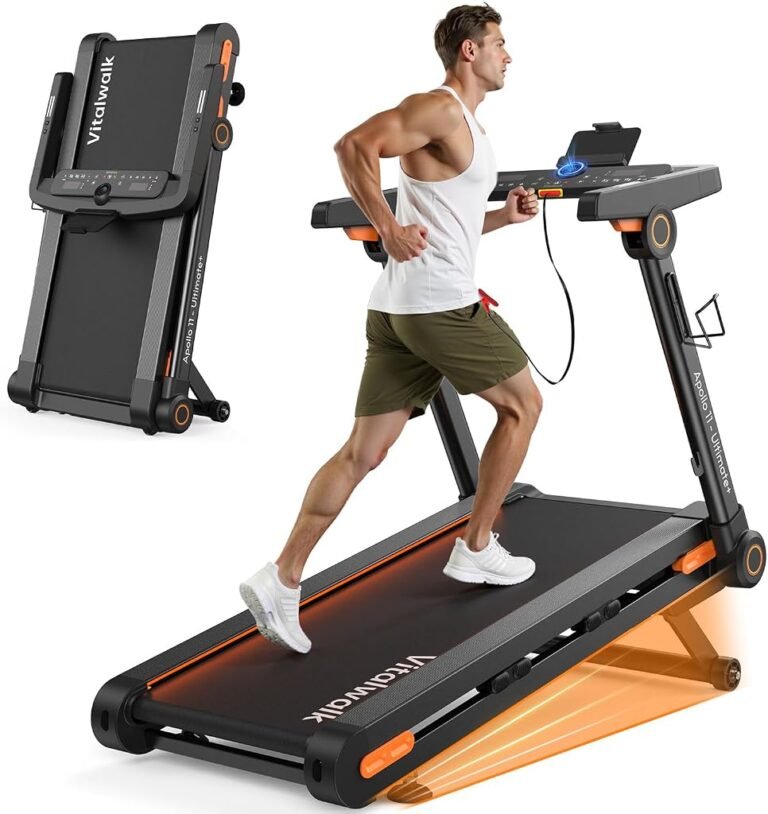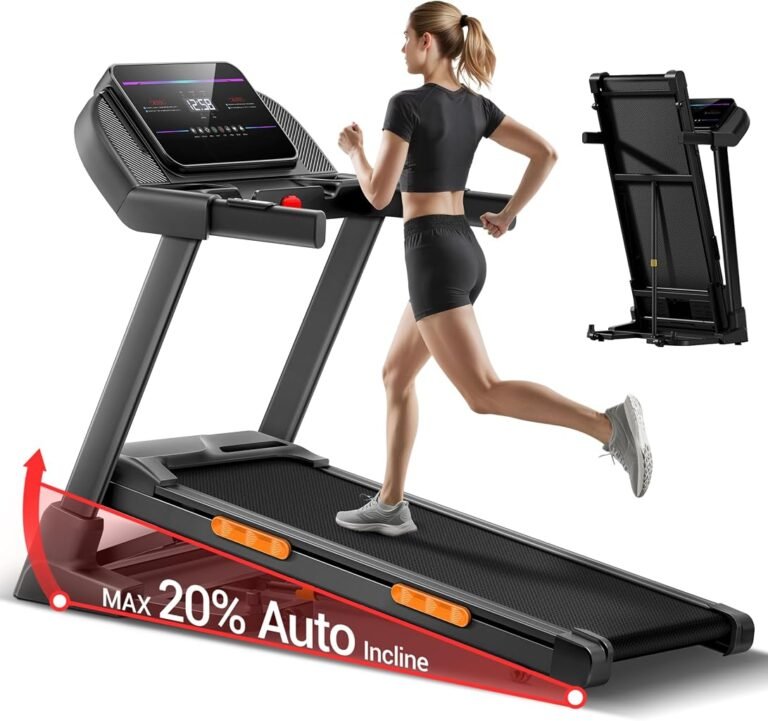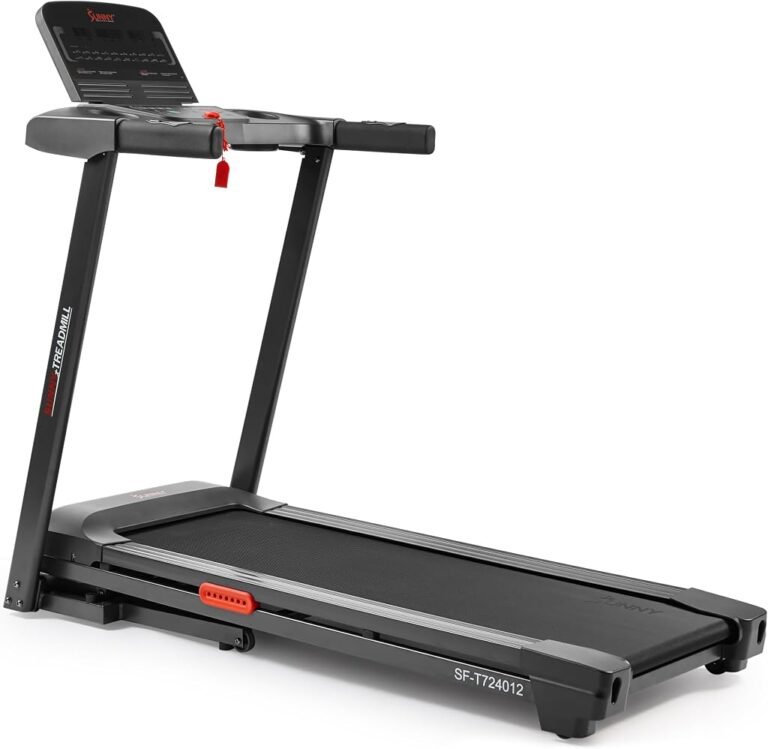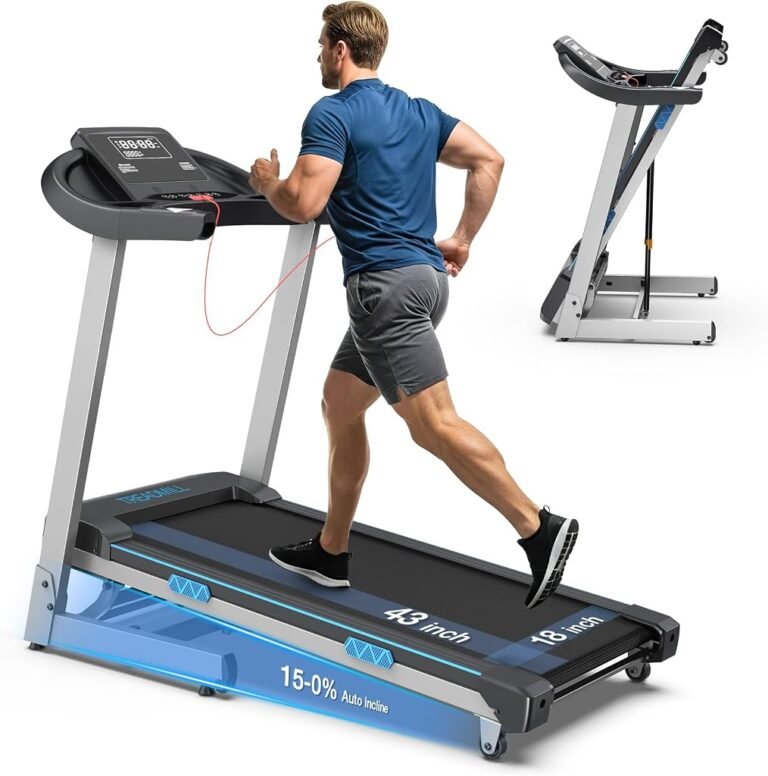
Home treadmills live under an unusual set of pressures. They need enough running surface to accommodate natural movement, enough structural capacity for repeated exercise, enough training flexibility to remain useful after the novelty fades, and preferably some way of reducing their footprint when nobody is exercising.
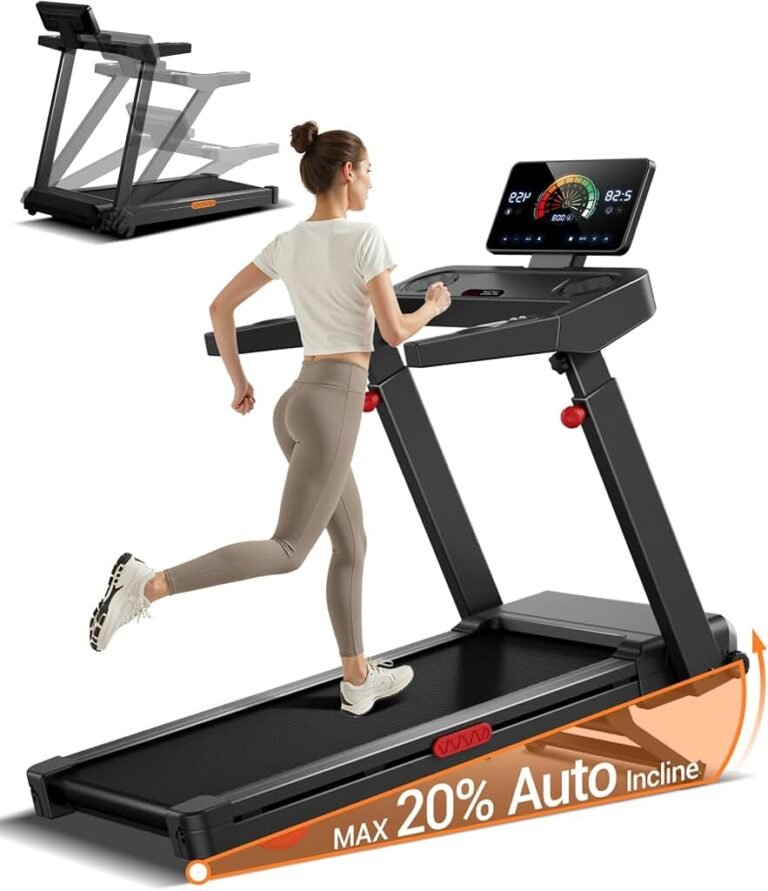
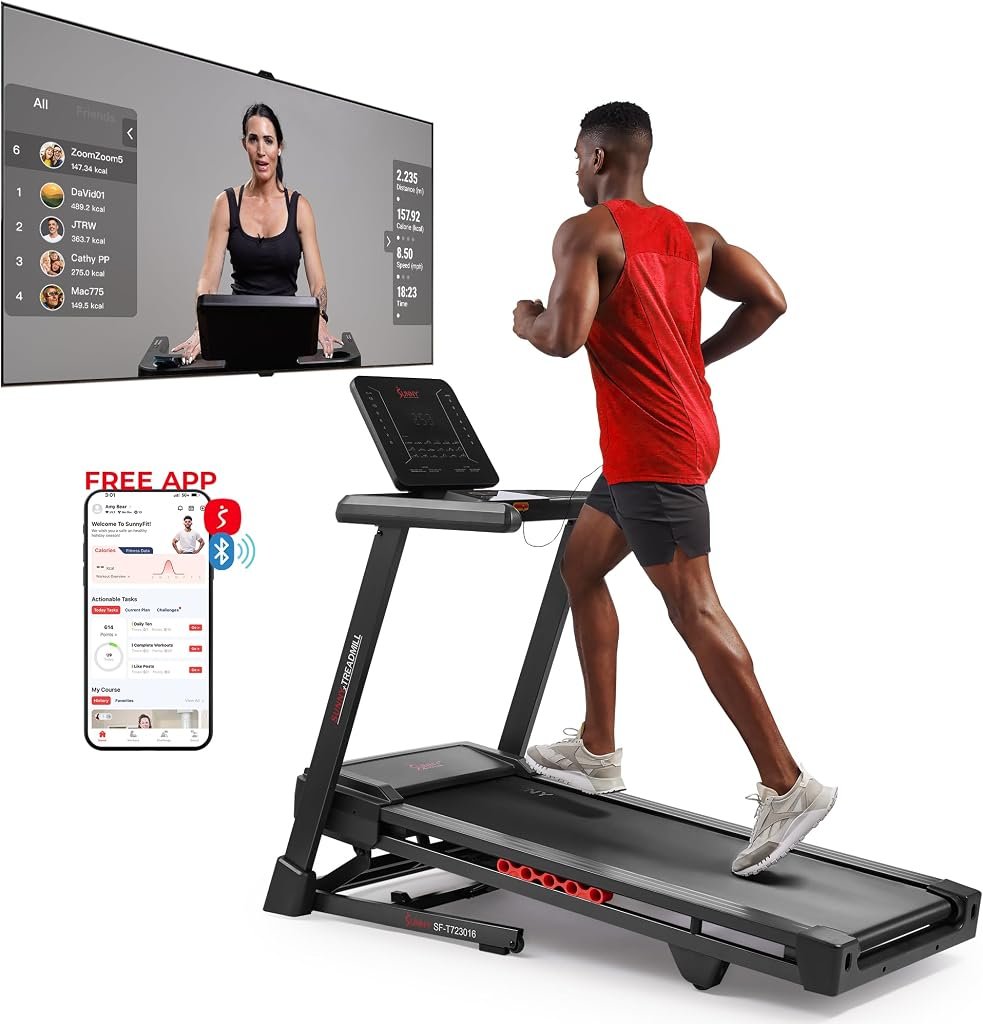
The Sunny Health & Fitness Foldable Auto Incline Treadmill approaches that problem with a notably important specification: a 20-inch-wide platform. Automatic incline and folding construction broaden the proposition, while the $799.99 price places the machine in a more demanding category than inexpensive walking pads and entry-level compact treadmills.
Our Score is 8.55/10. Buyer Confidence is exceptionally high at 9.8, Customer Sentiment is 8.28, and Value is 8.15. That distribution is revealing. The machine earns substantial editorial confidence, but its price makes the value judgment more demanding. Customer Sentiment, meanwhile, sits 1.52 points below Buyer Confidence.
That gap should not be ignored. It suggests a treadmill whose fundamental design and purchasing proposition inspire greater confidence than an assumption of universal owner satisfaction would justify.
The 20-inch-wide platform is central to that assessment. Compact treadmills often gain storage convenience by reducing dimensions. Sunny Health & Fitness takes a different route here: preserve a more accommodating exercise surface while retaining folding capability.
That combination makes the machine interesting. The $799.99 price ensures it must also be scrutinized carefully.
A 20-Inch-Wide Platform Changes the Equation
Running-belt width is one of the least glamorous treadmill specifications and one of the most consequential.
Screens photograph better. Apps generate longer feature lists. Speakers, device holders, preset programs, and digital dashboards are easy to advertise.
The belt is where every step actually lands.
Sunny Health & Fitness currently sells several treadmills built around 20-inch running decks. Its Advanced Heavy Duty Auto Incline Smart Treadmill, for example, combines a 20-inch-wide deck with folding construction, automatic electric incline, speeds reaching 12 mph, and a stated 300-pound maximum user capacity.
Those specifications illustrate why width matters in this part of the market. A 20-inch platform provides more lateral room than narrower compact belts, which can become increasingly noticeable as walking transitions toward jogging or running.
Width does not tell the entire story. Belt length remains equally relevant, particularly for taller users and faster running. Yet a 20-inch-wide platform gives the Sunny treadmill a more serious exercise identity than equipment designed primarily around low-speed walking.
That is an appropriate place to begin evaluating an $799.99 machine.
Our Score: 8.55/10
We rate the Sunny Health & Fitness Foldable Auto Incline Treadmill at 8.55/10.
That score places it firmly in excellent territory within our assessment, but it does not arise from price alone or from one headline feature.
The treadmill combines three characteristics that work logically together: a relatively accommodating 20-inch-wide platform, automatic incline, and folding construction.
The first addresses movement space. The second broadens training intensity. The third addresses the reality that a treadmill spends far more time unused than in motion.
The $799.99 price prevents an even easier recommendation.
At this level, buyers should expect a machine that fits their intended exercise closely. Someone seeking only casual walking can spend considerably less. A household intending regular walking, jogging, incline sessions, or mixed cardio has a stronger reason to consider the additional investment.
Our 8.55 score reflects that distinction.
This is not inexpensive fitness equipment. It is a more substantial home-cardio proposition whose features need to be used for the economics to make sense.
Buyer Confidence: 9.8
Buyer Confidence is the strongest score at 9.8.
Several factors support that assessment.
Sunny Health & Fitness maintains an extensive catalog of cardio equipment and publishes model-specific specifications and support documentation. Its current treadmill lineup includes multiple machines using 20-inch decks, automatic incline systems, folding frames, and smart connectivity.
That established product infrastructure matters when equipment contains motors, moving belts, incline mechanisms, electronics, and wear components.
The design concept itself is also straightforward.
A wider platform addresses exercise comfort. Powered incline provides another method of changing workload. Folding addresses domestic storage.
Nothing about that combination requires an elaborate explanation.
Yet 9.8 Buyer Confidence should not be confused with universal suitability. Treadmills are highly physical purchases. Dimensions, user capacity, speed, belt length, machine weight, controls, and storage geometry all matter.
A prospective buyer should still confirm the exact model specifications before ordering.
High confidence means the proposition is credible. It does not mean measurements become optional.
Customer Sentiment: 8.28
Customer Sentiment receives an 8.28 rating.
The 1.52-point separation from Buyer Confidence deserves attention because it exposes the difference between evaluating a product concept and living with a large piece of exercise equipment.
Treadmills interact directly with body dimensions and household dimensions.
A machine can be technically excellent and still feel poorly matched to a particular user. Taller runners may prioritize deck length differently from walkers. Someone in a small apartment may care about folded dimensions more than someone with a dedicated gym. A user exercising early in the morning may be unusually sensitive to operating noise.
There is also the question of expectations created by price.
A $799.99 treadmill enters a category where buyers are likely to demand more than functional adequacy. Controls, stability, movement space, folding behavior, incline operation, and everyday usability all become part of the ownership judgment.
The 8.28 Customer Sentiment score remains favorable.
It simply reflects greater variation in how households may experience the machine than the 9.8 Buyer Confidence figure might initially imply.
Value: 8.15
Value is rated at 8.15, the lowest of the four scores.
That is not surprising given the $799.99 price.
Value should never be confused with cheapness. A more expensive product can represent better value when its capabilities are genuinely useful, while an inexpensive machine can represent poor value if it is unsuitable or rarely used.
The Sunny treadmill has a plausible case for its price because its feature set extends beyond basic walking.
A 20-inch-wide platform, folding construction, and automatic incline address different aspects of treadmill ownership. The first concerns movement, the second exercise variety, and the third storage.
Still, $799.99 creates a meaningful threshold.
At 100 workouts, the purchase price represents roughly $8 in initial equipment cost per session. At 250 workouts, that falls to approximately $3.20. After 500 workouts, it falls to about $1.60.
Those figures exclude electricity, maintenance, financing, repairs, and accessories. They nevertheless demonstrate how strongly home-fitness economics depend on frequency of use.
A treadmill used several times every week tells a very different financial story from one that becomes expensive furniture.
Automatic Incline Has Measurable Exercise Value
Incline is not merely another button on the console.
Walking uphill changes physiological demand.
A controlled study involving 24 healthy older adults compared treadmill walking at 0%, 10%, and 16% grades. Researchers found that net cardiopulmonary metabolic energy cost increased by 22.9% at 10% incline and 44.2% at 16% incline compared with level treadmill walking. The study also measured increases in the activity of several lower-limb muscles as slope increased.
Those percentages should not be applied directly to every treadmill user. The research involved a specific population and controlled experimental conditions.
The broader lesson is more useful: grade changes workload substantially.
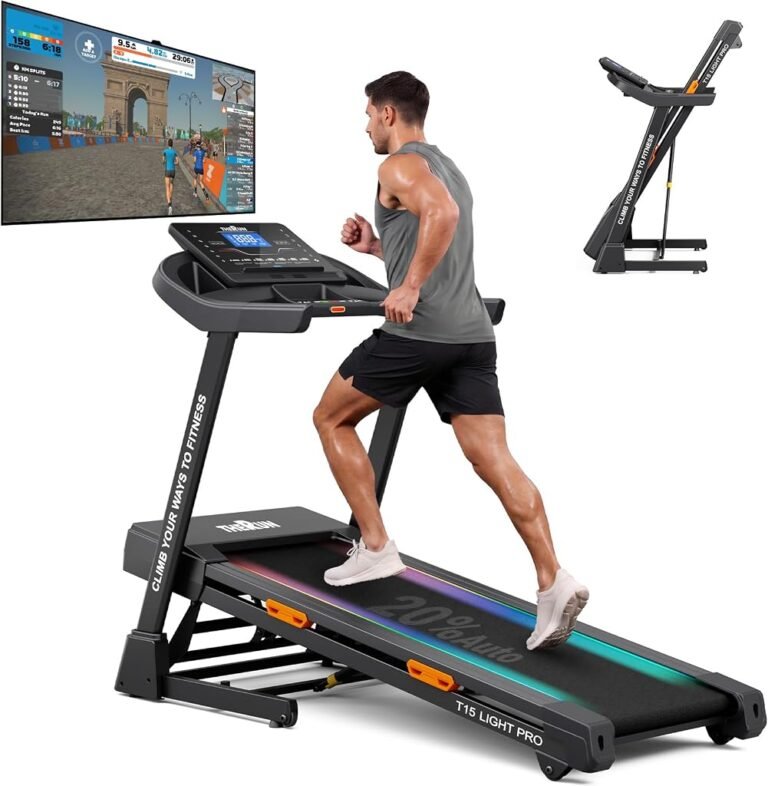
Automatic incline allows that variable to be adjusted during exercise rather than forcing the user to stop and mechanically reposition the treadmill.
That creates opportunities for hill intervals, progressive climbs, flatter recovery sections, and sustained moderate-grade walking.
For someone who prefers walking to running, incline can substantially broaden what a treadmill session feels like without requiring dramatically higher belt speeds.
Walking Does Not Need to Become Running
Home treadmills are frequently discussed as though walking were merely preparation for running.
Public-health guidance does not support such a narrow interpretation.
The Centers for Disease Control and Prevention recommends at least 150 minutes of moderate-intensity physical activity per week for adults, using brisk walking as an example. Adults are also advised to perform muscle-strengthening activity on at least two days each week.
That weekly aerobic target can be divided into five 30-minute sessions.
A treadmill therefore does not need to turn every owner into a runner to have legitimate exercise value.
The automatic incline function can make that especially relevant. A user can manipulate duration, speed, and grade independently.
A 30-minute session might include level walking followed by moderate incline intervals. Another could remain predominantly flat. A third might gradually increase grade before returning to an easier finish.
Variety becomes possible without requiring the user to abandon walking.
Incline Offers an Alternative to Simply Going Faster
The relationship between speed and exercise intensity can tempt treadmill users into assuming progression means continually accelerating the belt.
Research provides a more nuanced picture.
A study involving adults with obesity compared faster level walking with slower uphill walking. Researchers found that slower uphill walking produced moderate cardiovascular stimulus while reducing several lower-extremity loading measures. In one comparison, walking up a 6-degree incline at 0.75 meters per second reduced peak knee extension and adduction moments by approximately 19% and 26%, respectively, versus level walking at 1.50 meters per second.
That research should not be treated as individualized medical advice or as proof that incline is preferable for every user.
It does demonstrate why powered grade adjustment can be useful.
Intensity has multiple controls.
Speed is one. Duration is another. Incline is a third.
A treadmill capable of changing grade gives users more freedom to manipulate those variables rather than forcing every progression toward faster running.
Maximum Incline Is Not a Score
Treadmill marketing often encourages buyers to compare maximum incline figures as though larger automatically means better.
Human movement is less cooperative with simple rankings.
Research examining treadmill walking across grades of 0%, 5%, 10%, 15%, and 20% found that walking grade substantially changes energetic demands and preferred walking behavior.
The practical lesson is not that users should seek the steepest possible setting.
A maximum incline is an available boundary, not a training objective.
A moderate grade used with controlled posture and a sustainable speed may be more productive than a steep setting that forces the user to cling to the handrails.
Incline progression should therefore be treated like speed progression: gradually and according to individual ability.
The value of automatic adjustment lies in having choices between flat and maximum, not merely in reaching the largest number.
The Folding Mechanism Addresses a Mathematical Reality
A treadmill used for 45 minutes per day sits unused for 1,395 minutes.
That simple arithmetic explains why foldability matters.
Exercise equipment competes for household floor space even when nobody is exercising. In a dedicated gym, that competition may be irrelevant. In a bedroom, office, garage, or shared living space, it can determine whether a treadmill is practical at all.
Folding construction attempts to improve that equation.
Yet folding should not be mistaken for disappearance.
The machine retains its weight and requires a storage footprint. Furniture can interfere with folding. Ceiling height may matter for some upright storage arrangements. Moving the treadmill can also require more effort than buyers expect.
The correct pre-purchase question is therefore not simply, “Does it fold?”
The more useful questions are how it folds, where it will be stored, how much space remains necessary, and how frequently the household realistically intends to move it.
A Wider Platform and Folding Frame Pull in Opposite Directions
The 20-inch-wide platform reveals one of the central engineering tensions in this treadmill.
Users generally benefit from more room while exercising.
Homes generally benefit from equipment taking up less room.
Those objectives conflict.
A wider deck requires physical width. A longer running surface requires length. A stronger structure generally carries a mass penalty. Folding can recover some floor area, but it cannot erase the dimensions needed during exercise.
This is why the Sunny’s 20-inch platform deserves attention.
It suggests that exercise space has not been sacrificed entirely in pursuit of compactness.
For walkers, the additional lateral room may simply feel less restrictive. For jogging and running, belt dimensions become increasingly consequential as pace and stride change.
The machine still needs to fit the room, but the room is only half the equation.
The user needs to fit the treadmill.
The $799.99 Price Demands More Discipline
At $799.99, impulse buying makes little sense.
The treadmill should have a defined job before it arrives.
If the intended routine consists primarily of slow flat walking, less expensive equipment may satisfy the requirement.
If the intended routine combines brisk walking, incline training, jogging, or running—and if a wider platform matters—the Sunny becomes easier to justify.
That is why Value at 8.15 trails the overall score of 8.55.
The product can be very good without being inexpensive.
Buyers should resist evaluating the price solely against commercial treadmills costing considerably more. The relevant comparison is the least expensive machine that adequately meets the household’s actual exercise requirements.
Paying for unused capability is not value.
Neither is saving money by buying equipment that feels too restrictive to use consistently.
The Wider Deck May Matter Most After the First Month
Novel features attract attention during shopping. Fundamental geometry tends to matter longer.
A display may feel exciting during the first week. Preset programs can add variety. App connectivity can provide structure.
The belt remains underfoot during every workout.
This is why platform dimensions deserve disproportionate attention during treadmill selection.
A treadmill owner might complete hundreds of thousands of individual foot strikes over the life of the machine. Available movement space affects every one of them.
The 20-inch-wide platform is therefore not a decorative specification.
It is part of the physical interface between the user and the machine.
That does not automatically make wider better for every household. Wider equipment generally requires more room. Someone purchasing primarily for gentle walking may prefer a narrower machine that stores more easily.
The correct width is the one that balances user movement against available space.
Home Cardio’s Advantage Is Predictability
Outdoor exercise has advantages a treadmill cannot reproduce.
There is scenery, changing terrain, fresh air, and the possibility of social interaction. Walking outdoors can also require essentially no equipment investment.
A treadmill offers something different: control over circumstances.
Rain does not change the belt. Darkness does not close the route. Traffic disappears. Temperature can be managed. A short exercise window does not lose time to driving to a gym.
That predictability can matter more than another digital feature.
The CDC allows recommended weekly physical activity to be spread across multiple sessions. A treadmill makes those sessions easier to place around work, childcare, weather, and daylight.
Home exercise therefore solves a logistical problem as much as a fitness problem.
The machine cannot create consistency by itself.
It can remove several excuses consistency has to overcome.
Who Is This Sunny Treadmill Best Suited To?
The strongest candidate is someone who wants a more substantial home treadmill than a walking pad but still needs folding capability.
The 20-inch-wide platform strengthens the case for users who expect more movement space during brisk walking, jogging, or running.
Automatic incline favors people who want training variety without relying entirely on higher speed.
The $799.99 price means expected frequency of use should be substantial enough to justify the investment.
This treadmill is less compelling for someone seeking only gentle under-desk walking. A simpler machine can address that task with less expense and potentially less bulk.
Dedicated high-mileage runners should approach the purchase from the opposite direction. They should verify running-surface length, speed range, motor specification, machine weight, stability, user capacity, and warranty before prioritizing folding.
The Sunny treadmill makes its strongest case between those extremes: serious home cardio without requiring a permanently open full-size machine.
How It Fits Among the Best Treadmills for Home Use
The best treadmills for home use cannot be ranked sensibly by maximum speed or incline alone.
Domestic fitness equipment has constraints gym equipment largely avoids.
It shares space with furniture. Noise can affect other people. Storage matters. Doorways matter. Electrical outlets matter. Household budgets matter.
The Sunny Health & Fitness model addresses that reality by combining a wider exercise platform with a folding structure.
That is a more balanced design objective than pursuing minimum footprint at any cost.
Its 8.55 overall rating reflects that balance.
The treadmill offers a stronger physical exercise platform than minimalist walking equipment while retaining a mechanism intended to reduce its spatial burden after use.
The price remains the counterweight.
At $799.99, buyers should expect to use its broader capability rather than merely appreciate that the capability exists.
What Buyers Should Verify Before Purchase
Before ordering, the buyer should verify the exact current specifications for the specific model being considered.
Particular attention should go to:
- Running-surface length as well as the 20-inch width
- Maximum supported user weight
- Maximum speed
- Automatic-incline range and number of adjustment levels
- Overall operating dimensions
- Folded dimensions
- Machine weight
- Motor specification
- Safety-stop mechanism
- Handrail controls
- Electrical requirements
- Assembly requirements
- Warranty coverage
- Maintenance instructions
- Recommended clearance
The room should then be measured.
Marking the treadmill footprint on the floor with removable tape can reveal practical conflicts immediately. Doors need room to open. Chairs need room to move. Storage furniture still needs to function.
The folded configuration should receive the same treatment.
A treadmill that fits only on paper is not properly fitted.
Where the Sunny Health & Fitness Treadmill Gives Ground
The 8.55/10 rating leaves room for criticism.
Price is the most obvious issue. At $799.99, this machine faces competition not merely from walking pads but from other substantial home treadmills.
Its folding design also cannot remove the physical consequences of a wider platform. More usable exercise space and minimal storage dimensions are competing goals.
The Customer Sentiment score of 8.28 reinforces the importance of individual fit. A highly credible treadmill can still produce different experiences across users of different heights, stride patterns, exercise preferences, and living arrangements.
Value at 8.15 provides the clearest restraint.
The machine needs to be used regularly, and its incline and wider platform need to matter to the buyer. Otherwise, less expensive equipment becomes difficult to dismiss.
These are not minor details. They determine whether $799.99 purchases useful exercise infrastructure or excessive capability.
Final Considerations
The Sunny Health & Fitness Foldable Auto Incline Treadmill earns an 8.55/10 overall score by addressing several of the persistent conflicts in home treadmill design without reducing the machine to a minimalist walking pad.
Its 20-inch-wide platform is a meaningful feature because treadmill dimensions affect every workout. Automatic incline provides a second method of increasing exercise demand beyond speed, while folding construction acknowledges that domestic floor space has competing uses.
Buyer Confidence is the standout rating at 9.8. Customer Sentiment reaches 8.28, and Value receives 8.15.
That spread describes the treadmill more accurately than any single score.
There is substantial confidence in the machine’s proposition. There is more restraint around price and universal buyer fit.
At $799.99, this is not the logical choice for somebody who needs only occasional flat walking. Nor should serious runners buy it merely because the platform is 20 inches wide; belt length, speed, motor characteristics, stability, user capacity, and warranty deserve equal scrutiny.
Its natural audience is the household seeking a more capable home-cardio machine with a relatively accommodating platform, automatic incline, and a frame that can be folded when exercise ends.
Published research supports the usefulness of incline as a training variable, and public-health guidance establishes brisk walking as legitimate moderate-intensity exercise. The treadmill therefore does not need to turn every session into a run to justify its function.
The harder question is economic.
An $799.99 treadmill needs regular use. Its features need to solve actual problems rather than merely decorate a specification sheet. A wider platform matters when additional movement space improves the user’s experience. Automatic incline matters when grade becomes part of training. Folding matters when recovering floor space genuinely changes how the room functions.
When those conditions align, the Sunny Health & Fitness Foldable Auto Incline Treadmill makes a strong case for its 8.55/10 score. Its appeal rests less on novelty than on a practical balancing act: giving the user enough treadmill to exercise seriously while still acknowledging that, once the workout ends, the rest of the home needs its space back.