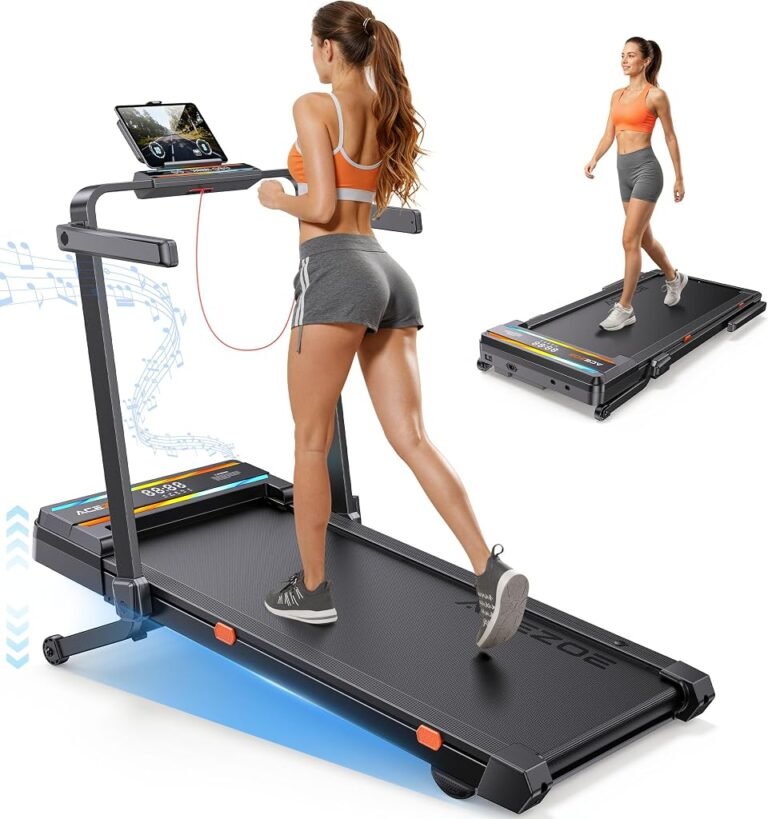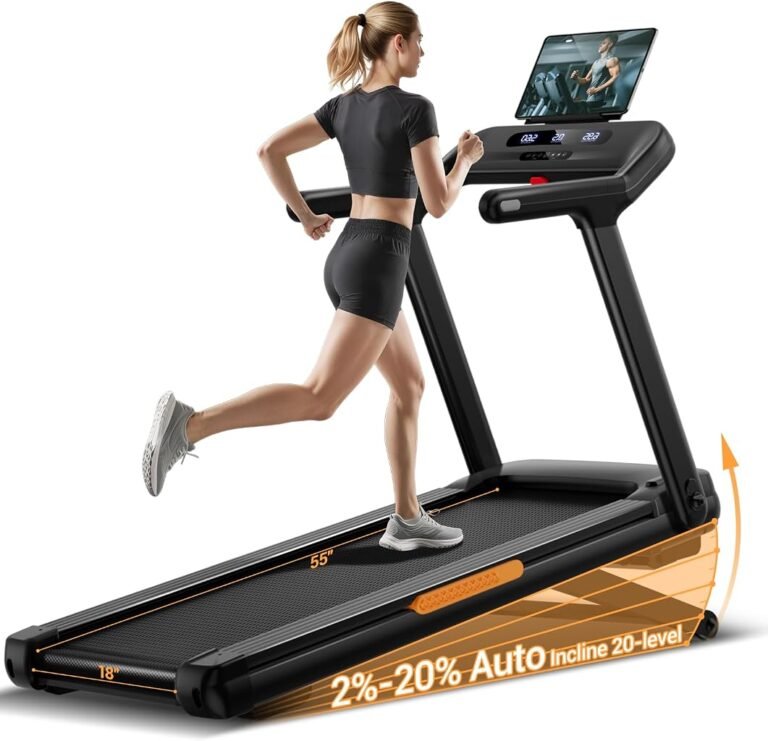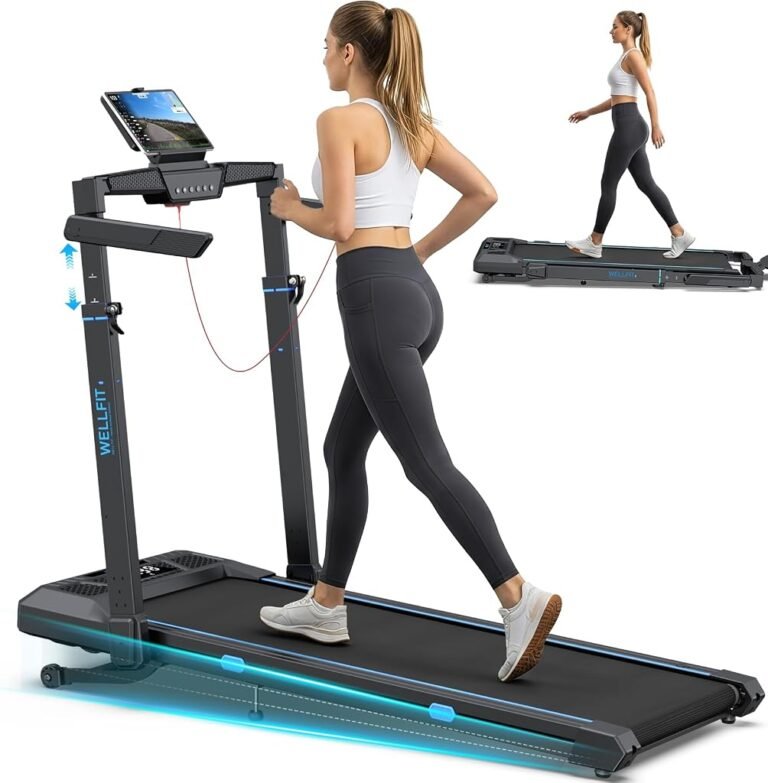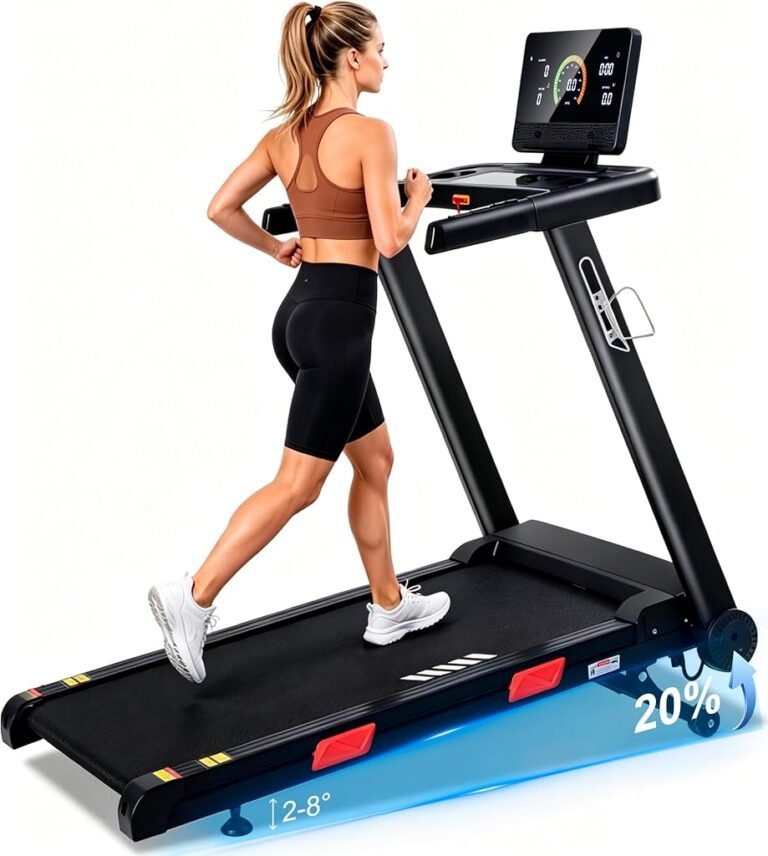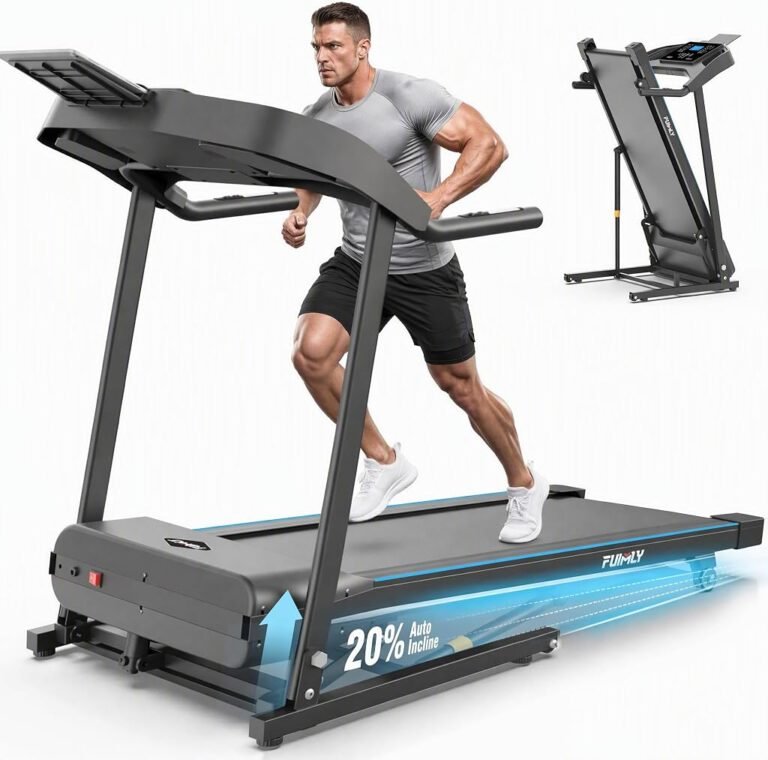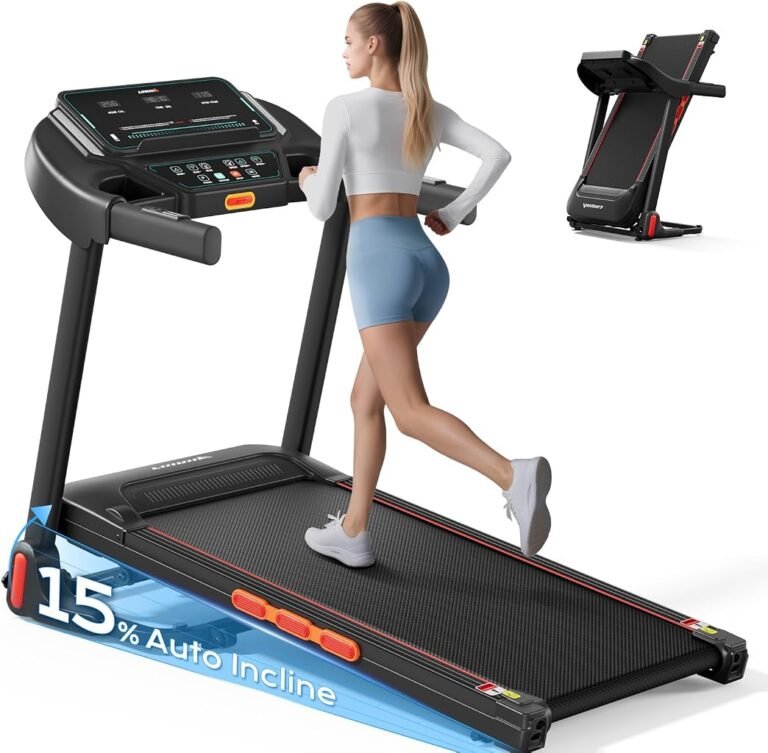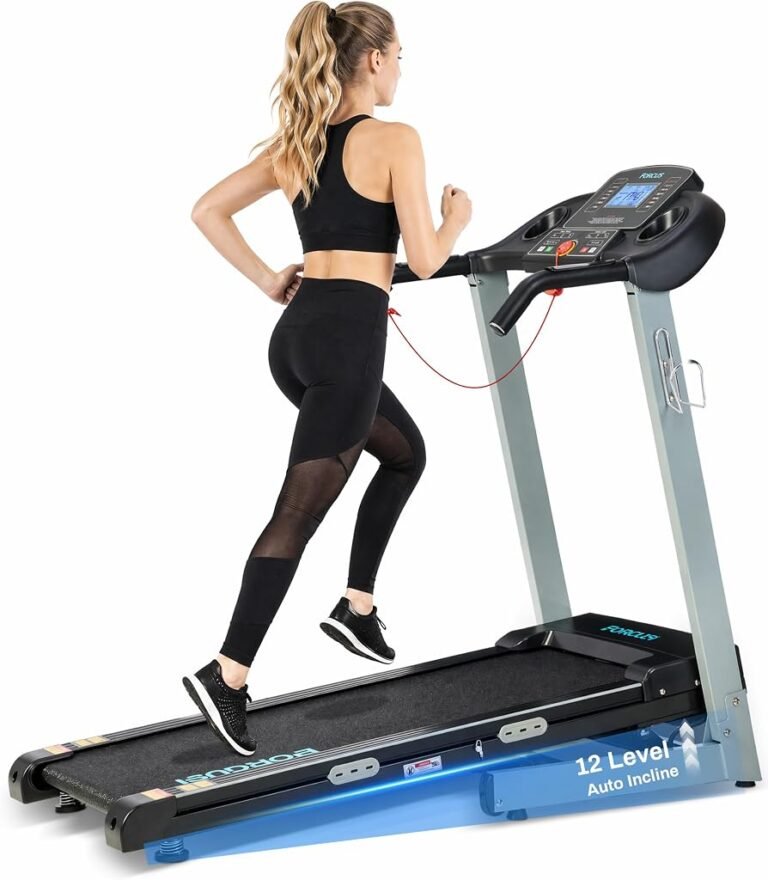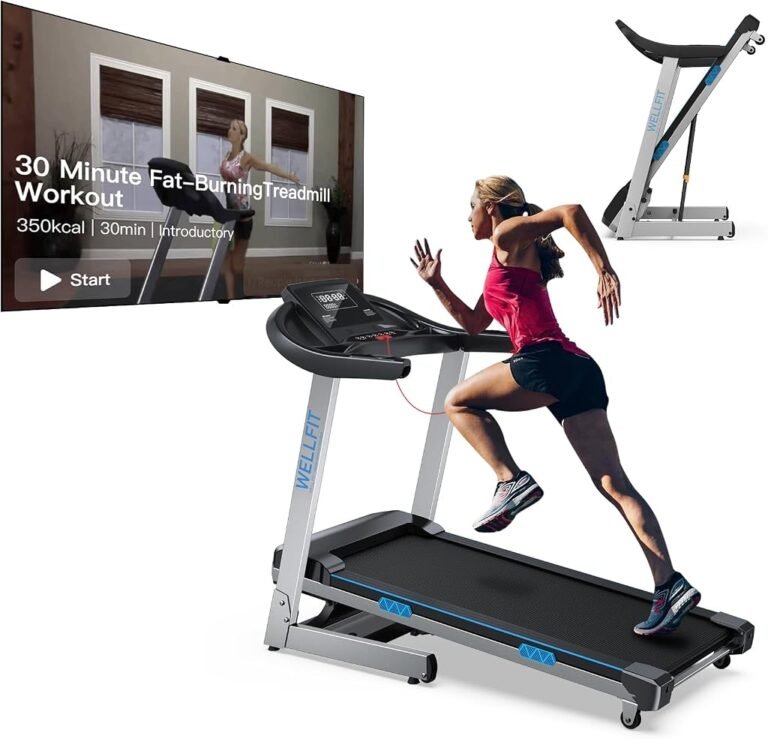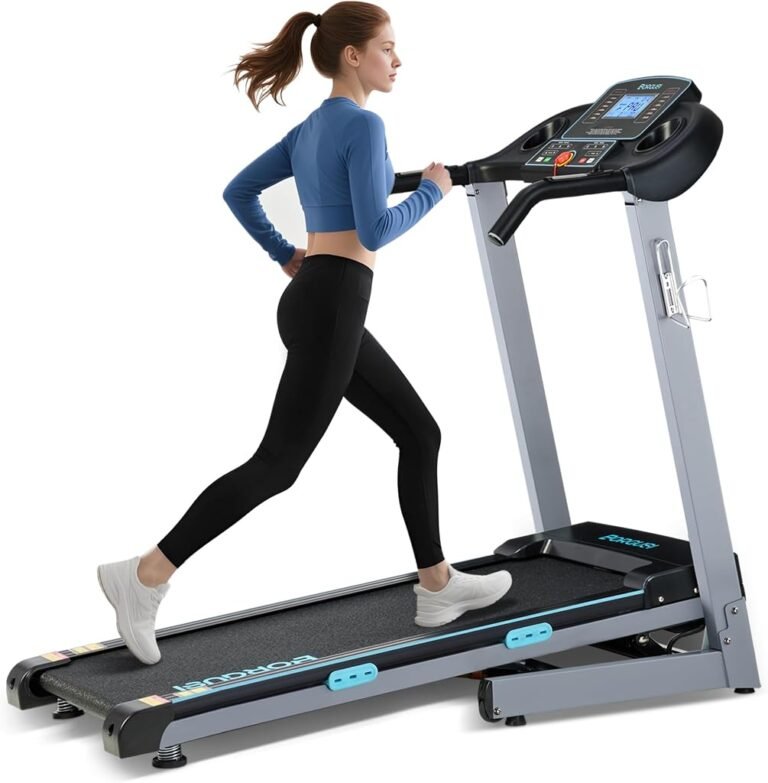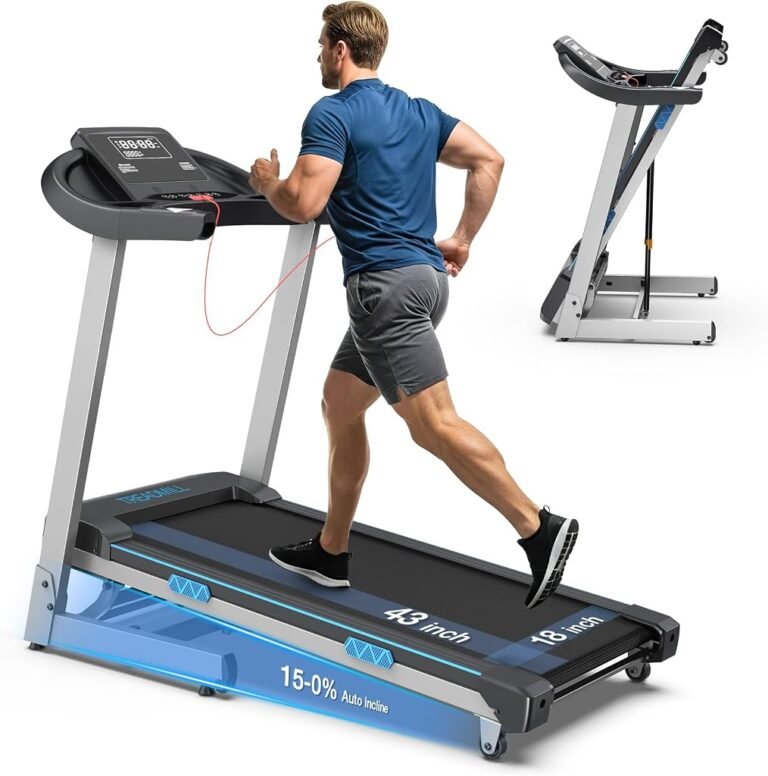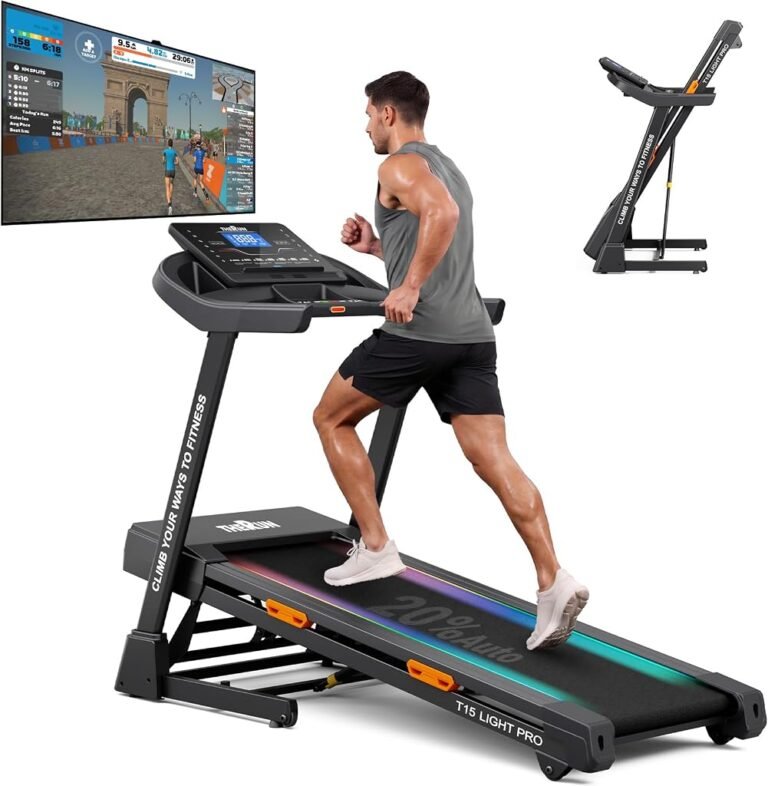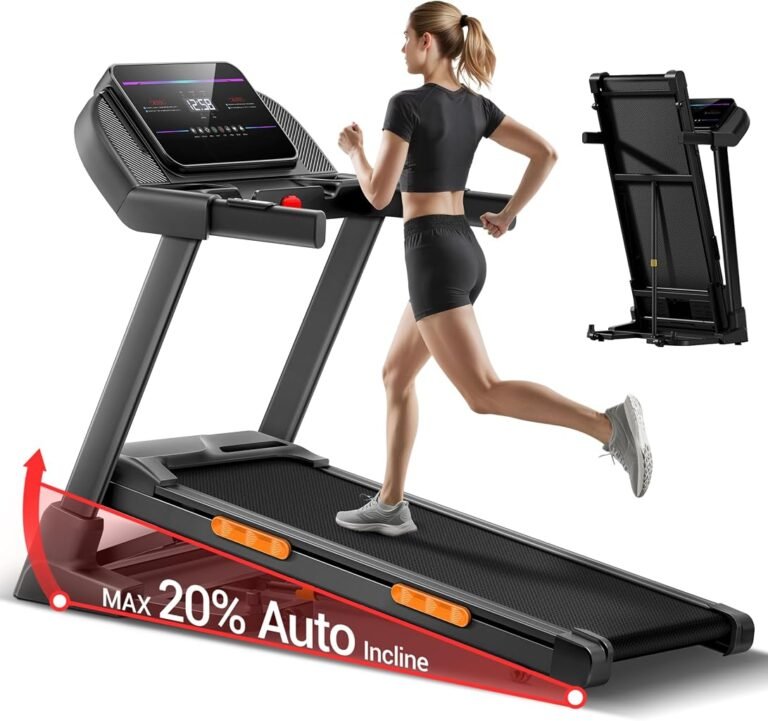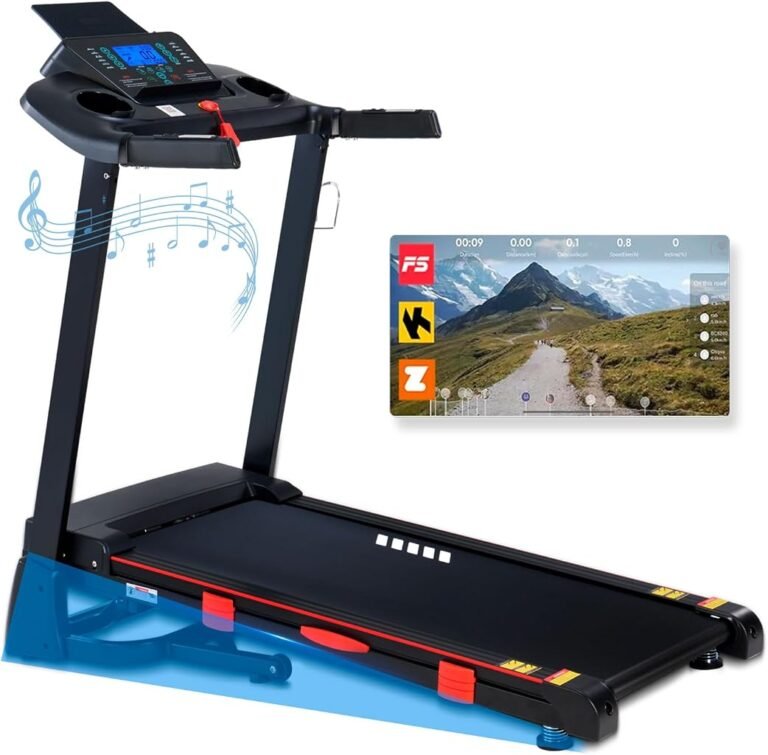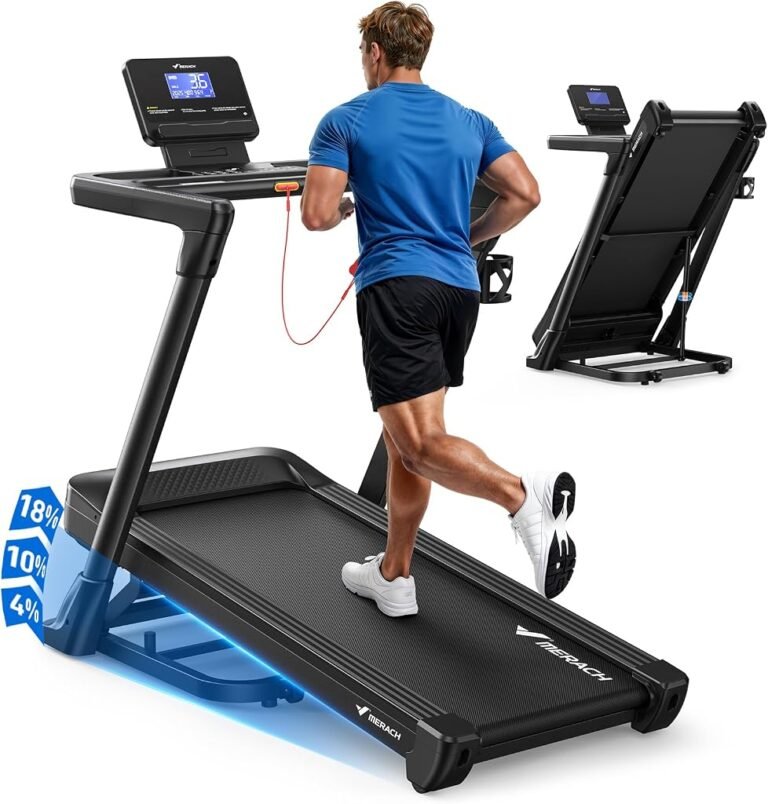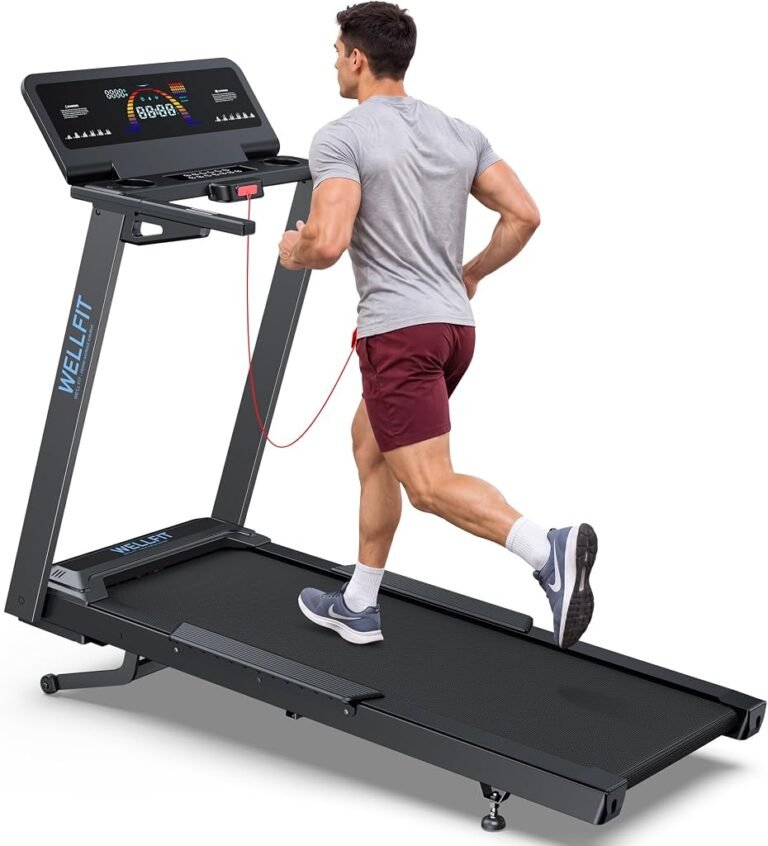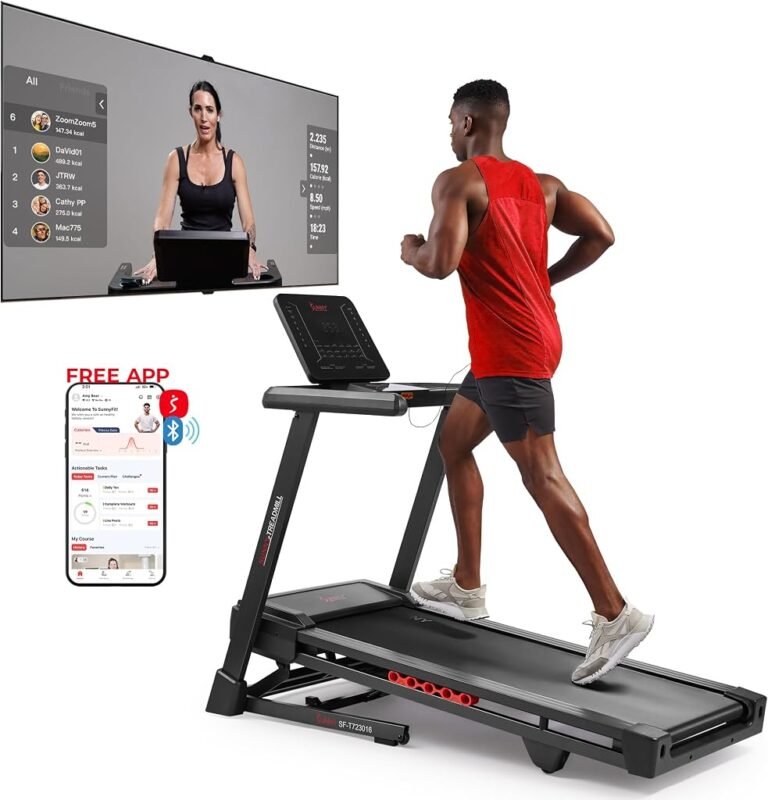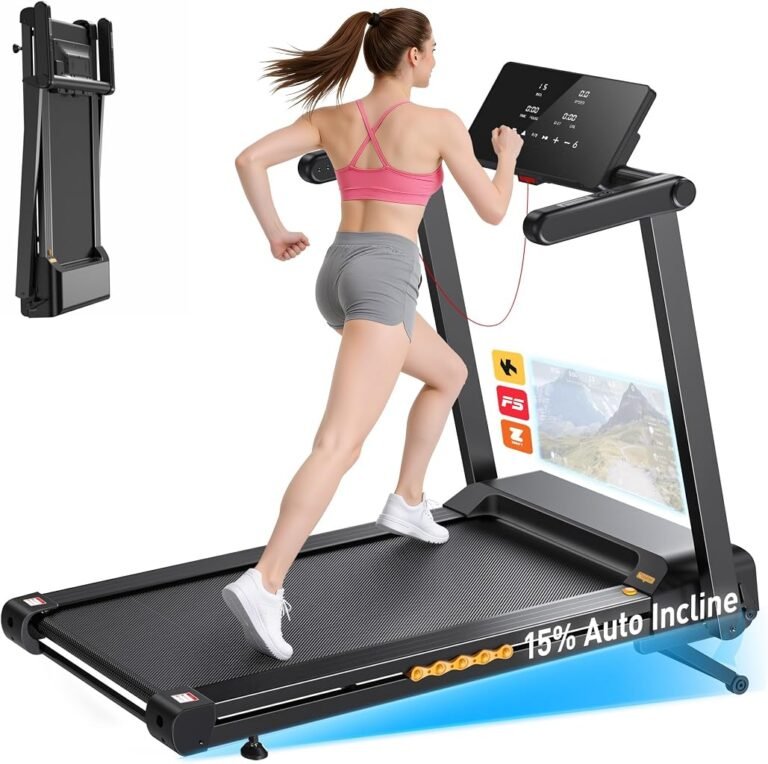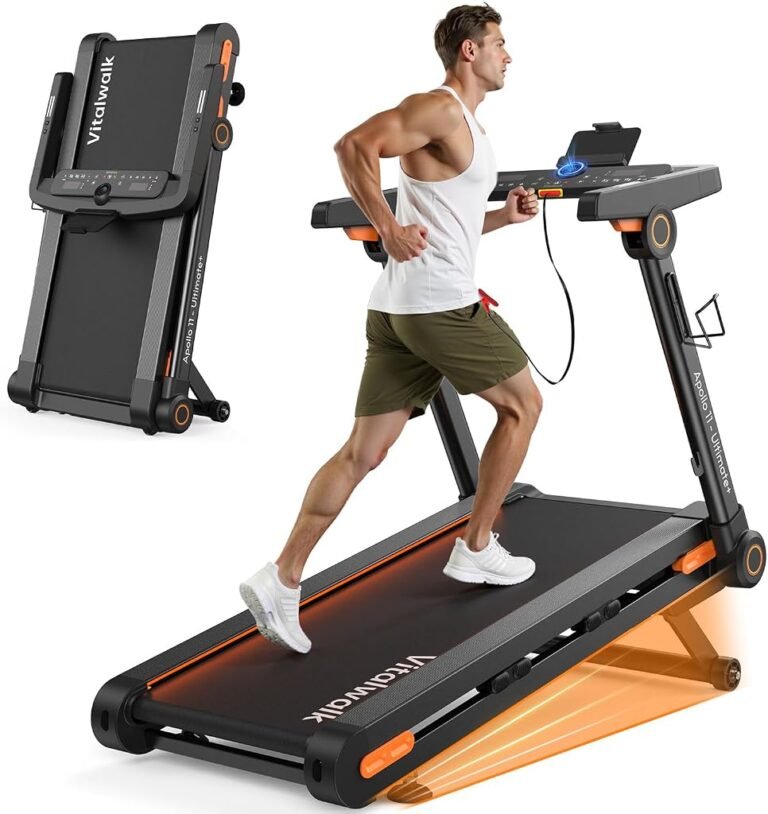
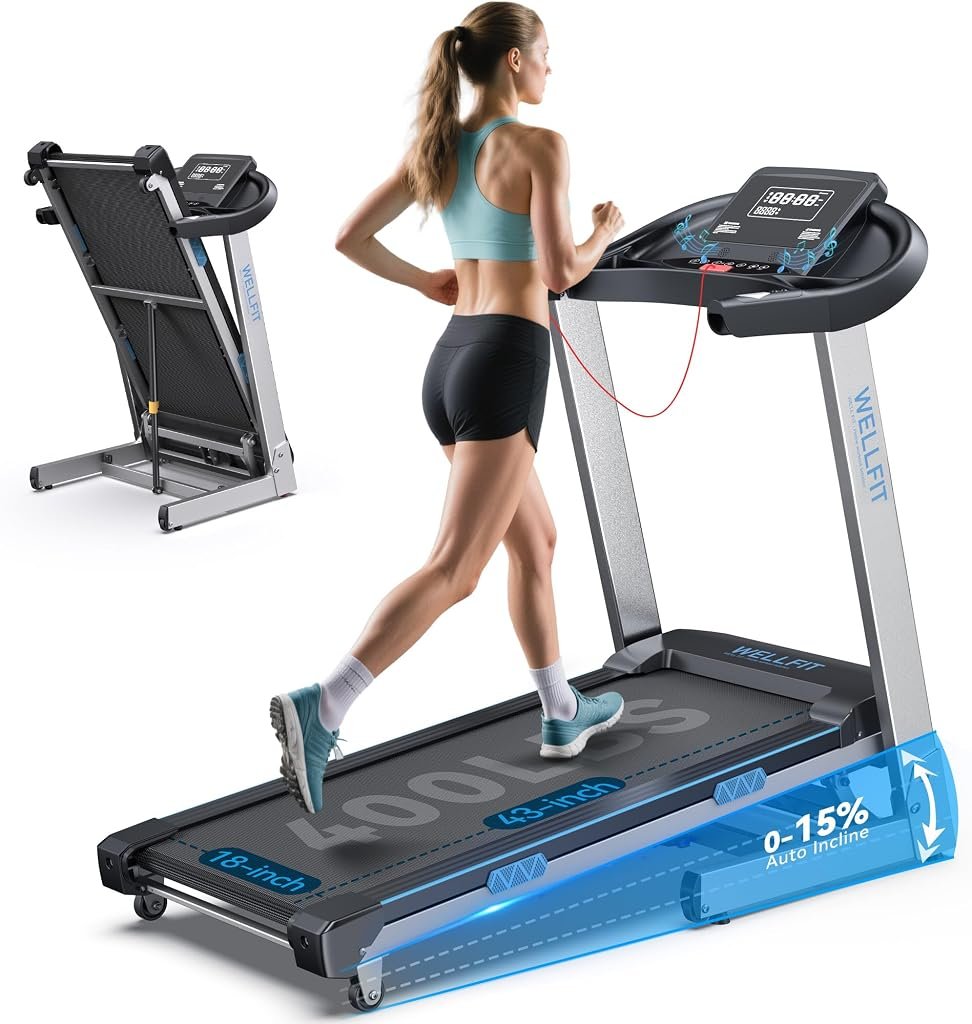
The WELLFIT Auto Incline Foldable Treadmill enters a crowded part of the home-fitness market with one feature that deserves immediate attention: a stated 15% automatic incline. At $399.99, it is neither a bare-bones walking pad nor an expensive premium treadmill. It sits in the middle, where buyers tend to expect meaningful exercise capability without surrendering a large amount of floor space or four figures of household budget.
That middle ground can be unforgiving. A treadmill around $400 has to be more capable than inexpensive flat walking equipment while accepting that larger, more expensive machines can offer wider decks, more substantial frames, stronger warranties, or additional training technology.
Our Score for the WELLFIT is 7.99/10, placing it in the good range. Customer Sentiment is 7.84, Buyer Confidence reaches 8.52, and Value is 7.91. Those ratings describe a product with a credible underlying proposition but a less uniform ownership picture than higher-scoring alternatives.
The 0.68-point separation between Buyer Confidence and Customer Sentiment is particularly informative. The treadmill makes sense conceptually and presents a relatively reassuring purchasing proposition, yet the experience is more dependent on individual expectations. The 15% automatic incline is the main attraction. Foldability addresses domestic practicality. Price is reasonable rather than exceptional.
For the right household, that combination can work well. For buyers who need only simple flat walking—or those expecting the dimensions and running characteristics of a large conventional treadmill—the calculation changes.
The 15% Automatic Incline Is the Headline Feature
Automatic incline materially changes what a home treadmill can do.
Speed and duration are the obvious ways to alter a treadmill workout. Grade adds another variable. That matters because increasing exercise demand does not necessarily require running faster.
Research involving older adults has found that inclined treadmill walking requires greater cardiopulmonary metabolic energy than level walking. In that study, 24 healthy older adults walked at grades of 0%, 10%, and 16%, with researchers measuring lower-limb muscle activity and metabolic energy cost.
The WELLFIT’s stated 15% automatic incline therefore has genuine training relevance.
A walker can maintain a manageable belt speed while increasing grade. Sessions can alternate between flatter recovery periods and steeper working sections. A user who dislikes running can create a more demanding walking workout without forcing pace beyond what feels controlled.
Automatic adjustment is also more practical than manual incline.
With manual systems, changing grade commonly requires interrupting the session and physically repositioning part of the treadmill. Powered adjustment makes incline usable throughout the workout rather than something selected once before exercise begins.
That distinction is easy to underestimate until regular use begins.
WELLFIT Has a Broader Auto-Incline Range
WELLFIT is not treating powered incline as an isolated feature on one treadmill. The manufacturer’s current range includes several machines built around automatic grade adjustment.
Its auto-incline treadmill collection includes models advertised with 10% and 15% powered incline, including foldable designs. That broader product range provides useful context for the machine reviewed here: automatic incline is part of WELLFIT’s established home-treadmill approach rather than an unusual addition to a single listing.
Specifications from other WELLFIT models should not be transferred to this treadmill, however.
Motor systems, maximum capacities, handrails, dimensions, speed limits, deck sizes, and folding arrangements can differ substantially even when products share a brand and incline percentage. Buyers should verify the exact specifications of the selected machine rather than assuming that every feature appearing elsewhere in the WELLFIT catalog is included.
The confirmed proposition here remains straightforward: a foldable home treadmill with 15% automatic incline and a $399.99 price.
That is enough to establish its position.
Our Score: 7.99/10
A 7.99/10 overall rating describes a capable product with identifiable trade-offs.
The score is not dragged down by a fundamental problem with the concept. Quite the opposite. Automatic incline and folding construction make sense together because they address two different needs: training versatility and domestic practicality.
The restraint comes from the purchasing equation.
At nearly $400, the treadmill must justify itself against cheaper walking pads and other folding treadmills. Its incline function helps considerably, but the buyer still needs to establish whether the machine’s dimensions, speed capability, weight limit, warranty, and storage requirements align with actual use.
The difference between a good treadmill and a good treadmill purchase lies there.
A 15% incline may be highly useful for someone who intends to perform structured hill-walking sessions several times each week. It is far less economically meaningful for somebody who plans to walk slowly on a flat deck while watching television.
Our 7.99 score recognizes the machine’s capability without pretending every household needs that capability.
Buyer Confidence: 8.52
Buyer Confidence is the strongest part of our assessment at 8.52.
That matters because home treadmills require a larger commitment than their purchase price alone suggests. They need floor space, electricity, storage planning, maintenance, and enough regular use to justify their physical presence.
The WELLFIT’s fundamental design makes sense. Incline has a clear exercise purpose. Folding has a clear household purpose. The $399.99 price is understandable within that feature combination.
The brand also maintains a broader catalog of folding and incline treadmills. WELLFIT’s current treadmill range includes compact folding machines alongside heavier auto-incline products, illustrating that space-conscious home cardio is a central part of its product portfolio.
An 8.52 Buyer Confidence score should still be paired with verification before purchase.
A prospective owner should confirm:
- Maximum user-weight capacity
- Exact walking or running surface dimensions
- Maximum belt speed
- Number and range of incline levels
- Operating dimensions
- Folded dimensions
- Product weight
- Electrical requirements
- Safety-stop arrangement
- Assembly requirements
- Warranty coverage
- Recommended clearance around the machine
These specifications determine whether the treadmill fits the buyer rather than merely fitting the budget.
Customer Sentiment: 7.84
Customer Sentiment receives a 7.84 rating, the lowest component score.
The difference from Buyer Confidence is substantial enough to deserve interpretation. Buyer Confidence exceeds Customer Sentiment by 0.68 points.
That gap suggests a machine that is easier to endorse as a sensible concept than to describe as universally satisfying in practice.
Compact treadmills are particularly vulnerable to differences in user expectations. A walking-focused owner may find a relatively compact deck entirely appropriate. A tall runner may experience the same dimensions differently. Someone with a dedicated exercise room may barely care about folding, while an apartment resident may regard it as central to the purchase.
Noise tolerance creates another variable. So does the frequency with which the machine needs to be moved or stored.
The 7.84 rating remains positive. It simply places greater emphasis on buyer-product matching.
That is a healthier way to evaluate home exercise equipment than assuming a single treadmill can satisfy every body type, room, and training objective.
Value: 7.91
At $399.99, the WELLFIT receives a Value score of 7.91.
That is close to the 7.99 overall score and slightly above Customer Sentiment. The pattern indicates respectable economics without establishing the machine as an automatic bargain.
The 15% incline carries much of the value argument.
Remove that feature and the machine would face a difficult comparison with less expensive walking equipment. Keep it, and the WELLFIT can support a broader range of workout intensities without requiring the footprint or expense associated with some larger treadmills.
Usage frequency remains decisive.
At $399.99, 100 workouts correspond to roughly $4 in initial equipment cost per session. At 250 workouts, that falls to about $1.60. After 500 workouts, the purchase price represents approximately $0.80 per workout.
Those calculations do not include electricity, maintenance, financing, repairs, or accessories. They are not a total-cost model. They demonstrate something more basic: home-fitness economics change dramatically when equipment gets used consistently.
A $250 machine abandoned after ten workouts is economically poor exercise equipment. A $399.99 treadmill used hundreds of times can tell a different story.
Walking Is a Serious Form of Aerobic Exercise
The WELLFIT’s value should not be judged by whether its owner eventually becomes a runner.
Walking itself can satisfy a substantial portion of recommended aerobic activity.
The Centers for Disease Control and Prevention advises adults to accumulate at least 150 minutes of moderate-intensity physical activity each week, along with muscle-strengthening activity on two days. The agency explicitly demonstrates that the aerobic target can be reached through five 30-minute brisk walks.
That provides a useful framework for treadmill ownership.
A person does not need marathon ambitions to justify regular indoor walking. Five half-hour sessions per week produce 150 minutes of aerobic activity if the exercise reaches moderate intensity.
The incline feature can broaden the ways those sessions are structured.
One day might involve predominantly flat walking. Another could incorporate short hill intervals. A third might use a moderate grade for a sustained portion of the workout.
The machine provides options. Consistency determines whether those options matter.
Why 15% Incline Should Not Become a Target in Itself
A maximum incline specification can easily become a competitive number: 10%, 12%, 15%, 18%.
That framing can be misleading.
The highest available grade is not automatically the correct grade for a workout. Incline should match conditioning, balance, speed, exercise history, and individual health circumstances.
A 15% setting is relatively steep. For many users, lower grades may be more appropriate for routine sessions.
The relevant advantage is therefore not simply the ability to reach 15%. It is the range of adjustment below that maximum.
A treadmill with powered incline lets the user progress gradually rather than treating the maximum setting as the objective. Small changes in grade can make workouts feel materially different, particularly when combined with changes in walking speed.
Users should also resist selecting an incline so aggressive that normal walking mechanics deteriorate. Hanging heavily from handrails to remain on the belt changes the exercise and may indicate that grade or speed should be reduced.
Controlled movement is more meaningful than a large number on the display.
Foldability Solves Only Part of the Space Problem
A foldable treadmill is still a treadmill.
That obvious statement is frequently forgotten during online shopping.
Folding can reduce the amount of floor area required between workouts, but the machine still has mass. It still requires a storage location. It still needs enough clearance to move between stored and operating positions.
The buyer should therefore measure twice: once for exercise and once for storage.
The operating footprint needs appropriate surrounding clearance. The storage footprint needs to coexist with furniture, doors, shelving, radiators, electrical outlets, and ordinary movement through the room.
Weight also matters if the treadmill will be repositioned frequently.
A machine that can technically fold but is inconvenient to move may remain open permanently. That does not make the folding mechanism useless, but it changes the value calculation.
The best folding system is not necessarily the one that produces the smallest catalog measurement. It is the one an owner can realistically use several times per week.
Where Home Cardio Has a Structural Advantage
Outdoor walking costs nothing in equipment and offers advantages a treadmill cannot reproduce. Terrain changes naturally. The environment changes. Sunlight, fresh air, and social contact can be part of the experience.
A treadmill offers a different advantage: control.
Temperature can be managed. Rain disappears as a constraint. Darkness does not shorten the available exercise window. Traffic and route planning vanish. A 25-minute exercise opportunity can remain a 25-minute commitment rather than becoming a longer outing.
That accessibility matters against the wider physical-activity picture.
The World Health Organization reported in 2024 that 31% of adults worldwide, approximately 1.8 billion people, did not meet recommended physical-activity levels in 2022. WHO also reported that adult physical inactivity had increased by about five percentage points between 2010 and 2022.
A home treadmill cannot resolve a global inactivity problem. It can address one recurring obstacle at the individual level: inconvenience.
That is a modest claim, but a useful one.
The Case for Incline Walking Rather Than Faster Running
One reason a 15% incline machine can be attractive is that exercise intensity does not have to be pursued exclusively through speed.
Inclined walking increases the mechanical demand associated with raising the body uphill. Research examining walking across 0%, 5%, 10%, 15%, and 20% treadmill inclines found measurable changes in the energetic demands of locomotion across grades.
For some users, manipulating grade may be preferable to increasing speed aggressively.
That can include people who simply enjoy walking more than running, as well as those building conditioning progressively.
The WELLFIT therefore has a useful identity: it can make walking more variable without requiring the user to treat running as the inevitable destination.
That distinction is relevant when comparing the best treadmills for home use. A treadmill should match the exercise somebody is realistically willing and able to repeat, not an imagined future routine.
“Heavy Duty” Needs Quantification
The product is positioned as a heavy-duty home treadmill, but that description should be interpreted cautiously.
“Heavy duty” has no single universal consumer-treadmill definition.
Maximum supported user weight, machine weight, frame construction, motor characteristics, deck dimensions, warranty coverage, and intended usage provide more useful information.
A buyer should prioritize those figures over descriptive language.
This becomes especially important in shared households. The treadmill needs to accommodate the person who places the greatest demands on it, not an average user invented from everyone in the home.
Height matters alongside weight.
A taller user may require more usable belt length, especially as speed increases. A heavier user needs adequate manufacturer-rated capacity. Someone with balance concerns may place greater emphasis on handrail geometry and controls.
The phrase “heavy duty” cannot answer those questions. Specifications can.
Running Ambitions Require Closer Scrutiny
The WELLFIT’s incline capability naturally attracts attention, but buyers planning regular running should give equal attention to deck dimensions and speed.
Walking and running impose different demands on treadmill geometry.
As pace increases, stride behavior changes. A compact deck that feels generous during walking can feel more restrictive at running speeds.
For that reason, serious runners should verify the exact belt length and width, maximum speed, user capacity, motor specification, and warranty before treating this as a primary running machine.
The folding design itself is not a disadvantage. Folding treadmills can be perfectly suitable for many runners. The issue is fit.
This WELLFIT makes its most straightforward case as versatile home cardio equipment with meaningful incline capability. Buyers whose priority is high weekly running mileage should evaluate it against machines built explicitly around that workload.
Who Is the WELLFIT Best Suited To?
The strongest fit is the home exerciser who wants walking to remain central but does not want a flat, low-feature walking pad.
The 15% automatic incline gives that user room to alter workload substantially. Folding construction makes sense in spaces where exercise equipment cannot permanently dominate the floor plan.
It can also suit households where several people exercise differently. One person might prefer steady flat walking, while another uses incline intervals.
The proposition becomes weaker for buyers at either extreme.
Someone seeking only low-speed under-desk movement may find the WELLFIT more expensive and substantial than necessary.
At the other end, a performance-focused runner expecting long, fast sessions should make verified deck size, speed capability, stability, and durability the dominant purchasing criteria.
The WELLFIT sits between those poles, which is precisely why careful fit matters.
What Buyers Should Verify Before Ordering
The most useful pre-purchase work takes only a few minutes and a measuring tape.
Buyers should verify:
- The exact 15% incline operation and adjustment controls
- Maximum speed
- Running-belt length and width
- Maximum supported user weight
- Overall operating dimensions
- Folded dimensions
- Machine weight
- Electrical requirements
- Safety-key arrangement
- Handrail configuration
- Assembly requirements
- Warranty coverage
- Maintenance instructions
- Recommended surrounding clearance
The room should then be measured physically rather than estimated.
Masking tape on the floor can make the operating footprint tangible before a large box arrives. The intended storage position should receive the same treatment.
Those steps are not exciting. They are far more useful than discovering after delivery that a treadmill blocks a doorway or that the available deck feels uncomfortable for the intended user.
The Economics of Convenience
A treadmill purchase is partly a transaction in time.
Gym exercise often includes travel, parking, changing, and waiting for equipment. Outdoor walking can be immediate, but weather and darkness can intervene. Home cardio removes several of those variables.
That can make short sessions easier to execute.
A person with 30 available minutes can spend nearly all of them exercising rather than allocating part of the window to transportation.
For some households, that convenience will justify the $399.99 price more effectively than any individual specification.
For others, an outdoor route or existing gym membership will remain preferable.
The treadmill’s economic value therefore extends beyond cost per workout. It also depends on whether immediate access changes behavior.
If proximity turns missed sessions into completed sessions, the equipment is doing something useful before incline percentage or display features even enter the discussion.
Where the WELLFIT Falls Short of a Higher Rating
The 7.99/10 score reflects several tensions.
First, Customer Sentiment at 7.84 trails Buyer Confidence by a noticeable margin. That keeps the assessment from moving into a stronger scoring band.
Second, the $399.99 price is competitive only when the incline and folding features are relevant to the buyer. Simpler walking equipment can cost less.
Third, compact folding treadmills inherently require close attention to dimensions. The benefits of reduced storage demands can collide with the spatial preferences of taller users or those planning faster exercise.
Finally, a 15% maximum incline sounds impressive but should not dominate the decision. A treadmill still has to succeed at ordinary sessions: comfortable walking, manageable controls, appropriate fit, practical storage, and repeatable use.
Those everyday considerations matter more than the largest number printed in a product description.
Final Considerations
The WELLFIT Auto Incline Foldable Treadmill earns an overall score of 7.99/10 because its central proposition is useful, coherent, and appropriately targeted at home exercise.
Its 15% automatic incline is the defining feature. Rather than forcing users to increase speed whenever they want a harder session, powered grade adjustment creates another path to progression. Foldability addresses the competing household need for recoverable floor space.
Buyer Confidence is the strongest rating at 8.52. Value follows at 7.91, while Customer Sentiment is 7.84. The spread between those scores describes the treadmill accurately: it is easier to endorse as a credible purchase than to assume it will suit every user equally well.
At $399.99, value depends heavily on intent. A person wanting only slow, flat walking can find simpler equipment. A dedicated high-mileage runner should scrutinize deck dimensions, speed, construction, and warranty with particular care.
The WELLFIT makes more sense between those extremes.
It is aimed at the home exerciser who values walking, wants the option to make that walking substantially harder through incline, and needs equipment capable of sharing a room with ordinary domestic life.
That places it naturally within discussions of the best treadmills for home use, where practical fit often matters more than headline specifications. A treadmill can offer an impressive incline range and still be a poor purchase if it does not fit the room, body, or exercise routine.
The reverse is also true. A machine with a modest overall score can become highly useful when its particular combination of features aligns closely with the household buying it.
The WELLFIT’s 7.99/10 rating reflects that measured position. Its strengths are tangible: powered 15% incline, folding construction, a home-focused format, and a price below many larger treadmill systems. Its limitations are equally practical: value depends on actually using those features, and physical fit requires verification.
For a buyer who wants structured incline walking without permanently surrendering a room to exercise equipment, the WELLFIT has a defensible place. Its most meaningful achievement is not reaching a 15% grade. It is giving home exercisers more ways to turn an ordinary walk into a repeatable, adjustable workout without requiring the journey to begin outside the front door.