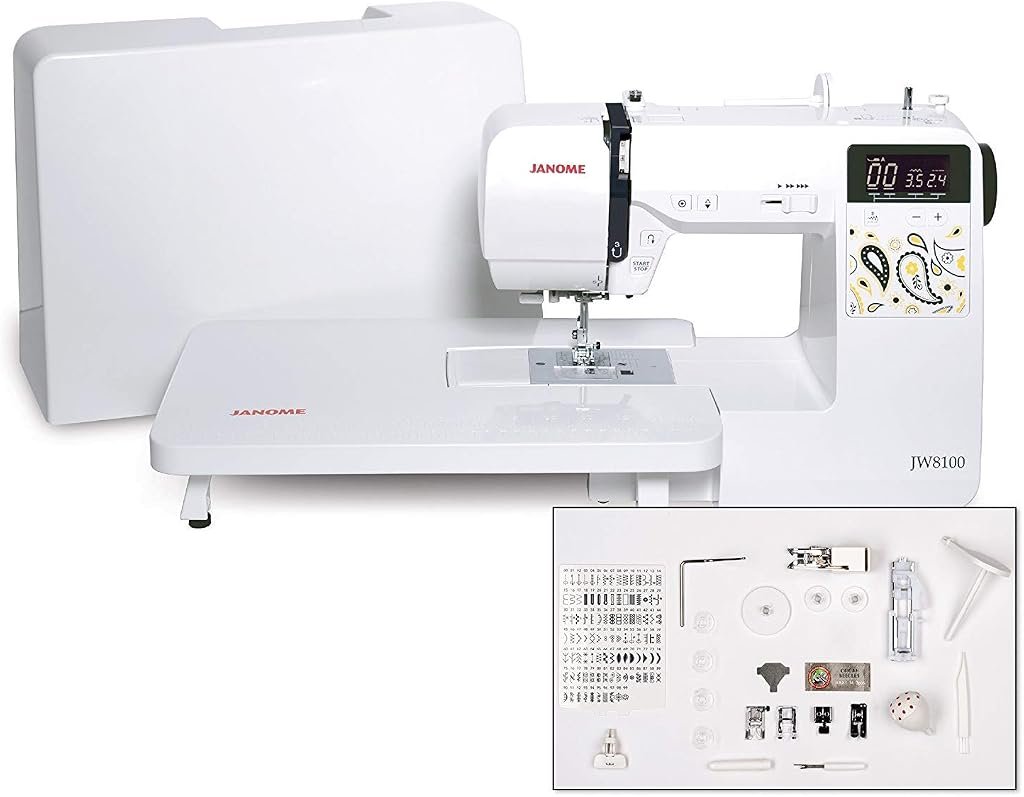
The Janome JW8100 sits in a useful middle ground: more capable than a stripped-down beginner machine, less specialized than a premium quilting system, and far removed from the complexity and cost of dedicated embroidery hardware. Its appeal rests less on novelty than on a sensible combination of computerized controls, 100 built-in stitches, seven automatic buttonholes, quilting-oriented accessories, and a relatively portable 12.7-pound body.
That positioning deserves attention because sewing-machine specifications can be misleading. A machine with hundreds of decorative stitches is not automatically more useful than one with fewer stitches and better controls. For garment construction and quilting, features such as needle-position control, feed-dog design, speed regulation, workspace, presser feet, and buttonhole automation can matter more than an inflated stitch library.
Our editorial assessment places the JW8100 at 8.85/10, with Customer Sentiment at 8.72/10, Buyer Confidence at 9.78/10, and Value at 8.4/10. Those figures describe a machine with unusually high confidence relative to its value score: buyers are getting a well-established computerized sewing platform, but not every feature associated with higher-priced machines.
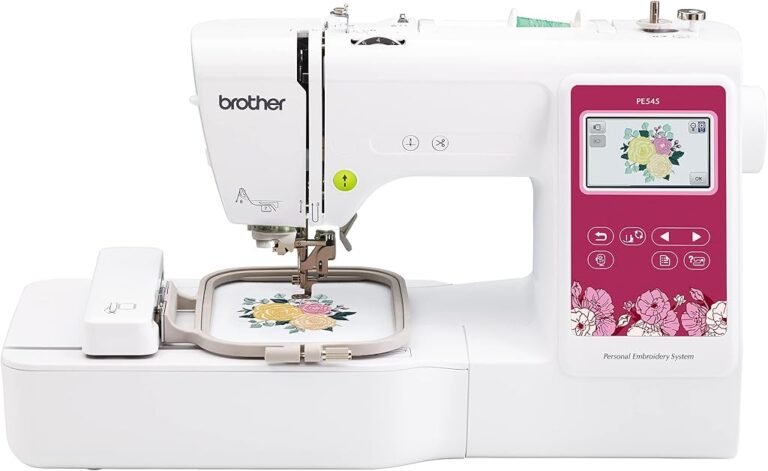
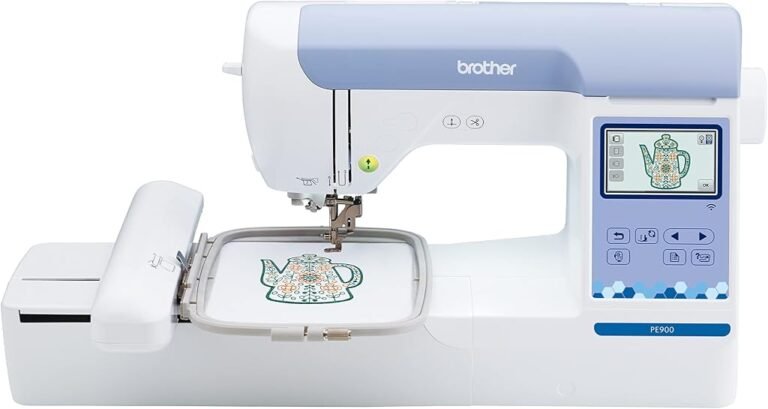
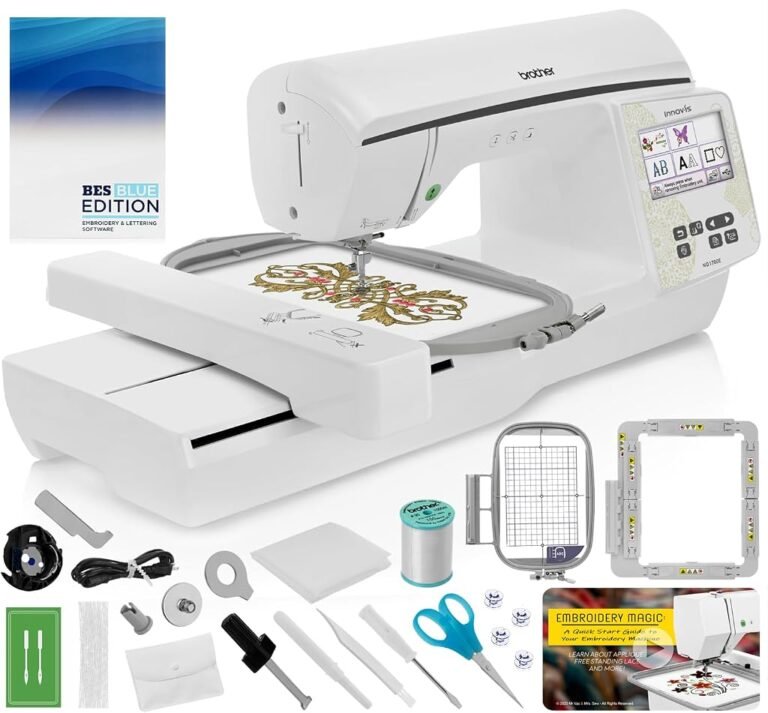
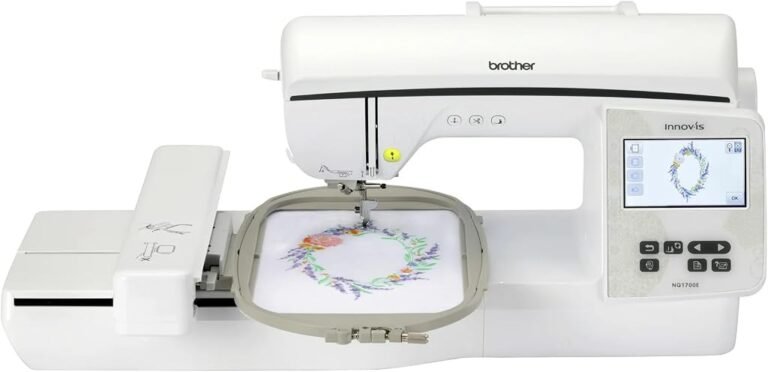
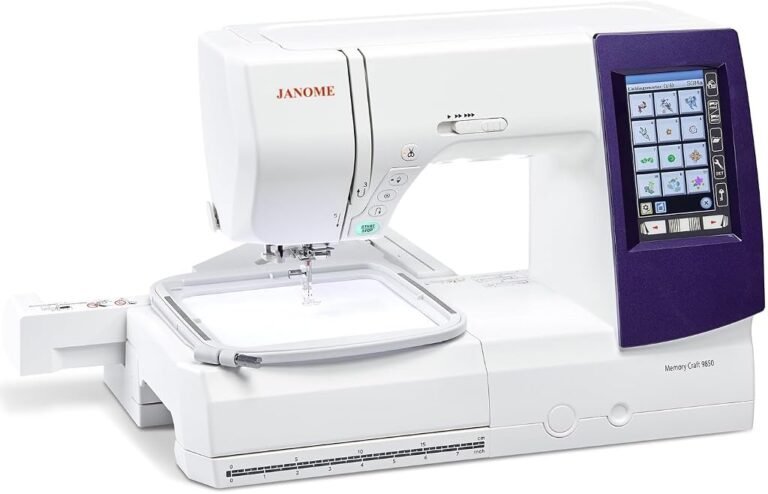
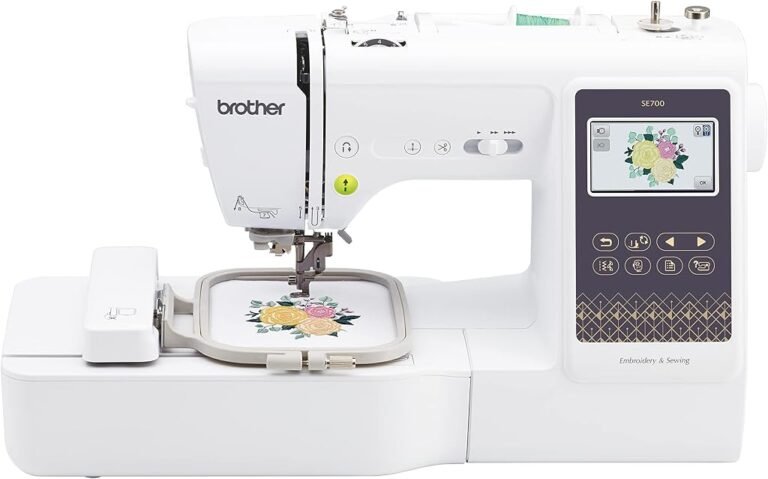
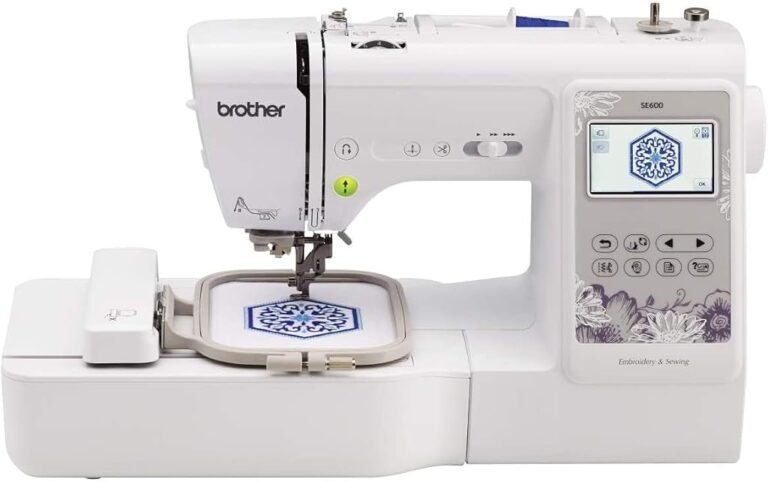
There is also an important distinction for shoppers comparing the best sewing and embroidery machines: the JW8100 is a computerized sewing machine, not an embroidery machine. It can produce decorative stitches, heirloom patterns and quilting stitches, but it does not provide computerized hoop embroidery or imported embroidery-design functionality.
What the Janome JW8100 Actually Offers
The official Janome JW8100 specifications establish the machine around 100 built-in stitches and seven one-step buttonholes. Janome divides those 100 stitches into 20 fashion and basic sewing stitches, 18 quilting stitches, 27 heirloom stitches and 28 home-décor stitches, alongside the buttonhole options.
That distribution is more revealing than the headline figure of 100.
For ordinary construction, 20 basic and fashion stitches cover the work that consumes most sewing time. The quilting selection broadens the machine’s usefulness without forcing a quilter to rely entirely on generic utility stitches. Heirloom and home-décor patterns provide decorative capacity for users who actually intend to exploit computerized stitch selection.
The JW8100 also includes a backlit LCD screen, built-in needle threader, start/stop control, locking-stitch button, reverse control, needle up/down selection and a seven-piece feed dog. Maximum stitch width is 7 mm. The machine uses manual thread-tension adjustment rather than electronically controlled automatic tension.
That last distinction matters. Computerization here mainly improves stitch selection and machine control; it does not automate every sewing variable. The operator retains direct responsibility for tension decisions.
For a developing sewer, that is not necessarily a weakness. Manual tension provides a clear relationship between fabric, thread, needle and stitch formation. It does, however, mean the JW8100 should not be mistaken for a machine that electronically diagnoses and adjusts every setup choice.
Computerized Controls Without an Overloaded Interface
The strongest argument for this model may be operational rather than numerical.
The JW8100 gives the operator a speed-control slider while retaining a conventional foot controller. Janome’s JW8100 instruction manual explains that the slider sets the available sewing-speed range, while pressure on the foot control regulates speed within that range.
This arrangement has practical consequences.
A new sewer can reduce the upper speed limit before approaching a curve, zipper, pocket corner or other area where precision matters. A quilter can similarly moderate speed while working through sections that demand careful fabric management. More experienced operators can raise the limit when sewing longer, uncomplicated seams.
The start/stop button also permits sewing without continually using the foot controller. That feature will not transform stitch formation, but it changes the ergonomics of certain repetitive operations.
Needle up/down is another apparently minor control that earns its place through frequency of use. Deliberately leaving the needle down helps hold the work in position while pivoting. Selecting the needle-up position can make fabric removal quicker. These are modest efficiencies individually; repeated across a long project, they reduce unnecessary hand movements.
The locking-stitch control follows the same logic. The JW8100’s design is less about radical automation than about putting commonly repeated actions on dedicated controls.
Quilting Is Where the Package Becomes More Interesting
The JW8100 is not merely a general-purpose computerized machine with decorative stitches attached. Its accessory package makes a more deliberate appeal to quilters.
Janome states that a hard cover, extension table and quarter-inch foot are included, while its published material identifies 22 standard accessories. A detailed retail listing also identifies an even-feed foot and quilting guide among the included equipment.
The extension table is particularly relevant. Large pieces of fabric exert leverage as they hang over the edge of a small sewing bed. Supporting more of that material on the same plane as the needle plate can make fabric management less awkward.
The quarter-inch foot addresses another recurring quilting requirement: consistent seam allowances during piecing.
The seven-piece feed dog is equally significant. Feed dogs move fabric beneath the presser foot, and having multiple points of contact is intended to support controlled feeding across the work. The machine also provides drop-feed capability, allowing the feed dogs to be lowered for techniques where the operator needs greater control over fabric movement.
This combination makes the JW8100 substantially more persuasive for mixed sewing and quilting than its stitch count alone would suggest.
There are limits. A detachable extension table does not turn a domestic machine into a large-throat quilting platform. Anyone routinely maneuvering large quilts should evaluate physical workspace as carefully as stitch selection. The JW8100 is better understood as a versatile domestic machine with thoughtful quilting provisions than as dedicated large-project quilting hardware.
Size, Weight and Portability
Portability is another measurable advantage.
A current retail specification lists the JW8100 at 16 inches wide, 7 inches deep and 12 inches high, with a weight of 12.7 pounds. Those dimensions make it considerably easier to contemplate carrying the machine to a class, storing it between sessions or moving it between work surfaces than a substantially heavier studio machine.
Low weight always involves a trade-off in perception. Some users equate mass with durability, while others need a machine that can realistically be lifted without reorganizing an entire sewing room.
The JW8100’s 12.7-pound weight puts mobility firmly on its side of that equation.
The included hard cover strengthens that proposition. It offers basic protection during storage and movement without requiring an immediate separate cover purchase.
For apartment sewing, shared workspaces, occasional classes or households where the dining table doubles as a sewing station, weight is not a footnote. It can determine whether a machine gets used regularly or remains stored because setup becomes a chore.
Stitch Selection: Enough Variety Without Chasing Numbers
The sewing-machine market often treats stitch count like camera megapixels: easy to advertise, easy to compare and easy to overvalue.
The JW8100’s 100 stitches are substantial, but the more relevant question is how many are likely to be used.
Straight stitching, zigzag work, stretch applications, edge finishing, buttonholes and a relatively small group of decorative stitches account for a large share of routine home sewing. Quilters may draw from a somewhat different subset. Heirloom sewing creates another set of demands.
Janome’s decision to distribute the library among basic, quilting, heirloom and home-décor categories gives the 100-stitch specification some practical structure.
Seven one-step buttonholes further strengthen the selection. A one-step system automates the buttonhole sequence rather than requiring the sewer to manually change directions and stages throughout the operation. Multiple styles give garment makers more choice than a single generic buttonhole.
Yet stitch quantity should not dominate a purchasing decision. Someone sewing mostly alterations, tote bags and simple clothing could use a fraction of this library for years. Conversely, a user interested in lettering, elaborate computerized embroidery or large libraries of imported designs will quickly discover that 100 sewing stitches do not address those ambitions.
The Difference Between Decorative Sewing and Embroidery
This distinction deserves unusually direct treatment.
The JW8100 should not be purchased as a substitute for a computerized embroidery machine.
Decorative sewing stitches are generated through the sewing machine’s built-in stitch system. Dedicated computerized embroidery equipment works differently: designs are generally created or imported as embroidery files and stitched within a controlled embroidery area, typically using a hoop and specialized movement system.
The JW8100 does not belong to that category.
That matters when shoppers search broadly for the best sewing and embroidery machines and encounter products with superficially similar digital displays and decorative examples. A computerized sewing machine can still be an excellent creative tool without being a computerized embroidery system.
For users primarily interested in clothing construction, repairs, quilting and decorative domestic sewing, avoiding embroidery hardware can also keep the machine simpler and less expensive. For users whose central objective is logos, monograms, downloaded embroidery designs or hoop-based artwork, another class of machine is required.
Everyday Usability
Several smaller JW8100 features collectively make routine sewing easier.
The built-in needle threader reduces the fiddly process of passing thread through the needle eye. The free arm, created by removing the extension section, accommodates tubular pieces such as sleeves and trouser hems. The top-loading bobbin architecture allows access from above the sewing bed rather than requiring a front-access bobbin case.
The machine also uses an auto-declutch bobbin winder. Janome lists that feature alongside the JW8100’s other core controls, while the manual provides dedicated instructions for bobbin winding and threading.
None of these features is dramatic in isolation. Their value lies in reducing friction during tasks performed repeatedly.
This is where the JW8100’s design feels coherent. It does not merely offer decorative capability. It addresses threading, bobbin preparation, stitch selection, speed control, reverse sewing, stitch locking, needle stopping and fabric support.
That coherence contributes heavily to our 9.78 Buyer Confidence score. The machine’s core functions are conventional, documented and supported by Janome’s existing accessory system rather than resting on an experimental design.
Maintenance Still Belongs to the Owner
Computerized does not mean maintenance-free.
Janome’s manual devotes sections to cleaning the hook race and feed dog, reinstalling the bobbin holder, warning signals and troubleshooting. Lint accumulation, incorrect threading, damaged needles and unsuitable needle-and-fabric combinations remain relevant even when stitch selection is electronic.
That point is useful for beginners because computerized controls can create the false impression that sewing problems are primarily electronic.
Many are mechanical setup problems.
When stitches misbehave, checking needle condition, threading path, bobbin installation, tension and accumulated lint is more rational than assuming the computer has failed. Janome’s manual even includes a fabric-and-needle chart, reinforcing the connection between material choice and correct needle selection.
Access to documentation is another positive. Janome maintains downloadable manuals and directs owners toward dealer and support resources through its official support system.
A Brand With an Unusually Long Computerized-Sewing History
The JW8100 also sits within a longer technical lineage.
According to Janome’s corporate history, the company introduced the Memory 7 in 1979, which it identifies as the world’s first programmable computer sewing machine. The Janome name itself traces back to the round bobbin system adopted by Japanese sewing-machine pioneer Yosaku Ose; the round bobbin resembled a snake’s eye, or “Janome” in Japanese.
The scale of the company is also measurable. Janome announced that it produced its 75 millionth sewing machine on August 31, 2023, more than a century after the company’s 1921 foundation, according to its corporate information.
History does not guarantee that a particular model is appropriate for a particular buyer. It does, however, help explain why the JW8100’s design feels evolutionary rather than experimental. Its controls build on established domestic-sewing conventions: rotary bobbin architecture, computerized stitch selection, feed-dog control and dedicated function buttons.
Where the JW8100 Falls Short
A credible review requires more than listing what a machine contains.
The first limitation is obvious: this is not an embroidery machine. Anyone buying it with expectations of hoop embroidery, downloadable design files or embroidery editing will have selected the wrong product category.
Second, thread tension is manually controlled. Some sewers prefer that direct adjustment, but shoppers expecting a more highly automated machine should recognize the distinction.
Third, a 7 mm maximum stitch width places a defined ceiling on decorative stitch size. That is entirely normal for this class of domestic machine, yet it separates the JW8100 from broader-format systems.
Fourth, portability and large-project workspace pull in opposite directions. The 12.7-pound chassis is convenient to move, while serious large-quilt work generally benefits from substantial working space and physical support. The extension table helps, but physics remains physics.
Finally, 100 stitches should not be confused with unlimited creative capability. Users focused heavily on lettering, embroidery or sophisticated programmable decorative work should evaluate machines specifically designed around those functions.
These limitations explain why our Value score is 8.4, lower than the 9.78 Buyer Confidence figure. The JW8100 offers a strong bundle of useful sewing and quilting features, but its appeal is highly dependent on whether the buyer actually needs those functions rather than embroidery or heavier-duty specialization.
Price and Value
Price deserves context rather than a permanent number because retail listings change.
At the time of checking, a current retail listing for the JW8100 showed $369, while Janome itself directs shoppers to dealers for pricing rather than publishing a fixed retail amount on the product page.
At $369, the value proposition rests on more than the computerized interface. The extension table, hard cover and quilting-oriented accessories matter because otherwise inexpensive machines can become less inexpensive after the owner adds feet, tables and storage protection separately.
Our 8.4/10 Value rating therefore reflects a good but not unconditional proposition. A buyer who uses the quilting equipment, buttonhole choices, speed control and 100-stitch library extracts considerably more value than someone who requires only straight stitch, zigzag and occasional repairs.
Price comparisons should therefore be made on equivalent configurations, not merely machine bodies.
Who Should Buy the Janome JW8100?
The JW8100 makes the strongest sense for several overlapping users:
- Beginners who want room to progress beyond basic sewing without immediately replacing their machine.
- Garment sewers who value one-step buttonholes, free-arm access, speed regulation and needle-position control.
- Quilters who can make practical use of the extension table, quarter-inch foot, drop feed and seven-piece feed system.
- Multipurpose home sewers moving among clothing, household projects and decorative work.
- Users who need a machine light enough to store or transport regularly.
- Sewers who prefer computerized stitch selection while retaining manual control over thread tension.
It is less compelling for embroidery-focused users, buyers primarily sewing unusually demanding heavy materials, or quilters whose large projects justify a much larger dedicated workspace.
Understanding the Editorial Scores
The 8.85/10 overall score reflects balance. The JW8100 covers a wide range of domestic sewing without wandering too far into specialized machinery.
Its 8.72 Customer Sentiment score suggests a favorable ownership profile without erasing the normal compromises of a mid-priced computerized machine. The machine’s appeal comes from everyday usability rather than one headline specification.
The standout figure is Buyer Confidence at 9.78. Janome provides direct product documentation, an accessible manual, accessory compatibility information and support infrastructure, while the machine itself relies on familiar domestic-sewing mechanisms. That creates a relatively straightforward ownership proposition.
The 8.4 Value score is more restrained. At roughly the mid-$300 level when checked, the machine needs to justify itself through use of its broader feature set. For someone who will exploit quilting accessories, multiple buttonholes, speed control and decorative stitches, that equation is favorable. For basic hemming and repairs, cheaper machinery can satisfy the narrower requirement.
Final Considerations
The Janome JW8100 is strongest when judged by the work it is designed to perform rather than by the temptation to compare raw specification counts.
Its 100 stitches and seven one-step buttonholes supply breadth, but the more consequential features are less glamorous: needle up/down control, adjustable speed, a seven-piece feed dog, drop feed, a free arm, built-in threading assistance, an extension table and quilting-oriented accessories. Together, they form a machine that can follow a sewer from elementary construction into more ambitious garment, decorative and quilting work.
Its limitations are equally legible. Manual tension remains part of the workflow. The 7 mm stitch-width ceiling defines the scale of decorative work. Large quilts will still challenge the physical workspace of a portable domestic machine. Most decisively, the JW8100 does not provide computerized embroidery.
That clarity is an advantage rather than a defect. The JW8100 does not need to impersonate a professional quilting platform or embroidery workstation to justify an 8.85/10 editorial score.
It is a portable, feature-rich computerized sewing machine aimed at people who expect their interests to expand. The unusually high 9.78 Buyer Confidence score reflects the maturity of that proposition, while the 8.4 Value rating acknowledges that buyers should actually need its quilting equipment and computerized conveniences to extract full value.
For the right sewer, the JW8100’s defining quality is not excess. It is range: enough automation to remove repetitive friction, enough manual control to preserve flexibility, and enough included equipment to support several kinds of sewing without forcing an immediate move to another machine.