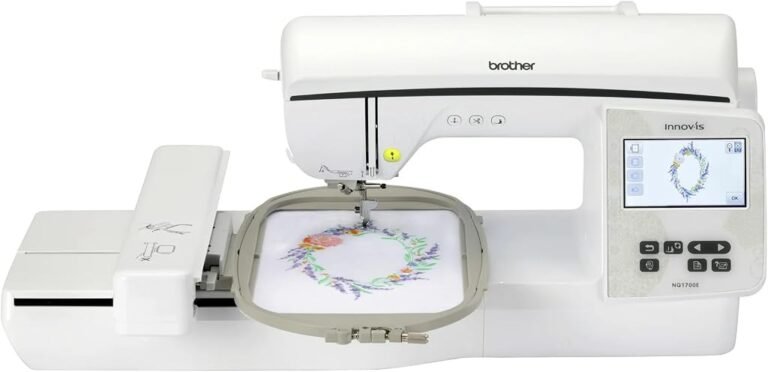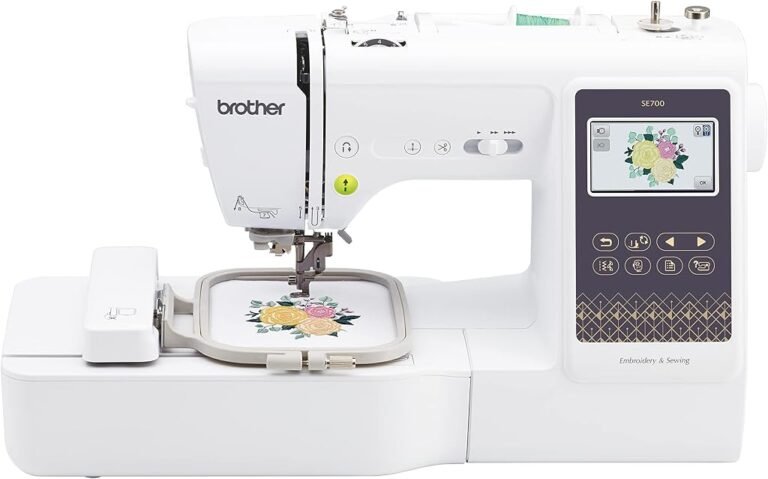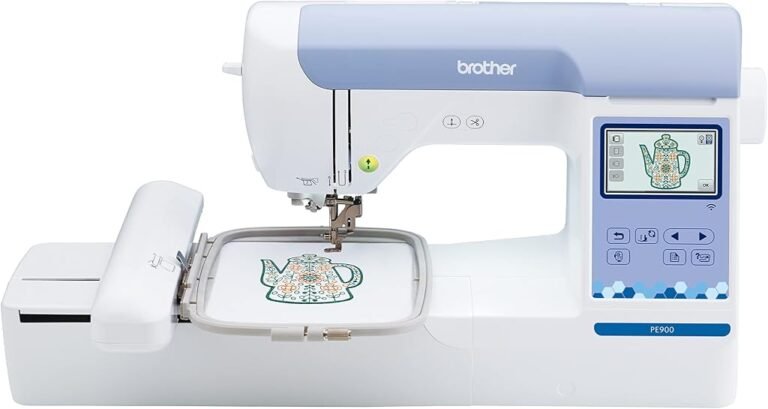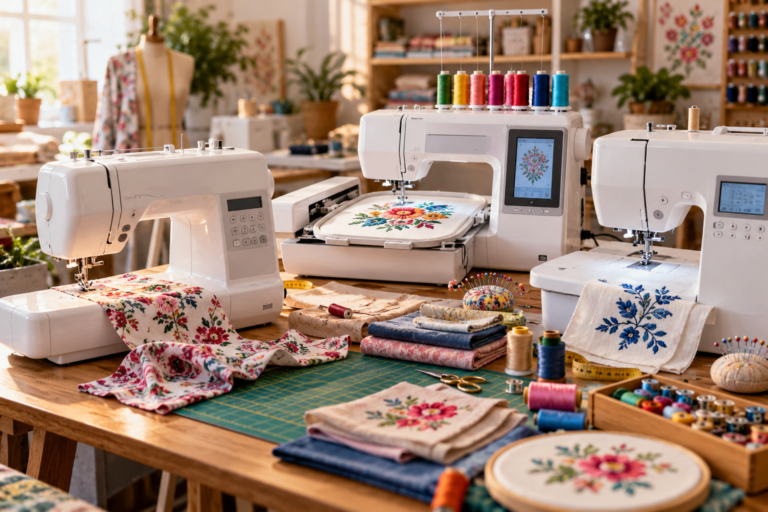
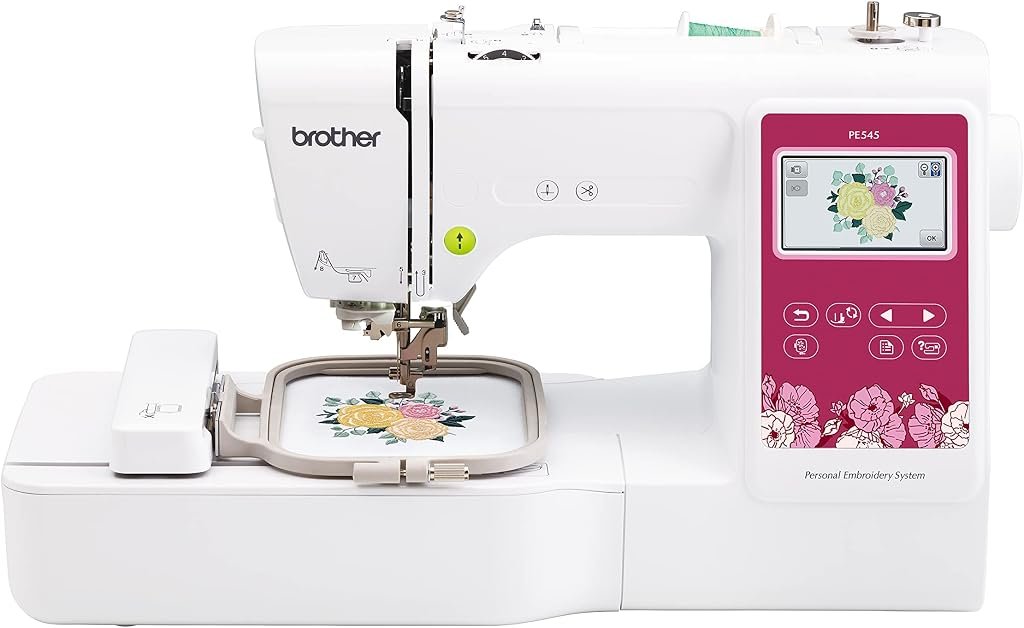
The Brother PE545 sits in an increasingly crowded part of the home-embroidery market: machines intended to make computerized embroidery approachable without stripping away the connectivity and editing tools that modern users expect. Its proposition is relatively straightforward. This is an embroidery-only, single-needle machine with a 4 × 4-inch maximum embroidery area, a color LCD interface, wireless design transfer, 135 built-in embroidery patterns, 10 lettering fonts, and a maximum embroidery speed of 400 stitches per minute.
That combination earns the PE545 an Our Score of 8.58/10. Its Customer Sentiment score is 8.5, Buyer Confidence is 9.15, and Value is 8.28. Those numbers describe a machine that makes considerable sense within its intended scope but becomes substantially less compelling when a buyer’s ambitions extend beyond that scope.
The defining question is therefore not whether the PE545 can produce computerized embroidery. It can. The more useful question is whether 4 × 4 inches will remain enough after the novelty of a first machine has worn off.
Brother’s current PE545 product specification lists a 4 × 4-inch maximum embroidery area, 135 built-in designs, 10 lettering fonts, wireless LAN, a 3.7-inch LCD, automatic thread cutting, an advanced needle-threading system, and embroidery speeds of up to 400 stitches per minute. These specifications reveal both the machine’s appeal and its principal restriction with unusual clarity.
A Machine Built Around Small-Format Embroidery
The PE545 is easier to understand when viewed as a specialist rather than a miniature version of a larger embroidery machine.
Its 4 × 4-inch embroidery field translates to roughly 100 × 100 mm. That space is appropriate for monograms, names, patches, children’s clothing details, small appliqués, decorative motifs, napkins, pockets, ornaments, and many left-chest designs. Brother itself describes a 6.4 × 4.0-inch workspace surrounding the machine’s 4 × 4-inch maximum embroidery area.
The distinction between workspace and embroidery field matters. A larger physical working area does not increase the dimensions of a design that can be stitched in one hooping. The design still has to fit within the machine’s 4 × 4 embroidery boundary.
For a beginner making personalized gifts, this restriction can initially feel almost irrelevant. Initials on towels do not require an enormous hoop. Neither do small patches, children’s motifs, names on bags, or decorative elements on household linens.
Growth changes the calculation.
A buyer who later wants broad sweatshirt graphics, large quilt-block designs, expansive towel borders, or substantial jacket decoration encounters a physical boundary rather than a software inconvenience. Designs can sometimes be divided and aligned across multiple hoopings, but that introduces additional positioning work and increases the opportunity for visible registration errors.
This is the central trade-off behind the PE545’s 8.28 Value score. The machine supplies a credible collection of electronic conveniences without forcing the buyer into a much more ambitious machine, but its low entry barrier comes with a fixed geometric constraint.
135 Designs Are Useful; Importing Designs Matters More
Brother includes 135 embroidery designs and 10 lettering fonts. That is enough material to begin experimenting without immediately searching for additional design files.
Yet built-in pattern counts can be misleading when comparing embroidery machines.
After an owner becomes comfortable with the basic workflow, the ability to import designs generally matters more than whether the machine contains another few dozen decorative motifs. Personalization tends to move toward specific names, logos, purchased design files, original artwork, and project-specific graphics.
Here the PE545’s connectivity is more consequential than its pattern count.
Wireless LAN permits embroidery files to be transmitted from a computer using Brother’s Design Database Transfer software. Brother also retains USB-based design transfer support, while the machine is among the models compatible with Brother’s Artspira ecosystem.
The result is an entry-level physical embroidery field paired with a comparatively modern digital workflow.
That is an intelligent allocation of features. The 4 × 4 hoop may restrict dimensions, but wireless transfer prevents the machine from feeling digitally isolated.
Artspira Expands the Workflow, With Some Boundaries
The PE545 is compatible with Brother Artspira after the appropriate machine update. Brother’s current compatibility documentation explicitly includes the PE545 among supported embroidery machines.
Artspira is oriented toward phones and tablets rather than conventional desktop computing. Brother states that the app supports Android 8.0 or later and iOS/iPadOS 15.0 or later, while its support documentation says Artspira is not desktop compatible.
That distinction matters for buyers who imagine every stage of the embroidery-design process happening on a computer.
Wireless connectivity also introduces ordinary networking dependencies. Brother’s Artspira support documentation states that wireless connections use the 2.4 GHz frequency and that WPA/WPA2 Enterprise cannot be used for network setup.
None of this makes connectivity unusually troublesome, but “wireless” should not be mistaken for “configuration-free.” The network, machine, software, and design workflow still need to communicate correctly.
Once configured, however, wireless transfer addresses a genuine inconvenience of older computerized embroidery workflows: repeatedly moving files using removable media.
The 3.7-Inch LCD Changes More Than the Specification Sheet Suggests
Embroidery machines ask users to make spatial decisions: where a motif sits, how lettering relates to another element, whether a design is correctly oriented, and whether the selected pattern belongs inside the available sewing field.
A 3.7-inch LCD is not large by consumer-electronics standards, but it gives the PE545 an interface suited to visual design selection and editing. Brother specifically identifies on-screen editing among the machine’s functions.
For beginners, this has practical consequences.
Computerized embroidery already demands unfamiliar knowledge: hooping, stabilizer selection, thread choice, bobbin management, fabric behavior, design density, color sequencing, and positioning. A visual interface cannot eliminate those variables, but it can reduce the amount of machine operation that must be translated from abstract button sequences.
This helps explain the 9.15 Buyer Confidence score, the strongest of our four editorial measurements. The PE545’s proposition is unusually legible. Buyers can determine what it does, what fits inside its hoop, and how designs reach the machine without deciphering a professional production system.
Its limitations are similarly visible.
That transparency is preferable to a longer specification list whose practical consequences remain obscure until after purchase.
400 Stitches Per Minute: Adequate for Its Intended Workload
Brother rates the PE545 at up to 400 stitches per minute.
Speed figures require context.
At the theoretical maximum, a 10,000-stitch design represents 25 minutes of needle movement alone:
10,000 stitches ÷ 400 stitches per minute = 25 minutes.
Actual project time will be longer because embroidery is not uninterrupted maximum-speed production. Color changes, thread replacement, positioning, inspection, trimming, machine acceleration and deceleration, and project preparation all consume time.
For occasional personalization, that is rarely a serious objection. For repeated production, it can become one.
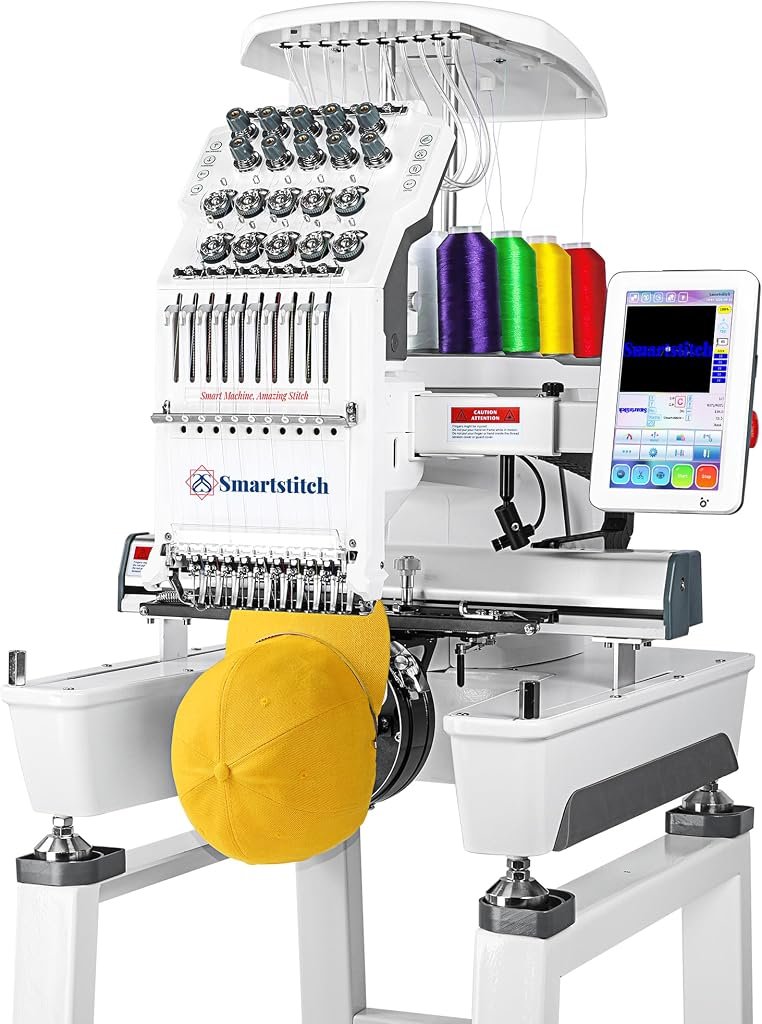
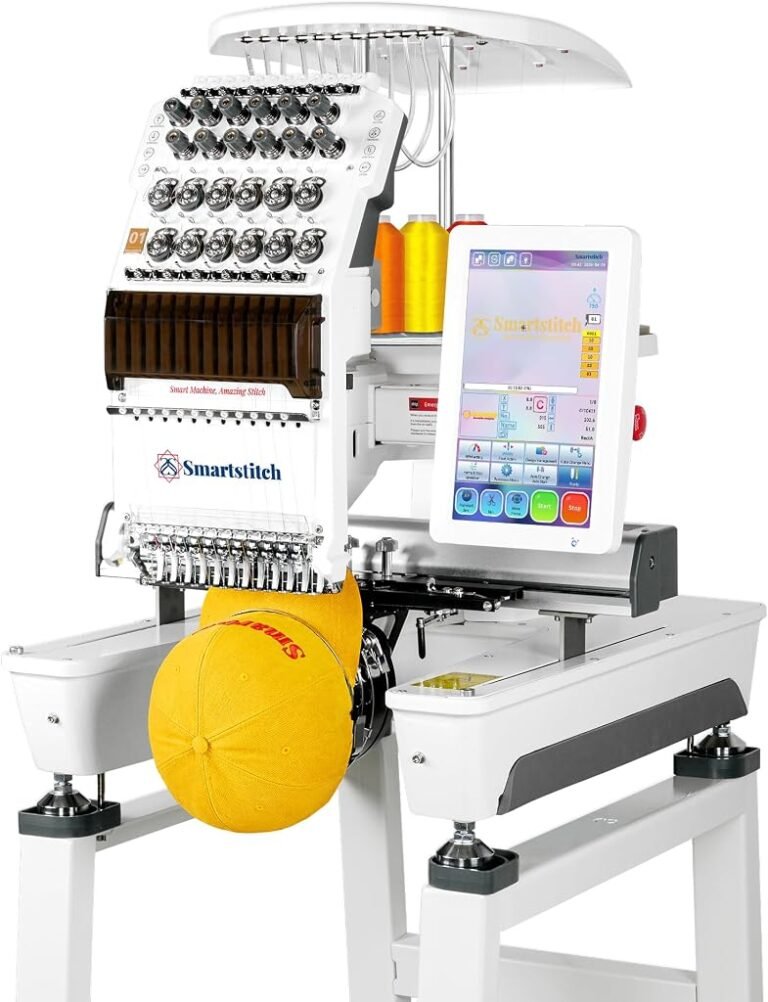
A person embroidering several gifts on a weekend evaluates throughput differently from a small business trying to produce dozens of identical items against a deadline. A single-needle 400-SPM machine inherently requires more operator intervention than a multi-needle commercial system that keeps several thread colors ready simultaneously.
The PE545 should therefore not be judged against commercial embroidery equipment merely because both categories put thread onto fabric under computerized control. Their production assumptions are fundamentally different.
Automatic Thread Cutting Is a Small Feature With Frequent Benefits
Brother includes an automatic thread cutter and advanced needle-threading system. Neither changes the maximum size of a design, but both address repetitive actions encountered during ordinary embroidery.
That distinction illustrates a broader pattern in the PE545’s design philosophy. Much of its appeal comes from reducing friction rather than expanding physical capacity.
A larger hoop would fundamentally alter what can be made. An automatic cutter instead alters how often the operator has to reach for scissors. Wireless transfer does not create a larger design field either, but it removes repeated file-handling steps.
These conveniences accumulate during regular use.
They also make more sense on a beginner-oriented machine than specification-sheet theatrics that rarely affect routine projects.
Embroidery Only Means Exactly That
One purchasing error deserves particular attention: the PE545 should not be mistaken for a combination sewing-and-embroidery machine.
Its purpose is embroidery.
A household that already owns a satisfactory sewing machine may view this specialization positively. Sewing and embroidery can remain on separate machines, avoiding repeated changes in setup and allowing each device to handle a distinct task.
Someone starting with no machine at all faces a different decision. If garment construction, hemming, seams, buttonholes, repairs, and conventional sewing matter alongside embroidery, the PE545 cannot replace a sewing machine.
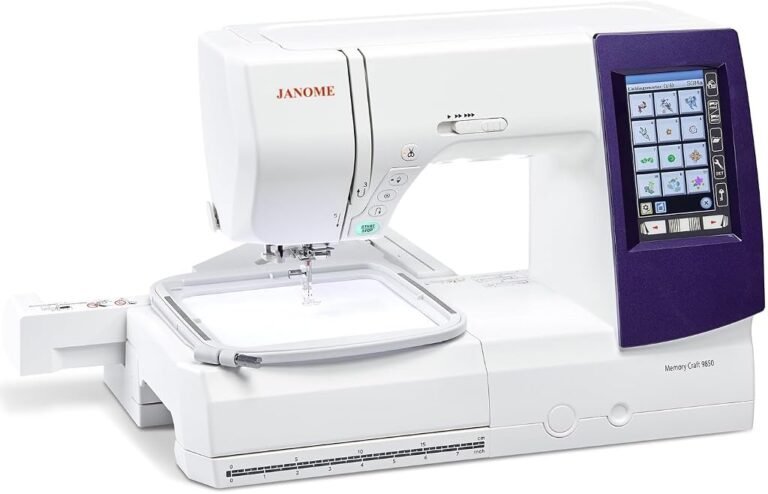
That distinction is particularly relevant when researching the best sewing and embroidery machines. Combination machines and dedicated embroidery machines solve different problems, even when their prices and computerized interfaces appear similar.
The PE545 makes most sense when embroidery itself is the objective.
The 4 × 4 Hoop Is Both Its Strength and Its Long-Term Risk
There is a useful contradiction at the center of this machine.
The 4 × 4 format contributes to the PE545’s accessibility. Projects remain relatively small, the included hoop is manageable, and the machine does not demand the physical footprint associated with larger embroidery systems.
Yet that same dimension is the specification most likely to trigger an eventual upgrade.
Independent reporting around the machine repeatedly identifies hoop size as the principal boundary, while retailer-published owner commentary includes users describing the 4 × 4 field as limiting after gaining experience.
The practical buying exercise is therefore remarkably simple: prospective owners should inspect the embroidery files they genuinely expect to use.
If most desired designs fall below 4 × 4 inches, the PE545’s limitation is largely theoretical. If many favorite designs exceed that boundary, buying a smaller machine first can create false economy.
The right comparison is not merely purchase price. It is purchase price plus the probability of replacement.
What Comes in the Box?
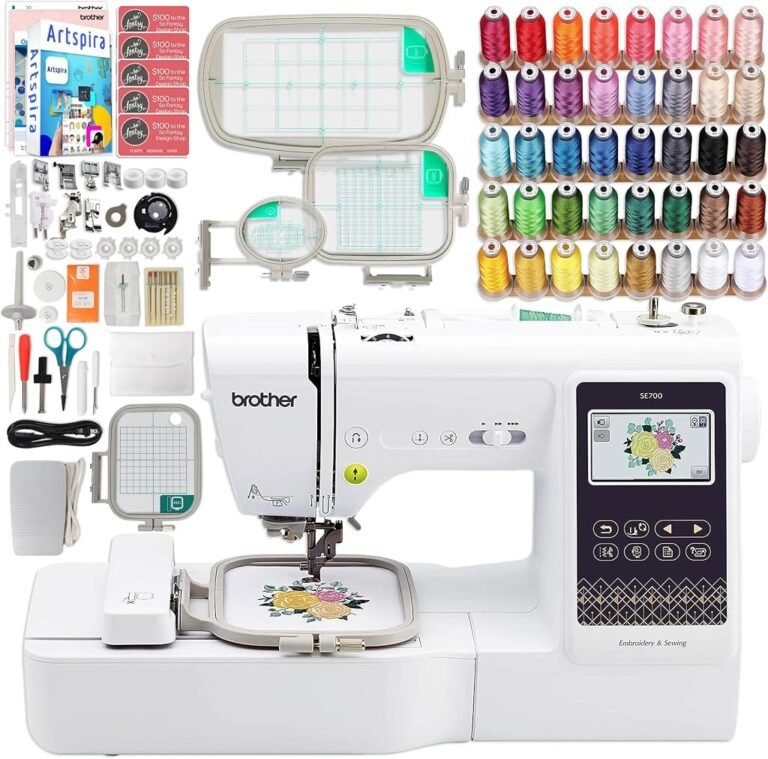
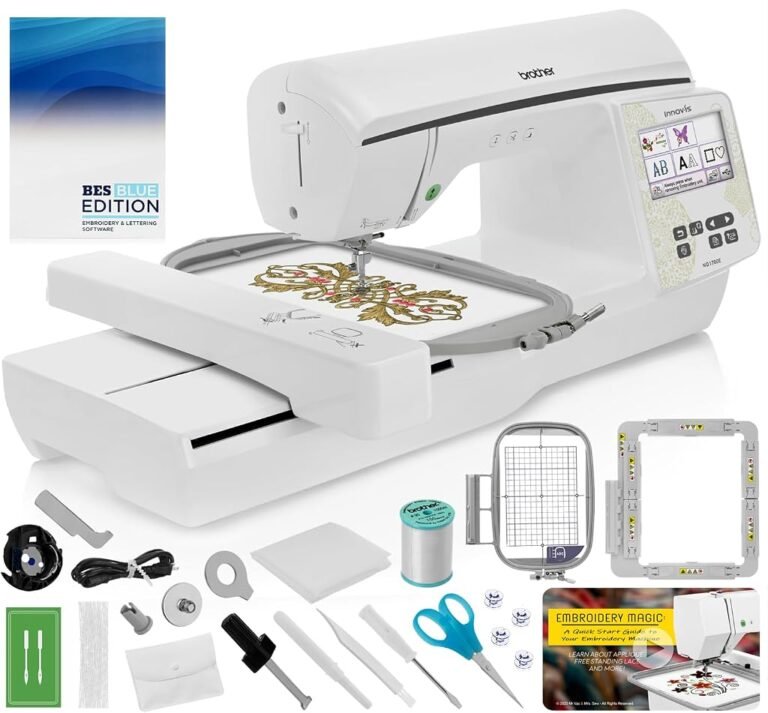
Brother lists the machine with the 4 × 4-inch embroidery frame set, embroidery foot “Q,” needles, bobbins, three pre-wound white embroidery bobbins, bobbin clips, seam ripper, scissors, cleaning brush, screwdrivers, spool caps, spool net, accessory bag, dust cover, operation manual, quick-reference guide, and embroidery design guide, among other small accessories.
Brother also lists a 1/2/25-year limited warranty structure for the PE545. Buyers should read the warranty documentation itself to understand which components fall into each coverage period rather than interpreting “25 years” as blanket coverage for the entire machine.
Brother maintains a dedicated PE545 support portal containing manuals, downloads, warranty information, compatible supplies, and frequently asked questions. That support infrastructure adds substance to the machine’s 9.15 Buyer Confidence score because ownership of computerized equipment extends beyond the initial setup.
Where the PE545 Performs Best Conceptually
The PE545’s strongest use cases are projects whose dimensions naturally match its embroidery field:
- Monograms and initials
- Small names and lettering layouts
- Children’s garment decoration
- Small patches and badges
- Napkins and compact linen designs
- Bag and pocket embellishment
- Small appliqué projects
- Decorative motifs
- Personalized gifts
- Small seasonal decorations
The common thread is scale.
Within that scale, 135 internal designs, lettering, wireless file transfer, automatic cutting, and on-screen controls create a coherent workflow. Outside it, the machine begins asking the owner to work around the hardware.
A machine should ideally disappear into the project. When users repeatedly have to split designs, re-hoop fabric, realign sections, or abandon files because they exceed the sewing field, the hardware is dictating creative decisions.
Who Should Skip the PE545?
Several buyer profiles should look beyond it immediately.
Anyone expecting large-format embroidery should start with a larger embroidery field. Buyers planning repeated commercial orders should examine machines built for higher throughput and fewer manual thread changes. Those who need conventional sewing alongside embroidery should compare combination machines rather than expecting the PE545 to perform both jobs.
International buyers also need to pay attention to regional electrical and warranty conditions. Brother’s U.S. product material is specifically oriented toward the U.S. market, so buyers outside that market should verify local model availability, voltage requirements, service arrangements, and warranty coverage before importing a machine.
The PE545 is therefore not an all-purpose answer. Its narrowness is part of its identity.
Interpreting Our Scores
Our 8.58/10 overall score places the PE545 firmly in favorable territory because its feature set is coherent rather than sprawling. Wireless transfer, a color display, automatic thread cutting, built-in designs, lettering, and accessible controls complement the type of projects that fit its 4 × 4 embroidery field.
The 8.5 Customer Sentiment score suggests generally positive owner reception while leaving enough distance from the ceiling to reflect genuine friction. Retailer-published owner feedback illustrates both sides: some beginners report easy operation and useful instructional material, while others describe networking difficulty, threading frustrations, software learning curves, or disappointment with the 4 × 4 limit.
The 9.15 Buyer Confidence score is particularly persuasive. Brother documents the PE545 clearly, maintains downloadable support resources, supports wireless transfer, and includes the model in its current Artspira compatibility documentation. The machine’s capabilities are also relatively easy to evaluate before purchase.
The 8.28 Value score is more restrained because value changes rapidly according to project size. Brother currently positions the PE545 around the $500 level on its U.S. site. At that level, the electronic feature set is respectable. But a buyer who quickly discovers that 4 × 4 inches is insufficient may find that the inexpensive first machine was merely the first payment toward a larger second one.
That difference between Buyer Confidence and Value captures the PE545 unusually well: there is considerable confidence about what the machine is, but whether it represents lasting value depends on knowing what the owner intends to embroider.
Final Considerations
The Brother PE545 is most persuasive when evaluated without asking it to become something larger.
It is a single-needle, embroidery-focused machine with a 4 × 4-inch ceiling, 135 built-in designs, 10 lettering fonts, a 3.7-inch LCD, wireless LAN, automatic thread cutting, advanced needle threading, and speeds up to 400 stitches per minute. Those are not speculative capabilities; they are documented by Brother.
Our 8.58/10 score reflects a machine whose strengths align well with beginners, hobby embroiderers, gift makers, monogram users, and owners who already have a separate sewing machine. Customer Sentiment at 8.5 indicates a favorable experience with recognizable points of friction. Buyer Confidence at 9.15 reflects a clearly documented product and established support pathway. Value at 8.28 acknowledges that a 4 × 4 embroidery field can either be entirely sufficient or become the reason for buying another machine.
That last distinction should drive the purchase.
A buyer interested primarily in names, monograms, patches, small motifs, children’s projects, and compact personalized gifts can use much of what the PE545 offers without repeatedly confronting its physical boundary. Wireless design transfer and Artspira compatibility give that modest embroidery field a broader digital life than its dimensions initially suggest.
A buyer already imagining large sweatshirt designs, broad decorative panels, substantial quilt motifs, or repeated production should treat the 4 × 4 measurement as a warning rather than a footnote.
The PE545’s appeal lies not in pretending to be a production machine. It lies in making computerized embroidery relatively approachable while retaining enough modern connectivity and automation to remain useful after the first few projects.
For the right project scale, that is a sensible balance. For the wrong project scale, no amount of wireless connectivity can make four inches become seven.