A serger is easy to misunderstand until the work it performs is separated from the work of an ordinary sewing machine. The Brother 1034D illustrates that distinction particularly well. It is a 3/4-thread overlock machine built around fast edge finishing, seam construction, rolled hems, fabric trimming and controlled handling of stretch fabrics. It is not intended to replace every function of a conventional sewing machine, and it has no computerized embroidery capability.
That narrower mission is precisely why the 1034D makes sense.
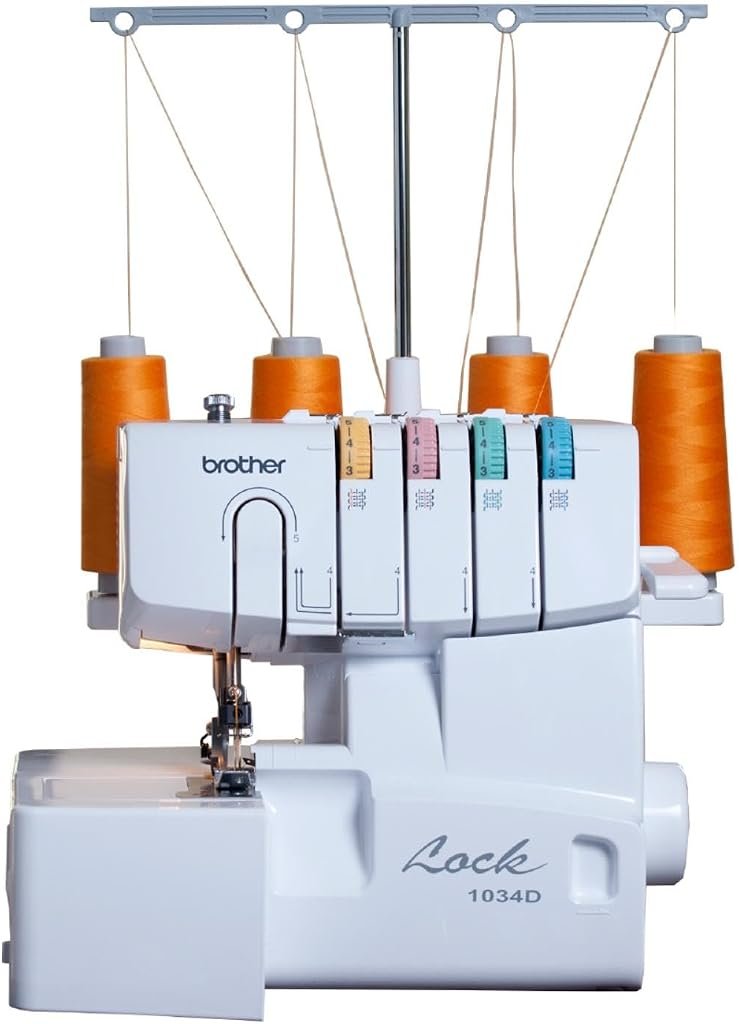
Brother specifies a maximum sewing speed of 1,300 stitches per minute, two needles, differential fabric feed, adjustable presser-foot pressure and several overlock and hemming configurations. Its design is mechanical rather than computerized, and the threading system uses color-coded guides rather than automated threading. The result is a machine that asks the operator to understand how thread tension, differential feed, cutting width and fabric behavior interact.
Our score is 8.86/10, accompanied by Customer Sentiment of 8.72, Buyer Confidence of 9.8 and Value of 8.4. The unusually high Buyer Confidence score reflects a mature, well-documented machine from an established manufacturer. The lower Value figure introduces an important qualification: a serger earns its place through specialized work. Someone who rarely finishes raw seams or sews stretch fabrics may obtain more utility from putting the same budget toward a conventional sewing machine.
For garment makers, knitwear sewers and people who routinely want clean seam finishes, the calculation changes substantially.
What the Brother 1034D Actually Does
The official Brother 1034D specifications describe a two-needle machine using three or four threads, with stitch options including four-thread overlock, three-thread overlock, narrow hem, rolled hem and ribbon-lock stitches. Brother rates its maximum sewing speed at 1,300 stitches per minute.
Those numbers require context.
An overlock machine forms stitches around the edge of fabric while its cutting mechanism can trim excess material. Several threads cooperate to form a flexible, enclosed edge. That architecture differs fundamentally from the lockstitch produced by a conventional home sewing machine.
The practical result is immediately recognizable inside commercially manufactured clothing: raw fabric edges can be trimmed and enclosed in thread during one operation.
The 1034D is therefore less about decorative abundance than workflow. Its purpose is to perform a comparatively small group of jobs quickly and consistently.
A four-thread overlock is particularly relevant to garment assembly because it provides a stronger seam configuration than an edge finish alone. Three-thread configurations can be useful where edge finishing is the principal objective. Narrow and rolled hems address lightweight edges and decorative finishing.
This specialization explains why comparing the 1034D purely by stitch count with a computerized sewing machine would produce a meaningless result. The two machines solve different problems.
Speed Is More Than a Headline Number
Brother’s 1,300-stitch-per-minute maximum is one of the 1034D’s defining specifications.
A conventional sewing project can involve long stretches of seam finishing: trouser legs, skirt panels, side seams, knit tops, household textiles and repeated garment pieces. A serger’s high operating speed is useful because these jobs often involve continuous edges rather than frequent decorative changes.
Yet maximum speed should not be confused with the speed at which every task ought to be performed.
Curves, corners, transitions between fabric thicknesses and the beginning or end of a seam demand more attention. The cutting blade also raises the stakes. A conventional sewing error may require removing stitches. A serging error made while the knife is engaged can remove fabric that cannot simply be stitched back into existence.
That creates an unusual combination: the 1034D is fast, but learning to use it rewards restraint.
Its speed therefore becomes more valuable after the operator understands fabric positioning, seam allowance and the relationship between the blade and needle. Beginners should regard 1,300 stitches per minute as available capacity rather than a target.
Differential Feed Is the Feature That Matters Most
Speed attracts attention. Differential feed deserves more of it.
Brother’s published material specifies a differential-feed ratio from 0.7 to 2.0. This system allows the front and rear feed dogs to move fabric at different rates.
That sounds mechanical because it is. Its effect, however, is visible in the finished fabric.
Stretch knits can become wavy when ordinary feeding stretches the material as it passes beneath the presser foot. Lightweight woven fabrics can react in the opposite direction, puckering or gathering when the feed behavior and stitch formation are poorly matched.
Differential feed gives the operator a method for responding to those behaviors.
Moving the setting in one direction can counter unwanted stretching. Moving it in the other direction can control puckering or deliberately create gathering, depending on fabric and setup.
This is where the 1034D becomes more than a machine for making raw edges look tidy. Fabric feeding affects the geometry of a seam. A beautifully enclosed edge is of limited use if the finished seam ripples across a knit garment that was supposed to lie flat.
For anyone sewing jersey, athletic fabrics or other stretch materials, differential feed is one of the strongest reasons to use a serger rather than trying to imitate overlock construction exclusively with a conventional sewing machine.
Threading: The Learning Curve Cannot Be Deleted
Serger threading has a reputation, and some of that reputation is deserved.
A machine using several threads simultaneously must route those threads through multiple guides, tension mechanisms and loopers in the correct sequence. The 1034D reduces confusion through color-coded threading paths and a lower-looper threading system. Brother explicitly identifies easy color-coded threading among the machine’s central features.
“Easy,” however, is relative.
Someone accustomed only to a single upper thread and bobbin should expect the first few threading sessions to require attention. The machine is not an air-threading serger, nor does it electronically perform the entire process for the operator.
The advantage is that the threading logic is visible.
That can be educational. Learning the route of each thread helps explain why a broken looper thread, incorrect threading order or missed guide can alter stitch formation dramatically. A user who understands the threading system is better equipped to diagnose problems than one who treats the mechanism as inaccessible machinery.
Brother also maintains dedicated 1034D support resources, manuals and instructional videos. The support material includes resources covering threading, differential feed, narrow rolled hems and other operating procedures.
For a beginner, those resources materially reduce the difficulty of ownership.
Three Threads, Four Threads and the Limits of the Machine
The 1034D is fundamentally a 3/4-thread serger.
Brother identifies four-thread overlock, three-thread overlock, narrow hem, rolled hem and ribbon-lock stitching among its available options.
That provides useful flexibility, but the boundaries should be understood.
This is not a coverstitch machine. A coverstitch is the familiar finish commonly seen around T-shirt hems: parallel lines of straight stitching appear on the outside while interlocking threads cover the fabric edge underneath.
A conventional 1034D overlock configuration does something different.
This distinction matters because shoppers looking at the best sewing and embroidery machines sometimes treat sewing machines, sergers, coverstitch machines and embroidery systems as increasingly sophisticated versions of one another. They are better understood as separate tool categories with overlapping applications.
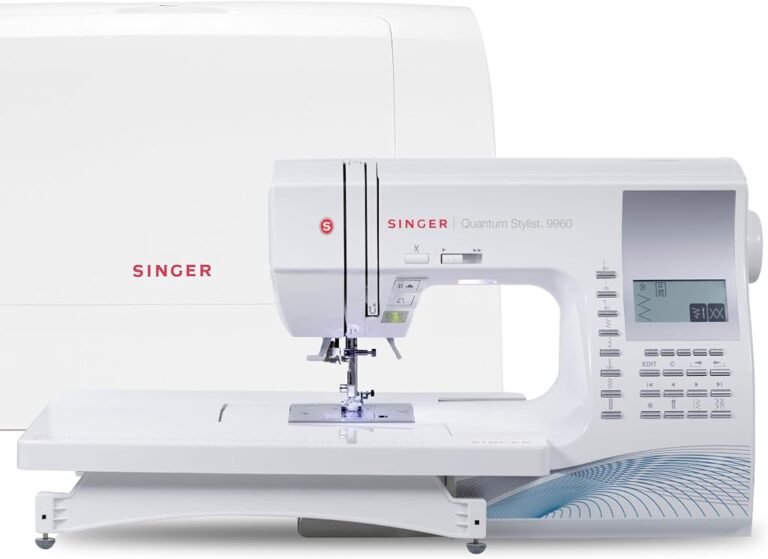
A sewing machine handles straight stitching, buttonholes, topstitching and numerous construction operations.
A serger trims and encloses edges while forming highly flexible seams.
A coverstitch machine specializes in cover hems and related operations.
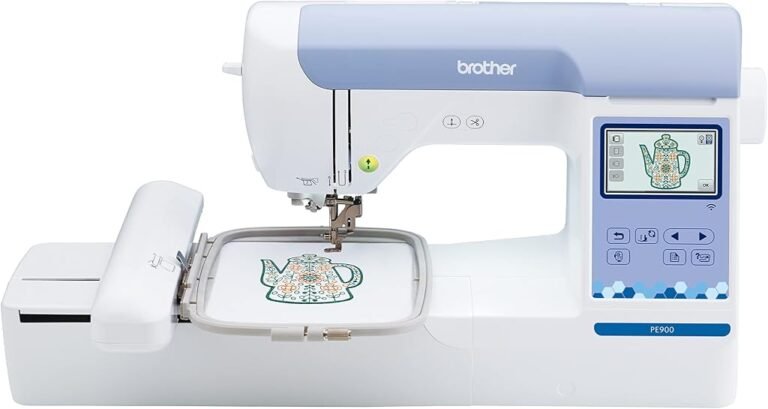
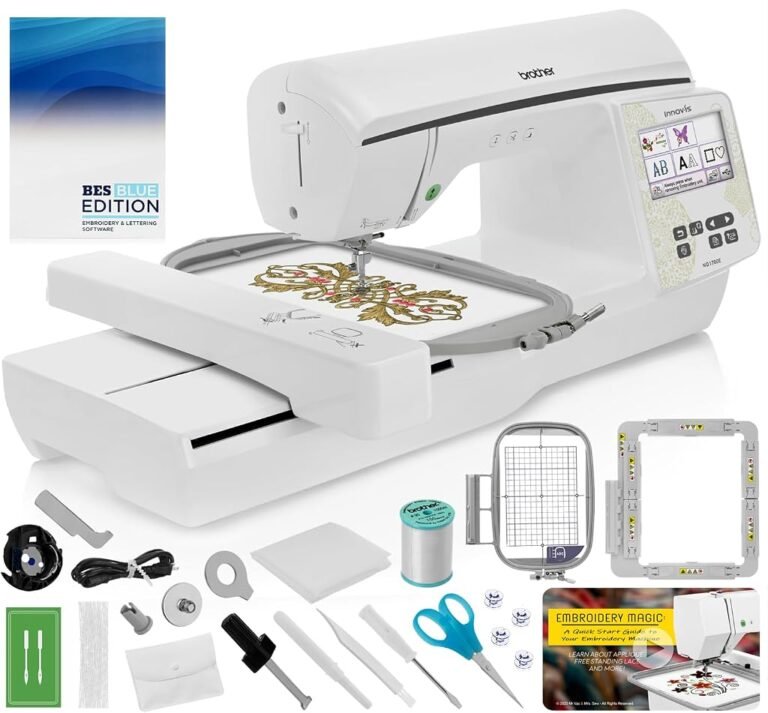
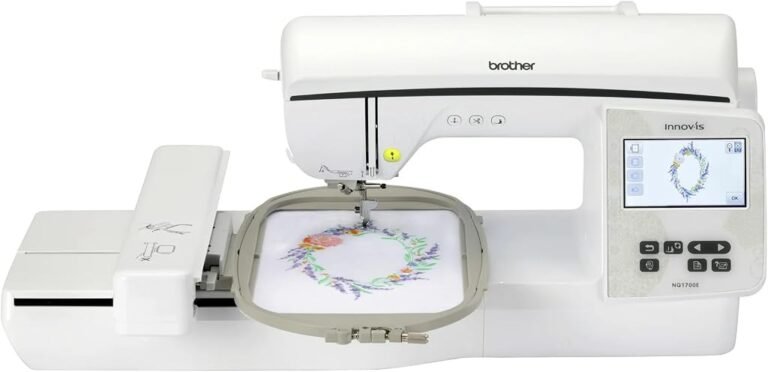
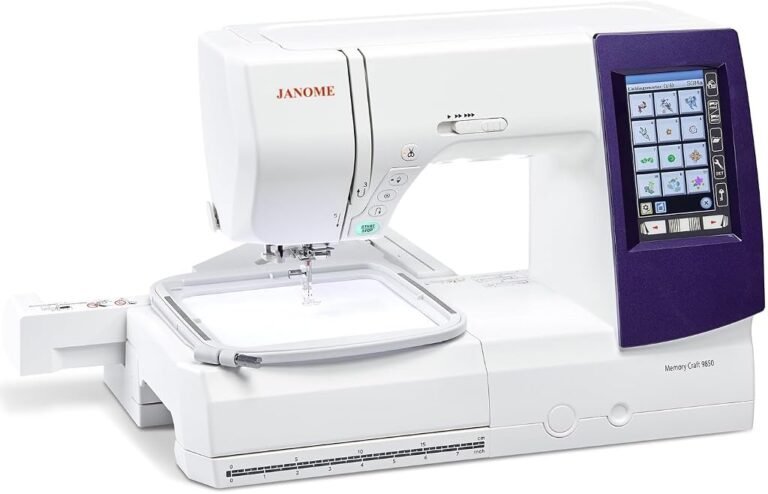
A computerized embroidery machine manipulates fabric within a controlled embroidery field to create programmed designs.
The 1034D occupies the second category. Asking it to perform the other three categories’ signature operations misunderstands the equipment.
Stitch Width, Length and Fabric Control
Adjustment matters because fabric does not behave uniformly.
Brother’s current product page specifies an adjustable stitch width from 3.00 mm to 7.00 mm, while the overlock seam width is listed as 5.0 to 7.0 mm. The company’s product literature also documents adjustable stitch length and the 0.7-to-2.0 differential-feed range.
These controls allow the operator to tune the stitch rather than accepting a single factory-defined edge.
Wider settings can place more thread across an edge. Narrower configurations suit different finishing requirements. Stitch length alters how densely the thread is laid along the seam.
Thread tension adds another variable.
The 1034D uses manual tension controls rather than an electronic automatic-tension system.
That makes test scraps more than an optional ritual.
Before committing a garment piece to the knife, a careful operator can serge a scrap of the actual fabric, inspect how the needle and looper threads meet, evaluate whether the fabric remains flat, and adjust tension, differential feed or stitch dimensions accordingly.
This habit costs minutes and can save an entire cut piece.
Cutting While Sewing Changes the Workflow
The knife is the element that most clearly separates the serging experience from ordinary sewing.
As fabric moves through the machine, the 1034D can trim the edge immediately before the overlock stitch encloses it. The result is an efficient sequence: trim, stitch and finish in one passage.
That efficiency also removes a familiar safety margin.
With a conventional sewing machine, excess seam allowance generally remains intact until it is deliberately trimmed. With an engaged serger knife, fabric can disappear as the seam is formed.
Accurate guidance therefore matters before the fabric reaches the needle.
This is especially relevant at curves and intersections. Operators transitioning from ordinary sewing often focus almost entirely on needle position. Serging requires awareness of the cutting position as well.
Once that habit develops, the integrated knife becomes one of the machine’s strongest productivity features.
Physical Size and Portability
The 1034D is relatively compact for a machine supporting four thread cones.
Brother lists the unit at 11.73 by 10.98 by 13.19 inches, with a unit weight of 13.45 pounds.
That weight makes it feasible to move between storage and a worktable without treating the machine as permanent studio furniture.
The compact dimensions also matter because a serger is frequently a second machine rather than the only machine on the table. A garment sewer may move repeatedly between a conventional sewing machine and the 1034D during construction.
A smaller footprint makes that two-machine workflow more manageable.
There is still a practical spatial consideration: four thread cones extend vertically behind and above the body. The dimensions of the chassis therefore do not describe every inch of working clearance required during operation.
Included Feet and Accessories
Brother lists three included presser feet: the standard foot, blind-stitch foot and gathering foot.
That selection broadens the machine beyond basic edge finishing.
The gathering foot supports deliberate gathering applications. The blind-stitch foot adds another finishing option. Snap-on foot changes also make moving between supported techniques less cumbersome than systems requiring tools for every change.
Brother additionally lists a soft cover, needle set, thread nets, spool caps, tweezers, cleaning brush, hexagonal driver, trim trap, foot controller and instruction material among the package contents.
The trim trap is mundane but useful. Serging creates waste by design. Every pass of the knife can produce narrow strips, lint and thread fragments, so controlling debris around the work area is part of normal operation.
Maintenance Is More Visible on a Serger
A machine that cuts fabric while sewing generates debris.
That simple fact explains why cleaning deserves particular attention with an overlocker. Fibers and clipped fabric accumulate around the knife, feed mechanism and lower working area more quickly than many beginners expect.
The included cleaning brush is therefore not decorative packaging.
Routine cleaning also gives the owner an opportunity to inspect the working area for tangled thread or unusual buildup. Needles should be replaced when bent, damaged or dull, and threading should be checked systematically whenever stitch formation changes unexpectedly.
Troubleshooting a serger is easier when variables are isolated.
If a previously stable stitch suddenly deteriorates after rethreading, threading is a logical first suspect. If the fabric waves, differential feed deserves examination. If thread loops hang beyond the edge, cutting width and tension deserve attention. If stitches skip, needle condition and installation belong near the beginning of the diagnostic process.
Randomly turning every tension dial at once destroys the reference point.
A better approach is controlled adjustment: test, alter one relevant variable, test again.
What the Brother 1034D Does Particularly Well
The 1034D’s strengths are concentrated rather than scattered.
Its 1,300-stitch-per-minute maximum provides ample speed for long seam-finishing operations. Differential feed gives meaningful control over difficult fabric behavior. Three- and four-thread configurations cover common domestic overlocking requirements, while narrow and rolled hemming extend its usefulness into lightweight and decorative finishing.
Color-coded threading reduces an inherently more complicated setup process.
Adjustable presser-foot pressure provides another method of adapting the machine to different fabrics. The machine also provides accessory storage and a trim collection system.
None of these features requires a screen, firmware or a large stitch database.
That mechanical simplicity is part of the 1034D’s identity.
Our 9.8 Buyer Confidence rating reflects this focused architecture. There is little ambiguity about what the machine is intended to do, and Brother maintains product documentation and support material specifically for the model.
Where the Brother 1034D Is Limited
The same specialization that makes the 1034D useful also creates its boundaries.
It does not replace a normal sewing machine. Straight-stitch topstitching, standard buttonholes, zipper insertion and many ordinary construction operations still belong on conventional equipment.
It does not provide coverstitch functionality.
It does not offer computerized embroidery.
Its threading system, although color coded, still requires the operator to manage multiple thread paths manually.
Its tension controls are manual rather than computerized.
The current Brother specification also lists a conventional bulb for lighting rather than the LED work-area lighting found on some newer machines.
These are not obscure technical distinctions. They directly affect buyer fit.
Someone seeking a single machine for occasional repairs and straightforward woven-fabric projects may find a serger unnecessarily specialized. Someone regularly sewing knit garments can reach the opposite assessment because differential feed, overlock construction and simultaneous edge trimming address recurring problems directly.
Brother’s Sewing-Machine Background
The 1034D comes from a manufacturer whose sewing-machine history predates modern domestic electronics.
Brother’s home sewing and embroidery operation sits within a broader product ecosystem covering sewing machines, embroidery machines, combination machines, quilting equipment, sergers and cover-stitch machines.
Corporate longevity alone does not establish the quality of an individual appliance. What matters more for the 1034D is that the machine sits within an active sewing-product ecosystem containing manuals, instructional material, accessories and manufacturer support.
That contributes substantially to its high Buyer Confidence rating.
Who Should Buy the Brother 1034D?
The machine makes the most sense when its specialized capabilities correspond to repeated work. Strong candidates include:
- Garment makers who regularly finish exposed seam allowances.
- Sewers working with jersey, stretch knits and other materials that benefit from differential feed.
- Users who want four-thread overlock construction alongside three-thread edge finishing.
- Makers who regularly use rolled or narrow hems.
- Owners of conventional sewing machines who want a dedicated companion machine for finishing and knit construction.
- Users prepared to learn manual threading, tension adjustment and differential-feed settings.
It is less appropriate for someone seeking only one machine for buttonholes, topstitching, zippers and basic repairs. It is also the wrong category for anyone whose primary objective is computerized embroidery or conventional coverstitched T-shirt hems.
That distinction is central to the 8.4 Value rating. Value here is strongly connected to frequency of use.
Interpreting the Editorial Scores
Our 8.86/10 overall score places the Brother 1034D firmly in favorable territory because its design addresses the principal requirements expected from an accessible domestic 3/4-thread serger without pretending to be a multipurpose computerized workstation.
The 8.72 Customer Sentiment score reflects a product proposition with broad practical appeal while recognizing the learning curve inherent in manual serger threading and adjustment.
The highest figure is Buyer Confidence at 9.8. Brother publishes detailed specifications, provides model-specific support resources and maintains instructional material for major procedures. The machine’s functions are also clearly bounded, reducing the risk of mistaking decorative marketing language for capabilities that are not present.
The 8.4 Value score is deliberately lower.
A specialized machine cannot create equal value for every sewer. Someone producing several knit garments each month can exploit differential feed, edge trimming and high-speed overlocking repeatedly. A person who sews twice a year and mainly repairs trouser hems cannot.
The score difference therefore tells a coherent story: confidence in the machine is higher than confidence that every household needs one.
The Case for a Serger Beside a Sewing Machine
Perhaps the most productive way to evaluate the 1034D is not as a replacement.
It works better conceptually as a companion.
A conventional machine can construct a garment with straight seams, install a zipper, make buttonholes and produce controlled topstitching. The 1034D can then handle overlocked seam construction, raw-edge finishing, rolled hems and stretch-sensitive operations where differential feed becomes useful.
Moving between two specialized tools can initially appear less efficient than owning one machine. In practice, specialization can remove repeated compromises.
A zigzag or overcasting stitch from a standard machine can finish a raw edge. That does not make the machine an overlocker. Likewise, a serger can construct many seams rapidly, but that does not make it suitable for every conventional sewing operation.
Recognizing those boundaries leads to more rational equipment choices.
Final Considerations
The Brother 1034D is best understood as focused mechanical equipment rather than a feature-count contest.
Its defining specifications are purposeful: two needles, three- or four-thread operation, differential feed, manual tension adjustment, adjustable presser-foot pressure, multiple overlock and hem configurations, a cutting system and a maximum speed of 1,300 stitches per minute. At 13.45 pounds, it also remains manageable enough for domestic storage and movement.
Its limitations are equally concrete. Threading requires learning. Tension adjustment remains manual. There is no coverstitch function, no computerized embroidery system and no realistic basis for treating the machine as a replacement for an ordinary sewing machine.
Those restrictions do not weaken its identity; they define it.
Our 8.86/10 score reflects a machine whose capabilities align closely with the work expected from a domestic overlocker. Customer Sentiment at 8.72 recognizes that the learning curve and specialization will not suit every buyer. Buyer Confidence at 9.8 reflects the clarity of the machine’s design, documentation and manufacturer support. Value at 8.4 acknowledges that the economic case becomes strongest only when overlocking is performed frequently enough to justify a second machine.
For garment makers, particularly those working with knits, the 1034D addresses problems that ordinary sewing machines can only partially imitate. Differential feed controls fabric behavior, the knife manages the edge, and multiple threads create an enclosed seam in a single operation.
That is the more meaningful measure of the Brother 1034D. It does not attempt to do everything. It concentrates on a narrow collection of demanding sewing operations and gives the operator direct mechanical control over how those operations are performed.