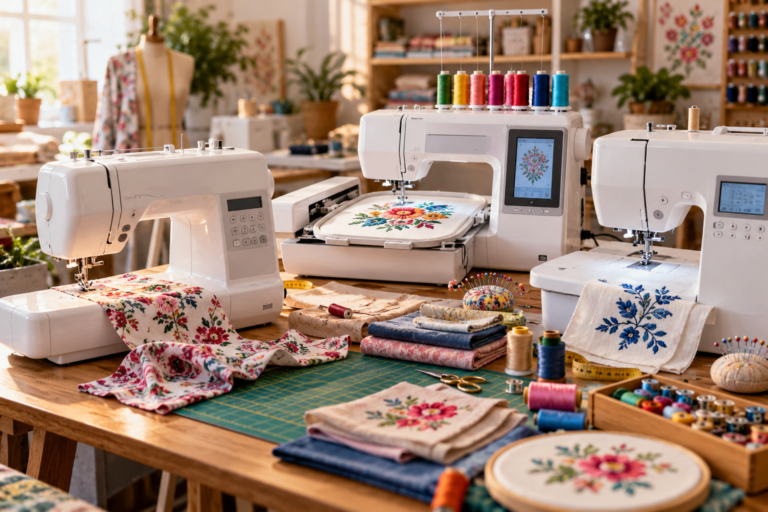
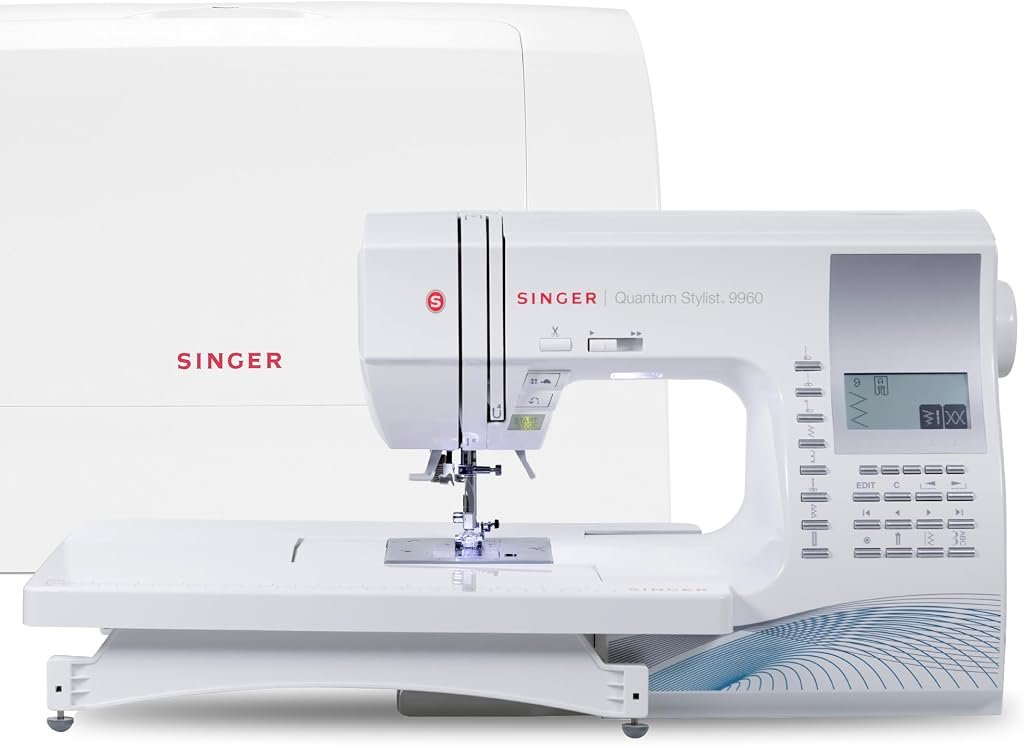
The SINGER Quantum Stylist 9960 belongs to a category of sewing machines that tries to answer an awkward question: how much functionality can be placed inside a conventional domestic sewing platform before the interface becomes more important than the mechanics?
Its answer is unusually expansive.
The 9960 combines 600 built-in stitches, five lettering alphabets, 13 one-step buttonhole styles, stitch sequencing with memory, mirror imaging, adjustable stitch dimensions, automatic thread cutting, needle up/down control, speed adjustment, a drop-feed system, an extension table and an extensive collection of presser feet. SINGER currently lists 1,172 stitch applications, distinguishing between individual built-in stitches and the sewing techniques those stitches can perform. SINGER’s official Quantum Stylist 9960 specifications also list a maximum speed of 850 stitches per minute and 6.4 inches of sewing space between the needle and machine tower.
Our editorial rating is 8.55/10. Customer Sentiment is 8.28, Buyer Confidence is 9.8, and Value is 8.15.
Those scores describe a machine with a broad and well-documented feature set, substantial quilting utility and an unusually deep stitch library. They also reveal its central trade-off. The 9960 gives the operator a large number of choices, but it remains a domestic sewing and quilting machine rather than an embroidery machine, long-arm quilting system or industrial platform.
That distinction defines the review.
Six Hundred Built-In Stitches Are More Than Most Owners Will Regularly Use
The number 600 dominates the 9960’s identity.
It is impressive numerically, but raw stitch count is a poor measure of sewing capability unless the stitches match the work being done.
A garment maker may spend most of the week using straight stitch, zigzag, stretch stitches, buttonholes and overcasting. A quilter may rely heavily on straight stitching, decorative quilting, appliqué functions and free-motion work. Someone making home décor may value decorative patterns and lettering more heavily.
The 9960 gives all of those users a very large menu.
SINGER separates the machine’s capabilities into 600 built-in stitches and 1,172 stitch applications. The latter figure represents different techniques that can be performed using the stitch library rather than 1,172 physically distinct stitch designs. That distinction matters because marketing language around computerized sewing machines can otherwise make stitch counts difficult to compare.
The more defensible strength of the 9960 is not simply that it has hundreds of stitches.
It is that the stitch library spans utility sewing, stretch work, decorative stitching, lettering and automated buttonholes within one interface.
Five Alphabets Make Personalization Possible Without Embroidery Hardware
The machine includes five built-in lettering alphabets.
That allows names, initials, phrases and monograms to be sewn directly through the feed system without moving into dedicated hoop embroidery.
This capability should not be confused with computerized embroidery.
The 9960 does not use an embroidery carriage and hoop to move fabric across two axes. It remains a conventional sewing machine in which fabric travels beneath the presser foot through the feed system.
Lettering is therefore created as a programmed sewing sequence rather than as free-positioned embroidery artwork.
That distinction limits graphic freedom but simplifies personalization.
A label, quilt signature, decorative phrase or repeated name can be produced without purchasing embroidery software, digitizing a design or attaching an embroidery module.
For many users, that is enough.
For someone expecting logos, large filled motifs or imported embroidery files, it is not.
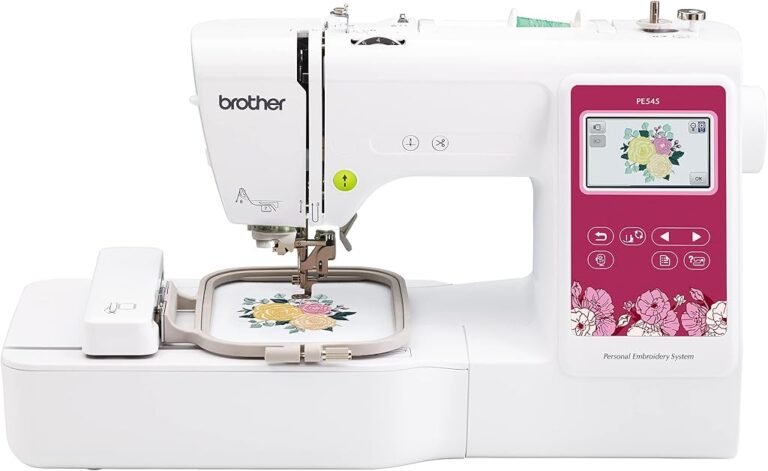
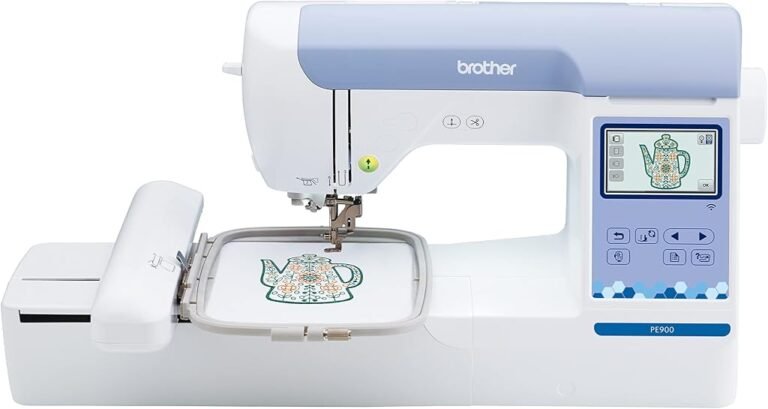
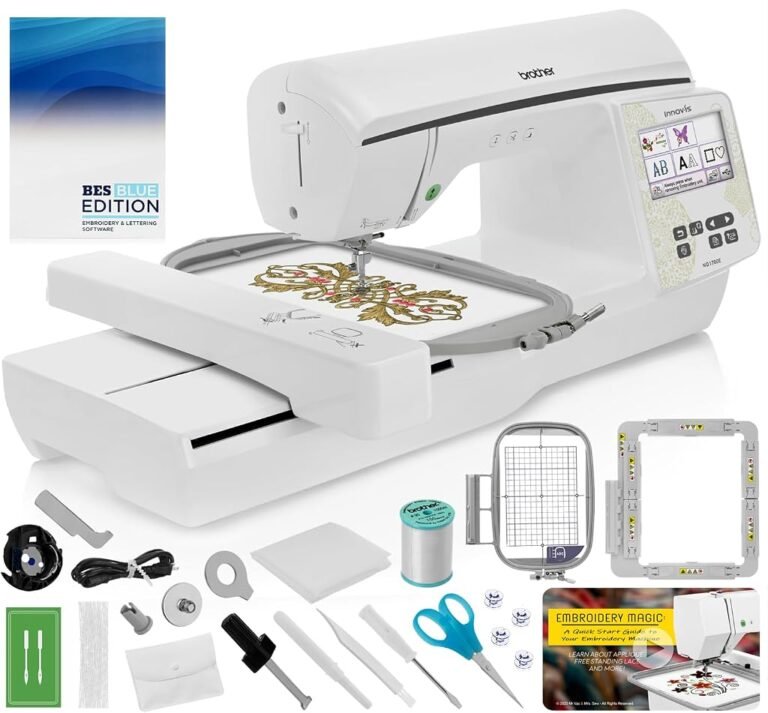
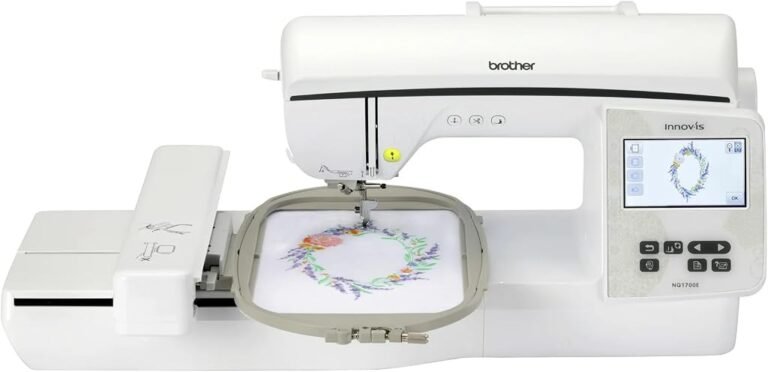
The 9960 Is a Sewing and Quilting Machine, Not an Embroidery Machine
This category distinction deserves direct attention because shoppers researching the best sewing and embroidery machines often encounter the 9960 beside combination systems.
The Quantum Stylist 9960 does not perform conventional hoop embroidery.
There is no embroidery field in the usual sense.
There is no design-file import workflow comparable with dedicated embroidery platforms.
The machine instead focuses on sewing, decorative stitching and quilting.
That makes it more appropriate for garment construction, alterations, piecing, decorative seams, buttonholes, appliqué, free-motion quilting and similar work than for stitched logos or large multicolor graphics.
The distinction can actually strengthen its appeal for the correct buyer.
Money and interface complexity are concentrated around sewing functions rather than an embroidery system that may rarely be used.
Thirteen One-Step Buttonholes Address a Common Construction Task
The 9960 includes 13 one-step buttonhole styles.
SINGER’s documentation states that the button is placed in the buttonhole foot so the machine can size the buttonhole accordingly.
That level of automation is useful because buttonholes are highly visible construction details.
Minor inconsistencies in length, spacing or density can make otherwise careful garment work look irregular.
A one-step system reduces the number of manual stages involved.
Thirteen styles also provide options beyond a single rectangular buttonhole, giving garment makers more flexibility for different clothing designs.
The practical value is greater than the number alone suggests.
A person may never use all 600 stitches, but repeated buttonhole construction is a task where automation can save both time and frustration.
850 Stitches Per Minute Is Fast Enough for Domestic Sewing
SINGER rates the 9960 at a maximum of 850 stitches per minute.
That speed sits comfortably within the range expected from a computerized domestic sewing machine.
The figure should not be interpreted as a requirement to sew at full speed.
The machine includes speed control, allowing the operator to set a lower maximum when accuracy matters more than throughput.
That is particularly useful when sewing curves, attaching appliqué, working close to an edge or guiding multiple layers during quilting.
Long seams benefit from higher speed.
Detailed work benefits from restraint.
The value is therefore not simply 850 stitches per minute. It is the ability to regulate how much of that speed is available.
Needle Up/Down Is a Small Feature With Large Practical Value
The 9960 includes programmable needle up/down positioning.
This determines whether the needle stops above the fabric or remains inserted when the machine pauses.
For quilting and appliqué, leaving the needle down makes pivoting easier.
The fabric can be rotated around the stationary needle without shifting the exact stitch position.
The same principle helps when turning corners, topstitching pockets or sewing angular shapes.
This is an example of why feature importance cannot be judged through headline numbers.
Needle up/down sounds less dramatic than 600 stitches.
During daily sewing, it may be used far more often.
Automatic Thread Cutting Removes a Repetitive Motion
The 9960 includes a button-operated thread cutter that trims the upper and bobbin threads at the end of sewing.
One thread cut saves only seconds.
Hundreds of thread cuts across garment construction, patchwork or quilting create a more noticeable difference.
Automatic cutting also reduces the habit of pulling a project away from the machine to reach for scissors.
That can be especially helpful on larger quilt sections, where moving the fabric unnecessarily creates additional handling.
The cutter should be understood as convenience rather than core sewing capability.
A machine without it can still produce the same seam.
The 9960 simply removes another small interruption.
The Top Drop-In Bobbin Improves Thread Monitoring
The machine uses a top drop-in Class 15 transparent bobbin.
The clear cover allows the operator to see remaining bobbin thread more easily.
That matters because running out of bobbin thread is one of the least dramatic but most disruptive events in sewing.
A garment seam can simply be restarted.
A long decorative sequence or quilting line may be more annoying to reconstruct cleanly.
Visibility does not guarantee the bobbin will never empty mid-seam, but it gives the operator better information before beginning a long section.
The system also simplifies bobbin access compared with designs requiring removal of a front-mounted bobbin case.
Automatic Tension Reduces Setup, but Judgment Still Matters
SINGER describes the 9960 as having a self-adjusting tension system that applies settings according to the selected stitch.
This can reduce routine adjustment.
It cannot make thread tension irrelevant.
Fabric thickness, thread type, needle choice and unusual construction methods can still require experimentation.
A computerized default is best understood as a starting point selected by the machine.
For common sewing, that can be very convenient.
For unusual materials or decorative work, the operator still needs to recognize what balanced stitching looks like.
Automation reduces setup.
It does not replace textile knowledge.
Quilting Capability Is More Than a Label
The 9960 includes several features directly relevant to quilting.
The feed dogs can be lowered for free-motion work. Needle up/down aids pivoting. A large extension table increases support around the needle. SINGER includes an even-feed or walking foot, a darning/embroidery foot, a quarter-inch foot and a quilting bar in the accessory package.
Those accessories matter because quilting places demands on fabric control rather than merely stitch selection.
A walking foot helps move multiple layers more evenly.
A quarter-inch foot supports repeatable patchwork seam allowances.
A darning or embroidery foot is used for free-motion techniques when the feed dogs are lowered.
The extension table gives a larger level surface around the sewing area.
Taken together, these features explain why the 9960 deserves its sewing-and-quilting classification rather than merely being a decorative sewing machine with an unusually high stitch count.
The Extension Table Helps, but the 6.4-Inch Throat Space Still Sets a Limit
SINGER lists 6.4 inches of sewing space from the needle to the tower, with four inches of vertical height.
That figure deserves attention from quilters.
The extension table supports fabric outside the machine.
It does not enlarge the opening through which a quilt must pass.
For piecing, small quilts, table runners and moderate quilting work, 6.4 inches can be manageable.
For large bed quilts, the physical space to the right of the needle becomes more restrictive.
The fabric must be rolled, folded or otherwise managed through that opening.
This is where the 9960 differs sharply from a long-arm quilting machine or a domestic model built around substantially larger throat space.
Its quilting features are genuine.
Its quilting dimensions remain domestic.
Stitch Sequencing Is One of the More Interesting Computerized Functions
The 9960 can combine stitches and lettering into stored sequences.
That capability changes decorative stitching from one isolated pattern at a time into programmable combinations.
A border might combine motifs.
A label might combine lettering with decorative elements.
A repeated sequence can be created once and sewn again without rebuilding every step manually.
Mirror imaging provides another variation by reversing compatible decorative stitches from side to side.
These functions are more likely to appeal to owners who actively use decorative sewing.
Someone focused almost entirely on straight garment seams will find less value in them.
That difference illustrates why the machine can feel either remarkably capable or unnecessarily elaborate depending on sewing habits.
Seven-Millimeter Stitch Width Expands Decorative Flexibility
The 9960 allows stitch width adjustments up to 7 mm.
Width control matters for zigzag stitching, satin work, appliqué and decorative patterns.
A wider decorative stitch can become a visible design element rather than merely a functional seam treatment.
The machine also provides 25 needle positions, allowing lateral adjustment for topstitching, edge stitching, zipper insertion and other construction methods.
That range gives the operator more control over where stitching lands relative to the presser foot.
Again, the benefit is not novelty.
It is positional flexibility.
The Presser-Foot Package Is Unusually Important
SINGER currently includes an extensive set of feet with the 9960, including:
- General-purpose foot
- Zipper foot
- Buttonhole foot
- Satin foot
- Blind-hem foot
- Open-toe foot
- Cording foot
- Darning/embroidery foot
- Even-feed or walking foot
- Overcasting foot
- Button-sewing foot
- Narrow-hem foot
- Quarter-inch foot
The package also includes a quilting bar, needles, bobbins, spool accessories, screwdriver, large extension table and hard dust cover.
This collection is meaningful because many sewing techniques depend more on the correct foot than on selecting another stitch from the menu.
A walking foot changes fabric feeding.
A zipper foot changes access beside zipper teeth or piping.
A narrow-hem foot helps form a rolled edge.
A quarter-inch foot provides a patchwork reference.
For owners who will actually use those techniques, the accessory package is more consequential than another hundred decorative patterns.
The Metal Internal Frame Adds Structural Weight to the Design
SINGER specifies an internal metal frame for the 9960.
That does not make the machine an industrial sewing system.
It does indicate that the internal structure supporting the mechanism is not entirely plastic.
This distinction is relevant because “heavy duty” language is often applied loosely in sewing-machine discussions.
The 9960 should not be evaluated as a machine intended for continuous industrial production simply because it contains a metal frame.
Its strengths lie in computerized domestic versatility.
Heavy fabrics may be sewn when needle, thread, presser foot and technique are appropriate, but the machine’s identity remains centered on household sewing and quilting rather than factory throughput.
The Free Arm Makes Tubular Construction Easier
The removable storage compartment exposes a free arm for sleeves, trouser hems and other narrow circular items.
This is a routine feature on many domestic machines, yet it is especially relevant on a model marketed heavily around quilting and decorative stitching.
The 9960 is still expected to handle ordinary construction.
Garments need cuffs.
Trouser legs need hemming.
Children’s clothing may involve narrow openings.
The free arm helps the machine remain useful for everyday sewing rather than becoming a specialized decorative platform.
Buyer Confidence at 9.8 Is the Strongest Editorial Score
Our Buyer Confidence score is 9.8, noticeably higher than the overall rating.
The reason is unusually straightforward: the 9960 is extensively documented.
SINGER publishes the stitch count, stitch applications, included feet, buttonhole count, speed, sewing area, bobbin class, stitch width, needle positions, extension table and many computerized functions on its current product page.
The company also maintains a dedicated manual library that includes the Quantum Stylist 9960, reducing uncertainty around threading, maintenance, controls and setup.
That documentation makes the ownership proposition easier to assess before purchase.
The machine may have a large feature set, but those features are not mysterious.
The Warranty Structure Supports the High Confidence Score
SINGER currently places the Quantum Stylist 9960 under its 25/5/1 limited warranty structure.
The company lists 25 years for the sewing-machine head, five years for motors, electronic components and parts, and one year for adjustments and accessories under the applicable coverage, subject to the warranty conditions. SINGER’s warranty coverage page specifically names the Quantum Stylist 9960 among the eligible machines.
That split coverage deserves attention.
“25-year warranty” by itself can create the impression that every component carries the same period of protection.
It does not.
The electronic and mechanical categories have different coverage windows.
A computerized machine should therefore be evaluated according to the actual breakdown rather than the largest number in the warranty headline.
Customer Sentiment at 8.28 Reflects Complexity as Well as Capability
Our Customer Sentiment score is 8.28.
That is positive, but materially below Buyer Confidence.
The gap reflects the nature of the machine.
A large feature set creates flexibility.
It also creates menus, settings, button combinations and choices that have to be learned.
Someone moving from a simple mechanical machine may need time to become comfortable with stitch selection, sequencing, lettering, memory functions, mirror imaging, speed control, programmable needle position and automatic cutting.
The interface reduces manual adjustment in several areas while increasing the amount of digital control available.
That trade-off will feel liberating to one user and excessive to another.
The machine is therefore easiest to recommend to someone who actively wants computerized sewing rather than someone seeking only basic seams.
Value at 8.15 Is Strongest When the Accessories Are Used
Our Value score is 8.15, the lowest of the four editorial ratings.
That difference has a clear explanation.
The 9960 offers a remarkable quantity of functionality, but value is created only when those functions replace purchases or expand the work actually being performed.
A quilter who uses the walking foot, quarter-inch foot, extension table, drop feed and needle-position controls extracts substantial utility.
A garment maker who uses automated buttonholes, lettering, decorative stitching, thread cutting and variable needle positions also makes use of the machine’s breadth.
Someone who sews an occasional straight seam may be paying for hundreds of stitches, specialized feet and memory features that remain unused.
The 9960 therefore rewards breadth of sewing activity.
Understanding the 8.55/10 Overall Score
Our 8.55/10 overall rating reflects a machine with exceptional functional breadth but several clearly defined boundaries.
The strengths reinforce one another.
Six hundred stitches support decorative and functional sewing.
Five alphabets add personalization.
Thirteen one-step buttonholes broaden garment construction options.
The 850-SPM maximum and speed control cover both long seams and careful detail work.
Automatic thread cutting removes a repetitive step.
Needle up/down supports pivoting and quilting.
Drop feed allows free-motion work.
The extension table and included quilting feet make the quilting designation credible.
The limitations are equally clear.
The 6.4-inch sewing space constrains large quilts more than the extension table may initially suggest.
The machine does not perform computerized hoop embroidery.
Its enormous stitch library may be excessive for users who prefer simple mechanical control.
And computerized convenience introduces greater dependence on electronics than a basic mechanical machine.
Those are not contradictions.
They define the buyer.
Who Is the Quantum Stylist 9960 Best Suited For?
The strongest fit is a user who works across several forms of domestic sewing rather than specializing narrowly.
That may include:
- Garment construction
- Patchwork and quilting
- Decorative stitching
- Appliqué
- Alterations
- Home décor
- Monograms and sewn lettering
- Buttonhole-heavy projects
- Free-motion quilting
- Topstitching
- Craft sewing
- Projects requiring several specialized presser feet
The machine also suits someone who prefers button-driven control over extensive manual adjustment.
A buyer seeking true embroidery should look elsewhere.
A quilter routinely handling very large quilts may prefer more throat space.
A user interested only in basic repairs and straight seams can meet those needs with much simpler equipment.
Final Considerations
The SINGER Quantum Stylist 9960 is best understood as a highly computerized sewing machine with serious quilting support rather than as a sewing-and-embroidery hybrid.
That distinction matters.
Its 600 built-in stitches, five lettering alphabets, 13 one-step buttonholes and 1,172 stated stitch applications give the machine unusual programming depth.
Yet the more persuasive features are often less dramatic.
Needle up/down improves pivoting.
Automatic thread cutting eliminates repeated trimming.
A transparent top bobbin improves thread monitoring.
Speed control allows difficult areas to be sewn deliberately.
The walking foot and quarter-inch foot address real quilting needs.
The large extension table supports bigger fabric sections.
The free arm keeps ordinary garment construction practical.
Our 8.55/10 overall rating reflects that balance.
Customer Sentiment at 8.28 acknowledges that extensive functionality also creates a learning burden. The 9960 offers many controls because it can perform many tasks.
Buyer Confidence at 9.8 is the strongest score because the machine is unusually well documented, supported by an official manual ecosystem and covered by a clearly defined warranty structure.
Value at 8.15 is more selective. The machine represents stronger value when its stitch library, presser feet, quilting hardware and automation are used regularly. A buyer interested only in straightforward sewing is unlikely to exploit enough of the feature set to justify choosing such a complex platform.
Its quilting limitations should also remain visible.
The extension table creates more exterior support, but it cannot increase the 6.4-inch sewing space to the right of the needle. Large quilts still require careful fabric management.
Its lettering limitations are equally clear.
Five alphabets allow useful personalization, but they do not transform the 9960 into a computerized embroidery machine capable of importing and stitching large graphic designs.
Within those boundaries, however, the machine has a coherent purpose.
It is designed for someone who wants one domestic machine to move repeatedly between garment work, quilting, decorative sewing, buttonholes, appliqué and personalization without changing equipment.
That breadth explains both its attraction and its complexity.
The Quantum Stylist 9960 asks the operator to learn more controls than a basic sewing machine. In return, it keeps a remarkably broad range of sewing techniques within reach of the same needle.