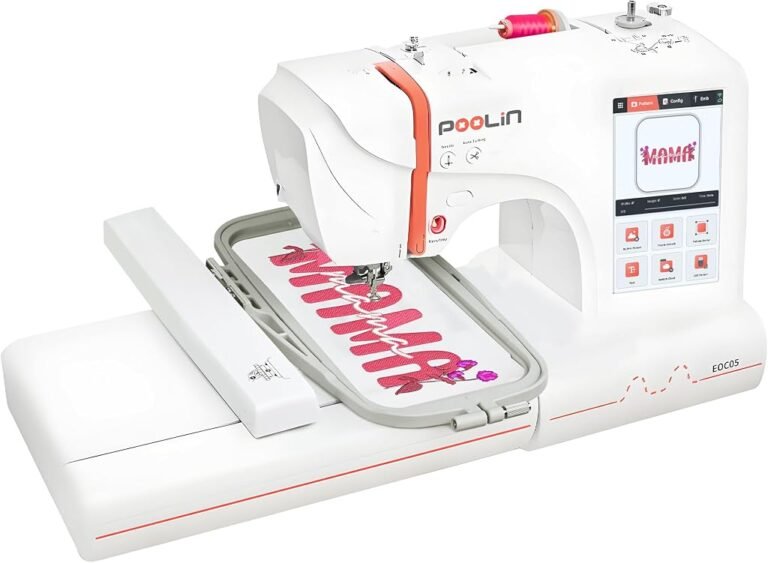
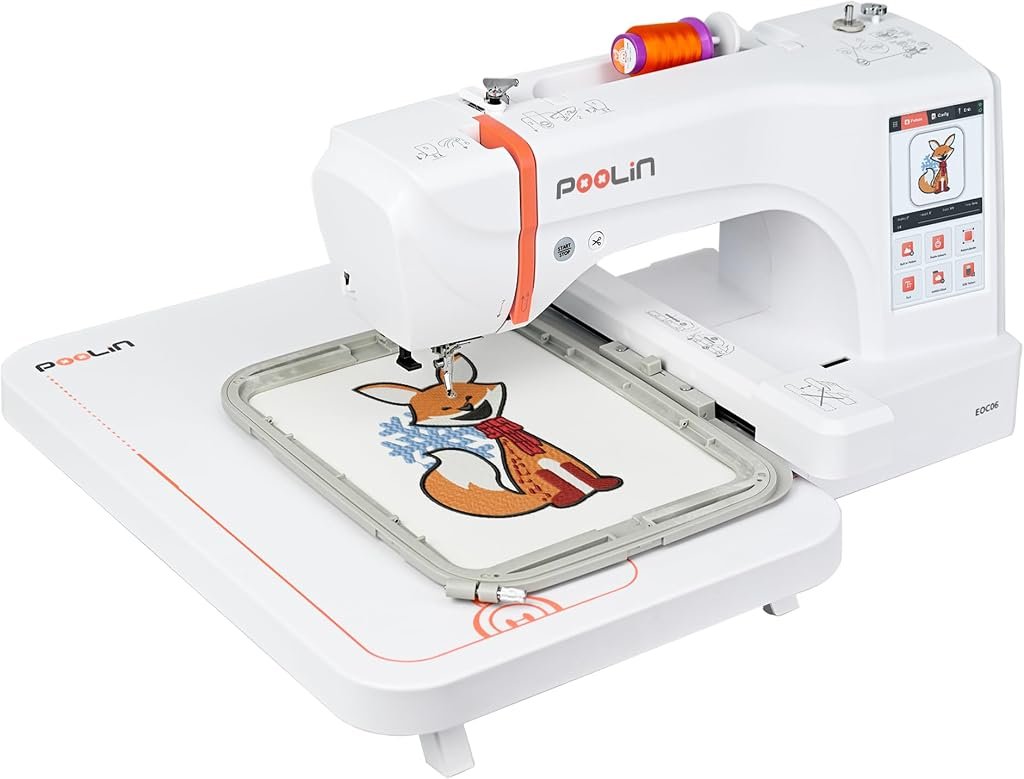
The Poolin EOC06 belongs to a class of single-needle home embroidery machines that attempts to solve a familiar problem: many users outgrow small embroidery fields well before they outgrow the craft itself. With a maximum working area of roughly 7.9 × 11 inches, a 7-inch touchscreen, four included hoops across three sizes, wireless and USB design transfer, 200 built-in patterns, eight lettering fonts, 26 border patterns and a rated maximum speed of 860 stitches per minute, the EOC06 places physical capacity ahead of compactness.
Poolin’s European documentation lists the maximum embroidery area as 20 × 28 cm, equivalent to approximately 7.9 × 11 inches, and specifies hoops measuring 14 × 14 cm, 20 × 20 cm and 20 × 28 cm. Two of the 14 × 14 cm hoops are included, bringing the total to four frames. The same documentation lists a 7-inch LCD touchscreen and states that the EOC06 accepts DST and DSB embroidery files. Poolin’s EOC06 specifications also identify the machine as embroidery-only rather than a conventional sewing-and-embroidery combination.
Our rating is 8.46/10. Customer Sentiment is 8.28, Buyer Confidence is 9.35, and Value is 8.15.
Those ratings describe a machine whose technical proposition is relatively easy to understand. The EOC06 offers considerably more embroidery area than many starter machines and surrounds that space with a modern interface and several workflow aids. Its more difficult questions concern ecosystem maturity, single-needle limitations and whether a buyer needs enough of its large field to justify choosing it over smaller alternatives.
The 7.9 × 11-Inch Field Is the EOC06’s Main Argument
Embroidery machines are often compared through design counts, screen sizes and software features. Hoop capacity deserves to come first because it creates a physical restriction that no firmware update can remove.
The EOC06 reaches approximately 7.9 × 11 inches, or 20 × 28 cm.
That is 88 square inches of nominal rectangular area.
For comparison, a 4 × 4 field represents 16 square inches, 5 × 7 provides 35 square inches, and 6 × 10 provides 60 square inches. Those calculations do not imply that every design can exploit every square inch perfectly, but they show how much additional layout room the EOC06 creates.
The difference is substantial for sweatshirt designs, decorative panels, pillow fronts, larger appliqués, quilt blocks, tote bags, jacket motifs, extended lettering and vertically arranged compositions.
A larger field can also reduce the need for design splitting.
When artwork exceeds a machine’s native sewing area, it may have to be broken into sections and stitched through multiple hoopings. That process can work well, but each repositioning introduces another alignment task. Fabric has to be secured again, registration points must be matched, and even minor movement can become visible where separate sections meet.
The EOC06 cannot eliminate multi-hooping for every project. An 11-inch boundary is still a boundary. What it does is move that boundary far enough away that many home projects can remain inside one setup.
For an owner who already knows that 4 × 4 and 5 × 7 fields feel restrictive, that difference carries more weight than another hundred decorative patterns.
Four Hoops Make the Large Field Easier to Use
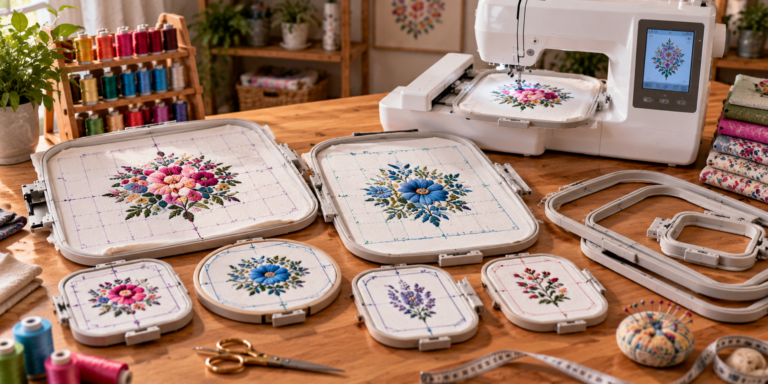
The EOC06 includes four hoops in three dimensions: two at 14 × 14 cm, one at 20 × 20 cm and one at 20 × 28 cm. Poolin presents these as interchangeable frames intended for projects ranging from lettering and smaller motifs to full-size designs using the machine’s maximum embroidery field.
The smaller frames matter.
Using a 20 × 28 cm hoop for every job would be inefficient. A compact name, patch or chest motif does not necessarily benefit from a large frame, particularly when a smaller hoop can use less stabilizer and make fabric easier to handle.
Two identical 14 × 14 cm hoops also create an interesting workflow option for repeated projects. An operator can prepare one hoop while another project is being completed or keep different pieces staged for a small batch.
That does not transform the EOC06 into production machinery, but it gives the included accessory package more practical depth than a single maximum-size frame would offer.
Hoop selection is ultimately a material-management decision as much as a design-size decision. Smaller frames can reduce excess fabric movement. Larger ones reduce the need to divide artwork. The EOC06 gives the user meaningful choices between those priorities from the beginning.
The Seven-Inch Display Is Unusually Central to the Machine
Poolin gives the EOC06 a 7-inch HD touchscreen, and this screen is not merely a menu panel.
The company documents direct editing functions including dragging, zooming, rotation, flipping, resizing and adding text. Before embroidery begins, the interface also offers a tracing function intended to show whether the selected pattern remains within the usable hoop area.
That combination matters because embroidery layout is inherently visual.
Consider a personalized design containing a name, a decorative border and a central graphic. The operator may need to change the graphic scale, reposition the lettering, rotate an element, verify spacing and make sure the complete arrangement remains safely within the selected hoop.
A larger screen gives those actions more room.
It cannot replace genuine digitizing software. Moving a finished embroidery object around a screen is fundamentally different from creating stitch paths, determining underlay, setting density or compensating for the way fabric contracts under dense stitching.
For ordinary composition, however, the display allows more decisions to remain at the machine rather than forcing every minor revision back to a computer.
860 Stitches Per Minute Fits the Larger Format
Poolin rates the EOC06 at a maximum of 860 stitches per minute.
That speed deserves practical context.
At a theoretical uninterrupted rate of 860 stitches per minute, a 17,200-stitch design would require exactly 20 minutes of needle movement:
17,200 ÷ 860 = 20 minutes.
A 34,400-stitch design would mathematically require 40 minutes.
Neither calculation predicts total project time.
Embroidery machines slow and accelerate. Thread changes create pauses. Bobbins need attention. A broken upper thread can stop progress. Some stitch sequences may operate below the stated maximum, while hooping, stabilizing and finishing occur outside machine-running time altogether.
Still, speed has greater significance on a machine capable of handling larger designs because larger artwork commonly carries higher stitch counts.
A 5,000-stitch monogram does not expose a major difference between 650 and 860 stitches per minute. A dense 40,000-stitch decorative piece can.
The EOC06’s 860-SPM ceiling therefore complements its physical size rather than functioning as an isolated performance statistic.
Two Hundred Patterns Matter Less Than File Import
Poolin includes 200 built-in embroidery patterns, eight lettering fonts and 26 pattern borders.
That is enough material to start working immediately without building an external design library first.
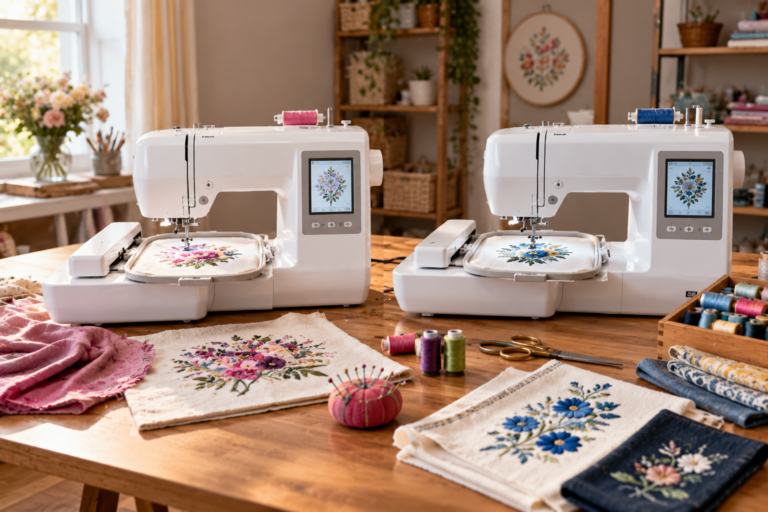
Built-in patterns are especially useful during the learning phase. They give the user known machine-ready files while attention can remain on hooping, stabilizer selection, thread changes and understanding the controls.
Their importance declines as personal preferences become more specific.
Embroidery users rarely remain satisfied with generic designs forever. Projects begin requiring a particular logo, pet image, seasonal graphic, business artwork, school motif, personalized illustration or exact typography.
At that stage, import capability matters more than factory pattern count.
The EOC06 supports DST and DSB files. Poolin states that other file formats must be converted before transfer.
That limitation deserves attention because embroidery marketplaces distribute designs in several formats. Buyers with existing collections should inspect their file libraries before purchasing and determine whether conversion will be routine.
A large embroidery field has little value if the desired artwork cannot reach the machine in a compatible form.
Wi-Fi and USB Provide Two Routes for Design Transfer
The EOC06 accepts design transfers through both Wi-Fi and USB.
That dual approach is sensible.
USB remains one of the most dependable methods for moving embroidery files. It requires no router configuration, no network troubleshooting and no dependence on a cloud service.
Wi-Fi reduces physical file handling when it works smoothly.
Poolin’s European support documentation specifies an important network restriction: its embroidery machines support 2.4 GHz Wi-Fi only. The company states that the 2.4 GHz network should be configured separately and should not share the same Wi-Fi name as the 5 GHz network. Poolin’s support guidance also recommends installing the latest firmware when connection problems occur.
That requirement deserves more attention than the generic phrase “Wi-Fi capable.”
Many modern routers combine 2.4 GHz and 5 GHz bands under a shared network name. A user unfamiliar with router configuration could therefore encounter setup friction even though the machine itself is functioning normally.
USB gives the EOC06 a useful fallback.
For buyers comparing the best sewing and embroidery machines, connectivity should be judged not by whether a Wi-Fi symbol appears on the feature list but by whether the actual network requirements fit the household where the machine will operate.
Institch Extends the Workflow Beyond the Touchscreen
Poolin connects the EOC06 with its Institch software environment.
Its European product documentation describes Institch Doodle Digitizing as a web-based tool that can accept uploaded artwork or drawn designs and prepare embroidery files, while also supporting operations such as flipping, rotation, resizing and custom lettering.
The existence of software matters, but expectations should remain disciplined.
Automatic or simplified digitizing tools can shorten the path between artwork and stitches, yet embroidery files are not merely images translated into thread.
A successful file must account for stitch order, fabric response, density, underlay, travel paths and the physical behavior of thread. Complex logos and dense artwork can expose the limits of one-click conversion quickly.
The EOC06 should therefore be viewed as giving users access to an easier design pathway, not as eliminating the technical skill associated with advanced digitizing.
That distinction is particularly relevant for anyone considering paid custom work. A design that looks acceptable on a screen can behave very differently once hundreds or thousands of stitches compress fabric in a small area.
Automatic Functions Focus on Repetitive Friction
Poolin lists a semi-automatic needle threader, bobbin winding, automatic thread trimming and an upper-thread break alarm among the EOC06’s convenience features.
These functions are not visually dramatic.
Their value emerges through repetition.
Large embroidery projects can involve dozens of pauses. Thread colors change. Bobbins empty. Upper thread can snap. Connecting thread needs to be trimmed. The operator moves repeatedly between setup, machine controls and the workpiece.
Reducing several of those small interventions matters more during a 30,000-stitch design than during a short monogram.
The thread-break alarm is especially practical because a machine cannot stitch correctly without thread merely because the carriage keeps moving. Detecting that interruption quickly can reduce the amount of recovery required.
Automation here should be interpreted as workload reduction, not autonomy. The EOC06 remains a single-needle machine that requires operator involvement when thread colors change.
Single-Needle Architecture Sets the Production Ceiling
This is one of the EOC06’s most consequential limitations.
The machine has one needle.
A design containing eight thread colors can therefore require repeated manual changes. The operator removes one upper thread, loads another and repeats the process whenever the color sequence calls for it.
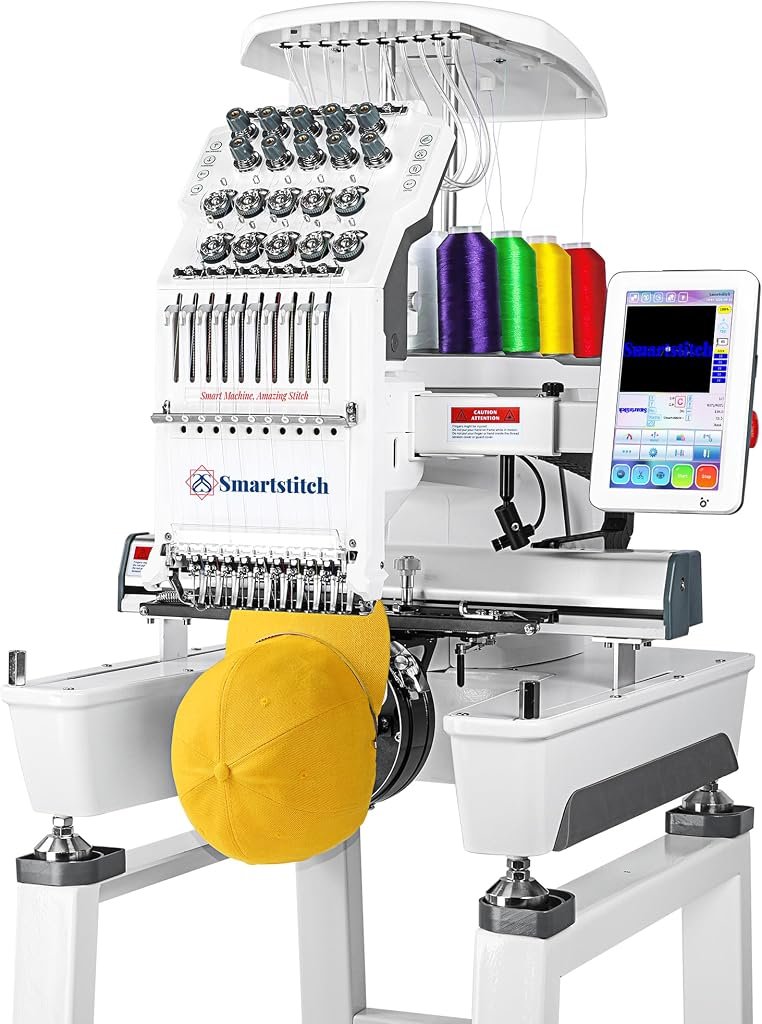
A multi-needle embroidery machine approaches the same problem differently by keeping several colors threaded simultaneously.
For home embroidery, occasional customization and small batches, manual color changes may be perfectly acceptable. For daily production, they become a direct labor cost.
This distinction prevents the EOC06’s 7.9 × 11-inch field from being mistaken for commercial production capacity.
Physical design size and manufacturing throughput are separate issues.
The machine can hold a fairly large design while still demanding substantial human involvement throughout the run.
Someone planning to make personalized gifts, occasional customer orders or short batches may find that compromise reasonable. Someone expecting dozens of multicolor garments each day should examine a different architecture.
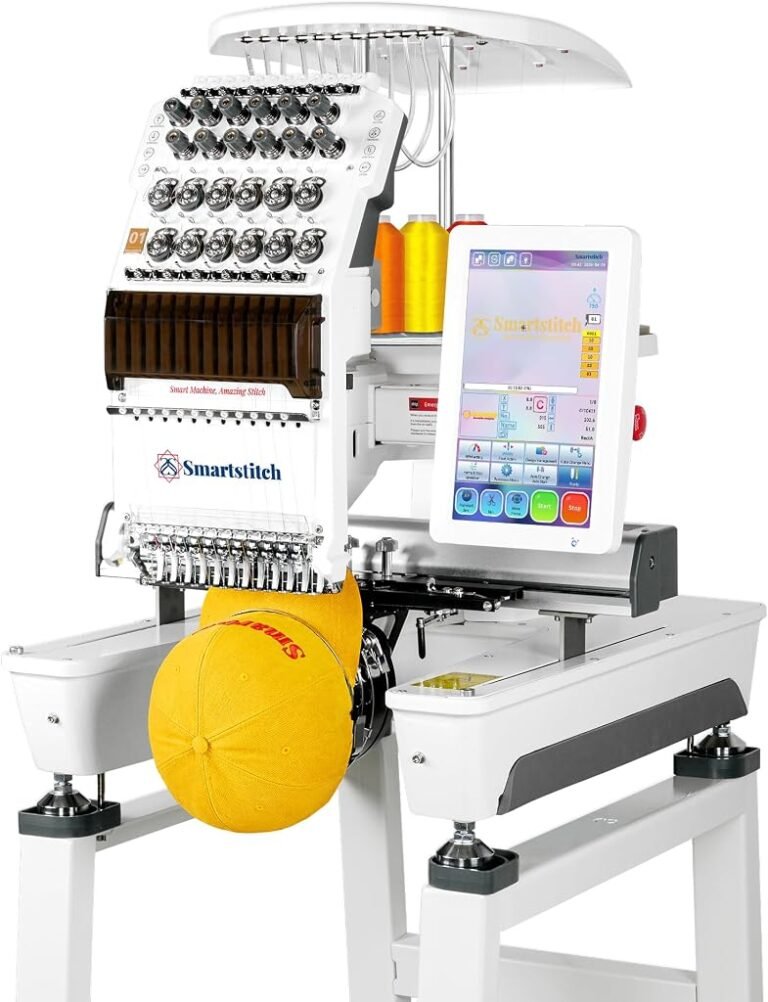
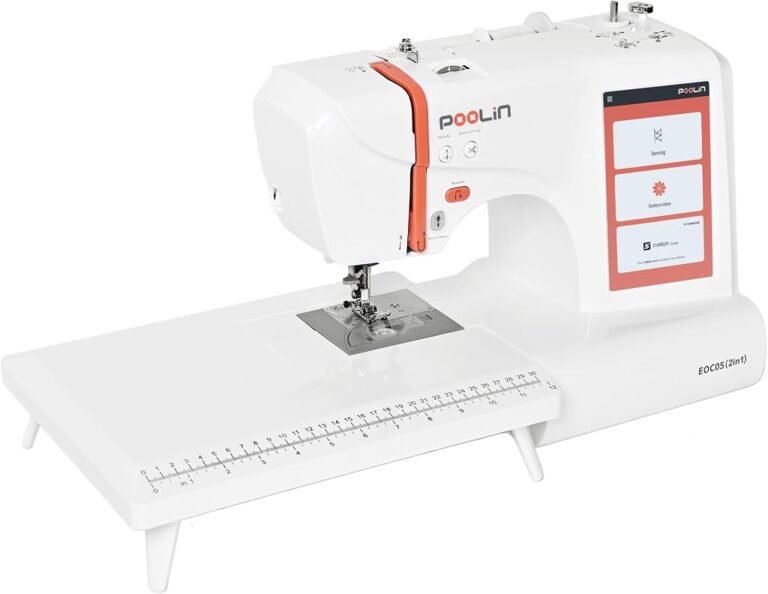
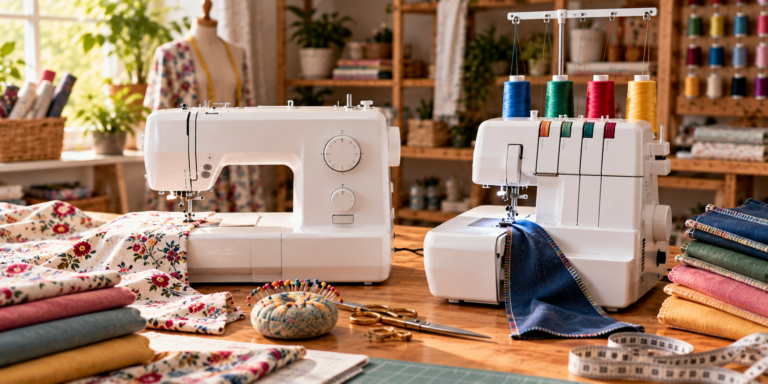
This Is an Embroidery Machine, Not a Conventional Sewing Machine
Poolin classifies the EOC06 as an embroidery machine with no standard sewing function.
That distinction affects both budget and workspace.
The EOC06 is not intended for garment seams, hems, buttonholes, repairs or conventional utility stitching. A household that wants those functions will need a separate sewing machine.
For users who already own one, specialization can be useful. The EOC06 can remain configured for embroidery while the other machine handles construction work.
For someone purchasing a first textile machine, the calculation changes. Buying a dedicated embroidery machine may eventually require another purchase before ordinary sewing tasks can be completed.
Combination machines solve that problem differently by housing both functions in one chassis, although embroidery-field dimensions, speed and price vary considerably.
The EOC06 therefore makes the most sense when embroidery is already a clearly defined priority rather than a secondary curiosity.
Size and Weight Require a Real Workspace
Poolin’s European specification page lists the EOC06 at 670 × 545 × 555 mm and 13.5 kg.
This is not a machine that disappears easily into a small cabinet after every session.
The embroidery arm and large hoop also require clearance beyond the body itself. A 20 × 28 cm frame needs space to move through its programmed path without striking a wall, stack of fabric or nearby object.
Large projects add another challenge: fabric weight.
A sweatshirt, quilt section or heavy bag can drag against the table and resist hoop movement if the surrounding material is not supported properly.
Buyers should therefore assess table depth and lateral clearance before purchase.
A stable dedicated surface is preferable to repeatedly setting up a machine of this size on a temporary dining table.
Workspace planning is mundane, but it can decide whether a large embroidery field feels liberating or awkward.
Included Supplies Lower the Initial Setup Burden
Poolin’s European listing describes a relatively extensive accessory bundle.
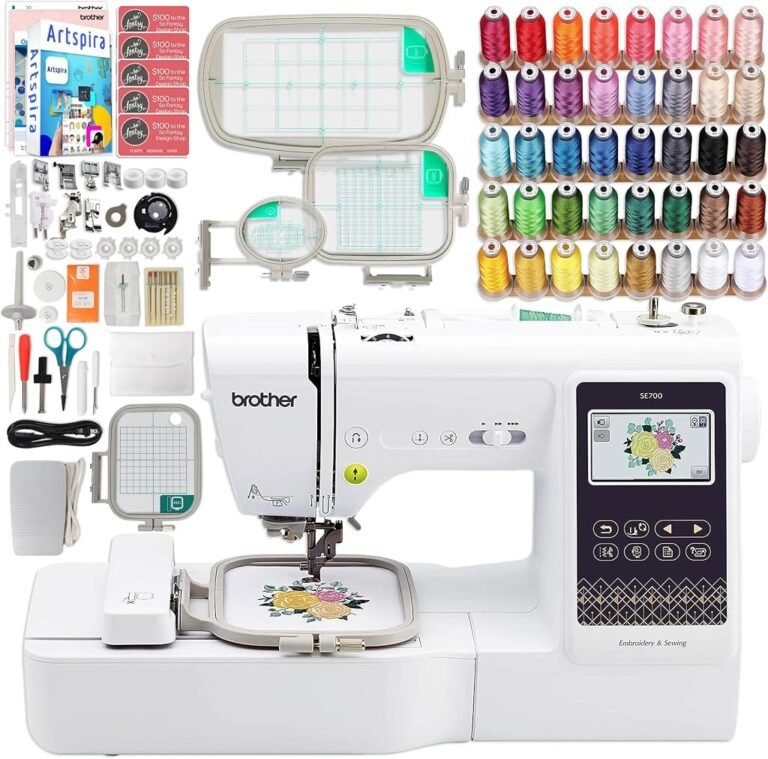
Beyond the four hoops, it lists 30 needles, a bobbin box, 20 stabilizer sheets, six rolls of polyester embroidery thread, scissors, tweezers, a screwdriver, seam ripper with brush, hex key, needle-plate wrench, rotary shuttle, spool-pin cap, replacement bobbin cover, USB drive, 12 hoop clips, thread stand and operating manual.
That assortment addresses many of the consumables and small tools required to begin experimenting.
Long-term ownership will naturally involve additional thread, bobbins, stabilizers and needles. Different fabrics also require different stabilization strategies, so the initial package should not be mistaken for a permanent supply inventory.
Still, supplying basic thread, stabilizer and multiple hoops lowers the number of separate purchases needed before a first project.
For a new owner, that has practical value because embroidery already carries enough variables without discovering halfway through setup that a basic consumable was never purchased.
Buyer Confidence Is the EOC06’s Strongest Editorial Score
Our Buyer Confidence score is 9.35, noticeably higher than the overall rating.
The reason is not that every question around the machine disappears. Rather, its current specifications, accessories, software support and operating requirements are relatively well documented through Poolin’s store and European support network.
Poolin’s official store lists the EOC06 at $1,220 at the time of review, compared with a displayed reference price of $1,699. Prices can change, so that figure should be treated as a current listing rather than a permanent market value. The official EOC06 store page also states that functional accessories carry one year of coverage and describes machine defect repair and parts replacement as part of its warranty policy.
Support infrastructure is especially relevant for a connected embroidery machine.
The EOC06 relies not only on mechanical operation but also on firmware, file compatibility, Wi-Fi configuration and design-transfer software. Buyers therefore need usable support after the initial setup period.
Poolin also maintains manuals, firmware-update guidance and technical assistance for the model, which reduces uncertainty around routine ownership.
Customer Sentiment at 8.28 Reflects the Learning Burden
Our Customer Sentiment score of 8.28 is positive but more restrained than Buyer Confidence.
That gap fits the nature of the product.
The EOC06 offers a large screen and substantial automation, but those features do not eliminate the technical demands of embroidery.
Correct stabilizer still matters.
Hooping tension still matters.
A badly digitized design remains badly digitized when loaded over Wi-Fi.
Stretch fabric can distort. Dense stitching can pucker. Heavy material can resist movement. Thread and needle choice can affect results.
The machine reduces some mechanical friction while leaving the textile knowledge intact.
For beginners, that means the first successful project is not necessarily evidence that every fabric will behave the same way. Different materials demand different preparation.
Poolin itself publishes separate instructions covering conventional hooping and floating methods, reinforcing the fact that fabric mounting is part of the process rather than an incidental step. Its hoop-installation guidance provides additional practical instruction for the EOC06.
Value at 8.15 Is More Conditional
Our Value score of 8.15 is the lowest of the four editorial ratings.
The EOC06 offers a great deal of physical capacity, but value depends on using it.
Someone regularly embroidering designs between 6 × 10 and roughly 8 × 11 inches can avoid many split-design workflows by choosing the larger Poolin field.
That is a tangible advantage.
A buyer whose work rarely exceeds 5 × 7 inches receives less benefit from the added size and may find a smaller machine easier to house and less expensive to own.
At the other extreme, a user planning high-volume production may discover that one needle, rather than hoop area, becomes the limiting factor.
That creates a defined middle ground.
The EOC06 works best for users who need larger home-embroidery capacity but are not yet operating at a volume that justifies several permanently threaded needles.
Where the EOC06 Fits Best
Its strongest use cases include:
- Large sweatshirt motifs
- Jacket and shirt designs
- Quilt blocks
- Pillow fronts
- Tote-bag embroidery
- Medium-to-large appliqués
- Decorative towels
- Long names and lettering arrangements
- Home décor panels
- Personalized gifts
- Small custom batches
- Larger single-hoop designs that would require splitting on 4 × 4 or 5 × 7 machines
The common thread is scale.
A buyer choosing the EOC06 should have a reason for wanting 7.9 × 11 inches. Without that requirement, several of the machine’s primary advantages become theoretical.
Understanding the 8.46/10 Overall Score
Our 8.46/10 score reflects a machine whose strongest assets work together coherently.
The large embroidery field reduces re-hooping. Four included frames improve flexibility across project sizes. The 7-inch touchscreen gives direct control over layout adjustments. An 860-SPM ceiling supports larger stitch counts. Wi-Fi and USB provide alternative transfer methods. DST and DSB support allow external design use, while Institch extends the design workflow beyond the machine.
The limitations are equally clear.
The EOC06 does not perform ordinary sewing. It uses one needle. Wi-Fi is limited to 2.4 GHz. Its native embroidery format support is narrower than some users may expect, making file conversion relevant. A machine this large also needs a suitable permanent or semi-permanent workspace.
None of these drawbacks makes the EOC06 incoherent.
They simply define the buyer for whom it makes sense.
Final Considerations
The Poolin EOC06 is ultimately a machine about avoiding small hoops.
Its 20 × 28 cm maximum embroidery area gives it significantly more room than the 4 × 4, 5 × 7 and 6 × 10 formats common in smaller home machines. That single characteristic changes how frequently a user has to split designs, reposition fabric or reject artwork because it exceeds the available field.
Poolin supports that capacity with four included hoops, a 7-inch touchscreen, a rated maximum speed of 860 stitches per minute, 200 built-in patterns, eight lettering fonts, 26 borders, Wi-Fi and USB transfer, DST and DSB file compatibility, Institch software access and several automatic thread-management functions.
Our 8.46/10 overall rating recognizes that those features form a logical package rather than an arbitrary list.
Customer Sentiment at 8.28 reflects a favorable user proposition while respecting the learning demanded by large-format embroidery. Stabilization, hooping, file preparation, thread choice and fabric control remain human responsibilities.
Buyer Confidence at 9.35 is the strongest rating because the machine’s major capabilities, hoop sizes, software environment, accessories and support resources are clearly documented.
Value at 8.15 is more selective because not every embroiderer needs an 11-inch-long field. The machine earns its space and cost when a user regularly creates designs large enough to exploit it.
Its biggest constraint is not difficult to identify.
One needle remains one needle.
The EOC06 can stitch a large multicolor design, but every requested thread change brings the operator back to the machine. That makes the EOC06 substantially different from a multi-needle production system even when both machines can physically accommodate the same artwork.
For a serious home embroiderer, that trade-off can be entirely rational. Multi-needle machines introduce far greater expense, size and mechanical complexity. A single-needle machine with a larger field offers another path: accept manual color changes in exchange for a comparatively accessible way to produce substantial designs.
The more revealing buying question is therefore not whether the EOC06 has enough features.
It is whether the buyer has enough large projects.
If the answer includes sweatshirt graphics, quilt blocks, decorative panels, large appliqués, bags, personalized home textiles or repeated designs that regularly push beyond 5 × 7 and 6 × 10 boundaries, the EOC06 offers a physical advantage that software cannot imitate.
If projects remain small, the machine’s additional capacity may amount to unused table space.
And if daily production involves many multicolor items, the single needle may become frustrating long before the 7.9 × 11-inch field becomes restrictive.
That leaves the Poolin EOC06 in a clearly defined position: a large-field home embroidery machine for users who have moved beyond compact formats but are not ready-or do not need-to move into multi-needle commercial hardware.
For that audience, the machine’s central appeal is refreshingly measurable. It gives embroidery more room.