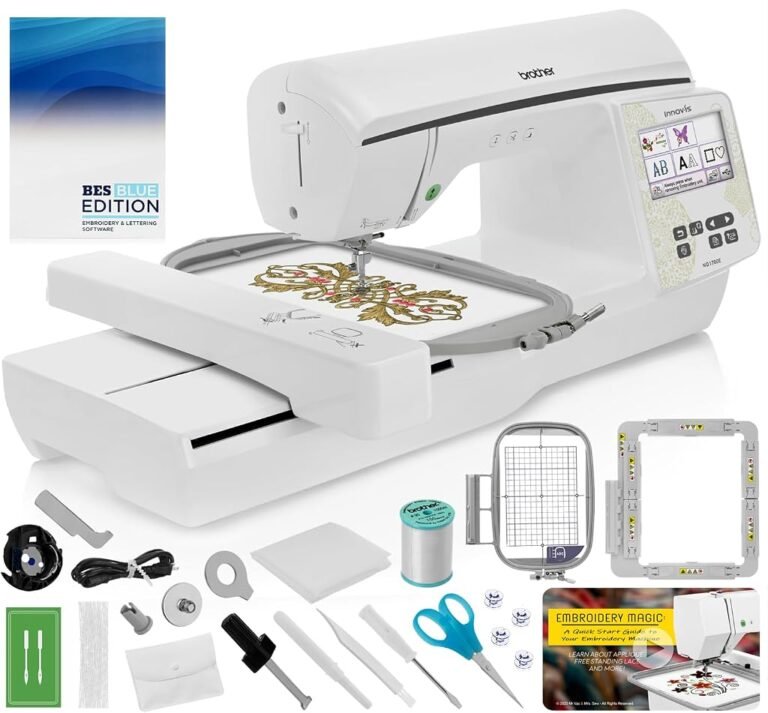
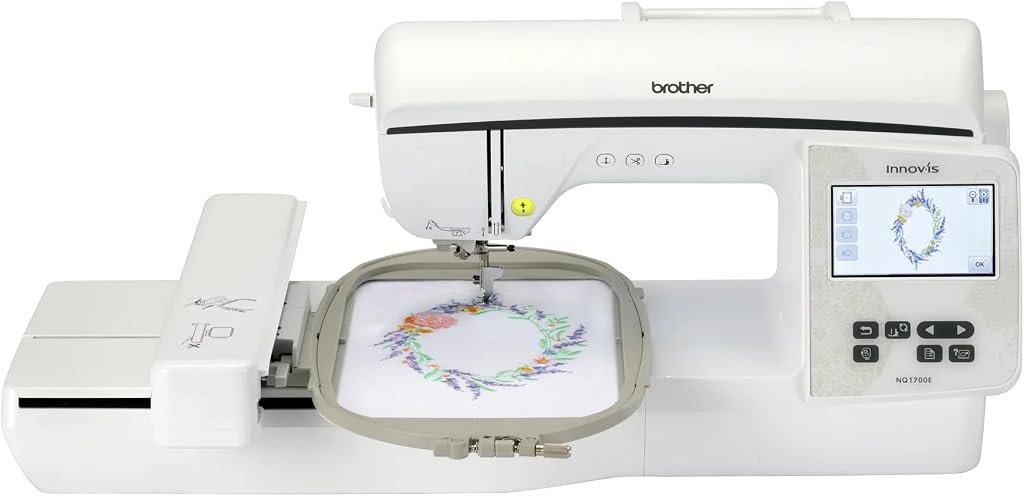
The Brother Innov-ís NQ1700E sits well beyond the point where computerized embroidery can be judged primarily by the number of decorative designs stored inside a machine. Its more consequential specifications concern physical space and workflow: a 6 × 10-inch maximum embroidery field, embroidery speeds up to 850 stitches per minute, wireless design transfer, two included embroidery frames, automatic thread management, and a color touchscreen that permits substantial editing at the machine.
Brother places 258 embroidery designs, 140 frame-pattern combinations, and 13 lettering fonts inside the NQ1700E. Its 4.85-inch color LCD touchscreen supports direct editing, while wireless LAN works with Brother’s Design Database Transfer system.
Those characteristics produce a machine aimed less at tentative experimentation and more at someone who already expects embroidery to become a sustained creative activity.
Our editorial rating is 8.45/10. Customer Sentiment is 8.5, Buyer Confidence is 8.54, and Value is 8.28. The closeness of those scores is revealing. The NQ1700E presents few glaring contradictions within its intended category, yet its value depends heavily on whether the owner actually needs the space and automation for which this class of machine exists.
The 6 × 10 Embroidery Field Changes the Buying Calculation
The NQ1700E’s defining specification is its 6 × 10-inch maximum embroidery area. Brother confirms that capacity in its current NQ1700E specifications, along with a workspace measuring 4.1 × 8.3 inches.
The numbers deserve context.
A nominal 4 × 4 field contains 16 square inches. A 5 × 7 field contains 35 square inches. A 6 × 10 rectangle contains 60 square inches. Those raw calculations do not mean every square inch can be used interchangeably for every design shape, but they illustrate why moving from entry-level embroidery to 6 × 10 is more than an incremental change.
Long names become easier to arrange. Larger appliqués fit without immediate division. Quilt blocks, decorative towel layouts, sweatshirt motifs, bag designs, pillow elements, and vertically oriented compositions have considerably more space.
The practical benefit is not simply that artwork becomes larger. It is that fewer projects require multiple hoopings.
Every additional hooping creates another opportunity for registration error. Fabric has to be repositioned, stabilized and aligned with the next design segment. A small shift can become visible where sections meet.
The NQ1700E cannot eliminate those challenges, but a larger native field means the user encounters them less often.
That is the machine’s strongest argument.
Six by Ten Inches Is Still a Boundary
Large is relative.
A 6 × 10 field accommodates a substantial range of home embroidery, but oversized jacket backs, expansive sweatshirt graphics, broad decorative panels and some quilt compositions can still exceed it.
This matters because hoop size is one of the few embroidery-machine specifications that software cannot negotiate away.
Additional designs can be purchased. Fonts can be imported through compatible files. Artwork can be edited externally. New applications can improve transfer workflows.
The physical sewing field remains fixed.
Multi-hooping can extend a project beyond that boundary, but it introduces positioning work. A buyer already planning designs larger than 6 × 10 inches should therefore examine a larger platform rather than treating repeated re-hooping as a harmless inconvenience.
Conversely, someone whose designs rarely exceed 4 × 4 inches may gain little from paying for a machine of this scale.
The sensible purchase lies between those extremes: a user whose actual design library regularly benefits from 5 × 7 to 6 × 10 capacity.
Two Included Frames Make the Larger Field More Practical
Brother includes two embroidery frames with the NQ1700E: 6 × 10 inches and 5 × 7 inches. Brother’s NQ1700E technical sheet documents both included frame sizes.
That pairing is more useful than simply providing the largest compatible frame.
A 6 × 10 hoop is appropriate when the design requires the machine’s maximum native capacity. Smaller projects, however, do not automatically benefit from being mounted in the largest available frame.
A 5 × 7 frame can make fabric handling more manageable and reduce the amount of stabilizer required for moderately sized designs. It also provides a sensible intermediate format for projects that exceed 4 × 4 but have no reason to consume a full 6 × 10 setup.
This illustrates a recurring theme in the NQ1700E: its better features tend to address workflow rather than spectacle.
The second hoop is not glamorous. It is useful.
258 Designs Are Substantial, but Import Capability Matters More
The NQ1700E includes 258 embroidery designs, 140 frame-pattern combinations and 13 embroidery lettering fonts.
That library gives a new owner ample material for learning.
Built-in designs eliminate the immediate requirement to find, purchase or transfer external files. They also give inexperienced users known-compatible artwork while they learn stabilizer selection, hooping, thread changes and placement.
Yet built-in design count should not dominate a purchasing decision at this level.
Embroidery tends to become more personal as skill increases. The owner starts wanting a specific flower rather than any flower, a particular lettering arrangement rather than a generic alphabet, or artwork created for one garment, recipient or occasion.
External-file compatibility therefore has greater long-term significance.
Brother’s file-format support documentation identifies PES, DST, PHC and PEN among formats readable by the NQ1700E. File compatibility always requires attention to machine limits and design dimensions, so downloading an embroidery file is not equivalent to guaranteeing that it can be sewn unchanged.
The broader point remains: the NQ1700E is not confined to its factory library.
Wireless Transfer Removes an Old Embroidery Ritual
Computerized embroidery has long involved a mildly absurd ritual: create or download a digital file on one device, place it on removable media, physically carry that media to another device, load the design, then repeat the process whenever a revision is needed.
Wireless transfer attacks that friction directly.
Brother’s Design Database Transfer system is a Windows application that can send embroidery data wirelessly to compatible Brother machines. The application also displays embroidery files through thumbnail views, making it a basic management tool as well as a transfer utility. The NQ1700E is explicitly listed among supported models.
The time saved on one transfer is trivial.
The advantage appears through repetition.
A user who experiments with several lettering layouts, edits a design, changes dimensions, organizes a growing library or moves between many projects can send files without repeatedly handling a USB drive.
USB support remains available, which is equally significant. Wireless convenience should not require dependence on wireless connectivity for every project.
The NQ1700E gives owners both routes.
Artspira Adds a Mobile Workflow
Brother also supports the NQ1700E within its Artspira ecosystem. The mobile application works with compatible tablets and phones rather than conventional desktop computers. Brother currently specifies Android 8.0 or later and iOS/iPadOS 15.0 or later for supported Artspira devices.
Artspira’s Design Editor can combine designs, resize them, move and rotate elements, flip artwork, alter thread colors and add text. Brother’s Design Editor documentation details those editing functions.
That gives the NQ1700E another route from digital idea to embroidery machine.
It also clarifies why connectivity should be evaluated as an ecosystem rather than a checkbox. A wireless machine does not mean every device communicates with it in precisely the same way. Windows software, mobile applications and USB media each create different paths.
Users whose embroidery process revolves around a tablet or phone may find Artspira more natural. Those managing large libraries on Windows may prefer Design Database Transfer.
Neither method makes embroidery preparation disappear. Both reduce unnecessary file handling.
The 4.85-Inch Touchscreen Earns Its Space
Brother describes the NQ1700E as using a 4.85-inch color LCD touchscreen. Its specification table lists the active LCD dimensions as 4.2 × 2.4 inches.
The display matters because embroidery is visual and spatial.
Designs need to be resized, rotated, positioned and combined. Text may need curvature or placement adjustments. The operator needs to understand where artwork sits relative to the available embroidery field before the needle begins moving.
The NQ1700E supports on-screen editing, drag-and-drop editing, curved text and realistic previews. Brother also lists color shuffling among its embroidery functions.
This does not make the touchscreen a substitute for dedicated digitizing software.
Digitizing original artwork requires decisions about stitch direction, density, underlay, pathing, compensation and material behavior. Those are fundamentally different tasks from repositioning an existing embroidery file.
For everyday composition, however, direct machine editing reduces the need to return to a computer whenever an element needs moving a few millimeters.
850 Stitches Per Minute Matters More on Larger Designs
Brother rates the NQ1700E at a maximum embroidery speed of 850 stitches per minute.
Speed becomes more relevant as stitch counts increase.
At a purely mathematical 850 stitches per minute, a 17,000-stitch design represents 20 minutes of needle movement:
17,000 ÷ 850 = 20 minutes.
A 25,500-stitch design would represent 30 minutes at the same theoretical maximum.
Actual embroidery takes longer.
The machine must accelerate and decelerate. Thread-color changes interrupt stitching. Bobbins need attention. Thread can break. Dense or difficult areas may not be sewn continuously at maximum speed. The operator must also hoop, stabilize, position and inspect the project.
The calculation is useful not as a prediction but as a way to understand scale.
On a tiny monogram, differences in maximum speed may barely matter. On a dense design exploiting much of a 6 × 10 field, additional speed can remove a meaningful amount of waiting.
That is why 850 stitches per minute fits the NQ1700E’s larger-format character.
Automatic Thread Management Reduces Repetitive Work
The NQ1700E includes an automatic thread cutter, automatic feed-thread cutting, an advanced needle-threading system, and upper and bobbin thread sensors.
None of these features enlarges the embroidery field or improves the underlying artwork.
Their benefit is repetition.
Embroidery involves more manual housekeeping than finished-project photographs suggest. Thread has to be loaded, monitored and cut. Bobbin supply must be watched. Color stages require attention.
Automation that removes several small actions becomes more relevant during long, dense designs than during a five-minute monogram.
Thread sensors are similarly mundane until thread runs out halfway through a project.
These are mature-machine features because they address what happens after the novelty of computerized embroidery fades and the operator begins caring about interruptions.
Color Sort Is About Operator Time
The NQ1700E’s Color Sort function addresses another repetitive cost: unnecessary thread changes.
When several combined design elements use overlapping colors, the original stitch sequence may ask the operator to change from one color to another and later return to the first color.
Color Sort can reorganize compatible sequences to reduce those changes.
The distinction is especially relevant because the NQ1700E remains a single-needle machine.
A multi-needle embroidery system can keep numerous colors threaded simultaneously. A single-needle machine requires the operator to replace the upper thread when the design requests another color.
Reducing unnecessary changes therefore reduces direct human intervention.
It does not transform the NQ1700E into commercial multi-needle equipment. It simply makes better use of the architecture it has.
For someone embroidering occasionally, the benefit may be modest. For a user running detailed multicolor designs repeatedly, the cumulative difference becomes easier to appreciate.
The Workspace Matches the Machine’s Larger Ambitions
Brother specifies a 4.1 × 8.3-inch workspace for the NQ1700E.
Workspace and embroidery area should not be confused.
The 6 × 10 specification defines the maximum embroidery field. The 8.3-inch horizontal working space describes room around the needle and machine arm.
That additional physical room becomes relevant when working with sweatshirts, quilt sections, towels, bags and other projects carrying significant fabric outside the hoop.
The fabric still needs active management.
A large sweatshirt can drag against the table. Excess material can interfere with hoop movement. A quilt section can create weight and resistance if it is allowed to hang awkwardly.
A larger machine does not abolish fabric physics.
It does, however, give the operator more room to manage those projects than a compact embroidery platform built around much smaller hoops.
Dedicated Embroidery Means No Conventional Sewing
The NQ1700E is an embroidery-only machine.
That distinction should be made before price comparisons begin.
It does not replace a conventional sewing machine for seams, garment construction, hems, buttonholes, repairs or ordinary stitching.
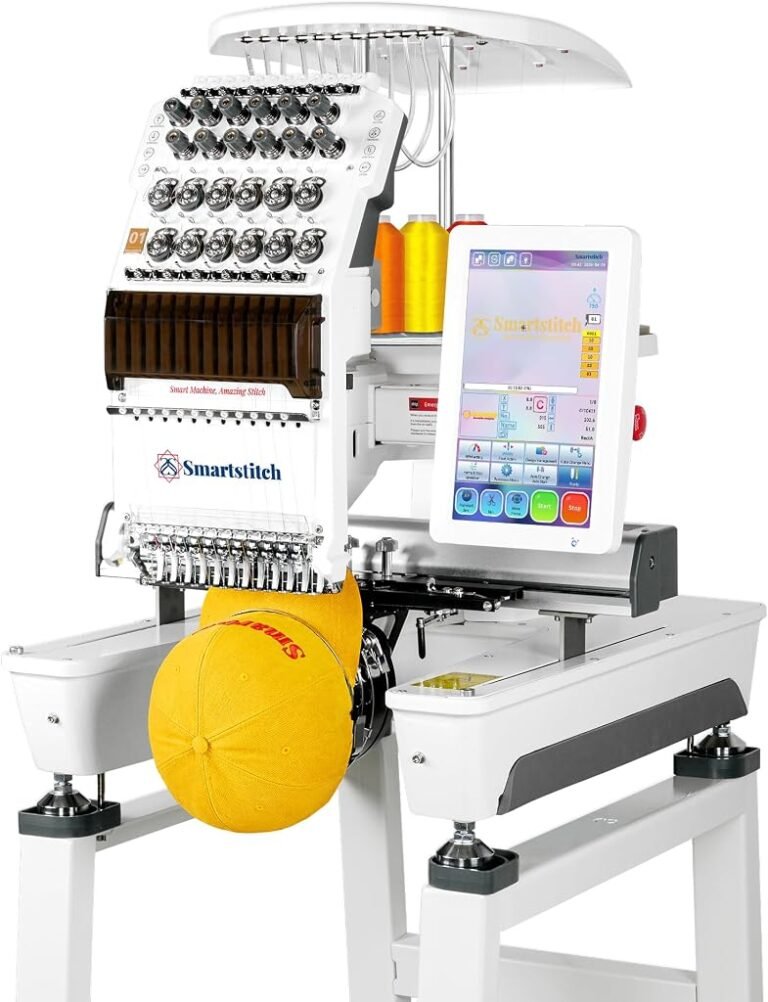
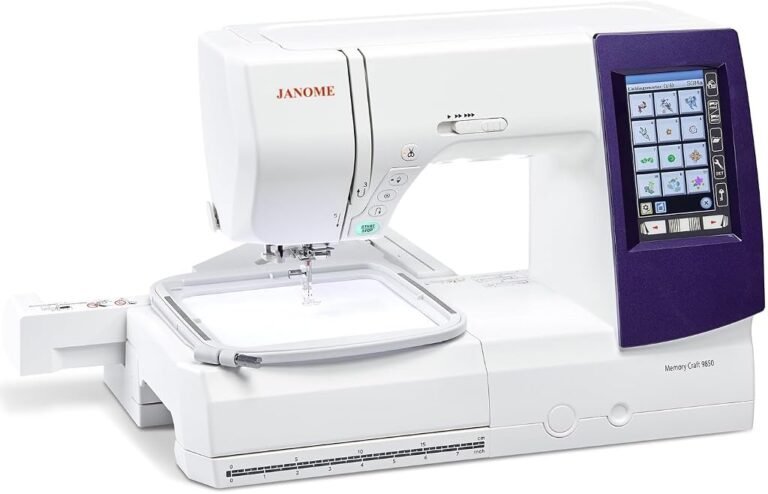
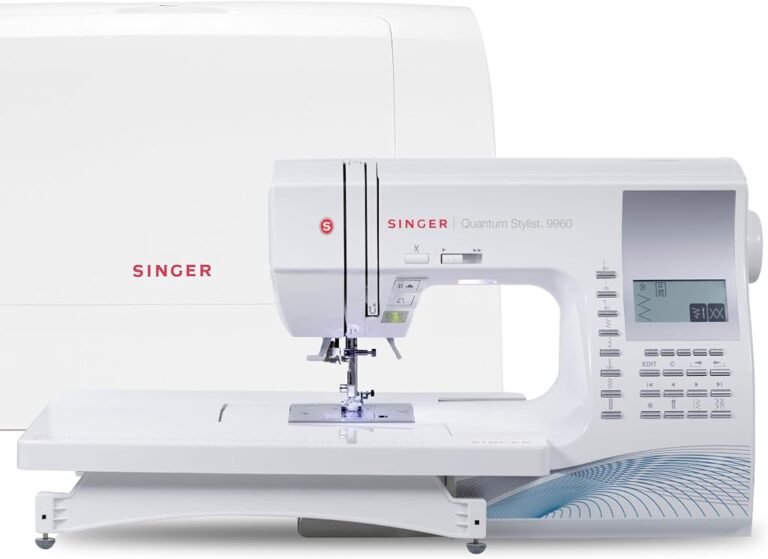
Someone researching the best sewing and embroidery machines may therefore discover that the NQ1700E belongs in a different category from combination machines that perform both functions.
Specialization can be an advantage for an established sewing room.
An owner with a separate sewing machine can leave the NQ1700E configured for embroidery instead of repeatedly installing and removing an embroidery unit. Sewing and embroidery projects can also proceed on separate machines.
For someone buying a first machine, the economics look different. A dedicated embroidery purchase may eventually require a second machine for conventional sewing.
The NQ1700E makes its strongest case when embroidery itself is the priority.
It Is Still a Single-Needle Home Machine
The 6 × 10 field and 850-SPM maximum speed can make the NQ1700E look production-oriented, but architecture matters more than appearance.
This is still a single-needle machine.
A six-color design can require repeated manual thread changes. Color Sort may reduce unnecessary switching, but it cannot keep six upper threads ready simultaneously.
That becomes the dividing line between ambitious home embroidery and sustained commercial production.
A person producing occasional custom gifts or small batches may find the workflow entirely reasonable. Someone processing repeated multi-color orders every day may spend too much time changing thread.
Commercial ambitions should therefore be evaluated in units per day and color changes per design, not simply hoop dimensions.
A machine can have enough embroidery area for a business project while still having the wrong production architecture for the required volume.
Support Infrastructure Strengthens Buyer Confidence
Our Buyer Confidence score of 8.54 reflects the NQ1700E’s documented capabilities and the surrounding Brother software ecosystem.
The manufacturer publishes detailed specifications, maintains Design Database Transfer compatibility, supports the model within Artspira and lists a 2/6/25-year Premium Limited Warranty structure.
That warranty description should not be read as blanket 25-year coverage for every component. The different numbers correspond to different portions and periods of coverage, making the full warranty conditions more useful than the headline alone.
Support matters more on a connected embroidery machine than on a purely mechanical appliance.
The machine interacts with wireless networks, transfer software, mobile applications and digital embroidery formats. Documentation therefore becomes part of the ownership experience.
This helps explain why Buyer Confidence slightly exceeds the overall score.
The NQ1700E is relatively straightforward to investigate before purchase. Its core dimensions and capabilities are not mysterious.
Where the NQ1700E Makes the Most Sense
The machine’s strongest applications are projects large enough to benefit from the 6 × 10 field but not so demanding that they require industrial production equipment:
- Larger appliqués
- Quilt blocks
- Sweatshirt and shirt decoration
- Substantial names and monograms
- Tote-bag embroidery
- Decorative towels
- Pillow designs
- Children’s garments
- Seasonal decorations
- Repeated personalized gifts
- Small custom-production batches
These projects exploit the machine’s central strengths: physical space, faster stitching, two included hoops and reduced manual workflow friction.
The NQ1700E is less compelling when purchased solely because its specifications exceed those of a smaller machine.
Unused capacity has no creative value.
Understanding the 8.45/10 Overall Score
Our 8.45/10 score reflects a machine with a coherent purpose.
The 6 × 10 embroidery field gives owners substantially more working area than entry-level models. The 850-stitch-per-minute maximum suits larger stitch counts. Wireless and USB transfer provide alternative routes for external designs. Two included hoops support different project sizes. The touchscreen gives useful editing control without pretending to replace digitizing software.
Those features reinforce one another.
The machine’s limitations are equally coherent.
It does not sew conventional stitches. It remains single-needle. Designs beyond 6 × 10 require another strategy. Wireless workflows vary according to device and software. Large projects still demand correct stabilization, hooping and fabric management.
The result is neither an entry-level curiosity nor a commercial production system.
It is a serious home embroidery machine.
Customer Sentiment at 8.5 Reflects the Learning Curve
Our Customer Sentiment score of 8.5 recognizes that a capable embroidery machine can reduce mechanical friction without eliminating the craft itself.
A larger screen does not select the correct stabilizer.
Wireless transfer does not repair a poorly digitized design.
An automatic thread cutter does not compensate for unsuitable thread tension or careless hooping.
A 6 × 10 field cannot prevent fabric from shifting when it has been inadequately stabilized.
This distinction matters because advanced features sometimes create unrealistic expectations about ease.
The NQ1700E automates several repetitive tasks, but successful embroidery still depends on material preparation and informed project choices.
That learning requirement should be seen as part of the medium rather than a flaw unique to this machine.
Value at 8.28 Requires the Right Buyer
Our Value score of 8.28 is lower than Customer Sentiment and Buyer Confidence because capacity only creates value when it is used.
A buyer routinely working with 5 × 7 and 6 × 10 designs receives a tangible benefit from the NQ1700E. Fewer split designs and fewer re-hoopings can save time and reduce alignment problems.
Someone producing almost nothing larger than 4 × 4 inches receives far less benefit.
At the other end, a user planning daily multi-color production may find the single-needle architecture restrictive enough to justify moving directly toward a multi-needle system.
The NQ1700E therefore rewards accurate self-assessment.
Buyers should examine the dimensions and stitch counts of designs they actually intend to make. They should also consider how often projects will run, how many color changes are typical and whether conventional sewing is required.
Those questions reveal more about value than a long comparison of built-in pattern totals.
Final Considerations
The Brother Innov-ís NQ1700E is defined by usable space.
Its 6 × 10-inch maximum embroidery field creates enough room for projects that would demand repeated repositioning on smaller machines. Brother complements that field with two included hoops, a maximum speed of 850 stitches per minute, 258 built-in embroidery designs, 140 frame-pattern combinations, 13 lettering fonts, wireless transfer, USB support, touchscreen editing and automated thread-management features.
Our 8.45/10 overall score reflects that balance.
Customer Sentiment at 8.5 recognizes a favorable ownership proposition while accounting for the unavoidable learning involved in stabilizing, hooping, thread selection and design preparation.
Buyer Confidence at 8.54 reflects clear manufacturer documentation, an established transfer system, Artspira compatibility and a defined warranty structure.
Value at 8.28 is more selective. A 6 × 10 machine earns its cost by preventing compromises that would otherwise interrupt real projects. If those projects never exceed small-format embroidery, much of the capacity goes unused.
The NQ1700E therefore makes the strongest sense for a user who already knows that 4 × 4 and 5 × 7 fields are likely to become restrictive.
For larger appliqués, quilt blocks, garment decoration, substantial personalization and repeated medium-format work, the extra area can change the process considerably. Designs fit in fewer sections. Alignment becomes less frequent. The operator spends more time embroidering and less time reconstructing a design around a smaller hoop.
There is another boundary waiting beyond 6 × 10, of course.
Buyers expecting oversized designs or sustained commercial output should examine larger-field or multi-needle systems before committing. No amount of touchscreen editing changes the physical dimensions of the sewing field, and Color Sort cannot give a single-needle machine multiple permanently threaded colors.
That restraint is part of the NQ1700E’s identity rather than an embarrassment.
It is neither a basic machine dressed up with connectivity nor industrial equipment compressed for a home desk. It is a dedicated home embroidery platform aimed at users whose projects have grown large enough to justify more space and whose workflow has grown frequent enough to appreciate automation.
For that buyer, the machine’s appeal is unusually concrete: fewer compromises with hoop size, fewer unnecessary thread-management tasks and more room between an idea and the physical boundary that determines whether it can be stitched in one piece.