The modern home office presents a furniture challenge that traditional workplaces rarely faced. A desk must accommodate computers, charging cables, documents, and long working hours while remaining visually compatible with the surrounding living space. Functionality alone is no longer sufficient. For many households, the workspace must also look like furniture rather than office equipment.
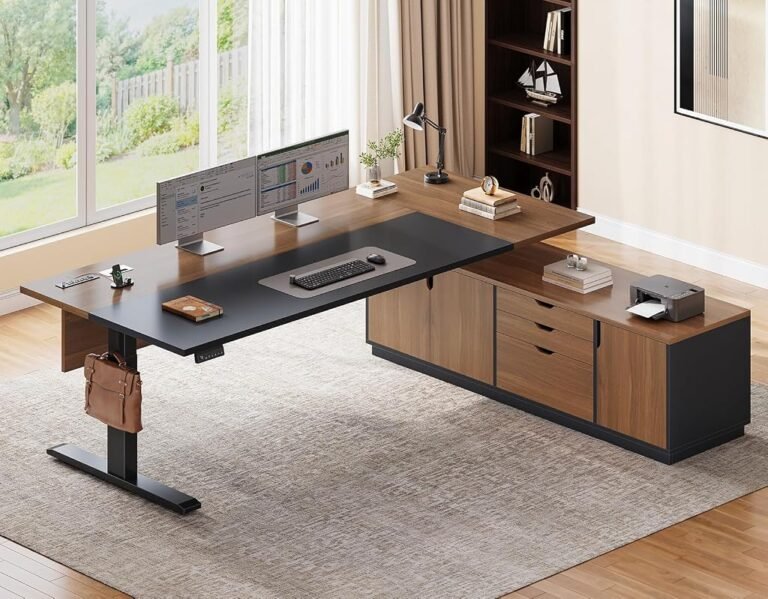
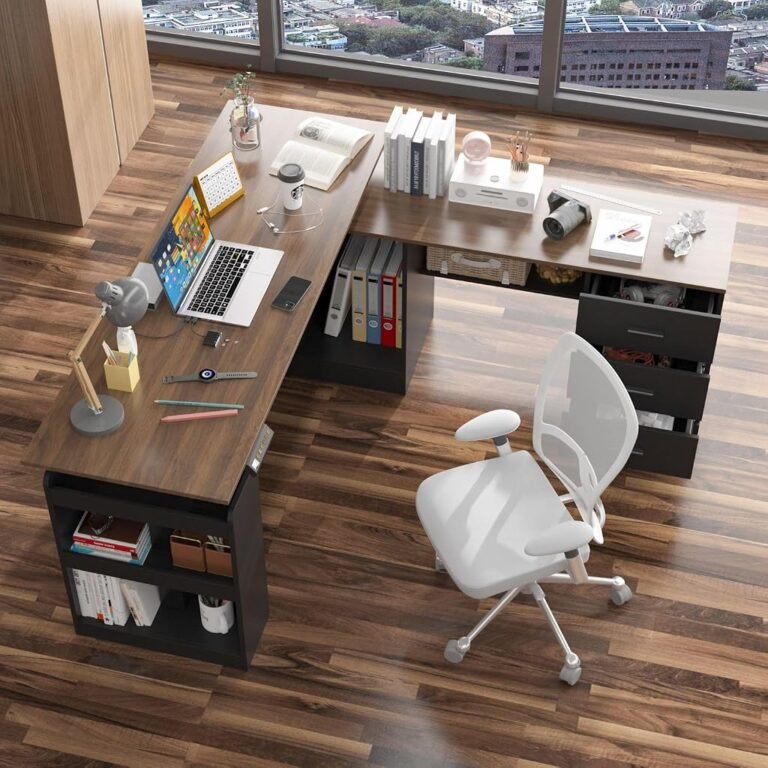
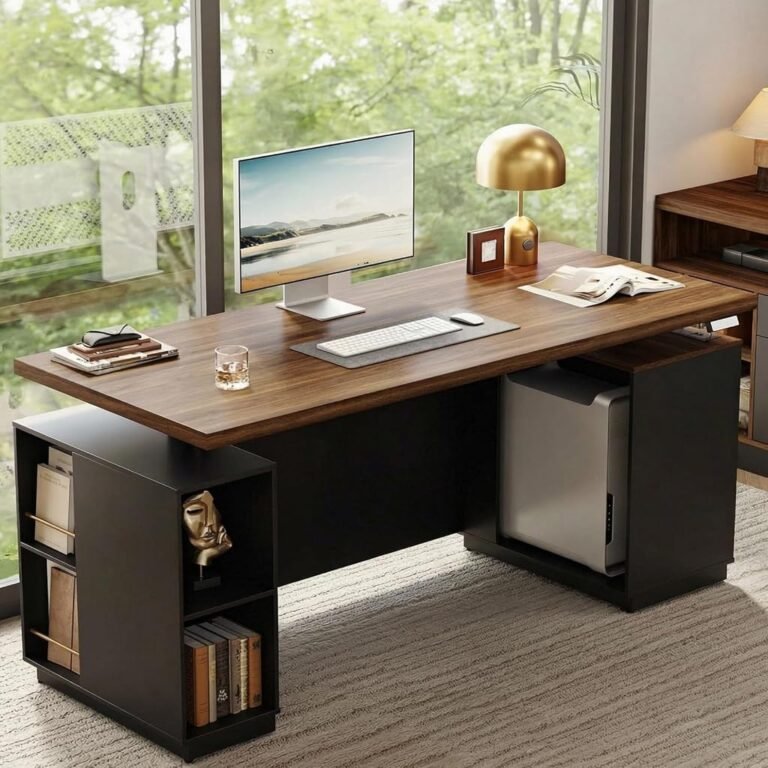
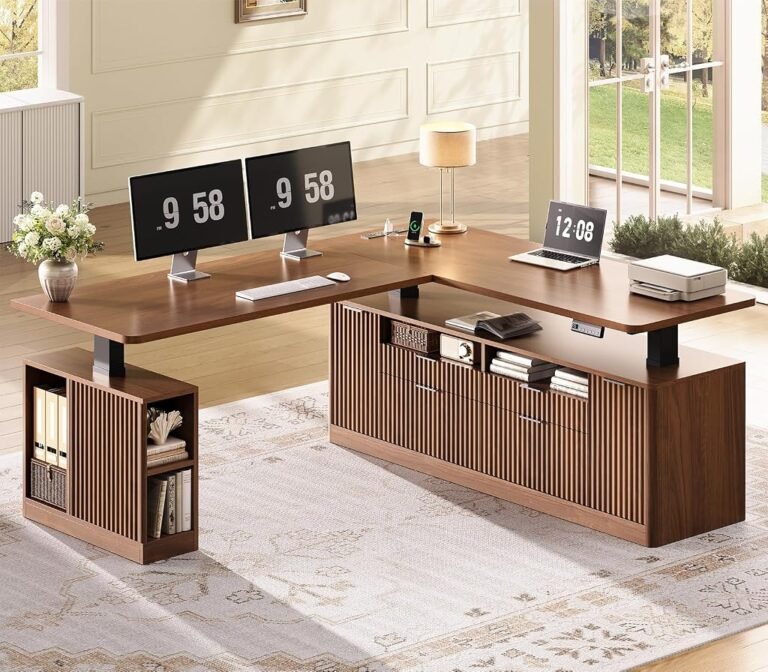
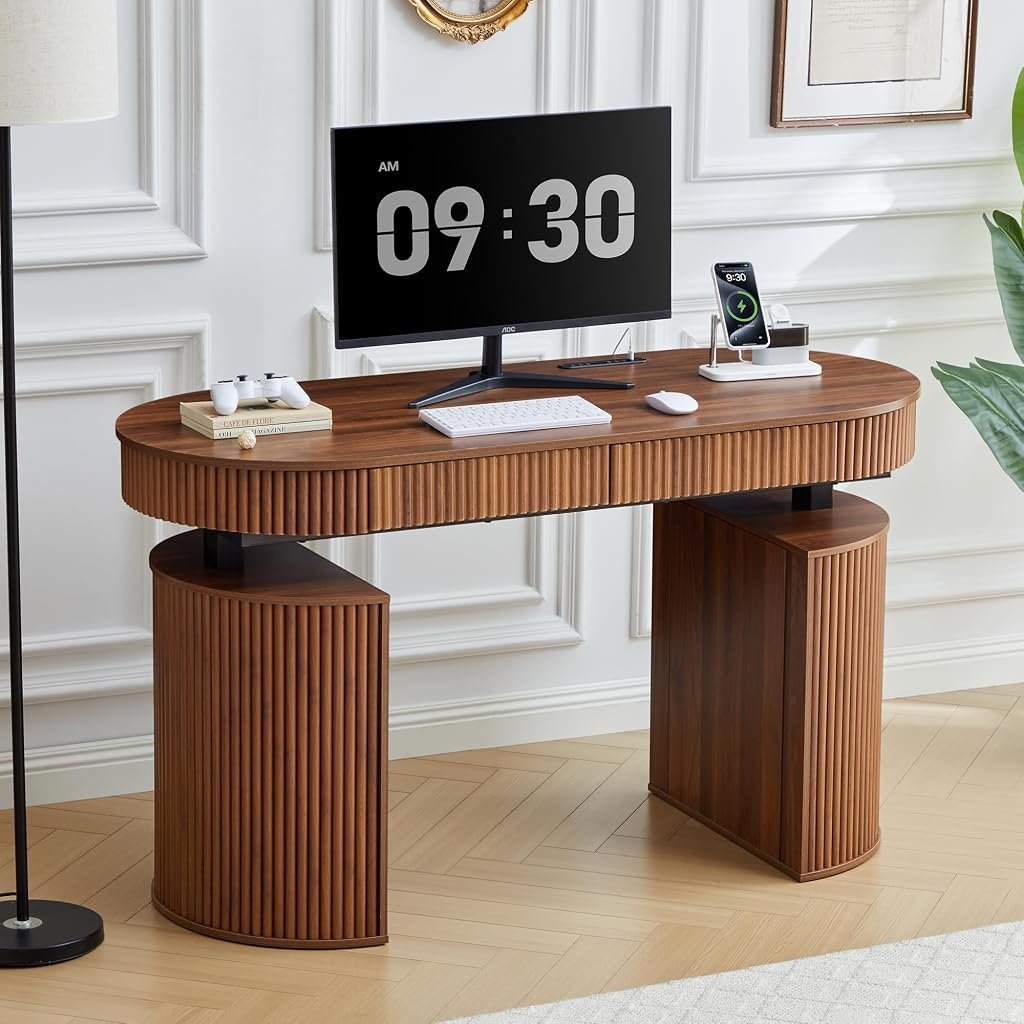
The ORRD Mid-Century Fluted Electric Standing Desk approaches this challenge by combining electric height adjustment, integrated storage, USB and Type-C charging ports, and a walnut-colored finish with decorative fluted detailing.
At $349.99, it represents a substantial purchase for a home workstation. Its appeal rests on a specific proposition: bringing the flexibility of an adjustable standing desk into an interior where conventional office furniture might look misplaced.
Our editorial assessment gives the ORRD desk an overall score of 7.82/10, placing it in the good category. Its combination of practical features and residential styling makes it particularly relevant to buyers who place considerable weight on appearance, storage, and everyday convenience.
However, its value requires a more careful examination than its attractive design might initially suggest. The central question is whether its combination of features offers sufficient utility to justify the price, especially for buyers whose priorities extend beyond aesthetics.
Design and Aesthetics: A Different Interpretation of Office Furniture
The ORRD desk’s most distinctive characteristic is its mid-century-inspired appearance.
Traditional electric standing desks generally emphasize functional simplicity. Their visual identity often revolves around flat rectangular work surfaces, exposed supporting structures, and minimal decoration.
ORRD takes a different approach.
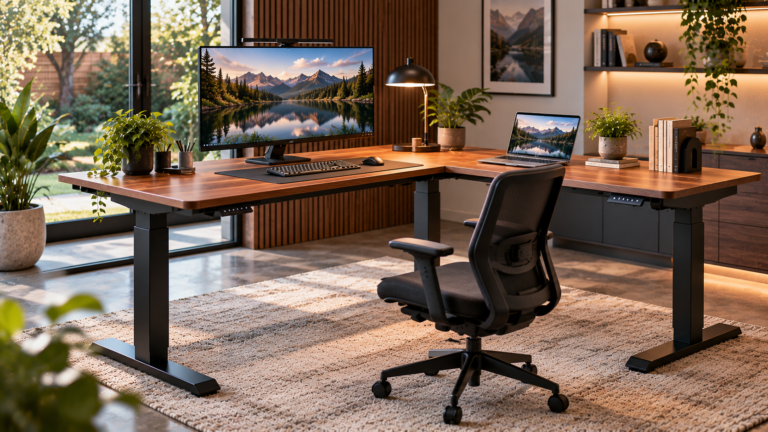
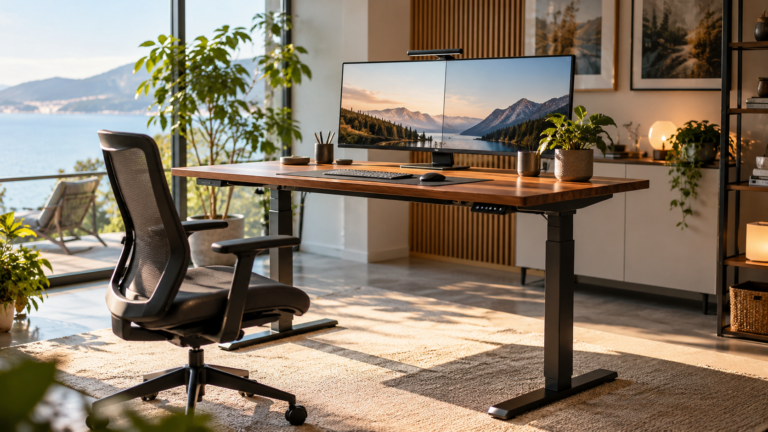
Its walnut finish and fluted detailing introduce elements more commonly associated with residential furniture, particularly cabinets, sideboards, and decorative storage pieces.
Fluting refers to repeated grooves or channels that create a textured surface. In furniture design, this technique adds visual depth through alternating areas of light and shadow.
The effect can be particularly noticeable in rooms where natural light changes throughout the day.
Rather than relying exclusively on color or ornamentation, fluting creates visual interest through surface geometry.
The Mid-Century Connection
Mid-century modern furniture developed around an interest in functional design, approachable materials, and forms suited to changing domestic lifestyles.
The movement encompassed considerable diversity, including the work of Charles and Ray Eames, Arne Jacobsen, and George Nelson.
The period brought together developments in furniture manufacturing, industrial design, materials, and residential architecture.
ORRD borrows from this broader visual tradition rather than attempting to reproduce a specific historical design.
Its walnut-colored appearance introduces warmth, while the fluted elements create a more decorative character than the restrained surfaces found on many conventional standing desks.
This distinction matters in multipurpose rooms.
A desk placed in a dedicated office can prioritize utility without much concern for its relationship with other furniture. A desk positioned in a bedroom, living room, or shared family space faces a different expectation.
It must remain visually acceptable even when work has finished.
The ORRD design is particularly well suited to that second environment.
Nevertheless, the walnut finish should not automatically be interpreted as solid walnut construction. Finish color and structural material are separate considerations, and buyers concerned with longevity should verify the actual materials and surface treatment before purchasing.
Electric Height Adjustment: The Desk’s Most Important Functional Feature
Beyond its appearance, the ORRD is fundamentally an electric height-adjustable workstation.
This feature distinguishes it from a conventional writing desk with decorative storage.
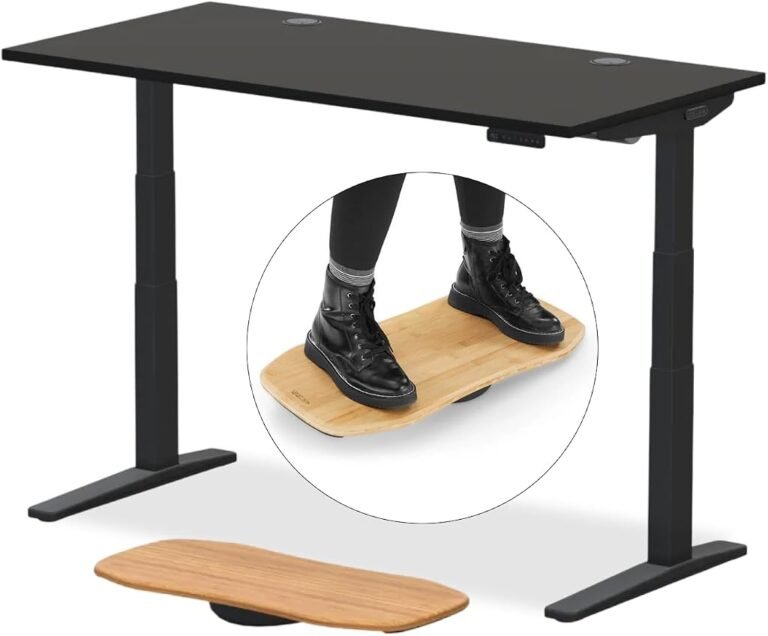
Electric adjustment allows the working surface to move between different heights without requiring manual lifting or mechanical cranking.
The practical advantage is straightforward: users can change their working position throughout the day.
For someone spending several hours at a computer, that flexibility can make the workstation more adaptable to different tasks and physical preferences.
However, adjustable height should not be confused with automatic ergonomic suitability.
A desk must reach the appropriate working height for its user, whether seated or standing.
The ORRD’s adjustable design supports this objective, but buyers should confirm its minimum and maximum height settings against their own requirements.
Why Height Adjustment Matters
The Occupational Safety and Health Administration’s guidance on neutral working postures identifies several principles relevant to desk setup.
These include keeping the shoulders relaxed, positioning the forearms approximately parallel to the floor, and maintaining comfortable alignment between the head, neck, and torso.
OSHA also emphasizes changing working positions rather than remaining stationary for extended periods.
This distinction is central to understanding the purpose of a standing desk.
The objective is not to replace eight hours of sitting with eight hours of standing.
Instead, adjustable furniture makes it easier to introduce variation into a workday that might otherwise involve prolonged periods in one position.
For the ORRD, this creates a meaningful functional advantage over fixed-height decorative desks.
The desk can accommodate different working postures while preserving its residential appearance.
That combination is central to its appeal.
The Practical Limits of Standing Desk Ergonomics
Standing desks are sometimes associated with broad claims about health, productivity, and physical well-being.
Such claims require careful interpretation.
Changing posture may improve comfort for certain users, but standing alone does not eliminate the physical demands associated with prolonged computer work.
Poor monitor placement, awkward keyboard positioning, insufficient movement, and unsuitable footwear can remain problematic regardless of desk height.
The most effective workstation arrangement considers the entire working environment.
A useful setup generally involves:
- Positioning the keyboard so the shoulders remain relaxed and the wrists stay relatively straight.
- Keeping the monitor at a height that avoids excessive neck bending.
- Alternating between sitting and standing according to comfort and task requirements.
- Taking periodic movement breaks rather than remaining stationary.
- Using an appropriately adjusted chair during seated work.
- Maintaining sufficient clearance beneath the desk for comfortable leg positioning.
OSHA’s computer workstation guidance provides a practical framework for assessing these conditions.
For ORRD buyers, the broader lesson is that electric adjustment should be treated as one component of an ergonomic workstation rather than a complete solution.
The desk’s usefulness will ultimately depend on how effectively its height settings accommodate the individual user.
Integrated Storage: A Meaningful Advantage for Home Offices
Storage is another defining feature of the ORRD desk.
Many electric standing desks provide little beyond a working surface. Users must accommodate office supplies, documents, and accessories through separate organizers or storage furniture.
ORRD integrates storage into the workstation itself.
This changes how the desk can function within a room.
A workstation with accessible storage can reduce the need for additional furniture and help separate frequently used equipment from items that do not require constant access.
For smaller home offices, that distinction can be particularly useful.
A desk that consolidates working and storage functions may create a more orderly arrangement than a simple tabletop surrounded by supplementary organizers.
Storage and Daily Workflow
The value of integrated storage becomes apparent during ordinary tasks.
A remote worker may need notebooks, charging accessories, stationery, and documents throughout the day.
Leaving every item on the work surface creates visual clutter and reduces available space for active work.
Storage provides an alternative.
Frequently used objects can remain accessible without being permanently displayed.
This is especially relevant to the ORRD’s design identity.
Its decorative appearance works best when the surrounding workspace remains relatively organized.
However, storage also introduces ergonomic considerations.
Depending on its placement, integrated compartments can affect available knee room, accessibility, or the arrangement of equipment.
Buyers should examine the storage configuration alongside the desk’s dimensions rather than treating additional compartments as an unconditional advantage.
A storage feature is useful only when it supports the intended workflow without interfering with comfortable positioning.
USB and Type-C Charging: Convenience With Practical Boundaries
The ORRD desk includes USB and Type-C charging ports.
This is a relevant feature for contemporary home offices, where multiple electronic devices may require regular charging.
Smartphones, wireless accessories, tablets, and other small electronics can create considerable demand for accessible power connections.
Integrating charging ports into the desk can reduce dependence on inconveniently positioned wall outlets.
It may also simplify the arrangement of charging cables around the working surface.
For users who frequently move between tasks or devices, accessibility is a meaningful convenience.
Nevertheless, the presence of a Type-C port does not establish its charging capabilities.
USB-C describes a connector format, not a guaranteed charging speed or power output.
The distinction matters because different devices have substantially different electrical requirements.
A smartphone and a laptop, for example, may use the same connector shape while requiring different charging capabilities.
Buyers planning to charge laptops or other demanding devices should verify the desk’s supported charging output before relying on its integrated ports.
The ports are best regarded as a practical convenience rather than a replacement for every dedicated power adapter.
Everyday Usability: Where Design Meets Working Habits
The ORRD’s combination of electric adjustment, storage, and charging addresses several everyday workstation needs.
Its design encourages a relatively integrated arrangement: the desk provides the primary work surface, accommodates selected supplies, and offers convenient connections for compatible devices.
That combination can reduce the number of separate accessories required to establish a functional workspace.
However, everyday usability involves more than the presence of individual features.
A successful workstation must support the specific equipment and working habits of its owner.
Someone using a laptop and a notebook may have different requirements from someone using two monitors, a desktop computer, speakers, and multiple peripheral devices.
The ORRD’s suitability should therefore be evaluated against the intended setup.
Questions That Matter Before Purchase
Several practical checks deserve attention:
- Desktop dimensions: Will the surface accommodate the intended monitor, keyboard, and accessories without crowding?
- Height range: Can the desk reach comfortable seated and standing positions for the user?
- Weight capacity: Is the lifting system rated for the combined equipment load?
- Storage clearance: Does the storage arrangement interfere with knees, legs, or chair positioning?
- Electrical access: Can the desk connect conveniently to a suitable outlet?
- Charging capability: Do the integrated ports provide the power required by the intended devices?
- Assembly requirements: Are the tools, instructions, and installation space appropriate for the household?
These considerations are particularly relevant because electric standing desks combine furniture construction with moving mechanical and electrical components.
A purchase decision should account for both categories.
Stability and Construction: The Questions Behind the Appearance
Stability is among the most consequential performance characteristics of an adjustable desk.
A workstation may look substantial while still allowing noticeable movement under certain conditions.
Height-adjustable furniture faces particular mechanical demands because the relationship between the supporting structure and the work surface changes as the desk rises.
At greater heights, the effects of uneven loading, lateral movement, and contact with the desktop can become more noticeable.
For a computer workstation, excessive movement can be distracting.
Monitor vibration during typing or unwanted movement while leaning against the work surface can interfere with concentration.
The ORRD’s appearance does not establish its resistance to these conditions.
A responsible assessment of its construction must distinguish between decorative design and measurable mechanical performance.
Its fluted detailing contributes to visual character, but that feature alone does not establish frame rigidity, lifting capacity, or long-term structural durability.
Likewise, electric adjustment confirms the presence of a powered lifting mechanism without establishing its operating speed, noise level, or expected service life.
For buyers intending to use heavy equipment or substantial monitor arrangements, the manufacturer’s published load rating and warranty coverage deserve particular attention.
These factors may matter more than decorative detailing over several years of ownership.
Understanding the Editorial Ratings
Our overall score for the ORRD Mid-Century Fluted Electric Standing Desk is 7.82/10.
This places it within the good category, reflecting a product with a coherent combination of features and a recognizable design identity.
The desk’s strongest proposition is not that it offers an extraordinary technical specification.
Rather, it combines several desirable home-office functions within a furniture design that differs from conventional adjustable workstations.
Our Customer Sentiment rating is 7.62/10.
This is the most restrained of the four editorial measures, supporting a positive but measured assessment of the ownership proposition.
The desk should not be treated as an automatic fit for every household. Its design priorities are specific, and buyers seeking a purely performance-oriented workstation may place less value on its decorative features.
Buyer Confidence receives 8.42/10, the highest of our four ratings.
That stronger assessment reflects the coherence of the desk’s intended purpose: an electrically adjustable home workstation combining storage, integrated charging, and residential styling.
The difference between Buyer Confidence and Customer Sentiment is meaningful.
The ORRD presents a clearly defined proposition, but that does not make every aspect of the ownership experience equally compelling.
Our Value rating is 7.79/10.
At $349.99, the desk offers a reasonable balance for buyers who intend to use its full combination of features.
The value proposition becomes less persuasive when one or more of those features are unnecessary.
For example, someone who already has suitable storage, accessible charging outlets, and no particular preference for fluted furniture may find less justification for paying for this design.
The overall 7.82/10 score captures that distinction.
ORRD is a good choice for a particular type of workspace, not a universal answer to every standing desk requirement.
Price Analysis: What Does $349.99 Represent?
The ORRD’s $349.99 price positions it as a considered furniture purchase rather than a minor office accessory.
The financial assessment should begin with the functions the desk is expected to replace or consolidate.
A conventional desk provides a fixed working surface.
An electric standing desk adds powered adjustment.
The ORRD combines that adjustment with integrated storage, charging access, and a decorative walnut-style appearance.
For buyers who need all four elements, the combined proposition has practical appeal.
However, evaluating price through a feature count alone can be misleading.
The usefulness of a feature depends on how frequently it will be used.
A buyer who changes working height several times daily may derive considerable practical benefit from electric adjustment.
Someone who rarely changes posture may receive much less.
Similarly, integrated charging has greater value for users with several compatible devices than for those whose equipment remains connected to dedicated adapters.
The Cost of Ownership
Initial price is only one component of long-term value.
Electric standing desks also introduce maintenance and durability considerations that do not apply in the same way to fixed-height furniture.
Potential ownership concerns include the lifting mechanism, electronic controls, electrical connections, and moving structural components.
These are not established defects of the ORRD. They are relevant considerations for the product category.
Before purchasing, buyers should examine warranty coverage, replacement-part availability, return conditions, and the manufacturer’s support arrangements.
A desk intended for daily professional use should be evaluated as a long-term working tool.
Its initial appearance matters, but dependable operation matters throughout its service life.
Who Is the ORRD Standing Desk Best Suited For?
The ORRD has a relatively clear audience.
Its combination of residential styling and office functionality makes it especially relevant to people who work from home but do not want their living space to resemble a conventional workplace.
Remote Workers With Shared Living Spaces
A workstation placed in a living room or bedroom must coexist with furniture intended for relaxation and domestic use.
The ORRD’s walnut finish and fluted design can make that visual transition less abrupt.
Its storage also supports the practical need to put work materials away after working hours.
Buyers Who Prefer Decorative Furniture
For design-conscious buyers, a desk is a prominent object rather than an invisible utility.
The ORRD’s decorative elements create a stronger furniture identity than a typical minimalist standing desk.
This makes it relevant to interiors featuring wood tones, textured surfaces, and mid-century-inspired furnishings.
Users Seeking Several Functions in One Desk
The combination of adjustable height, storage, and charging is useful for buyers who prefer an integrated workstation.
Instead of assembling several separate accessories around a basic desk, they can begin with a more multifunctional piece.
Buyers With Primarily Computer-Based Work
The ORRD is particularly relevant to computer work that benefits from alternating between seated and standing positions.
Writing, administrative work, virtual meetings, and general office tasks are natural applications.
For highly specialized equipment arrangements, however, the desk’s dimensions and load capacity should be verified before purchase.
Who Should Consider a Different Desk?
The ORRD’s design priorities also create clear boundaries around its appeal.
Buyers whose primary concern is maximum technical performance may prefer to prioritize published stability measurements, lifting specifications, and equipment capacity.
Those using unusually heavy computer equipment should focus on confirmed structural ratings.
People requiring extensive desktop space should compare exact surface dimensions rather than relying on the desk’s visual proportions.
The ORRD may also be less appealing to buyers who prefer minimalist office furniture without decorative elements.
Its fluted detailing and walnut appearance are central characteristics, not incidental additions.
For someone seeking a plain, utilitarian workstation, those features may offer little practical benefit.
Finally, buyers who already own sufficient storage and charging accessories should consider whether the integrated features justify the purchase price.
The desk’s strongest value emerges when its functions align closely with actual working habits.
How the ORRD Fits Into a Standing Desk Buying Guide
A useful standing desk buying guide should distinguish between features that influence daily working comfort and those that primarily influence appearance.
The ORRD illustrates why this distinction matters.
Its electric adjustment addresses posture flexibility.
Its storage addresses organization.
Its charging ports address accessibility.
Its fluted walnut-style design addresses visual compatibility with residential interiors.
These are separate benefits, and each should be evaluated independently.
The OSHA guidance on keyboard and workstation positioning reinforces the importance of matching work-surface height to comfortable arm and wrist positions.
This suggests a practical order of evaluation.
First, establish whether the desk accommodates the user’s body and equipment.
Second, examine whether the storage arrangement and charging features improve the intended workflow.
Third, consider the design and finish.
Finally, assess whether the price represents an acceptable exchange for those combined benefits.
This approach prevents an attractive appearance from overshadowing the basic requirements of a comfortable workstation.
It also prevents buyers from dismissing decorative design as irrelevant.
In a home office, visual compatibility can influence how successfully a workspace integrates into daily domestic life.
The objective is to assign each consideration an appropriate weight.
Making the Most of the ORRD Desk
The ORRD’s features are most useful when supported by deliberate workstation organization.
For users who choose this desk, several practices can improve everyday functionality.
Establish Comfortable Working Heights
The first priority should be identifying suitable seated and standing positions.
The keyboard should remain at a comfortable height, with the shoulders relaxed and the arms positioned naturally.
The monitor should be arranged to avoid unnecessary neck bending.
Height changes should respond to comfort and working needs rather than an arbitrary requirement to stand continuously.
Organize Storage by Frequency of Use
Frequently accessed supplies should remain easy to reach.
Less frequently used materials can be placed farther from the primary working area.
This reduces unnecessary movement and helps preserve a clear desktop.
Keep Charging Cables Controlled
Integrated charging ports are most useful when cables are arranged deliberately.
Excess cable length can create clutter, while poorly positioned wires may interfere with the desk’s movement.
Charging accessories should remain clear of moving components.
Maintain Regular Movement
Even a carefully adjusted workstation cannot replace ordinary physical movement.
OSHA’s guidance on computer work processes and rest pauses recommends short breaks from computer tasks, including opportunities to stretch, stand, and walk.
This advice remains relevant regardless of whether the desk is positioned for sitting or standing.
Strengths and Drawbacks at a Glance
The ORRD’s principal strengths are closely connected to its intended role as a residential workstation.
Strengths
- Distinctive mid-century-inspired appearance with walnut coloring and fluted detailing.
- Electric height adjustment for greater flexibility between working positions.
- Integrated storage for organizing office supplies.
- USB and Type-C charging ports for convenient device access.
- A design that can integrate more naturally into furnished living spaces.
- A combination of functions that may reduce the need for separate workstation accessories.
Drawbacks and Limitations
- The $349.99 price requires meaningful use of its combined features to deliver its strongest value.
- Decorative styling may not appeal to buyers seeking a purely functional workstation.
- Buyers must verify height range, dimensions, and weight capacity for their intended setup.
- Integrated charging should not be assumed to support every USB-C device’s power requirements.
- Storage placement requires consideration of legroom and accessibility.
- Long-term ownership value depends partly on warranty coverage and support for electrical and mechanical components.
These trade-offs establish the ORRD as a specialized home-office option rather than a universal workstation.
Its appeal is strongest when furniture design and practical office requirements carry similar importance.
Final Considerations
The ORRD Mid-Century Fluted Electric Standing Desk presents a thoughtful combination of residential aesthetics and contemporary workstation functionality.
Its walnut-colored finish and fluted detailing distinguish it from conventional electric desks, while height adjustment, integrated storage, and USB and Type-C charging address practical demands of modern computer-based work.
At $349.99, it is best understood as a multifunctional furniture purchase.
Its value does not rest on electric adjustment alone. The broader appeal comes from combining several useful features within a design intended to complement domestic interiors.
Our overall rating of 7.82/10 reflects that balance.
The Buyer Confidence score of 8.42 indicates a favorable assessment of the desk’s clearly defined purpose, while Customer Sentiment at 7.62 and Value at 7.79 support a more measured view of its suitability and price.
The differences between these ratings are instructive.
A coherent product design does not automatically translate into exceptional value for every buyer. The ORRD makes the most sense when its distinctive appearance, storage, charging access, and adjustable height are all relevant to the intended workspace.
For remote workers seeking a desk that functions as office equipment without looking disconnected from the rest of the home, the ORRD deserves serious consideration.
For buyers prioritizing verified lifting performance, unusually demanding equipment arrangements, or the lowest possible cost, technical specifications and alternative configurations should carry greater weight.
Ultimately, the ORRD’s appeal lies in its attempt to reconcile two expectations that are not always addressed together: the practical demands of computer work and the visual standards of residential furniture.
It earns its good editorial rating by addressing both, while leaving buyers with several sensible technical checks to complete before making a long-term investment.