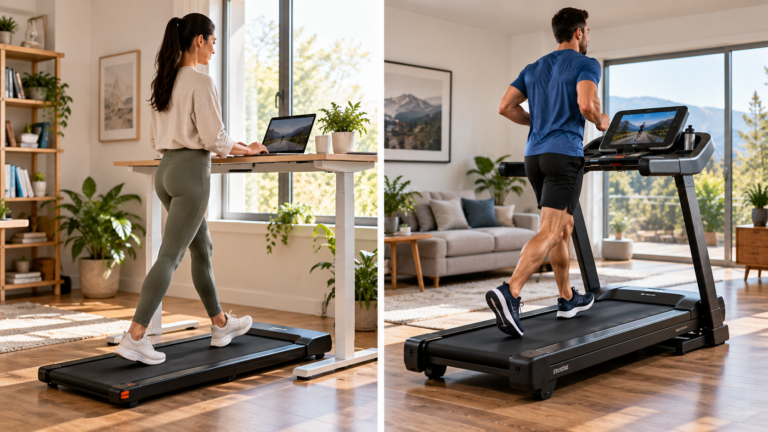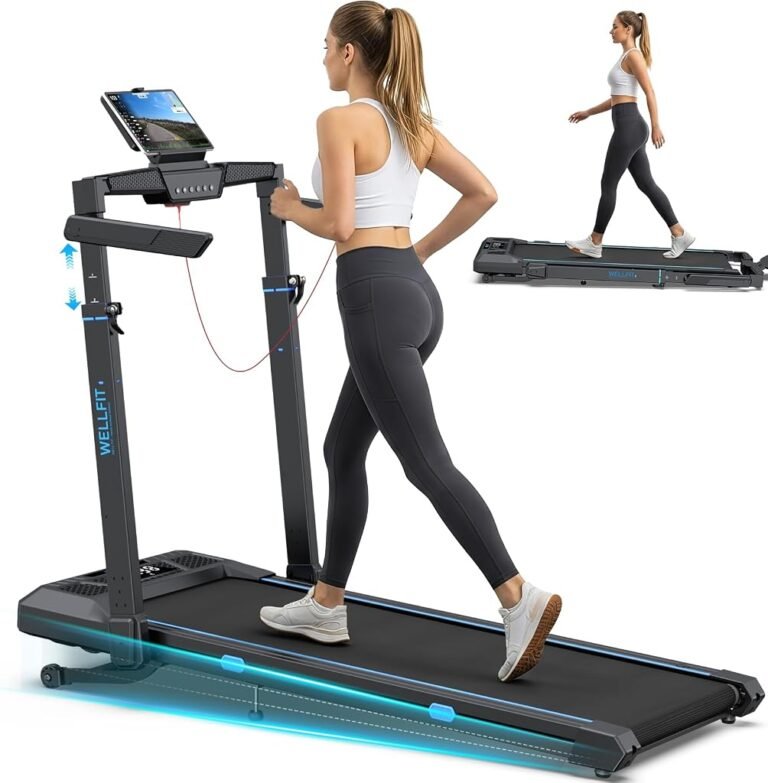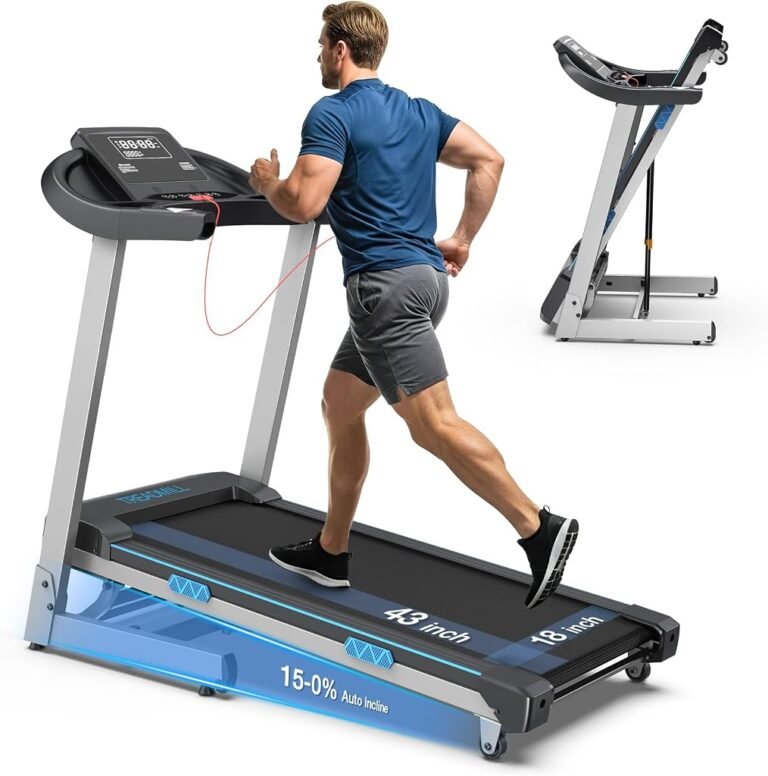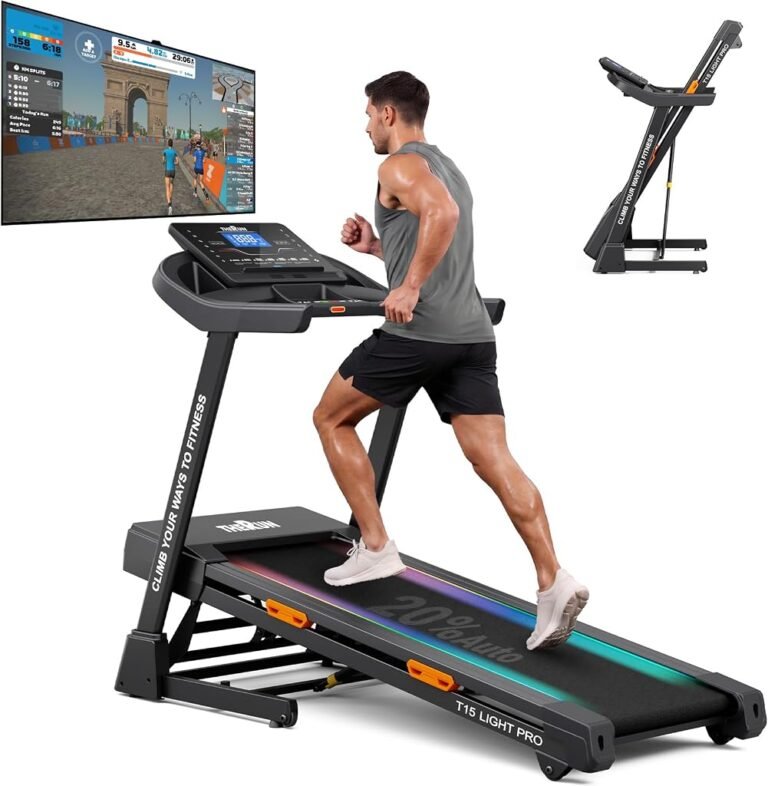
A treadmill does not stop consuming space when the workout ends. That simple fact explains much of the appeal behind folding models and much of the resistance to fixed-frame machines in residential settings.
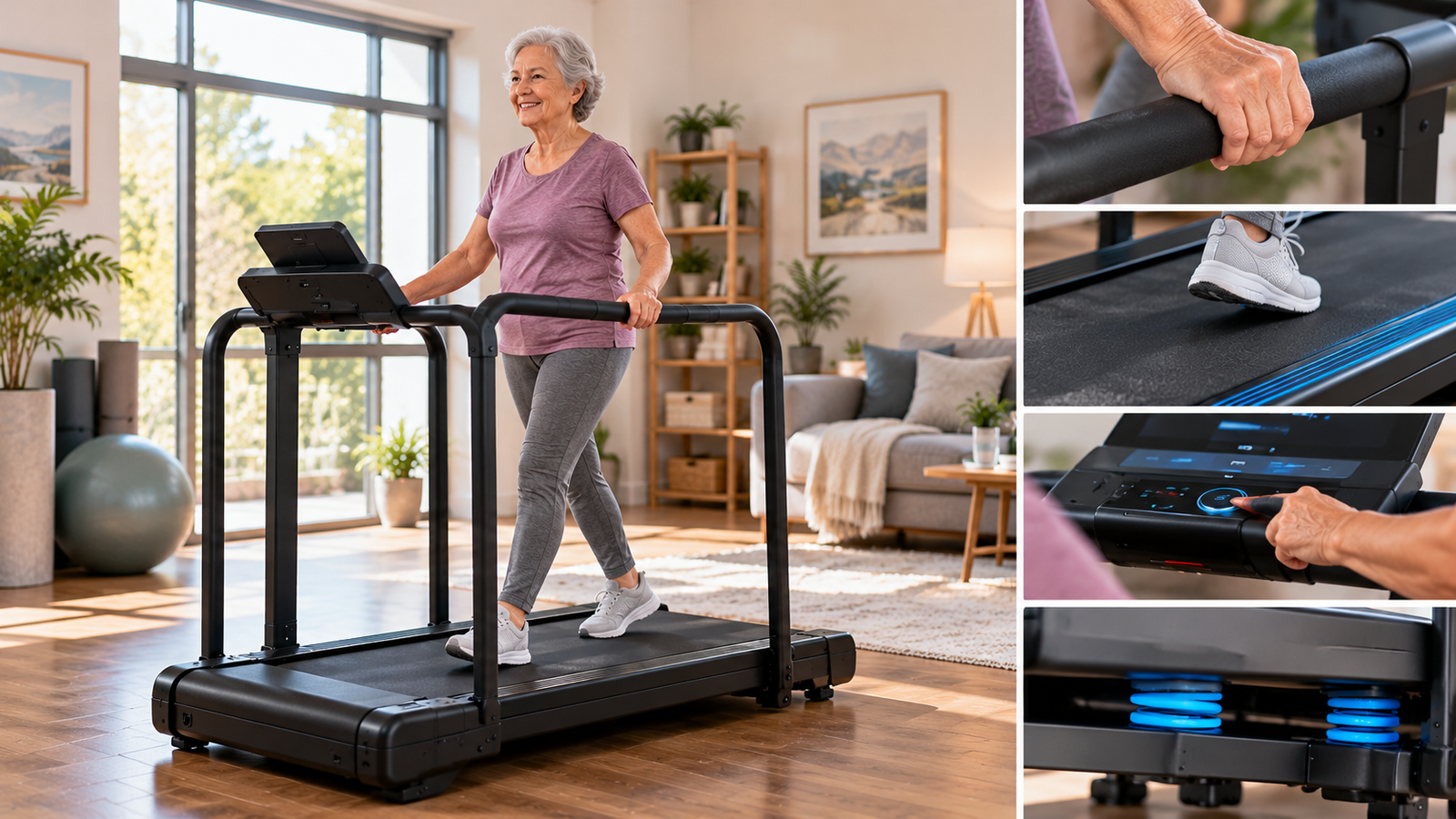
Yet the familiar assumption that foldable treadmills are compact compromises while non-foldable treadmills are large, serious training machines has become increasingly unreliable. Current folding designs can have substantial running surfaces, automatic incline, double-digit maximum speeds, heavy frames, and considerable user capacities. Some weigh well over 100 pounds even before packaging enters the calculation.
The distinction is therefore not simply small versus large, casual versus serious, or inexpensive versus premium.
A foldable treadmill allows part of the running deck to move into a storage position. A non-foldable treadmill keeps its operating geometry largely fixed. From that mechanical difference emerge questions about floor space, accessibility, stability, storage habits, moving the machine, maintenance, room layout, and the friction involved in beginning a workout.
The better design depends less on which category sounds more capable and more on what happens to the treadmill during the other 23 hours of the day.
Foldable vs Non-Foldable: The Fundamental Difference
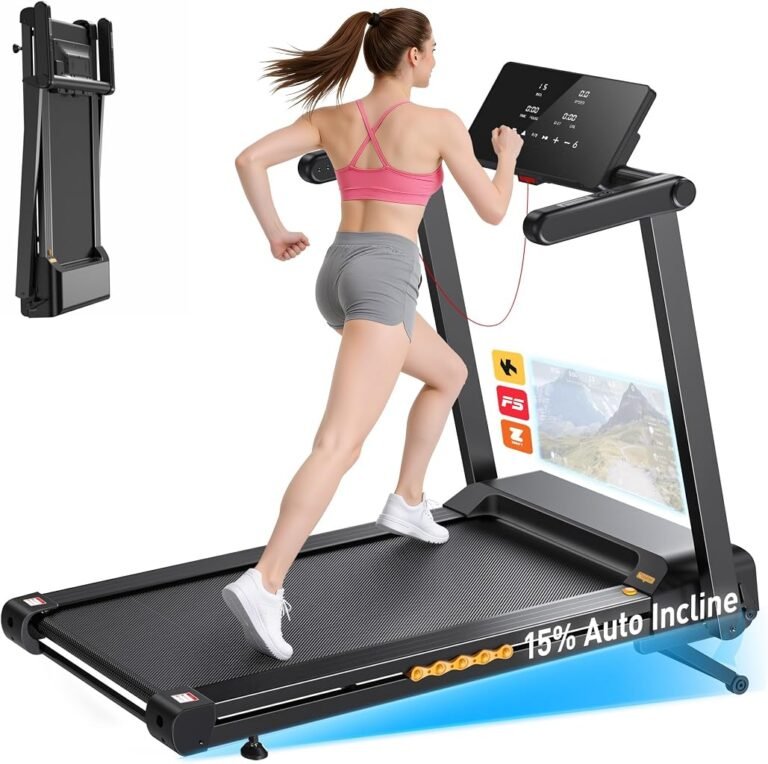
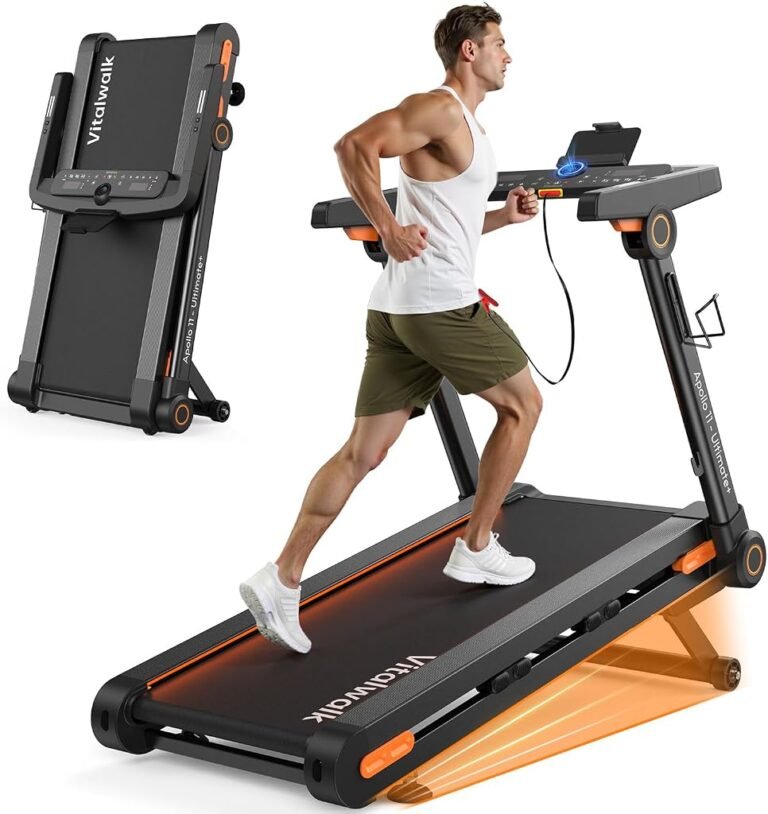
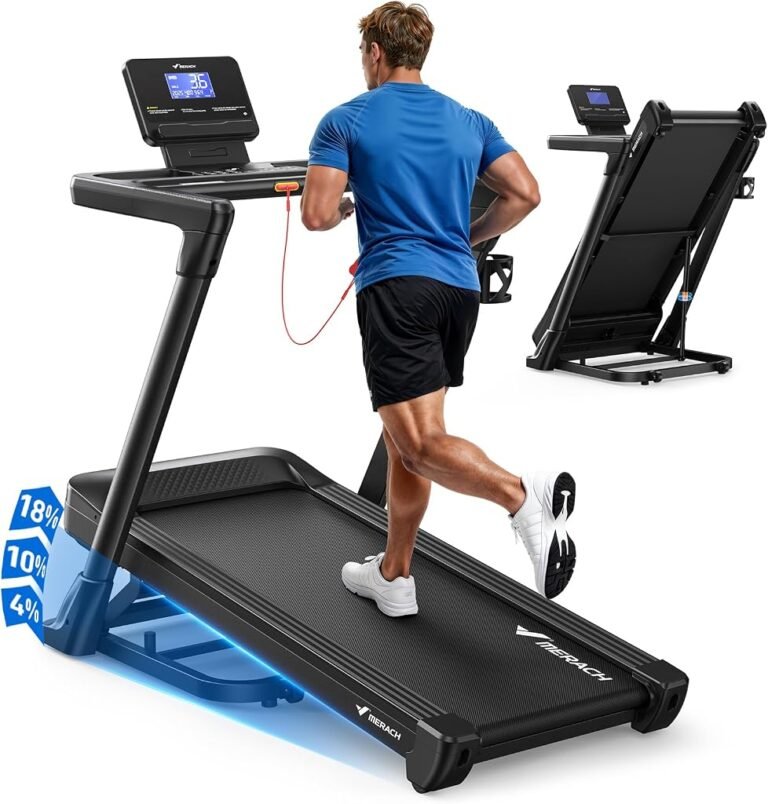
A folding treadmill incorporates a mechanism that allows the running deck to be raised, lowered, collapsed, or otherwise repositioned for storage. The exact engineering varies considerably.
Some designs raise the deck toward the console. Others use flatter folding arrangements. Hydraulic or assisted lowering mechanisms can make deck movement more controlled. Transportation wheels are common on residential machines, although their presence does not make a heavy treadmill genuinely portable in the everyday meaning of the word.
A non-foldable treadmill avoids the recurring deck-storage movement. Its frame remains in operating position.
That creates a straightforward trade:
- Foldable treadmills can reclaim some floor area between workouts.
- Non-foldable treadmills eliminate the need to raise and lower a deck.
- Folding does not necessarily mean lightweight.
- Fixed-frame construction does not automatically guarantee better performance.
- A folding mechanism has value only when the owner actually uses it.
- A non-folding treadmill is easier to justify when it has a permanent exercise area.
The categories describe frame configuration. They do not independently establish motor quality, cushioning, speed capability, running-area dimensions, weight capacity, noise, or durability.
Those characteristics have to be evaluated model by model.
Modern Folding Treadmills Can Still Be Substantial Machines
The idea that folding automatically means compact becomes difficult to defend when current specifications are examined.
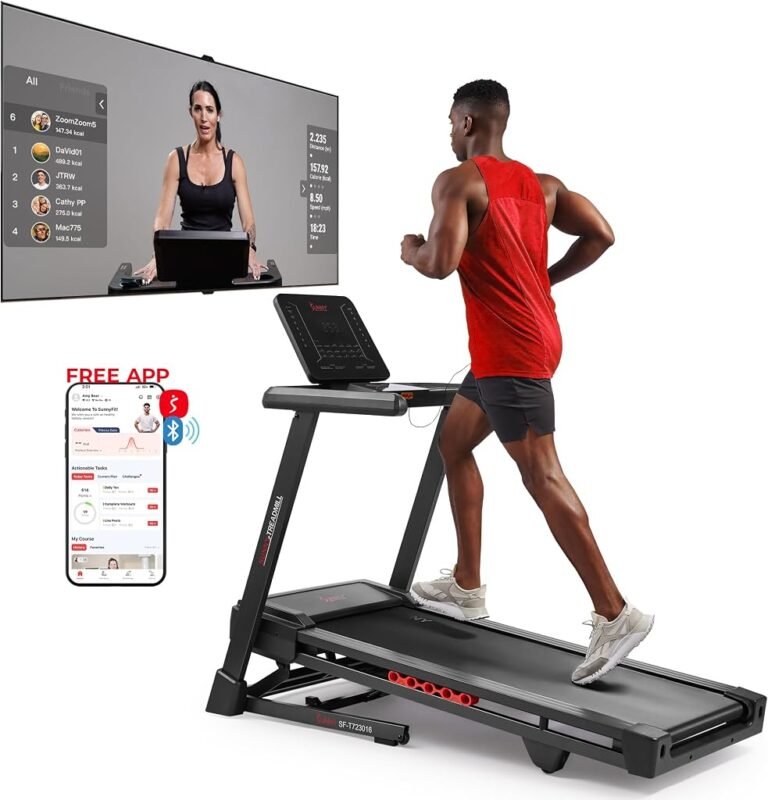
Sunny Health & Fitness’s Premium Auto Incline Smart Treadmill, for example, is listed with operating dimensions of 64.17 inches long by 28.35 inches wide by 52.76 inches high. Folded, its dimensions are 39.84 inches long by 28.35 inches wide by 55.12 inches high.
That is a meaningful reduction in floor length, but the machine does not disappear.
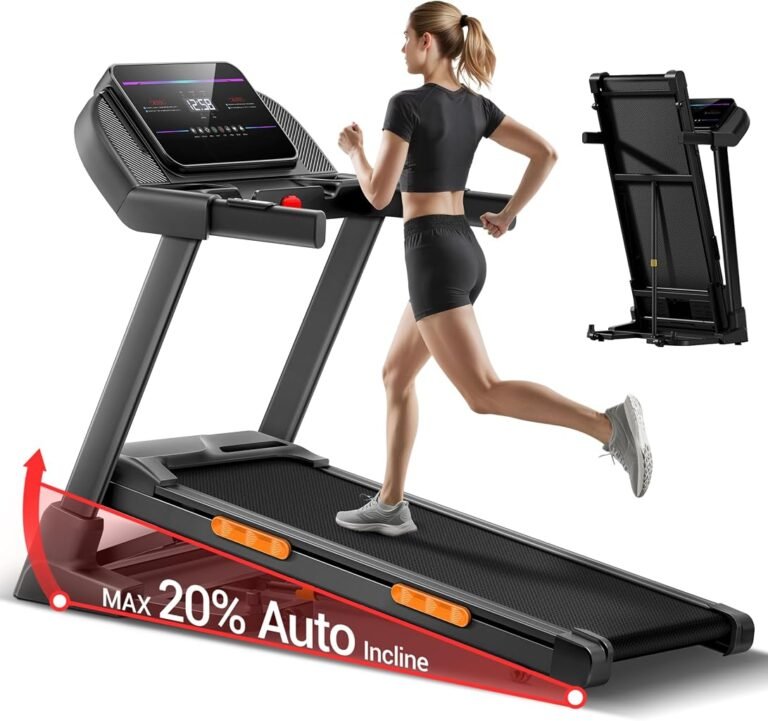
Another current Sunny model, the Energy Flex Motorized Auto Incline Smart Treadmill, measures 68.3 inches long in operating position and 43.3 inches long when folded. It weighs 125.7 pounds.
The point is not that these dimensions are unusually large. They illustrate what “foldable” means in practical residential use.
A folding treadmill can reclaim several feet of longitudinal floor space while remaining a large appliance.
That distinction should shape expectations before purchase.
Floor Area Is More Useful Than the Word Foldable
Buyers comparing treadmills should calculate floor area rather than relying on category labels.
Consider a hypothetical machine measuring 70 inches by 34 inches when open. Its operating footprint is roughly 16.5 square feet.
If folding reduces its floor dimensions to 40 by 34 inches, the stored footprint becomes approximately 9.4 square feet.
That is a substantial difference.
But the remaining 9.4 square feet still exist. So does the machine’s vertical mass. Furniture placement still matters. Doors still need to open. People still need to walk through the room.
This is why storage measurements deserve the same scrutiny as operating dimensions.
A buyer should record:
- Open length, width, and height.
- Folded length, width, and height.
- Clearance required to raise or lower the deck.
- Space needed to step onto the machine safely.
- Distance from nearby furniture and walls.
- Ceiling clearance, particularly where incline raises the user.
- Access to an appropriate electrical outlet.
- The route needed to move the treadmill into the room.
A tape measure can settle arguments that feature lists cannot.
Folding Helps Most in Multipurpose Rooms
The strongest case for a folding treadmill appears when the room has another job.
Bedrooms, home offices, guest rooms, dens, and shared living areas often cannot surrender a large rectangle of floor space permanently. A treadmill may fit comfortably during exercise yet interfere with a desk chair, guest bed, storage cabinet, or normal walking path afterward.
Folding changes that equation.
A deck that can be raised after exercise allows some of the operating footprint to return to household use. The benefit repeats after every workout.
This recurring benefit distinguishes folding from conveniences that matter only on delivery day.
Someone exercising five days per week could theoretically fold and unfold the treadmill hundreds of times per year. In such a household, the mechanism is not an occasional novelty. It becomes part of the normal workout routine.
For a treadmill placed permanently in a basement gym, that same mechanism can become almost irrelevant.
A Dedicated Exercise Room Changes the Calculation
Non-foldable treadmills make the strongest practical case when floor space has already been committed to exercise.
If the machine stands in a dedicated home gym, there may be no meaningful reason to move the deck after each session.
The treadmill can remain ready for immediate use.
That seemingly minor detail has behavioral value. Starting a workout requires stepping onto the machine rather than lowering a deck, moving nearby objects, checking clearance, and reversing the process afterward.
The distinction can become especially relevant for frequent runners. Someone using a treadmill six days a week may prefer permanent readiness over reclaiming floor space that has no competing purpose.
A fixed installation also simplifies room planning. Mats, fans, displays, shelves, speakers, and other equipment can be positioned around a treadmill whose geometry does not repeatedly change.
In a dedicated room, permanence is not necessarily a disadvantage. It can be the reason the room works.
Folding Does Not Automatically Mean Lower Capability
A current product can quickly undermine the assumption that folding requires severe performance compromises.
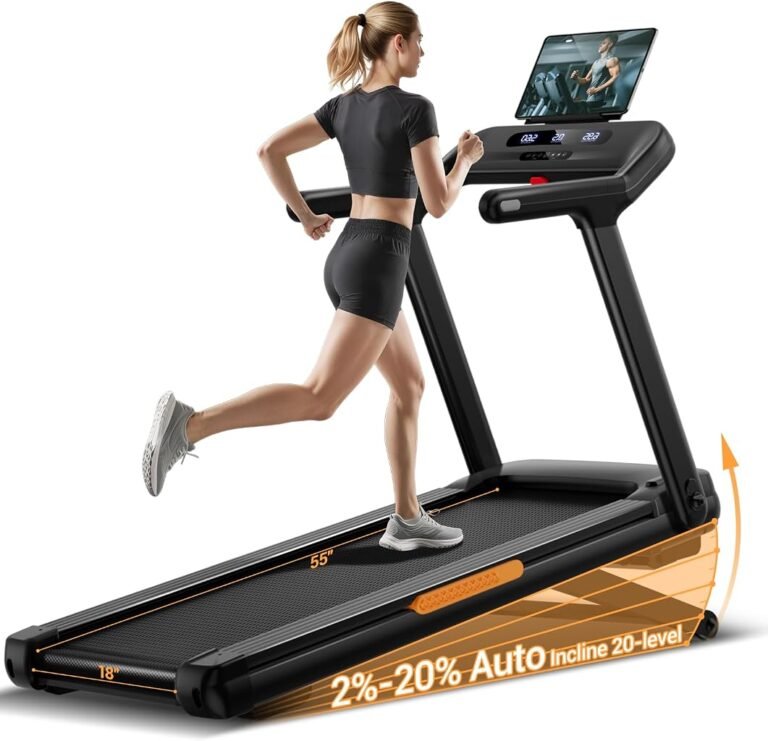
The Sunny Health & Fitness Platinum Smart One-Click Fold Wi-Fi Treadmill is specified with a 55-by-20-inch running surface, speeds from 1 to 12 mph, automatic incline, a 300-pound maximum user weight, and a folding mechanism. Its listed product weight is 177.8 pounds.
Again, the relevance is not whether that particular machine is appropriate for every buyer. The specifications demonstrate that a folding architecture can coexist with characteristics associated with substantial residential treadmills.
Similarly, ProForm’s Carbon TLX uses the company’s SpaceSaver folding design while listing a 300-pound user capacity and an operating footprint of 35.1 inches wide by 74.3 inches deep by 59.1 inches tall.
Folding should therefore be evaluated as one engineering choice among many.
A buyer still needs to examine the running surface, speed range, incline, user capacity, controls, cushioning, frame, warranty, maintenance requirements, and dimensions.
The hinge does not define the whole machine.
Non-Foldable Does Not Automatically Mean Better Stability
The opposite assumption deserves equal skepticism.
It is tempting to infer that a fixed frame must be more stable because it contains fewer moving structural elements. That can be directionally plausible as an engineering consideration, but it does not establish the behavior of any individual treadmill.
Stability depends on the entire structure: frame geometry, materials, joints, deck construction, machine mass, leveling, floor surface, manufacturing tolerances, and the user’s movement.
A well-engineered folding treadmill can feel stable in ordinary use. A poorly positioned fixed treadmill can rock on an uneven floor.
Buyers therefore should not treat “non-foldable” as a substitute for evaluating construction.
The more useful indicators include appropriate user capacity, frame design, product weight, leveling provisions, running-area dimensions, warranty coverage, and whether the treadmill sits correctly on the intended surface.
Category labels are shortcuts. Mechanical performance is specific.
Running Surface Should Be Evaluated Separately
One of the most consequential treadmill dimensions is the usable belt area.
A folding mechanism does not tell the buyer whether the belt is long or wide enough.
Walking generally requires less belt length than faster running because stride patterns and speed differ. Taller users and runners may prefer additional room, while compact walking machines can prioritize smaller footprints.
The trade becomes physical rather than abstract.
A larger running surface generally requires space somewhere in the machine. Folding can reclaim some of that space when the treadmill is stored, but it cannot make the running deck smaller during exercise without changing the usable area itself.
This creates an important buying sequence:
First determine the running area appropriate for the intended user and activity.
Then determine whether a folding version of that suitably sized treadmill is needed.
Starting with the smallest stored footprint can lead to purchasing a machine that stores beautifully but feels constrained during the activity for which it was purchased.
Weight Capacity Is Not a Folding Score
Weight capacity is another specification frequently pulled into the folding-versus-fixed debate without enough care.
A treadmill’s stated user capacity should be checked against the intended user regardless of frame type.
Current folding machines demonstrate why category-based assumptions fail. The Sunny examples above list capacities of 275 or 300 pounds depending on the model, while the folding ProForm Carbon TLX lists 300 pounds.
Those figures should not be generalized across all folding treadmills. They show that folding itself does not dictate one universal capacity.
The same principle applies to non-folding equipment.
A fixed frame should not be assumed suitable for a particular user merely because it does not hinge upward.
The exact manufacturer’s capacity is the number that matters.
The Best Treadmills for Home Must Fit Human Behavior
Discussions of the best treadmills for home frequently become exercises in specification comparison. Maximum speed gets compared with maximum speed. Belt width meets belt width. Incline percentage meets incline percentage.
Home use introduces another variable: friction.
How difficult is it to begin exercising?
A treadmill stored behind boxes has a friction problem.
A folding treadmill that requires rearranging furniture before the deck can be lowered has a friction problem.
A giant non-folding treadmill positioned conveniently in a dedicated gym may have very little friction.
A compact folding machine in an office may also have very little friction if lowering the deck takes seconds and nothing needs to be moved.
The better design is the one that makes regular use easier in the actual household.
That can matter more than reclaiming another square foot on paper.
Exercise Consistency Matters More Than Frame Configuration
The public-health objective behind owning a treadmill is not to possess an elegant storage mechanism. It is to make physical activity more accessible.
The CDC’s current adult physical-activity guidance recommends at least 150 minutes of moderate-intensity aerobic activity per week, or 75 minutes of vigorous activity, or an equivalent combination, alongside muscle-strengthening activity on at least two days each week.
That gives treadmill ownership a useful behavioral benchmark.
Thirty minutes of suitable activity on five days reaches 150 minutes. A treadmill that is annoying to set up five times every week may undermine that routine. A treadmill permanently blocking an important part of a small apartment can create a different kind of resistance.
This is why convenience should not be dismissed as superficial.
Equipment that fits daily life is easier to use repeatedly.
Folded Dimensions Can Be Misleading Without Height
Floor area is only part of storage.
Raising a treadmill deck often shifts the machine’s geometry vertically. The folded treadmill may require substantially less floor length while becoming a tall object.
That matters around shelves, windows, wall-mounted televisions, sloped ceilings, lighting fixtures, and low storage areas.
The Sunny Premium Auto Incline example moves from 64.17 inches long in operating position to 39.84 inches folded, but its listed height changes from 52.76 inches to 55.12 inches.
The Energy Flex example goes from 68.3 inches long to 43.3 inches folded, with a folded height of 57.9 inches.
A buyer focused only on reduced length could miss the second half of the geometry.
Stored dimensions should always be treated as three-dimensional.
Transportation Wheels Do Not Make a Treadmill Portable
Many folding treadmills include wheels, which can help reposition the machine.
“Portable,” however, should be used cautiously.
A treadmill weighing 125, 175, or 200 pounds does not become lightweight because two wheels touch the floor. Tilting and rolling such equipment still requires control, adequate floor conditions, clearance, and sufficient physical ability.
Thresholds, thick carpet, narrow turns, stairs, and uneven flooring can make movement substantially harder.
For that reason, folding and mobility should be treated as separate characteristics.
A treadmill can fold well and still be difficult to move between rooms.
A buyer planning to wheel a machine from a closet to a living room before every workout should pay particular attention to product weight, wheel design, balance while tilted, floor surfaces, and the exact storage route.
Moving a heavy treadmill daily is a very different proposition from raising its deck in place.
Stairs Can Decide the Purchase Before Folding Matters
Delivery receives surprisingly little attention in treadmill comparisons.
The machine has to reach its final room before any folding mechanism becomes useful.
Boxed dimensions and shipping weight can exceed the assembled measurements that dominate product pages. Staircases, narrow hallways, sharp corners, elevators, door frames, and basement access can therefore become decisive.
A treadmill destined for an upstairs room should be evaluated as a heavy appliance rather than a parcel.
This issue affects both frame types.
A non-folding treadmill may be difficult to maneuver because of its assembled geometry. A folding model may arrive in packaging that is still large and heavy. The ability to fold after assembly does not necessarily solve delivery constraints beforehand.
Measuring the route from entrance to final position is one of the least glamorous and most useful steps in treadmill shopping.
Folding Mechanisms Add Another Moving System
A folding treadmill introduces components associated with raising, supporting, locking, and lowering the deck.
That is not inherently a durability problem. It is simply another mechanical system that needs to operate correctly.
Users should follow the manufacturer’s procedure rather than forcing the deck, modifying the locking mechanism, or storing the machine in an unintended position.
Assisted-lowering systems can make the process more controlled. The Sunny models cited earlier, for example, specify soft-drop systems.
A non-folding treadmill eliminates the recurring need to manipulate the deck for storage.
That mechanical simplicity may appeal to buyers who know the treadmill will never need to move from its operating position.
Still, the difference should not be exaggerated. The running belt, rollers, motor, electronics, incline system where fitted, and other components remain regardless of whether the frame folds.
Maintenance Does Not Disappear With Either Design
Neither configuration escapes treadmill maintenance.
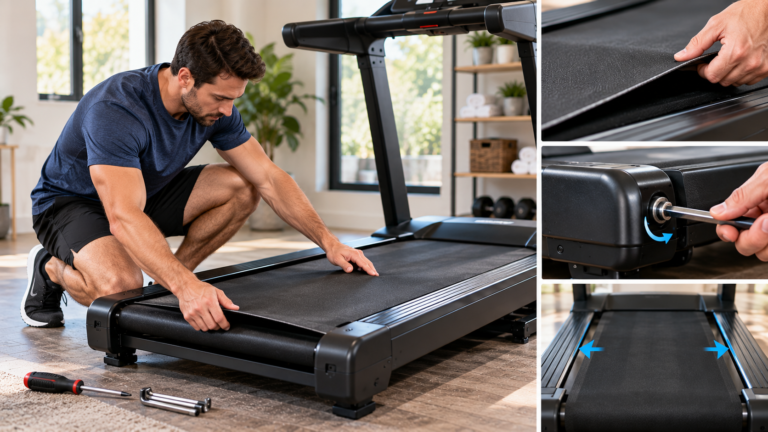
Running belts can require lubrication, tension adjustment, alignment checks, and cleaning according to manufacturer instructions. Motors and electronics need suitable operating environments. Dust and debris should not be allowed to accumulate unchecked.
A folding machine may provide easier access to certain areas when its deck is raised, depending on the design, but that does not change the maintenance schedule specified for the model.
A non-folding treadmill likewise requires care despite having no storage hinge.
The purchasing lesson is simple: storage architecture and maintenance burden are separate questions.
A buyer comparing two machines should examine the support documentation for each rather than assuming that fixed means maintenance-free or folding means mechanically troublesome.
Noise Is Not Determined by the Hinge
Apartment buyers often connect treadmill noise with folding design because compact machines are common in shared buildings.
The relationship is not that simple.
Perceived noise can come from the motor, belt, rollers, foot strikes, vibration transmitted through the frame, floor construction, treadmill speed, user gait, and room acoustics.
A folding joint is only one element in a much larger mechanical system.
Placement can matter greatly. A machine on a rigid floor above another residence creates a different acoustic problem from the same machine on a ground-level concrete slab.
Buyers concerned about noise should therefore evaluate the complete treadmill and its intended environment rather than using foldability as a noise proxy.
Ceiling Clearance Matters More Than Many Buyers Expect
Treadmill height changes the user’s effective standing height.
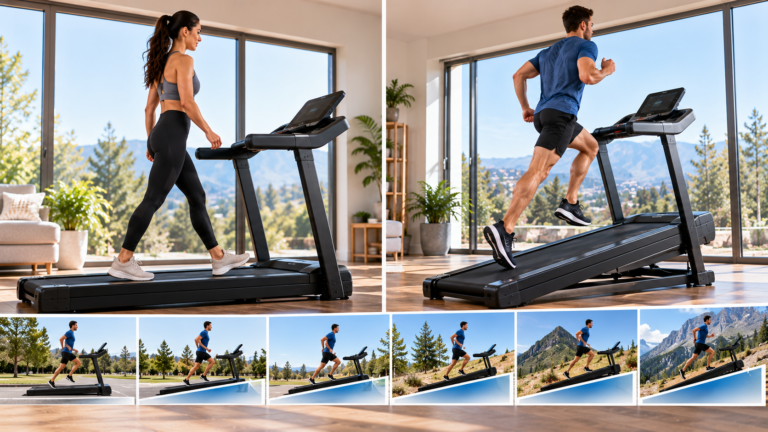
The belt already sits above the floor. Incline can raise portions of the deck further. A tall user in a basement with a low ceiling may therefore have less overhead clearance than expected.
This problem is independent of folding.
A compact stored footprint offers no help if the user cannot exercise comfortably under the ceiling.
The buyer should combine the treadmill’s deck height with user height and additional elevation created by incline, then leave reasonable overhead room.
Basements, lofts, and rooms beneath ducts or beams deserve particular scrutiny.
Space planning must include the person, not merely the machine.
Who Should Choose a Foldable Treadmill?
A folding treadmill is generally the stronger fit when floor space must perform multiple jobs.
It particularly suits households where:
- The treadmill will stand in a bedroom, office, guest room, or shared living space.
- Reclaiming floor area after exercise has genuine value.
- The owner expects to fold the machine regularly.
- Stored dimensions fit the intended location.
- Raising and lowering the deck can occur without moving furniture.
- The user can operate the folding mechanism comfortably.
- The selected model still provides an appropriate running area, capacity, speed range, and other required features.
The decisive factor is repeated use of the mechanism.
If folding solves a problem after nearly every workout, it can be a highly functional feature.
Who Should Choose a Non-Foldable Treadmill?
A fixed-frame treadmill makes more sense when permanent placement creates no meaningful household conflict.
It particularly suits buyers who:
- Have a dedicated home gym or exercise area.
- Expect the treadmill to remain ready for use.
- Have no need to reclaim the operating footprint.
- Prefer not to raise and lower a deck.
- Have already verified that delivery and installation are practical.
- Prioritize a particular fixed-frame model because its overall specifications suit the intended training.
The argument is strongest when space has already been allocated.
In that setting, folding capability may provide little return because the deck would remain open anyway.
A Room-First Buying Method
The most reliable decision can be made before choosing a treadmill.
Start with the room.
Measure the usable floor area, doorways, ceiling height, electrical access, furniture, and the route through which the treadmill will arrive.
Then determine whether the room needs to change function after exercise.
If it does, establish the maximum acceptable stored dimensions.
If it does not, focus more heavily on running-area size, capacity, speed, incline, ergonomics, controls, maintenance, and other performance requirements.
A useful checklist includes:
- Operating footprint.
- Folded footprint, where applicable.
- Stored height.
- Deck height.
- Ceiling clearance.
- Running-area dimensions.
- User capacity.
- Product weight.
- Shipping dimensions and weight.
- Transportation-wheel arrangement.
- Required electrical location.
- Space for safe entry and exit.
- Frequency with which folding will realistically occur.
- Maintenance access.
- The needs of every intended user.
This sequence prevents storage convenience from overwhelming exercise suitability.
The Real Trade-Off Is Permanence vs Flexibility
The foldable-versus-non-foldable debate becomes clearer once performance stereotypes are removed.
A folding treadmill offers spatial flexibility.
A non-folding treadmill offers permanent readiness.
Neither is inherently superior.
Flexibility matters when the room changes throughout the day. Permanence matters when the room has already been assigned to exercise.
The distinction is behavioral as much as architectural.
If folding the deck becomes an annoying chore, the mechanism can create friction instead of removing it. If leaving a non-folding treadmill open makes a small room difficult to use, permanence creates its own friction.
Good home equipment should fit into a routine rather than forcing the household to reorganize around it.
Final Considerations
Foldable vs non-foldable treadmills for home is ultimately a space-management decision wrapped around an exercise-equipment decision.
The folding mechanism deserves attention, but it should not be allowed to overshadow the treadmill itself.
Modern folding machines can have substantial running surfaces, automatic incline, high stated capacities, considerable product weights, and operating dimensions comparable with serious residential equipment. Foldability therefore should not be interpreted as proof of limited capability.
Non-foldable machines should not automatically be credited with superior stability, durability, or performance either. Those characteristics depend on the exact frame, construction, motor, deck, components, placement, and intended use.
The most meaningful difference appears after exercise.
A foldable treadmill can return part of its operating footprint to the household. That advantage becomes significant in offices, bedrooms, guest rooms, apartments, and other multipurpose spaces.
A non-foldable treadmill remains ready. That can be an advantage in a dedicated exercise room where there is no reason to reclaim the floor.
Buyers should measure both operating and stored dimensions, not simply look for the word “foldable.” They should examine height as well as floor area, product weight as well as transportation wheels, delivery routes as well as final placement, and running-area dimensions as well as storage dimensions.
The health objective sits above the hardware choice. Current CDC guidance calls for adults to obtain at least 150 minutes of moderate-intensity aerobic activity each week, or 75 minutes of vigorous activity, or an equivalent combination, alongside muscle-strengthening activity on at least two days. A treadmill can help make that activity available regardless of weather, daylight, or outdoor conditions.
Whether its deck folds has no direct effect on those recommendations.
Its indirect effect can still matter.
A folding treadmill that fits comfortably into a small household may be easier to live with. A permanently open treadmill in a dedicated gym may be easier to start using. In either case, reducing obstacles between intention and exercise has practical value.
Among the best treadmills for home, the stronger design is therefore not automatically the one that folds or the one that refuses to move. It is the one whose operating footprint, stored geometry, running area, capacity, controls, maintenance requirements, and daily setup fit the household closely enough that the machine remains accessible rather than becoming an obstacle.
A treadmill should demand effort during the workout. The room should not demand another workout simply to make space for it.