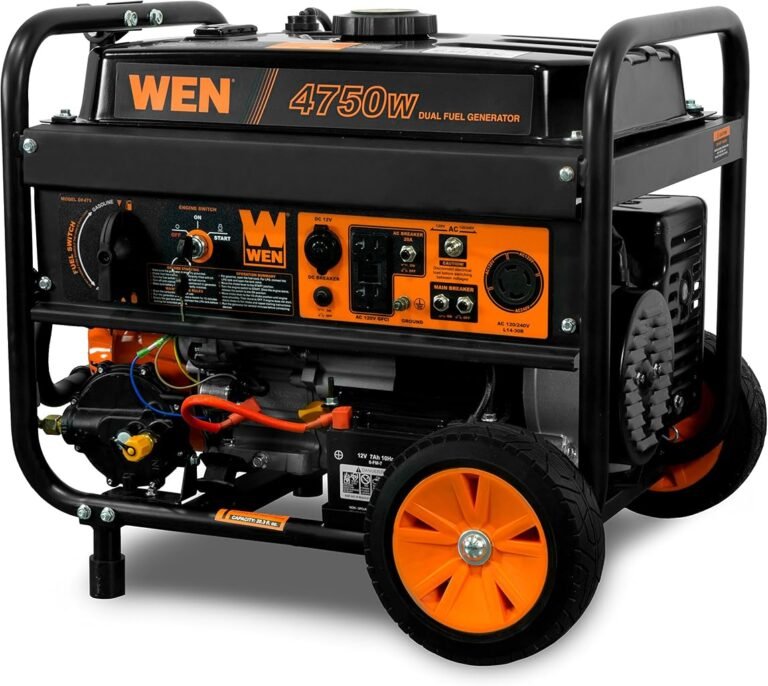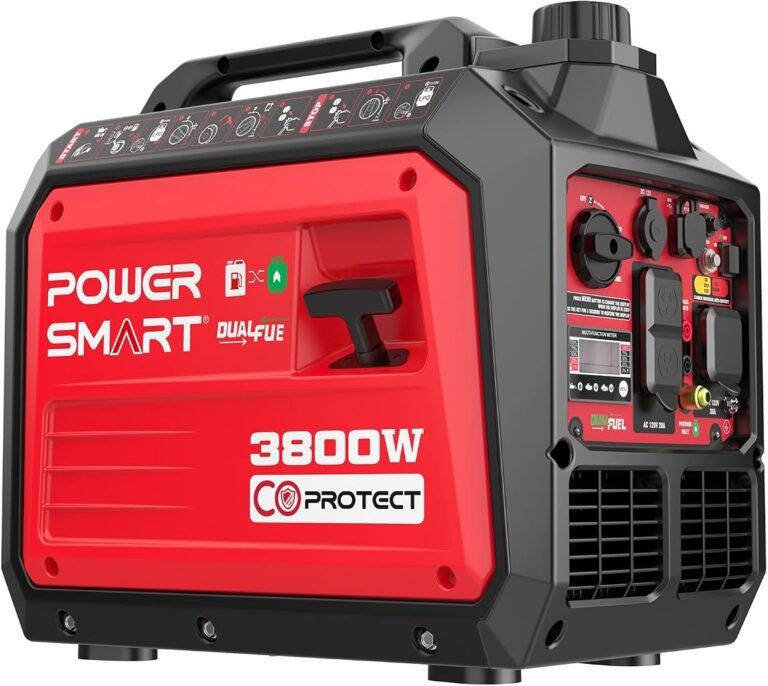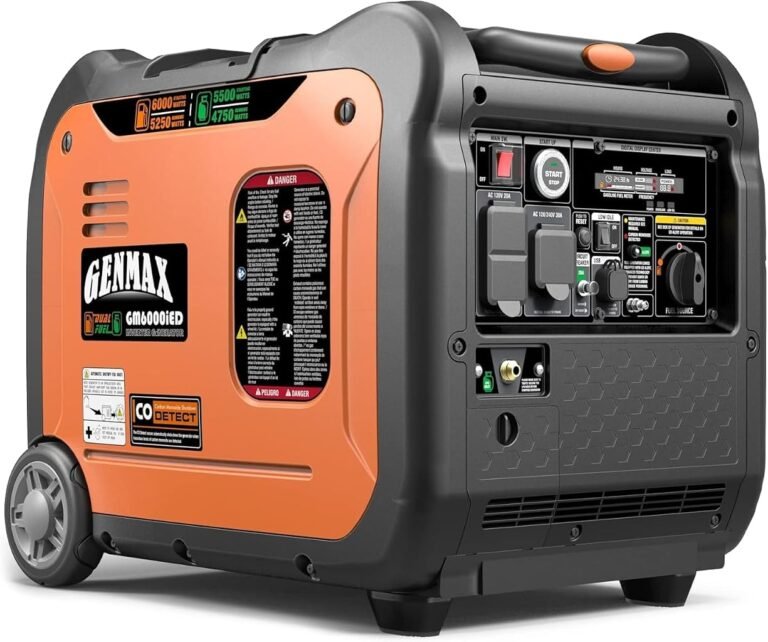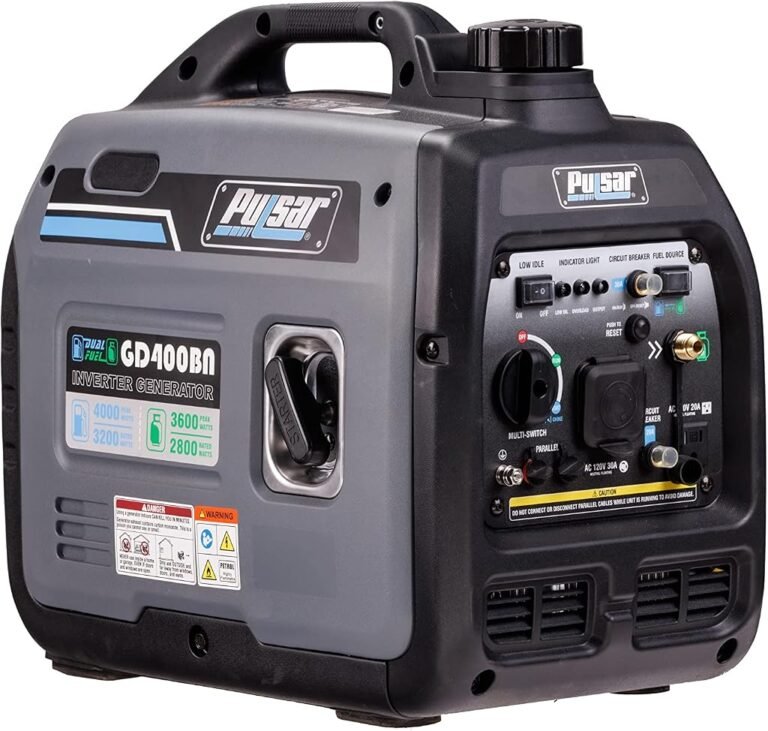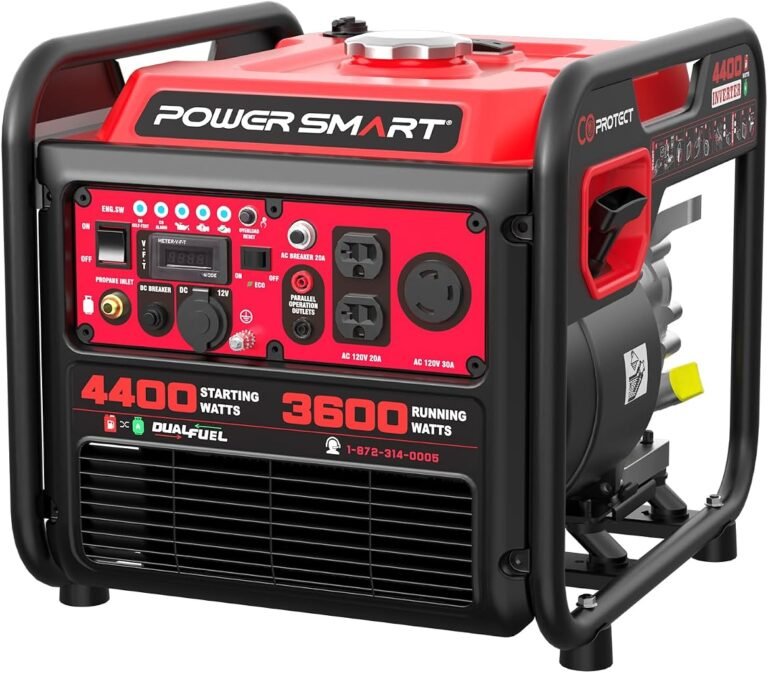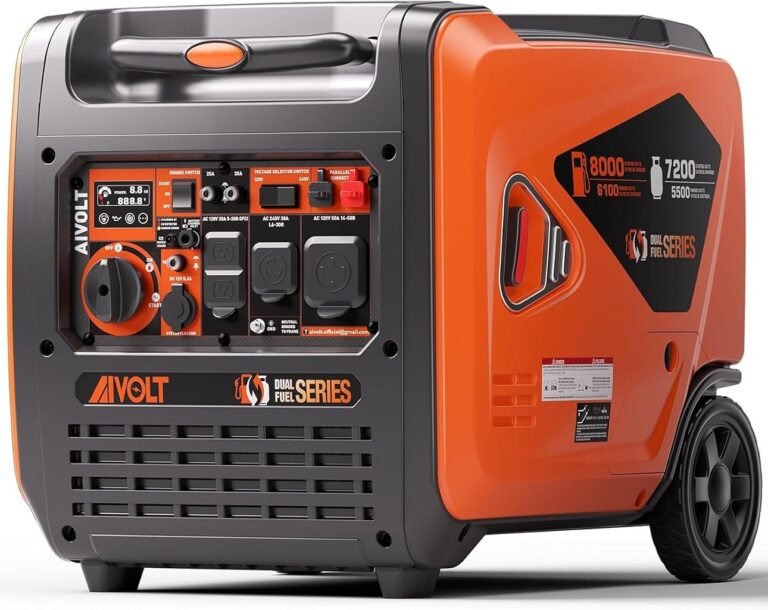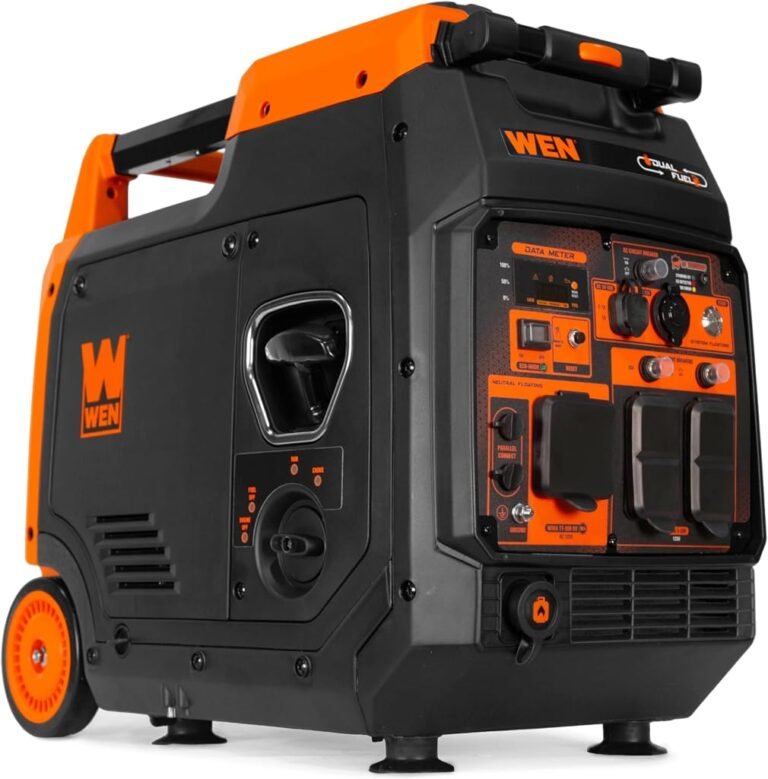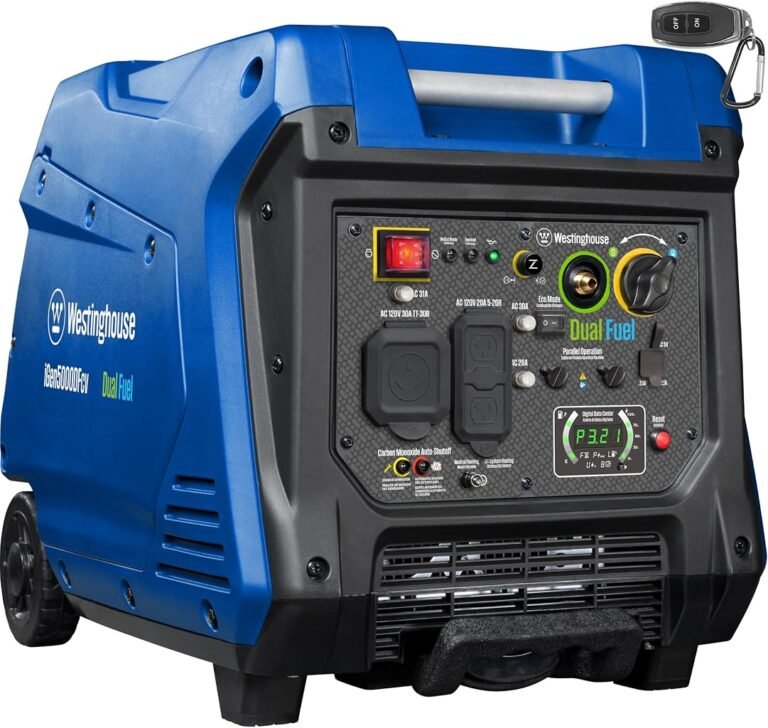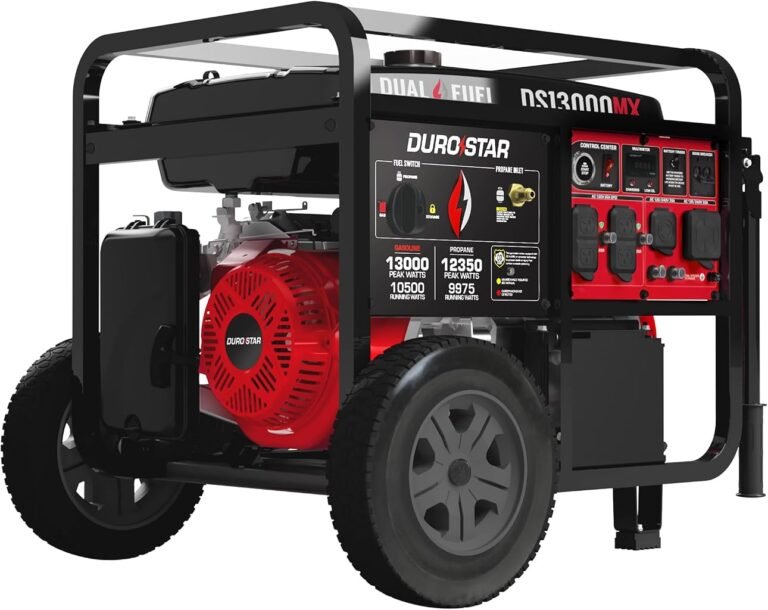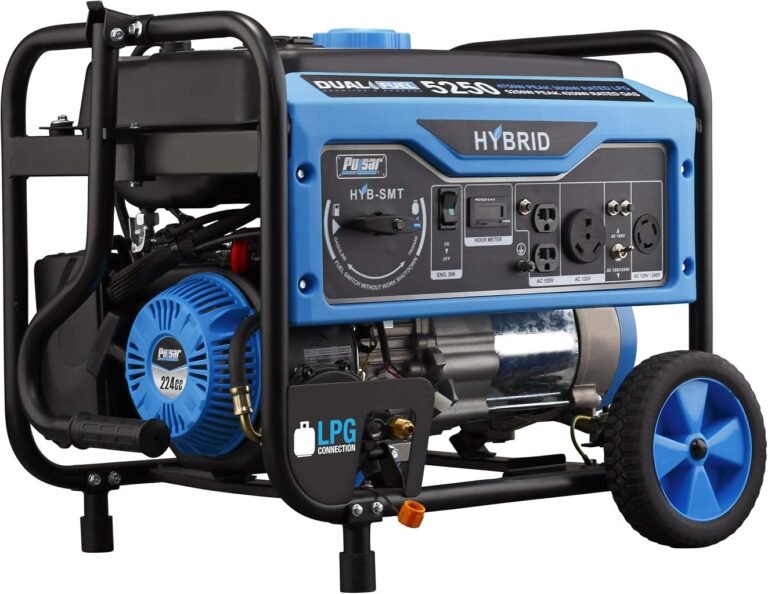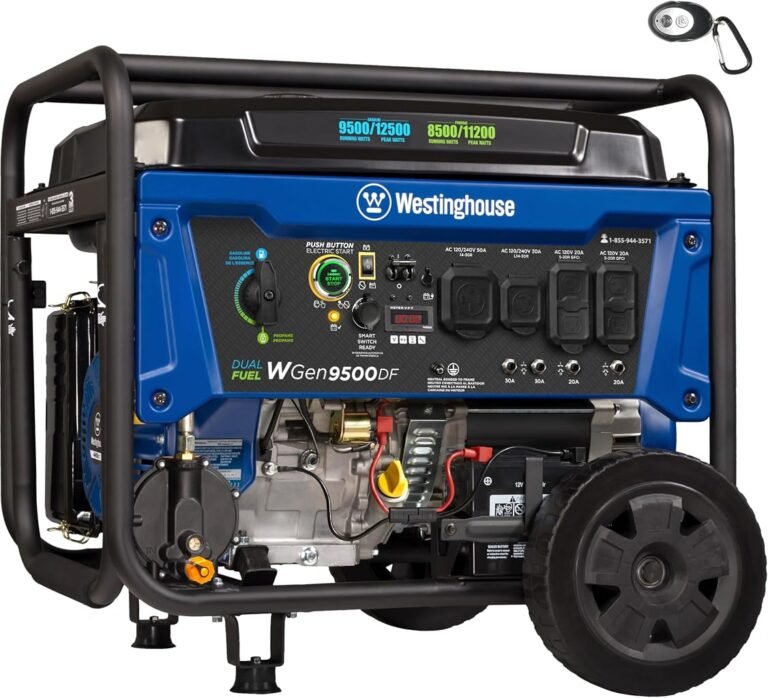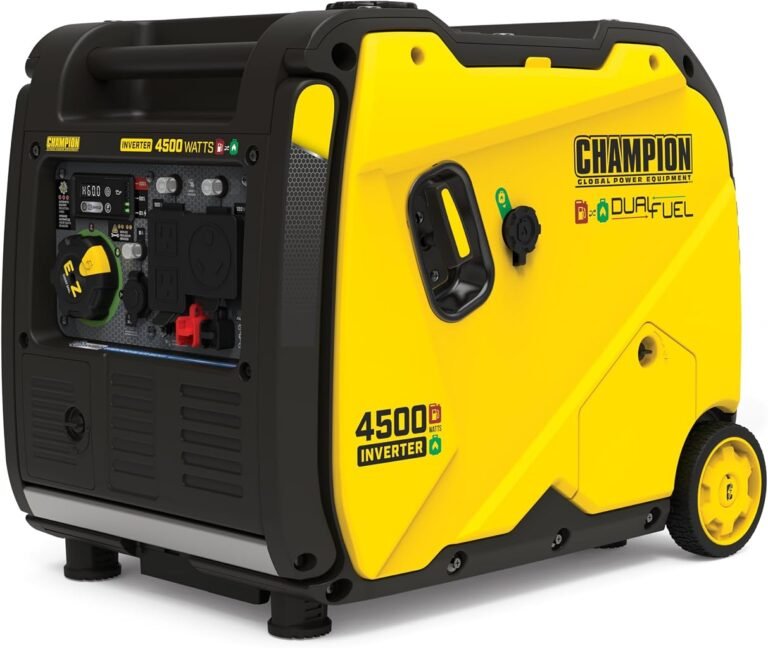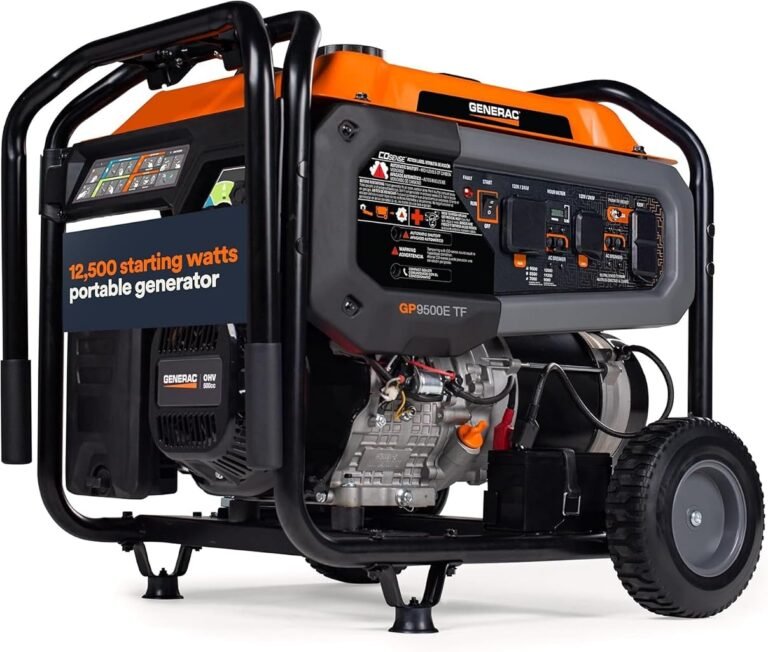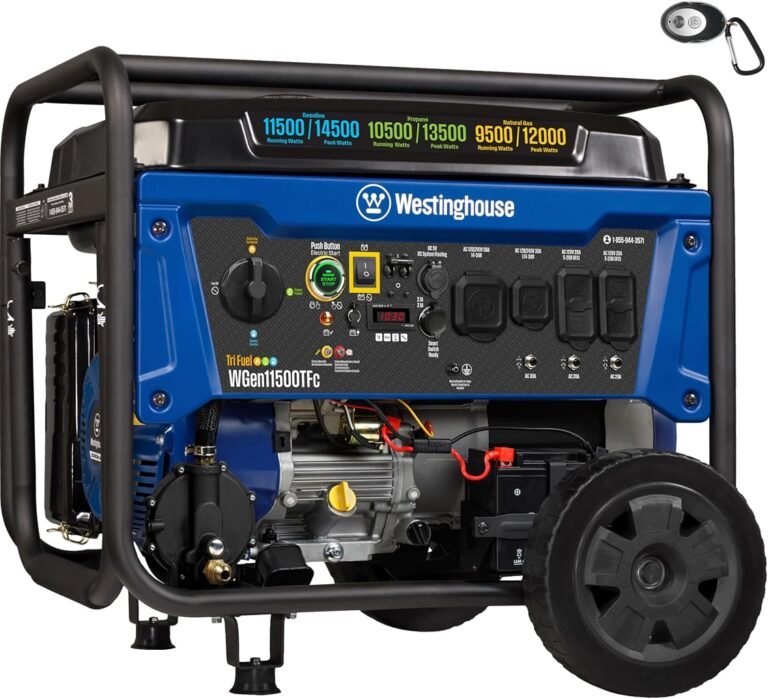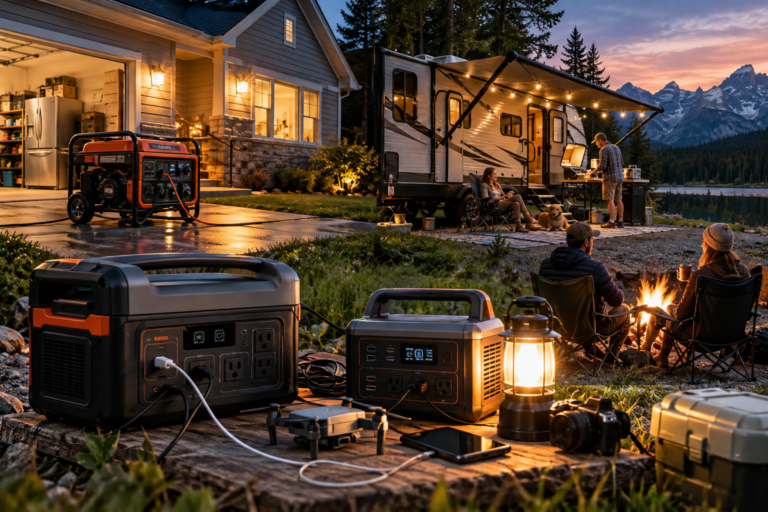
Portable generators are frequently judged by a single number printed in oversized type on the enclosure. That habit makes comparison easy, but it can also make comparison wrong. Peak wattage is temporary capacity. Running wattage determines what the generator can sustain. Fuel choice can alter both figures, and portability means considerably more than attaching a handle to an engine.
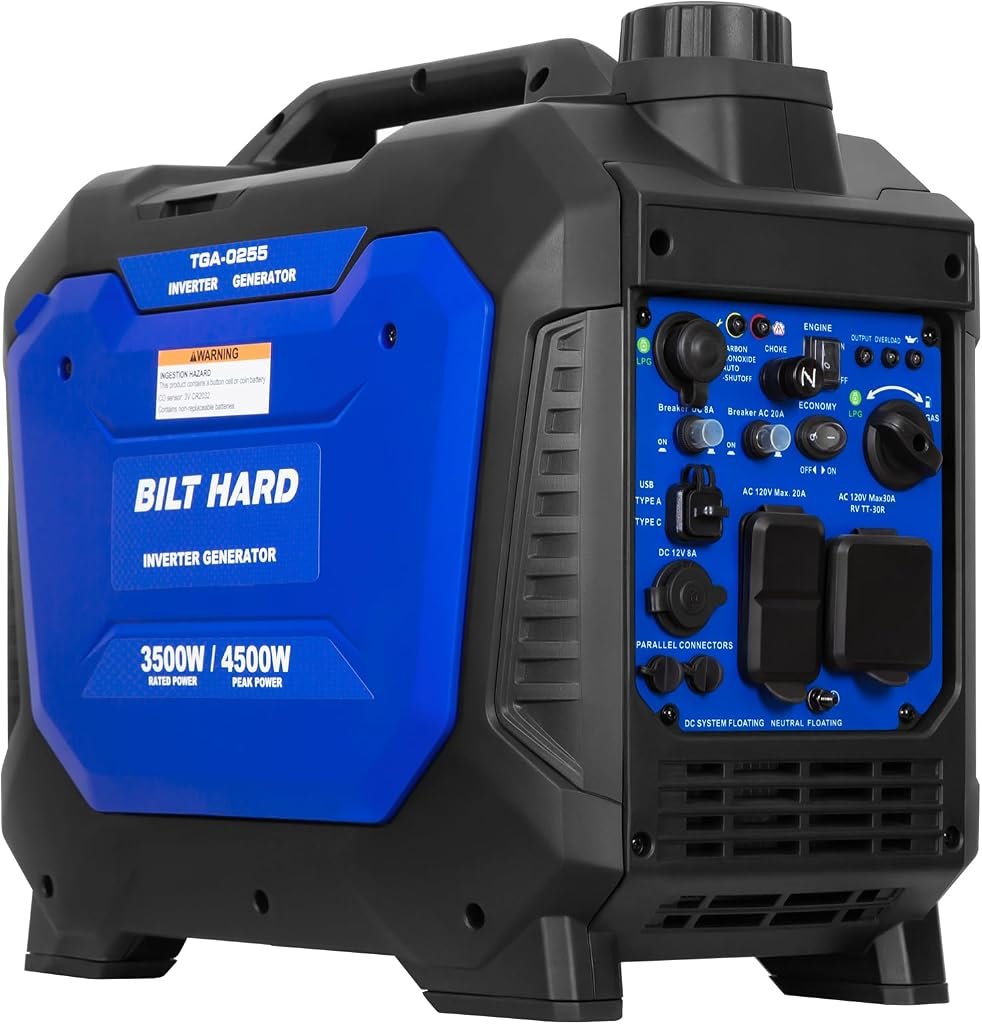
The BILT HARD 4500W Dual Fuel Inverter Generator illustrates why those distinctions matter. The current TGA-0255 model combines a 141cc Ducar four-stroke OHV engine with gasoline and propane operation, inverter electronics, a 30-amp RV receptacle, USB charging, ECO mode, parallel capability and automatic carbon-monoxide shutdown. According to the manufacturer’s current specification, output reaches 4,500 peak and 3,500 running watts on gasoline, falling to 4,150 peak and 3,200 running watts on propane.
That is enough power to move the machine beyond the small-generator category without turning it into a large home-backup unit. Its design instead points toward RV use, camping, selected household loads and portable emergency electricity.
Our score is 8.56/10. Customer Sentiment stands at 8.5, Buyer Confidence at 9.09, and Value at 8.28. The scores are unusually close, with Buyer Confidence leading. That pattern reflects a generator whose technical proposition is easy to understand: meaningful continuous output, two fuel choices, inverter power, RV-oriented connectivity and modern CO protection without the bulk associated with many larger generators.
The 4,500-Watt Figure Needs Translation
The first task in any responsible portable generator buying guide is separating starting watts from running watts.
On gasoline, the BILT HARD reaches 4,500 watts temporarily but is rated for 3,500 watts of continuous output. Propane reduces those figures to 4,150 peak and 3,200 running watts. The electrical system is 120V, single phase and 60 Hz.
That distinction determines what the generator can realistically support.
Starting wattage accommodates brief surges associated with motors and compressors. Refrigerators, air conditioners, pumps and similar equipment can require substantially more electricity during startup than after reaching normal operating speed.
The generator therefore should not be treated as a continuous 4,500-watt source.
At 3,500 running watts on gasoline, however, it has considerably more flexibility than compact 1,000- or 2,000-watt inverter models. Refrigeration, lights, communications equipment, televisions, chargers and selected appliances can potentially operate together when their combined load and startup requirements remain within the available capacity.
The propane rating remains useful as well. Switching fuels reduces sustained capacity by 300 watts, approximately 8.6% compared with gasoline. That reduction deserves consideration when operating close to the machine’s limit, but 3,200 continuous watts still leaves a practical power envelope.
The appropriate calculation is straightforward: add the running demand of equipment expected to operate simultaneously, account for the largest relevant startup surge, and leave margin instead of planning permanently against maximum capacity.
Dual Fuel Is a Practical Form of Redundancy
Dual-fuel generators are often discussed as though propane were merely an alternative for owners who dislike handling gasoline. Emergency planning makes the feature more consequential.
Gasoline gives the BILT HARD its maximum rated output. Propane reduces output but provides a second fuel source that can be stored separately. The generator includes an LPG hose and regulator for propane operation.
During normal conditions, gasoline is easy to obtain and carries considerable energy in a compact volume. Regional power failures can alter that equation. Fuel stations need electricity to operate pumps, and demand can rise sharply before and after severe weather.
Propane creates another option.
Storage behavior also differs. Gasoline requires careful treatment when equipment will sit unused for long periods, particularly because degraded fuel can create problems in small-engine fuel systems. Propane does not sit in the carburetor between uses in the same manner.
That does not make propane the automatic choice. Cylinder capacity, ambient temperature and fuel availability all matter, and the generator loses 300 running watts on LPG.
The real advantage is flexibility. An owner can choose gasoline when maximum output matters and propane when its storage or availability characteristics are preferable.
For emergency equipment that may be called into service under unpredictable conditions, two usable fuels are more valuable than two fuels listed merely for marketing symmetry.
The 141cc Engine Keeps the Machine Relatively Compact
BILT HARD uses a 141cc Ducar OHV air-cooled four-stroke engine. Oil capacity is listed at 13.53 fluid ounces, or 0.4 liter, and starting is by recoil.
The displacement is notable because it is relatively modest for a generator producing 3,500 continuous gasoline watts.
A smaller engine contributes to a more manageable package, although output should never be inferred from displacement alone. The inverter system, engine tuning and generator head all influence the final electrical specification.
The current model is fully enclosed rather than built around a conventional exposed open frame. That architecture supports the generator’s recreational orientation and helps control acoustic output.
It also changes how the machine is handled. There is a built-in carrying handle rather than the wheel-and-frame arrangement common on larger generators. A retailer listing for the TGA-0255 places its weight at approximately 58 pounds.
That figure puts the BILT HARD in an interesting physical category.
Fifty-eight pounds is not effortless for every adult to carry, particularly across uneven ground. Yet it remains far removed from the 100- to 200-pound generators commonly used for higher-capacity household backup. A single person who can comfortably handle that weight can move the unit between storage, a vehicle, an RV and an outdoor operating position without a wheel kit.
That mobility is one of the machine’s more meaningful advantages.
The Fuel Tank Reflects the Compact Design
BILT HARD currently specifies a 1.66-gallon, or 6.3-liter, gasoline tank.
Tank capacity reveals an unavoidable generator trade-off. More gasoline extends the potential interval between refueling, but fuel adds weight and requires physical space. A large tank would work against the compact dimensions that make this generator attractive for RV and camping use.
Runtime also cannot be separated from electrical load.
A generator operating lightly does not consume gasoline at the same rate as one supplying 3,000 watts continuously. ECO mode is intended to adjust engine speed when demand permits, reducing unnecessary fuel consumption and acoustic output.
That makes load management relevant for reasons beyond avoiding overload.
During an outage, refrigeration does not necessarily need to run simultaneously with every other appliance. Batteries can be charged during periods of low demand. Temporary cooking loads can be scheduled rather than stacked on top of motor-driven equipment.
A generator’s fuel supply lasts longer when electrical demand is managed intelligently.
Propane also changes the runtime calculation because operation is no longer tied to the gasoline tank’s 1.66-gallon capacity. Runtime then depends on the connected propane supply and operating load.
Inverter Power Fits the Intended Workload
BILT HARD specifies less than 3% total harmonic distortion, or THD, from the inverter system.
That specification matters because modern portable-power loads increasingly contain electronics.
A generator used during a blackout may power a refrigerator alongside a modem, router, laptop, television, phone charger or battery-management system. An RV adds another collection of electronically controlled equipment.
The BILT HARD’s inverter architecture is therefore not merely an efficiency feature. It is part of the machine’s electrical identity.
ECO mode complements that architecture by allowing engine speed to respond to load rather than forcing the engine to operate as though maximum capacity were required continuously.
This relationship is particularly useful when demand varies. A refrigerator compressor may start, run and stop. Chargers taper their consumption. Lights are switched on and off. The generator encounters a changing electrical workload rather than a single fixed demand.
Variable engine behavior can respond more appropriately to those changes.
None of this means a 141cc gasoline engine becomes silent or consumes negligible fuel. High electrical demand still requires mechanical work. Inverter technology manages that relationship more intelligently; it does not remove it.
The Outlet Selection Is Strongly RV-Oriented
The control panel gives the BILT HARD a clear recreational identity.
The current specification includes a 120V 20A NEMA 5-20R duplex receptacle, a 120V 30A TT-30R RV receptacle, USB Type-A and Type-C connectivity, and a 12V/8A DC outlet. Circuit protection is included.
The TT-30R outlet is especially relevant.
Thirty-amp travel trailers commonly use this connection format, so the generator can interface with compatible RV electrical systems without treating RV use as an afterthought. Electrical demand still has to remain within the generator’s actual output capacity; the presence of a 30-amp receptacle does not transform 3,500 running watts into unlimited 30-amp service.
That distinction matters with air conditioning.
RV air conditioners can impose substantial compressor-starting loads. Other appliances operating simultaneously—microwaves, electric water heating, coffee makers or battery chargers—can push total demand higher.
Owners should therefore calculate the startup and running requirements of the actual RV equipment rather than assuming that an RV-ready socket guarantees every combination of appliances will operate together.
The USB ports are less dramatic but logically suited to the same environment. Phones and other small devices can charge directly without consuming an AC receptacle through separate adapters.
Noise Requires an Honest Reading of the Specification
Noise figures for generators can become misleading when operating conditions disappear from the comparison.
BILT HARD’s current product page specifies 72 dBA at 100% load from 23 feet. The company attributes lower noise and fuel consumption under lighter demand to the fully enclosed design and ECO mode.
That full-load condition matters.
A generator working at maximum demand should not be acoustically compared with another machine measured at idle or quarter load. Engine speed and load substantially affect sound.
The useful observation is narrower: the BILT HARD uses an enclosed inverter configuration and variable-speed operation, both appropriate design choices for applications where noise matters. Campgrounds, RV sites and residential outage use are environments where acoustic behavior can influence whether a generator is tolerable even when its electrical performance is adequate.
The published 72 dBA full-load figure should therefore remain the reference point for demanding operation rather than relying on lower figures that may describe lighter loads or different versions.
Buyers especially sensitive to generator noise should compare figures only when distance and operating load are stated under similar conditions.
Recoil Starting Is Simple but Not Luxurious
Starting is manual. BILT HARD specifies a recoil starter, with no electric-start system on the current 4,500-watt model.
That choice reduces mechanical and electrical complexity.
There is no starting battery to keep charged during months of storage, no starter motor and fewer components associated with an electric-start system. For emergency equipment that may sit unused for long periods, eliminating a battery removes one potential point of failure.
The compromise is physical effort.
A buyer with limited mobility, shoulder problems or difficulty operating pull starters may reasonably prefer an electric-start generator. At roughly 58 pounds, the BILT HARD is compact enough to be moved by many adults, but compact size does not automatically make recoil starting appropriate for every owner.
This is one area where the generator’s relatively straightforward design favors simplicity over convenience.
Parallel Capability Creates an Expansion Path
The BILT HARD is parallel ready, allowing two compatible units to be connected through a parallel kit, which is not included with the generator.
That feature gives buyers an unusual choice.
Someone whose normal requirements fit comfortably within 3,500 running watts can operate one generator most of the time. If electrical needs later increase, a second compatible machine can potentially expand available capacity rather than forcing immediate replacement of the original unit.
There are limits to that logic.
Two generators require twice the engine maintenance, additional storage space and more fuel planning. The parallel kit adds another component to purchase and manage. Anyone who knows from the beginning that considerably more than 3,500 continuous watts will be required regularly should compare a larger single generator before committing to a two-machine arrangement.
Parallel capability is best treated as future flexibility, not justification for deliberately undersizing the first purchase.
Carbon-Monoxide Protection Is a Material Safety Feature
The BILT HARD incorporates a carbon-monoxide sensor that automatically shuts down the engine when unsafe CO levels are detected.
That feature addresses a documented hazard.
The U.S. Consumer Product Safety Commission’s carbon-monoxide information states that more than 100 U.S. deaths each year are linked to portable generators. The agency also reports that a single portable generator can produce as much carbon monoxide as hundreds of cars.
Automatic shutdown therefore deserves more attention than cosmetic controls or another convenience outlet.
It does not make improper placement safe.
Current CPSC generator-safety guidance instructs consumers to operate portable generators outdoors at least 20 feet from homes and buildings, with exhaust directed away from windows, doors and vents. Generators should never operate inside homes, garages, basements, crawlspaces, sheds or similarly enclosed areas.
A CO sensor should be understood as another protective layer rather than permission to reduce that distance.
Working carbon-monoxide alarms inside the residence remain part of responsible generator preparation as well.
Home Backup Requires More Than Enough Wattage
The BILT HARD’s 3,500 gasoline running watts can support meaningful emergency loads, but household backup involves more than adding appliance wattages.
Connection method matters.
A generator should never be connected to household wiring through improvised backfeeding. Supplying building circuits requires appropriate electrical equipment and installation practices. A qualified electrician can determine what transfer equipment is appropriate for a particular electrical system.
The BILT HARD is also a 120V generator.
That specification creates an important boundary. Buyers requiring 240V loads should not mistake total wattage for voltage compatibility. A generator can have enough theoretical wattage for an appliance and still be electrically unsuitable because it does not supply the required voltage.
For straightforward extension-cord backup of selected 120V loads, the situation is simpler. Refrigerators, freezers, lights, communications equipment and selected appliances can be prioritized according to actual consumption.
This is where 3,500 continuous watts can be genuinely useful without pretending to replace utility service.
Warranty Coverage Deserves Careful Reading
BILT HARD’s current warranty policy deserves more scrutiny than the typical product-page badge.
The manufacturer states that warranty coverage applies to products purchased directly from its official website and that purchases from third-party platforms such as Amazon, Walmart or eBay are not covered under that policy. The policy also distinguishes consumer, commercial and rental use and places responsibilities for transportation and maintenance on the owner.
That has direct relevance to Buyer Confidence.
A generator is a mechanical product with an engine, carburetor, inverter electronics, sensors and electrical outlets. Service arrangements matter more here than they do for disposable consumer goods.
Prospective owners should therefore read the warranty attached to their actual purchase channel rather than assuming every retailer provides identical manufacturer coverage.
This is one area where purchase location can materially alter the ownership proposition even though the generator itself is unchanged.
What the Scores Say About the BILT HARD 4500W
Our 8.56/10 overall score reflects a generator with an unusually balanced specification for its output class.
The 9.09 Buyer Confidence score leads. The reason is not brand prestige; it is technical clarity. The current manufacturer documentation identifies gasoline and propane output, engine displacement, fuel capacity, outlet configuration, voltage, THD, starting system, CO protection and parallel capability. Buyers can determine what the generator is intended to do without relying solely on the 4,500-watt headline.
Customer Sentiment at 8.5 sits close to the overall score. That proximity supports the broader editorial assessment that the feature mix aligns well with the likely audience: RV owners, campers and households needing selected 120V backup loads.
Our 8.28 Value score is slightly more restrained.
Dual-fuel capability, inverter output, a 30A RV connection, USB-A and USB-C ports, CO shutdown and parallel expansion create a substantial package. Yet value also reflects the compromises: recoil starting, 120V-only operation and the practical limit imposed by 3,500 running watts.
The machine earns its strongest marks when buyers actually need this combination rather than simply pursuing the largest peak-wattage figure within a budget.
Who Is the BILT HARD 4500W Best Suited For?
The strongest fit is a buyer seeking a relatively manageable dual-fuel inverter generator for RV use, camping or selected household backup.
Its main strengths are concrete:
- 4,500 peak and 3,500 running watts on gasoline.
- 4,150 peak and 3,200 running watts on propane.
- Dual-fuel operation with LPG hose and regulator.
- 141cc Ducar OHV four-stroke engine.
- Less than 3% THD inverter output.
- ECO mode with variable engine operation.
- 120V 30A TT-30R RV receptacle.
- 120V 20A duplex receptacle.
- USB Type-A and Type-C connectivity.
- 12V/8A DC output.
- Automatic carbon-monoxide shutdown.
- Parallel capability.
- Approximately 58-pound listed weight.
- Fully enclosed housing.
The weaker fit is just as clear.
Anyone requiring 240V output needs a different generator. Buyers who cannot comfortably use recoil starting should investigate electric-start alternatives. Households expecting broad whole-home backup will need more continuous capacity, while users who require only a few hundred watts may find this generator unnecessarily large.
Its value comes from matching the job rather than trying to cover every possible job.
Final Considerations
The BILT HARD 4500W Dual Fuel Inverter Generator is more accurately understood as a 3,500-running-watt gasoline generator and 3,200-running-watt propane generator than as an unrestricted 4,500-watt power source. That distinction immediately makes the product easier to assess.
Within those boundaries, the specification is coherent. A 141cc engine keeps the package relatively compact. Dual-fuel operation gives owners another option when gasoline storage or availability becomes inconvenient. Inverter electronics with less than 3% THD suit a workload that can include modern electronics alongside conventional appliances. The TT-30R receptacle gives RV owners a connection intended for their application, while parallel capability creates a route to additional capacity later.
The safety package also deserves credit. Automatic CO shutdown addresses a hazard responsible for more than 100 U.S. deaths annually, according to CPSC data, although correct outdoor placement remains mandatory regardless of sensor technology.
The compromises are equally visible. Recoil starting requires physical effort. The generator supplies 120V rather than 120/240V. Propane operation reduces continuous output by 300 watts. The compact gasoline tank favors manageable size over the very long refueling intervals possible with larger machines.
Our 8.56/10 score reflects that balance. Buyer Confidence at 9.09 is the strongest rating because the machine has a clearly documented electrical and mechanical identity. Customer Sentiment at 8.5 sits close behind, while Value at 8.28 recognizes a broad feature set without ignoring the limits of a 3,500-running-watt, recoil-start, 120V generator.
The model makes particular sense for a 30-amp RV owner who values dual fuel, an emergency-power buyer who has calculated a manageable group of 120V loads, or a camper who needs considerably more capacity than a small suitcase generator can provide without moving into a much heavier class.
It makes less sense when purchased merely because 4,500 watts sounds reassuring.
Generator selection is ultimately an exercise in arithmetic and logistics. Running demand, startup surges, fuel storage, voltage requirements, safe outdoor placement, physical carrying ability and refueling strategy all matter. Peak wattage alone cannot answer those questions.
When those calculations point toward roughly 3,200 to 3,500 watts of sustained portable power, the BILT HARD presents a well-defined combination of fuel flexibility, inverter output, RV connectivity and modern CO protection. When the calculations point elsewhere, the sensible decision is to choose a different size rather than force the generator into a job it was never designed to perform.