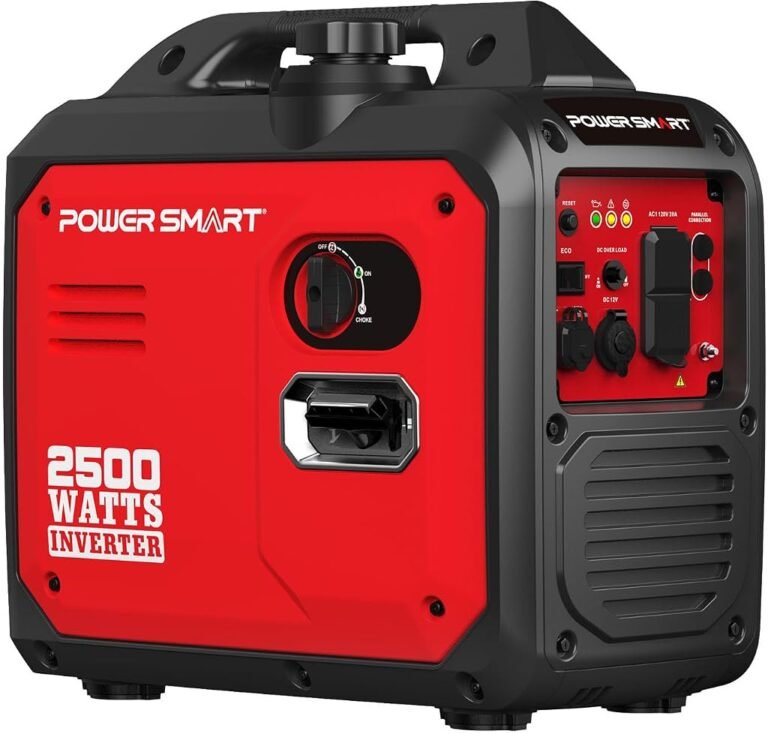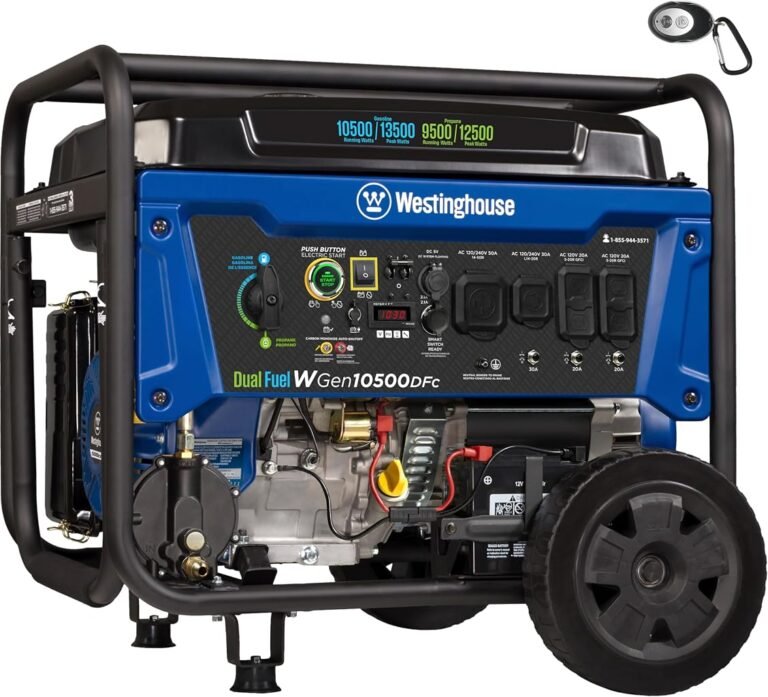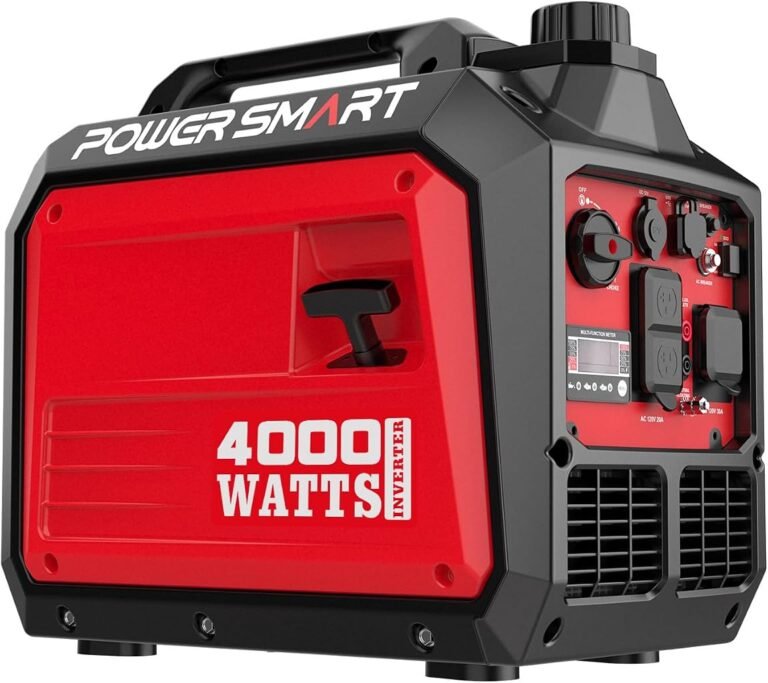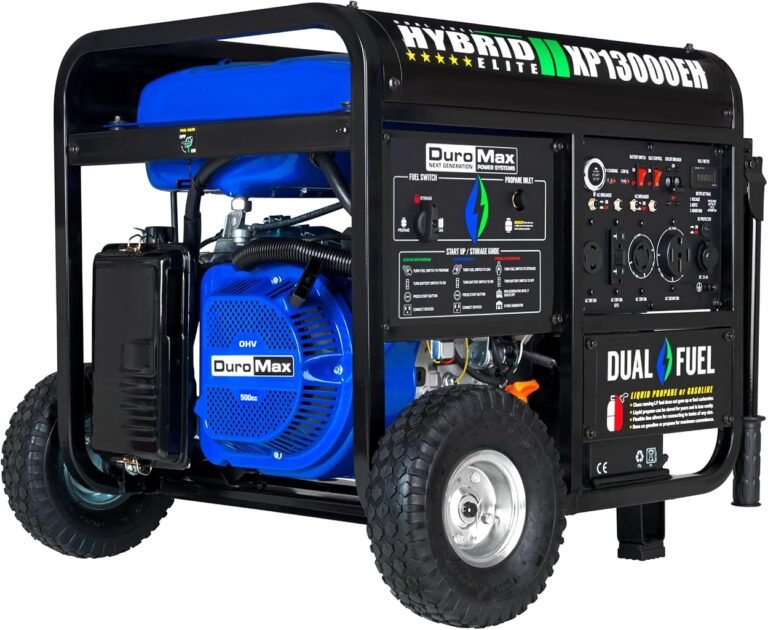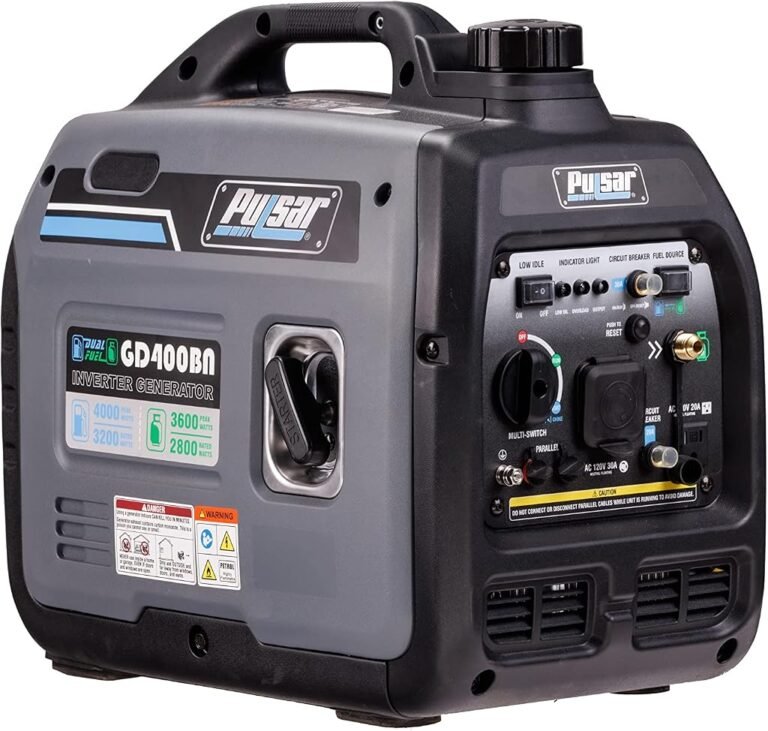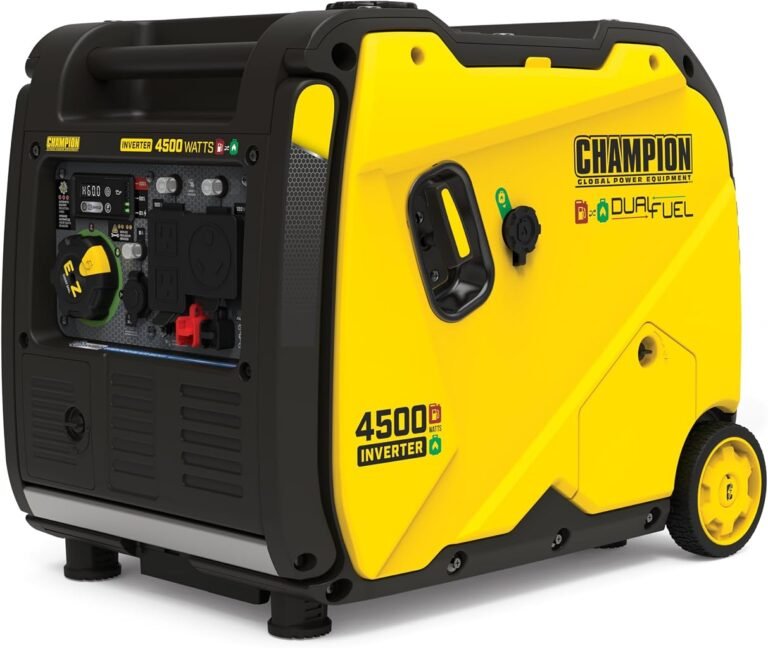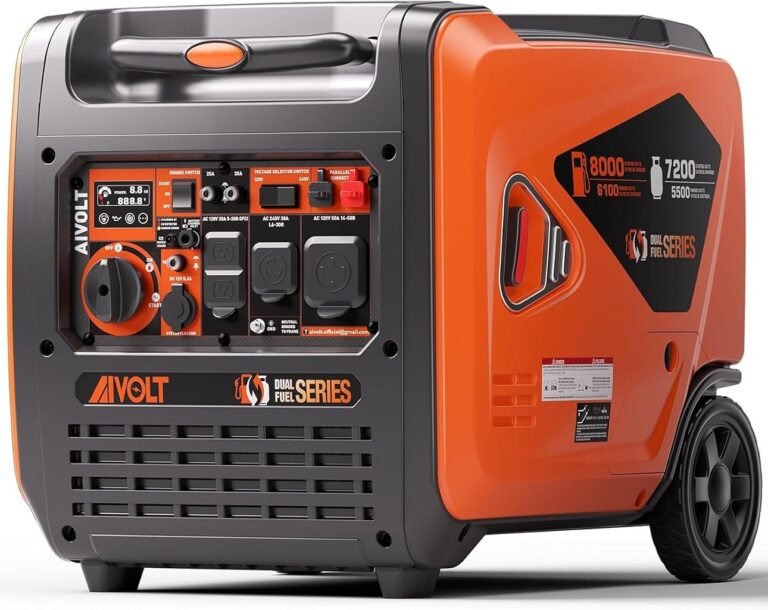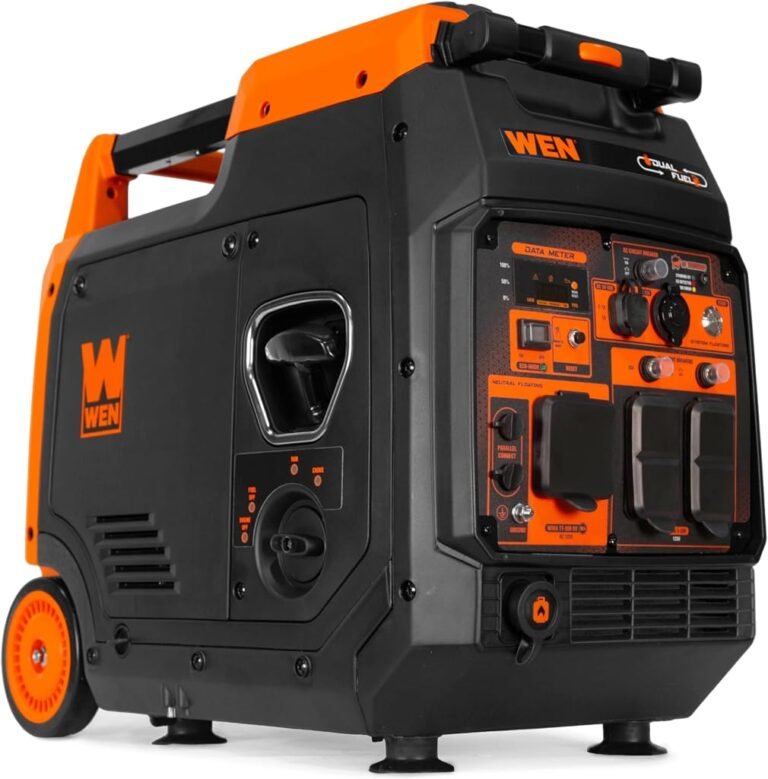
Portable generators become easier to judge once the largest number on the casing stops dominating the discussion. Peak wattage attracts attention, but sustained output determines how much equipment can remain powered. Fuel choice affects that output. Runtime changes with load. Noise measurements become meaningful only when distance and operating conditions are disclosed. Portability is similarly more complicated than a molded handle and a photograph of someone carrying the machine.
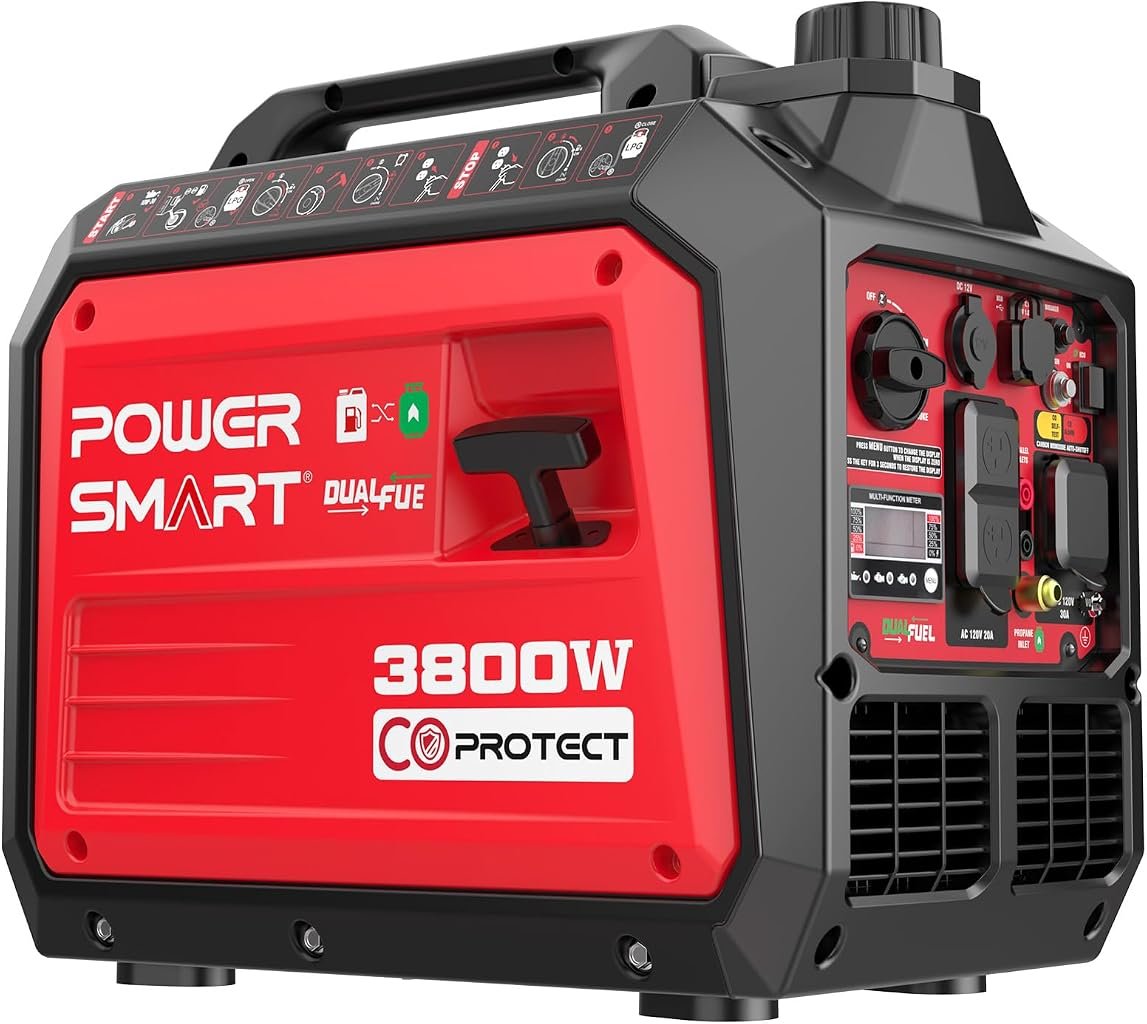
The PowerSmart HB5040DC 3800W Dual Fuel Inverter Generator provides a useful example. It combines a 149cc four-stroke OHV engine with gasoline and propane operation, a fully enclosed inverter design, manual starting, a 30-amp RV outlet, USB connectivity, a multifunction display, ECO operation and automatic carbon-monoxide protection. PowerSmart rates it at 3,800 surge watts and 3,300 running watts on gasoline, dropping to 3,500 surge watts and 3,100 running watts on propane.
The machine weighs a published 50.7 pounds, carries 1.3 gallons of gasoline, and is rated for 4.5 hours at 50% load. Its current manufacturer price is $449.99, matching the reference price used for this review.
Our score is 8.62/10. Customer Sentiment stands at 8.5, Buyer Confidence at 9.35, and Value at 8.28. Buyer Confidence is the standout figure because the product has a well-defined specification and few ambiguities about its intended assignment. Value is slightly more restrained because 3,300 running watts, recoil starting and 120V-only output establish firm boundaries despite a useful feature package.
The 3,800-Watt Label Is Only the Starting Point
A disciplined portable generator buying guide begins by translating the headline wattage into sustained capacity.
The PowerSmart produces 3,800 starting watts and 3,300 running watts on gasoline. On propane, those figures decline to 3,500 starting watts and 3,100 running watts. Rated current is 27.5 amps on gasoline and 25.8 amps on propane, with 120V single-phase output at 60 Hz.
The 3,800-watt number therefore describes short-duration surge capacity rather than a continuous electrical budget.
That difference matters whenever motors and compressors enter the calculation. Refrigerators, pumps and air conditioners can require additional power while starting. A generator must accommodate those brief surges while simultaneously supporting whatever other equipment is already running.
At 3,300 continuous gasoline watts, the PowerSmart has enough capacity to handle substantially more than lights and electronics. Refrigeration, communications equipment, televisions, chargers and selected household or RV appliances can coexist when their actual requirements remain within the available capacity.
Yet 3,300 watts is not whole-home electricity.
Electric water heaters, large resistance heaters, central air-conditioning systems, ranges and other high-demand equipment can consume several thousand watts individually. Even modest appliances can exceed the generator’s capacity when too many operate together.
The useful number is therefore not 3,800. It is the margin remaining after actual running loads and startup demands have been calculated.
Dual Fuel Makes the Generator More Adaptable
The difference between a gasoline-only generator and a dual-fuel model becomes most apparent when fuel availability stops being predictable.
Gasoline produces the PowerSmart’s maximum output. Propane sacrifices 200 running watts, reducing sustained capacity from 3,300 to 3,100 watts. The machine includes a propane hose with regulator, so LPG operation is part of the standard configuration rather than an optional conversion.
The output penalty is relatively modest: about 6.1% of the gasoline running rating.
That makes propane unusually practical here. An owner who does not need the final 200 watts can gain a second fuel choice without surrendering a large share of the generator’s capacity.
Gasoline remains convenient and energy dense, but long-term storage requires management. Fuel left untreated in small-engine systems can create reliability problems. Propane has different storage characteristics and does not leave liquid fuel sitting in the carburetor in the same way.
During regional outages, dual fuel also creates redundancy. Gasoline stations may be crowded, depleted or unable to pump fuel if local electricity is unavailable. Stored propane can provide another route to electricity.
Propane brings its own constraints. Cylinder size, temperature, remaining fuel and regulator performance affect operation. It should therefore be viewed as an alternative fuel system rather than an inherently superior one.
The advantage lies in choice.
A 149cc Engine Produces a Useful Middleweight Package
PowerSmart builds the HB5040DC around a 149cc single-cylinder, four-stroke OHV engine with forced-air cooling. Starting is manual rather than electric. The manufacturer specifies a 16.2-fluid-ounce oil capacity.
The complete generator weighs 50.7 pounds.
That figure deserves more attention than it usually receives because weight directly affects whether a generator will actually be used as intended.
At roughly 51 pounds, the PowerSmart can be moved by many adults without a wheel kit. It remains light enough for RV storage, vehicle transport and relocation from a garage or shed to an appropriate outdoor operating area.
It is not universally easy to carry.
Fifty pounds becomes much more demanding on stairs, loose ground or over distance. Buyers with limited lifting ability should treat published weight as a physical requirement rather than a secondary specification.
Still, the relationship between output and mass is attractive. The generator supplies 3,300 continuous gasoline watts while remaining far below the 100-pound threshold crossed by many larger portable units.
The enclosed housing also gives it a different character from open-frame generators. The engine and generator components are packaged inside a compact shell rather than surrounded primarily by a tubular metal frame.
The 1.3-Gallon Tank Explains the Runtime
The PowerSmart carries 1.3 gallons, or approximately 5 liters, of gasoline and is rated for 4.5 hours of operation at 50% load.
Half of the 3,300-watt gasoline running rating is 1,650 watts.
That context is necessary because runtime figures can otherwise create false expectations. A 4.5-hour rating at half load does not mean the generator will run 4.5 hours at 3,300 watts, nor does it describe what happens at a very light load.
Fuel consumption changes with demand.
The 1.3-gallon tank also reflects a deliberate compromise. A larger tank could extend gasoline runtime, but it would increase dimensions and weight. For an inverter generator positioned around portability, there is a point where more fuel capacity begins undermining another reason for buying the machine.
Load management can partly compensate.
During an outage, a refrigerator does not necessarily need to operate at the same moment as every other appliance. Charging can be scheduled. High-draw devices can be used separately. Reducing simultaneous demand gives the engine less work to perform and can stretch a finite fuel supply.
Propane changes the equation again because runtime then depends on the connected cylinder rather than the onboard gasoline tank.
Noise Numbers Need Their Measurement Conditions
PowerSmart publishes a 70 dB noise rating at 23 feet for the HB5040DC. Its product documentation also identifies lighter-load operation around 59 dBA at 23 feet and 25% load, while the higher figure corresponds to heavier operation.
Those two numbers illustrate why generator noise comparisons can become misleading.
A machine at quarter load is performing a very different job from one operating near full output. Comparing a lightly loaded generator’s acoustic figure with another model’s full-load measurement produces little useful information.
Distance matters as well.
The PowerSmart’s disclosed 23-foot measurement distance at least gives buyers a basis for comparison when another manufacturer publishes noise under similar conditions.
The practical interpretation is straightforward: this is an enclosed inverter generator whose acoustic behavior changes with load. It should be considerably more suitable to RV sites, camping and residential use than a design built without regard for noise, but 70 dB is not silence.
A generator running a substantial air-conditioning or household load will remain audible.
ECO Operation Makes Sense for Variable Loads
PowerSmart equips the generator with ECO operation, allowing engine behavior to adjust when electrical demand is lower.
This feature aligns naturally with real generator use.
Household and RV electrical loads are rarely static. Refrigerator compressors cycle. Chargers reduce consumption as batteries fill. Lights switch on and off. Air-conditioning compressors start and stop. A generator might face 500 watts one minute and several times that amount moments later.
A conventional engine operating at unnecessarily high speed under every condition wastes some of the advantage of light-load periods.
ECO operation allows the machine to respond more appropriately.
The result should not be confused with unlimited fuel economy. When the generator is asked to deliver substantial power, the engine still has to produce the mechanical energy required to generate it.
The feature is most relevant during the many periods when demand is well below maximum capacity.
The Electrical Panel Is Built Around RV and Portable Use
The PowerSmart’s control panel is one of its more useful elements.
Available connections include two 120V 20A NEMA 5-20R receptacles, one 120V 30A RV receptacle, a 12V DC outlet and two 5V USB ports. The generator is also parallel capable.
The 30-amp RV connection immediately identifies an intended audience.
A travel trailer can connect through a receptacle designed around that application rather than depending entirely on household-style outlets and adapters. Yet connector compatibility does not override generator capacity.
An RV air conditioner can impose a meaningful compressor-starting surge. Microwaves, coffee makers, electric water heaters and other appliances can then add substantial demand. Owners still need to calculate what can operate simultaneously within 3,300 gasoline or 3,100 propane running watts.
The USB ports are modest but appropriate. Phones and other small devices can charge directly without consuming an AC outlet through a separate adapter.
The 12V DC output broadens the connection options further.
The Multifunction Display Improves Load Awareness
According to PowerSmart’s current HB5040DC specifications, the generator includes a five-in-one display showing voltage, frequency, operating hours, fuel level and output.
That information is more useful on a generator than it may appear in a product photograph.
Operating hours help owners track maintenance. Voltage and frequency give immediate electrical information. Fuel indication reduces guesswork around the small 1.3-gallon tank.
Output monitoring may be the most useful feature during active operation.
Without a load display, generator management can become an exercise in adding nameplate wattages mentally while appliances cycle unpredictably. A visible indication of output gives the operator a better sense of how heavily the machine is working.
It does not replace correct load calculations. Starting surges can happen quickly, and appliance ratings still matter.
But it makes the generator less opaque.
For an emergency appliance rather than a device used every day, straightforward operating information can reduce mistakes when the machine is finally needed.
Recoil Starting Trades Convenience for Simplicity
The HB5040DC uses a manual starting system. There is no electric-start battery in the current specification.
That creates a straightforward trade.
Electric starting can make a generator easier to operate, especially for users who have difficulty pulling a recoil starter. It becomes more appealing as engine displacement increases.
A starting battery, however, creates another maintenance obligation. Generators often spend months in storage. Batteries can discharge during that period unless they are maintained appropriately.
Manual starting removes that particular dependency.
For a 149cc engine, the choice is understandable, particularly in a machine designed around moderate weight and compactness. Yet accessibility matters more than design purity. Someone who cannot comfortably use a recoil starter should treat the absence of electric starting as a substantial limitation.
A generator that cannot be started by its intended owner is poorly matched regardless of its electrical specification.
Carbon-Monoxide Shutdown Addresses a Serious Risk
PowerSmart equips the HB5040DC with CO Alert, which automatically shuts the generator down when dangerous carbon-monoxide conditions are detected. Low-oil shutdown and overload protection are also specified.
The safety context is severe.
The U.S. Consumer Product Safety Commission reports that more than 100 U.S. deaths each year are linked to portable generators. The agency also states that one portable generator can produce as much carbon monoxide as hundreds of cars.
That makes automatic CO shutdown a material feature rather than decorative electronics.
It must not be interpreted as permission to operate the generator close to a house.
In its 2026 guidance, the CPSC instructs consumers to operate portable generators outdoors at least 20 feet from the home, with exhaust directed away from the house and other buildings. The agency explicitly warns that opening windows or doors does not provide adequate ventilation for a generator operating inside an enclosed space.
CO Alert is therefore another layer of protection after correct placement, not an alternative to correct placement.
Working carbon-monoxide alarms inside the home remain necessary as well.
Refueling Creates Another Safety Obligation
A gasoline generator combines electricity, hot engine surfaces and flammable fuel. Carbon monoxide is not the only hazard requiring planning.
CPSC’s current guidance says generators should never be refueled while running. They should be switched off and allowed to cool before gasoline is added.
That rule matters particularly with a 1.3-gallon tank because extended operation may require repeated refueling.
The temptation during an outage is obvious: keep appliances powered, pour more gasoline into the generator and avoid interruption.
The safer procedure requires accepting the interruption.
Placement should also be planned before an emergency. A 50.7-pound generator is manageable enough to move, but no owner should discover after starting it that exhaust is directed toward a window or that the machine must be repositioned through rain or darkness.
Generator preparedness is partly about wattage. It is also about deciding where the machine will run, how cords will reach the required loads and how fuel will be stored safely.
Parallel Capability Provides an Upgrade Route
The PowerSmart is parallel capable, allowing compatible inverter generators to be connected for greater available output.
That provides an expansion path without forcing every buyer into a larger generator immediately.
A user whose normal requirements remain comfortably below 3,300 watts can operate one compact machine. If future requirements increase, parallel operation can potentially provide additional capacity.
There is an economic and logistical counterargument.
Two generators mean two engines, two maintenance schedules and more storage. Fuel consumption rises with the additional electrical work being performed. The parallel arrangement also introduces additional hardware.
Anyone who already knows that substantially more than 3,300 running watts will be required regularly should compare larger generators before assuming two smaller machines are the better route.
Parallel capability is valuable because it preserves an option, not because it makes the PowerSmart’s existing capacity irrelevant.
120V Output Establishes a Firm Boundary
The PowerSmart is rated for 120V output.
This specification deserves more attention than it usually receives.
A generator can possess enough total wattage to run a theoretical load and still be unsuitable if the equipment requires 240V. Wattage and voltage answer different electrical questions.
That means buyers seeking to operate 240V pumps, certain large tools, electric dryers or other 240V equipment need a different generator architecture.
For RV use and selected household backup through appropriate 120V connections, the PowerSmart’s configuration makes more sense.
The generator’s strongest use case is therefore selective rather than universal backup. Refrigeration, lights, communications equipment, electronics and compatible appliances can be prioritized without pretending that a 120V, 3,300-running-watt machine can reproduce normal household electrical service.
That boundary is healthy when understood before purchase and frustrating when discovered afterward.
What the Scores Say About the PowerSmart 3800W
Our 8.62/10 overall score reflects a well-balanced portable inverter generator whose limitations are relatively easy to identify.
The 9.35 Buyer Confidence rating is the highest of our four figures. PowerSmart publishes unusually specific information about the HB5040DC: gasoline and propane ratings, current, voltage, engine displacement, fuel capacity, runtime, noise, weight, starting method and safety systems are all clearly stated.
That clarity makes buyer fit easier to determine.
Customer Sentiment at 8.5 sits close to the overall score. It supports an assessment of a machine whose intended applications and actual specification align reasonably well.
Our 8.28 Value rating is positive but slightly lower.
At the $449.99 reference price, the package includes dual-fuel operation, inverter architecture, CO shutdown, RV connectivity, USB output, a multifunction display, ECO operation and parallel capability. PowerSmart also lists a two-year warranty and 30-day returns for purchases through its current direct-sales page.
The constraints prevent Value from matching Buyer Confidence. Recoil starting is less convenient than electric starting. Output is limited to 120V. The 1.3-gallon gasoline tank prioritizes portability over long refueling intervals. Continuous output stops at 3,300 watts on gasoline and 3,100 on propane.
Those compromises are acceptable when they align with the intended workload.
Who Is the PowerSmart 3800W Best Suited For?
The PowerSmart HB5040DC fits buyers who want more electrical capacity than a small suitcase generator while retaining manageable weight and dual-fuel flexibility.
Its main strengths include:
- 3,800 starting and 3,300 running watts on gasoline.
- 3,500 starting and 3,100 running watts on propane.
- 149cc four-stroke OHV engine.
- 50.7-pound published weight.
- 1.3-gallon gasoline tank.
- 4.5-hour runtime at 50% load.
- Dual-fuel operation.
- 120V 30A RV receptacle.
- Two 120V 20A receptacles.
- 12V DC output.
- Two USB ports.
- ECO operation.
- Five-in-one information display.
- Automatic CO shutdown.
- Low-oil shutdown.
- Overload protection.
- Parallel capability.
The weaker fit is equally identifiable.
Buyers who need 240V should choose another generator. Those unable to operate recoil starting should prioritize an electric-start model. Households expecting broad whole-home backup need more continuous capacity, while buyers whose electrical requirements amount to a few hundred watts can choose something lighter.
The PowerSmart occupies a productive middle ground only when the load calculation points there.
Final Considerations
The PowerSmart 3800W Dual Fuel Inverter Generator is more accurately described as a 3,300-running-watt gasoline generator and 3,100-running-watt propane generator. The 3,800-watt headline describes useful startup capacity, but sustained output should determine whether the machine fits the assignment.
Within that boundary, the specification is coherent. The 149cc engine and 50.7-pound chassis keep the generator genuinely transportable for many owners. Dual-fuel operation creates useful redundancy. A 30A RV connection makes recreational use straightforward, while USB and DC outputs suit modern portable equipment. ECO operation and inverter architecture fit variable loads rather than forcing the machine into the operating pattern of a basic open-frame generator.
The CO shutdown system is another substantial advantage. Portable-generator exhaust is capable of creating lethal carbon-monoxide concentrations quickly, and federal safety authorities continue to document deaths associated with improper use. The sensor adds protection, but the generator still belongs outdoors at least 20 feet from the home with exhaust directed away from buildings.
The compromises remain visible. Manual starting requires physical effort. The 1.3-gallon tank limits gasoline endurance compared with larger machines. The electrical system is 120V only. At full or heavy load, the generator remains plainly audible despite its enclosed inverter construction.
Our 8.62/10 score reflects that balance. Buyer Confidence at 9.35 is particularly high because the machine’s capabilities and boundaries are documented with unusual clarity. Customer Sentiment at 8.5 stays close to the overall assessment, while Value at 8.28 recognizes a substantial feature set at the $449.99 reference price without treating the generator as more capable than its ratings allow.
The PowerSmart makes particular sense for an RV owner who needs a 30-amp connection, a household planning selective emergency backup, or an outdoor user who wants more than 3,000 continuous watts without moving into a much heavier generator.
It makes less sense when the purchase begins and ends with the 3,800-watt label.
The sensible process starts elsewhere: calculate running loads, identify startup surges, decide whether 120V is sufficient, determine which fuel will be stored, establish a safe operating location and confirm that a roughly 51-pound generator can be moved comfortably.
When those answers align with 3,100 to 3,300 watts of continuous capacity, the HB5040DC presents a disciplined balance of portability, fuel flexibility and useful electrical output. When they do not, another generator size or electrical configuration is the more rational choice.