Generator listings often reduce a complicated machine to one large wattage number. That shorthand can be useful, but it can also conceal differences in fuel type, sustained output, electrical architecture, starting system, noise, and safety equipment. In this case, those differences expose a particularly significant product-identity issue.
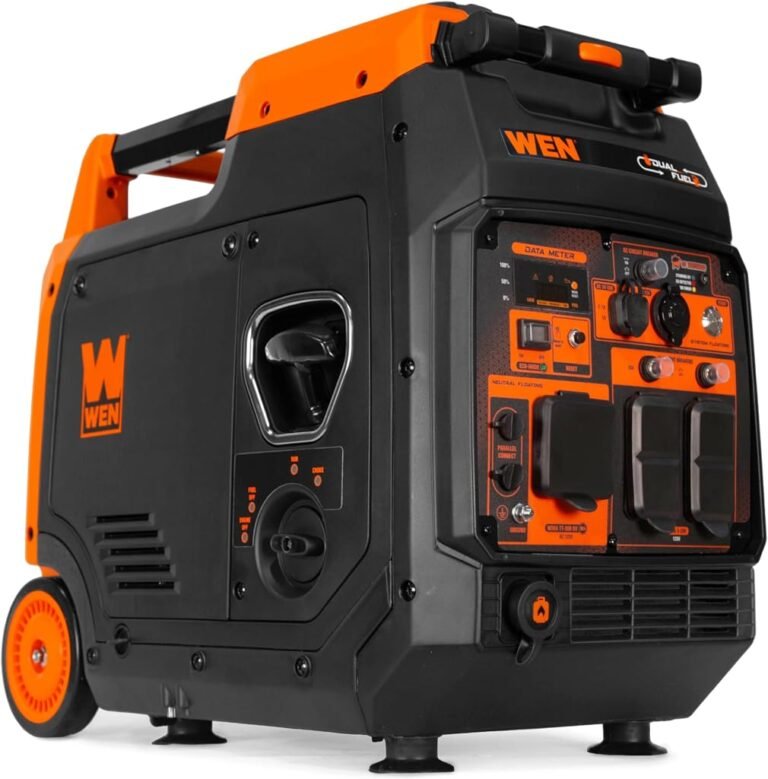
The generator associated with this review is verifiably the WEN DF480iX, not a Westinghouse 4,650-peak-watt gasoline generator. WEN identifies the DF480iX as a 4,800-watt dual-fuel portable inverter generator with electric start, RV connectivity, fuel shutoff, and a carbon-monoxide shutdown sensor.
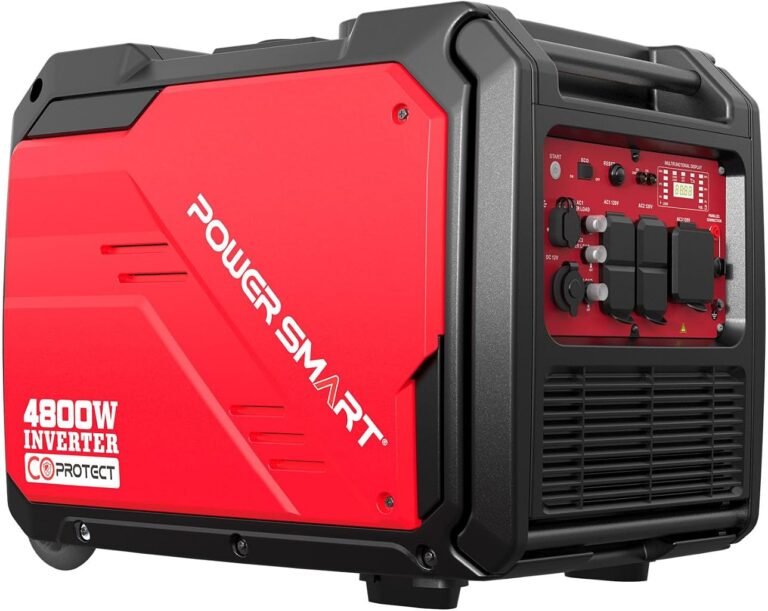
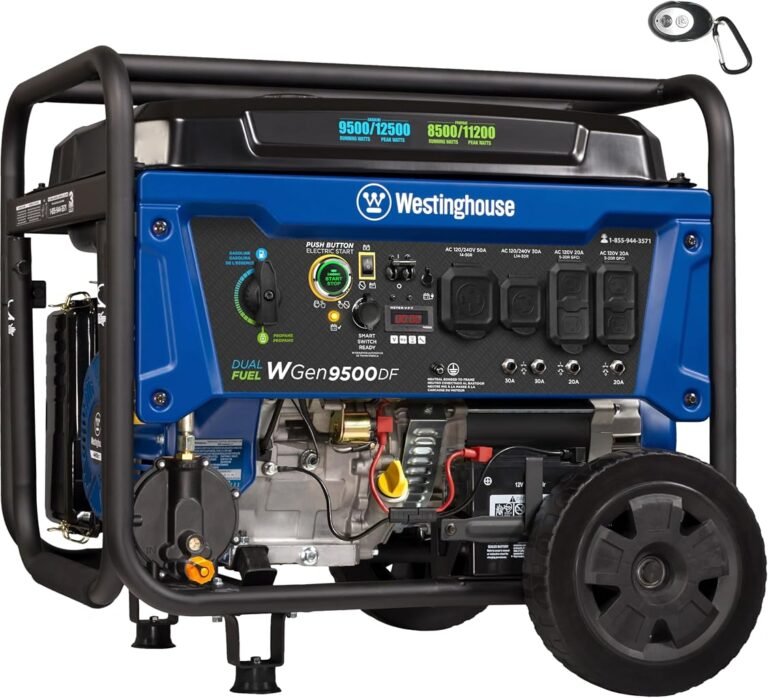
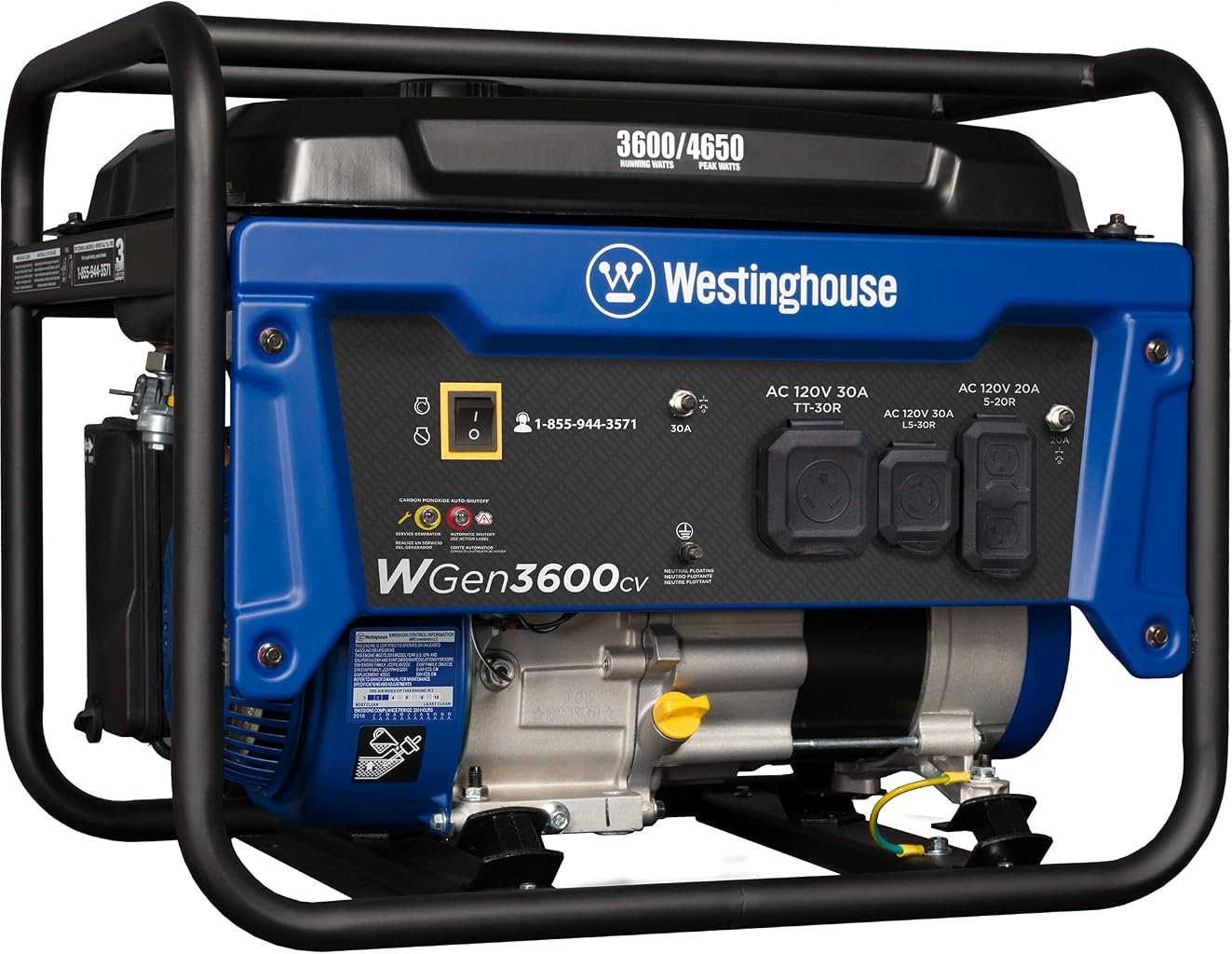
That discrepancy cannot be treated as cosmetic. Brand, peak output, fuel capability, and generator architecture all differ. The responsible editorial approach is therefore to evaluate the identifiable WEN DF480iX while making the naming conflict explicit rather than assigning WEN specifications to a Westinghouse machine.
Once the identity is established, the product itself becomes much easier to assess. Our score is 8.98/10, accompanied by Customer Sentiment of 8.94, Buyer Confidence of 9.64, and Value of 8.52. The ratings describe a generator with a broad feature set and unusually strong specification transparency, though its value proposition depends heavily on the price actually paid.
A 4,800-Watt Generator, but Only on Gasoline
The headline output figure needs immediate qualification.
According to WEN’s official DF480iX specifications, its 224cc dual-fuel engine produces 4,800 surge watts and 4,000 rated watts on gasoline. Propane operation reduces those figures to 4,320 surge watts and 3,600 rated watts.
Those four numbers are more useful than a generic “4,800-watt” label.
Surge output exists primarily to accommodate short periods of elevated demand, such as when an electric motor or compressor starts. Rated output describes the sustained electrical capacity available during normal operation. Buyers planning an RV setup or emergency household load should therefore work principally from 4,000 watts on gasoline or 3,600 watts on propane, while preserving additional capacity for startup events.
Fuel selection consequently affects more than convenience.
On propane, the DF480iX gives up 400 rated watts compared with gasoline, a 10% reduction in sustained output. Peak output falls by 480 watts, also 10%. That trade-off is straightforward: propane provides another fuel option, while gasoline extracts the higher electrical output from the engine.
The distinction becomes relevant when operating near the generator’s limit. A load plan that fits within 4,000 rated watts on gasoline cannot automatically be transferred unchanged to propane.
This is precisely why a portable generator buying guide should separate surge wattage, rated wattage, and fuel-specific output rather than treating the largest printed figure as the machine’s universal capacity.
Dual Fuel Changes the Preparedness Equation
Dual-fuel capability is among the DF480iX’s more meaningful advantages.
Gasoline is widely available and gives the generator its maximum output. Propane offers a second operating option through a tool-free LPG quick connector. WEN states that the generator can run for up to seven hours at half load from its 1.9-gallon gasoline tank, while a 20-pound propane tank can provide up to 12 hours at half load.
These are manufacturer runtime figures rather than guarantees for every operating condition. Electrical demand, ambient conditions, maintenance, fuel quality, and operating behavior can affect actual runtime.
Even so, the comparison illustrates the practical character of dual-fuel ownership.
During a prolonged outage, fuel availability can become as consequential as generator output. A machine that accepts two fuels gives its owner another option when gasoline supplies are inconvenient or unavailable. Propane also changes storage logistics because it is contained differently from gasoline.
The compromise is lower electrical capacity when running on LPG.
For users with moderate loads, that reduction may have little practical effect. For an RV air conditioner operating alongside a microwave, converter, refrigerator, or other equipment, those missing watts can become much more noticeable.
The DF480iX therefore rewards load awareness rather than eliminating it.
Inverter Architecture Separates It From a Conventional Generator
The inverter designation is not merely branding.
WEN states that the DF480iX is engineered to mirror a pure sine wave, with total harmonic distortion below 0.3% at no load and below 1.2% at full load. The manufacturer explicitly positions this output for sensitive electronics including laptops, smartphones, monitors, and tablets.
That specification distinguishes the DF480iX from many conventional open-frame generators.
Traditional portable generators can be entirely appropriate for tools, appliances, pumps, and emergency equipment. Inverter generators add electronic power conditioning and commonly adjust engine behavior according to load. On the DF480iX, WEN provides an eco-mode function that changes fuel consumption as connected demand rises and falls.
For buyers who intend to power computers and communications equipment alongside ordinary appliances, the published harmonic-distortion figures are particularly useful because they replace vague claims about “clean power” with measurable output characteristics.
There is also a practical efficiency argument.
A generator does not spend every operating hour at maximum demand. Refrigerators cycle. Chargers taper their consumption. Some equipment is switched off while other equipment is operating. An inverter system capable of responding to changing loads can therefore make sense for applications characterized by fluctuating demand.
Electric Start Is More Than a Convenience Feature
The DF480iX uses keyless electric starting and retains a recoil starter as backup.
That pairing is sensible.
Electric start reduces the physical effort involved in normal startup. The recoil mechanism provides a second method rather than making the generator completely dependent on the electric-start system.
The value of that arrangement can be underestimated when generators are compared only by wattage and price. Portable generators are often used under unpleasant circumstances: bad weather has interrupted utility service, an RV is being set up after travel, or temporary power is needed at a location without mains electricity. Reducing friction during startup has practical merit.
Still, electric start should not be mistaken for automatic standby operation. This remains a portable generator requiring deliberate setup, safe placement, fueling, electrical connection, and load management.
It is not a permanently installed standby generator that automatically assumes household electrical demand when the utility fails.
Noise Is Better Quantified Here Than on Many Listings
WEN rates the 224cc engine at 62 decibels at quarter load.
The operating condition matters. A quarter-load acoustic figure should not be interpreted as a promise of 62 dB at every output level. Engine behavior changes as electrical demand changes.
Even with that qualification, publishing a measured noise figure at a defined load gives buyers something concrete to compare.
Noise is particularly relevant for RV use, campsites, residential backup, and other situations where the generator may operate for hours rather than minutes. An enclosed inverter generator is generally conceived around a different acoustic objective from an exposed conventional generator engine.
The DF480iX’s inverter architecture, enclosure, and eco-mode are therefore not isolated specifications. Together they describe a machine intended for sustained portable use where electrical quality, fuel consumption, and acoustic behavior matter alongside raw wattage.
RV Connectivity Is Built Into the Design
The outlet panel reinforces that interpretation.
WEN equips the DF480iX with four 120V NEMA 5-20R three-prong receptacles, one 120V TT-30R RV receptacle, one 12V DC receptacle, and two 5V USB ports.
That is a broad connection set for a generator in this output class.
The TT-30R receptacle is especially relevant. Owners of compatible 30-amp RVs do not have to treat RV connection as an afterthought requiring the same sort of adaptation demanded by generators fitted solely with household outlets.
Yet the presence of a 30A RV outlet does not repeal the generator’s output limits.
Air conditioners can impose substantial startup loads. Microwaves, electric heating appliances, converters, refrigerators, and other equipment add further demand. An RV owner should therefore calculate both sustained and startup requirements before deciding which appliances can operate simultaneously.
On gasoline, 4,000 rated watts provide a useful envelope. On propane, that envelope narrows to 3,600 watts.
The result is a generator well aligned with RV applications, provided the user treats wattage as a budget rather than an unlimited account.
Our Score: 8.98/10
Our 8.98/10 score reflects the coherence of the DF480iX as a portable power package.
The generator combines dual-fuel operation, inverter power conditioning, electric and recoil starting, RV connectivity, CO shutdown, onboard mobility equipment, fuel shutoff, eco mode, USB charging, and parallel capability. WEN also states that low-oil and low-fuel shutdown systems operate alongside overload protection and indicator lights.
The significance is not the sheer number of features. It is how closely they correspond to the likely jobs of a 4,000-rated-watt portable inverter generator.
RV owners need appropriate connectivity and manageable noise. Emergency users benefit from fuel flexibility. Electronics users have reason to care about harmonic distortion. Portable operation benefits from wheels and a telescoping handle. Long periods between uses make carburetor fuel management relevant.
The feature set therefore has internal logic.
Customer Sentiment is 8.94, only slightly below the overall score. That close alignment supports a broadly favorable editorial assessment without implying that every buyer will find the same trade-offs acceptable.
Buyer Confidence: 9.64
Buyer Confidence is the highest rating at 9.64.
The reason is unusually straightforward: WEN publishes detailed specifications for the DF480iX.
Its official documentation identifies engine displacement, gasoline and propane output, harmonic distortion, acoustic output at a defined load, fuel capacity, half-load runtime, outlet configuration, starting method, CO shutdown, parallel capability, and warranty coverage.
That degree of specificity matters in generator shopping.
A buyer can calculate whether 4,000 gasoline running watts are adequate. The 3,600-watt propane rating can be incorporated into a separate load plan. A 30A RV owner can identify the TT-30R outlet before purchase. A user concerned about electronics can inspect published harmonic-distortion figures rather than relying entirely on generic inverter language.
High buyer confidence does not mean universal suitability. It means the product’s capabilities are sufficiently defined to support an informed purchasing decision.
The distinction is meaningful.
Value: 8.52
Our Value score of 8.52 sits below Buyer Confidence and below the 8.98 overall rating.
At the $349 reference price attached to this review, the specification set is aggressive: dual-fuel operation, 4,800 gasoline surge watts, inverter architecture, electric start, CO sensing, RV connectivity, and multiple outlets create a substantial functional package.
Price comparisons require care, however. WEN’s official product page currently displays a materially different manufacturer-direct price, illustrating how generator pricing can vary by seller and timing.
Value should therefore be judged against the actual transaction price rather than a permanent assumption that the generator costs $349 everywhere.
At a low-$300s price, the combination is particularly compelling on specification. As the purchase price rises, competing inverter generators, dual-fuel models, higher-output machines, and alternative brands deserve closer examination.
The 8.52 score captures that sensitivity. This is a strong feature package, but value remains connected to the price at checkout.
CO Watchdog Adds Protection, Not Permission
The DF480iX includes WEN’s Watchdog CO Shutdown Sensor, which is designed to shut down the generator when dangerous carbon-monoxide levels are detected.
That is useful secondary protection. It does not make enclosed or near-building operation safe.
The Centers for Disease Control and Prevention’s current generator guidance says a generator should be kept outdoors at least 20 feet from doors, windows, and vents. CDC also recommends battery-operated or battery-backup CO detection inside the home.
CDC’s warning is direct: “Never use a generator inside your home or garage, even if doors and windows are open.”
The reason is physical rather than theoretical. Combustion produces carbon monoxide, an odorless and colorless gas. Generator exhaust can enter occupied spaces through openings, and a garage with an open door remains an enclosed or partially enclosed structure.
The safest interpretation of CO shutdown technology is therefore as an additional layer behind correct placement, never a replacement for it.
Household Backup Demands Electrical Discipline
A 4,000-rated-watt gasoline generator can keep meaningful household equipment operating during an outage, but it is not equivalent to utility service.
Refrigeration, lighting, internet equipment, chargers, televisions, selected pumps, and other modest loads can be prioritized. High-demand electric heating, large air-conditioning equipment, electric ranges, clothes dryers, and similar appliances can consume substantial portions of the available capacity.
The practical method is to build a load schedule.
Each appliance’s running demand should be recorded, followed by the startup requirement of motor-driven equipment. Loads can then be grouped according to priority, with headroom preserved beneath the generator’s rated capacity.
Connection to household wiring requires equal discipline.
The U.S. Consumer Product Safety Commission warns against generator backfeeding through male-to-male extension cords, stating that exposed energized prongs can create electrocution and fire hazards.
For household circuits, CPSC technical guidance explains that a suitable transfer switch or equivalent proper means is needed to interface portable-generator output safely with installed residential wiring.
The DF480iX’s capability therefore should not encourage improvised electrical connections. A capable generator connected incorrectly remains dangerous.
Fuel Shutoff Addresses a Mundane but Real Ownership Problem
Generators can spend long periods unused.
That makes fuel management relevant. WEN’s fuel-shutoff function stops incoming fuel and allows the generator to consume fuel remaining in the carburetor before shutting down. The manufacturer presents this system as a way to reduce buildup and blockages associated with stagnant fuel.
This feature lacks the immediate appeal of electric start or a large wattage figure, but it addresses the ownership cycle more directly.
Emergency equipment often sits idle precisely because it is emergency equipment. Maintenance practices between uses can therefore determine whether the generator starts when required.
Fuel shutoff does not eliminate maintenance, proper storage, or adherence to the owner’s manual. It does make the shutdown procedure better suited to equipment that may face extended inactivity.
Parallel Capability Creates an Upgrade Path
WEN also permits two compatible inverter generators to be linked through a separately sold parallel connection kit.
That creates an alternative to buying one much larger generator from the outset.
For some owners, modular capacity is attractive. A single generator can handle ordinary camping or moderate backup loads, while a second compatible unit can increase available power when circumstances require it.
There are trade-offs: two engines mean two machines to fuel, store, transport, and maintain. Parallel operation also requires compatible equipment and the correct connection hardware.
Still, the option gives the DF480iX more flexibility than a generator whose output is permanently confined to one unit.
Who Is It For?
The DF480iX is particularly coherent for several types of users:
- RV owners needing a TT-30R connection and enough capacity for carefully managed onboard loads.
- Households seeking portable emergency power for selected circuits or appliances rather than unrestricted whole-house operation.
- Users who prefer the flexibility of gasoline and propane.
- Buyers powering laptops, communications equipment, and other electronics who care about published harmonic-distortion figures.
- Users who value electric starting but still want recoil backup.
- Owners who expect long periods between generator use and can benefit from fuel-shutoff functionality.
Its limitations are equally concrete.
The generator produces less power on propane. Its 4,800-watt figure is surge output, not sustained capacity. Gasoline operation is rated at 4,000 watts, while propane is rated at 3,600 watts. A 1.9-gallon gasoline tank prioritizes manageable size rather than very large onboard fuel reserves. And no CO sensor makes indoor or near-house operation acceptable.
These are not defects so much as boundaries. Good generator ownership begins by recognizing them.
Final Considerations
The most unusual aspect of this Westinghouse 4650 Peak Watt Gas Portable Generator review is that the identifiable machine is not a Westinghouse 4,650-watt gasoline generator at all. It is the WEN DF480iX, a 4,800-surge-watt dual-fuel inverter generator with 4,000 rated watts on gasoline and 3,600 rated watts on propane.
That distinction should govern any purchasing decision.
Evaluated as the WEN DF480iX, our 8.98/10 score reflects a well-integrated collection of capabilities rather than one oversized headline number. Customer Sentiment of 8.94 sits close to that assessment. Buyer Confidence reaches 9.64 because WEN publishes unusually detailed operating specifications. Value at 8.52 is favorable while remaining sensitive to the actual retail price.
The strongest parts of the design are interconnected. Dual fuel expands energy options. Inverter architecture addresses electrical quality and changing loads. Electric start reduces startup effort while recoil provides redundancy. The TT-30R outlet addresses RV use directly. CO Watchdog provides another safety layer. Fuel shutoff responds to long storage intervals. Parallel capability gives owners a path to additional output.
Its boundaries are equally visible. Propane costs 10% of rated output relative to gasoline. The 4,800-watt headline is temporary surge capacity. Runtime claims are tied to defined loads and fuel arrangements. CO shutdown cannot compensate for unsafe placement. Household integration requires proper electrical equipment rather than backfeeding.
For buyers, the broader lesson extends beyond this one machine. Generator shopping should begin with an exact model number, followed by rated watts, surge watts, fuel-specific output, receptacles, electrical architecture, runtime conditions, safety systems, and the demands of the equipment that will actually be powered.
Once those numbers are placed in the correct order, the DF480iX makes a coherent case for RV use and moderate emergency backup. Its appeal is not that it removes the compromises inherent in portable power. It is that those compromises are unusually measurable—and therefore manageable.