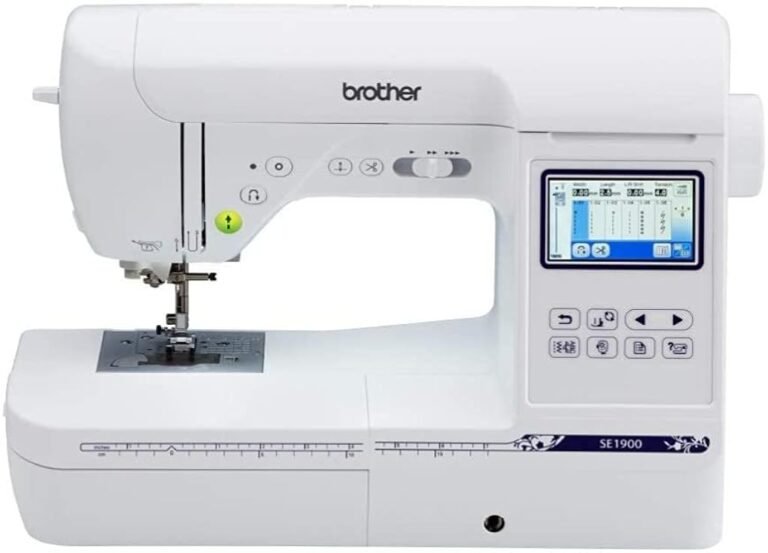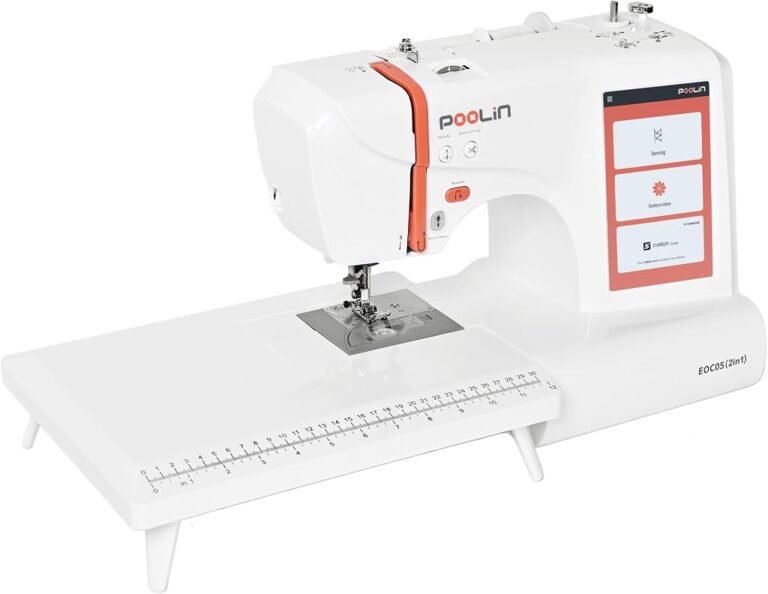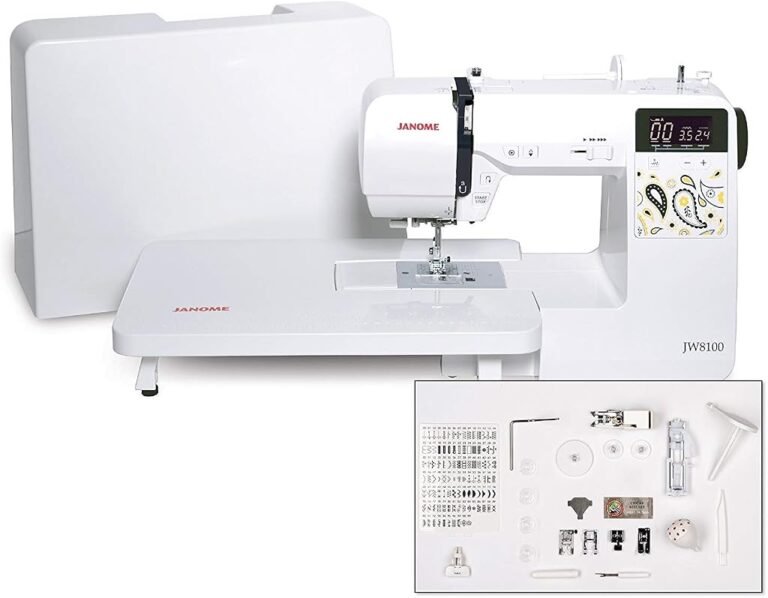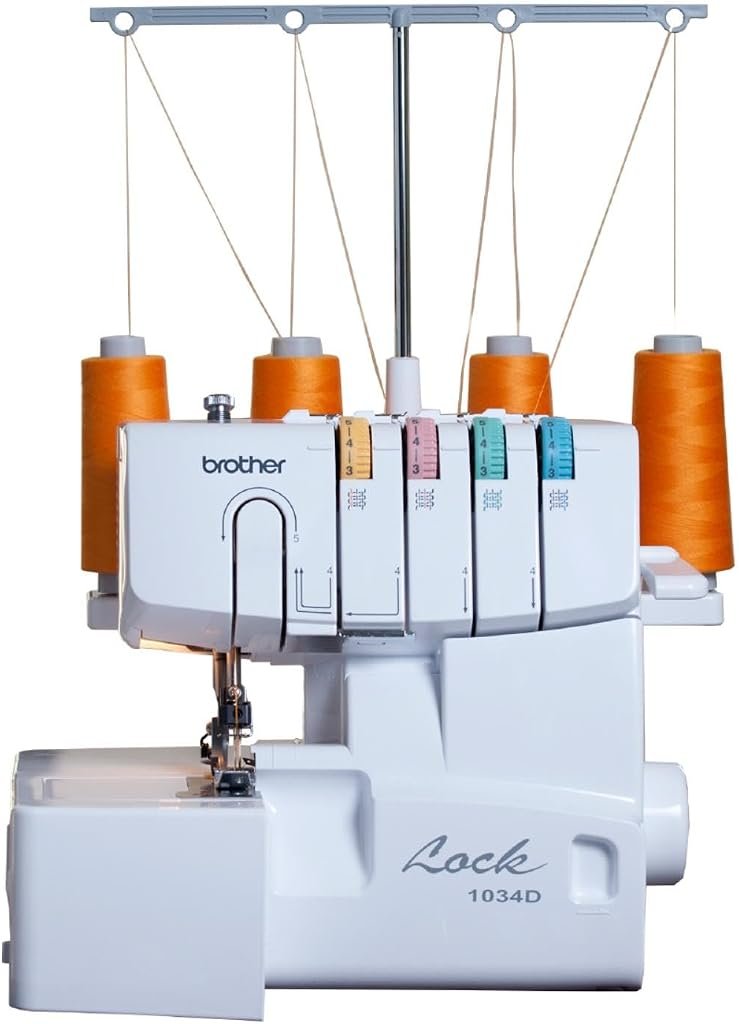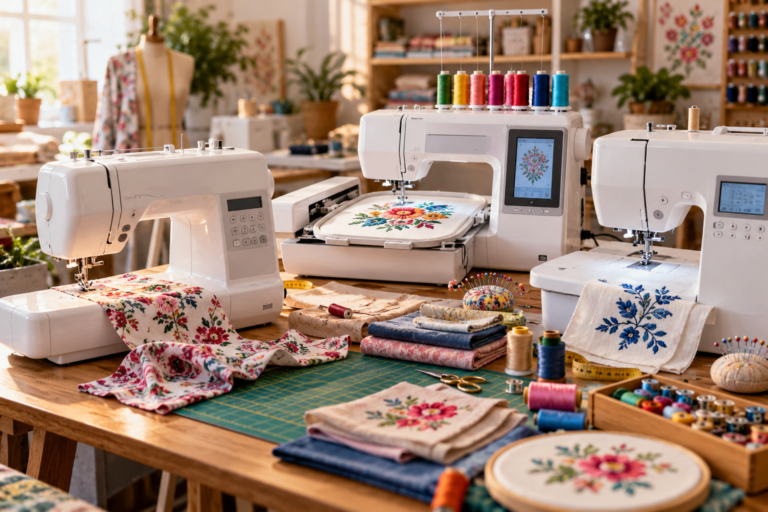
Buying a sewing machine becomes confusing at precisely the moment the word “embroidery” enters the discussion. A conventional sewing machine, a dedicated embroidery machine and a sewing-and-embroidery combination machine can all put thread into fabric, yet they are built around distinctly different jobs. Treating them as interchangeable is one of the easiest ways to buy more machine than necessary—or discover after purchase that a seemingly sophisticated machine cannot perform the work originally intended for it.
The dividing line is mechanical purpose.
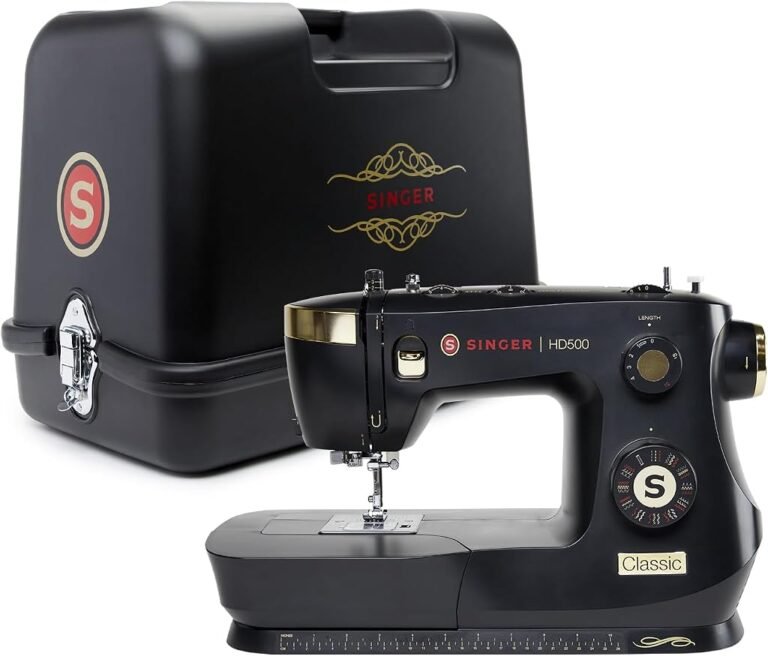
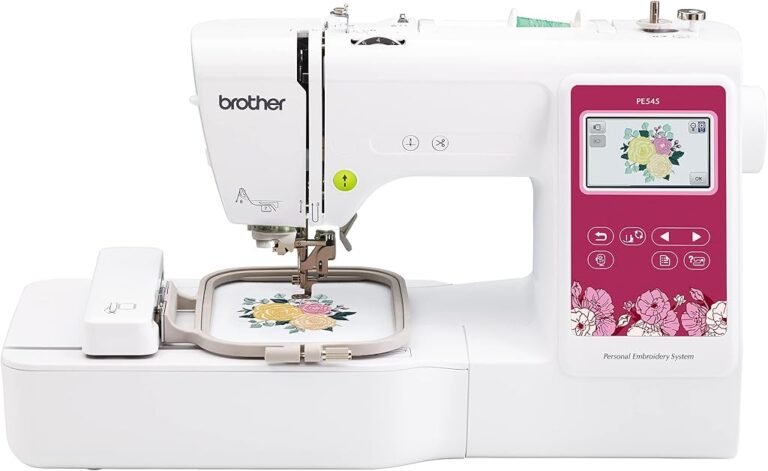
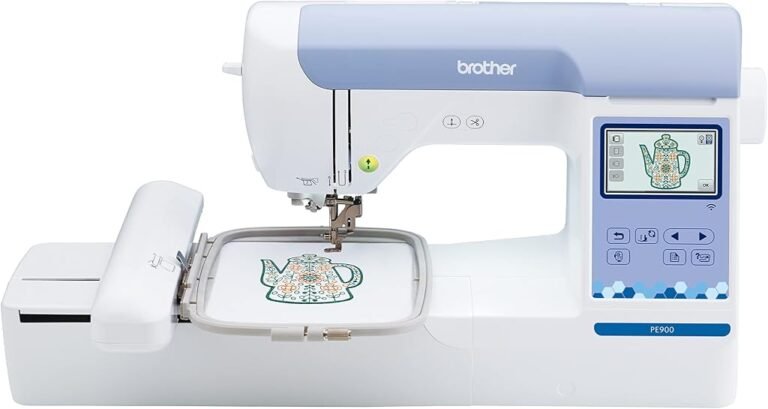
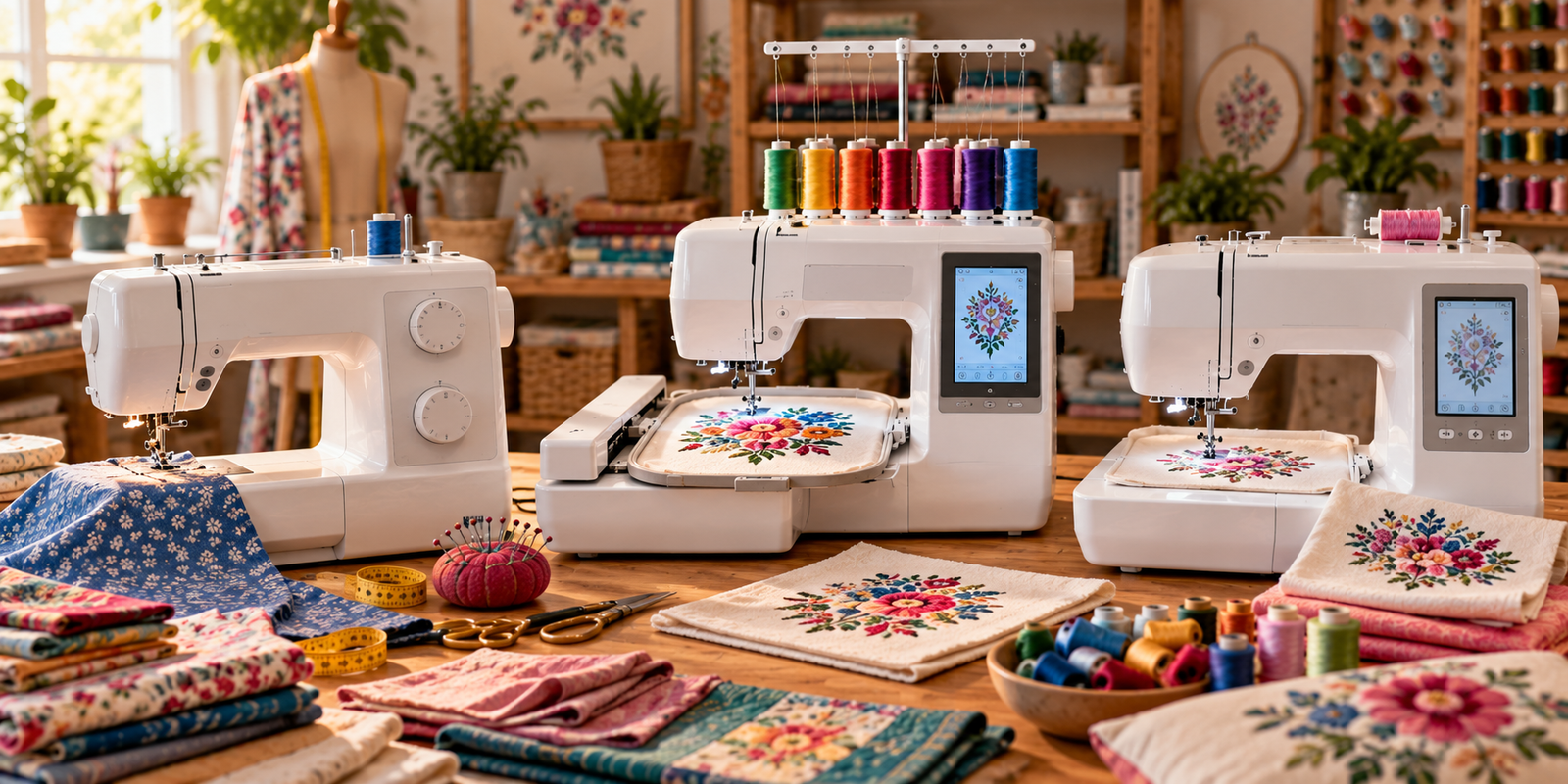
A sewing machine primarily forms user-guided seams and decorative stitches while the operator moves fabric through the machine. A computerized embroidery machine works from digital embroidery data and moves hooped fabric automatically through a programmed design. A combination machine places both capabilities into one chassis.
That sounds straightforward. In practice, the choice reaches into workspace, project size, workflow, software, hoop dimensions, production volume and future equipment plans.
Someone making garments and occasionally adding a monogram has different requirements from a person embroidering logos on finished shirts. A quilter interested in decorative stitches has different requirements again. A home-based personalization operation may eventually find that owning separate sewing and embroidery machines is more productive than asking one combination machine to switch between jobs all day.
The correct choice begins not with stitch counts or touchscreen dimensions, but with the work that needs to happen.
What a Sewing Machine Actually Does
The conventional sewing machine is fundamentally a construction tool.
Its primary purpose is joining, finishing and manipulating fabric through stitches controlled by the operator. Straight stitching, zigzag stitching, buttonholes, blind hems, stretch stitches and decorative patterns are common capabilities, although the exact selection varies enormously between machines.
The operator generally determines where the stitch goes by guiding fabric under the presser foot.
That distinction separates ordinary sewing from automated machine embroidery.
Modern computerized sewing machines may contain hundreds of decorative stitches. Those stitches can produce elaborate borders, geometric patterns and lettering, but they do not necessarily make the machine an embroidery machine.
Decorative sewing stitches are formed as fabric feeds through the machine along a guided path. Dedicated machine embroidery instead uses a hoop and motorized movement system to position fabric in multiple directions according to a digital design.
The difference becomes obvious when considering an embroidered flower.
A decorative sewing machine may stitch a flower-like pattern as fabric feeds through the machine. An embroidery machine can reproduce a two-dimensional flower design across a defined hoop area, moving the hooped fabric automatically as it creates the programmed stitch sequence.
For garment construction, alterations, quilting, bag making and household repairs, conventional sewing remains the relevant capability.
What an Embroidery Machine Does Differently
An embroidery machine is built around automated design placement.
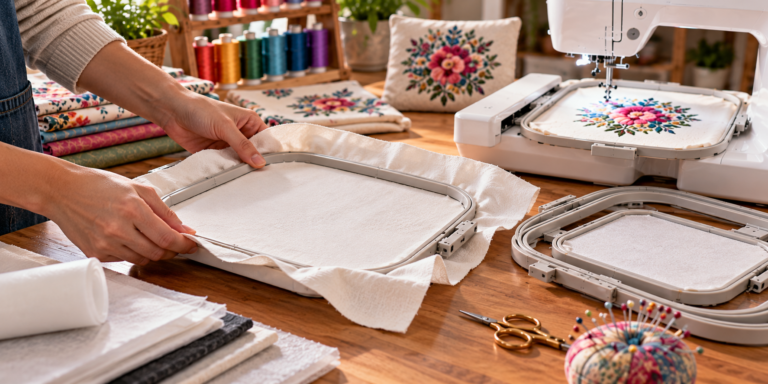
Fabric is generally stabilized and secured in a hoop or compatible frame. The machine then moves that assembly beneath the needle according to digital embroidery instructions.
Those instructions contain more than an image.
Embroidery data governs stitch placement and sequence and may contain color-change and machine-command information depending on the format and equipment. This is why an ordinary JPEG or PNG image cannot simply be treated as a finished embroidery design. Artwork must be converted through digitizing into stitch instructions that the embroidery machine can interpret.
The distinction matters because embroidery is partly a software discipline.
Someone buying an embroidery machine is not only acquiring a needle mechanism. The user is entering a workflow involving design files, hoop dimensions, stabilizers, thread selection, placement, digitizing and sometimes wireless or USB transfer.
Dedicated embroidery machines also vary radically in architecture.
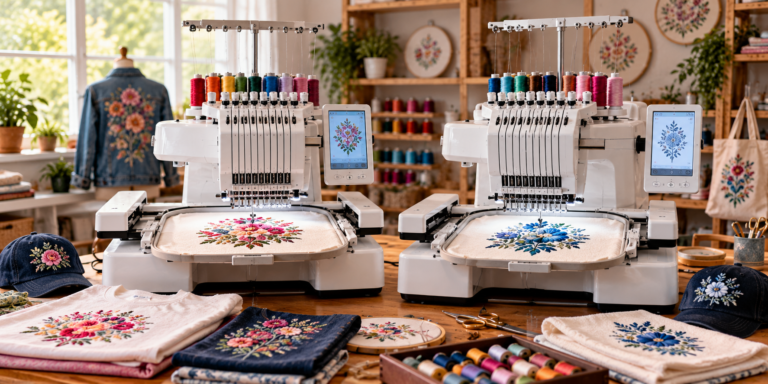
A home model may use one needle and require manual thread changes between colors. Commercial-style multi-needle machines can keep numerous thread colors loaded simultaneously and automatically move between prepared needles during a design.
That difference can matter enormously when embroidery volume rises.
A Dedicated Embroidery Machine Usually Cannot Replace a Sewing Machine
One of the most consequential purchasing mistakes is assuming that a dedicated embroidery machine can perform ordinary sewing because both machines use needles and thread.
That is generally false.
A dedicated embroidery machine is engineered around embroidery frames and automated design movement. It is not intended to replace a conventional sewing machine for assembling garments, inserting zippers, sewing long seams, making routine buttonholes or repairing clothing.
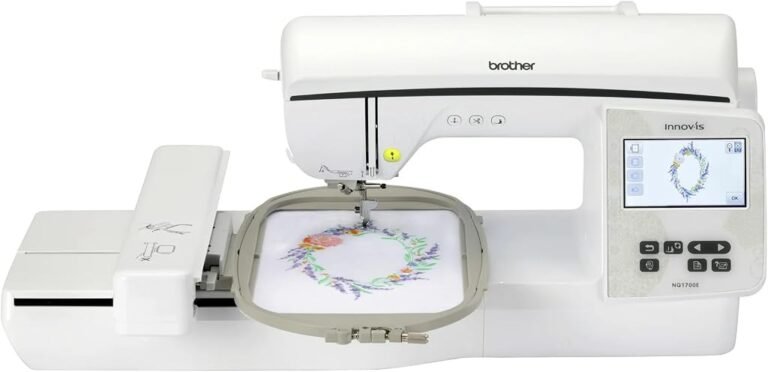
The distinction is visible in manufacturers’ product classifications. Brother, for example, separates embroidery machines from sewing-and-embroidery models rather than treating embroidery as merely another stitch category.
A household with no sewing machine should therefore think carefully before making an embroidery-only model its first purchase.
If the actual goals include hemming trousers, constructing clothing and occasionally adding embroidered names, an embroidery-only machine solves only part of the problem.
If a capable sewing machine is already present, however, a dedicated embroidery machine can make excellent structural sense.
The two machines can remain configured for their respective jobs instead of requiring repeated conversion between sewing and embroidery modes.
What a Combo Machine Changes
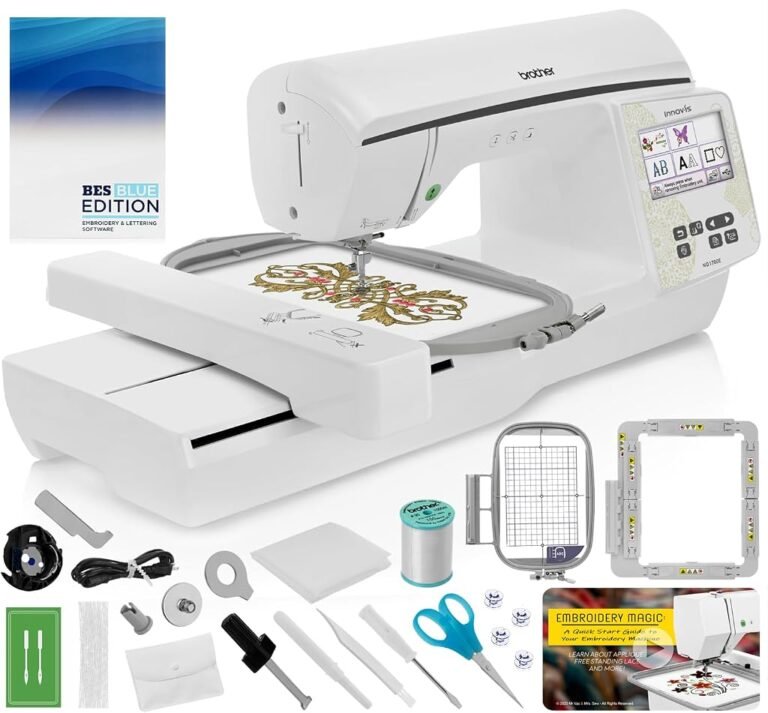
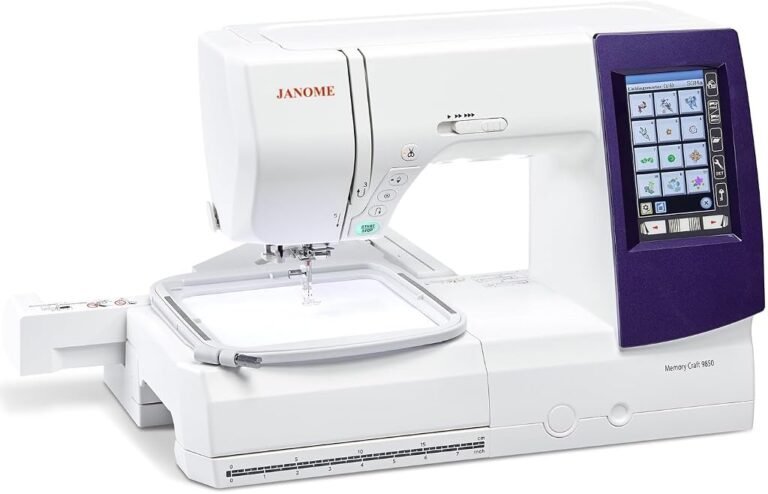
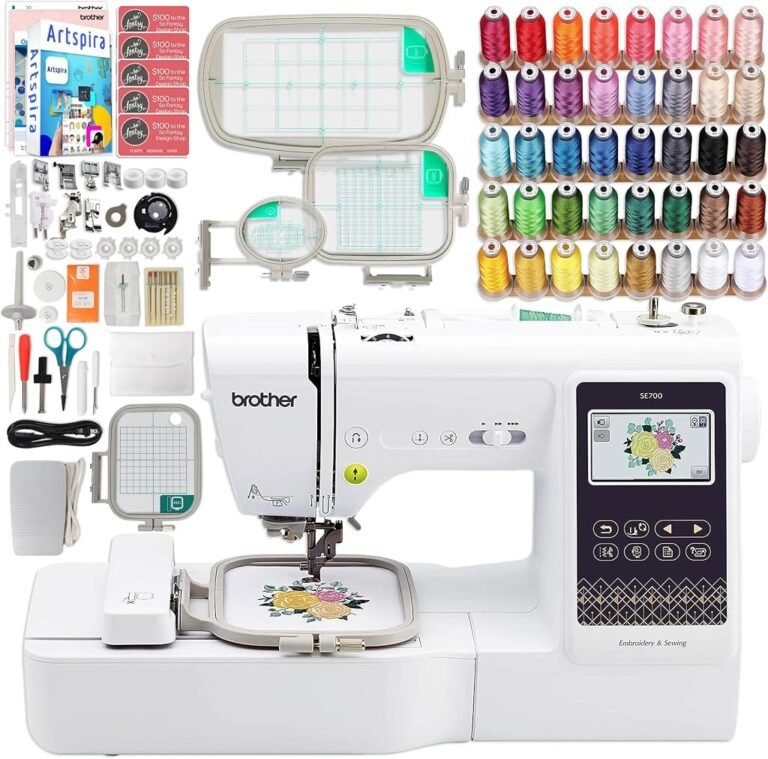
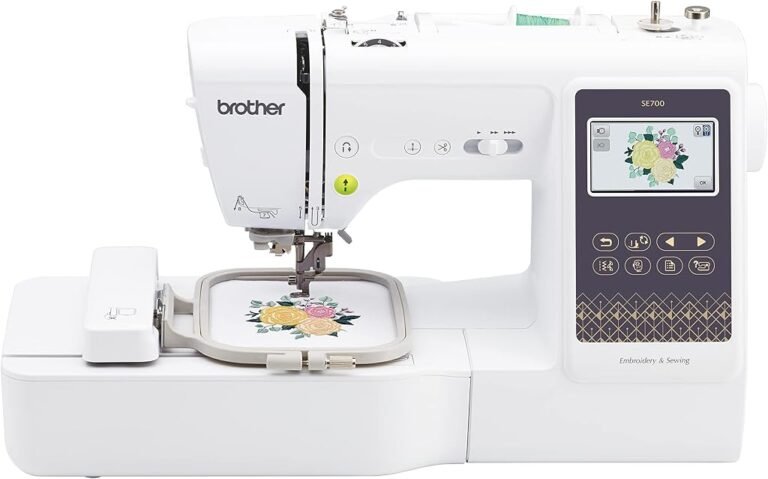
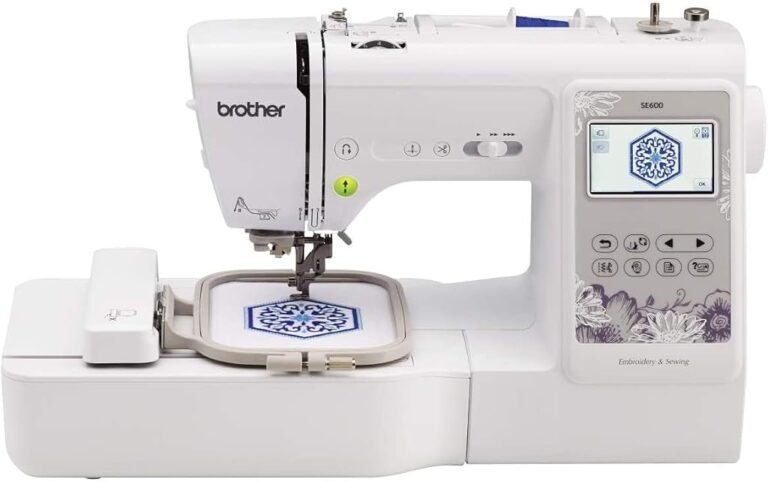
A combination machine places conventional sewing and computerized embroidery in the same machine.
This arrangement can be highly practical.
The machine can perform normal sewing with standard presser feet and feed mechanisms, then be configured for embroidery using an embroidery unit and hoop system.
For someone with limited space, that consolidation has obvious appeal.
One machine can support garment construction, decorative sewing, repairs, buttonholes and embroidery without requiring permanent room for two separate chassis.
Combination models also reduce the number of machines a beginner needs to learn immediately.
Yet consolidation carries a less obvious cost: one machine can perform only one of its primary jobs at a time.
If a 45-minute embroidery design is running, the same machine cannot simultaneously sew the side seam of another garment.
That limitation barely matters to an occasional hobbyist. It matters considerably more when project volume rises.
Combo Does Not Mean Compromised by Definition
There is a persistent assumption that a machine combining sewing and embroidery must inherently perform each job poorly.
That is too broad.
Modern combination machines can contain substantial sewing systems and fully developed embroidery mechanisms. Their capabilities need to be judged from actual specifications rather than category stereotypes.
The better criticism is operational.
A combo machine consolidates two workflows into one physical resource. That can be an advantage in a spare bedroom and a disadvantage in a busy studio.
The question is therefore not whether combination machines are “real” embroidery machines. Many are.
The question is whether sharing one machine between sewing and embroidery matches the owner’s workflow.
Hoop Size Changes What an Embroidery Machine Can Physically Do
Maximum embroidery area is among the most consequential specifications in any embroidery purchase.
A machine supporting a 4-by-4-inch maximum embroidery field cannot stitch a 5-by-7-inch design as one ordinary 5-by-7 design merely because a larger physical hoop can somehow be attached.
The carriage and machine architecture determine the supported embroidery field.
Common home-machine sizes include fields around 4 by 4 inches and 5 by 7 inches, while larger models can support considerably more space.
The arithmetic illustrates why seemingly small dimensional changes matter.
A 4-by-4-inch rectangle contains 16 square inches. A 5-by-7-inch rectangle contains 35 square inches. The latter represents more than twice the nominal rectangular area.
Usable embroidery capability is more nuanced than simple area because designs have particular dimensions and shapes. Still, the calculation demonstrates why hoop specifications deserve more attention than the number of built-in flowers or borders.
A user interested primarily in monograms, children’s clothing and small patches may be satisfied with 4-by-4 embroidery for years.
Someone imagining jacket backs, large quilt blocks or broad decorative panels can encounter that boundary rapidly.
Software cannot enlarge the machine’s physical travel.
Sewing Stitch Count and Embroidery Design Count Are Different Metrics
Marketing literature often places large numbers prominently on packaging: 200 stitches, 150 embroidery designs, 10 fonts.
Those figures measure different things.
Built-in sewing stitches are programmed stitch patterns available during conventional sewing. Embroidery designs are digital patterns stitched through the embroidery system.
Neither number independently establishes machine quality.
A garment maker may repeatedly use straight stitch, zigzag, stretch stitches and buttonholes while barely touching hundreds of decorative alternatives.
An embroidery user may quickly move beyond built-in designs and spend most of the machine’s life importing external files.
The more useful question is whether the machine contains the functions needed for recurring projects.
A smaller but relevant feature set can be more useful than a large library that remains untouched.
Single-Needle and Multi-Needle Embroidery Are Different Workflows
Most consumer embroidery and combination machines use a single needle.
When a multicolor design reaches a programmed color change, the machine stops and the operator changes thread.
For occasional embroidery, this can be perfectly reasonable.
A multi-needle embroidery machine approaches the job differently. Several needles can remain threaded with different colors. The machine can then switch among prepared needles as required by the design.
This is one reason multi-needle equipment appears frequently in production-oriented embroidery.
Consider a design using eight colors.
A single-needle machine may require repeated operator intervention as colors change. A 10-needle machine can potentially keep all eight colors prepared, reducing rethreading during the job.
Needle count does not directly determine embroidery quality, and it does not mean a 10-needle machine stitches 10 times faster.
It changes labor.
That distinction is critical for anyone hoping to sell embroidered products.
Embroidery Speed Needs Context
Manufacturers commonly express embroidery speed in stitches per minute, usually abbreviated SPM.
The figure is useful, but it can be misunderstood.
A machine rated at 1,000 SPM does not necessarily finish a 20,000-stitch design in exactly 20 minutes.
Embroidery involves acceleration, deceleration, trims, color changes, travel movements and other interruptions. Dense or technically demanding areas may also be stitched below maximum speed.
A faster machine therefore creates capacity, not a guaranteed completion time.
The same logic applies when comparing a home embroidery machine with commercial-style multi-needle equipment.
Higher maximum speed matters more as project volume grows. For someone stitching one monogram on Saturday afternoon, a few minutes may have little economic meaning.
For a small operation repeating the same design dozens of times, minutes accumulate into hours.
The Hidden Cost Is Often Workflow, Not Purchase Price
Machine price is easy to see. Workflow cost is harder.
Embroidery requires consumables and supporting equipment. Depending on the projects, these can include:
- Embroidery thread
- Bobbin thread or prewound bobbins
- Stabilizer
- Embroidery needles
- Hoops or specialty frames
- Temporary adhesives where appropriate
- Digitizing software or digitizing services
- Test fabric
- Maintenance materials
A machine with a lower purchase price can become expensive if its limitations force repeated workarounds.
Conversely, buying an expensive machine whose capacity remains unused is not efficient spending.
This is why project mapping should precede product comparison.
The buyer should identify the largest likely design, common fabric types, expected color counts, frequency of embroidery and whether sewing must occur while embroidery is running.
Those answers narrow the equipment category before model numbers enter the discussion.
Why Separate Machines Can Become More Efficient
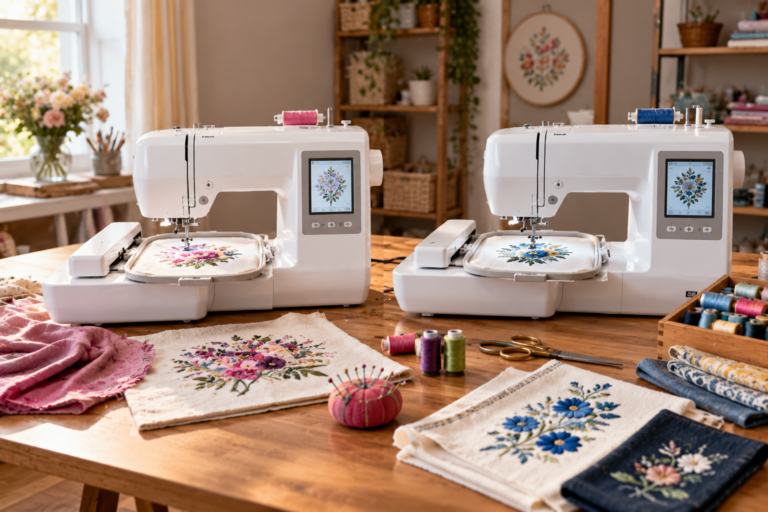
A dedicated sewing machine beside a dedicated embroidery machine creates an operational advantage that specifications rarely capture: parallel work.
While the embroidery machine stitches a design, the sewing machine remains available.
A garment maker can prepare another item, sew seams or finish a previous piece without waiting for the embroidery cycle to end.
This arrangement also reduces machine conversion.
A combination machine may require removing ordinary sewing components, installing the embroidery unit, changing presser-foot configuration, preparing the hoop and later reversing the process.
For occasional switching, this is minor.
For repeated switching throughout a working day, it becomes friction.
Two machines require more space and greater initial spending, but they can provide a more fluid workflow for active users.
Why Combo Machines Still Make Sense for Many Homes
Parallel production is irrelevant if the machine is used twice a month.
For many home users, space matters more.
A combination machine can place sophisticated sewing and embroidery functions on one table. Accessories and an embroidery unit still require storage, but the main chassis remains shared.
This arrangement suits users whose projects naturally move from construction to embellishment rather than requiring both processes simultaneously.
A parent making children’s clothing, for example, might sew a garment first and embroider a name afterward. There may be no operational need for two machines.
Likewise, someone exploring both crafts may prefer learning one interface and maintenance routine before expanding the equipment collection.
The value of a combination machine is therefore strongest when consolidation solves a genuine space or usage problem.
Which Machine Is Better for Garment Making?
A sewing machine is the natural starting point.
Garment construction requires seam formation, fabric feeding, buttonholes, zipper work, edge finishing and numerous forms of controlled sewing.
Embroidery is optional decoration.
A combination machine can perform garment construction while adding embroidery capability, making it attractive for users who know they want both.
A dedicated embroidery machine alone is poorly matched to this workload because it does not replace the construction machine.
Someone primarily interested in dressmaking should therefore prioritize sewing characteristics first: stitch control, buttonhole capability, presser-foot options, fabric handling and ergonomics.
Embroidery should be secondary unless decorative work represents a substantial share of the intended projects.
Which Machine Is Better for Monograms and Personalization?
A dedicated embroidery machine becomes more attractive when the primary activity is adding names, initials, logos and decorative designs to finished goods.
The operator may already be purchasing blank shirts, towels, bags or garments rather than constructing those products from raw fabric.
Conventional sewing capability then contributes relatively little.
The embroidery field becomes far more important.
A 4-by-4 machine may cover many monograms and small logos. Larger designs require more capacity.
Users planning personalization as a repeated activity should also examine file-transfer methods, design editing, thread management and hoop availability.
For frequent multicolor personalization, multi-needle equipment eventually becomes relevant because operator intervention becomes part of the productivity equation.
Which Machine Is Better for Quilting?
The answer depends on what “quilting” means in the intended workflow.
For piecing and ordinary quilting work, a sewing machine or sewing-capable combination machine is appropriate.
Throat space, feed control, stitch quality, presser-foot compatibility and quilting accessories can matter more than embroidery functions.
For embroidered quilt blocks, labels or decorative motifs, an embroidery system becomes relevant.
A combination machine can be particularly attractive here because the same chassis can piece fabric and later embroider decorative elements.
Yet serious quilting and embroidery performed concurrently may again favor separate machines.
The project, rather than the category label, should dictate the architecture.
Which Machine Makes Sense for a Small Business?
A small personalization business needs to think differently from an occasional home user.
Machine idle time, thread changes, hooping speed and the ability to perform parallel work acquire financial significance.
A combination machine can support a small operation at modest volume, particularly when both sewing and embroidery services are offered.
As order volume rises, however, a dedicated embroidery machine becomes easier to justify because it can remain configured for production.
Multi-needle equipment becomes more attractive when frequent color changes create repeated labor.
This does not mean every new embroidery business requires commercial-style machinery.
Buying production capacity before demand exists can lock capital into equipment that spends most of its time idle.
A staged approach is often more rational: understand actual order patterns, identify the recurring bottleneck and purchase machinery that removes that specific restriction.
Questions to Answer Before Buying
The most useful buying checklist is built around projects rather than features.
Before selecting a category, a buyer should establish:
- Whether conventional sewing is required.
- Whether embroidery will be occasional or frequent.
- The largest embroidery dimensions likely to be used.
- Whether imported designs are expected.
- How many colors typical embroidery designs contain.
- Whether sewing needs to continue while embroidery is running.
- How much permanent workspace is available.
- Whether the machine will need to be moved or stored.
- Whether digitizing will be performed in-house or outsourced.
- Whether production volume may justify multi-needle equipment later.
- How much money remains for hoops, stabilizer, thread and other supplies after purchasing the machine.
These questions eliminate many unsuitable machines before price comparisons begin.
The Three Buying Paths
The decision can be reduced to three practical paths.
Choose a sewing machine when the primary goals are garment construction, repairs, quilting, bags, household projects and ordinary decorative stitching, with little or no interest in automated embroidery.
Choose a dedicated embroidery machine when a satisfactory sewing machine is already available or when the work consists primarily of decorating finished goods with programmed designs.
Choose a combination machine when both conventional sewing and automated embroidery are genuinely wanted, workspace is limited, and simultaneous sewing and embroidery are not major requirements.
A fourth path emerges for heavier use: separate sewing and embroidery machines, potentially including multi-needle embroidery equipment.
That arrangement costs more and requires more space, but it allows each machine to remain prepared for its specialized job.
Final Considerations
A sewing machine, an embroidery machine and a combination machine all work with fabric, needles and thread, but they solve fundamentally different problems.
The sewing machine is a construction tool. It gives the operator direct control over seams, hems, buttonholes, quilting and the structural work that turns pieces of fabric into finished objects.
The embroidery machine is an automated decoration system. It interprets digital stitch data and moves hooped fabric through programmed designs. Its meaningful constraints include embroidery area, needle configuration, transfer methods, speed and workflow.
The combination machine merges those capabilities. Its central advantage is consolidation: one chassis can support ordinary sewing and computerized embroidery. Its central operational limitation is equally straightforward: the machine cannot perform both jobs simultaneously.
For beginners, the choice should start with the first projects rather than the longest specification sheet.
Someone wanting to make clothing needs sewing capability. Someone wanting to personalize purchased shirts needs embroidery capability. Someone genuinely planning both can justify a combination machine.
Hoop size deserves particular attention because physical embroidery capacity cannot be downloaded later. A small field can be entirely sufficient for monograms and compact motifs, yet frustrating for larger artwork.
Production ambitions also change the equation. As embroidery frequency rises, thread changes, machine conversion and waiting time become measurable workflow costs. That is where dedicated and multi-needle machines begin to justify their additional space and expense.
The best sewing and embroidery machines are therefore not necessarily the models carrying the largest stitch libraries, brightest screens or longest feature lists. The useful machine is the one whose architecture matches the work.
A sewing machine should be purchased for sewing. An embroidery machine should be purchased for embroidery. A combo machine should be purchased when consolidation genuinely improves the owner’s workflow.
Once that distinction is established, comparing individual models becomes considerably easier. The buyer is no longer asking which machine has more features. The question becomes far more practical: which machine removes the fewest possibilities from the projects that actually matter?