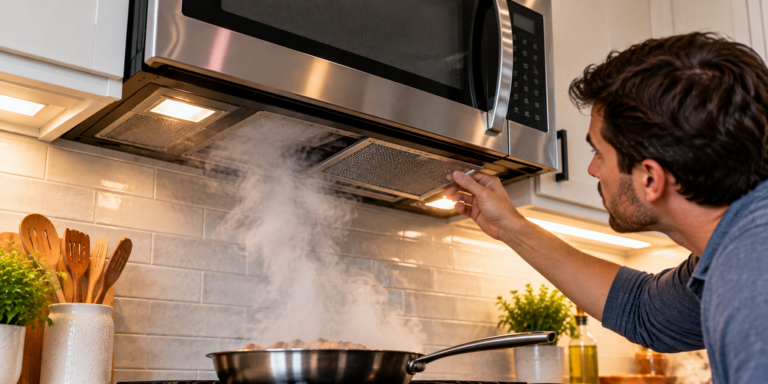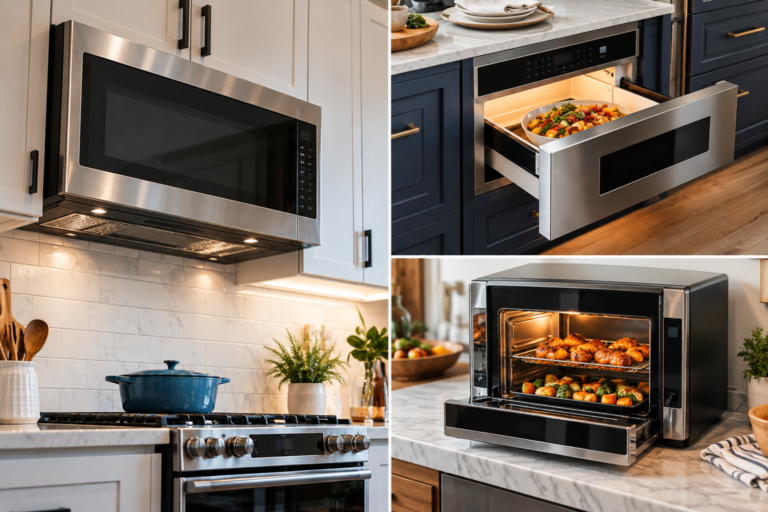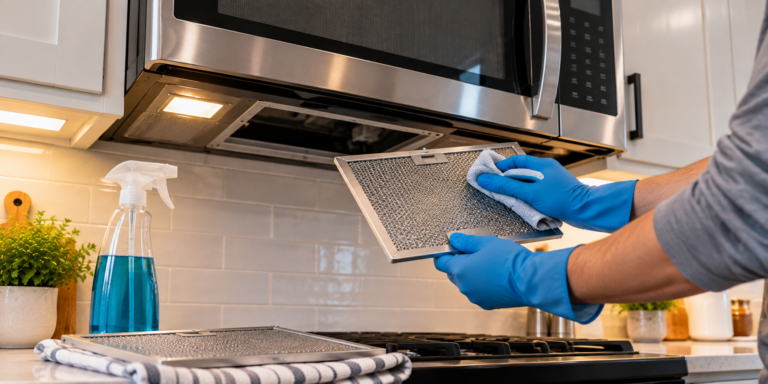
The difference between a convection microwave and an air fryer combo microwave looks minor on a control panel. One machine may have a button labeled “Convection,” another adds “Air Fry,” and both still contain a magnetron, turntable or cooking tray, heating elements and some form of fan-assisted hot-air cooking. That superficial similarity has encouraged an understandable assumption: air frying is simply convection cooking with a different name.
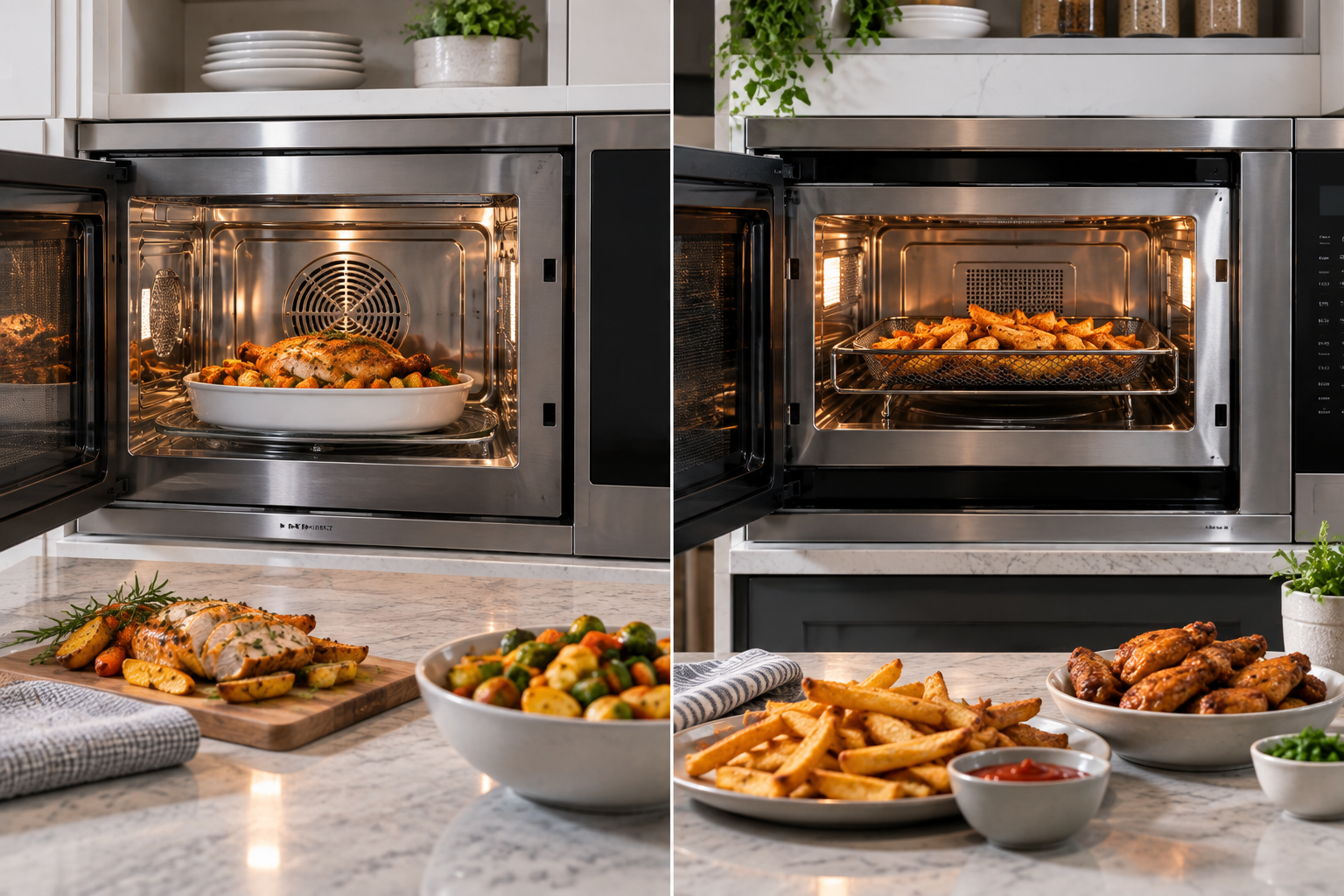
The engineering is more nuanced.
A convection microwave combines microwave energy with an oven-style heating system that circulates hot air around food. Its dry-heat side is primarily suited to jobs associated with a compact convection oven: baking, roasting and browning. An air fryer combo microwave starts from much the same multifunction concept but adds a cooking mode intended to create more concentrated airflow and surface browning.
Neither design makes the microwave function obsolete. The microwave remains the fast-heating component. The convection system handles jobs that benefit from dry heat. Air-fry operation pushes that hot-air system toward crisping.
The practical distinction is therefore not microwave versus air fryer. It is conventional convection versus a more aggressively configured convection mode inside an appliance that can also cook with microwaves.
That distinction affects food texture, accessories, cooking time, capacity, cleaning and ultimately whether paying for an air-fry setting makes sense.
Start With What the Microwave Actually Does
Before comparing convection and air frying, the microwave side needs to be separated from both.
According to the U.S. Food and Drug Administration’s explanation of microwave cooking, a magnetron generates microwaves that are reflected around the metal oven cavity and absorbed by food. The resulting molecular activity produces heat. The FDA also points out that microwave energy does not make food radioactive.
This process explains why microwaves are so effective at reheating moist foods quickly.
It also explains one of their familiar limitations. Microwave energy is not equivalent to surrounding food with several hundred degrees of dry circulating air. A microwave can make a potato hot quickly; creating the browned, crisp exterior associated with roasting requires a different heat-transfer process.
Convection microwave ovens solve that problem by putting another cooking system inside the microwave cavity.
Once heating elements and forced-air circulation enter the design, the appliance can operate much more like a small oven.
An air fryer combo microwave takes that architecture another stage further.
What a Convection Microwave Adds
A convection microwave contains a heating element and fan system capable of circulating heated air around the cavity.
That fundamentally changes its cooking range.
Instead of relying solely on microwave energy, the appliance can use dry heat for foods that benefit from browning. Cakes, roasted vegetables, casseroles and similar dishes can therefore be approached more like they would be in a conventional oven.
Some models also combine microwave and convection energy during particular programs. That allows microwave heating to accelerate the process while dry heat works on the exterior.
This hybrid ability is one reason convection microwaves should not be evaluated only by microwave wattage.
A conventional microwave might be selected primarily by capacity, output power, controls and sensor functions. A convection microwave adds another set of questions: maximum oven temperature, preheating, fan design, rack positions, included cookware and available combination modes.
The appliance has effectively become two cooking systems sharing one cavity.
That arrangement can be particularly useful where space is limited. A household may gain both microwave reheating and small-oven functionality without finding room for two separate machines.
The compromise is that one cavity has to accommodate both jobs.
What an Air Fryer Combo Microwave Adds
An air fryer combo microwave retains microwave capability while adding a hot-air mode intended specifically to promote crisping.
Whirlpool’s comparison of convection microwaves and air fryers describes the distinction in functional terms: both circulate hot air, but convection microwaves are associated more closely with roasting and baking, while air fryers are engineered around focused heat and airflow intended to produce a crisp exterior.
That difference is easy to underestimate.
“Air frying” does not introduce an entirely separate fundamental cooking physics comparable to the difference between microwave radiation and convection. It remains a form of hot-air cooking. The distinction comes from how the appliance directs and intensifies that heat and airflow around the food.
In a dedicated basket air fryer, the chamber is relatively small. Food generally sits in a perforated basket or tray, allowing rapidly moving hot air to reach a large percentage of its surface.
A microwave cavity is larger and was not originally shaped around that single task.
An air fryer combo microwave therefore has to approximate the same effect through fan operation, heating elements, cooking trays, baskets or elevated racks.
This is why the accessory package matters more than the “Air Fry” button itself.
Air Frying Is Not Simply Faster Convection
The easiest shorthand is to say that air frying is powerful convection. That is directionally useful but incomplete.
Traditional convection cooking aims to distribute hot air throughout an oven cavity. The moving air reduces temperature differences around the food and improves heat transfer compared with relying solely on relatively still oven air.
Air frying concentrates attention on surface texture.
Food is commonly spread in a relatively shallow layer, often on a perforated surface, so hot air can reach multiple sides. The desired outcome is rapid moisture removal from the exterior accompanied by browning.
Those goals affect how food should be arranged.
A casserole benefits from convection but gains little from having high-speed air driven beneath every piece of pasta. French fries are different. A crowded pile traps moisture and shields surfaces from airflow. Spreading them across an air-fry tray gives the moving air better access.
The cooking mode and the physical arrangement work together.
That is why putting food into a convection microwave and increasing the temperature does not automatically reproduce a dedicated air-fry cycle.
The Accessory Can Matter as Much as the Cooking Mode
Buyers comparing these appliances often focus on control-panel terminology while overlooking the metal hardware inside the box.
That is a mistake.
An air-fry basket or perforated tray increases exposed food surface area. An elevated rack can move food closer to a heating element while allowing air to circulate underneath. A solid baking tray behaves differently because it blocks airflow from below.
A convection microwave may include a wire rack primarily intended for baking or combination cooking.
An air fryer combo may add a perforated basket or crisping tray specifically configured for high-airflow cooking.
The practical difference can be substantial even when the underlying heating systems look similar on a specification sheet.
This is one reason buyers should inspect the accessory list before assigning much value to an air-fry function.
A sophisticated program cannot make air pass efficiently through a solid pan.
Crispness Is the Main Culinary Difference
Microwave heating and crisp surfaces have an uneasy relationship.
Foods crisp when their exterior loses enough moisture and undergoes browning reactions under suitable heat conditions. Microwave cooking is extraordinarily useful for heating water-rich food quickly, but that very strength can work against a dry exterior.
Convection heat addresses the problem.
Air frying pushes harder in that direction by emphasizing hot-air contact with exposed surfaces.
That makes an air fryer combo more naturally suited to foods such as:
- French fries and potato wedges;
- breaded chicken pieces;
- roasted chickpeas;
- reheated pizza where a dry underside is desirable;
- frozen breaded foods;
- vegetables intended to brown at the edges.
A standard convection microwave can cook many of the same foods. The difference is not a rigid boundary of what can and cannot be cooked.
It is optimization.
The air-fry mode and associated cookware are configured around the pursuit of crispness. Conventional convection is configured around broader oven duties.
Convection Remains Better Suited to Many Baking Tasks
Air frying is not automatically preferable whenever dry heat is required.
A cake does not need air rushing beneath it through a perforated basket. Neither does a lasagna.
Traditional convection is often the more natural mode for baked goods, casseroles and roasting vessels because these foods benefit from controlled oven heat rather than maximum surface exposure.
That makes a convection microwave more versatile than its lack of an air-fry label might suggest.
For a household that mainly wants to reheat food, bake occasionally and roast modest portions, conventional convection can cover a very broad range of jobs.
The air fryer combo earns its additional complexity when crisp foods form a meaningful part of the household’s routine.
Without that usage pattern, the extra mode can become another button rarely pressed.
Dedicated Air Fryers Still Have a Structural Advantage
An air fryer combo microwave should not automatically be assumed to perform identically to a dedicated basket air fryer.
The geometry is different.
Dedicated air fryers can use small cooking chambers shaped around intense circulation. Their baskets expose large areas of food directly to moving air, and the heating system has relatively little empty cavity volume to manage.
A microwave-air-fryer combination has competing design obligations.
Its cavity must accommodate plates, bowls and containers during microwave operation. It may need a turntable. It needs shielding and door architecture suitable for microwave energy. It may also need racks and enough vertical clearance for convection baking.
Those requirements can make the cavity more versatile, but specialization usually decreases as versatility increases.
A combination microwave therefore makes its strongest argument through consolidation rather than through claiming superiority over every dedicated appliance it imitates.
Capacity Can Be Deceptive
Microwave capacity is commonly expressed in cubic feet, but that number can be misleading when air frying enters the discussion.
A relatively large microwave cavity may accept a substantial casserole dish, yet air frying generally works best when food is arranged with enough exposed surface for air to circulate.
A deep pile of fries might physically fit. That does not mean it represents an efficient air-fry load.
Horizontal cooking area becomes particularly important.
A wide perforated tray can be more useful for air frying than a deeper cavity with the same nominal volume because food can be spread into a thinner layer.
This changes how capacity should be evaluated in a microwave buying guide.
For ordinary microwave use, plate diameter and cavity height deserve attention. For convection, cookware dimensions become important. For air frying, usable tray area and airflow around the food deserve equal scrutiny.
One capacity number cannot describe all three.
Cooking Speed Depends on the Job
Microwave cooking generally has the advantage when the objective is simply to heat food rapidly.
The FDA notes that microwave cooking can be more energy efficient than conventional cooking because food can cook faster and the energy heats the food rather than the entire oven compartment.
That does not mean microwave cooking is always the desired method.
Speed is only one dimension of cooking.
Reheating soup rewards rapid internal heating. Reheating fried chicken presents another problem: the center needs to become hot while the exterior ideally becomes crisp again.
This is where combination appliances become interesting.
Microwave energy can address internal heating, while convection or air-fry operation can address exterior texture. Depending on the appliance, these processes may be available separately or through programmed combination modes.
For buyers, the important distinction is whether the machine merely contains several cooking modes or intelligently combines them.
The manual is often more revealing than the front-panel icons.
Energy Use Cannot Be Reduced to One Simple Winner
Claims that one cooking method is always more energy efficient should be treated cautiously.
Microwave heating can be efficient for small portions because it heats food rapidly without requiring a large oven cavity to reach temperature.
Air frying can also avoid heating a full-size oven when preparing modest quantities.
But actual electricity consumption depends on power draw multiplied by operating time.
A high-powered appliance running briefly may use less electricity than a lower-powered appliance running much longer. Preheating also changes the equation. So does portion size.
For that reason, appliance wattage alone does not establish operating cost.
The more useful household question is which cavity is appropriately sized for the meal.
Running a large conventional oven for a handful of frozen fries can be inefficient. Running several consecutive small air-fryer batches to feed a large family can erase much of that advantage.
Scale matters.
Cleaning Favors Simpler Cooking Until Grease Arrives
A basic microwave is usually easy to clean because most of its mess consists of splashes, spills and steam residue.
Convection introduces baked-on residue.
Air frying introduces another possibility: aerosolized grease and crumbs moving through forced airflow.
That means an air fryer combo can demand more maintenance than its microwave ancestry suggests.
Removable baskets and trays help, particularly when dishwasher-safe. Smooth stainless-steel or coated interiors can simplify wiping. Accessible heating areas matter as well.
Buyers who expect to air fry several times per week should examine cleaning instructions before purchase rather than treating maintenance as an afterthought.
A difficult-to-clean air-fry system tends to become a rarely used air-fry system.
Microwave-Safe Does Not Mean Convection-Safe
Multifunction microwaves introduce a cookware issue that basic machines largely avoid.
The FDA explains that glass, paper, ceramic and suitable plastics can be used for microwave cooking, while metal generally should not be used during microwave operation unless the appliance instructions specifically permit it.
Convection mode changes the rules because the appliance is functioning more like an oven.
Some cookware suitable for microwave heating may not tolerate high convection temperatures. Conversely, metal racks and air-fry baskets supplied with combination appliances may be appropriate in particular modes even though putting arbitrary metal objects into an ordinary microwave would be inappropriate.
The operating manual therefore becomes authoritative for cookware selection.
Owners should not transfer assumptions from one mode to another.
“Microwave safe,” “oven safe” and “approved for this combination mode” are three different questions.
Safety Standards Apply to the Microwave System
Adding convection or air frying does not remove the regulatory obligations attached to microwave operation.
The FDA has regulated microwave-oven manufacture since 1971 and requires manufacturers to certify products against federal radiation-safety requirements. The federal standard limits microwave leakage during the appliance’s useful life and requires independent door interlock systems that stop microwave production when the door is opened.
This provides useful context for a common misunderstanding surrounding multifunction machines.
The presence of a convection heater or air-fry mode does not somehow turn microwave energy into a different phenomenon. When the magnetron operates, the microwave portion remains a microwave oven and is subject to the corresponding safety architecture.
The additional heat systems introduce more familiar oven hazards instead: hot racks, hot trays, heated door surfaces, steam and cookware capable of causing burns.
In other words, multifunctionality changes the cooking risks more than it changes the fundamental microwave safety framework.
Which One Makes More Sense for Different Kitchens?
A convection microwave is usually the more coherent choice when baking, roasting and reheating are the primary objectives. It supplies dry heat without requiring the household to pay particular attention to crisping-oriented accessories or specialized airflow modes.
An air fryer combo becomes more relevant when crisping is frequent enough to justify another cooking system inside the same appliance.
The distinction becomes easier to see through actual kitchen behavior:
- A household reheating leftovers and occasionally baking a casserole gains little from an air-fry button.
- Someone frequently preparing frozen fries, breaded foods and roasted vegetables has more reason to investigate air-fry performance.
- A small kitchen with little countertop space can benefit from combining several machines into one.
- A household already satisfied with a dedicated basket air fryer may gain less from duplicating the function.
- Someone expecting large-batch air frying should examine tray area carefully; cavity volume alone is insufficient.
- Buyers focused on baking should prioritize convection temperature control, rack arrangement and preheating rather than the air-fry label.
The appliance should follow the cooking pattern, not the other way around.
What to Check Before Buying
The specification sheet needs to be read differently for an air fryer combo than for an ordinary microwave.
Microwave wattage remains relevant, but it is only one measurement. Convection temperature range, cavity dimensions, fan-assisted modes, included racks, air-fry trays, electrical requirements and installation clearances can matter just as much.
The manual deserves attention before purchase.
It can reveal whether air frying requires preheating, which rack position should be used, whether the turntable remains installed, what cookware is permitted and whether microwave and convection energy can operate in combination.
Cleaning instructions also deserve scrutiny.
If a tray cannot be cleaned conveniently, or if grease regularly reaches difficult areas around the heating system, the theoretical convenience of combining appliances begins to erode.
A multifunction appliance earns its footprint only when its additional functions remain convenient enough to use.
The Price Premium Should Buy Consolidation, Not Buttons
The economic case for an air fryer combo microwave is strongest when it replaces something.
If it allows a household to remove a countertop air fryer while also providing microwave and convection-oven functions, the extra cost buys usable kitchen space.
If a dedicated air fryer remains on the counter because it performs the job more conveniently, the combination microwave’s air-fry function has delivered little practical value.
This is the central purchasing discipline.
Feature count should not be confused with utility.
A conventional convection microwave with excellent controls, appropriate capacity and useful racks may be a better fit than an air fryer combo burdened with a poorly configured crisping mode. Conversely, a well-designed air fryer microwave can reduce appliance clutter for households that genuinely use all three cooking methods.
The question is not which machine has more functions.
It is which functions replace equipment, save time or improve the food the household actually prepares.
Final Considerations
A convection microwave and an air fryer combo microwave share much of their underlying architecture, but they are optimized differently.
Both retain microwave energy for rapid heating. Both can use fan-assisted dry heat. A convection microwave directs that dry-heat capability toward broad oven duties such as baking and roasting. An air fryer combo adds a mode and usually accessories intended to increase airflow around food and promote a drier, crisper exterior. Whirlpool’s distinction between convection for roasting and baking and air frying for focused crisping captures the practical divide.
That does not make the air fryer combo automatically more capable in every kitchen.
Convection remains highly useful for baking, roasting and secondary-oven duties. Air frying becomes meaningful when crisp foods are prepared frequently enough for airflow optimization to matter. Dedicated basket air fryers can retain an advantage in specialization because their smaller chambers and perforated baskets are built around that single task.
For buyers working through a microwave buying guide, the decision should therefore move beyond labels. Cavity geometry, tray area, accessories, convection temperatures, combination modes, cleaning requirements, electrical demand and real cooking habits deserve closer examination.
A household that wants a microwave and compact oven may find conventional convection entirely sufficient. A household trying to remove a separate air fryer from the countertop has a stronger reason to choose the additional mode.
The difference is ultimately one of emphasis. Convection microwave ovens broaden what a microwave can cook. Air fryer combo microwaves narrow part of that added capability toward a specific result: more aggressive surface browning and crisping.
That distinction sounds modest until dinner arrives. Then the difference between making food hot and making its exterior crisp becomes remarkably easy to understand.