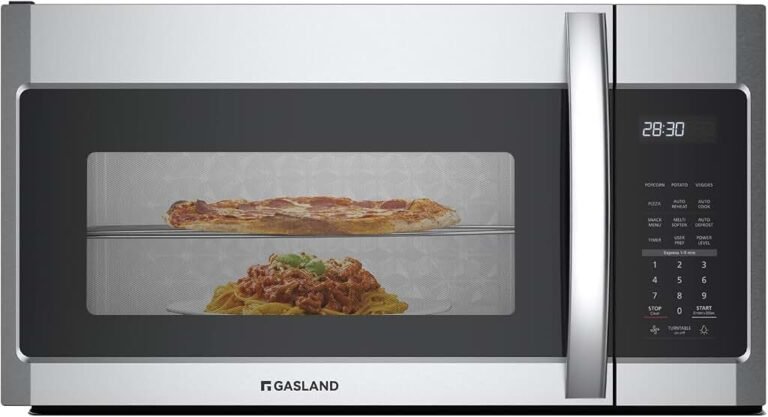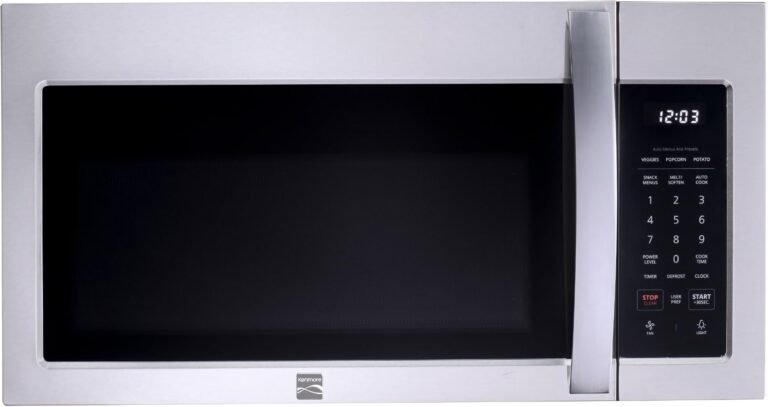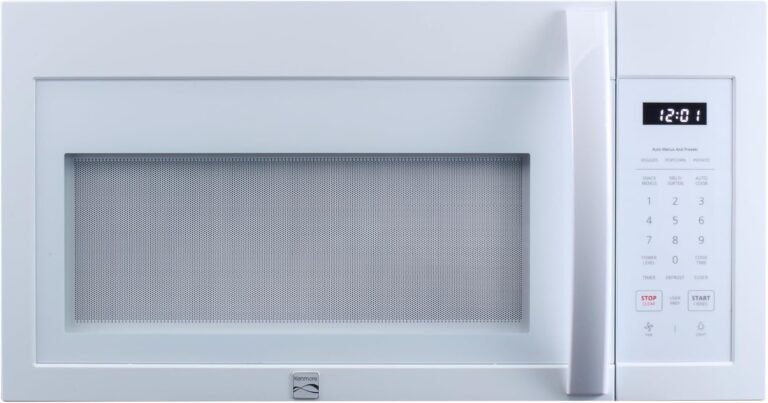
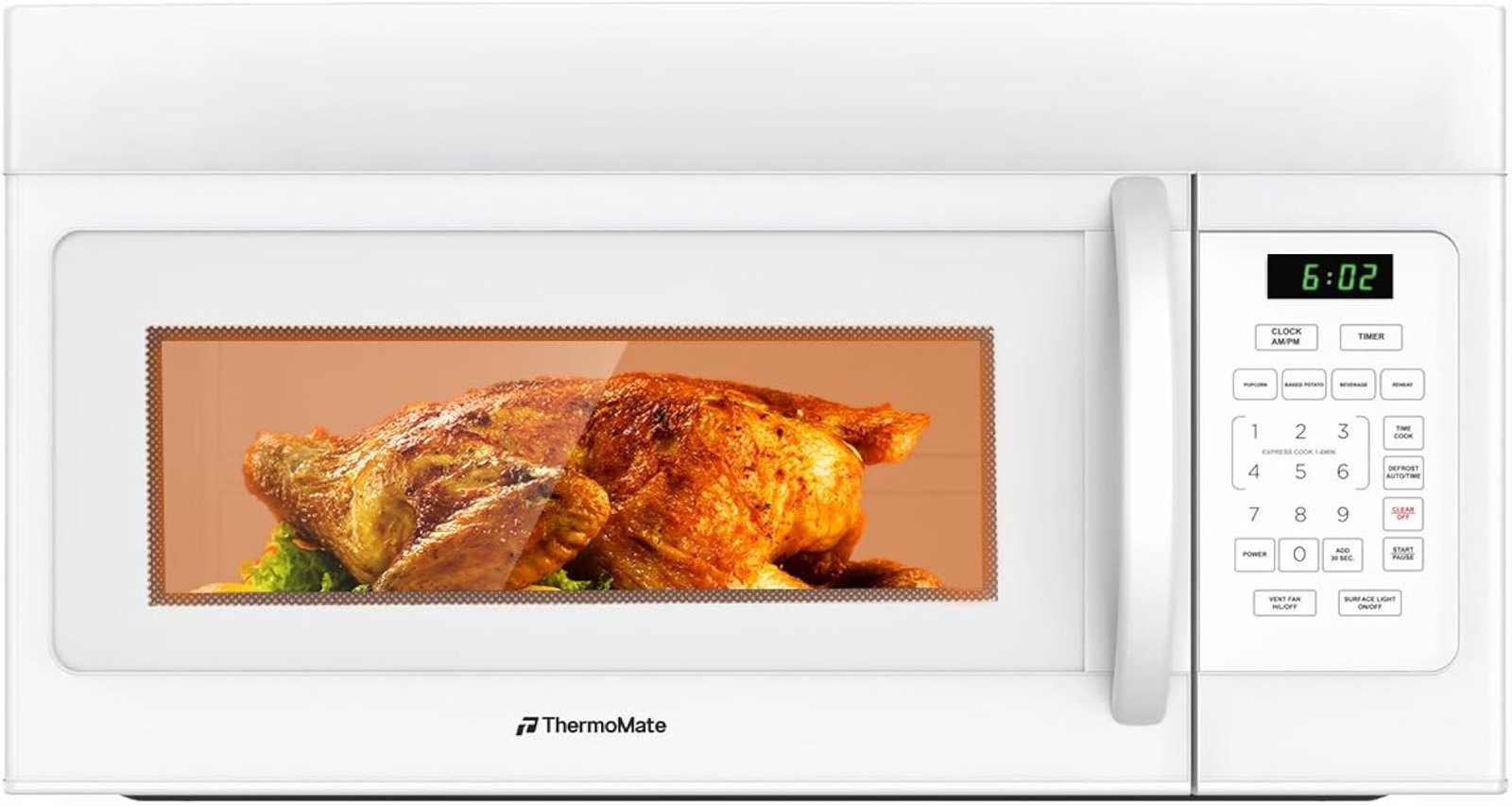
Appliance labels can create an illusion of certainty. Capacity, installation type and cooking technology look like straightforward descriptors until a model number points somewhere else. That is precisely the issue surrounding the ThermoMate 1.7 cu. ft. Over-the-Range Microwave name: the identifiable appliance is Toshiba’s OptiChef PRO MAX, and reliable listings identify it as a 1.3 cu. ft. countertop combination microwave with 1,100 watts of microwave output-not a 1.7 cu. ft. over-the-range unit.
That distinction changes nearly every meaningful part of the buying decision.
The Toshiba OptiChef PRO MAX belongs to a newer class of multifunction countertop appliances. It combines conventional microwave heating with air frying, inverter-controlled power delivery, a humidity sensor, a 2.4-inch color interface and connected functionality. Current product listings identify model ML2-STC13SAIT(SS) with the 1.3 cu. ft. OptiChef PRO MAX configuration. A current listing identifying the model and its specifications describes a 1.3 cu. ft. countertop appliance with 1,100-watt output and Alexa compatibility.
At $369.99, this is therefore better evaluated as a premium multifunction countertop microwave than as an over-the-range microwave.
Our score is 8.52/10. Customer Sentiment stands at 8.5, Buyer Confidence at 8.88 and Value at 8.28. Those figures describe a capable and unusually versatile appliance whose identity is well established once the incorrect capacity and installation description are removed from the equation. They also expose the central trade-off: the OptiChef PRO MAX offers considerably more cooking flexibility than a conventional microwave, but that flexibility costs money, countertop area and interface simplicity.
The Product Identity Matters More Than the Headline
A microwave buying guide normally begins with dimensions, wattage or capacity. Here, it needs to begin with identity.
The OptiChef PRO MAX is repeatedly identified as a countertop appliance with 1.3 cu. ft. capacity. Listings for the model specify countertop installation, 1,100-watt output, Origin Inverter technology, a smart humidity sensor and ChefFry Plus air-frying functionality. One current specification listing gives exterior dimensions of approximately 17.8 inches deep, 21.8 inches wide and 12.8 inches high.
That is fundamentally different from a 1.7 cu. ft. over-the-range microwave.
An over-the-range appliance is engineered around mounting hardware, cabinet clearances, cooktop lighting and ventilation. A countertop combination microwave instead needs sufficient work-surface space and appropriate clearance around its chassis.
Those categories should never be casually substituted for one another.
The OptiChef PRO MAX therefore should not be purchased to fill an over-the-range opening simply because a retail description categorizes it that way. Its strengths lie elsewhere.
A 1.3 cu. ft. Cavity Is the Correct Starting Point
Capacity affects more than the amount of food that can theoretically enter a microwave. It affects plate diameter, cookware choice, interior height and the practicality of combination cooking.
The OptiChef PRO MAX is identified at 1.3 cu. ft. That makes it smaller than the 1.7 cu. ft. figure in the review name, but the difference should not automatically be interpreted as inadequate capacity.
Combination microwaves use their interiors differently from basic microwave ovens. Air frying and convection-style cooking often require racks, trays or enough open space for heated air to circulate around food. An appliance may therefore have a reasonable nominal cavity while providing less practical vertical clearance once accessories or upper heating components enter the equation.
For ordinary microwave jobs-plates, bowls, vegetables, beverages and leftovers-1.3 cu. ft. is a useful middle ground between very small compact ovens and large countertop machines.
The buyer who routinely heats oversized casserole dishes should still measure them.
Cubic-foot figures are helpful for broad comparison, but they remain volume measurements. They do not tell a household whether its favorite rectangular dish fits through the door or rotates freely.
The 1,100-Watt Output Is a Serious Microwave Foundation
The OptiChef PRO MAX is identified with 1,100 watts of microwave output. That gives the appliance a credible foundation before its more unusual functions are considered.
Microwave wattage matters because recipes and packaged-food instructions frequently assume relatively powerful household machines. Lower-output microwaves can accomplish the same heating tasks, but often require longer cooking times.
The more interesting technology here is Toshiba’s Origin Inverter system.
Traditional microwave power control can cycle the magnetron between full output and no output when a lower power setting is selected. Inverter systems can provide more graduated energy delivery. The practical objective is better control during jobs where relentless maximum output is undesirable, particularly reheating and defrosting.
That distinction is more meaningful than adding another dozen preset buttons.
A frozen ingredient does not benefit from having its outer edges cooked while its center remains solid. A sauce does not benefit from violent localized boiling merely because the microwave reached the requested energy total quickly. Controlled power delivery is aimed at reducing those compromises.
The OptiChef PRO MAX therefore begins with a microwave architecture that is more ambitious than a simple timer-and-magnetron appliance.
ChefFry Plus Changes What the Appliance Is For
The defining feature beyond microwave heating is ChefFry Plus.
Current listings describe the system as combining a top fan and heating element to provide air-fryer-style cooking. That changes the appliance from a reheating specialist into a compact combination oven.
Microwave energy and air frying solve different problems.
Microwaves are exceptionally effective at rapidly heating foods containing water because microwave energy is absorbed and converted into heat within the food. The U.S. Food and Drug Administration explains that microwaves cause water molecules in food to vibrate, producing heat. The agency also points out that thick foods are not literally cooked “from the inside out”; outer layers receive microwave energy while heat reaches deeper areas partly through conduction.
Air frying attacks another weakness of ordinary microwave cooking: surface texture.
Microwave reheating can restore temperature quickly but generally does little to recreate the dry, crisp exterior associated with roasting or frying. A fan and heating element can expose food surfaces to moving hot air instead.
The value of combining the two methods is therefore straightforward. One system supplies rapid volumetric heating; the other can address browning and exterior texture.
That does not mean every dish benefits from both. It means the appliance has a broader set of physical tools available.
The Combination Design Can Replace Appliances, but Not Always
The obvious attraction is consolidation.
A kitchen containing a microwave and separate air fryer already dedicates counter or cabinet space to two appliances. Combining those functions can reduce the number of machines competing for outlets and storage.
Yet combination appliances create their own compromise.
A dedicated air fryer may have a basket geometry optimized specifically for rapid airflow. A microwave-air-fryer combination must accommodate a turntable, microwave-safe cavity architecture, heating components and accessories within the same enclosure.
The OptiChef PRO MAX should therefore be judged as a flexible all-rounder rather than assumed to reproduce every characteristic of two specialized appliances simultaneously.
That distinction matters especially for households buying it primarily as an air fryer.
Its appeal becomes stronger when microwave cooking remains the primary requirement and air frying expands what the same appliance can do. If air frying is the dominant cooking method and microwave use is rare, a dedicated air fryer may represent a more focused solution.
The Humidity Sensor Addresses a Familiar Microwave Weakness
Microwave cooking has always demanded a certain amount of guesswork.
Time-based reheating assumes the user can estimate how quickly a particular quantity and composition of food will absorb energy. Thirty seconds can separate a lukewarm center from overheated edges.
The OptiChef PRO MAX incorporates a smart humidity sensor. Current product descriptions identify the sensor as part of the automatic cooking system.
Sensor cooking generally works by detecting moisture or steam released during heating and using that feedback to help determine cooking progress. The advantage is not mystical intelligence. It is feedback.
A conventional timed cycle knows only that 90 seconds have elapsed. A sensor-equipped system has another variable available to inform its control logic.
This is particularly relevant for reheating, where food quantity and initial temperature can vary considerably from one use to another.
No sensor can make every container of food physically identical, but sensing is a more rational foundation for automation than assuming that identical button presses should produce identical results regardless of what sits inside the cavity.
The 2.4-Inch Color Interface Is More Than Decoration
Combination appliances face a user-interface problem that basic microwaves largely avoid.
A simple microwave might require little more than numeric buttons, power adjustment, defrost and start. Add air frying, automatic programs, inverter controls, sensor modes and connected functions, and a conventional keypad can become crowded quickly.
The OptiChef PRO MAX uses a 2.4-inch color display, and current listings describe approximately 25 cooking programs in the 1.3 cu. ft. configuration.
A screen makes conceptual sense here because it can organize functions hierarchically rather than assigning every feature its own permanent button.
The trade-off is immediacy.
A physical “+30 seconds” button requires almost no interpretation. A menu-driven interface can ask more of the user, particularly during the first weeks of ownership. People who prefer appliances that reveal every major function at a glance may find a multifunction display less transparent than a conventional keypad.
The interface is therefore inseparable from the product’s ambition. More cooking modes create a stronger need for menu organization.
Alexa Compatibility Adds Convenience, Not Cooking Capability
The OptiChef PRO MAX is also identified as compatible with Alexa.
Connected appliance features are easy to overstate. Voice control does not improve microwave physics, create additional cavity volume or make air circulate faster.
Its usefulness is situational.
A voice command can be convenient when hands are occupied with food preparation, particularly when the requested action is simple. It can also support users who find touch controls difficult to operate.
For other households, the connected functionality may remain largely unused.
That makes Alexa compatibility a secondary buying criterion rather than a foundation for the product’s value. The stronger technical arguments remain inverter power control, sensor operation and the combination of microwave and hot-air cooking.
Connectivity is an accessory to those functions, not a substitute for them.
Countertop Placement Has Real Costs
Correcting the product from “over-the-range” to “countertop” introduces the review’s largest practical trade-off.
The OptiChef PRO MAX consumes work-surface space.
At roughly 21.8 inches wide and 17.8 inches deep according to current listings, it is not a tiny appliance. A kitchen with shallow counters or limited preparation area should map that footprint before purchase.
The depth figure deserves particular attention because countertop appliances also need appropriate operating clearance. A machine should not be pushed into an improvised enclosed space merely because its chassis physically fits.
This changes the comparison with a true over-the-range microwave.
An over-the-range model releases countertop area but consumes the zone above a cooktop and commonly incorporates ventilation. The Toshiba uses counter area but gains multifunction cooking capability without requiring permanent mounting.
Neither arrangement is universally superior.
A renter may prefer the countertop format because it avoids cabinetry work. A homeowner with very little work surface may see the same format as a major drawback.
Architecture determines which compromise hurts less.
There Is No Over-the-Range Ventilation Benefit
Because the OptiChef PRO MAX is a countertop appliance, it should not be credited with the ventilation function associated with genuine over-the-range microwaves.
That difference is substantial.
A true over-the-range unit normally combines microwave cooking with cooktop lighting and an exhaust or recirculation fan. It replaces the physical position of a range hood, even if its ventilation performance differs from that of a dedicated hood.
The Toshiba does not solve that problem.
A kitchen still needs whatever ventilation arrangement is appropriate for the cooking surface. Anyone replacing an existing over-the-range microwave must therefore account for the missing hood function before switching to this countertop combination oven.
This is why installation category is not a minor catalog field. It changes the surrounding kitchen system.
Microwave Safety Is Better Understood Through Regulation Than Myth
The multifunction design does not change the basic safety framework governing microwave energy.
The FDA says it has regulated microwave oven manufacturing since 1971 and requires manufacturers to certify compliance with federal safety-performance standards. The agency describes microwave radiation as non-ionizing radiation, distinguishing it from ionizing radiation such as X-rays.
Federal rules limit microwave leakage throughout an oven’s lifetime to 5 milliwatts per square centimeter measured approximately two inches from the oven surface. The FDA states that this limit is “far below the level known to harm people.”
The same federal standard requires two independent interlock systems to stop microwave generation when the door latch is released or the door opens.
Everyday safety concerns are more mundane.
The FDA reports that most microwave injuries involve heat-related burns from hot containers, overheated foods or liquids rather than radiation.
With a combination oven, users also need to remember that accessories and interior surfaces used during hot-air cooking can become physically hot. Microwave habits-such as casually reaching for a plate immediately after a short reheating cycle-should not automatically be transferred to air-frying or convection-style operation.
The Scores Reveal a Product With High Confidence but Conditional Value
Our overall score of 8.52/10 reflects an appliance with a substantial functional range and a coherent reason for combining its technologies.
Customer Sentiment is 8.5, almost identical to the overall assessment. That close relationship fits a product whose appeal is easy to understand: users seeking one countertop appliance capable of reheating, defrosting and producing drier, crispier cooking results have a clear reason to consider it.
Buyer Confidence is the strongest figure at 8.88.
That rating reflects the identifiable Toshiba product architecture and the specificity of its main features: 1.3 cu. ft. capacity, 1,100-watt output, countertop installation, inverter technology, humidity sensing, ChefFry Plus and a color interface are all consistently associated with the OptiChef PRO MAX configuration across current listings.
Value lands lower at 8.28.
At $369.99, the appliance needs its multifunction capability to matter. A household that only reheats coffee and leftovers can obtain that basic microwave function for substantially less. The economic argument becomes stronger when the air-frying capability can replace or prevent the purchase of another countertop appliance.
The gap between Buyer Confidence and Value therefore makes editorial sense. Confidence in what the product is does not automatically mean every household needs what it does.
Strengths That Carry Real Weight
The Toshiba’s strongest attributes are interconnected rather than isolated:
- Its 1,100-watt microwave output provides a substantial foundation for routine heating and cooking.
- Origin Inverter technology gives the appliance a more sophisticated approach to lower-power cooking than simple full-power cycling.
- ChefFry Plus expands the machine beyond microwave reheating into hot-air cooking.
- The humidity sensor adds feedback to automated microwave operation.
- The 2.4-inch color display gives a multifunction appliance a more structured interface.
- Alexa compatibility creates an additional control option for households that use voice assistants.
- The 1.3 cu. ft. capacity balances usable interior space against the realities of countertop placement.
- Combining microwave and air-fryer functions can reduce the need for multiple separate countertop appliances.
- Countertop installation avoids the permanent mounting work required by an over-the-range machine.
The central strength is versatility. The OptiChef PRO MAX is not merely a microwave with an unusually elaborate control panel; it incorporates a separate hot-air cooking method alongside microwave energy.
Drawbacks That Should Influence the Decision
The first drawback is the mismatch between the ThermoMate description and the identifiable Toshiba appliance. This is a 1.3 cu. ft. countertop combination microwave, not a verified 1.7 cu. ft. over-the-range model.
Second, the appliance consumes meaningful countertop space. Its multifunction nature does not make its physical footprint disappear.
Third, it does not replace a range hood. A household moving from a genuine over-the-range microwave must preserve or add appropriate cooktop ventilation elsewhere.
Fourth, multifunction controls introduce a learning curve. A color display and numerous programs can organize complexity, but they cannot eliminate it.
Fifth, $369.99 is difficult to justify for someone who needs only conventional microwave reheating. The value case relies on actually using inverter-controlled cooking, sensing or air frying.
Sixth, combination cavities involve physical compromises. Heating elements, racks and airflow requirements can affect usable space differently from a basic microwave cavity.
These limitations do not undermine the product’s design. They define the household for which that design makes financial and practical sense.
Who Is Most Likely to Appreciate It?
The OptiChef PRO MAX makes the strongest case in a kitchen where several countertop cooking functions are desired but appliance proliferation is unwelcome.
A household considering both a new microwave and an air fryer is the obvious audience. So is a renter who cannot install a wall oven or over-the-range appliance but wants more cooking flexibility than a basic microwave supplies.
Its appeal also extends to smaller households that use a full-size oven reluctantly for modest portions. A countertop hot-air cooking mode can be more proportionate to reheating pizza, crisping smaller servings or preparing foods that respond poorly to microwave heating alone.
The buyer who should look elsewhere is equally identifiable.
Anyone specifically needing a 1.7 cu. ft. cavity should not treat this as one. Anyone needing an over-the-range installation should not treat it as one. Anyone relying on the microwave to replace cooktop ventilation should not treat it as one.
Accuracy about those three points matters more than enthusiasm about the feature list.
How It Fits Into a Microwave Buying Guide
The OptiChef PRO MAX demonstrates why microwave shopping increasingly requires buyers to identify the cooking method they actually need.
First comes installation. Countertop, built-in, drawer and over-the-range appliances solve different spatial problems.
Second comes capacity. The Toshiba should be evaluated at 1.3 cu. ft., with frequently used cookware measured against the cavity rather than relying solely on nominal volume.
Third comes microwave output. At 1,100 watts, the OptiChef PRO MAX has a substantial rated output for ordinary microwave work.
Fourth comes secondary cooking technology. Air frying has meaningful value only if the household will use hot-air cooking. Otherwise, the buyer is paying for hardware that spends much of its life idle.
Fifth comes automation. Humidity sensing and inverter control affect how the appliance manages food, while voice control primarily changes how instructions reach the machine.
Price belongs near the end of that sequence.
A $369.99 appliance can be poor value if most of its capabilities go unused. The same price can look considerably more rational if one machine replaces the planned purchase and storage of both a microwave and a separate air fryer.
Value is therefore tied to utilization rather than feature count.
Final Considerations
The ThermoMate 1.7 cu. ft. Over-the-Range Microwave name points toward an appliance that the identifiable product is not. The Toshiba OptiChef PRO MAX is consistently identified as a 1.3 cu. ft. countertop air-fryer combination microwave with 1,100-watt output, Origin Inverter technology, humidity sensing, a 2.4-inch color interface and Alexa compatibility.
That correction substantially improves the usefulness of the review because the Toshiba is more interesting when judged for what it actually attempts.
It is not trying to disappear above a cooktop. It is trying to make one countertop appliance perform jobs that commonly require multiple machines.
Our 8.52/10 score reflects that versatility without confusing feature quantity with universal usefulness. Customer Sentiment at 8.5 closely tracks the overall rating, while Buyer Confidence reaches 8.88 because the appliance’s core identity and capabilities can be established consistently. Value at 8.28 reflects the harder question: whether a household will use enough of those capabilities to justify $369.99.
For ordinary reheating, the OptiChef PRO MAX is more machine than necessary. For a kitchen seeking microwave speed, inverter control, sensor-assisted cooking and air-fryer functionality in one chassis, its proposition becomes substantially more coherent.
Its most meaningful limitation is equally simple. Multifunctionality does not repeal physics. The appliance still needs countertop area. Its cavity is still 1.3 cu. ft. Hot-air cooking still introduces heated surfaces and accessories. It still cannot perform the ventilation job of a true over-the-range microwave.
Those boundaries are useful rather than disappointing because they make the buying decision clearer.
The OptiChef PRO MAX is best viewed not as an over-the-range microwave that somehow acquired air-frying features, but as a countertop cooking system built around a capable microwave core. For the household that needs precisely that combination, its 8.52/10 assessment is justified by functional breadth and a technically credible feature set. For the household shopping specifically for a 1.7 cu. ft. over-the-range appliance, the search should continue rather than forcing this Toshiba into a category it was not designed to fill.