The household air fryer has moved from novelty to routine appliance within a decade. Its rise tracked two parallel shifts: interest in lower-oil cooking methods and improvements in compact electric heating. A newer subset now sits inside that broader category, often labeled the infrared heating air fryer. The phrase suggests a technological break from earlier designs, yet the reality sits closer to incremental engineering than reinvention. Understanding what infrared adds, what it does not, and how claims align with measured performance requires a careful look at heating physics, food science, and independent testing.
This article examines how infrared air fryers work, the technical distinctions behind infrared cooking technology, and what verified data says about outcomes. The focus remains informational rather than promotional, drawing on primary sources and published evaluations.
How Infrared Air Fryers Work
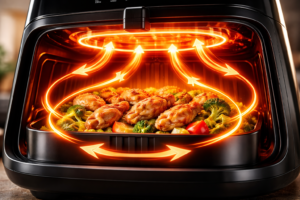
All air fryers rely on rapid heat transfer to cook food with limited added fat. Standard models use resistive electric coils to heat air, then circulate that air with a fan. An infrared heating air fryer introduces an additional mode of heat transfer.
Infrared heating technology explained at its simplest: instead of warming only the air, infrared emitters radiate energy directly toward the food surface. According to Encyclopaedia Britannica’s definition of infrared radiation, it “is electromagnetic radiation with wavelengths longer than those of visible light but shorter than those of microwaves” and “is experienced as heat.”
In an infrared air fryer, this radiation supplements convective airflow. The food absorbs radiant energy at the surface while hot air continues to move moisture away. That dual mechanism places infrared cooking technology between a traditional air fryer and a broiler.
From a physics standpoint, three heat transfer modes operate simultaneously:
- Radiation from infrared elements to the food surface
- Convection from circulating hot air
- Conduction as heat moves inward through the food
The infrared component accelerates surface heating, which influences browning reactions such as the Maillard reaction. That surface emphasis explains why manufacturers often associate infrared air fryer benefits with crust formation rather than internal doneness.
Infrared Heating Vs Convection In Compact Appliances
The comparison between infrared heating vs convection tends to blur distinctions, since most infrared air fryers still use convection fans. The difference lies in energy delivery priority.
In a conventional air fryer, air temperature must rise before food heating follows. In an infrared-assisted unit, radiant energy reaches the food immediately after the element energizes. Engineering literature on industrial ovens shows that radiant heating reduces warm-up lag, a pattern that scales down to countertop appliances.
A technical overview from the U.S. Department of Energy notes that infrared heaters “transfer energy directly to objects without heating the surrounding air first,” improving response time in controlled environments (U.S. Department of Energy – Infrared Heating).
Translated to a kitchen appliance, that faster surface response can shorten preheat phases or improve browning consistency, particularly for thin foods.
Infrared Vs Traditional Air Fryer Designs
The phrase infrared vs traditional air fryer suggests a binary choice. In practice, design overlaps dominate.
Traditional models rely on resistive heating coils, high-velocity air circulation, and consistent air temperature distribution. Infrared-assisted models incorporate quartz or ceramic infrared emitters alongside airflow, delivering higher surface heat flux at similar air temperatures.
From a functional perspective, both remain small convection ovens. The distinction matters most for foods where surface texture defines quality, such as breaded proteins or roasted vegetables.
Infrared Cooking Advantages In Food Outcomes
Claims around infrared cooking advantages often center on crispness, moisture retention, and speed. Each links to known food science mechanisms.
Surface Browning And Texture
Infrared radiation increases surface energy density. That accelerates browning reactions without requiring higher bulk air temperatures. Lower air temperatures can reduce dehydration, leaving interiors less dry.
Laboratory research on radiant ovens has shown more uniform crust formation on protein surfaces at shorter cook times. These findings align with many infrared air fryer reviews that describe faster browning on thin or breaded foods.
Oil Reduction And Chemical Byproducts
Air frying in general has drawn attention for reduced oil use. According to the U.S. Food and Drug Administration, “air frying can reduce acrylamide formation by 70% to 90% compared with deep frying” (FDA – Acrylamide Questions And Answers).
Infrared elements do not directly change that chemical mechanism, yet faster surface heating can shorten exposure time at critical temperatures. That may contribute to marginal further reductions, though peer-reviewed data specific to infrared air fryers remains limited.
Energy Efficiency Considerations
Radiant heating efficiency depends on proximity and absorption. Infrared energy that misses food becomes waste heat. In compact chambers, that loss shrinks. Independent appliance testing shows that air fryers typically draw between 1200 and 1700 watts during active heating, with total energy use tied more to cooking time than heater type.
Shorter cycles remain the primary path to lower energy use, regardless of whether infrared heating is present.
Infrared Air Fryer Comparison In Real Kitchens
An infrared air fryer comparison rarely shows dramatic differences across all foods. Patterns emerge instead.
Foods showing noticeable differences include breaded chicken cutlets, thin potato slices, and reheated pizza or pastries. Foods showing minimal difference include dense vegetables, thick roasts, and frozen casseroles.
That divide reflects radiant penetration limits. Infrared energy acts at the surface. Internal heating still depends on conduction and convection.
Professional kitchen equipment research shows the same pattern. Radiant broilers excel at finishing and searing, not bulk cooking. Infrared air fryers adapt that strength to a smaller scale.
Reviews And Independent Testing
Infrared air fryer reviews vary widely in tone. Manufacturer materials emphasize speed and texture. Independent outlets focus on repeatability, noise, and ease of use.
Testing by independent reviewers indicates that models performing well tend to score higher in browning tests while showing similar internal doneness to non-infrared peers.
Product evaluations by Wirecutter observe that air fryer performance differences “often come down to basket design and airflow rather than advertised heating technology” (Wirecutter – Best Air Fryers).
That observation tempers expectations around infrared branding. Heating method plays a role, yet mechanical design still drives outcomes.
Selecting The Best Infrared Heating Air Fryer
The phrase best infrared heating air fryer invites ranking. From an investigative perspective, selection rests on measurable attributes rather than labels.
Factors that consistently influence performance include basket geometry, fan speed consistency, temperature control accuracy, and ease of cleaning. Top infrared air fryers in independent tests typically combine infrared elements with well-designed airflow paths. Models that rely on infrared claims without addressing airflow show less consistent results.
Safety, Maintenance, And Longevity
Infrared elements introduce additional components that influence longevity. Quartz emitters operate at high temperatures and can degrade over time if contaminated with grease. Regular cleaning remains necessary.
Electrical safety standards remain identical across air fryer categories. All certified models sold in the United States comply with established safety standards. No data suggests infrared models carry higher electrical risk.
Broader Context Of Infrared Cooking Technology
Infrared cooking technology predates air fryers by decades. Commercial salamanders, conveyor ovens, and industrial dryers have used radiant heating since the mid-twentieth century. What changed is miniaturization and cost reduction.
The residential appliance sector adopted infrared once ceramic emitters became affordable and durable enough for consumer use. Air fryers offered a compact enclosure that maximized radiant efficiency.
This historical arc explains why infrared air fryers appear new while relying on established physics.
Limits Of Current Evidence
Despite confident marketing language, gaps remain in publicly available data. Few peer-reviewed studies isolate infrared air fryers from standard convection units under controlled conditions. Most evidence comes from consumer testing organizations and engineering analogies.
That limitation suggests caution when attributing large performance gains to infrared elements alone.
Final Considerations
Infrared heating air fryers represent an incremental shift rather than a categorical leap. Their defining trait lies in combining radiant and convective heat inside a compact chamber. That combination can improve surface browning and shorten cooking cycles for specific foods.
Verified sources support several points: air frying reduces oil use and acrylamide formation compared with deep frying; radiant heating transfers energy directly to food surfaces; overall performance depends as much on airflow and design as on heating method.
For readers evaluating infrared vs traditional air fryer options, expectations benefit from grounding in physics and test data rather than branding. Infrared elements add a tool, not a transformation. In kitchens where crisp surfaces and quick finishes matter, that tool may earn its place.